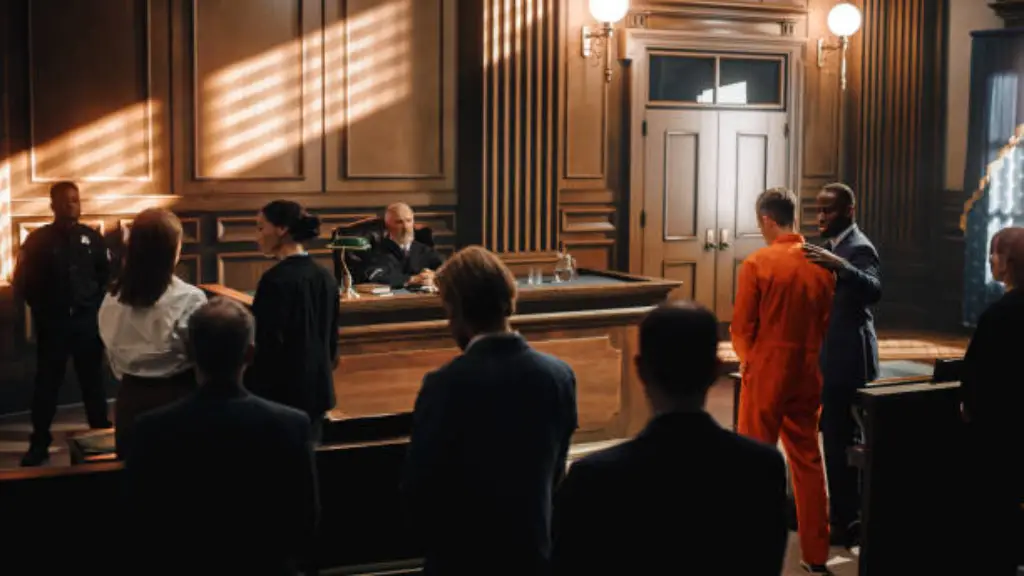
The chambers of a federal judge are designed to intimidate. Mahogany walls rise to fourteen-foot ceilings, swallowing sound until even breathing feels intrusive. Behind the massive oak desk where I sat reviewing sentencing recommendations, the golden seal of the United States District Court caught afternoon light filtering through tall windows that overlooked the gray December skyline of Washington, D.C. I’d been appointed to this position at thirty-four, making me one of the youngest federal judges in the circuit, a fact that still surprised me some mornings when I put on my robes and remembered the girl I used to be—the one who’d been abandoned at sixteen with nothing but a grandfather’s love and a scholarship application.
My phone buzzed against the polished wood surface, vibrating with an insistence that suggested the caller had tried multiple times. I glanced at the screen and felt my pen pause mid-signature, hovering over a racketeering case I’d been overseeing for eight months. The name on the display made my chest tighten in a way I hadn’t experienced in years: Richard Vance. My father, though the term felt grotesque applied to a man who’d contributed half my DNA before disappearing to the French Riviera when I was still learning to drive. Ten years of silence, and now this call on Christmas Eve.
I let it ring twice more before answering, using those seconds to compose myself, to remember who I was now rather than who I’d been when he left. “Judge Vance,” I said, my voice professional and deliberately distant, the tone I used with attorneys who tried to charm their way through procedural violations.
“Evelyn! Darling!” Richard’s voice boomed through the speaker, smooth and artificially warm, as if we’d spoken yesterday rather than a decade ago. “Judge? Oh my, that’s right—I heard through the grapevine you were working in the legal field somewhere. Listen, sweetheart, your mother and I are back in the States! We’ve settled into a beautiful new place in Connecticut. We miss you terribly and thought it was time to reconnect, bury the hatchet, you know. Family is everything, especially at Christmas.”
I swiveled my chair to face the window, watching storm clouds gather over the Potomac. The practiced charm in his voice triggered memories I’d spent years processing in therapy—the casual way he’d announced over breakfast one morning that he and my mother Martha were “pursuing new opportunities abroad,” the way they’d dropped me at my grandfather’s house with two suitcases and promises to “send for me soon” that never materialized. “What do you want, Richard?” I asked, dispensing with pretense.
“Direct as always,” he laughed, but I heard the nervous edge underneath. “We genuinely want to see you. It’s been too long. We know things ended poorly, but we’re older now, wiser. We thought you might need some family support. Legal careers can be tough, and we know those law school loans can be crippling. We’re in a position to help if you’re struggling.” The assumptions in his words were almost amusing. They thought I was struggling, presumably imagining me as an overworked public defender or maybe a legal aid attorney barely making rent. They clearly hadn’t bothered with even a basic internet search that would have revealed my appointment, my cases, the profile piece the Washington Post had run six months ago.
“I’m not struggling,” I said flatly, looking down at my Italian suit that cost more than the car I’d driven in law school. “And I’m busy. Why are you really calling?” There was a pause, a recalibration. When Richard spoke again, his tone shifted, became more calculated. “Henry is here with us,” he said, dropping the name like bait into water. “Your grandfather. He’s not doing well, Evelyn. Getting confused, you know how it is with age. He asks for you sometimes. We thought you’d want to see him, especially for Christmas. Just come for dinner tomorrow. For him.”
My heart, which had remained steady through his entire pitch, suddenly hammered against my ribs. I’d been trying to reach Grandpa Henry for three months. His landline had been disconnected. Letters I’d sent to his address—the small house he’d built with his own hands in rural Connecticut—had been returned marked “Return to Sender, Addressee Unknown.” I’d been terrified he’d passed away and no one had thought to inform me, or worse, that he’d been moved to some facility and forgotten. The idea that my parents had him, that they’d had him this whole time without telling me, sent ice through my veins.
“Is he alright?” I asked, unable to keep the urgency from my voice. Richard sighed dramatically, the sound of a burdened man dealing with inconvenience. “He’s old, Evie. Confused. These things happen. Just come see for yourself. Six o’clock tomorrow. I’ll text you the address.” He hung up before I could respond, leaving me staring at my phone with a growing sense of dread that had nothing to do with legal proceedings and everything to do with the instincts you develop when you’ve been betrayed by the people who should have protected you.
I sat motionless for several minutes, my mind racing through possibilities, none of them good. Richard and Martha didn’t do family gatherings. They did transactions, manipulations, performances designed to benefit themselves. The fact that they’d invoked Henry, the one person whose name could guarantee my presence, meant they wanted something. But what? And more importantly, why hadn’t Henry contacted me himself if he was supposedly with them? My grandfather was many things—stubborn, old-fashioned, proud to a fault—but he wasn’t forgetful. He’d raised me from sixteen to eighteen, had paid for my undergraduate education from his carpenter’s pension, had sat in the front row at my law school graduation when my parents hadn’t bothered to respond to the invitation.
I stood and walked to the wall safe hidden behind a portrait of Lincoln, one of the few personal touches I allowed in chambers. The combination was Henry’s birthday, the date I considered far more important than my own. Inside the safe, I kept several items: important legal documents, backup files on sensitive cases, and two objects I now removed with deliberate care. The first was a small velvet box containing a vintage Omega watch I’d bought three months ago, anticipating a reunion with my grandfather that never came. The second was my federal badge and service weapon. As a judge, I was authorized to carry both, though I rarely felt the need. My authority came from law, not force.
Tonight, however, something in my gut told me I needed to be prepared for more than a awkward family dinner. I clipped the badge to my belt, holstered the weapon, and covered both with my heavy wool trench coat. I wasn’t going to a reunion. I was walking into something that felt increasingly like a crime scene; I just didn’t know what crime had been committed yet.
The address Richard sent led to an estate in an affluent Connecticut suburb, the kind of gated community where houses came with names instead of just numbers. As I drove my modest sedan up the long, snow-dusted driveway two hours later, I immediately registered details that didn’t align with what I knew of my parents’ financial history. The house itself was massive—easily six thousand square feet of New England colonial architecture with professionally decorated exterior lighting. Parked in the circular drive were two vehicles that made my investigative instincts sharpen: a Bentley Continental GT and a Porsche 911, both current year models with temporary tags.
I did rapid calculations as I parked. My parents had always been what they called “socialites,” which was a polite term for perpetually unemployed grifters who lived on credit, charm, and schemes. Six months ago, according to the last information I’d gathered through a private investigator I’d hired to locate Henry, they’d been living in a rented apartment in Monaco, dodging creditors. The vehicles in front of me represented at least three hundred thousand dollars. The house, in this neighborhood, was easily two million. That kind of money didn’t appear from nowhere, and people like Richard and Martha didn’t suddenly develop legitimate income streams.
Something was very wrong.
I approached the front door, my boots crunching on rock salt scattered across the stone pathway. Snow had begun falling more heavily, fat flakes swirling in the security lights flanking the entrance. Before I could knock, the door swung open, and Martha stood there looking exactly as I remembered—artificially preserved through expensive procedures, wearing a silk cocktail dress that probably cost more than most people’s monthly rent, holding a crystal champagne flute like a prop in a lifestyle magazine. Her eyes scanned me from head to toe with the practiced assessment of someone evaluating worth based on appearance. I saw the moment she registered my plain wool coat, my sensible boots, my lack of jewelry beyond a simple watch. Her lips curved into a smile that didn’t reach her eyes.
“Evelyn,” she purred, her voice dripping with condescension wrapped in false warmth. “You actually came. How… quaint. Still shopping at thrift stores, I see? Well, we can’t all prioritize fashion, I suppose. Come in before you let all the heat out.” She stepped aside, gesturing me into a foyer that screamed new money—marble floors, a crystal chandelier that probably cost more than my first car, artwork that looked expensive but felt empty. The house smelled of pine and roasting meat, overwhelmingly warm in that aggressive way people heat homes when they’re not paying attention to utility costs.
“Where’s Grandpa Henry?” I asked, not bothering with pleasantries. Richard appeared from what I assumed was a living room, wearing a burgundy velvet smoking jacket that would have looked ridiculous on anyone who wasn’t actively trying to cosplay as a wealthy dilettante. He spread his arms as if expecting an embrace I had no intention of providing. When I didn’t move, his arms dropped awkwardly, and irritation flickered across his face before he could mask it with false joviality.
“Evelyn! So good to see you! Let’s have a drink first, catch up properly. We have some exciting news about our new life here, and—” I cut him off, my voice taking on the edge I used in court when attorneys tried to waste my time with irrelevant tangents. “I’m not interested in catching up. I’m here to see Henry. Where is he?”
The temperature in the room seemed to drop despite the overwhelming heat. Richard and Martha exchanged a look I recognized from years of watching them communicate in silent shorthand—shared irritation, recalculation of strategy. “He’s… occupied at the moment,” Richard said, his jovial mask slipping to reveal something harder underneath. “Look, Evelyn, let’s dispense with the melodrama and cut to the chase here. We know you’re probably barely scraping by on whatever legal aid salary you’re earning. We’re offering you an opportunity. We’re generous people, despite what you might think.”
“An opportunity,” I repeated, my investigator’s mind already cataloging the setup, the manipulation. “What kind of opportunity?” Martha took a long sip of champagne before responding, her voice taking on that particularly cruel casual tone I remembered from childhood, the way she’d announce devastating things as if they were weather reports. “We’re moving to Florida, to The Golden Palms—a very exclusive retirement community. It’s strictly child-free, and more importantly, dependent-free. Very high standards for residents.”
The pieces were clicking into place with horrible clarity. “Meaning you can’t bring Henry,” I said, and it wasn’t a question. Richard shrugged, the gesture so casual it made my hands clench. “He can’t come with us, Evelyn. He’s become a burden—senile, messy, frankly embarrassing. He ruins the aesthetic we’re cultivating. We sold his house six months ago, got an excellent price for the property, and those proceeds funded this new chapter in our lives. But we can’t take the baggage into our future.”
The words hit me like physical blows. “You sold his house? The house he built himself? The house he promised would stay in the family?” My voice was dangerously quiet, the kind of quiet that made experienced attorneys nervous in my courtroom. “It was in his name, technically,” Martha said, examining her manicured nails with studied disinterest. “We just helped him sign the necessary paperwork. He wanted to help family. Really, we’re just claiming our inheritance a bit early. Very efficient.”
“So,” Richard continued, clearly warming to his pitch now, “since you’re young and unmarried with presumably no social life to speak of, we figured you could take him off our hands. Consider it your inheritance—you get the old man, we get our Florida dream. Fair trade, wouldn’t you say?” The sheer audacity of it, the casual cruelty masked as generosity, made something in my chest go very cold and very hard. I felt the weight of my badge against my hip, felt the familiar controlled fury that came when I faced predators in my courtroom who thought themselves clever.
“Where is he?” I asked again, each word precisely enunciated. “Right now. Where is Henry?” Martha sighed dramatically, as if I was being purposely difficult about something trivial. “Oh for heaven’s sake, don’t look so tragic. He’s perfectly fine. We just didn’t want him wandering around during our party tonight—he tends to spill things and make messes. We put him somewhere quiet where he won’t be a bother.”
“Where?” The single word came out like a judge’s gavel. Richard flinched at my tone, genuine annoyance replacing his fake warmth. “He’s out back. We put him in the garden shed for the evening. It’s perfectly adequate, stop being so dramatic. If you want him so badly, go get him. Just don’t track mud on the Persian rugs, they’re hand-woven and cost a fortune.”
The world tilted on its axis. “The shed,” I whispered, my mind immediately calculating temperatures, exposure times, the vulnerability of a ninety-year-old man. “Richard, it’s twenty-three degrees outside. The windchill is in the teens.” His face flushed with defensive anger. “He has blankets! Stop overreacting! Just go get him if you care so much. We’re done with this conversation.” I didn’t waste another word. I turned and ran toward the back of the house, my heart pounding not with exertion but with a growing horror that I was already too late, that my grandfather—the man who’d raised me, who’d taught me what love actually looked like—had been left to freeze because he was inconvenient to people who’d stolen his life savings.
The back door led to an expansive patio that would have been impressive in daylight. Now, in the dark with snow falling heavily, it looked like a frozen wasteland. Security lights illuminated the first twenty feet of manicured lawn, but beyond that, everything faded into darkness. At the very back of the property, maybe fifty yards away, I could just make out the shape of a small wooden structure—the kind of shed people store lawnmowers and garden tools, not human beings.
“Grandpa!” I screamed into the wind, my voice swallowed by the storm. I sprinted across the frozen ground, my boots slipping on patches of ice, my lungs burning from the cold air. Snow plastered against my face, half-blinding me, but I didn’t slow down. I reached the shed and found the door secured with a simple metal bolt on the outside—the kind of lock you use to keep animals in, to prevent escape. My hands shook with rage and fear as I yanked it back and threw the door open.
The smell hit me first—a stomach-turning combination of mildew, motor oil, and the unmistakable sharp odor of urine and human waste. The interior was somehow colder than outside, the damp wood and concrete floor creating an environment that sucked heat from anything living. “Grandpa?” I choked out, pulling my phone from my pocket and activating the flashlight. The beam cut through the darkness and landed on what I’d initially thought was a pile of dirty rags crumpled in the corner between a rusted lawnmower and stacked paint cans.
The pile moved.
“Grandpa!” I fell to my knees on the filthy floor, my hands reaching for him. Henry Vance, the man who’d been my salvation, my hero, my true parent, was curled into a tight fetal position, shivering so violently his entire body shook. He was wearing thin cotton pajamas—the kind you sleep in during summer—and nothing else. No coat, no socks, no shoes. His feet were mottled purple and white. His lips had a blue tinge that made my medical training from my pre-law days scream warnings. This was advanced hypothermia. This was life-threatening.
“Evie?” His voice was a dry whisper, barely audible over his chattering teeth. “Is that really you, or am I dreaming again?” Tears blurred my vision as I ripped off my heavy wool coat and wrapped it around his skeletal frame. He felt like ice under my hands, his skin translucent and frighteningly cold. “I’m here, Grandpa. I’m real. I’m getting you out.” I tried to lift him, but he clutched my arm with surprising strength, panic in his clouded eyes.
“No, you have to go,” he wheezed, his breath coming in painful rattles. “Richard’s dangerous. He said if I told anyone about the money, about what he did, he’d make sure I never saw you again. He has a gun, Evie. In the bedroom safe. He said he’d use it if I caused problems.” The words broke something inside me, some final thread of restraint. “How long have you been out here?” I asked, though I wasn’t sure I wanted the answer. Henry’s eyes drifted, focusing on something I couldn’t see. “Since morning, I think. Maybe longer. I lost track. I tried to stay warm, but I’m so tired, honey. So tired.”
“Did they feed you?” The question came out harsh, already knowing the answer from the hollow look of his cheeks, the way his pajamas hung on a frame that had always been sturdy. “Not for a few days,” he admitted, his voice small and ashamed. “I messed up some papers Richard wanted me to sign. My hands were shaking too much. He got angry, said I was being difficult, that I didn’t deserve food if I couldn’t be cooperative.” My vision went red at the edges. This wasn’t just neglect. This was systematic abuse, torture of a dependent elder.
“The house,” Henry continued, his words slurring slightly from the cold. “They said they were helping me. Said the house was too much for me to maintain, that they’d found me a nice retirement home. They brought papers, made me sign. But there was no home. They just brought me here, locked me in the spare room at first. Then Martha said I smelled, that I was like broken furniture cluttering up their new life. That’s when they moved me out here.” Broken furniture. The phrase echoed in my head, crystalizing every ounce of rage I’d been controlling.
I checked his pulse with shaking fingers. It was thread and irregular—he was in serious trouble. “I’m going to get you help,” I promised, pulling out my phone. But I didn’t dial 911, not yet. I had another call to make first, to set in motion something I’d been preparing for months without knowing why. I dialed a number I had memorized for emergencies. It rang once before a gruff voice answered. “Marshal Davis, Fugitive Task Force.”
“This is Judge Vance,” I said, my voice steady despite the tears freezing on my cheeks. “I’m at 42 Oakwood Lane, Greenwich, Connecticut. I have a confirmed situation—elder abuse, false imprisonment, immediate threat to life. I need immediate response.” There was a brief pause, then Davis’s voice came back sharp and focused. “We’ve been tracking the financial crimes investigation on Richard and Martha Vance for six months, Your Honor. Wire fraud, identity theft, interstate movement of stolen assets. We were waiting for your authorization to move. Are you giving that authorization now?”
“Execute the warrants,” I said, looking down at Henry’s blue-tinged lips. “Bring everyone. And send paramedics immediately—I have a critical hypothermia victim.” I hung up and gathered Henry closer, trying to transfer my body heat to him. “Grandpa, help is coming. Two minutes. Can you stay with me for two minutes?” His hand found mine, his grip weak but determined. “Evie, be careful,” he whispered. “Richard will hurt you. You’re just a girl.”
I touched the badge on my hip, still concealed beneath my suit jacket. “No, Grandpa,” I said softly, with absolute certainty. “I’m not just a girl anymore. I’m the law. And the law is about to remind some people that cruelty has consequences.”
I left Henry wrapped in my coat with strict instructions not to move, promising I’d be right back. I walked across that frozen lawn toward the house with a calm that felt almost supernatural, the kind of calm that comes when rage transforms into purpose. Through the sliding glass doors, I could see Richard and Martha in the kitchen, laughing over something, refilling champagne glasses. They were celebrating their freedom, bought with an old man’s stolen life savings while he froze in their backyard. I slid the door open and stepped inside. The obscene warmth of the house felt like an insult.
“Did you get the old bag?” Martha called without looking, slicing a lime on a cutting board. “Don’t bring him through the house—put him straight in your car. I just had the carpets cleaned and I don’t want him dripping on them.” The casual cruelty in her voice, the complete lack of basic humanity, made something inside me go absolutely cold. “Turn around,” I said, my voice low but carrying that particular resonance that silenced courtrooms. It was the voice of authority, of judgment, of consequences about to be rendered. Martha turned. Richard looked up from his drink. They saw me standing there, snow melting in my hair, my coat gone, wearing my sharp grey suit. And they saw something in my expression that made Richard’s hand falter, champagne sloshing over the rim of his glass.
“Where’s your coat?” he asked irritably. “Did you leave it with him? God, Evelyn, you’re so soft. Just like he is. That’s why you’ll never—” I cut him off by pulling back my blazer with deliberate slowness. The gold badge on my belt caught the kitchen light, gleaming with the full weight of federal authority. The great seal of the United States District Court was unmistakable. Richard’s glass fell from his hand, exploding against the tile in a spray of crystal shards and champagne.
“What—” he started, but I was already speaking, my voice taking on the formal cadence I used when reading verdicts. “You sold a property located at 15 Fairview Drive on July 4th of this year. You forged the signature of Henry Vance, a dependent adult with diagnosed dementia and diminished legal capacity. You wire-transferred the proceeds, amounting to one point two million dollars, to a shell corporation registered in the Cayman Islands. You then used those proceeds to purchase this property, two luxury vehicles, and to fund an offshore gambling operation that’s been flagged by FinCEN for suspicious activity.”
Richard’s face went from red to white in seconds. “How do you—that’s impossible—you can’t know—” I stepped forward, my hand resting on my badge. “You imprisoned Henry Vance in sub-zero temperatures without adequate clothing, food, water, or heat. That’s False Imprisonment. Elder Abuse in the First Degree. Attempted Manslaughter. And that’s just for tonight. The fraud charges have been building for months.”
Martha laughed, a high, hysterical sound. “Evelyn, stop this ridiculous theater. You’re a struggling legal aide or whatever. What do you know about wire fraud? You’re nobody. You’re just our mistake of a daughter who never amounted to anything.” The words, meant to wound, just made me smile grimly. “I am United States Federal District Court Judge Evelyn Vance,” I said clearly. “And for the last six months, I have been working with the FBI, FinCEN, and US Marshals on a RICO investigation into an identity theft ring operating out of Connecticut. I just didn’t realize until tonight that the primary subjects of that investigation were my own parents.”
Richard lunged toward me, his face contorted with rage. “You lying bitch! I’ll kill—” He never finished the sentence. The front door exploded inward with the sound of a battering ram striking wood. The house was instantly flooded with shouting, with tactical lights, with the overwhelming force of federal agents executing warrants. “US MARSHALS! EVERYONE ON THE GROUND NOW!”
Heavily armed agents in tactical gear swarmed through every entrance. Richard tried to run, probably thinking of the gun he’d mentioned keeping in his safe. A Marshal tackled him before he made it three steps, driving him face-first into the hardwood floor with enough force to make his nose explode in blood. Martha screamed, throwing her champagne glass at an agent who dodged it easily before two others grabbed her arms, spinning her around and cuffing her hands behind her back with practiced efficiency.
“You have the right to remain silent,” an agent intoned mechanically while Martha shrieked incoherently. I stood in the center of the chaos, perfectly still, the eye of the hurricane I’d called down. Richard managed to lift his head from the floor, blood streaming from his broken nose, and locked eyes with me. There was hatred there, pure and undiluted. “You set us up,” he spat, his voice distorted by pain and rage. “You planned this whole thing!”
“I didn’t plan for you to put a ninety-year-old man in a shed to freeze to death,” I said, looking down at him with no pity, no regret. “That was entirely your choice. And now you’re going to live with the consequences of that choice for the next fifteen to twenty years.” A paramedic team rushed past me toward the back door, and I intercepted them. “Garden shed, fifty yards back. Ninety-year-old male, advanced hypothermia, possible malnutrition, definitely dehydrated. He’s wrapped in my coat but needs immediate warming and fluids.”
As the agents dragged Richard and Martha toward separate vehicles, Martha tried once more, straining against her cuffs. “Evelyn! Please! It was a misunderstanding! We just wanted to enjoy our retirement! We gave you life!” I walked up to her, close enough to smell the expensive perfume that couldn’t quite mask desperation. “You gave me biology,” I said quietly. “Henry gave me life. He taught me to read. He paid for my education when you refused. He taught me that right and wrong aren’t negotiable, that power comes with responsibility, and that cruelty—even casual cruelty—has consequences.”
“We’re your family!” she wailed, tears ruining her makeup. I let her see my face, let her see absolute zero sympathy. “A misunderstanding is a parking ticket, Martha. Locking an elderly dependent in a shed during winter so you can buy a Porsche is depraved indifference to human life. I’m recusing myself from your case, obviously. But the prosecutor is a good friend of mine, and I’ll be making it very clear that I believe maximum sentencing is appropriate. You wanted a retirement home? The Bureau of Prisons will provide one. It has bars on the windows and the thermostat is controlled by the warden.” I nodded to the agents. “Get them out of my sight.”
They dragged her away, her screams fading into the wail of sirens painting the snow red and blue. I watched them go and felt nothing but profound relief, like a tumor being excised. I walked back to the ambulance where medics were working on Henry. They had him on a stretcher, wrapped in thermal blankets, with two IVs running warm saline. “His core temp is up to ninety-four,” the lead paramedic told me. “That’s still critically low, but he’s trending right. Another hour in that shed and this would be a recovery mission instead of a rescue.”
I climbed into the back of the ambulance as they prepared to transport. Henry’s eyes opened, unfocused but aware. “Evie?” he whispered. “Did I dream all that?” I took his hand, so much warmer now, and kissed his papery forehead. “They’re gone, Grandpa. They’re never coming back. And you’re coming home with me. I have a house in Georgetown with a fireplace and a guest room that’s been waiting for you.”
One year later, I sat in that Georgetown townhouse on Christmas Eve, watching Henry doze in the leather armchair by a crackling fire. He’d gained back the weight, his skin had that healthy flush of someone well-fed and loved, and he wore the cashmere cardigan I’d bought him that looked nothing like the thin pajamas he’d been left to freeze in. We’d decorated our tree together with ornaments from my childhood—crooked stars and pasta angels Richard and Martha would have considered trash. The house smelled of cinnamon and pine, and outside, snow fell in gentle swirls that looked peaceful rather than threatening.
“Got a letter today,” Henry said, breaking the comfortable silence. He held up an envelope with a prison stamp. “From Richard. Wants me to put money on his commissary account. Says the food is terrible where he is.” I looked up from the legal brief I was reviewing. “What did you do with it?” Henry grinned, a spark of his old mischief lighting his eyes. “Used it to start this fire. Seemed fitting.”
I laughed, genuinely and fully. My parents had pled guilty to avoid a trial that would have exposed every detail of their crimes. They were each serving fifteen years in separate federal facilities, had lost everything they’d stolen, and would emerge as elderly as the grandfather they’d tried to destroy. The seized assets had been returned to Henry with substantial damages. He was wealthy again, but money had never been what mattered to him.
“I worry sometimes,” Henry said softly, watching the flames dance. “That I didn’t give you enough when I raised you. I was just an old carpenter. I couldn’t give you fancy things.” I moved to sit at his feet, resting my head on his knee the way I had as a child. “Grandpa, you fed me when they forgot I existed. You sat through every school play when they were in France. You told me I was smart when they said I was plain. You didn’t just give me the world—you gave me the foundation to build my own world, on my terms, with honor.”
His rough carpenter’s hand, still strong despite his age, stroked my hair. “I’m proud of you,” he whispered. “Not because you’re a judge. Because you’re good.” I reached under the tree and pulled out a small box. “Merry Christmas, Grandpa.” He opened it with trembling fingers. The vintage Omega watch gleamed against its velvet lining, and he turned it over to read the engraving: “To the only father who mattered. Love, The Law.”
He chuckled, wiping his eyes. “Merry Christmas, Judge.” I looked at the fire, at the snow falling outside, at the man who’d taught me everything that actually mattered, and felt completely whole. The discarded daughter had become the protector. The abandoned child had found her purpose. And the verdict—the final, unappealable verdict of our lives—was peace, justice, and love that never failed. Some families are born. Some are built. Ours was both—built from ruins into something stronger than blood, forged in adversity into something that would never break again.

Ethan Blake is a skilled Creative Content Specialist with a talent for crafting engaging and thought-provoking narratives. With a strong background in storytelling and digital content creation, Ethan brings a unique perspective to his role at TheArchivists, where he curates and produces captivating content for a global audience.
Ethan holds a degree in Communications from Zurich University, where he developed his expertise in storytelling, media strategy, and audience engagement. Known for his ability to blend creativity with analytical precision, he excels at creating content that not only entertains but also connects deeply with readers.
At TheArchivists, Ethan specializes in uncovering compelling stories that reflect a wide range of human experiences. His work is celebrated for its authenticity, creativity, and ability to spark meaningful conversations, earning him recognition among peers and readers alike.
Passionate about the art of storytelling, Ethan enjoys exploring themes of culture, history, and personal growth, aiming to inspire and inform with every piece he creates. Dedicated to making a lasting impact, Ethan continues to push boundaries in the ever-evolving world of digital content.