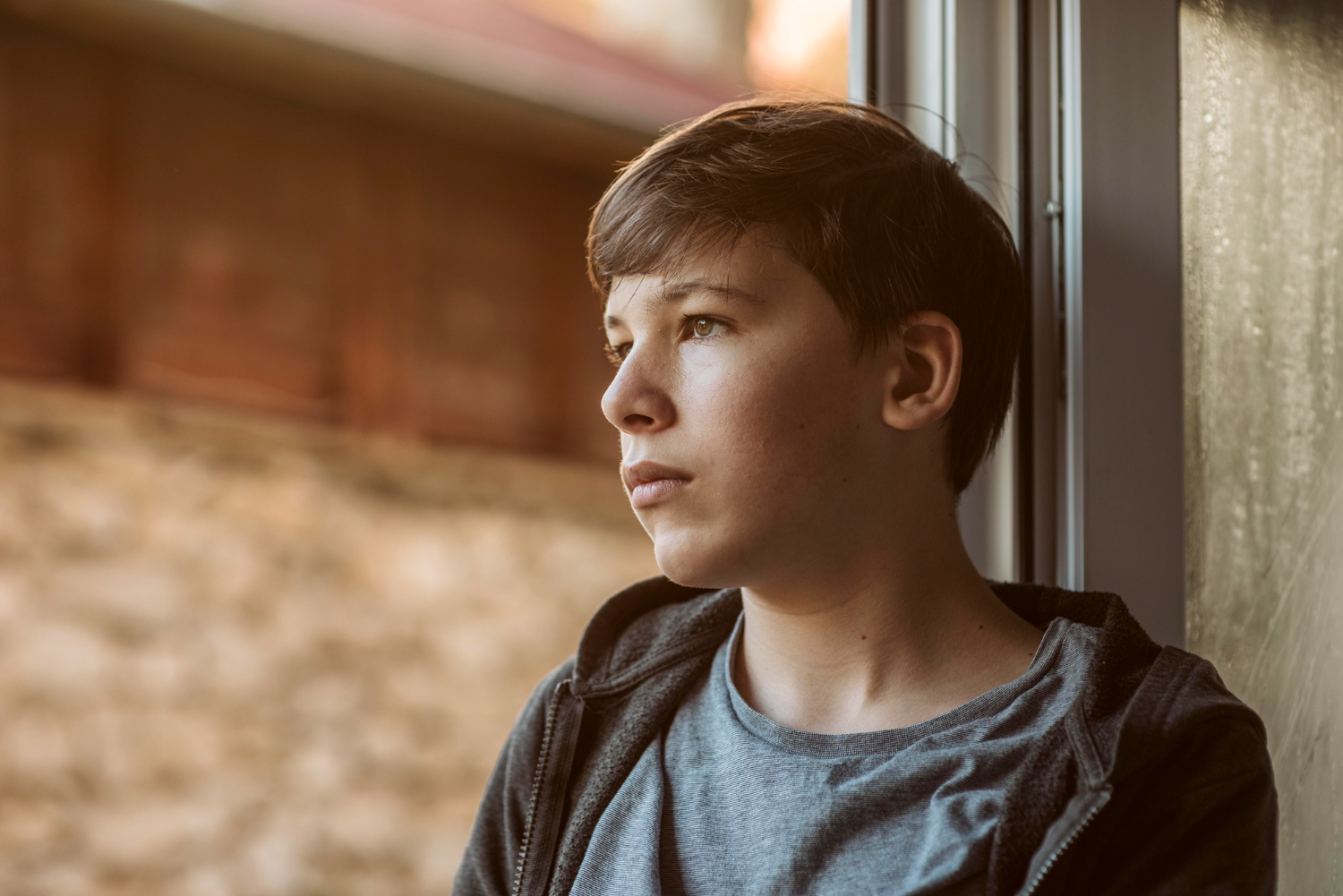
My son was standing there holding a basket of homemade rolls when my sister looked over her perfectly set Thanksgiving table and said, “Your son can’t sit at the adult table.”
It was Thanksgiving at Kelsey’s house, the kind of gathering she’d been posting about on Facebook for weeks—filtered photos of her farmhouse table with its white linen runner, artfully arranged miniature pumpkins, and hand-lettered place cards in elaborate cursive. Eight chairs surrounded that table, each one designated for someone she deemed worthy of adult conversation. My name was there. My boyfriend Daniel’s name. My parents. Kelsey’s husband Greg. And right there next to Grandpa, in perfect calligraphy, was her daughter Ava’s name.
Ava is twelve years old.
My son Max is thirteen.
“He’s thirteen,” I said, trying to keep my voice steady and reasonable. “He’s taller than me now.”
Kelsey didn’t even look at me. She flicked her eyes dismissively toward the corner of the den where a folding card table had been set up with plastic plates and paper napkins that said “gobble gobble” in cheerful letters. “He’s thirteen,” she repeated, as if I’d misheard her the first time. “That’s still a kid. The adult table is tight this year. You know we do this every year—kids at the kids’ table, adults at ours.”
One of the cousins—also thirteen, but from Greg’s side of the family—smirked and slid confidently into the chair between my dad and Ava. A chair had been removed from somewhere to make room for everyone Kelsey deemed adult enough. There was literally no space left at her precious table.
My dad patted the empty air next to him where a chair wasn’t and shrugged with that familiar gesture that meant, “What can you do? Don’t make waves.”
Max stood there clutching the basket of rolls he’d spent two hours making that morning. He’d carefully brushed them with melted butter and sprinkled sea salt on top, proud of how they’d turned out. He’d worn a collared shirt because he knew my mom liked taking nice family photos at holidays. Now he hugged that basket to his chest like armor, his face starting to flush that blotchy red that creeps up his neck when he’s trying not to cry.
The kids’ table in the den was a cheap folding card table with plastic plates that didn’t match and a stack of paper napkins. Three toddlers were already there, smearing cranberry sauce across their faces with sticky fingers. A television was on low in the background, playing some animated movie nobody was watching. You could barely see the table legs because of the overflowing toy bin shoved underneath.
Kelsey finally turned to me with that patient expression she uses when she thinks she’s being perfectly reasonable. “It’s not a big deal, Aaron. He can sit with the kids. He likes video games, right? They can talk about Fortnite or whatever.”
Ava, twelve years old, took a delicate sip of sparkling cider from an actual glass flute and pretended not to notice the tension, though I saw the tiny smirk playing at the corner of her mouth.
I felt my hands start to shake. It started in my fingertips and traveled up my wrists like electricity. My throat went tight, but I forced myself to smile so my voice wouldn’t shake too. I glanced at Max, really looked at him. He had gone completely red in that way he does when he’s humiliated, the flush spreading down his neck. He nodded once, trying to be brave about it, and then his eyes slid away to study the carpet like it was the most fascinating thing in the world.
I heard Daniel take a breath behind me, preparing to say something, but I knew from experience that wouldn’t help. We’d had variations of this fight before, always dressed up in different circumstances.
“No problem,” I heard myself say in a voice that sounded automated, disconnected from my body. It came out flat and professional, like I was asking for a receipt at a gas station.
I walked calmly to the counter and set Max’s beautiful rolls next to the turkey nobody had thanked him for. Then I grabbed our coats from the hallway hook. I helped Max slide his arms into his jacket, noting how his hands were trembling slightly. The front door had one of those decorative wreaths with burlap ribbon that shed dust when you moved it. We walked past the neat line of shoes in the entryway without bothering to take ours off first.
Kelsey got as far as “Aaron—” in that warning tone she uses, but I closed the door with a firm click of the storm latch before she could finish.
We stood in the cold late afternoon light, the smell of damp leaves and someone else’s chimney smoke hanging in the November air. In the car, Max held the basket of rolls carefully in his lap, staring at the little salt crystals on top like they were stars he couldn’t quite reach.
I didn’t cry. Not then. But I thought about those place cards inside, about how my son’s name had been scrawled on a paper turkey cutout in blocky children’s handwriting and pushed to the side of a television.
I’m Aaron. I’m thirty-eight years old and I live in Tacoma, Washington. I work as an operations coordinator at a hospital, which is a professional way of saying I live in spreadsheets and schedules and make things run smoothly without ever raising my voice. I’m a single mom to Max. His father and I divorced when Max was five, and we’ve managed to stay civil for our son’s sake. Daniel and I have been together for a year and a half, and he’s lasted this long because he’s genuinely kind to Max, which is more than I can say for most of my family.
I grew up in this area. My parents still live in my childhood house fifteen minutes away. My sister Kelsey is thirty-six and lives in a beautiful house she can’t quite afford with her husband Greg and their two kids. I moved back from Portland three years ago when my dad had his heart scare, telling myself it would be good for Max to have cousins and grandparents nearby.
I’m the oldest child. I’m the one with the dependable job and the detailed planner. Somehow in our family dynamic, “dependable” morphed into “default person who fixes everything.” I was the one who researched contractors and figured out the new windows for my parents’ house when the old ones started fogging up. I put the forty-eight-hundred-dollar deposit on my credit card because the contractor offered a discount for immediate payment.
I started Venmoing my mom two hundred dollars every Friday for groceries when the grandkids visited, which added up to over ten thousand dollars in a year before I accidentally did the math. I paid Kelsey’s overdue electric bill in July—three hundred twelve dollars and ninety cents—because she called me crying and I couldn’t be on hold with the utility company during my work hours. When their refrigerator died, I replaced it because “we can’t live without one,” ordering a twelve-hundred-dollar model from Lowe’s that was delivered two days later while Kelsey smiled like I’d brought her a bouquet of flowers.
I bought season passes to the zoo for both families last spring because there was a sale—four passes for their family, two for us, four hundred fifty-six dollars total. The first time they used them, they didn’t invite Max because it was a weekday and he had school. The photos went up on Facebook. Max saw them, liked the one with the otters, and didn’t speak to me for an hour.
I’m always the one who makes things happen, who solves problems, who quietly pays for things so everyone else can enjoy life without stress.
Disney World was going to be my masterpiece, my grand gesture of love.
When my dad was recovering from his heart procedure, he said he wanted to do something big while we were all still together and healthy. I started planning immediately, moving four hundred dollars every month into a dedicated travel savings account. I told Kelsey in June, “I’m going to take all of us to Disney World. I’ll cover hotel and tickets. It’ll be the only time we can do something this big.”
I meant it as a gift, a real one that would create memories for years. I actually cried in the shower when I did the math and realized I could make it work if I picked up two extra shifts a month for six months.
I booked everything in September when the deals were decent. Two rooms at Disney’s Caribbean Beach Resort from March tenth through the seventeenth. Park hopper passes for seven days for four people in their room. Genie Plus add-ons because I didn’t want little kids standing in long lines. The total for their package alone was just under seventy-eight hundred dollars. I booked flights for four from Seattle to Orlando, non-stop, for thirty-two hundred dollars because I wanted the kids to experience the magic immediately, not arrive exhausted and cranky.
When you added in airport parking and ground transportation—because Magical Express had been discontinued—it came to twelve thousand dollars. I put the twelve-hundred-dollar package deposit on my credit card the day I got my raise at work.
I created an email folder labeled “Kelsey WDW” with all the confirmation letters carefully organized. I added their names to my Disney account. I set an alarm for six in the morning on the day dining reservations opened and snagged Chef Mickey’s at seven-twenty on our second night, Crystal Palace for breakfast, and even a build-your-own-droid slot at Galaxy’s Edge because Kelsey’s son loved Star Wars.
Kelsey cried actual tears when I told her about the lightsaber reservations. She told everyone at her church that her sister was a saint, that I was the most generous person she knew.
Kelsey is remarkably good at crying when it keeps her at the center of attention and sympathy.
Here’s what I didn’t tell people: when I wouldn’t co-sign for her new SUV in May because my mortgage lender had explicitly warned me that taking on new debt would hurt my refinancing application, she didn’t speak to me for two full weeks. Then she posted a passive-aggressive meme about sisters who forget where they came from.
At Max’s birthday party in August, my mom forgot to write his name on the cake. It just said “Happy Birthday Grandkids” in blue frosting because my niece and nephew have birthdays near his, so mom ordered one cake for all of them. Max’s gift from Kelsey was a t-shirt from some bar crawl with “Keep Tacoma Weird” printed on it, tags still attached. He’s thirteen years old. He said thank you like the polite kid I raised him to be. Later I found it shoved under the couch.
I told myself none of it mattered. I told myself I was being too sensitive, reading too much into things. I told myself they loved Max in their own way.
And then came Thanksgiving and that moment at the table.
Looking back, I wonder if the car incident set everything in motion. After I refused to co-sign, the comments about “real family” and “blood” started appearing in conversations, never quite directed at Max but close enough that he heard them.
“Our kids just get each other,” Kelsey said at Halloween when Max didn’t want to wear the group costume she’d chosen for all the kids. “They grew up together, you know.”
I let it slide because it seemed easier than being the person who makes everything about money. I realize now that everything was about money to them—I was just the one expected to provide it silently while they decided who deserved to benefit.
After we left Kelsey’s house that Thanksgiving, Max and I bought turkey sandwiches from the grocery store deli. He carefully picked out all the tomatoes and lined them up on his plate like a little fence, the way he’s done since he was small. “It’s okay, Mom,” he said in that voice that tried to be brave. “I actually like the kids’ table better. The TV shows are better in there.”
I made myself nod and smile. We put his rolls in the oven at home and ate them hot with too much butter, leaning against the kitchen counter because sitting at our empty dining table felt too sad. Daniel came over later with a pumpkin pie and didn’t say “I told you so,” which is one of many reasons I love him.
That night, lying in bed unable to sleep, I stared at my phone screen showing the Disney email that said “Get ready to make magical memories!” with cheerful clip-art confetti. I thought about Max standing in Kelsey’s entryway holding his basket. I thought about Ava sipping sparkling cider at the adult table like a miniature queen. I thought about that paper turkey with my son’s name scrawled on it in childish block letters, relegated to the kids’ corner.
I thought about zoo passes they used without him, the weekly grocery money, the SUV I didn’t co-sign, the lightsaber reservation I’d set my alarm for dawn to secure. I replayed my sister’s dismissive tone: “He’s thirteen. That’s still a kid.”
And yet they treated me—an adult, their sister, their daughter—like nothing more than a wallet with legs.
The next morning was quiet. Max was at his dad’s place for a few hours. Daniel had gone for his morning run. I made coffee and sat at my kitchen table with my laptop, the one I used to pay all our bills and manage our life. Weak morning light from the window over the sink made a pale circle on the wood.
I opened my carefully organized Disney folder and logged into my account. My Disney Experience dashboard appeared with its cheerful icons and bright colors. Two resort reservations sat there: our room and theirs. Two sets of names. Two confirmation numbers. Two balances due.
I clicked on their package first. It was listed under Kelsey’s last name but tied to my account, my credit card, my planning. The remaining balance due in January was sixty-six hundred dollars and change. I could see all the park tickets linked to their names, all the dining reservations I’d fought for tagged as a party of eight.
I stared at the “modify or cancel” button for a long time, long enough for my coffee to go cold in the mug. I whispered out loud in my empty kitchen, testing the words: “I won’t fund a family my kid isn’t part of.”
Then I clicked.
The system took me through several screens, each one asking for confirmation. “Are you sure?” “You may lose dining reservations.” It listed all the reservations like little soldiers lined up: Chef Mickey’s, Crystal Palace, Oga’s Cantina. It showed the flight confirmation number for their tickets because I’d saved it in the notes section—AS4821 Seattle to Orlando, AS4822 Orlando to Seattle.
I opened the airline app separately. Four tickets under their last name, all paid for with my Visa card. A large red “cancel” button sat there waiting. The airline credits would return to my account in their names, which I could keep or reassign later.
I clicked cancel on the flights first. Then I went back to Disney and hit the final confirmation button.
The screen flashed white, processed for a moment, and then displayed: “Reservation C7G31RR cancelled.”
The twelve-hundred-dollar deposit would be refunded to my credit card in seven to ten business days. The park tickets were unassigned and then disappeared. The dining reservations automatically adjusted to a party of four. A notification bar at the top of the screen said, “We’re sorry to see you cancel.”
I sat back in my chair and released a breath I hadn’t realized I’d been holding. I took a screenshot of the cancellation confirmation and emailed it to myself with the subject line: “Done.”
Then I clicked over to our family’s reservation. I kept it. I went through all the dining reservations and removed Kelsey’s family from each one. I kept Chef Mickey’s but changed it to a different day at six-ten in the evening for a party of three. I switched the droid-building reservation to a lightsaber-making slot for Max because he’d been drawing blue lightsabers in the margins of his homework for months.
I paid the adjusted balance for our smaller, simpler trip. It felt like putting on a jacket that actually fit, that was made specifically for my body instead of trying to squeeze into something designed for someone else.
I didn’t text anyone. I didn’t call or make an announcement. I simply went to the sink and ran hot water over my coffee mug, washing it until it squeaked clean.
At ten-thirteen that morning, my phone rang. Kelsey’s name appeared on the screen. I let it go to voicemail. A minute later, a text bubble popped up: “Hey, can you send me the Disney confirmation numbers? Greg’s mom wants to look at the resort pictures, and I can’t find the email you sent.”
I set my phone face-down on the table. The wood surface was still warm where my coffee mug had sat. I watched Daniel come back from his run, hanging his keys on the hook by the door. He saw my face and didn’t ask questions, just put a hand on my shoulder and stood there quietly.
The phone rang again. My mom this time. Then Kelsey again, more insistent. I answered on the third ring.
“Hi.”
“Hey.” Kelsey used her bright, cheerful voice, the one she employs for multi-level marketing parties. “Okay, so I was looking for those confirmation numbers because Greg’s mom is so excited about the trip and wants to see the resort—”
“There aren’t any confirmation numbers for you, Kelsey.”
Silence stretched between us like a frozen road in winter.
“What?”
“I cancelled your Disney package.”
“You what?” Her voice shot up an octave.
“I cancelled the Disney package I booked and paid for for your family. The flights too.”
“You can’t do that!” She laughed, but it snagged in her throat like catching on barbed wire.
“I can,” I said calmly, “because I paid for it. And Max had to sit at the kids’ table.”
“Seriously? You’re punishing my children because your son is overly sensitive about a chair?”
“I’m protecting mine,” I said, keeping my voice level and firm. “I won’t fund a family my kid isn’t included in.”
“You are unbelievable.” Her voice turned sharp. “It was just a seat, Aaron. He’s a kid. That’s how we do things.”
“So is your daughter,” I said before I could stop myself, “but Ava had a place card at the adult table. In calligraphy.”
Kelsey went quiet again, but it was a different kind of silence—the kind where someone is scrambling to find their next attack.
“You said this was a gift,” she finally managed.
“Gifts don’t come with treating my son like an afterthought,” I replied.
“You’re being so dramatic.” That word—the one she always uses when I stop being useful to her.
“I’m not arguing with you about this,” I said. “I cancelled the trip for your family. We’re still going. You are not. That’s final.”
She was still talking, her voice rising into something shrill and desperate, when I pressed the red button to end the call.
Four text messages came through in rapid succession, the blue bubbles stacking up on my screen. Then a screenshot appeared from the family group chat she’d created with my mom and dad—a chat that included my name. Her message to them read: “She cancelled everything over a CHAIR. Can you believe this?”
I turned my phone completely off. The house went quiet in that specific way it does when the heater clicks off and you suddenly realize how much background noise there was.
The rest of that day brought calls I didn’t answer—thirty-two in total according to the log I checked later. Voicemails piled up. My mom used her sad, disappointed voice first, then switched to her angry one: “We have always arranged the tables this way, Aaron. Why are you punishing everyone now? Why do you have to ruin nice things?”
My dad employed his practical, let’s-be-reasonable voice: “Maybe we can add a folding chair next time. Just un-cancel it before you lose money or it becomes too complicated.”
Kelsey’s messages ramped up into full dramatic crisis mode: “You are ruining my children’s dreams. You promised them Disney. It’s non-refundable, Aaron. We already told everyone. Greg took time off work. How am I supposed to explain this to Ava? I hope you’re happy with yourself.”
I put my phone in a drawer and went to help Max clean his fish tank. He’d named the fish Bluey even though she’s orange. We scooped out plastic plants and he made exaggerated faces at the smell, and we laughed when she splashed water on both of us, creating a small puddle on the floor.
When I turned my phone back on that evening, longer messages waited. Kelsey had recorded a voice memo of herself crying: “I get it now. You’re with Daniel and he’s controlling you. He probably told you to do this, didn’t he? This isn’t like you, Aaron.”
Daniel snorted when I played that one for him and handed me a bowl of popcorn. “I can’t even control what we watch on Netflix,” he said, squeezing my knee affectionately.
My mom texted at eight-thirty: “We are coming over tomorrow to talk about this.”
I texted back: “Not a good time.”
She wrote: “We’re family.”
I responded: “Then act like it.”
They came anyway. At ten o’clock Saturday morning, the doorbell rang. My front door has a small window with stained glass in a leaf pattern. I could see my mom’s carefully styled hair through it. I left the chain lock on and opened the door only as far as the chain allowed.
“Aaron,” my mom said from one foot away, using her library whisper voice. “This is ridiculous. We need to talk.”
“My boundary is not ridiculous,” I said firmly. “I won’t fund a family my kid isn’t part of.”
“Over a seat?” She huffed with exasperation.
“Over a pattern,” I corrected. “This isn’t about one chair. This is about how Max is consistently treated.”
“We can’t change how many chairs fit in Kelsey’s dining room. It’s a small space.”
“You can change who you make space for,” I said.
She started to say more, then noticed Max behind me in the hallway. Her expression immediately shifted to her grandmother smile. “Hi, sweetie. You know Auntie Kelsey didn’t mean anything by the seating. You had so much fun with the little kids at the table last year, didn’t you?”
Max stepped back slightly. He’s unfailingly polite, even when people don’t deserve it. “Hi, Nana,” he said quietly, then excused himself to wash his hands because he hates having sticky fingers.
My dad cleared his throat. “Can we at least come in and discuss this like adults?”
“No,” I said. “I don’t want to have this argument in front of Max. I wasn’t unkind to anyone. I’m simply telling you what I’ve decided.”
“You already are arguing in front of him by not letting us in,” my mom countered.
“I cancelled a trip I paid for,” I said steadily. “That’s the only action I’ve taken. I’m done paying for things that exclude my son.”
My mom’s eyes shifted to Daniel, who had appeared in the background. She looked at him like this was somehow his fault, like he’d corrupted her reasonable, compliant daughter.
She sighed dramatically, a sound meant to convey how unreasonable I was being. “Fine. Enjoy your little trip, then.”
“We will,” I said simply.
“You’re heartless,” she said, shaking her head.
I closed the door gently, without slamming it. The chain slid back into place with a soft metallic sound that felt like finality.
After they left, my cousin Leah texted: “Heard there was drama. Heads up—Kelsey is blasting you on Facebook.”
She sent a screenshot. My name wasn’t mentioned directly, but the message was clear: “Some people would rather punish innocent children than admit they overreacted. Praying for those who put pride before family.”
Ten comments already: “Wow,” “Praying for you,” “Some people don’t understand what family means.”
Leah sent another text immediately: “You did the right thing. Bring Max over tonight. My boys want to show him the Lego city they built.”
We went. Max spent two blissful hours carefully placing tiny plastic traffic cones and making sure the crosswalk lines were perfectly straight. Leah hugged me tightly, the way we used to hug as teenagers. “She’s always treated you like this,” Leah said quietly. “But now it involves your kid. That’s where it stops.”
For a full week, the calls slowed and eventually stopped. I saw my mom at the pharmacy one afternoon. She was cool, polite, distant. “Are you really not coming to Christmas?” she asked.
“We’ll see,” I said.
“Your father is heartbroken,” she said, using the emotional leverage she’d always employed.
“So is my son sometimes,” I replied.
She pressed her lips into a thin line and walked toward the greeting card aisle without another word.
At work, I received an email notification from the bank confirming the Disney refund had been processed. I moved it into my travel savings account with a single click. Then I booked a late lunch reservation at Skipper Canteen for the three of us because Max loved puns and terrible jokes.
I could still hear Kelsey’s voice in my head: “You’re cruel. You’re heartless. It wasn’t a big deal.”
But her voice got quieter every time I looked at the confirmation numbers with only our three names listed.
One night while we were watching a movie, Max asked quietly, “Are we in trouble?”
I paused the TV and sat next to him on the couch, in the spot where the cushions have permanently molded to our bodies. “No, buddy,” I said. “We’re not in trouble. I just finally did the adult thing and set a boundary.”
He leaned his head against my shoulder. “Am I old enough for the adult table?” It wasn’t asked like a joke.
“Yes,” I said firmly. “You always were.”
We hosted our own Thanksgiving the following Sunday. I bought a small turkey breast because I didn’t want leftovers haunting our refrigerator for days. Daniel made mashed potatoes with way too much garlic, exactly the way we like them. Max made another batch of rolls, this time experimenting with rosemary from our little herb garden.
We set the table with the good plates I normally kept in the high cabinet, reserved for occasions that never quite seemed special enough. I put three chairs close together on one side because I wanted it to feel full and intimate. Then I set two empty chairs at the end without plates.
I didn’t say anything about those empty chairs. I just positioned them there and draped extra napkins over one, like someone might reach for them at any moment.
Max made new place cards out of printer paper, writing in his neat block letters: “Mom,” “Max,” “Daniel.” He drew a small, careful turkey next to each name. On two additional place cards, he wrote “Nana” and “Pop-Pop” without looking at me for approval. He set them at the empty chairs and went back to the kitchen.
I swallowed hard around the lump in my throat and let them stay there.
We went around the table and said what we were grateful for. Daniel said, “This food, this roof, this quiet peace.” I said, “Health insurance that covers dental.” Max said, “That our fish didn’t die this year.”
We clinked our water glasses together like champagne flutes and laughed.
After dinner, Max got out his sketchbook and drew a detailed picture of a castle with fireworks exploding overhead and a small figure holding a glowing blue lightsaber. He handed it to me carefully, like it was fragile. “This is us,” he said. “At Disney.”
I put it on the refrigerator with a magnet shaped like a pineapple, and I stood there looking at it for a long time.
Christmas we spent at home. Kelsey extended an invitation the way you invite someone you’re hoping will decline—polite but hollow. I said no. Leah and her boys came over in the afternoon with a complicated board game and a bag of oranges that nobody asked for but everyone enjoyed. We ate chocolate until our teeth felt squeaky. Max laughed with Leah’s boys until he had to wipe his eyes. He sat at our dining table for pizza that evening, and nobody corrected him or suggested he belonged somewhere else.
In March, we went to Florida.
The plane touched down at Orlando International just after two in the afternoon. Max pressed his face against the window during descent, watching palm trees and blue-roofed buildings emerge from the clouds. He’d been bouncing his leg with nervous excitement the entire flight.
We took the Magical Express replacement shuttle to Caribbean Beach Resort, and Max’s eyes went wide when we drove under the archway into the colorful, tropical complex. Our room had a view of the lake, and he immediately ran to the window to watch a boat glide past.
“Mom,” he said, his voice full of wonder. “We’re actually here.”
That first evening, we took the Skyliner to Epcot just to walk around World Showcase, not even using park tickets yet. We ate crepes in France and Max tried to pronounce “bonjour” to the cashier, who smiled at his attempt. We watched the sun set over the lagoon, painting everything gold and pink.
The next morning, we arrived at Magic Kingdom before opening. Max wore his new Mickey ears—the classic ones, nothing fancy—and carried a backpack with our sunscreen and water bottles. When the gates opened and we walked down Main Street USA for the first time, he didn’t say anything. He just stopped in the middle of the street and stared at Cinderella Castle, his mouth slightly open.
“It’s bigger than I thought,” he finally whispered.
We rode Space Mountain three times because there was no one to complain about doing the same ride repeatedly. We ate Dole Whip and let it drip down our hands. We watched the parade from the curb, and Max waved enthusiastically at every character, not caring if anyone thought he was too old for that.
At Chef Mickey’s that evening, Max got his picture with Mickey Mouse, who high-fived him and posed for multiple photos until we got one where Max wasn’t blinking. We ate until we were uncomfortably full, and nobody rushed us or complained about the cost.
The lightsaber building experience at Galaxy’s Edge was scheduled for our fourth day. I’d kept it as a surprise, only telling Max that morning. His face went through several emotions—disbelief, excitement, pure joy—before settling on this enormous grin that made my chest tight.
In the workshop, he chose every piece carefully: a blue kyber crystal, a black hilt with silver accents, a specific emitter design. The cast member treated him with complete seriousness, explaining the significance of each choice. When Max ignited his finished lightsaber for the first time and that blue glow lit up his face, I had to blink back tears.
“Mom,” he said, turning to me with the lightsaber humming. “This is the best thing ever.”
Daniel put his arm around my shoulders and squeezed.
That night, walking back to our resort under Florida stars, Max held his lightsaber carefully in both hands. “Thank you for bringing us here,” he said quietly. “Just us.”
“You’re welcome, buddy.”
“I know it costs a lot,” he added. “And I know we could have brought Ava and everyone. But I like it being just us.”
I stopped walking and crouched down to his eye level, even though he was almost as tall as me now. “Max, you are worth every single penny of this trip. You are worth the planning and the saving and the early mornings to get reservations. You deserve to feel special and included and celebrated. Always.”
His eyes got shiny. “I know Aunt Kelsey is mad at you.”
“Aunt Kelsey will get over it or she won’t,” I said. “But that’s not your responsibility or your fault.”
“Is it because of the table thing?”
“It’s because of a lot of things that happened over a long time,” I said carefully. “But mostly it’s because I finally learned to protect what matters most. And you matter most.”
He hugged me right there on the pathway, his lightsaber still clutched in one hand, humming softly between us.
On our last morning, we had breakfast at our resort and watched boats cross the lake. Max was quieter than usual, processing everything, trying to hold onto the magic before we had to leave it behind.
“Can we come back someday?” he asked.
“Absolutely,” I said. “When you’re older, we’ll come back and do all the things we didn’t have time for this trip.”
“Just us three again?”
“Just us three,” I confirmed.
Daniel raised his coffee cup. “To future adventures with the people who actually matter.”
We clinked our cups together—coffee, orange juice, hot chocolate—and watched the sun climb higher over the lake.
The flight home was smooth. Max fell asleep against the window, his new lightsaber carefully packed in the overhead bin. I looked over at Daniel, who was reading something on his phone, and felt something I hadn’t felt in years: peace. Not the anxious peace of avoiding conflict, but real, solid peace that came from knowing I’d made the right choice.
When we got home, there was a card in the mailbox from Leah: “Welcome back, adventurers! Can’t wait to hear everything.”
My parents’ driveway was empty when we drove past—they were probably at Kelsey’s for Sunday dinner like always. My phone had a few text messages from my mom, but nothing urgent. Nothing I needed to respond to immediately.
We unloaded our suitcases and Max immediately put his lightsaber on the shelf in his room, positioning it carefully so he could see it from his bed. He put his Mickey ears on the hook behind his door and arranged his collection of pressed pennies on his desk.
That night, after Max was asleep, Daniel and I sat on the back porch with tea. It was chilly, but we wrapped ourselves in a blanket and watched the neighbor’s cat prowl through our yard.
“Any regrets?” Daniel asked quietly.
I thought about it honestly. I thought about the money—twelve thousand dollars that could have gone to other things. I thought about the family relationships that were strained or broken. I thought about future holidays that might be awkward or painful.
Then I thought about Max’s face when he built his lightsaber. I thought about eating crepes in Epcot with no one rushing us. I thought about riding Space Mountain three times in a row because we wanted to. I thought about my son saying, “I like it being just us.”
“No,” I said. “No regrets at all.”
Daniel kissed the top of my head. “Good.”
Two months after we got back, my mom called. Not texted—actually called, which meant something.
“Hi, sweetheart,” she said, and her voice was different. Softer.
“Hi, Mom.”
“I wanted to talk to you about something. Your father and I have been thinking a lot about Thanksgiving. About the table situation.”
I waited, not making it easy.
“We didn’t handle it well,” she continued. “I didn’t handle it well. I got so caught up in Kelsey’s feelings that I didn’t think about Max’s. Or yours.”
“Okay,” I said neutrally.
“I’m sorry,” she said, and it sounded genuine. “I’m sorry we made Max feel less important. I’m sorry we made you feel like you always had to be the one to sacrifice. That wasn’t fair.”
I felt something crack open in my chest. “Thank you for saying that.”
“I know you probably don’t want to come to family things right now, and I understand. But I want you to know that next Thanksgiving, if you come, Max will have a seat at the adult table. I’ll make sure of it.”
“I appreciate that, Mom. I really do.”
“How was Disney?” she asked tentatively.
I smiled. “It was perfect. Max built a blue lightsaber and we rode Space Mountain until we were dizzy.”
“I’d love to see pictures sometime. If you want to share them.”
“I’d like that,” I said.
We talked for a few more minutes about small things—the weather, her garden, Max’s science project. It wasn’t completely comfortable yet, but it was a start.
After we hung up, I went to Max’s room. He was doing homework, earbuds in, completely focused.
I tapped his shoulder and he pulled out one earbud. “Yeah?”
“Nana just called. She apologized. She said next Thanksgiving, you’ll have a seat at the adult table.”
Max processed this, his face cycling through emotions. “Do you believe her?”
“I think I do,” I said. “But if I’m wrong, we’ll leave again. Deal?”
“Deal.” He smiled slightly. “But I kind of liked our Thanksgiving better anyway.”
“Me too, buddy. Me too.”
As I left his room, I thought about all the ways this situation could have gone. I could have stayed at Kelsey’s that day, forced Max to sit at the kids’ table, swallowed my anger, and funded a Disney trip for people who didn’t value him. I could have kept being the dependable one who never makes waves.
But I didn’t. I chose my son. I chose his dignity and his worth. I chose to stop funding a family that didn’t make space for him.
And in doing that, I didn’t just protect Max. I taught him something crucial: that he doesn’t have to accept being treated as less-than. That his mother will always choose him. That love isn’t about grand gestures—it’s about showing up, setting boundaries, and making sure the people who matter know they matter.
The following Thanksgiving, we did go to my parents’ house. Max sat at the adult table, right between Daniel and me, with a real place card that had his name spelled correctly in my mom’s handwriting. Kelsey was civil but distant. Her kids were fine—they’d moved on the way kids do.
But the biggest difference was this: I wasn’t anxious. I wasn’t waiting for someone to disrespect Max so I could decide whether to speak up. Because I’d already made it clear what would happen if they did.
After dinner, while everyone was having coffee, Max leaned over and whispered, “This is nice. But our Thanksgiving was better.”
I squeezed his hand under the table. “Our Thanksgiving was perfect.”
And it was. Not because of the location or the food or the fancy resort. It was perfect because it was ours—built on love and respect and the simple truth that family isn’t defined by blood or obligation. Family is defined by who shows up for you, who makes space for you, and who chooses you even when it’s hard.
I chose Max. And I’d make that choice again a thousand times over, twelve-thousand-dollar Disney trips and all.

Sophia Rivers is an experienced News Content Editor with a sharp eye for detail and a passion for delivering accurate and engaging news stories. At TheArchivists, she specializes in curating, editing, and presenting news content that informs and resonates with a global audience.
Sophia holds a degree in Journalism from the University of Toronto, where she developed her skills in news reporting, media ethics, and digital journalism. Her expertise lies in identifying key stories, crafting compelling narratives, and ensuring journalistic integrity in every piece she edits.
Known for her precision and dedication to the truth, Sophia thrives in the fast-paced world of news editing. At TheArchivists, she focuses on producing high-quality news content that keeps readers informed while maintaining a balanced and insightful perspective.
With a commitment to delivering impactful journalism, Sophia is passionate about bringing clarity to complex issues and amplifying voices that matter. Her work reflects her belief in the power of news to shape conversations and inspire change.