The Lion Who Never Forgot
The morning started like any other at the Riverside Zoo. I was making my rounds as a security guard, checking the gates, watching the early visitors trickle in with their coffee and excited kids. The sun was just breaking through the clouds, and everything felt peaceful.
Then I heard the scream.
At first, I thought maybe someone had dropped something, or a kid had gotten scared by one of the monkeys. But then I saw people running. Not walking fast – running. Full sprint, parents grabbing children, teenagers vaulting over benches.
“What the hell?” I muttered, jogging toward the commotion.
That’s when I saw him.
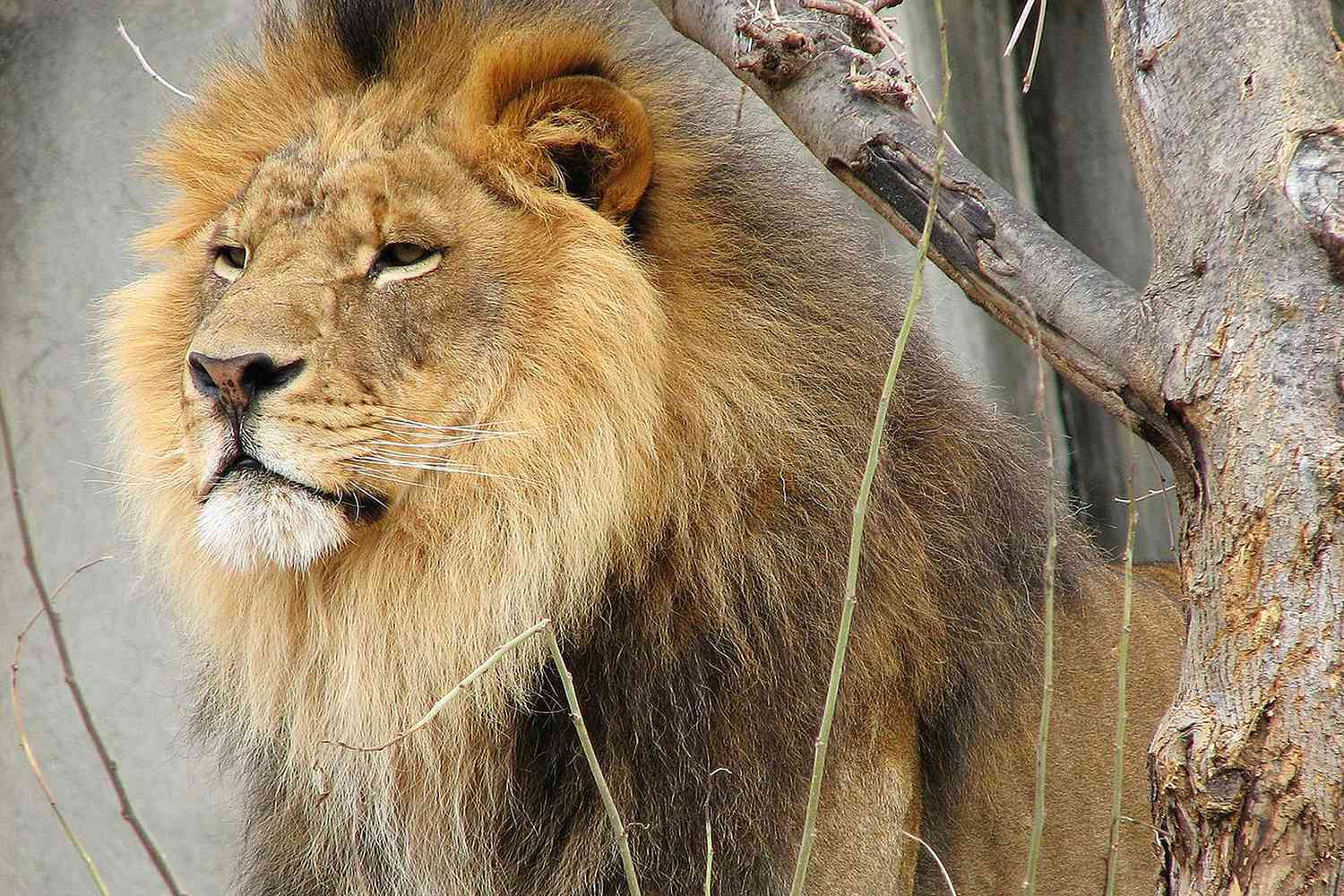
A full-grown male lion, his golden mane catching the sunlight, padding down the main walkway like he owned the place. People scattered in every direction, some diving into gift shops, others climbing trees, a few brave souls trying to corral kids behind barriers.
My radio crackled. “Security to all units, we have a Code Red situation. The lion enclosure has malfunctioned. Repeat, we have an escaped lion.”
I grabbed my radio. “This is Jake at the main gate. I can see him. He’s heading toward the exit.”
“Do NOT approach,” came the panicked voice of my supervisor. “Animal control is on the way.”
But the lion wasn’t attacking anyone. That’s what struck me as weird. He moved with purpose, like he was late for an appointment. When people screamed and ran, he barely glanced at them. His eyes were focused straight ahead, like he knew exactly where he was going.
I followed at a distance, radioing his location to the response team. The lion reached the front gates – which some panicked visitor had left wide open – and stepped onto Maple Street.
Cars slammed on their brakes. A delivery truck swerved so hard it mounted the sidewalk. I watched a woman abandon her Honda Civic in the middle of the road and sprint into a coffee shop.
“He’s on Maple Street now,” I radioed, breathing hard as I tried to keep up. “Moving east toward Downtown Park.”
The lion picked up his pace, his powerful legs carrying him past honking cars and screaming pedestrians. Police sirens wailed in the distance, getting closer.
Three blocks later, he turned into Downtown Park. The place was nearly empty – just a few joggers who had seen him coming and bolted. But on a bench near the old oak tree, completely unaware of the chaos, sat an elderly woman.
She had silver hair pulled back in a neat bun, wore a navy blue cardigan despite the warm morning, and leaned heavily on a wooden cane beside her. She was feeding breadcrumbs to a small group of pigeons, talking to them softly.
The lion stopped about twenty feet away from her bench.
My heart hammered against my ribs. I was too far away to help, and even if I wasn’t, what could I do against a 400-pound predator?
“Ma’am!” I shouted, running toward them. “Ma’am, you need to move! Now!”
She didn’t hear me. Or maybe she was hard of hearing. The pigeons scattered as I got closer, but she kept sitting there, looking down at her empty breadcrumb bag.
The lion began moving toward her again, but slower now. Each step was deliberate, almost careful. His massive paws barely made a sound on the grass.
I was still fifty yards away when the woman finally looked up.
She turned her head and found herself face to face with a lion.
I expected her to scream, to faint, to scramble away. Instead, she went completely still. Her eyes widened, but not with terror – with something else I couldn’t identify.
The lion stopped directly in front of her bench. For a moment that felt like an hour, they just looked at each other.
Then the most incredible thing happened.
The lion lowered his massive body to the ground. He stretched his front paws forward and bowed his head, bringing his muzzle down until it was almost touching her knees.
The woman’s hand trembled as she reached out. I wanted to yell at her to stop, but something held me back. Her fingers touched his mane, and the lion closed his eyes.
“Oh my goodness,” she whispered, her voice carrying across the quiet park. “Leo? Is that really you?”
The lion – Leo, apparently – let out a soft rumbling sound. Not a growl or a roar, but almost like a purr. He gently rubbed his enormous head against her hand.
By now, I had reached them, but I stopped a safe distance away, too amazed to interfere. Police cars were pulling up at the park entrance, and I could hear the animal control van’s engine.
“Ma’am,” I said quietly, “I’m going to need you to move away from the animal very slowly.”
She looked up at me with tears in her eyes. “His name is Leo. I raised him when he was just a baby.”
“You what?”
“I worked at the zoo for fifteen years,” she said, never taking her hand away from Leo’s mane. “They brought him in when he was maybe eight weeks old. His mother had been killed by poachers, and he was barely alive. Weighed maybe twelve pounds, wouldn’t eat, wouldn’t stop crying.”
Leo shifted closer to her, resting his massive head against her leg.
“The veterinarians didn’t think he’d make it,” she continued. “But I volunteered to care for him. I bottle-fed him every two hours, even through the night. When he had nightmares, I’d sing to him. When he was scared of the other animals, I’d sit with him until he fell asleep.”
The animal control team was setting up their equipment at the park entrance, but their supervisor was holding them back, watching this incredible scene unfold.
“What happened?” I asked.
Her face clouded over. “Budget cuts. The zoo laid off half the staff, including me. Leo was about six months old by then, starting to get big. They moved him to the main lion habitat with the adult lions. I tried to visit him, but they said it was against policy for former employees.”
She stroked behind Leo’s ears, and he made that purring sound again.
“That was twelve years ago,” she said. “I always wondered if he remembered me, if he understood why I stopped coming.”
Leo lifted his head and looked directly into her eyes. Then he did something that made everyone watching – the police officers, the animal control team, the gathering crowd of onlookers – go completely silent.
He placed one massive paw very gently on her lap and gave her a single, soft lick on her cheek.
“I remember you too, baby,” she whispered.
Dr. Sarah Martinez, the zoo’s head veterinarian, arrived just as this was happening. I watched her climb out of her truck and approach us carefully.
“Mrs. Chen?” she called out. “Margaret Chen?”
The elderly woman looked up. “That’s me.”
“I’ve heard about you from some of the older staff members. You’re the one who saved Leo when he was a cub.”
Mrs. Chen nodded. “I tried to.”
“You did more than try. According to his medical records, you’re the reason he survived those first few months. The current staff still talks about you sometimes – about how you practically lived at the zoo during his recovery.”
Dr. Martinez knelt down several feet away from Leo, studying his body language. “He’s completely relaxed. I’ve never seen anything like this.”
“What happens now?” Mrs. Chen asked, her voice tight with worry.
“Well, we need to get him back to his habitat safely. But Mrs. Chen…” Dr. Martinez paused. “The zoo has been looking for experienced volunteers to help with our animal enrichment programs. People who understand how to connect with the animals, help them with socialization and emotional well-being.”
Mrs. Chen’s eyes lit up. “You mean…”
“I mean Leo clearly hasn’t forgotten you. And honestly, we could use someone with your experience. If you’re interested, I’d love to have you back.”
Leo seemed to sense the conversation was about him. He lifted his head and looked between Mrs. Chen and Dr. Martinez, as if he understood exactly what was being discussed.
The tranquilizer team had their equipment ready, but Dr. Martinez held up a hand. “Let’s try something first. Mrs. Chen, do you think you could walk him back to the zoo? He seems to trust you completely.”
It was a crazy idea, but somehow it worked. Mrs. Chen stood up slowly, her cane in one hand, and began walking toward the park entrance. Leo rose and padded alongside her, staying close enough that she could keep her free hand on his mane.
The crowd of onlookers parted like the Red Sea as we made our way back to the zoo. Police cars followed at a distance, and the animal control team stayed ready, but Leo never showed any sign of aggression. He walked calmly beside Mrs. Chen, occasionally looking up at her face as if to make sure she was really there.
When we reached the lion habitat, Leo hesitated at the entrance. He looked back at Mrs. Chen one more time.
“It’s okay, sweetheart,” she said. “I’m not leaving this time. Dr. Martinez said I can come visit you every week.”
Leo stepped into his habitat, then turned and sat down just inside the entrance, watching her.
Dr. Martinez was true to her word. Mrs. Chen started volunteering at the zoo the following week. I’d see her there every Tuesday and Thursday, spending time with Leo and helping with the other big cats.
But the most amazing part came about a month later. Leo had seemed depressed since his escape attempt, barely eating, spending most of his time lying in the corner of his habitat.
Then Mrs. Chen had an idea.
“I used to sing to him when he was little,” she told Dr. Martinez. “Just silly songs, but they always calmed him down.”
So one Tuesday afternoon, Mrs. Chen sat on a bench outside Leo’s habitat and started singing. Nothing fancy – old folk songs, lullabies, even a few pop songs she’d heard on the radio.
Leo perked up immediately. He came to the front of his enclosure and lay down as close to her as the barriers would allow. His eyes never left her face.
Word spread quickly. Within a few weeks, Mrs. Chen’s “concerts” had become the most popular attraction at the zoo. Families would plan their visits around her singing sessions, and Leo would always position himself right at the front of his habitat, listening intently.
The zoo started advertising it: “Come hear the Lion Whisperer.” Visitor numbers doubled, then tripled. Leo became famous on social media, with videos of him listening to Mrs. Chen’s songs going viral worldwide.
But the best part was watching the two of them together. Mrs. Chen would arrive every Tuesday and Thursday morning, and Leo would be waiting for her at the front of his enclosure. She’d greet him like an old friend, tell him about her week, and then settle in for their singing session.
Dr. Martinez told me that Leo’s health improved dramatically. He started eating regularly again, playing with his enrichment toys, and even socializing with the other lions.
“Animals remember kindness,” she explained. “Leo spent his most vulnerable weeks with Mrs. Chen. She wasn’t just caring for him – she was his whole world. That kind of bond doesn’t break, even after twelve years.”
Six months after the escape incident, I was working my usual morning shift when Mrs. Chen approached me at the security desk.
“Jake, I wanted to thank you,” she said.
“Thank me? For what?”
“For not shooting him that day in the park. For giving us a chance to reconnect.”
I shook my head. “I never would have shot him, ma’am. It was pretty clear he wasn’t trying to hurt anyone.”
“But you didn’t know that at the time. You took a risk, trusting that something good was happening instead of something terrible.”
She was right. In the moment, following a loose lion through the city, I had made a choice to observe rather than react with force. Looking back, it was probably crazy. But sometimes crazy leads to something beautiful.
“How’s Leo doing?” I asked.
Her face lit up with the kind of smile that only comes from pure joy. “He’s wonderful. Happy, healthy, and he still gets excited every time he sees me coming down the path.”
“And how are you doing?”
“Better than I’ve been in years. I didn’t realize how much I missed working with animals until I had the chance to do it again. Leo gave me back something I thought I’d lost forever.”
She paused, then added, “You know, I think he escaped that day specifically to find me. The electronic malfunction, the route he took through the city – it led him straight to the park where I sit every Tuesday morning. I’ve been feeding the pigeons there for twelve years, same bench, same time. Somehow, he knew.”
I thought about that a lot after she left. Could a lion really remember the exact location where his human friend spent her mornings? Could he have planned his escape route that precisely?
Maybe it was just coincidence. Or maybe some bonds really are that strong.
All I know is that whenever I walk through Downtown Park now and see that bench under the oak tree, I think about second chances. About how sometimes the most unlikely friendships survive against all odds. About how love – whether between humans or between a human and a lion – finds a way to endure.
Leo and Mrs. Chen taught me that some connections are so deep, they transcend time, distance, and even the natural order of things. Their story reminds me that kindness leaves marks on the world, even when we think no one is watching.
And sometimes, twelve years later, that kindness comes back to find you.

Lila Hart is a dedicated Digital Archivist and Research Specialist with a keen eye for preserving and curating meaningful content. At TheArchivists, she specializes in organizing and managing digital archives, ensuring that valuable stories and historical moments are accessible for generations to come.
Lila earned her degree in History and Archival Studies from the University of Edinburgh, where she cultivated her passion for documenting the past and preserving cultural heritage. Her expertise lies in combining traditional archival techniques with modern digital tools, allowing her to create comprehensive and engaging collections that resonate with audiences worldwide.
At TheArchivists, Lila is known for her meticulous attention to detail and her ability to uncover hidden gems within extensive archives. Her work is praised for its depth, authenticity, and contribution to the preservation of knowledge in the digital age.
Driven by a commitment to preserving stories that matter, Lila is passionate about exploring the intersection of history and technology. Her goal is to ensure that every piece of content she handles reflects the richness of human experiences and remains a source of inspiration for years to come.