The Silence That Saved Everything
When my daughter got married, I remained silent about the $33 million her late husband left her. Thank God I did. A few days later, my daughter’s new husband knocked on my door with a stranger carrying a briefcase and embossed seal, talking about “family fairness” and “simple agreements.” That’s when I realized my silence hadn’t weakened me—on the contrary, it had protected me.
They seated me at table 12 behind a flower arrangement big enough to hide a small aircraft, like I was an embarrassing relative they hoped would vanish into the centerpiece. So I smiled sweetly and let my new son-in-law think he’d won.
My name is Sylvia Hartley. I’m 72, I’m a widow, and I live just outside Charleston where people still believe good manners can smooth over bad intentions—until you watch someone use “polite” as a weapon.
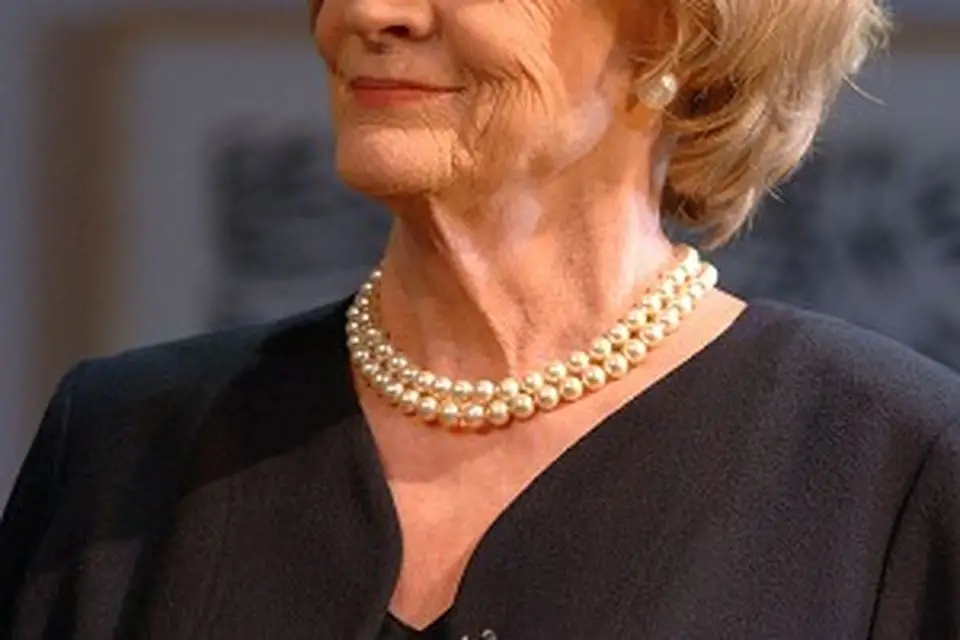
The morning of Emma’s wedding, I dressed the way a harmless older woman is supposed to: modest gray, soft pearls, neat hair, nothing that whispers power or trouble. Emma glanced at me amidst the bridal chaos and said, “Mom, you look acceptable,” like I’d passed a test nobody warned me I was taking.
I didn’t tell her that “acceptable” was exactly what I was going for.
The ballroom was gorgeous in that expensive, curated way—white linens, gold-rimmed china, a string quartet turning pop songs into something respectable. Marcus Thornfield’s parents entered like the room belonged to them by right. Patricia, his mother, wore diamonds that caught every light and every gaze, and somehow her eyes slid right through me like I was part of the décor.
When I showed the usher my place card and gently suggested there might be a delightful mistake, he didn’t blink. “Table 12, ma’am. Right behind the decorative feature.”
Decorative features. That’s what they call the floral wall they used to hide me.
From my horticultural exile, I watched the reception in the mirror across the room, because in front of me was nothing but hibiscus and baby’s breath. I watched Marcus work the crowd with three different smiles: bright charm for the wealthy, polished warmth for the useful, and a blank stare for anyone who might ask for something instead of offering it.
During cocktail hour, he approached my flower wall like it was a VIP section. “Mrs. Hartley,” he said, voice smooth, posture perfect, like he’d stepped into a boardroom instead of his wedding. “Isn’t this magical? You must be bursting with pride.”
“Oh, I’m practically vibrating,” I said, sweet as syrup, and watched his eyes flick to my hands, my jewelry, my posture—measuring, cataloging, deciding.
He leaned in slightly. “We should spend some quality time soon. Dinner this week. Just us. I have ideas about… family coordination.”
Family coordination. The way he said it made it sound like kindness. The way he looked at me made it sound like a plan.
“Thursday,” I said, smiling. “I do love a good mystery.”
He looked pleased, like I’d confirmed exactly what he hoped about me: quiet, compliant, easy to steer.
That night, while Emma danced and the DJ played something nostalgic and loud, I sat behind my flower wall and remembered all the times I’d been made small with a smile. And when I got home, I wrote one line in my notebook: Watch. Don’t feed it.
But let me back up, because you need to understand how we got here—how a 72-year-old widow everyone dismissed as harmless knew exactly what game was being played.
Emma’s first husband was David Chen. They met when Emma was 26, fresh out of graduate school with a degree in art history and absolutely no idea what to do with it. David was 32, brilliant, kind, and building something extraordinary in the tech world—something to do with data security that I never fully understood but that made very smart people very excited.
They were married for eight years. Good years, mostly. David adored Emma, supported her dream of opening a small gallery, never made her feel less than even though his company was growing exponentially. They were planning to start a family when the diagnosis came.
Pancreatic cancer. Stage four. Six months, maybe eight if they were lucky.
They got nine.
Emma was 34 when David died, and she was devastated. The kind of grief that changes you permanently, that makes you someone different than who you were before. I watched my daughter disappear into sorrow for two years, barely eating, barely functioning.
What I didn’t tell her—what David’s lawyer advised me not to tell her until she was ready—was what David had left behind.
His company had gone public three months before his death. The stock options he’d held, the equity he’d built, the careful investments he’d made—all of it came to Emma. After taxes, estate fees, and various complications I still don’t fully understand, Emma inherited approximately $33 million.
The lawyer, Gerald Simmons, came to me first. “Mrs. Hartley, your daughter is not in a state to manage this right now. We need to set up a trust, get professional management in place, but most importantly—we need to keep this quiet until she’s ready to handle it.”
I agreed completely.
Emma knew she’d inherited something. She knew there was life insurance, some savings, the house. She knew she was comfortable, that she didn’t need to rush back to work. But she didn’t know the actual number. Gerald and I decided—with her psychiatrist’s agreement—that the full weight of $33 million would crush someone already drowning in grief.
So we waited.
We set up a trust that paid her a comfortable living allowance. We kept the rest managed, invested, growing quietly in the background. And we told almost no one.
Emma slowly came back to herself. She reopened her gallery. Started seeing friends again. Started living again, carefully, like someone learning to walk after a long illness.
And then, three years after David’s death, she met Marcus Thornfield.
He was charming. Successful, or so he claimed—something in commercial real estate development. He pursued Emma with the kind of focused attention that can feel like love when you’ve been lonely long enough. Flowers, thoughtful gifts, patience with her grief, interest in her work.
Within six months, they were engaged.
I had reservations. Small things that didn’t quite add up. The way Marcus always had a story about deals that were “just about to close.” The way he never seemed to pick up a check without checking his phone first, like he was verifying his account balance. The way his eyes would track expensive things—watches, cars, jewelry—with an intensity that seemed wrong for someone supposedly successful.
But Emma was happy. Really happy, for the first time since David died.
Gerald called me two months before the wedding. “Have you told Emma yet? About the full amount?”
“No,” I said. “Should I?”
“That’s not for me to decide. But Marcus Thornfield has been asking questions. Subtle ones. About David’s company, about the estate, about what Emma might have inherited. I think he’s fishing.”
“Has Emma told him anything?”
“She doesn’t know anything to tell. But Mrs. Hartley, you should be aware—I did a background check. Marcus Thornfield is not what he appears to be.”
Gerald sent me a file. Marcus’s real estate company was mostly smoke and mirrors—a few small properties, lots of debt, deals that never quite materialized. His parents, the Thornfields with their diamonds and their country club memberships, were leveraged to the hilt. The family business had been failing for years, sustained only by increasingly desperate loans and the appearance of wealth.
Marcus needed money. Badly.
And he thought he was marrying it.
The question was: how much did he think Emma had? Did he know about the $33 million, or was he just hoping for something substantial?
I decided to stay quiet and watch.
At the wedding, I watched Marcus’s parents circle Emma like sharks assessing prey. I watched Marcus steer her away from certain conversations, noticed how he’d changed the subject whenever anyone asked Emma about her finances or David’s estate.
And I watched how they seated me—the mother of the bride—behind a wall of flowers, out of sight, dismissed as irrelevant.
That’s when I knew Marcus had made his first mistake: he’d underestimated me.
Three days later, Marcus showed up at my front door at 6:47 p.m. with a slim packet tucked under his arm and that same dazzling smile—only now it carried urgency, like he didn’t want me thinking too long.
My doorbell camera blinked its tiny light as I let him in.
“I brought something that’ll make things easier for you,” he said, settling into my living room like he belonged there. He placed the packet on my coffee table like it was a gift. “Just a few simple steps. So Emma and I can step in if you ever need help.”
Help. Steps. Step in. Words dressed in velvet, hiding a hand reaching for the steering wheel of my life.
I poured tea I didn’t plan to drink and kept my voice gentle. “How thoughtful, Marcus.”
His gaze flicked, quick and hungry, toward the hallway—toward the one door in my house I never invited anyone to open. My study, where I kept my files, my documents, everything important.
Then he looked back at me and said, softly and confidently, like this was already decided, “All you have to do is say yes tonight, and everything will be taken care of.”
And right then, I realized he wasn’t here because he cared about family.
He was here because he believed I had something he could take.
And he had no idea what I’d been keeping quiet on purpose.
I picked up the packet. Power of attorney documents. Beautifully printed on heavy stock paper with an embossed seal from “Thornfield Family Legal Services”—which I later discovered was Marcus’s college roommate working out of a strip mall office.
The documents would give Marcus and Emma—but let’s be honest, mostly Marcus—control over my finances, my property, my medical decisions. Everything.
“This is quite comprehensive,” I said mildly, flipping through pages.
“We just want to make sure you’re protected, Sylvia. At your age, things can happen so suddenly. Confusion, memory issues, health problems. This way, Emma and I can make sure you’re taken care of without any stress or worry on your part.”
At my age. Like being 72 meant I was already halfway to incompetent.
“And if I have questions about any of this?” I asked.
“Of course, of course. Though really, it’s standard stuff. Our family attorney looked it over. But if you want your own lawyer to review it, that’s fine—just know that legal fees can add up quickly. We’re trying to save you that expense.”
He was trying to rush me into signing before I could get actual legal advice.
“I do appreciate you thinking of me,” I said, setting the papers down. “But I’m a bit tired tonight. Could I look this over tomorrow? Make sure I understand everything?”
Something flickered in his eyes. Frustration, maybe, or calculation.
“Absolutely,” he said, standing. “Take your time. Though, you know, Emma’s been worried about you. She mentioned you seemed confused the other day? Forgetting things?”
I hadn’t been confused. I’d been perfectly fine. But Marcus was building a narrative.
“I’ll call her tomorrow,” I said sweetly. “We’ll talk it through together.”
“Actually,” Marcus said quickly, “let’s keep this between us for now. You know how Emma worries. Let’s get everything sorted first, then we can present it to her as all taken care of. Less stress for everyone.”
He wanted to keep Emma in the dark while he secured control of what he thought was my money.
After he left, I sat in my living room for a long time, looking at those papers.
Then I called Gerald Simmons.
“He thinks I have money,” I told him. “Substantial money. And he’s trying to get power of attorney.”
“Do you have substantial money, Mrs. Hartley?”
I laughed. “I have my house, some savings, my late husband’s pension. Comfortable, but nothing that would justify this kind of maneuvering.”
“Then what does he think you have?”
“I think,” I said slowly, “he’s done some math. He knows David was successful. He knows Emma inherited something. But he doesn’t know how much or where it is. So he’s assuming—since Emma doesn’t seem to have massive wealth—that maybe I’m holding it. That maybe David left it to me, or that I’m managing Emma’s inheritance.”
“That’s quite a leap.”
“Unless someone told him Emma’s mother controlled a significant trust.”
Gerald was quiet. “Who would know that?”
“Anyone who saw the trust documents. Anyone Emma might have mentioned it to casually. ‘My mom helps manage things from David.’ She might have said something innocent that Marcus twisted into something else.”
“What do you want to do?”
“I want to know exactly what Marcus Thornfield is after,” I said. “And I want to make sure Emma is protected when the truth comes out.”
Over the next week, I did what older women do best: I became invisible and I listened.
I had lunch with Patricia Thornfield—Marcus’s mother—who’d suddenly decided I was worth her time. She spent two hours complaining about how expensive Emma’s gallery was, how much money Emma must be “sitting on” from her first marriage, how “family should share resources.”
I attended a charity event where Marcus’s father, Richard, had too much scotch and told me about their “temporary cash flow issues” that would be “completely resolved soon.”
I let my hairdresser—who also did Patricia’s hair—tell me all about how the Thornfields were about to lose their house unless they came up with $400,000 by the end of the month.
Marcus was desperate. The family was desperate. And they’d decided Emma—and by extension, me—was their salvation.
The problem was, they still didn’t know exactly what they were reaching for.
On Thursday, I called Marcus and told him I’d signed the papers.
I hadn’t, of course. I’d signed papers—different papers, drafted by Gerald, that looked official but actually did nothing. I put them in the official-looking packet and waited.
Marcus arrived within an hour, his relief palpable.
“This is wonderful, Sylvia. You won’t regret this. Emma and I will make sure you’re completely taken care of.”
“I know you will, dear,” I said. Then, casually: “Now that we’re family handling family matters, I should probably mention something Emma doesn’t know yet.”
His attention sharpened like a blade. “Oh?”
“David’s estate,” I said carefully. “It was more complicated than Emma realized. There were some investments, some assets that took time to settle. Gerald—that’s the estate attorney—has been managing everything in trust.”
“How much are we talking about?” Marcus asked, dropping all pretense of casual interest.
“Well,” I said, “after everything was settled, the trust is worth approximately $31 million.”
The number hit him like electricity. His eyes went wide, his breathing changed. I could practically see him recalculating his entire future.
“Thirty-one million,” he repeated.
“Give or take. It’s been growing. We kept it quiet because Emma was so fragile after David died. We didn’t want her overwhelmed. But now that she’s married, now that she has you to help her manage things…”
I trailed off, letting him fill in the blanks.
“Does Emma know?” he asked urgently.
“Not the exact amount. Gerald and I thought we’d tell her together. Now that you’re family, maybe you should be there too. Gerald suggested next week.”
Marcus’s mind was racing. I could see it: $31 million. More than enough to save his family, clear their debts, fund whatever lifestyle he’d been pretending to live.
“That’s… that’s incredible,” he said. “Emma is so lucky to have you managing this for her.”
“Well,” I said modestly, “I won’t be managing it much longer. Once Emma knows, she’ll take control. Though I suppose with the power of attorney you had me sign, technically you and Emma can make decisions together now.”
Wrong. The papers I’d signed gave him nothing. But he thought they did.
“Right,” he said. “Right. That’s perfect.”
Over the next three days, Marcus became a different person around me. Attentive, affectionate, constantly checking in. He brought groceries, offered to help with yard work, called me “Mom” in a way that made my skin crawl.
He was also spending money. A new watch appeared on his wrist. He took Emma to an expensive restaurant. His parents suddenly looked less stressed at church.
He’d already started spending money he didn’t have yet, convinced it was coming.
Meanwhile, I called Emma.
“Sweetheart,” I said, “I need you to come over. Alone. There’s something we need to discuss.”
“Is everything okay, Mom?”
“Everything’s fine. But it’s important. And Emma—don’t tell Marcus yet. This is between us first.”
She arrived the next afternoon, looking worried.
I sat her down in my living room and pulled out a folder. Gerald had sent me copies of everything—the trust documents, the investment statements, all of it.
“Emma, when David died, he left you much more than you realized.”
I watched my daughter’s face as I explained. The initial confusion, then shock, then something close to panic as the number registered.
“Thirty-three million dollars?” she whispered. “I’ve had thirty-three million dollars for three years and nobody told me?”
“You weren’t ready,” I said gently. “You were barely surviving. Adding that weight to your grief would have crushed you. Gerald and I agreed to wait until you were stronger.”
“Does Marcus know?”
“That’s the important question,” I said. “What have you told Marcus about David’s estate?”
She thought about it. “Not much. He asked once or twice. I told him David left me comfortable, that you and the lawyer were handling things. I didn’t know any details to share.”
“Has Marcus asked to see documents? Bank statements? Anything?”
“No, but…” She frowned. “He’s been weird about money lately. Talking about combined finances, asking about my gallery’s accounts, suggesting we should ‘consolidate everything’ now that we’re married.”
I showed her the power of attorney documents Marcus had brought me.
“He wanted you to sign this?” Emma’s voice was sharp now. “He wanted control of your finances?”
“He thinks I’m managing your trust. He thinks the money is somehow accessible through me. And Emma, I need you to know something else.”
I showed her Gerald’s background check on Marcus. The debt, the failing business, the family’s financial desperation.
My daughter’s face went through several emotions: hurt, anger, disbelief, and finally—the one that worried me most—resignation.
“I should have known,” she said flatly. “After David, after someone who actually loved me, I should have known this was too good to be true.”
“No,” I said firmly. “You should have been able to trust your husband. His deception is not your failure.”
“What do I do, Mom?”
“That depends. What do you want?”
She was quiet for a long moment. “I want to know the truth. I want to know if he ever loved me at all, or if this was always about money.”
“Then we give him an opportunity to show us,” I said. “We set a trap, and we see if he takes the bait.”
Together, we called Gerald and explained the situation. Then we planned.
The following Monday, I called Marcus. My voice was shaky, upset.
“Marcus, something terrible has happened. Can you come over? I don’t want to tell Emma until we figure this out.”
He arrived in fifteen minutes.
“What’s wrong?”
“It’s the trust,” I said, wringing my hands. “Gerald called. There’s been a problem with one of David’s investments. Something about fraud, investigations. They’ve frozen the assets.”
“Frozen? All of it?”
“All $31 million. It could be tied up in litigation for years. Gerald says we might lose half of it to legal fees and penalties.”
Marcus’s face went completely white. “That’s not possible. They can’t just—”
“They can, apparently. Gerald is trying to fight it, but he says it doesn’t look good.”
I watched Marcus very carefully. This was the moment that would tell me everything. If he actually loved Emma, he’d be upset for her sake. He’d offer support, comfort, help.
Instead, he looked like a man watching his lottery ticket burn.
“We need to protect what we can,” he said urgently. “The house, your assets, anything that’s separate from the trust. Sign it over to me and Emma now, before they try to claim it’s connected.”
There it was.
“Sign over my house?”
“It’s the only way to protect it. These investigators, they’ll go after everything connected to David’s estate. But if your assets are in my name—separate, clean—they can’t touch them.”
“I don’t know, Marcus. That seems—”
“Sylvia, please. Let me help. That’s what family does. You trust me, don’t you?”
That’s when Emma walked in. We’d planned her entrance perfectly.
“Marcus? What are you doing here? Mom, what’s going on?”
Marcus turned, his face reorganizing itself into concern. “Emma, sweetheart, there’s been a problem with David’s estate. I came to help your mother—”
“Help her what?” Emma asked coldly. “Help her sign over her house to you?”
“That’s not—you don’t understand. The trust is frozen. We need to protect what we can.”
“What trust, Marcus? I thought you didn’t know anything about David’s money.”
He froze.
“I… your mother mentioned…”
“My mother mentioned a trust worth $31 million, and suddenly you’re here trying to get her to sign over her assets. Interesting timing.”
“It’s not like that.”
“Then what is it like?” Emma’s voice was level, but I could hear the steel underneath. “Because from where I’m standing, it looks like you’ve been very interested in money that isn’t yours.”
“I married you, didn’t I? I love you.”
“Do you?” Emma pulled out her phone. “Because Gerald Simmons—the estate attorney—says he never called my mother. There’s no frozen trust. No investigation. No problem with David’s investments.”
The color drained from Marcus’s face.
“So here’s what actually happened,” Emma continued. “My mother told you a lie about $31 million. And you immediately started planning how to steal it, including trying to get power of attorney over her finances.”
“That’s not fair. I was trying to protect—”
“Let me ask you something, Marcus. If I told you right now that there is no $31 million—that David left me comfortable but nothing extraordinary—would you still want to be married to me?”
The question hung in the air.
Marcus’s mouth opened, closed. He looked between Emma and me, calculating, trying to find the right answer.
But his silence was the answer.
“Get out,” Emma said quietly.
“Emma, please. Let me explain—”
“Get out of my mother’s house.”
After Marcus left, Emma collapsed on my sofa and cried. Not the way she’d cried for David—that had been grief for love lost. This was different. This was anger and humiliation and relief all mixed together.
“I’m sorry,” I said, holding her. “I’m sorry he wasn’t who you thought he was.”
“I’m not,” she said, wiping her eyes. “I’m grateful you figured it out before he could do real damage. Mom, the power of attorney papers he gave you—they were fake, weren’t they? The ones you actually signed?”
“Gerald drafted them. They look official, but they don’t actually grant any authority. I knew Marcus might try to use them to access accounts or make claims, so we made sure they were worthless.”
“What about the trust? Is that real? Do I actually have—”
“$33 million? Yes, sweetheart. It’s real, it’s yours, and it’s been waiting for you to be ready.”
She stared at me. “I don’t know if I’m ready.”
“You are. You’re stronger than you think. You just proved it.”
“What do I do about Marcus?”
“That’s up to you. But you should know—he’ll probably fight the divorce. He’ll claim he didn’t know about the money, that he really loves you, that this was all a misunderstanding.”
“Can he claim any of the trust?”
“Not unless you were foolish enough to co-mingle funds or add him to accounts. Which, thank God, you didn’t.”
“No. I kept everything separate. David’s lawyer told me to, back when we first got married. Keep some things just mine.”
“Smart man, David.”
Emma was quiet for a moment. “Marcus will tell people. About the money.”
“Probably. Are you ready for that?”
“I don’t know. People will treat me differently.”
“Some will,” I agreed. “Others will treat you exactly the same. The money doesn’t change who you are, Emma. It just reveals who other people are.”
Emma filed for divorce the next day. Gerald recommended an attorney who specialized in high-net-worth separations. South Carolina is an equitable distribution state, but since Emma and Marcus had only been married for three days and the trust was clearly separate property from before the marriage, Marcus had no legal claim to any of it.
That didn’t stop him from trying.
He hired an attorney—on credit, I later learned, since he couldn’t afford the retainer. He claimed Emma had hidden assets during their courtship, that he’d married her under false pretenses, that he was entitled to compensation.
The judge was not impressed.
“Mr. Thornfield,” she said during the preliminary hearing, “you’re arguing that your wife deceived you by not disclosing her full financial situation before marriage. But you also failed to disclose your financial situation—specifically, that you and your family are deeply in debt. It seems both parties entered this marriage with incomplete information.”
“That’s different, your honor. I didn’t deliberately hide—”
“Did you tell Ms. Chen that your business was failing? That your parents are facing foreclosure? That you have over $200,000 in personal debt?”
Marcus’s lawyer looked like he wished he could disappear.
“No, but—”
“Then I’d say you’re both guilty of financial non-disclosure. The difference is, Mr. Thornfield, that Ms. Chen’s assets were legally protected in a trust she herself was unaware of. Your debts, however, you knew about perfectly well. Motion denied.”
The divorce was finalized in six weeks. Marcus got nothing except a legal bill he couldn’t pay and a reputation that followed him out of Charleston.
His parents had to sell their house. The Thornfield business quietly filed for bankruptcy. Patricia’s diamonds—real ones, as it turned out—went to auction.
I felt sorry for them, in a distant way. But mostly I felt grateful that Emma had escaped before Marcus could do lasting damage.
Three months after the divorce, Emma came to my house with Gerald Simmons.
“Mom,” she said, “I’ve been learning about the trust. About everything David set up. And I want to make some changes.”
“Of course. It’s your money, sweetheart.”
“I want to make sure you’re protected. Not because I think you need me to manage your finances,” she added quickly, “but because I want you to benefit from what David built too. He loved you. He told me once that you were the mother he wished he’d had.”
I hadn’t known that. My eyes filled with tears.
“I’m setting up an annual distribution for you,” Emma continued. “Enough that you never have to worry, that you can travel, enjoy your life. And I’m putting it in an irrevocable trust, so nobody can ever touch it or take it away from you.”
“Emma, that’s not necessary—”
“It is to me. You protected me when I couldn’t protect myself. You saw through Marcus when I was too lonely to see clearly. You kept my inheritance safe until I was strong enough to handle it. This is my way of saying thank you.”
Gerald slid papers across my coffee table. A trust in my name, funded with $2 million, managed by professionals, distributing $100,000 annually for the rest of my life.
“I can’t accept this,” I said.
“You can, and you will,” Emma said firmly. “Because I’m your daughter, and you taught me that family takes care of each other. Real family. Not the kind that shows up with fake legal documents and a briefcase.”
I signed the papers.
That evening, Emma stayed for dinner. We sat in my kitchen—the same kitchen where I’d poured tea for Marcus while he tried to steal my life—and we talked about the future.
“What will you do with the rest?” I asked. “The trust?”
“Live my life,” Emma said. “Keep the gallery, because I love it, not because I need the income. Travel. Maybe go back to school. Maybe start a foundation in David’s name. I don’t know yet. But for the first time in three years, I feel like I can make choices without being afraid.”
“That’s what David wanted,” I said. “For you to be free.”
“That’s what you gave me too, Mom. By keeping quiet, by watching, by knowing when to speak up and when to stay silent—you gave me freedom.”
Six months later, Emma met someone new. Richard was a high school teacher—kind, genuine, living in a modest apartment with student loan debt and a rescue dog. He knew about Emma’s money from the beginning, because she told him on their second date.
“I need you to know,” she said, “that I have substantial wealth. And I need to know that you’re okay with that, or not okay with that, but either way I need honesty.”
Richard thought about it for approximately five seconds.
“Does this mean you can cover dinner?” he asked. “Because I was planning to, but I’ve got, like, $40 in my checking account until Friday.”
Emma laughed for the first time in months.
They’ve been together for a year now. He still teaches, still lives in his modest apartment, still drives his beat-up Honda. Emma helps with his student loans because she wants to, not because he asked. They’re talking about marriage, but taking it slow.
Last week, Richard came to my house for Sunday dinner.
“Mrs. Hartley,” he said, helping me clear the table while Emma was in the bathroom, “I want you to know something. I don’t care about Emma’s money. I make enough to support myself, and if she lost every penny tomorrow, I’d still want to marry her.”
“I believe you,” I said.
“But I also want you to know—I see what you did. How you protected her from Marcus. And if you ever think I’m not treating her right, if you ever get a bad feeling, I want you to tell me. Because your judgment matters.”
I looked at this young man—barely making $45,000 a year as a teacher, content with his life, genuinely in love with my daughter—and I felt something I hadn’t felt since David died.
Hope.
“I will,” I said. “But Richard, I don’t think I’ll need to.”
Today, I’m 73. I live in my same house outside Charleston, but now I travel three months out of the year. I’ve been to Italy, to Japan, to Scotland. I take art classes, I volunteer at Emma’s gallery, I have lunch with friends who’ve known me for decades and don’t care how much money my daughter has.
Emma thrives. Her gallery expanded. She started a foundation that funds art programs in underserved schools. She and Richard got engaged last month, and this time, the wedding planning feels joyful instead of anxious.
Marcus Thornfield occasionally appears on social media, always with a new business venture, always looking for investors, always projecting success he doesn’t have. I feel sorry for whoever believes him next.
The power of attorney documents—the real ones, the fake ones Marcus thought were real—sit in my filing cabinet as a reminder: silence is not weakness. Sometimes it’s strategy.
I stayed quiet about $33 million, and that silence saved everything.
Because the thing about being underestimated is this: people stop watching you. They stop being careful. They show you exactly who they are, confident that you’re too old, too trusting, too harmless to notice.
They forget that we older women have been watching people underestimate us our entire lives.
And we’ve learned exactly what to do about it.
Last week, Emma called me.
“Mom,” she said, “Richard and I have been talking. When we get married, I want to do a prenup. Not because I don’t trust him, but because I want us to start with everything clear and honest.”
“That’s very wise.”
“And I want you to be there. When we sign it. Because you taught me that protecting yourself isn’t the same as not loving someone. It’s actually how you make sure love has room to be real.”
“I’d be honored,” I said.
After we hung up, I sat in my living room and looked at my grandmother’s photograph on the mantle. She’d been underestimated her whole life too. She’d stayed quiet when she needed to, spoke up when it mattered, and taught me that being “acceptable” was sometimes the best disguise.
“Thank you,” I told her photograph. “For teaching me that silence can be its own kind of power.”
The house was quiet. Outside, Charleston continued its beautiful, complicated life. Somewhere, Marcus was probably planning his next move, his next target.
But my daughter was safe. My daughter was free. My daughter had learned that money reveals character, that silence can be strategic, and that sometimes the most powerful thing a woman can do is watch, wait, and know exactly when to speak.
And that, at the end of the day, is worth more than $33 million.
Though I’ll be honest: the money helps too.

Lila Hart is a dedicated Digital Archivist and Research Specialist with a keen eye for preserving and curating meaningful content. At TheArchivists, she specializes in organizing and managing digital archives, ensuring that valuable stories and historical moments are accessible for generations to come.
Lila earned her degree in History and Archival Studies from the University of Edinburgh, where she cultivated her passion for documenting the past and preserving cultural heritage. Her expertise lies in combining traditional archival techniques with modern digital tools, allowing her to create comprehensive and engaging collections that resonate with audiences worldwide.
At TheArchivists, Lila is known for her meticulous attention to detail and her ability to uncover hidden gems within extensive archives. Her work is praised for its depth, authenticity, and contribution to the preservation of knowledge in the digital age.
Driven by a commitment to preserving stories that matter, Lila is passionate about exploring the intersection of history and technology. Her goal is to ensure that every piece of content she handles reflects the richness of human experiences and remains a source of inspiration for years to come.