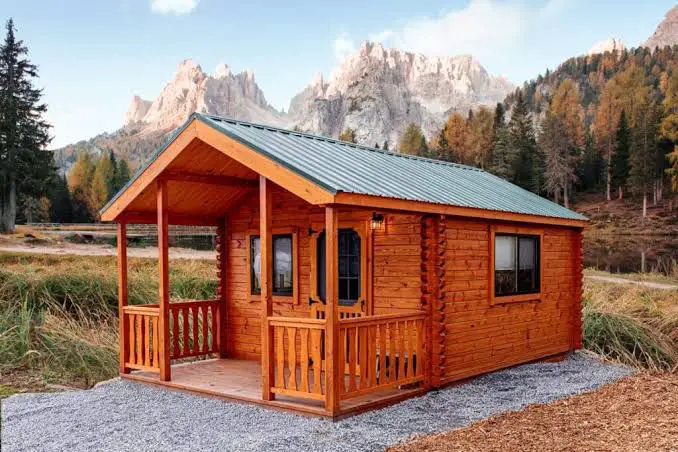
The Cabin I Built With My Own Hands
The first snowflakes hit my windshield somewhere past Boulder, fat and lazy, melting on contact. November in the Rockies meant unpredictable weather, but I’d driven this route enough times to know which curves tightened in ice and which stayed clear. The highway climbed steadily, leaving the last gas station and civilization behind as pine forests pressed in from both sides.
I needed this. Three weeks of back-to-back depositions, client meetings that ran past midnight, conference calls with Tokyo that started at four in the morning. My law practice had grown beyond anything I’d imagined when I’d hung my shingle thirty years ago, but growth came with costs. The costs showed in my reflection—lines around my eyes that hadn’t been there last year, a tightness in my jaw that never fully released anymore.
The cabin was supposed to be my answer to that. My sanctuary. The place where I could be Helen Garrett, not Attorney Garrett, not Mom, not anyone’s anything except myself.
I’d bought the land twenty-three years ago, right after the divorce. Five acres of mountain wilderness with a creek running through it and views that made your chest ache. I’d hired a contractor for the foundation and framing, but I’d done most of the finish work myself—learned to lay tile and install windows, figured out plumbing through trial and error and a lot of YouTube videos. Every board, every nail, every decision had been mine.
It was the first thing in my life that belonged to me alone.
I’d told exactly three people I was coming up this weekend: my assistant, my neighbor who checked my mail, and my son David. A quick text Thursday night: Heading to the cabin for the weekend. Need to unplug. Love you.
He’d responded with a thumbs up emoji. Standard David—affectionate but efficient with words.
So when I rounded the final curve and saw four vehicles parked in my driveway, my first thought was that I’d taken a wrong turn. But no—there was the boulder with the quartz vein that caught the light, there was the old fence post I kept meaning to replace, there was my cabin with smoke curling from the chimney.
And there, unmistakably, was David’s black Audi.
I parked behind a silver SUV I didn’t recognize and sat for a moment, hands still on the wheel, trying to construct a narrative that made sense. Maybe David had decided to surprise me. Maybe he’d brought his girlfriend Melissa and some friends for the weekend, not realizing I’d be here.
Except I’d told him I was coming.
I grabbed my weekend bag from the trunk and walked to the front door. Through the window, I could see movement inside, hear voices. Laughter. Music playing softly—something acoustic and unfamiliar.
I tried the door. Locked.
My own front door was locked, and I had to use my key to get into my own cabin.
The voices stopped the second the door opened. I stepped into my living room and stopped so abruptly that I nearly dropped my bag.
Everything was different.
Not destroyed, not vandalized. Different. The furniture was still there—my leather couch, the coffee table I’d refinished myself, the bookshelf that held twenty years of accumulated novels and field guides. But the arrangement had changed. The couch faced a different direction. The rug I’d bought in Santa Fe was rolled up in the corner, replaced by something newer, cleaner, clearly expensive.
And the walls. The walls were what made my breath catch.
Every photograph I’d hung was gone. The picture of my parents on their fiftieth anniversary. The shot of David at eight years old, gap-toothed and grinning, holding up his first caught trout. The landscape photo of the creek at sunrise that I’d taken myself and had professionally printed.
In their place were generic prints—mountain scenes you could buy at any home goods store. Tasteful, pretty, utterly impersonal.
Four people sat frozen in my living room, wine glasses suspended halfway to lips. David on the couch, looking like he’d been electrocuted. Melissa beside him, eyes wide. And two people I’d never seen before—a well-dressed couple in their sixties, both with the kind of subtle cosmetic work that suggested comfortable money and regular visits to upscale dermatologists.
“Mom.” David stood so fast he nearly knocked over the wine bottle on the coffee table. “What are you doing here?”
The question was so absurd it took me a moment to process it. “What am I doing here?”
“We thought you weren’t coming until next weekend,” he said, words tumbling out fast. “You said the weekend of the fifteenth, I thought that meant—”
“Today is the fifteenth,” I said slowly.
His face went pale.
Melissa stood too, smoothing her sweater with nervous hands. “Mrs. Garrett, we can explain. David mentioned you’d be away, and my parents were coming to town, and we thought it would be nice to show them the mountains, and—”
“And you decided to redecorate my cabin?” I set my bag down carefully, keeping my voice level. “Move my furniture, take down my photographs, and make yourselves at home?”
“We didn’t mean any harm,” the older woman said, standing with the kind of gracious poise that comes from a lifetime of country clubs and charity galas. “I’m Patricia Hensley, Melissa’s mother. This is my husband, Richard. We’re terribly sorry for the confusion. The children told us this was a family cabin and that we were welcome to use it.”
“Family cabin,” I repeated.
“Melissa and David are engaged,” Patricia continued, smiling like this explained everything. “We thought of it as a chance to blend our families, enjoy some quality time together. We brought our own linens, our own groceries. We were very careful not to impose.”
I looked at David. He wouldn’t meet my eyes.
“You’re engaged,” I said. Not a question. A statement, flat and hollow.
“Mom, I was going to tell you—”
“When? After the wedding?”
“We only decided last week. Everything’s been so crazy with Melissa’s new job and the move and—”
“And you thought the best way to celebrate would be to bring her parents to my cabin without asking. To remove my belongings and redecorate like I wouldn’t notice.”
“We were going to put everything back,” Melissa said quickly. “We just thought the space could use a little… freshening up. The photos were packed very carefully. They’re in the closet in the master bedroom. Nothing’s damaged.”
“Packed away,” I said. “In my cabin. In the closet of my bedroom.”
Richard Hensley cleared his throat. “Perhaps we should give you all some privacy to sort this out. Patricia and I can drive back down to Denver—”
“No one’s driving anywhere in this weather,” I said. The snow had picked up outside, already coating the cars in white. “The roads will be dangerous within the hour.”
I walked to the fireplace, my fireplace, and looked at the mantel. Even my collection of river stones was gone, replaced by three artfully arranged candles that had never been lit.
“Where are my things?” I asked.
“Everything’s safe,” David said. “We didn’t throw anything away. It’s all carefully stored.”
“In my cabin.”
“We thought—” He stopped, started again. “Melissa’s parents were expecting something a little more… polished. You know how it is. First impressions matter, and—”
“And my photographs weren’t impressive enough.”
“That’s not what I meant—”
“Then what did you mean, David? Explain it to me. Because from where I’m standing, it looks like you brought your fiancée’s parents to my cabin without permission, removed all evidence of my existence, and planned to put it back before I noticed. Is that about right?”
The silence was deafening.
Patricia stepped forward, her smile slightly strained now. “Mrs. Garrett, I think there’s been a misunderstanding. David told us this was a family property. That decisions about its use were made collectively. If we’d known—”
“Did he also tell you I built this cabin? That I bought this land with my own money, designed every room, installed half the fixtures myself?”
She blinked. “He said it was an investment property.”
I turned to my son. “Investment property.”
“I just meant that it’s valuable,” he said weakly. “That it’s a good asset for the family.”
“What family, David? You and me? Or the family you’re apparently planning that doesn’t include me?”
“Jesus, Mom, that’s not fair—”
“What’s not fair is coming to my home and finding it altered like a stage set. What’s not fair is discovering my son is engaged from his fiancée’s mother. What’s not fair is standing in my own cabin being told I’m the one who’s confused.”
My voice had risen slightly. I forced it back down, drew in a breath. Thirty years of courtroom experience had taught me that anger was less effective than cold, clear rationality.
“Here’s what’s going to happen,” I said. “You’re going to put back every single thing you moved. The photographs go back on the walls exactly where they were. The rug goes back down. The furniture returns to its original arrangement. You’re going to do this now, before dinner, before anything else.”
“Mom, can we just talk about this—”
“After you fix what you broke, we can talk. Not before.”
Melissa looked at her parents, then at David. “Maybe we should just do what she’s asking.”
“Thank you, Melissa,” I said. “That would be appreciated.”
They worked in silence for the next hour. I sat in the kitchen, drinking coffee and watching snow accumulate outside, while they shuffled furniture and rehung pictures. Patricia and Richard tried to help, their gracious concern slowly curdling into embarrassed discomfort.
I didn’t feel triumphant. I felt tired and sad and older than my fifty-eight years.
When they finished, David came to the kitchen doorway. “It’s done. Everything’s back.”
“Thank you.”
“Mom, I’m sorry. I really am. It was stupid. I should have asked.”
“You should have,” I agreed. “But that’s not actually the problem, is it?”
He leaned against the doorframe, looking so much like his father in that moment that it hurt. Same broad shoulders, same way of carrying tension in his jaw. “What do you mean?”
“You told Melissa’s parents this was an investment property. A family cabin where decisions are made collectively. You let them think you had the authority to invite them here.”
“I just wanted to impress them. Melissa’s family is… they have money, Mom. Real money. Country clubs and vacation homes and all of it. I wanted them to see that I came from something too.”
“So you used my cabin as a prop.”
“That’s not how I thought of it.”
“Then how did you think of it?”
He was quiet for a long moment. “I thought you wouldn’t mind. You’re always saying I should use the place more, that it’s silly for it to sit empty. I thought this would make you happy—me bringing my future in-laws, creating memories, making it a real family space instead of just your retreat.”
There it was. The thing that had been lurking under all of this.
“You think this cabin is wasted on me,” I said softly.
“No, that’s not—”
“You think because I’m single, because I come here alone, that it’s selfish somehow. That I should be sharing it, opening it up, making it available for your use.”
“I didn’t say that.”
“You didn’t have to.” I set down my coffee cup. “David, do you know why I bought this land?”
“After the divorce, you said you needed space—”
“I needed proof,” I corrected. “Proof that I could build something that was mine. Your father and I had built a life together, and when that ended, I looked around and realized how little of it felt like it belonged to just me. The house was ours. The furniture was ours. Even my career had been shaped around his schedule, his needs, making sure he could focus on his work while I handled everything else.”
David’s expression flickered with something that might have been guilt.
“This cabin is the first thing I built for myself,” I continued. “Not for a marriage, not for a family, not for anyone’s approval. Just for me. And that matters, David. It matters that I have this.”
“I know it matters—”
“Do you? Because bringing people here without asking, erasing my presence to make it more palatable for your in-laws, that suggests you don’t understand what this place means to me.”
Melissa appeared in the doorway behind David. “Mrs. Garrett, I owe you an apology too. I pushed David to do this. My parents were disappointed when I told them we couldn’t afford to take them skiing at Aspen, and when David mentioned the cabin, I thought it would be perfect. I’m the one who suggested we ‘freshen things up.’ I thought we were being helpful.”
“By removing my photographs?”
She flushed. “They were… very personal. My mother is particular about aesthetics. I didn’t want her to think we were staying in someone’s actual home. I wanted it to feel like a rental property, something neutral.”
“But it’s not neutral,” I said. “It’s mine.”
“I understand that now.”
Patricia appeared behind them, Richard at her shoulder. The four of them stood in the doorway like defendants awaiting a verdict.
“Mrs. Garrett,” Patricia said, her voice careful and measured. “I need to apologize as well. I made assumptions about this property and your relationship with your son. I treated your home as if it were a hotel, and that was inappropriate. We’ll leave first thing in the morning.”
“The roads won’t be safe until afternoon at the earliest,” I said. “The snow’s coming down hard now.”
“Then we’ll leave as soon as it’s safe.”
I looked at all four of them—embarrassed, uncomfortable, waiting for me to either absolve or condemn them. Part of me wanted to. Wanted to be gracious and forgiving, to smooth everything over and pretend this hadn’t hurt.
But I was tired of being gracious when what I felt was angry.
“I need some time alone,” I said finally. “There’s a guest room with twin beds off the back hall. David and Melissa can take the loft. You can stay the night, but in the morning, we’re going to have a real conversation about boundaries and respect and what it means to be family.”
“Of course,” Patricia said quickly. “Whatever you need.”
I stood and walked past them to the master bedroom—my bedroom, with my things finally restored—and closed the door.
I didn’t sleep well. The cabin was too full of people, too full of noise even when everyone was quiet. I could hear them moving around, whispering, the creak of unfamiliar footsteps on my floors.
Around three in the morning, I gave up and went to the kitchen to make tea. David was already there, sitting at the table in sweatpants and a t-shirt, nursing what looked like whiskey.
“Couldn’t sleep either?” I asked.
He shook his head. “I keep thinking about what you said. About building something for yourself.”
I filled the kettle and set it on the stove. “And?”
“I never thought of it that way. I always just thought of this as the cabin. A place you went sometimes. I didn’t understand that it was… more than that.”
“It is.”
“I should have asked. Before bringing anyone here. Before changing anything. I should have treated it like it was yours.”
“It is mine, David. That’s not in question.”
He took a drink, winced. “Dad always said you were territorial about your space. I thought he was being critical, but maybe he was just being accurate.”
“Your father didn’t like that I had something separate from him,” I said quietly. “Something he couldn’t control or shape or influence. That’s part of why we didn’t work.”
“He never told me that.”
“He wouldn’t.” The kettle began to whistle. I poured water over a tea bag, breathing in the steam. “But it’s true. He needed me to need him. And I needed to be able to stand on my own.”
David was quiet for a moment. “Melissa’s like that. She needs to be needed. That’s why she pushed so hard for this weekend. She wanted to show her parents that we were building something together, that we were a team.”
“And are you?”
“I thought we were. But watching her parents tonight, seeing how they just… expected you to go along with everything, expected their comfort to matter more than your feelings… I don’t know. It made me wonder what I’ve been signing up for.”
I sat down across from him. “Do you love her?”
“I think so. But I also think I might love the idea of her more than the reality. She’s successful, she’s beautiful, she comes from the kind of family that makes everything look easy. Being with her makes me feel like I’ve made it somehow.”
“That’s not love, David. That’s aspiration.”
He laughed, but it came out bitter. “When did you get so wise?”
“After making all the mistakes you’re currently contemplating.”
We sat in silence for a while, sipping our drinks, listening to the wind push snow against the windows.
“What do I do?” he asked finally.
“That’s not for me to answer. But I’ll tell you what I learned: you can’t build a life with someone if you’re trying to be someone you’re not. And you can’t love someone fully if you’re more concerned with how they make you look than who they actually are.”
“She’s going to be angry when I tell her we need to slow down.”
“Probably.”
“Her parents are definitely going to be angry.”
“Almost certainly.”
“But it’s the right thing to do.”
“That’s for you to decide.”
He nodded slowly, then looked at me with an expression I hadn’t seen since he was young—uncertain, seeking approval, still my son despite being thirty-two years old.
“I’m sorry, Mom. Really sorry. Not just about the cabin, but about making you feel like your needs didn’t matter. Like you were being selfish for wanting something that was yours. That was wrong.”
“Thank you,” I said. “That means a lot.”
“Can I ask you something?”
“Of course.”
“Are you happy? Coming up here alone, not dating, focusing on your career? Is that enough for you?”
I considered the question honestly. “Yes. It is. It might not always be—I might meet someone someday, or decide I want something different. But right now, this life I’ve built? It’s exactly what I need.”
“Good,” he said. “You deserve that.”
We finished our drinks in companionable silence. Outside, the snow continued to fall, blanketing everything in white, making the world new and clean and quiet.
Morning came with brilliant sunshine and impossible blue sky. The kind of day that makes you forget there was ever weather at all.
Patricia and Richard were up early, bags already packed, clearly eager to leave. Melissa looked exhausted, her eyes red like she’d been crying. David looked resolved, which I suspected meant difficult conversations had already happened or were about to.
I made coffee and pancakes while everyone moved around the cabin with careful politeness. We ate breakfast together at the table, passing syrup and butter, making small talk about the weather and the roads.
“Mrs. Garrett,” Patricia said finally, setting down her fork. “I want you to know that we really are sorry. We overstepped badly, and we’ve discussed it as a family. It won’t happen again.”
“I appreciate that.”
“I also want you to know that we think very highly of your son. He’s clearly been raised with strong values.”
“Most of the time,” I said, glancing at David with a slight smile.
He had the grace to look embarrassed.
After breakfast, we all worked together to check that everything was back in place, that nothing had been forgotten or damaged. Richard and Patricia loaded their car while Melissa and David stood on the porch, having a quiet conversation that involved a lot of hand-holding and serious expressions.
When they finally came back inside, Melissa approached me alone.
“Mrs. Garrett, I need to apologize again. Not just for this weekend, but for not considering what this place means to you. David explained it better last night, and I feel terrible.”
“Thank you, Melissa.”
“I also need to tell you that David and I are going to take some time before making any big decisions about our future. We moved too fast, and we need to make sure we’re doing this for the right reasons.”
“That sounds wise.”
“I hope that when we do move forward—if we do—that we can start over with you. Build a real relationship instead of whatever this awkward mess has been.”
“I’d like that,” I said honestly.
She smiled, relieved, and went to join her parents.
David hung back, watching them load the last of the luggage.
“You okay?” I asked.
“Getting there,” he said. “We’re going to do counseling. Talk through what we both want, what we’re willing to compromise on, what our non-negotiables are.”
“Good.”
“And I’m going to come back here sometime soon. Alone. If that’s okay with you. I want to understand what you see in this place. Why it matters so much.”
“I’d like that.”
He hugged me then, hard and quick, the way he used to when he was younger. “Love you, Mom.”
“Love you too.”
I stood on the porch and watched them drive away, three cars navigating the snowy road carefully, red taillights disappearing around the curve one by one.
Then I went back inside my cabin—my photographs on the walls, my rug on the floor, my river stones on the mantel—and made myself another cup of tea.
The silence was perfect.
I sat by the fire with a book I’d been meaning to read, listened to the creek running behind the cabin, watched sunlight move across the floor in golden bars.
This was mine. This peace, this space, this life I’d built with my own hands.
And I didn’t have to explain it to anyone.
THE END

Lila Hart is a dedicated Digital Archivist and Research Specialist with a keen eye for preserving and curating meaningful content. At TheArchivists, she specializes in organizing and managing digital archives, ensuring that valuable stories and historical moments are accessible for generations to come.
Lila earned her degree in History and Archival Studies from the University of Edinburgh, where she cultivated her passion for documenting the past and preserving cultural heritage. Her expertise lies in combining traditional archival techniques with modern digital tools, allowing her to create comprehensive and engaging collections that resonate with audiences worldwide.
At TheArchivists, Lila is known for her meticulous attention to detail and her ability to uncover hidden gems within extensive archives. Her work is praised for its depth, authenticity, and contribution to the preservation of knowledge in the digital age.
Driven by a commitment to preserving stories that matter, Lila is passionate about exploring the intersection of history and technology. Her goal is to ensure that every piece of content she handles reflects the richness of human experiences and remains a source of inspiration for years to come.