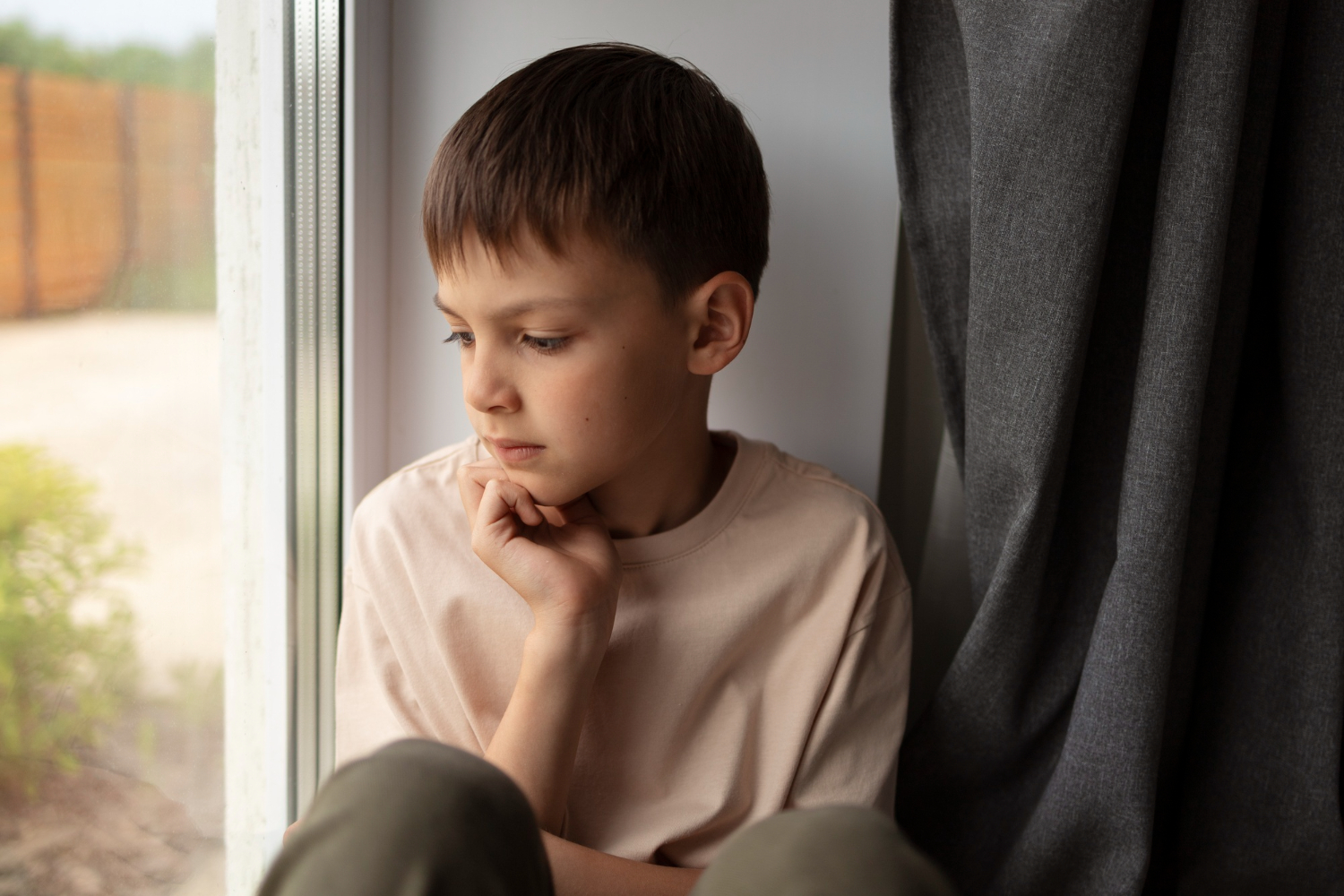
The suitcase wheels clicked across our Savannah foyer like a countdown timer I couldn’t stop. Each rotation pulled my mother closer to the door and further from any responsibility she had to the eleven-year-old kid standing barefoot on the cool tile, watching his world quietly collapse.
“You’re independent now,” Mara Hollis said with that bright, rehearsed smile she wore like armor. She was already somewhere else in her mind—cafés in Paris, museums in Rome, freedom she’d been craving like oxygen. “You’re not a baby anymore. Just order food if you need to.”
Independent. The word hung in the humid summer air between us, dressed up like a gift when it was really abandonment with better packaging. I stood there holding a crumpled twenty-dollar bill that was warm from my sweating palm, staring at the woman who was supposed to protect me as she prepared to leave me behind for an entire month.
No babysitter. No neighbor on standby. No list on the fridge explaining what to eat or who to call if something went wrong. Not even a real goodbye—just a quick kiss pressed to my forehead so fast it felt more like a stamp than affection.
My father, Derek, moved through the room with his phone glued to his ear, half-listening to whoever was on the other end while he carried bags like an assistant rather than a parent. When he glanced at me, it wasn’t to check my face or read my fear. It was to make sure I wasn’t making a scene that would complicate their departure.
“You’ll be fine,” he said into the phone, then to me without changing tone, as if I was part of the same conversation. “Be good. Be good.”
Like this was about behavior. Like my job was to make their European vacation easier.
I wanted to ask a hundred questions. Who’s coming over? What if I get sick? What if I run out of food? What if someone knocks on the door and I don’t know what to say? But every question felt like it would make me look small, and in our house, small was something you got punished for. My mother loved the idea of me being mature the way she loved the idea of a perfect family photo—clean lines, no mess, no visible need.
She didn’t say she’d call every night. She didn’t say Mrs. Barrow next door had a key. She didn’t say my school knew they’d be gone. There was no safety net because a safety net would mean admitting there was something to fall from.
Instead, she reached into her purse and pulled out a shiny credit card, placing it on the kitchen counter like it was a solution. The plastic caught the sunlight streaming through our windows, looked official and grown-up and reassuring.
“Emergency card,” she announced. “If you need anything, use that. Easy.”
She made it sound like ordering a pizza was the same as being cared for. She made it sound like a piece of plastic could replace a person’s presence. I remember staring at that card and feeling a tiny flicker of relief anyway, because when you’re eleven and scared, you grab whatever hope you can reach, even when your brain knows better.
My mother hoisted her suitcase handle and stepped toward the door. Derek grabbed his keys without ever looking at the pantry or asking if I knew where the first aid kit was. Right before she crossed the threshold, Mom lifted her phone, angled it toward herself, and snapped a quick selfie—her face, the sunlight, the doorway behind her. Like she was documenting the moment she became free.
I saw it in the reflection of the hallway mirror. I saw the little pause as she checked the shot, adjusted her smile, and slipped the phone away satisfied. Then the suitcase wheels rolled down the driveway. The car doors slammed. The engine started. The sound of their laughter faded into the warm summer air like it had never belonged to my house in the first place.
I stood in the hallway listening to the emptiness settle. It didn’t rush in all at once—it crept, filling the corners, sitting on the couch cushions, hovering by the kitchen counter where the emergency card waited like a beautiful lie.
“I’ll be fine,” I said out loud to nobody, my voice echoing back smaller than when it left my mouth.
The first problem hit about ten minutes after the taxi pulled away. I stood at the kitchen counter, phone in my hand, staring at that shiny emergency card like it owed me something. My stomach was already tight, not from hunger yet, but from the kind of fear that makes your body brace for impact.
I opened the food delivery app my mom used when she didn’t feel like cooking. It still had her saved addresses, her favorite orders, her little notes about extra napkins. I entered the card number carefully, trying not to breathe too loud, and hit pay.
Declined.
I blinked at the screen like maybe it was wrong. Tried again. Declined. I switched apps. Declined. I tried one more time because denial is a stupid kind of hope and I had nothing else. Declined.
I flipped the card over looking for instructions, a sticker, anything. There was nothing. No PIN. No activation number. No note in my mother’s handwriting explaining what to do. Just a clean, untouched piece of plastic that looked prepared and wasn’t.
My finger started shaking so badly I had to set the phone down. I wasn’t just alone—I was alone with a dead lifeline, a flotation device with no air.
I checked the fridge like food might have appeared while I wasn’t looking. Half a bottle of salad dressing. A few wilted grapes. Leftover takeout in a container that smelled sour when I cracked the lid. I closed it fast. I opened the pantry and lined up what I saw like inventory: two cans of something I didn’t recognize, one can of soup, a box of cereal that felt too light when I picked it up, peanut butter with a thin smear left, bread already starting to go stiff at the edges.
I did the math without calling it math. If I was careful, if I rationed, if I didn’t grow too fast or get hungry the way kids are supposed to get hungry, I could make it stretch. Maybe.
Day one, I tried to turn it into a game because games make you feel like you chose the rules. I sliced the bread as thin as I could, spread peanut butter so carefully it barely covered the surface, and told myself real survivors knew how to make things last. I poured cereal into a bowl and ate it slowly, trying to trick my stomach into gratitude.
By the end of that first afternoon, it stopped being funny. The house wasn’t just quiet—it was loud in the wrong ways. The refrigerator hum. The air conditioner clicking on and off. The creak of floorboards when I moved, like the house was paying attention to my loneliness.
I turned the TV on just for noise and let random daytime shows fill the room so I wouldn’t have to hear my own breathing. At some point I wandered toward the hallway where the phone sat on a little table. We still had a landline then, mostly for show, mostly because my mom liked the idea of a proper home.
My eyes landed on a small note taped beside it. I hadn’t noticed it earlier because I wasn’t looking for traps yet. The paper was pale yellow, the handwriting neat and sharp. My mom’s. It said: “Don’t bother the neighbors. Don’t embarrass me.”
I read it twice like maybe I was misunderstanding. The words didn’t change. They just got heavier. That was when something in me shifted, because it wasn’t just that she’d left—it was that she’d left me with a rule designed to keep me quiet. A little leash made of shame. A reminder that her reputation mattered more than my safety.
I pictured Mrs. Helen Barrow next door, an older woman who always waved, who smelled like laundry soap and cinnamon, who once offered me cookies when my mom forgot it was the class bake sale. I pictured walking to her porch and knocking. And then I pictured my mom’s face when she found out I’d made a scene. The fear of her anger wrapped itself around my throat tighter than hunger did.
That night, I went to my mom’s laptop like maybe there was a code somewhere, an email about activating the card, something that made this make sense. The screen lit up with her life—work emails stacked like they were the most important thing in the world, travel confirmations, calendar reminders. I found her itinerary. I found hotel names. I found a reservation email that made my stomach drop because it proved she didn’t plan to come back in a few days. She planned a full month. Thirty nights. And in all of it, there wasn’t one line that said “make sure Zephyr is taken care of.”
That was the moment I stopped calling it fear. It became clarity. Everything had a plan except me.
I grabbed my notebook from my backpack, the same one I used for school, and flipped to a clean page. I wrote one word at the top in big, hard letters: Evidence. I didn’t know where I’d learned the word—maybe from TV, maybe from the way adults talked about consequences when they wanted you to behave. I just knew I needed something that couldn’t be argued with later.
Under the heading, I started writing like a report. Date and time. Parents left for Europe for one month. Left me with $20. Emergency card declined, not activated, no PIN. No babysitter. No neighbor informed. No check-ins. I listed the pantry inventory down to the last half-empty cereal box because numbers feel safer than feelings.
As I wrote, my hands steadied. My breathing slowed. The house didn’t get warmer and my stomach didn’t fill, but something in me stopped floating. I had a page. I had proof that I was here, that this was happening, that if something went wrong it wasn’t because I was dramatic or ungrateful or not independent enough.
By the second morning, my body started learning a new schedule my mother hadn’t planned for. Wake up hungry, stand up too fast, see the room tilt. Pretend you’re fine because the alternative is admitting you’re not.
At school, hunger didn’t feel like an empty stomach—it felt like fog. The teacher’s voice came through like a radio in another room, and the words on the board didn’t settle in my brain the way they normally did. I kept my face smooth anyway. I smiled when other kids joked. I nodded when someone asked if I’d finished a worksheet. I learned in real time how to laugh without letting it touch my eyes.
When I stood to sharpen my pencil, a wave of dizziness rushed over me so fast I grabbed the edge of my desk. My vision pinched at the corners, dark for a second, then snapped back. I sat down like nothing happened, like I hadn’t just felt my own body betray me.
At lunch, I opened my bag and found the sad little sandwich—bread so thin it felt like paper, peanut butter spread like a stain. No fruit. No snack. No drink besides tap water in a bottle I’d rinsed too many times. A boy behind me leaned over and wrinkled his nose. “That’s it?” he asked, half joking. My cheeks burned. I shrugged like I didn’t care. “I’m not that hungry,” I lied, even though the lie made my stomach growl in protest.
Mrs. Klein, my homeroom teacher, stopped by my table while I chewed slowly, dragging time out. She watched me a little too long. Teachers have a look when they’re adding things up in their heads, and I saw it flicker across her face. “Zephyr,” she said gently, “did you forget your lunch money today?”
Her voice was soft, but the question felt like a spotlight. A couple kids glanced over. I shook my head fast. “No, ma’am. I’m good.”
She didn’t move right away. “You seem a little off. Everything okay at home?”
That was the door. The simplest door in the world. All I had to do was step through it. But my mother’s note—don’t bother the neighbors, don’t embarrass me—might as well have been carved into the wall of my skull. I heard her voice in my head, calm and deadly: Why would you tell people our business? Do you know what that makes me look like?
I forced a small smile. “Just tired. We had a late night.”
Mrs. Klein’s eyes narrowed slightly, not in anger but concern. “Make sure you’re eating okay. If you need anything, you can come see me.” She touched the back of my chair like a promise and walked away.
I sat there after she left, staring at my sandwich like it was evidence of something I couldn’t name out loud. I wasn’t just hungry—I was performing. Every hour, every answer, every smile was a mask designed to protect two adults who weren’t even in the country.
By day three, I was documenting everything. I set my phone on the kitchen counter and angled it so it could see my face. My hands trembled as I hit record. For a second I almost stopped, but I kept going because real was already here whether I named it or not.
“Day three,” I said quietly. “I’m still alone. The card doesn’t work. I tried. There’s no PIN. I ate the last decent thing in the fridge yesterday.” I swallowed and forced myself to keep my eyes on the camera. “If you’re seeing this, it means someone finally asked what happened to me.”
I stopped recording and saved the clip, my heart hammering. Part of me hoped nobody would ever see it. Another part wanted it to explode in my mother’s face when she came home, because this was something she couldn’t talk her way out of.
By day four, my body stopped pretending. I woke up with a dull ache in my stomach that didn’t feel like hunger anymore—it felt like something scraping. When I stood, the room swayed and I had to brace my hand on the dresser until my vision stopped blurring.
At school, the fog in my head got thicker. Halfway through the morning, Mrs. Klein told me to stay after class. She waited until the other kids filed out, then closed the door softly. “Zephyr,” she said, “you don’t look well.”
“I’m fine,” I said automatically.
“You’ve been pale all week. You didn’t really eat at lunch yesterday. You got dizzy the other day. I’m sending you to the nurse.” The word nurse made my chest seize. “I don’t need—” “Yes, you do,” she said firmly. “And I’m going to call home.”
The nurse took one look at me and her expression changed. “Sweetheart, did you eat breakfast?” I nodded too fast. “Yeah.” She held my gaze like she’d been doing this long enough to know when kids lied to survive. “What did you eat?” I tried to answer and realized I couldn’t come up with something believable. “Cereal,” I said finally.
She checked my temperature, then took my blood pressure. She asked for my parents’ numbers. I gave them, my voice steady even though my insides were shaking. I watched her dial. I watched her listen. I watched her frown when it went to voicemail. She tried again. Same result.
“I’m going to leave a message,” she said, “and I’m going to notify the front office that we can’t reach your guardians.”
My mouth went dry. “They’re busy. They travel a lot.”
She didn’t argue. She just nodded in that careful way adults do when their mind is already moving toward a bigger protocol.
On day five, I tried walking to the corner store with my twenty dollars, but when I got close enough to see the owner through the window—an older man who knew everyone’s name—I froze. I imagined him smiling and saying, “Hey buddy, what can I get you?” And then, “Where’s your mom today?” My heart started hammering so hard it made my ears ring. I turned around before I ever touched the door.
That evening, my phone buzzed. Not a message from my parents—a notification that my mother had posted again. Another photo. Her standing in front of a famous landmark, sunlight on her face, hair perfect, smile wide. The caption was breezy, celebratory: “Finally free for a month.”
Free. Not “miss my kid.” Not “checking in.” Not “can’t wait to come home.” Just free. Like I was the thing she’d escaped.
My throat tightened so hard it felt like I couldn’t swallow. I didn’t comment. I didn’t respond. I took a screenshot and saved it with the timestamp beside the rest of the facts in my notebook.
The knock came on day seven when I least expected it and when I needed it most. It wasn’t a polite tap—it was the kind of knock that carries urgency, that makes your heart leap before your brain catches up. The doorbell rang once, then again, then the knocking came back, three sharp hits that sounded too loud in a house that had been swallowing sound for days.
I froze in the kitchen with cereal dust on my fingers and a bandage wrapped around a cut from trying to open a can with a dull knife. My first instinct was to hide, to stay quiet and hope the danger passed. But then my eyes dropped to my notebook on the table, the word evidence staring up at me.
If I didn’t open that door, I wasn’t protecting my parents anymore. I was protecting the lie that I was fine. I was protecting the silence.
I walked to the door and cracked it open, keeping the chain latched. A man stood on the porch in a jacket with the school crest. He had a messenger bag and a badge clipped to his collar. “Zephyr Hollis?” he asked, voice calm but serious.
My throat tightened. “Yeah.”
“I’m Adrien Vance. I’m the school counselor. Can I come in? I’ve been trying to reach your parents.”
I hesitated, then unlatched the chain. The door opened wider and with it the smell of the house came out—stale air, old cereal, the faint metallic tang of dried blood on my finger.
He stepped into the entryway and paused, taking in the quiet the way someone takes in a room after an alarm stops ringing. He followed me into the kitchen, and the house betrayed me before I could decide which version of the truth to tell. The nearly empty fruit bowl. The dishes in the sink. The pantry door slightly open, revealing more space than food. The emergency card sitting on the counter, shiny and useless. My notebook lying open on the table, the word evidence staring up.
“Zephyr,” he said, “where are your parents?”
The old instinct surged—protect them, make it smooth, keep the family looking normal. “They’re out of town,” I said.
He waited. “How long?”
I swallowed. “A little while.”
His eyes shifted to my bandaged finger. “Did you do that at school?”
I shook my head. “At home.”
Another pause. His voice lowered, not threatening, just direct. “Are you alone here?”
This was the line. The one where if I crossed it, nothing could go back. I glanced at the notebook without meaning to.
“Yes,” I whispered. “Just me.”
Mr. Vance’s expression changed in a way I’ll never forget. It wasn’t anger—it was something sharper. Professional concern switching into action. He pulled out a chair and sat at the table, motioned for me to sit across from him.
“How long have you been alone?”
I stared at my hands. “About a week. They said a month.”
His eyebrows rose and his jaw tightened. “A month. Zephyr, who was supposed to check on you?”
“No one,” I said, and once you say the truth, your body stops spending energy trying to hold it down. “They left me twenty dollars and that card, but it doesn’t work. It’s not activated.”
Mr. Vance stared at the card, then back at me. “Do you have enough food?”
I gave a short laugh that didn’t sound like me. “Not really.”
He leaned forward. “Leaving an eleven-year-old alone for a week, let alone a month, without supervision, with limited food and no plan—that’s dangerous. It can be neglect.”
Neglect. Laws. Those were words adults used in serious voices on TV. I’d never heard them aimed at my kitchen table.
He glanced at the open notebook. “Is that your notes?” I slid it toward him. His eyes moved across the pages and something in his posture tightened. “You’ve been documenting.”
“I didn’t know what else to do. I just didn’t want someone to say I was lying.”
He nodded slowly. “That’s smart. You shouldn’t have to do this, but you’re doing exactly what helps the truth stay intact.” He looked at me directly. “Do you want help, Zephyr?”
The question hung in the air. Help meant adults. Adults meant exposure. Exposure meant my mother’s anger, my father’s denial, the collapse of the image they guarded like it was more fragile than me.
“Yes,” I said finally, my voice shaking but the word landing solid. “I do.”
Mr. Vance stepped into the hallway with his phone, and through the wall I heard fragments of his voice—controlled, professional, specific. “Student is alone, eleven years old, parents out of the country, no verified guardian, limited food, attempted contact multiple times.”
Mrs. Helen Barrow arrived first. She stepped into my kitchen and her eyes found me immediately—my pale skin, the bandage, the tight set of my shoulders, the emptiness around me. “Oh honey,” she breathed. “Why didn’t you come to me?”
The question wasn’t accusation. It was grief. I stared at the floor because looking at kindness felt like looking at something I wasn’t allowed to touch. “I didn’t want to bother you. And my mom…” I stopped.
Mrs. Barrow’s eyes moved to the landline table and the little yellow paper taped beside it. She crossed the room, read it, and her mouth tightened. She turned back to me. “She told you not to ask for help.”
I nodded once, my throat burning. “They always said I was mature. I thought if I asked for help, it meant I wasn’t what they wanted me to be.”
Mrs. Barrow’s face crumpled. She reached out and touched my shoulder gently. “Asking for help isn’t weakness. It’s survival, and no child should be trained to protect an adult’s pride.”
When the caseworker arrived, she introduced herself as Tessa Lang. She stepped into the kitchen with calm efficiency and asked simple questions that built a record. How long had my parents been gone. Had any adults checked on me. Had my parents called.
I showed her my phone—the messages, the selfie with its timestamp, the caption about being “finally free,” the call log with no incoming calls from my parents. I showed her the notebook. She flipped through slowly, her eyes changing the same way Mr. Vance’s had—concern turning into certainty.
“You’ve done a good job recording,” she said quietly. “I’m sorry you felt like you had to.”
While they spoke in low voices about next steps, I set my phone up on the counter again and hit record, panning slowly across the nearly empty shelves, the quiet kitchen table, Tessa’s bag resting on a chair like an anchor dropped into my life.
“This is what the house looked like when people finally noticed,” I said into the camera. “This is what my parents will walk into when they come back.”
Tessa arranged temporary placement with Mrs. Barrow. That night, in her guest room with clean sheets and a glass of water already on the nightstand like someone anticipated my needs, I added to my notebook one more time. Then I lay back and stared at the dark ceiling, knowing somewhere across an ocean, my parents were being told their month of freedom had turned into an investigation.
We went back to the house the morning they returned. The kitchen had been turned into a place where truth would sit in plain sight and refuse to move. Tessa and her supervisor arrived, followed by Mr. Vance with his folder from the school. Mrs. Barrow stayed close to me like a steady wall at my back.
I opened my notebook and turned it to the first page—evidence written in dark, heavy letters. I set my phone beside it, paused on the first frame of the video from day three.
The sound of tires on the driveway came next. Car doors slamming. Voices light and casual, floating through the walls like nothing inside them was about to break.
The front door opened. My mom came in first, dragging her suitcase, coat still neat, sunglasses pushed up on her head like she was walking off a runway. My dad followed, juggling bags, still talking about the flight.
Their voices stopped when they saw the kitchen. They didn’t look at me right away—they looked at the adults, the badge, the folders, the number of people who clearly didn’t belong there.
“What is this?” my mom demanded. “Why are there strangers in my kitchen?” Her eyes snapped to me, sharp and accusing, like I had rearranged the world without permission.
My dad tried to smile, tried to smooth the moment. “There’s been some kind of misunderstanding. We can clear this up.”
Renee Maddox, Tessa’s supervisor, stood and introduced herself. “We’re here regarding concerns about your son’s safety while you were out of the country.”
My mom didn’t ask if I was okay. She didn’t ask how I was feeling. She asked, “Who called you?”
My dad cleared his throat. “Zephyr is very mature. We trusted him. He had money. He had a card.”
Renee slid the first document forward. “This is the activation record for the emergency card. It was never activated. No PIN was set.” Another page followed. “These are transaction attempts showing the card was declined when Zephyr tried to order food.” Another. “These are photographs of the refrigerator and pantry taken during the first week of your trip.”
My mom crossed her arms. “Expired food doesn’t mean he was starving.”
Renee placed the call logs on top of the stack. “These are the phone records. One image sent from the airport. One selfie from Europe. No calls checking on your child.”
My dad’s face lost its color. My mom shook her head faster, defensive. “He’s exaggerating. He’s always been dramatic.”
Tessa turned to me. “Zephyr, would you like them to see the video you recorded?”
My hand trembled as I reached for the phone, but I didn’t hesitate. I tapped the screen. The kitchen filled with my own voice from days earlier, small and careful. “Day three. I’m still alone. The card doesn’t work. If you’re seeing this, it means someone finally asked what happened to me.”
The video moved slowly across the empty shelves, the quiet table, the stillness that felt so loud at night.
My mom’s hand flew to her mouth. She took a step back like the image itself had shoved her. “No,” she whispered. “No, this can’t be happening.”
My dad stared at the floor, shoulders sagging, the story he’d been preparing finally collapsing under its own weight.
I didn’t raise my voice. I didn’t cry. I said the words my mother had drilled into me my whole life. “You always told me actions have consequences. This is what your choice looks like.”
Renee read the decision aloud. Based on the findings, this met the criteria for neglect under state guidelines. An emergency order would be put in place. I would not return to unsupervised care. Temporary placement would continue with Mrs. Barrow. Contact would be limited and supervised.
My mom turned to me, eyes wet, desperate. “Tell them you want to come home. Please, we can fix this.”
I looked at her and felt something settle inside me. Not anger. Not victory. Clarity.
“I want to be safe,” I said.
The room went quiet. And this time, it stayed that way.
The weeks that followed felt like waking up from a long fever. Mrs. Barrow’s house stayed warm and steady—breakfast smells, clean towels, someone asking how I slept like it actually mattered. That warmth did something strange. It didn’t erase the hurt. It made it sharper, because once you know what normal care feels like, you realize how long you lived without it.
The hearing came in family court, a small room with beige walls and fluorescent buzz. My parents sat at their table dressed carefully, faces arranged like they were stepping into church. When they called my name, I held my notebook in my lap, not because anyone asked for it, but because it reminded me I was real.
They presented the timeline like a map of a fire—the date my parents left, the statement that they planned a month, no guardian arranged, the emergency card record, the declined transaction attempts, the photos of the pantry and fridge, the nurse’s notes about my dizziness, Mr. Vance’s documentation, Mrs. Barrow’s receipt and testimony.
Then came the videos. I didn’t watch them again, but I listened as my own voice played in that quiet courtroom. I heard myself say I was alone, that the card didn’t work, that I ate the last decent thing, that if you’re seeing this, it means someone finally asked.
My mother’s breath hitched somewhere behind me. My father sat stiff, eyes fixed forward.
When the judge asked me questions, I answered the way I’d learned to answer in my notebook—clear, precise, no drama. Seven days when the school counselor came. They planned a month. I had twenty dollars. The card didn’t work. They did not call to check if I ate. I was scared. I was hungry. I didn’t tell anyone because I was afraid of embarrassing my mother.
That last sentence made the judge’s eyes narrow slightly.
My parents’ lawyer tried to frame it as a misunderstanding—stress, hardworking parents, a mature child. My mother spoke about needing a break, about believing I could handle it. My father used words like trust and independence like they were protective blankets.
But the blanket didn’t cover the numbers. It didn’t cover the call logs. It didn’t cover the empty fridge. It didn’t cover my voice recorded in the dark.
The judge didn’t raise her voice. She didn’t scold. Her calm made it worse for my parents because it meant she wasn’t emotional—she was certain.
She ruled that my parents would have supervised visits only. Parenting classes were mandatory. A psychological evaluation was required. Custody would not return automatically, not because the court wanted to punish them, but because the court no longer assumed they were safe by default.
That was the real consequence—the loss of the automatic right to be believed, the loss of the automatic right to access me whenever they wanted.
On the way out, my mother tried to catch my eye, her face trembling. “Zephyr, please, we can still be a family.”
I didn’t answer. Not because I hated her, not because I was cruel, but because I finally understood that my feelings were not a tool for her repair.
In the car with Mrs. Barrow afterward, my hands shook as the adrenaline drained. I stared out the window at Savannah’s trees and quiet streets—the same city, the same summer, but a different life.
Mrs. Barrow didn’t ask me to forgive. She just reached over and squeezed my shoulder once. “You did the right thing. You chose safety.”
Years later, that sentence still echoes. Safety. Not perfection, not a clean happy ending. Safety.
I’m thirty-one now, sitting at a desk late at night in Savannah with a risk file open in front of me. I work in compliance and investigations because my brain learned early what it means when a person with power decides the story matters more than the child inside it.
People like to think I chose this field because I’m good at patterns, because I’m meticulous, because I have the temperament for it. The truth is uglier and simpler—I learned to live by records because I once had to prove I existed in a house where love could be rewritten into independence and neglect could be called trust.
My parents still try sometimes, through approved channels at first, later through careful rebuilding. My mother writes about growth. My father talks about therapy like it’s a box he checked. Maybe parts of them changed. Maybe parts never will.
I don’t pretend I’m untouched. I don’t pretend I’m healed in a straight line. But I know what I know.
The day they came home expecting souvenirs and stories, my mother walked into a table covered in proof and a room full of adults who refused to let her talk her way out of reality. When she gasped, “No, no, this can’t be happening,” she wasn’t reacting to a sudden disaster. She was reacting to finally seeing what had been happening the entire time since the moment she chose a plane ticket over her child.
And the only reason she had to see it was because I stopped being the kid who carried their image and became the kid who carried the truth.
When I think back on that summer, what stays with me isn’t just the hunger or the silence—it’s how quickly a child can learn to disappear, and how one steady, ordinary act of kindness can pull them back into the light. Sometimes we don’t get the ending we imagined. Sometimes we just get a chance to be safer, to be seen, to start again with clearer boundaries and a little more care.
And if there’s anything we carry out of stories like this, maybe it’s a softer kind of courage—the kind that looks like noticing, asking one more question, leaving a door open without demanding an explanation. That’s the foundation that matters. That’s what holds when everything else falls away.

Lila Hart is a dedicated Digital Archivist and Research Specialist with a keen eye for preserving and curating meaningful content. At TheArchivists, she specializes in organizing and managing digital archives, ensuring that valuable stories and historical moments are accessible for generations to come.
Lila earned her degree in History and Archival Studies from the University of Edinburgh, where she cultivated her passion for documenting the past and preserving cultural heritage. Her expertise lies in combining traditional archival techniques with modern digital tools, allowing her to create comprehensive and engaging collections that resonate with audiences worldwide.
At TheArchivists, Lila is known for her meticulous attention to detail and her ability to uncover hidden gems within extensive archives. Her work is praised for its depth, authenticity, and contribution to the preservation of knowledge in the digital age.
Driven by a commitment to preserving stories that matter, Lila is passionate about exploring the intersection of history and technology. Her goal is to ensure that every piece of content she handles reflects the richness of human experiences and remains a source of inspiration for years to come.