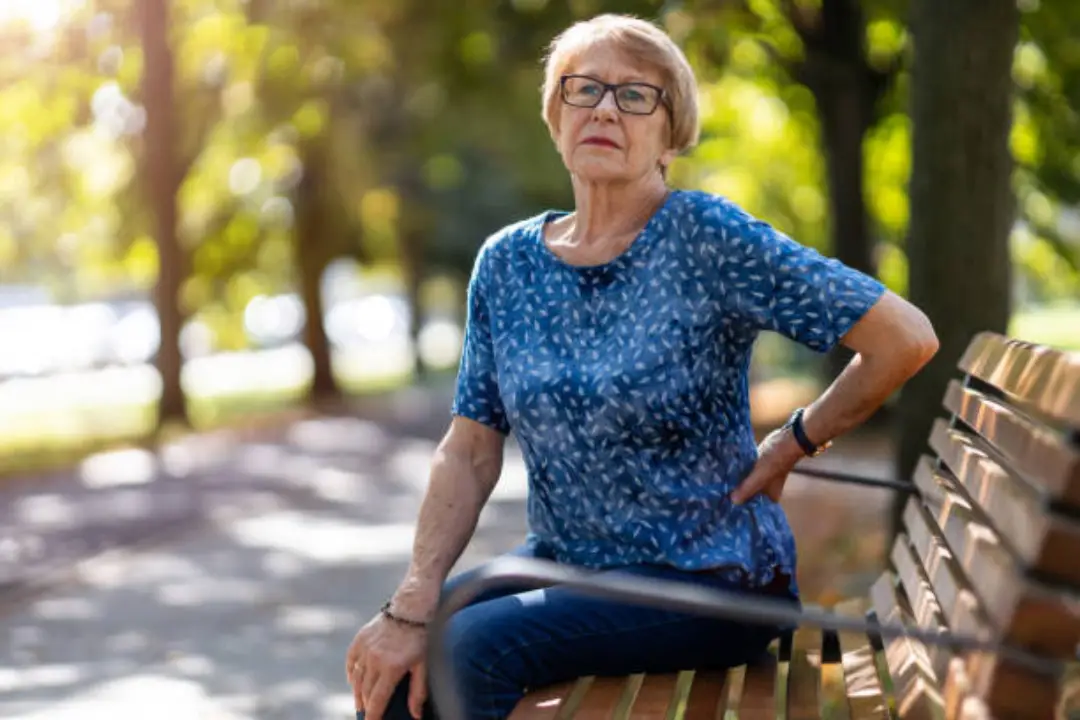
I was born Naomi Marie Blackwood, became Naomi Canton when I married Nicholas in 1981, and remained that person for forty-two years—until the day after we buried him, when my son drove me to a quiet road outside town and told me to get out. I’m sixty-eight years old now, with arthritic hands that still remember how to braid my daughter’s hair and knead the sourdough bread my family once loved. I’m telling you this so you understand: before everything collapsed, I was simply a mother who believed she had raised good children.
Nicholas’s cancer took fourteen months to kill him. Pancreatic—the silent executioner that gives you just enough time to put your affairs in order, but not enough time to truly live with the knowledge. We kept it quiet at first, just between us. Our children were busy with their own lives: Brandon with his financial consulting career in Boston that seemed to require him to miss every major holiday, and Melissa with her perpetually failing wellness businesses in Denver that somehow always needed “one more” investment from Dad.
“They don’t need this burden yet,” Nicholas had said one night, staring at the ceiling of our bedroom, the morphine making his words slur slightly. “Let them live their lives a little longer without this shadow.”
I nodded because I loved him. But I knew better. I knew our children in ways Nicholas, with his generous heart, refused to see.
When they finally arrived at our modest farmhouse on the outskirts of Milfield, Pennsylvania—the same house where they’d grown up, where Nicholas and I had built Canton Family Orchards from twenty acres of neglected apple trees into one of the most respected organic fruit operations in the state—they didn’t come with comfort or sympathy. They came with questions about the will.
“Mom, I’m just trying to be practical,” Brandon said, his voice taking on that condescending tone he’d perfected sometime after his first six-figure bonus. We were sitting at the kitchen table while Nicholas slept upstairs, his breathing labored even through the medication. “The medical bills must be piling up. Have you two considered downsizing? The business can’t be easy for you to manage alone.”
Brandon had left Milfield at eighteen, declaring small-town Pennsylvania as suffocating as the soil that had paid for his Princeton education. He’d visited maybe twice a year since then, usually staying in a hotel rather than his childhood bedroom because “the country air aggravates my sinuses.” But suddenly, during his father’s final weeks, he developed a profound interest in the family business that had embarrassed him throughout his adolescence.
Melissa arrived three days later, bringing six suitcases and the scent of expensive failure. Five wellness ventures in eight years, each one launched with her father’s money, each one abandoned when it required actual work. But she hugged Nicholas with genuine tears and slept beside his bed the night before he passed, which is why what came after hurt even more.
The funeral was small, just as Nicholas would have wanted. The cemetery sits on a low hillside outside town, overlooking our orchards where the spring blossoms were just beginning to show. I stood between my children as they lowered him into the ground, Brandon’s arms stiff around my shoulders, Melissa openly weeping into a monogrammed handkerchief I’d never seen before.
“He’s at peace now,” Pastor Williams said.
I wondered if that was true, or just something people say when someone dies after long suffering. What I remember most about that day was the silence afterward. The house echoed with it as neighbors dropped off casseroles and spoke in hushed tones about Nicholas’s kindness, his integrity, how he’d helped Mr. Peterson save his dairy farm during the recession or employed the Wilson boys when they needed summer work.
That evening, as the last visitors left, I told Brandon and Melissa, “I made up the guest rooms. I thought we could spend tomorrow going through some of your father’s things together.”
“About that, Mom,” Brandon said, setting down his whiskey glass with a precision that reminded me painfully of his father. “Melissa and I have been talking, and we think it’s best if we settle things quickly. We both need to get back.”
“Settle things?” I asked, though something cold was already settling in my chest.
“The estate,” Melissa clarified, not looking up from her phone. “The house, the business. We need to figure out the next steps.”
I’d expected grief from my children. Maybe some reminiscing about their father, sharing memories of the man who had loved them unconditionally despite their flaws. What I got instead was a boardroom meeting. Brandon opened his laptop on the dining table where we’d celebrated birthdays and graduations.
“Dad spoke to me about this last year,” he said, still not meeting my eyes. “He was worried about you managing alone. The business needs modernization, investment. The house is too much for someone your age.”
“My age,” I repeated, the words tasting bitter. “I’ve managed this orchard alongside your father for forty years.”
“And you’ve done wonderfully,” Melissa said in the same voice she used when selling overpriced supplements to desperate women. “But it’s time to think about your future, Mom. A retirement community would give you friends. Activities. You’d be so much happier.”
“I have friends,” I said, my voice sounding distant even to my own ears. “I have activities. This is my home.”
“It’s all of our home,” Brandon corrected, his tone sharpening. “And Dad left the business to Melissa and me in the will. He wanted us to take care of you, but he knew the business needed younger management.”
I stared at my son—this stranger in expensive clothes who thought he knew anything about the earth that had fed him, the trees his father had nursed through drought and blight and frost.
“Show me the will.”
He slid a document across the table. Not our family lawyer’s letterhead, but something printed on Brandon’s corporate stationery. Nicholas’s signature looked wrong somehow—too perfect, too steady for a man whose hands had trembled with pain for months.
“You had him sign this while he was on morphine.”
The rage that rose in me then was something primal, something I hadn’t felt since the day a fox tried to steal into our chicken coop when the children were small. I’d chased it off with a broom and the kind of fury that comes from protecting what’s yours.
“He was lucid,” Brandon insisted, but his eyes flickered away. “He wanted us to have a fresh start with the business. There’s a developer interested in the land. Platinum Acres. They’re willing to pay seven million dollars.”
“Seven million,” Melissa breathed, her eyes bright with greed. “Mom, we can all start fresh. You’ll have more than enough money for a beautiful retirement.”
Fresh—as if the life Nicholas and I had built was something stale, something to be discarded. As if the legacy of Canton Family Orchards, our sustainable farming practices, our refusal to sell to big grocery chains that would squeeze our workers, our annual donation of ten percent of our crop to local food banks—as if all of that was nothing compared to cookie-cutter homes for wealthy weekenders from Philadelphia.
“Your father would never sell this land for development,” I said, my voice steadier than I felt. “And I didn’t sign anything agreeing to this.”
“You don’t need to,” Brandon explained with practiced patience, like he was talking to a child. “The business was in Dad’s name. The house, too. Pennsylvania isn’t a community property state. Everything passes according to the will.”
I knew then that they had planned this—not just after Nicholas fell ill, but perhaps long before. How many times had Brandon visited in the last year, not to check on his dying father, but to lay the groundwork for this betrayal? How many of Melissa’s phone calls had been reconnaissance rather than concern?
“I need time,” I said, standing up. My legs felt unsteady. “I’m going to bed. We’ll discuss this tomorrow.”
“There’s nothing to discuss,” Brandon said, but I was already walking away, climbing the stairs to the bedroom I’d shared with Nicholas, where his scent still lingered on the pillows.
I didn’t sleep. I lay awake listening to the familiar creaks of our old farmhouse, staring at the ceiling and trying to understand how I had raised children who could do this. Had I been too soft? Had Nicholas’s generosity taught them to take rather than give? Or was this something born in them, some fundamental lack of empathy that no amount of love could have fixed?
Morning came with the smell of coffee—the expensive kind Brandon had brought from Boston because our local brand was “undrinkable.” I dressed slowly, my joints stiff with grief and age and the cold knowledge of what my children had become.
When I came downstairs, they were waiting with a small suitcase I didn’t recognize.
“We packed some essentials for you,” Melissa said brightly, too brightly. “Brandon and I thought we’d drive you to look at Sunny Pines today. It’s a beautiful retirement community just two hours from here. They have a room available starting next week.”
“I’m not going to any retirement community,” I replied, pouring myself coffee with hands that trembled only slightly. “This is my home.”
“Mom, be reasonable,” Brandon said, an edge creeping into his voice. “The paperwork is done. We close with the developers next week. You can’t stay here.”
I looked at my son—really looked at him—and saw nothing of Nicholas in his face. Nothing of the boy who had once followed his father through the orchard at dawn, asking endless questions about pollination and pruning. Nothing but a stranger who saw me as an inconvenience to be managed.
“I need my medication from upstairs,” I said quietly. “And I’d like to take some photos. Personal things.”
“Sure, Mom,” Melissa agreed, relief evident in her voice. “Take whatever personal items you want. We can send the rest later.”
I moved through my home one last time, touching the worn banister Nicholas had sanded and re-varnished every five years. The quilt my grandmother had made that draped across our bed. The window seat where I’d read stories to my children on rainy afternoons, back when they still wanted my attention.
In the bathroom, I retrieved my medications, but also slipped my passport and birth certificate from the hidden compartment in the medicine cabinet—the one Nicholas had built when we first worried about burglaries in the late eighties. In our bedroom closet, behind Nicholas’s collection of flannel shirts that still smelled faintly of him, I retrieved the small fireproof box containing the one thing my children didn’t know about: the original deed to twenty acres of land, purchased before I married Nicholas, still in my maiden name. The most profitable twenty acres, as it happened. The acres that included the water rights any developer would need.
When I came downstairs, my purse was heavier, but my heart felt lighter with a cold, clear resolve.
“Ready?” Brandon asked. It wasn’t really a question.
I nodded, allowing Melissa to take my arm as if I were already the infirm old woman they wanted me to be.
We drove in Brandon’s rental car, a sleek black SUV with leather seats. I watched my home disappear through the rear window, memorizing the sight of spring buds on the apple trees, the weathered red of our barn, the stone chimney Nicholas had rebuilt the summer before Brandon was born. We drove past Milfield’s small downtown, past the elementary school where I’d volunteered, past the community center where I still taught quilting on Wednesday evenings.
But instead of continuing on the highway toward the retirement community Brandon had mentioned, he turned onto County Road 27, a rural route that cut through farmland. Twenty minutes later, he pulled onto the gravel shoulder beside an empty field.
The engine idled as he turned to look at me, and in that moment, I saw something in his eyes that made my blood run cold. Not anger. Not even guilt. Just cold calculation.
“This is where you get out, Mom,” he said, his voice eerily calm. “The house and business are mine now.”
“What?” Melissa’s face registered shock. “Brandon, what are you doing?”
“What we discussed,” he snapped. “Mom’s not going to make this easy. She’ll contest the will, make scenes, embarrass us with the developer. This is cleaner.”
He reached across me and opened my door, letting in a rush of cool spring air.
“She has her medication, some clothes. There’s a gas station about five miles up. She can call one of her quilting friends to come get her.”
“Brandon, this is insane,” Melissa said, but her voice was weak, uncertain.
“Get out, Mom,” Brandon said, not looking at me.
I looked at my daughter, searching for any sign that she would stop this. Her mouth opened and closed, tears forming in her eyes, but she said nothing. She would go along with him. She always had.
“Melissa?” I asked, giving her one last chance.
“I’m sorry, Mom,” she whispered, her voice breaking. “It’s just… we need this money. I have debts. So many debts.”
I nodded once, gathered my purse and the small suitcase, and stepped out onto the gravel shoulder. The spring air was cool, scented with fresh earth and the distant promise of rain. I stood there clutching my bag as Brandon drove away without looking back, Melissa’s pale face visible through the rear window until they crested a hill and disappeared.
No phone. No cash. Or so they thought.
And that’s when I realized: I wasn’t alone. I was free. Free from pretending these people deserved my love simply because I had given them life. Free from the weight of maternal obligation to children who saw me as nothing but an obstacle between them and their inheritance.
I started walking, not toward the gas station Brandon had mentioned, but toward a future they couldn’t imagine. In my purse was my passport, my medication, and a deed to twenty acres of prime orchard land—land that included the water rights, the main house, and the barn. Land that was mine and mine alone, purchased with money I’d saved from my teaching job before I married Nicholas, kept separate all these years as a kind of insurance neither of us thought we’d ever need.
My children thought they’d left me with nothing. They were about to learn how catastrophically wrong they were.
The walk to town took nearly two hours. My sensible funeral flats weren’t made for country roads, and by the time I reached Miller’s Gas and Grocery at the edge of Milfield, my feet were blistered and the afternoon sun had burned my neck. I didn’t care. Pain has a way of clarifying things, and with each step, my purpose had crystallized into something sharp and unbreakable.
I didn’t go inside immediately. Instead, I sat on the weathered bench outside, watching pickups and sedans come and go, normal people living normal lives who had no idea that Naomi Canton—who’d judged their apple pies at the county fair for twenty years—had just been abandoned like garbage by her own children.
“Mrs. Canton?”
I looked up to see Ray Miller himself, third-generation owner of the store, wiping his hands on his apron. His weathered face creased with concern.
“You all right? You’re looking a bit peaked.”
“Just resting, Ray. It’s been a long day.”
He glanced at my small suitcase, then back at my face, reading more than I said.
“Real sorry about Nicholas. He was a good man. Best customer I ever had—always paid his bills on time, always had a kind word.”
“Yes, he was.” I straightened my spine, feeling strength return with each breath. “Ray, could I use your phone? I seem to have forgotten mine.”
“Of course you can. Come on inside.”
He led me past the beer coolers and snack aisles to the small office behind the counter, then tactfully closed the door behind me.
I didn’t call any of my quilting friends, as Brandon had suggested. I called Vincent Hargrove, our family lawyer of thirty years.
“Naomi,” he said immediately, his voice tight with concern. “I’ve been trying to reach you since yesterday. I was surprised not to see you at the reading.”
My hand tightened on the receiver. “What reading?”
Vincent was silent for a moment. “The will reading. Your son presented a document yesterday afternoon. But I had serious concerns. The signature looked wrong, and the terms contradicted everything Nicholas and I discussed last year. I’ve been trying to contact you to verify.”
“I’ve been… indisposed,” I said, my voice steady despite the rage building inside me. “Vincent, I need your help, and I need discretion.”
“You have both. Can you come to my office? One hour?”
“I’ll be there.”
I bought a cheap prepaid phone with the emergency cash I kept hidden in a secret compartment of my purse—money Nicholas had insisted we both carry after getting stranded with a flat tire years ago. I also purchased a bottle of water and a sandwich I had no appetite for. Ray refused to take my money.
“On the house, Naomi. You need anything else, anything at all, you just ask.”
His kindness nearly broke me, but I couldn’t afford to break. Not yet.
Vincent’s law office occupies the second floor of a Victorian building on Main Street, above a stationery store and across from the town hall where Nicholas and I had attended more zoning meetings about agricultural preservation than I could count. When his secretary Helen saw me, her eyes widened with concern.
“Mrs. Canton, Mr. Hargrove is expecting you.” She hurried from behind her desk. “Can I get you anything? Water? Coffee?”
“I’m fine, Helen. Thank you.”
Vincent met me at his office door. He’d been a year behind Nicholas in school, had handled our business incorporation, our wills—everything legal in our lives. Now in his late sixties, his tall frame was slightly stooped with age, but his eyes were as sharp as ever.
“Naomi.” He guided me to a leather chair, then sat not behind his imposing desk but in the chair beside me. “Tell me what’s happening.”
So I did. Every detail. The conversation after the funeral. The suspicious will. The drive to County Road 27. The abandonment. With each detail, Vincent’s expression darkened, his jaw tightening.
“The will they showed you was not the will Nicholas and I prepared last year,” he said when I finished. “Their document is a forgery. I suspected as much when I saw it, which is why I tried to contact you before proceeding.”
I opened my purse and removed the small fireproof box. From it, I withdrew the deed to the original twenty acres, the paper yellowed with age but the seal still clear.
“They don’t know about this.”
Vincent examined the deed, nodding slowly. “Smart. Very smart. This is still in your maiden name, Blackwood. You purchased this before your marriage?”
“With money I’d saved from teaching,” I confirmed. “Nicholas suggested putting it in my name when we first expanded the orchards. Insurance, he called it, in case the business ever failed or he died and left me vulnerable.”
“And now it’s insurance of another kind.” Vincent placed the deed carefully on his desk. “Naomi, this changes everything. This parcel includes the main house, the barn, and—” he paused, studying the property description more carefully, “—and the water rights to Miller Creek. Without access to water, the remaining orchard land is essentially worthless for development.”
“I know,” I said quietly.
Vincent looked at me with something like respect. “What do you want to do?”
I met his eyes. “I want my home back. I want the business my husband built. And I want my children to understand exactly what they’ve done.”
Vincent didn’t flinch at the coldness in my voice. Instead, he nodded approvingly.
“Let’s start with temporary accommodation. My sister Ruth runs Rose Hill Bed and Breakfast. She has a vacancy. Tomorrow we’ll begin the legal work.”
“No.” I shook my head. “We need to move faster. The developer is closing next week.”
Understanding dawned in Vincent’s eyes. “You’re not planning to just go through the courts.”
“Courts are for people with time,” I said. “I have a better plan.”
That night, in the floral-papered comfort of Rose Hill Bed and Breakfast, I made my first strategic call—not to my children, but to Harold Winters, the regional manager of Pennsylvania Trust Bank, where Canton Family Orchards had done business for decades.
“Mrs. Canton, I’m so sorry about your husband,” he said when he heard my voice. “Nicholas was a good friend as well as a valued client.”
“Thank you, Harold. I’m calling because I’ve discovered some concerning transactions, and I need your help to protect what’s left of our business.”
By midnight, I had made seven calls, each one a strand in the web I was weaving. I spoke to Martin Adams, the agricultural extension agent who’d worked with us for fifteen years. I spoke to Sophia Delaney, editor of the Milfield Gazette and Nicholas’s second cousin. I spoke to people who had known me and Nicholas for decades, people who understood that what my children were attempting wasn’t just wrong—it was an assault on everything our community valued.
In the morning, I met Vincent at his office with a legal pad full of notes.
“I need you to freeze the business accounts,” I told him. “And I need you to file an emergency injunction on any sale of the property based on the fraudulent will.”
Vincent reviewed my notes, his eyebrows rising. “This is comprehensive. And ruthless.”
“I had forty years with Nicholas,” I said. “I know every contract, every client, every detail of that business. And I’m going to use all of it.”
“Your children won’t take this quietly,” he warned.
“I’m counting on it.”
By noon, the pieces were in motion. Vincent had filed the emergency injunction. Harold had frozen the business accounts pending investigation of suspicious activity. Martin had contacted the environmental board about protected wetlands on the proposed development site—wetlands that happened to be on my twenty acres. And Sophia was preparing an article about a local inheritance dispute that might interest the Philadelphia papers.
My phone rang—the new prepaid one whose number they shouldn’t have known, but Vincent had made sure they received it. I let it ring four times before answering.
“This is Naomi.”
“Mom.” Brandon’s voice crackled with barely contained fury. “What have you done?”
I smiled, though he couldn’t see it. “I’ve only just begun.”
“Mom, be reasonable—”
“I gave you a chance to be reasonable,” I interrupted. “That ended on County Road 27.”
“Where are you?” Melissa cut in, her voice shrill. Brandon had clearly put me on speaker. “We’ve been worried sick.”
The lie hung between us like poison. They hadn’t called the police. Hadn’t contacted friends. They’d been too busy finalizing their betrayal.
“Worried that I survived?” I asked. “Worried that I didn’t conveniently disappear?”
“That’s not fair,” Melissa whined.
“Listen carefully,” I said. “I’m giving you one chance. Withdraw your fraudulent will. Sign the business and house back to me. In return, I’ll give you each fifty thousand dollars. After that, we’re done.”
Brandon laughed bitterly. “You’re delusional. You have nothing.”
“The will is a forgery,” Vincent interjected, leaning toward the speakerphone on his desk. “As the lawyer who drafted Nicholas Canton’s actual will, I can testify to that in court.”
Silence stretched across the line.
“You have twenty-four hours,” I said. “After that, the offer expires, and I proceed with fraud charges.”
I hung up before they could respond.
The next twenty-four hours passed in a blur of paperwork and strategy. By evening, I’d moved into a small apartment above Lucille’s Bakery—my friend since our children started kindergarten together had offered it without hesitation. By morning, I’d filed paperwork asserting my ownership of the original twenty-acre property. By noon, I’d met with the agricultural board about conservation easements Nicholas and I had quietly put in place years ago.
When my phone rang again and Brandon’s voice came through, it had lost its edge of superiority, replaced by something closer to panic.
“The offer’s off the table,” I said before he could speak.
“Our problem,” Melissa broke in. “Mom, please. I used the advance from the developer to pay off debts. If this falls through, I’ll be ruined.”
“You should have thought of that before leaving me on the side of the road,” I replied.
Over the following weeks, I watched my careful plan unfold with ruthless precision. The bank statements Vincent obtained showed suspicious withdrawals. The environmental board confirmed protected wetlands. The Philadelphia Inquirer picked up Sophia’s story, revealing that Platinum Acres had a pattern of targeting vulnerable elderly landowners.
And then Robert Wilson arrived—Nicholas’s college roommate, now one of Philadelphia’s most respected real estate attorneys. Thirty years ago, Nicholas had loaned Robert money when his first firm collapsed. Robert had never forgotten.
“These developers have been on our radar,” Robert told me, spreading documents across Vincent’s desk. “What they’re planning violates at least six environmental regulations. We’ve been looking for a way to stop them.”
“And now you have one,” I said.
In the end, my children signed away their claims in Vincent’s office, their faces hollow with defeat. Brandon tried one last time to salvage something.
“What happens now?” he asked.
“Now you leave Milfield,” I said, gathering the signed documents. “Both of you. Today. If I see either of you in this town again, I will press charges regardless of what you’ve signed.”
They left separately, shoulders slumped, neither looking back.
Three months later, I sat on my front porch in Nicholas’s rocking chair, watching the summer sun set over an orchard heavy with ripening fruit. The harvest would be good this year—perhaps our best ever. My new manager, Lisa Adams, had proven more than capable, and we’d already begun implementing the farm-to-table restaurant Nicholas and I had always dreamed of.
My phone chimed with a text from an unknown number: “Mom, please. It’s been months. Can we talk? – M.”
I deleted it without replying, just as I’d deleted the twelve before it. Melissa had been reaching out ever since the scandal broke, ever since her creditors took everything she owned. Brandon never contacted me at all. Vincent heard he’d been asked to resign from his firm when his connection to the fraud investigation came to light.
My children were learning the hardest lesson: that some bridges, once burned, can never be rebuilt. Some betrayals cut too deep for forgiveness.
As darkness settled over the orchard, I rocked gently, listening to the night sounds—crickets chirping, a distant owl, the creak of the chair against weathered boards. In my lap lay a notebook where I’d been sketching plans for the Nicholas Canton Agricultural Scholarship, a fund for local students pursuing sustainable farming.
“I’m doing it, Nicholas,” I whispered to the night air. “Everything we planned. Everything they tried to destroy.”
Tomorrow I would meet with the scholarship committee. Next week, I would host the first community harvest dinner, inviting the neighbors and friends who had rallied around me when I needed them most. And in the quiet evenings, I would sit here in Nicholas’s chair, watching over the orchard we had built together—a legacy that would continue without our children, strong and enduring as the trees themselves.
Not alone, after all. Just free.
Some might call me harsh, unforgiving. Some might say a mother should forgive anything. But remember this: my children made their choice on County Road 27 when they left me in the dust. I made mine every day after—to honor Nicholas’s legacy, to protect what we built, and to show that kindness should never be mistaken for weakness.
Would you have forgiven, or would you, like me, have chosen justice instead? Either way, remember: some people don’t discover what strength truly looks like until it’s too late.

Sophia Rivers is an experienced News Content Editor with a sharp eye for detail and a passion for delivering accurate and engaging news stories. At TheArchivists, she specializes in curating, editing, and presenting news content that informs and resonates with a global audience.
Sophia holds a degree in Journalism from the University of Toronto, where she developed her skills in news reporting, media ethics, and digital journalism. Her expertise lies in identifying key stories, crafting compelling narratives, and ensuring journalistic integrity in every piece she edits.
Known for her precision and dedication to the truth, Sophia thrives in the fast-paced world of news editing. At TheArchivists, she focuses on producing high-quality news content that keeps readers informed while maintaining a balanced and insightful perspective.
With a commitment to delivering impactful journalism, Sophia is passionate about bringing clarity to complex issues and amplifying voices that matter. Her work reflects her belief in the power of news to shape conversations and inspire change.
I liked the post very much.