The Janitor Who Fixed Everything
Part 1: The Test
I still remember the smell of that hangar in Chicago. It was a mix of jet fuel, polished steel, and the industrial bleach I used to scrub the floors. But mostly, I remember the sound of laughter. Not the warm, family kind—the sharp, metallic kind that sticks to your skin and burns.
My name is Ethan Cole. To the people at Hail Aviation, I was just “The Janitor.” I was the guy in the faded blue uniform, the one who cleaned up the coffee spills in the breakroom and mopped the oil off the epoxy floors near the landing pads. I was invisible. And honestly? I preferred it that way.
Invisibility was safe. Invisibility meant I could do my shift, collect my paycheck, and rush home to my little girl, Lily.
Lily was seven, and she was my whole world. Since my wife passed away three years ago, it had just been the two of us against a mountain of medical bills and a world that didn’t seem to care much about bad luck. Lily was sick—the kind of sick that requires specialists, expensive medications, and a dad who is home every night, not deployed overseas.
That’s why I left the Air Force. That’s why I buried my past as a lead aerospace mechanic and picked up a mop. A mop didn’t carry the weight of lives on the line. A mop let me be home for bedtime stories.
But that Tuesday morning, the weight came crashing back.
The main hangar was chaotic. Veronica Hail, the CEO, was pacing around the company’s newest helicopter prototype like a panther circling wounded prey. Veronica was brilliant, intimidating, and known for building her empire from the ground up right here in Illinois. She was also known for having zero patience.
“Why is it still grounded?” her voice echoed off the high metal ceiling.
A group of senior engineers stood around the machine, looking at their tablets, sweating. This helicopter was supposed to be delivered to a client in three hours. Every minute it sat on the ground was costing the company thousands of dollars.
“It’s failing the vibration test, Ms. Hail,” the lead engineer stammered. “We can’t isolate the frequency. It’s… it’s a ghost in the machine.”
I was nearby, wringing out my mop into the yellow bucket. I tried to make myself small, but I couldn’t help looking. I knew that machine. Not that specific one, but the anatomy of it. I’d spent ten years fixing rotors in sandstorms and freezing rain. I knew how they breathed.
I saw the open panel near the rotor housing. I saw the way the coupling was seated. It wasn’t a computer error. It was mechanical. It was off by a hair—literally millimeters.
Without thinking, I stepped a little closer. “It’s the coupling alignment,” I whispered, mostly to myself.
But the hangar was dead silent, and my voice carried.
Veronica spun around. Her heels clicked sharply on the concrete as she marched toward me. The engineers looked at me like I was a bug they had forgotten to squash.
“Excuse me?” Veronica asked, her eyes narrowing. She looked at my name tag, then at my dirty sneakers. “Did the janitor just offer a technical opinion?”
A few engineers snickered. My face burned hot. I gripped the mop handle so tight my knuckles turned white.
“I… I just said it looks like the coupling alignment, Ma’am,” I stammered, trying to keep my voice steady. “If you adjust the torque on the lateral bolts, it might settle the vibration.”
The silence stretched for a painful five seconds. Then, Veronica threw her head back and laughed. It was a harsh, dismissive sound.
“Well, gentlemen,” she said, turning back to her highly paid team. “Apparently, we’re overpaying you. The guy who cleans the toilets thinks he knows more about aerodynamics than you do.”
The laughter rippled through the room. It felt like being back in high school, but worse. This was my livelihood. I couldn’t lose this job. I needed the insurance for Lily.
Veronica turned back to me, a cruel smirk playing on her lips. She stepped into my personal space, her expensive perfume clashing with the smell of my bleach bucket.
“Tell you what, Ethan,” she said, her voice dripping with sarcasm. “You fix this helicopter. You fix a ten-million-dollar machine with your mop bucket wisdom. If you get this bird in the air in the next hour, I’ll kiss you right here in front of everyone.”
The room erupted. The engineers were slapping their knees. Security guards were chuckling.
“And if you touch it and break it,” she added, her voice dropping to a cold whisper, “you’re fired. And I’ll make sure you never work in this city again.”
She turned on her heel and walked away, dismissing me like I was nothing.
I stood there, frozen. The laughter died down as everyone went back to their confused huddles, ignoring me again. They didn’t think I’d dare. They thought I was just a janitor. They didn’t know about the medals in my drawer at home. They didn’t know about the nights I spent keeping birds in the air when failure wasn’t an option.
I looked at the helicopter. I looked at the clock.
I thought about Lily. I thought about the pharmacy bill sitting on my kitchen counter with a big red “OVERDUE” stamp on it. I thought about the way Veronica looked at me—like I was debris.
I took a deep breath. I pushed my mop bucket to the side.
I wasn’t going to let them win.
Part 2: The Fix
The hangar doors were vast, rattling slightly in the Chicago wind, a sound that usually blended into the background noise of my life. But in the silence left behind by Veronica Hail and her entourage of engineers, that rattling sounded like a countdown.
I stood there for a long time, gripping the handle of my mop until my knuckles turned the color of old parchment. The echo of their laughter was still bouncing around the high steel rafters, stinging my ears.
For a moment, I considered just doing my job. I looked at the yellow bucket, the gray water swirling with chemical cleaner. I could just finish mopping, clock out at 4:00 PM, pick up Lily from Mrs. Gable’s downstairs, and heat up another frozen lasagna. I could swallow the insult. I had swallowed plenty of them over the last three years.
But then I thought about last night.
I thought about Lily sitting at the kitchen table, her small face pale under the fluorescent light of our cramped apartment. She had been trying to hide it, but I saw her wince when she swallowed. The meds weren’t working as well as they used to. The specialist in downtown Chicago—Dr. Evans—had told me that we needed to switch her to a new immunotherapy treatment.
“It’s promising, Ethan,” he had said, looking at his clipboard instead of my eyes. “But insurance is tricky with this one. It’s considered ‘experimental’ by your provider.”
“Tricky” was doctor-speak for expensive. “Tricky” meant five thousand dollars out of pocket just to start.
I had forty-two dollars in my checking account.
I looked up at the helicopter. It was a Bell 525 Relentless prototype, sleek, silver, and intimidating. A machine built for power, speed, and precision. To the engineers in the break room, it was a collection of schematics and data points. To Veronica, it was a quarterly profit margin.
But to me? To me, it was a puzzle. And I had never met a puzzle I couldn’t solve.
The hangar was empty now. It was lunch hour. The engineering team had retreated to the cafeteria. Security was on rotation, meaning the floor patrol wouldn’t pass by for another twenty minutes.
I looked around. The coast was clear.
My heart hammered against my ribs—a frantic rhythm I hadn’t felt since my last tour in Kandahar. This was reckless. If I touched that bird and left so much as a smudge of grease on the wrong sensor, I wouldn’t just be fired. I’d be blacklisted. I could be sued.
“Daddy, are you a superhero?” Lily had asked me once, pointing to a picture of me in my flight suit that I kept hidden in a shoebox.
“No, peanut,” I had told her. “I’m just a mechanic. I fix things.”
“Fixing things is a superpower,” she had insisted.
I let go of the mop. It clattered against the bucket, a loud sound in the empty space.
I walked toward the helicopter.
My steps were heavy, my work boots squeaking on the epoxy floor. As I got closer, the smell hit me—aviation fuel, hydraulic fluid, the faint ozone scent of avionics. It was the smell of my past. It was the smell of the man I used to be before grief and debt stripped me down to a janitor.
I reached the fuselage. Up close, the beast was even more impressive. I ran a hand along the composite skin, feeling the cold smoothness. I moved toward the rotor housing, the place where the vibration was originating.
The engineers had been looking at the computer diagnostics. That was their mistake. They were trusting the sensors to tell them the story, but sensors only report what they’re told to measure. They don’t feel the machine.
I needed tools.
I scanned the nearby workbenches. The engineers were sloppy; they always left things out. I spotted a Snap-on rolling cabinet that hadn’t been locked. I slid a drawer open. The chrome of the wrenches gleamed under the overhead lights.
It had been three years since I held a torque wrench with intent. Three years of mops, brooms, and toilet brushes.
I grabbed a 3/8-inch drive torque wrench and a set of crowfoot adapters. The weight of the steel in my hand felt like shaking hands with an old best friend.
I climbed up the maintenance step, moving with a muscle memory that hadn’t faded. I was no longer Ethan the Janitor. I was Sergeant Cole, Lead Airframe Mechanic, 101st Airborne.
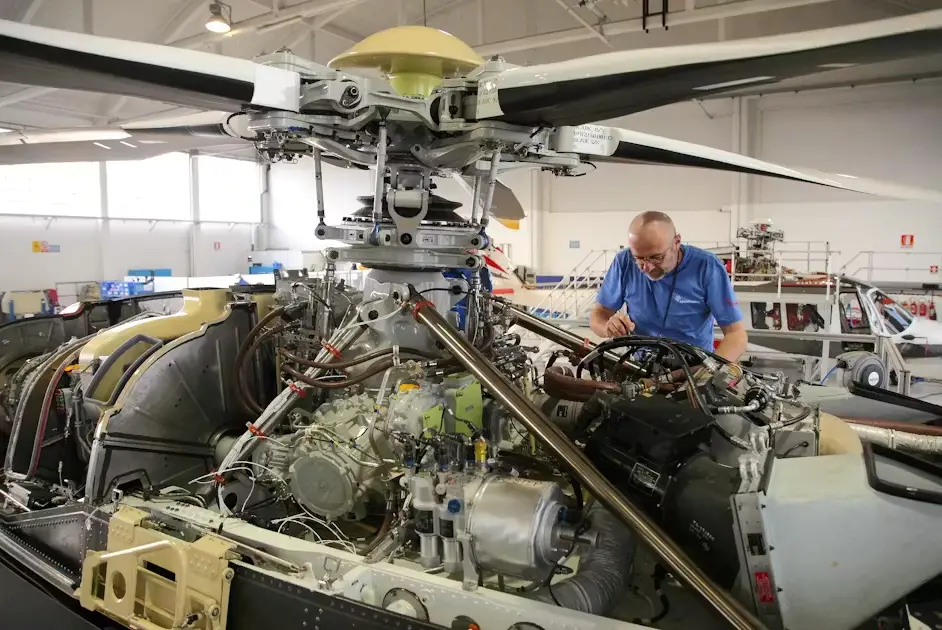
I popped the cowling on the main rotor transmission.
There it was.
To the untrained eye, it looked perfect. The linkages were shiny, the bolts were secured with safety wire, and the fluid levels were green. But I didn’t use my eyes. I used my fingers.
I reached in, bypassing the main drive shaft, and felt the damper bracket. It was tight. Too tight.
The engineers had torqued it to spec, I was sure of that. But the manual for this specific rotor system was written for static load. Under dynamic load—when the blades were spinning at 300 RPM—the harmonic resonance of the composite frame caused the metal to expand microscopically. If the bracket was torqued to the factory “perfect” spec, it became rigid. It couldn’t flex with the vibration. It fought the vibration.
It needed to breathe.
“You’re suffocating,” I whispered to the machine.
I set the wrench. I didn’t look at the dial. I closed my eyes.
I remembered the sandstorms in the desert. I remembered the screaming of the wounded being loaded into the back of a Black Hawk while the rotors churned the air into dust. I remembered the pilot screaming that the bird was shaking too hard to lift off. I had climbed up there then, under fire, and done this exact adjustment by feel.
I applied pressure. Click.
I backed it off a quarter turn. Then I tightened it again, stopping not when the wrench clicked, but when the tension in the bolt felt “dead”—that sweet spot where the metal is holding but not strangling.
I moved to the second coupling. Same thing. Too rigid.
I worked fast. Sweat pricked at my hairline, not from exertion, but from the adrenaline of doing something forbidden. I was rewriting the work of engineers who made ten times my salary. I was risking everything on an instinct.
I finished the alignment. It took me twelve minutes.
I wiped the sweat from my forehead with my sleeve, careful not to drip on the open transmission. I closed the cowling, securing the latches with a soft snap. I wiped down the metal where I had touched it, removing any fingerprints with a rag from my back pocket.
I climbed down.
I put the tools back exactly where I found them. I wiped the handle of the torque wrench.
Then, I walked back to my bucket. I picked up the mop.
My hands were shaking. Not from fear anymore, but from the rush. For twelve minutes, I hadn’t been a broke single dad terrifyingly close to homelessness. I had been a mechanic. I had been useful.
I started mopping the floor again, the rhythmic swish-swish of the wet strings against the concrete acting as a metronome to slow my heart rate down.
Ten minutes later, the double doors swung open.
The noise of the hangar returned instantly. The engineers filed back in, looking well-fed and still annoyed. Veronica followed them, phone pressed to her ear, looking like a storm cloud in a tailored suit.
“I don’t care what the supplier says,” she was barking into the phone. “If we don’t deliver by Friday, the contract is void. Fix it.” She hung up and glared at the helicopter.
She didn’t even look at me. I was just part of the scenery again.
“Alright,” the lead engineer, a man named Henderson, sighed. “Let’s run the diagnostic again. Maybe the sensor was just glitching.”
“It wasn’t a glitch, Henderson,” Veronica snapped. “The bird was shaking like a washing machine. Run the active test.”
My stomach tightened. This was it.
If I was wrong, if my instinct was off, the vibration would be worse. The helicopter might damage itself. They would check the logs. They would check the cameras. They would see me.
A test pilot, a guy named Miller with a confident swagger, climbed into the cockpit. He put on his headset and gave a thumbs up.
“Clear prop!”
The starter whine began—a high-pitched scream that deepened into a roar as the turbine caught. The blades began to turn. Whoosh. Whoosh. Whoosh.
Slowly, the speed increased. The air in the hangar began to circulate, whipping papers off clipboards and blowing my hair back. I leaned on my mop, watching from the safety of the yellow caution line.
The rotor blurred into a disc. The sound became a deafening thrum.
Usually, at this RPM, the “hop” would start. The landing skids would begin to chatter against the concrete. The tail boom would oscillate.
But today… nothing.
The helicopter sat there, planted on the ground, rock steady. The blades cut the air with a smooth, aggressive rhythm. It was a perfect hum.
I saw Miller in the cockpit. He was looking at his instrument panel, frowning. He tapped the gauge. He looked confused. He pushed the cyclic stick slightly, testing the response. The bird moved smoothly on its suspension, fluid and graceful.
He gave a thumbs up to the ground crew, but his face was a mask of shock.
Veronica stepped closer, her hair whipping in the rotor wash. She shielded her eyes, looking at the skids. They weren’t moving.
“Shut it down!” she signaled.
The turbine wound down. The blades slowed. The noise died away until the hangar was quiet again—but this time, the silence was heavy with confusion.
Miller opened the door and jumped down.
“Well?” Veronica asked, her arms crossed.
“It’s… it’s perfect,” Miller said, taking off his helmet. “Zero vibration. Stick energy is clean. What did you guys do?”
Veronica turned to Henderson. “I thought you said you were going to lunch.”
“We did,” Henderson said, looking at his team. “We haven’t touched it since the last test failed.”
“Don’t lie to me,” Veronica warned, her voice dangerous. “Machines don’t fix themselves. Who authorized the repair? And why wasn’t it logged?”
The engineers looked at each other. They were baffled. They started checking their tablets, scrolling through digital logs.
“Ms. Hail, the access logs are empty,” one of the junior engineers said, his voice trembling. “No one logged into the maintenance computer. No one badge-swiped the tool crib.”
“Then how is it fixed?” she demanded.
I was scrubbing a spot on the floor about twenty feet away. I wasn’t looking at them, but I could feel the tension radiating outward.
Veronica walked around the helicopter, her eyes scanning every inch. She was smart; I gave her that. She knew this wasn’t magic. She knew someone had touched her machine.
She stopped at the maintenance step. She leaned in, looking closely at the cowling I had opened.
“There,” she said, pointing.
The engineers crowded around.
“What?” Henderson asked.
“A smudge,” she said. She reached out a manicured finger and wiped a tiny spot on the polished silver metal. “Grease. Someone opened this panel.”
She turned around, her eyes scanning the room. The engineers. The security guard by the door. And then… me.
Her eyes landed on me.
I kept mopping. Don’t look up, I told myself. Just be the janitor.
But I could feel her stare. It was burning a hole in the side of my head.
I heard the clicking of her heels. She was coming over.
“Ethan,” she said.
I stopped mopping. I straightened up, wiping my hands on my pants. I turned to face her. She was standing five feet away, the entire engineering team behind her like a confused jury.
“Yes, Ma’am?”
“Did you touch my helicopter?”
The question hung in the air.
I had a choice. I could lie. I could say no, say I saw a guy in a jumpsuit run in and out. I could protect my job.
But then I remembered the feeling of the wrench in my hand. I remembered the pride I felt when that rotor spun smooth. I remembered that I wasn’t just a janitor.
I looked her in the eye.
“Yes, Ma’am,” I said quietly. “I did.”
A collective gasp went through the group. Henderson looked like he was going to faint.
“You…” Veronica seemed at a loss for words, which was rare for her. “You touched a ten-million-dollar prototype? Are you insane?”
“I fixed it,” I said, my voice gaining a little strength. “It wasn’t the software. It was the damper bracket. It was torqued for static load, not dynamic. I backed it off a quarter turn and reseated it by feel.”
Silence. Absolute, stunned silence.
Henderson stepped forward, his face red. “That’s impossible. You’re a janitor. You can’t just ‘feel’ a torque spec. That’s highly calibrated equipment!”
“Check the bolts,” I said, looking at Henderson. “Get your torque wrench. Check the lateral tension. You’ll find they’re exactly at 45 foot-pounds, allowing for 0.02 inches of thermal expansion.”
Henderson looked at Veronica. She nodded sharply. “Check it.”
Henderson scrambled up the maintenance step. He opened the panel. He put his digital wrench on the bolt. He waited.
“Well?” Veronica barked.
Henderson looked down, his face pale. He looked at the reading on his tool, then at me, then back at the tool.
“It’s… it’s exactly 45 foot-pounds,” he whispered. “Dead on.”
He climbed down slowly, looking at me with a mixture of fear and awe.
Veronica stared at me. Her expression was unreadable. The mockery from earlier was gone, replaced by a fierce, calculating intensity.
“Who are you?” she asked softly.
“I’m Ethan Cole,” I said. “I mop the floors.”
“No,” she shook her head slowly. “Janitors don’t know about dynamic loads and thermal expansion. Janitors don’t calibrate aerospace couplings by hand. Who are you really?”
I sighed. The secret I had kept hidden, the past I had buried to protect Lily from the instability of my old life, was coming out.
“I was a Master Sergeant in the Air Force,” I said, my voice steady. “160th Special Operations Aviation Regiment. I spent twelve years keeping birds in the air in places where, if the engine quit, everyone died. I didn’t learn from a textbook, Ma’am. I learned in the dirt.”
The revelation hit the room like a physical wave. The snickers, the jokes, the dismissal—it all evaporated. The men who had laughed at me for cleaning up their coffee spills were now looking at a combat veteran who had likely forgotten more about aviation than they would ever learn.
Veronica took a step closer. She looked at my hands—rough, scarred, stained with bleach and now, a little bit of grease.
“If you’re a Master Sergeant from the 160th,” she said, her voice devoid of its usual bite, “why the hell are you pushing a mop in my hangar for minimum wage?”
This was the part that hurt. The mechanics of a helicopter were easy to explain. The mechanics of a broken life were harder.
I looked down at my boots. I thought of the medical bills. I thought of the flexible hours this job gave me so I could take Lily to her treatments. I thought of the pride I had swallowed for her.
“Because my daughter is dying,” I said. The words came out raw, stripping away any defense I had left.
The silence in the hangar changed again. It wasn’t shocked anymore. It was ashamed.
“She has Acute Lymphoblastic Leukemia,” I continued, forcing myself to look up, to look Veronica in the eye. “My wife passed three years ago. It’s just me and Lily. The treatments… they take everything. I needed a job that let me leave at 3 PM to pick her up. I needed a job close to the hospital. I couldn’t take a deployment contract. I couldn’t take a high-stress engineering gig that required sixty hours a week. I needed to be a dad first.”
I took a breath.
“So I took the mop. Because a mop doesn’t ask me to travel. A mop doesn’t call me at midnight. But today… today I saw a machine that was hurting. And I knew how to fix it. So I did.”
I gripped the mop handle again, bracing myself for the firing squad.
“I’m sorry I touched your equipment, Ms. Hail. I’ll pack my things.”
I turned to walk away. I didn’t want them to see my eyes watering. I didn’t want their pity. I just wanted to go home and hug my daughter.
“Wait.”
Veronica’s voice cracked. It wasn’t the command of a CEO. It was the voice of a human being.
I stopped.
I turned around. Veronica was standing there, and for the first time since I’d started working at Hail Aviation, the ice queen mask was gone. Her eyes were wide, shimmering slightly. She looked at Henderson, then at the helicopter, then back at me.
She took a deep breath, composing herself, but her hands were shaking slightly.
“You’re not going anywhere, Ethan,” she said.
She walked up to me, closing the distance until she was standing right in front of me. She didn’t care about the bleach smell anymore.
“I told you,” she said, her voice loud enough for everyone to hear, “that if you fixed this helicopter, I would kiss you.”
The engineers gasped again.
“I’m not going to kiss you, Ethan,” she said softly, a sad smile touching her lips. “Because I don’t deserve to. I mocked you. I belittled you. I judged you by the uniform you wear instead of the man you are. And for that, I am profoundly sorry.”
She extended her hand.
“I don’t need a janitor,” she said firmly. “I need a Lead Technical Advisor. And I think I just found the best one in the state of Illinois.”
I looked at her hand. It was perfectly manicured, contrasting with my rough, calloused palm.
“But… the hours,” I stammered. “My daughter…”
“Bring her,” Veronica said instantly. “We have a daycare center on the third floor. If she’s too sick for that, you work from home. You work when you can. I don’t care about the schedule. I care about the talent. And I care about fixing the mistake I made today.”
She paused, looking around at her silent team.
“We all need to fix the mistake we made today.”
I hesitated. I looked at the helicopter, then at the mop bucket. The symbol of my sacrifice. The symbol of my hiding.
I reached out and took her hand. Her grip was firm, warm.
“Thank you, Ms. Hail,” I choked out.
“Call me Veronica,” she said. “And Ethan? Go home. Go see your daughter. You start your new job tomorrow. And bring those bills you mentioned. We need to talk about your signing bonus.”
As I walked out of the hangar that day, I didn’t look back. I left the mop bucket in the middle of the floor.
Part 3: The Storm
I pulled up to the small, peeling apartment complex on the south side. I ran up the stairs, two at a time. I unlocked the door.
“Lily!” I called out. “Daddy’s home!”
There was no answer.
Usually, she was on the couch, watching cartoons. Or at the table with her coloring books.
The apartment was silent. Too silent.
“Lily?”
I ran to her bedroom. Empty.
My phone buzzed in my pocket. I pulled it out, my hands trembling. It was Mrs. Gable, the neighbor who watched her.
“Ethan,” her voice was panicked, tearful. “Ethan, you need to get to St. Jude’s immediately. It’s Lily. She collapsed. The ambulance just left.”
The phone slipped from my hand and hit the floor with a crack.
The high of the promotion, the victory in the hangar, the hope—it all shattered in a split second.
I didn’t think. I ran.
The sliding glass doors of the emergency room at St. Jude’s hissed open, and I burst through them like a man on fire. The air inside was different from the hangar. The hangar smelled of fuel and possibility; the hospital smelled of antiseptic and fear.
“Lily Cole!” I shouted at the triage nurse, my voice cracking. “My daughter. She was just brought in. Lily Cole!”
The nurse, a woman with tired eyes who had seen a thousand panicked fathers, didn’t flinch. She tapped on her keyboard. “Pediatric ICU. Room 402. But sir, you can’t just—”
I didn’t hear the rest. I was already running.
The elevator ride to the fourth floor felt like it took a century. My reflection in the steel doors stared back at me—a man in a janitor’s uniform, stained with grease and sweat, terror etched into every line of his face.
When I reached Room 402, the scene stopped me dead in my tracks.
Doctors were swarming. Monitors were screaming that high-pitched, rhythmic alarm that signals a crash. I saw a tube down Lily’s throat. Her skin, usually so pale, was now a translucent gray. She looked tiny in the center of all that machinery.
“Clear!” a doctor shouted.
I watched, helpless, as they worked on her. I was paralyzed in the doorway, my boots feeling like they were filled with concrete.
A hand grabbed my shoulder. It was Dr. Evans, the specialist I had been unable to pay for months. He looked grim.
“Ethan,” he said, pulling me into the hallway away from the chaos. “Her immune system crashed. Septic shock. It’s attacking her organs. The current protocol isn’t working.”
“Do something else!” I pleaded, grabbing his white coat. “You said there were experimental treatments. You said there was hope!”
Dr. Evans looked down, unable to meet my eyes. “The new immunotherapy drug, the one we talked about? It’s her only shot to reverse the cytokine storm. But the pharmacy won’t release it.”
“Why?” I demanded.
“Insurance denied the emergency authorization an hour ago,” he said quietly. “It’s classified as elective because it’s not FDA approved for this specific stage yet. The cost is forty-five thousand dollars for the initial dose. Ethan… the hospital administration won’t override it without payment upfront. I’ve tried. I’ve been yelling at them for twenty minutes.”
Forty-five thousand dollars.
I had forty-two dollars in the bank. I had a maxed-out credit card. I had a 2008 sedan with a transmission leak.
“I’ll sign whatever,” I choked out. “I’ll pay it back. I’ll work for the rest of my life. Just give it to her!”
“They need the funds now, Ethan. The drug has to be flown in from the distribution center in Indianapolis. Even if you had the money, with this storm front moving in over Lake Michigan, the transport is grounded. We’re running out of time.”
He put a hand on my shoulder, a gesture of finality. “Go be with her. It might be… time.”
I sank to the floor. The cold linoleum seeped through my uniform. I buried my face in my grease-stained hands and wept.
The hallway was blurry through my tears. I heard footsteps approaching—clicking heels, fast and authoritative, cutting through the squeak of rubber-soled nurses’ shoes.
“Get up.”
The voice was familiar. Sharp. Commanding.
I looked up.
Veronica Hail stood over me.
She looked out of place in the sterile hospital corridor. She was still wearing her impeccable charcoal business suit, her hair perfectly styled, but she was out of breath. Her eyes were wide, scanning the hallway, taking in the scene—the screaming monitors, the defeated doctor, the janitor on the floor.
“Ms. Hail?” I whispered. “What are you…”
“I followed you,” she said, her voice tight. “You left the hangar like you were running from a fire. I checked your file. I called the number.” She looked at Dr. Evans. “Are you the doctor?”
Dr. Evans blinked, surprised by the intensity of this stranger. “I am. And you are?”
“I’m her father’s employer,” Veronica said, stepping between me and the doctor. “What is the problem? Why isn’t that child getting the medicine?”
“It’s a matter of funding and logistics,” Dr. Evans explained wearily. “The insurance—”
“I don’t care about the insurance,” Veronica cut him off. She pulled a checkbook from her designer bag. She didn’t hesitate. She uncapped a pen and started writing. “What’s the number? Forty-five? Fifty? Make it a hundred thousand.”
She ripped the check out and slammed it against the doctor’s clipboard.
“There,” she said. “That covers the drug, the stay, and whatever else she needs. Now get it.”
Dr. Evans looked at the check. He looked at the signature. His eyes widened. “Ms. Hail… this is… okay. I can override the pharmacy hold with this. But that doesn’t solve the logistics. The drug is in Indianapolis. The storm has grounded all medical transport. Even with the money, we can’t get it here fast enough. She has maybe two hours.”
Veronica froze. She looked at me. I was still on the floor, staring at her in shock.
“Two hours?” she asked.
“The roads are jammed with rush hour traffic and the rain,” Dr. Evans said. “Driving would take four. The MedEVAC helicopters are grounded due to the wind shear. It’s a no-go.”
Veronica turned slowly to face me. A strange look crossed her face. It was the same look she had in the hangar when she realized I had fixed her machine. It was a look of calculation. Of risk.
“Ethan,” she said.
I stood up. “Yes?”
“The Bell 525,” she said. “The prototype. The one you fixed.”
“What about it?”
“It’s built for high-speed offshore operations,” she said, her mind racing. “It’s rated for Category A takeoffs in hurricane conditions. It has a de-icing system that the standard medical choppers don’t have. And it’s fast. It cruises at 160 knots.”
She grabbed my arm. “Can it fly in this?”
I looked out the window at the darkening sky. The rain was lashing against the glass. The wind was howling.
“It can fly,” I said, my voice steadying. “But you need a pilot who knows how to handle the active vibration control in manual mode. Miller won’t do it. He’s a test pilot, not a storm chaser.”
Veronica looked me dead in the eye. “Miller is at the hangar. But he doesn’t know the machine like you do. You said you were 160th SOAR? Night Stalkers?”
“Yes.”
“Then you fly it.”
The doctor interjected, “You can’t be serious. You’re going to steal a corporate prototype to fly into a storm?”
Veronica ignored him. She pulled out her phone and dialed a number. “Security? This is Hail. Prep the 525. Now. Fuel it. I’m coming with a crew.” She hung up and looked at me. “I’m not stealing it. I own it. And I’m using it to save a life.”
“Ethan,” she said, her voice softening. “I can buy the drug. But I can’t fly the bird. If you want to save her, we have to go. Now.”
I looked at the door to Room 402. I looked at my daughter’s fading form.
“Let’s go,” I said.
Part 4: The Flight
The drive back to the hangar was a blur of Veronica’s sports car weaving through stopped traffic, driving on the shoulder, breaking every law in the Illinois vehicle code. She drove with the same aggression she ran her company.
When we screeched onto the tarmac, the rain was coming down in sheets. The wind was whipping the windsock straight out, tearing at the fabric.
The Bell 525 sat on the pad, lights flashing, rotors already spinning. The ground crew looked terrified, struggling to stand against the gusts.
We ran to the aircraft. I didn’t head for the passenger door. I headed for the cockpit.
I climbed into the left seat. The smell of the avionics, the glow of the screens—it was like coming home. I put on the headset. The noise of the storm faded, replaced by the hum of the systems.
Veronica climbed into the co-pilot seat. She wasn’t a pilot, but she strapped in, her face pale but determined.
“You know how to read a map?” I asked over the intercom.
“I run a navigation company, Ethan,” she replied, her voice shaky but defiant. “Just fly the damn thing.”
I grabbed the collective. My hands, the hands that had been mopping floors for three years, now commanded ten million dollars of horsepower.
“Tower, this is Hail One, requesting immediate departure, special VFR, medical emergency,” I radioed.
“Hail One, negative, airport is closed. Wind shear alert. Visibility zero,” the tower crackled back.
I looked at Veronica.
“Go,” she said.
I pulled the collective. The 525 leapt off the ground.
The wind hit us instantly. The helicopter bucked violently to the left. A normal machine would have rolled over. But the dampeners—the ones I had tuned by hand just hours ago—kicked in. I felt the vibration through the stick, the metal groaning, but it held. It breathed.
“Hanging on!” I yelled as I pushed the nose down and banked hard into the wind.
We tore through the sky toward Indianapolis. The flight was a nightmare. We were flying low, under the radar, dodging cell towers and power lines in the blinding rain. Every gust was a fight.
Veronica was clutching the dashboard, her knuckles white. But she didn’t scream. She watched me. She watched my hands move with a fluid precision, making hundreds of micro-adjustments every second.
“You really are a master,” she whispered over the comms.
“I’m just a dad,” I gritted out, fighting the stick.
We landed at the distribution center in Indianapolis forty minutes later. It was a rough landing, bouncing once, but we were down. A courier ran out to the helicopter, ducking under the rotors, and handed a small cooler through the window to Veronica.
The cure.
“We got it!” she yelled. “Get us back!”
The flight back was worse. The storm had intensified. The headwind was brutal. The fuel gauge was dropping faster than I liked.
“We’re burning too much fuel fighting the wind,” I said, scanning the instruments. “We’re going to be tight.”
“How tight?” Veronica asked.
“Fumes,” I said.
We hit Chicago airspace with the low fuel light flashing. The city was a grid of blurred lights below us. I could see the hospital in the distance, a beacon of white light in the darkness.
“St. Jude’s helipad is on the roof,” I said. “It’s tight. And with this wind…”
“You can do it,” Veronica said. She reached out and put a hand on my arm. “Ethan. You fixed this machine. You know it. Trust yourself.”
I took a deep breath. I channeled every mission, every sandstorm, every moment of my life into my hands.
We approached the roof. The updraft from the building was vicious. The helicopter swayed, the tail swinging wildly. I danced on the pedals. I eased the collective down.
The skids touched the concrete. We slid a few inches, then settled.
I cut the engines.
Silence.
I slumped back in the seat, exhausted.
Veronica unbuckled instantly. She grabbed the cooler. She opened her door and jumped out into the rain.
“Come on!” she screamed.
We ran into the hospital, bypassing the elevators, bursting through the stairwell doors. We sprinted down the hallway to Room 402.
Dr. Evans was standing by the bed, checking his watch. The monitor was beeping slowly. Too slowly.
“We have it!” Veronica shouted, holding up the cooler like a trophy.
The nurses rushed forward. They took the cooler, unpacked the vial, and prepped the IV.
I stood at the foot of the bed, gasping for air, watching the clear liquid flow down the tube and into my daughter’s arm.
“Now we wait,” Dr. Evans said.
I collapsed into a chair in the corner. Veronica didn’t leave. She pulled up a chair next to me.
She looked at her ruined designer suit, soaked and stained with oil from the cockpit. She looked at her hair, which was a mess. And then she looked at me.
“You fly pretty good for a janitor,” she said softly.
I looked at her, and for the first time in years, I smiled. A real smile.
“You co-pilot pretty good for a CEO,” I replied.
We sat there in the dim light of the ICU, the millionaire and the janitor, united by the steady beep of the monitor that signaled my daughter was fighting back.
Part 5: The Awakening
The sun that rose over Chicago the next morning didn’t look like the sun from the day before. It was cleaner, sharper, washing over the city in a bath of pale gold. The storm had broken, leaving behind scrubbed streets and a stillness that felt like a held breath.
I was awake to see it. I hadn’t slept. I was sitting in the uncomfortable vinyl chair next to Lily’s bed, my hand resting lightly on her small arm.
The monitor beeped—steady, strong, rhythmic. A lullaby of life.
Around 4:00 AM, her fever had broken. The color had returned to her cheeks, just a faint flush of pink, but to me, it was the most beautiful color in the world. Dr. Evans had come in an hour ago, checked her vitals, and let out a long breath he seemed to have been holding since yesterday.
“She turned the corner,” he had whispered, checking the chart. “The cytokine levels are dropping rapidly. It’s a miracle, Ethan. She’s going to make it.”
I looked at Lily now. Her eyes fluttered open. She looked groggy, confused.
“Daddy?” she rasped.
My heart swelled so big I thought it would crack my ribs. “I’m here, peanut. I’m right here.”
“Did you fix it?” she asked sleepily.
I laughed, a wet, choking sound. “Yeah, baby. We fixed it.”
“Good,” she sighed, closing her eyes again. “You’re a superhero.”
She drifted back to sleep. I sat there, weeping silently, grateful for every breath she took.
I wasn’t alone in the room. In the corner, curled up in the other visitor chair with her expensive blazer pulled over her like a blanket, was Veronica Hail. She was fast asleep. The Dragon Lady of Chicago Aviation, the woman who terrorized engineers and ate competitors for lunch, was snoring softly with her mouth slightly open.
She hadn’t left. After the medicine was administered, she had stayed. She had fetched me coffee. She had argued with the hospital billing department when they tried to bring me paperwork. She had been… human.
Around 8:00 AM, Veronica stirred. She sat up, blinking, and immediately reached for her phone—a reflex. Then she remembered where she was. She looked at me, then at Lily.
“She’s okay?” Veronica asked, her voice raspy from sleep.
“She’s okay,” I nodded. “Thanks to you.”
Veronica waved a hand dismissively, standing up and trying to smooth out the wrinkles in her skirt. “I just wrote a check. You flew through a hurricane.”
“You risked your company,” I said. “The FAA is going to have a field day with that flight.”
Veronica smirked, the old spark returning to her eyes. “Let them fine me. I’ll buy the FAA if I have to. Besides, I have a feeling the PR from ‘CEO Saves Dying Child’ will outweigh the regulatory slap on the wrist.”
She walked over to the bed and looked down at Lily. Her expression softened, a crack in the armor that I knew would never fully seal up again.
“Ethan,” she said, keeping her voice low. “We need to talk about the future.”
I tensed up. “If this is about the job… I know I broke protocol. I know I stole the helicopter technically…”
“Stop,” she said. She turned to me. “I’m not firing you. I’m promoting you. But not just to Lead Tech.”
She paced the small room. “Last night, while you were watching her sleep, I was thinking. I was thinking about how I ran my company. I built Hail Aviation on efficiency. Speed. Profit. I hired the best degrees money could buy. And I missed the best mechanic I had because he was wearing the wrong shirt.”
She stopped and looked at me.
“I missed you because I didn’t look. I didn’t see the people. I only saw the functions.”
She took a breath. “I’m creating a new division. ‘Special Projects and Recovery.’ It’s going to focus on high-risk, high-reward aviation solutions. Emergency response, rapid logistics—exactly what we did last night. And I want you to run it.”
I stared at her. “Me? I don’t have a degree, Veronica. I have a GED and a military record.”
“You have the instinct,” she said. “You have the hands. And you have the heart. I can hire a thousand MBAs to do the paperwork for you. I can’t hire someone who can diagnose a rotor coupling by feel. I want you to be the Director of Technical Operations. The salary starts at two hundred thousand a year. Plus full benefits. Plus stock options.”
Two hundred thousand.
The number didn’t even compute. It meant the end of the struggle. It meant no more choosing between rent and medicine. It meant Lily could go to college. It meant I could breathe.
“I… I don’t know what to say,” I stammered.
“Say yes,” she said. “And say you’ll help me fix the culture. I want to start a program for veterans. I want to find the other Ethans who are mopping floors or driving trucks because life dealt them a bad hand. I want to train them. Give them a path.”
I stood up and extended my hand. “Yes.”
She didn’t shake it. She stepped forward and hugged me. It was brief, awkward, but genuine.
“Go home, Ethan,” she said, pulling back. “Shower. Sleep. Take care of your girl. See you on Monday. And burn that uniform. You won’t be needing it.”
Epilogue: Six Months Later
The hangar looked the same, but it felt different. The air was lighter. The music playing in the background wasn’t just the noise of machinery; it was the sound of a team that actually talked to each other.
I walked across the floor. I wasn’t wearing the blue jumpsuit anymore. I was wearing a polo shirt with the company logo and a pair of clean work pants. I carried a clipboard, but my hands were still greasy. I couldn’t help it. I still liked to get into the engines.
“Hey, Boss!”
I turned. It was Henderson, the lead engineer who had once mocked me. He waved from the top of a fuselage. “We got that vibration data you asked for. You were right about the harmonic resonance. We adjusted the dampeners on the fleet. Efficiency is up 12%.”
“Good work, Henderson,” I called back. “Take an early lunch.”
He smiled and gave a thumbs up. The fear was gone from the team. They weren’t afraid of making mistakes anymore; they were focused on solving problems together.
I walked toward the main office—the glass-walled room where Veronica ruled. But today, the door was open.
Inside, sitting on the plush leather couch, was Lily.
She was vibrant. Her hair had grown back thick and curly. Her cheeks were rosy. She was coloring in a book, her feet swinging happily.
“Daddy!” she yelled when she saw me.
She jumped up and ran to me. I caught her, swinging her around. She was heavy—solid, healthy weight.
“Hey, superhero,” I said, kissing her forehead.
Veronica was at her desk, reviewing contracts. She looked up and smiled. It wasn’t the shark smile of six months ago. It was a real smile, one that reached her eyes.
“Is the new intake group ready?” she asked.
“Yeah,” I said, setting Lily down. “Ten new candidates. Three from the Marines, two from the Air Force, five from trade schools in the city. All of them smart, all of them passed over by other companies.”
“Good,” she said. “Go welcome them.”
I walked to the window looking out over the tarmac. Outside, the Bell 525—our bird—was being prepped for a flight. But it wasn’t a corporate charter. It was painted with a new emblem: a red cross with wings. We had secured the contract for emergency organ transport for the entire Midwest region. We were saving lives every day.
I thought about the man I was six months ago. The man hiding in the shadows, terrified of the light. The man who thought silence was safety.
I realized now that silence is the enemy. If I hadn’t spoken up, if I hadn’t risked the mockery to fix that helicopter, I would still be mopping floors. Lily might not be here.
I felt a hand on my shoulder. Veronica stood beside me, looking out at the helicopter.
“You know,” she said quietly. “I never did pay up on that bet.”
I looked at her, confused. “What bet?”
“I said if you fixed it, I’d kiss you.”
I laughed, feeling the heat rise in my cheeks. “I think the job and saving my daughter’s life was payment enough.”
She smiled, a mischievous glint in her eye. She leaned in and kissed me gently on the cheek. It wasn’t romantic, exactly. It was something deeper. It was a seal of partnership. Of mutual survival.
“Consider the debt paid,” she said.
She walked back to her desk. “Now get back to work, Director Cole. Those helicopters aren’t going to fix themselves.”
I grabbed my clipboard and took Lily’s hand.
“Come on, peanut,” I said. “Let’s go show the new recruits how we do things.”
“Can I show them the wrench?” Lily asked, skipping alongside me.
“You sure can.”
We walked out onto the hangar floor, into the noise and the light. I wasn’t invisible anymore. I was seen. I was valued. And most importantly, I was home.
If you’re reading this, and you feel invisible—if you feel like the world has put you in a box and taped it shut—remember this: Your current uniform doesn’t define your worth. Your bank account doesn’t define your skill.
Sometimes, you have to break the rules to do what’s right. Sometimes, you have to pick up the wrench even when they tell you to stick to the mop.
And sometimes, just sometimes, the thing that is broken is the only thing that can carry you through the storm.
Fix it. Fly it. And never, ever let them keep you on the ground.

Lila Hart is a dedicated Digital Archivist and Research Specialist with a keen eye for preserving and curating meaningful content. At TheArchivists, she specializes in organizing and managing digital archives, ensuring that valuable stories and historical moments are accessible for generations to come.
Lila earned her degree in History and Archival Studies from the University of Edinburgh, where she cultivated her passion for documenting the past and preserving cultural heritage. Her expertise lies in combining traditional archival techniques with modern digital tools, allowing her to create comprehensive and engaging collections that resonate with audiences worldwide.
At TheArchivists, Lila is known for her meticulous attention to detail and her ability to uncover hidden gems within extensive archives. Her work is praised for its depth, authenticity, and contribution to the preservation of knowledge in the digital age.
Driven by a commitment to preserving stories that matter, Lila is passionate about exploring the intersection of history and technology. Her goal is to ensure that every piece of content she handles reflects the richness of human experiences and remains a source of inspiration for years to come.
What an amazing story! I loved it! From a US Army maintenance officer.
What an outstanding story that was, I enjoyed that from start to finish. Very well done!