The Price of Not Helping Family
She smiled as my work laptop sank in my parents’ Phoenix pool, and my dad just said, “That’s the price of not helping family.”
I didn’t scream—I scooped it out, watched the little flag sticker curl, and walked away. By dawn my screen was a storm of missed calls, and Bri’s message was only two words: “Fix this.” She had no idea what I quietly set in motion that night.
The Phoenix heat made everything shimmer like a mirage, even at six in the evening when the sun finally started its descent. The pool water caught the light in ripples that looked almost pretty if you didn’t know what was about to happen. Sinatra crackled from a tiny Bluetooth speaker someone had set on the patio table, singing about summer wind while ice melted in Mason jars of sweet tea.
I’d set my laptop on the outdoor table while I helped my dad with the grill—just for a minute, just to keep an eye on work emails while I flipped burgers and pretended this was a normal family barbecue. The faded flag sticker on its lid caught the sun, a souvenir from a work trip to D.C. that felt like a lifetime ago now.
My sister Bri appeared from inside the house, screen door banging behind her, walking up like she owned not just the backyard but everything in it. She moved with that particular confidence of someone who’d never been told no in a way that stuck, who’d learned early that if she pushed hard enough, everyone eventually gave in.
She tapped my keyboard with one perfectly manicured nail—coral polish, I noticed absently, probably expensive, definitely not paid for with her own money.
“You really won’t lend me ten thousand?” she said, not asking, just confirming what she already knew, what I’d already told her three times over the past week.
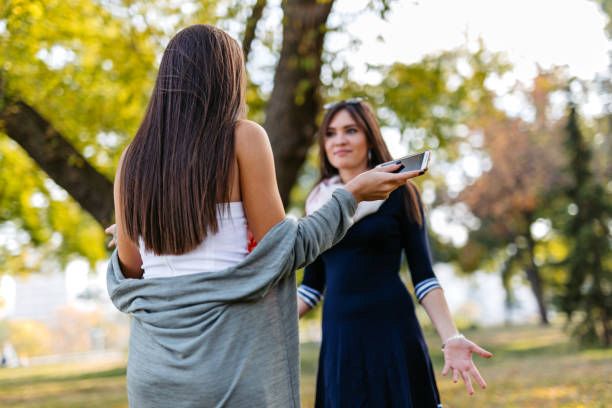
Then she lifted my laptop with one hand, holding it casually, like it was a book she was about to shelve. And turned toward the deep end of the pool.
My name is Lauren Mitchell, I’m 29, and I live in Phoenix, Arizona. I work as a financial analyst for a consulting firm that trusts me with sensitive client data, confidential spreadsheets, and a laptop that costs more than my monthly rent. In that second—the second between when Bri lifted my laptop and when she threw it—my parents didn’t look at her.
They watched me.
Like my reaction was the real show. Like this was a test I was supposed to pass by staying calm, by not making a scene, by proving I could take a joke.
The splash hit louder than the grill lid closing. Water erupted in a crown of droplets that caught the sunset and turned briefly golden before falling back down. The laptop hit the bottom with a muffled thud I felt more than heard, and the screen blinked once—a sad little flash of blue light—before going dark.
Bri laughed. “Oops.”
Just that. Oops. Like she’d bumped a glass, not destroyed thousands of dollars of company equipment and potentially compromised confidential client files.
Dad looked up from the grill, spatula in hand, and shrugged with the kind of casual indifference that hurt more than anything he could have said. “That’s the price of not helping family.”
In the water, I could see the flag sticker on the laptop lid starting to curl, peeling away from the metal in slow motion as chlorine ate at the adhesive.
Our stucco cul-de-sac in North Phoenix had always been the kind of place where everyone knew everyone’s business and privacy was just a suggestion. Growing up here, I’d learned early what role I was supposed to play.
I was the “responsible” one. The kid who kept everything smooth so no one got mad. The one who did her homework without being asked and got a scholarship to Arizona State and landed a good job right out of college. The one who never caused problems.
Bri was the “free spirit.” The creative one. The one who needed space to find herself, needed understanding, needed help, always needed something.
And Mom’s favorite line, the one she’d been using since we were kids, was always: “Family helps family.”
Even when it meant I swallowed my own no. Even when it meant my boundaries were suggestions and Bri’s wants were requirements.
It had started small, years ago. Little favors that seemed reasonable at the time.
“Can I use your Netflix login? Just until I get back on my feet.”
“Can you add me to your Spotify family plan? I’ll pay you back.”
“Can you lend me your car for the weekend? Mine’s in the shop.”
Every time I hesitated, someone would sigh—Mom, usually, with that particular disappointment that made my stomach hurt—and remind me that I was the one who could handle it. I had a good job. I was stable. I could afford to help.
The favors got bigger.
“Can you co-sign my apartment lease? My credit’s not great.”
“Can you cover my car payment this month? I’m a little short.”
“Can you lend me two thousand? I’ll pay you back when my tax refund comes.”
The tax refund never came. Or it came and went to something else, someone else, some emergency that was always more urgent than paying me back.
By the time I was 25, I’d loaned Bri over fifteen thousand dollars that I’d never see again. By 27, I’d co-signed three different leases and had her defaults dragging down my credit score. By 29, I’d learned to say no.
Which was when things got ugly.
The first time I refused—really refused, not just hesitated before giving in—Bri had cried. Real tears, the kind that made mascara run. Mom had called me selfish. Dad had given me the disappointed dad look that still made me feel twelve years old and desperate for approval.
“After everything we’ve done for you,” Mom had said, like my childhood—the one they’d chosen to have, the responsibility they’d taken on—was a debt I could never repay.
But I’d held firm. Said no to a loan I couldn’t afford. Said no to co-signing another lease. Said no to being the family ATM.
Which led to today. To this barbecue I’d been guilted into attending. To Bri asking for ten thousand dollars like it was pocket change. To me saying no one more time.
And to my laptop at the bottom of the pool.
I didn’t cry. Didn’t scream. Didn’t give them the satisfaction of seeing me break.
I just walked to the edge of the pool, crouched down, and reached in. The water was warm—Phoenix pool water was always warm in summer, heated by the sun until it felt more like bathwater than anything refreshing.
My laptop was heavier wet, waterlogged, completely ruined. Droplets ran down the keys as I lifted it out, dripping onto the concrete, forming a puddle that spread like blame.
The flag sticker had completely peeled off now, floating on the surface of the water like a tiny boat that had lost its way.
I set the laptop on the concrete and dried my hands on my jeans. They were already soaked through from fishing the laptop out, but I wiped them anyway, slowly, methodically, while my family watched.
Bri was smiling. Not apologetic, not concerned about what she’d just done—pleased. Like she’d proven a point. Like destruction was victory.
Mom stood by the patio door with her arms crossed, her face carefully neutral in that way that meant she thought I was overreacting but didn’t want to say it yet.
Dad had gone back to the grill like nothing had happened.
I grabbed my keys from the table, picked up my purse, and walked toward my car without saying a word.
Behind me, Bri’s voice cut through the evening air: “Fix your attitude, Lauren. We’re family.”
Dad sighed like I’d embarrassed him. Like my leaving—not Bri’s destruction of my property—was the real problem here.
I got in my car, started the engine, cranked the AC to full blast, and drove away from the stucco cul-de-sac where I’d grown up learning that my needs were always negotiable but everyone else’s were sacred.
My townhouse was on the east side of Phoenix, a modest two-bedroom in a complex that was nice enough but not fancy. I’d bought it two years ago—my first major purchase, my declaration of independence, my attempt to build a life that was mine.
The silence when I walked in felt different than usual. Usually it was peaceful, a respite from the noise of work and family obligations. Tonight it felt heavy, charged with everything I wasn’t saying.
The AC hummed. The porch light buzzed—I’d been meaning to replace that bulb for weeks. Otherwise, nothing.
I put the waterlogged laptop on my kitchen counter, stared at it for a long moment, and made myself a promise I didn’t say out loud.
I was done.
Done being the responsible one while Bri played at being a free spirit with my money. Done letting “family helps family” be a weapon used against me. Done pretending that boundaries made me selfish instead of sane.
I opened my backup laptop—a personal one, older, but functional—and started making a list.
Every place Bri had gotten comfortable using my life like a shortcut. Every account, every subscription, every little piece of access I’d given her over the years because saying no seemed harder than just giving in.
Netflix. Spotify. Amazon Prime. My HBO Max password. My Disney+ account that she’d been using for her boyfriend and his kids. My Costco membership card. My AAA membership that she’d used three times in the past year for roadside assistance.
Then the bigger things. The apartment lease I’d co-signed. The credit card I’d added her to as an authorized user “just for emergencies” that she’d maxed out buying furniture. The car insurance policy where she was listed as a driver on my plan because it was cheaper than getting her own.
I started at the top of the list and worked my way down.
Changed my Netflix password. Then Spotify. Then Amazon. Then every streaming service I’d been sharing.
Removed her as an authorized user on my credit card. Called AAA and had her taken off my membership. Called Costco and got a new member number.
The apartment lease was trickier—I couldn’t just remove myself without consequences. But I could document. I opened a folder and started saving screenshots of every late payment, every notice from the landlord, every time her half of the rent had come from my account because she “didn’t get paid yet.”
By the time I looked up, it was past midnight. My phone had been buzzing intermittently, but I’d ignored it. Now I picked it up and saw seventeen missed calls from Bri, twelve from Mom, three from Dad.
One text from Bri, sent an hour ago: “What did you do?”
I didn’t respond. Just plugged my phone into the charger and went to bed.
I didn’t sleep much. Kept thinking about the laptop at the bottom of the pool, about Bri’s smile, about Dad’s shrug. About all the years I’d convinced myself that family meant sacrifice, that love meant giving until you had nothing left.
Around 3 AM, I got up and checked my email. The work laptop had been set to auto-backup to the cloud, so my files were safe. I’d have to report it to IT in the morning, explain what happened, probably face questions about why I’d had it at a family barbecue in the first place.
But the files were safe. The client data was secure. I’d have to use my personal laptop for a few days while the company sent a replacement, but I wouldn’t lose my job.
Bri hadn’t destroyed my career. Just my property. Just my boundaries. Just my peace of mind.
Just.
By sunrise, my phone was exploding. The missed calls had multiplied—twenty-three from Bri now, fifteen from Mom, eight from Dad. Text messages stacked on top of each other until they looked unreal, a wall of demands and accusations.
From Bri: “What did you do?”
“Why can’t I log into Netflix?”
“Why isn’t my card working?”
“CALL ME”
“This is SO immature”
“You can’t just cut me off”
“I need those passwords”
“Fix this NOW”
From Mom: “Lauren, your sister is very upset”
“What’s going on?”
“She says you changed all your passwords?”
“This is ridiculous. She’s family.”
“Call me immediately”
From Dad: “You’re being childish. Fix whatever this is.”
I was still staring at my dead work laptop on the counter, at the space where the flag sticker used to be, when someone started pounding on my front door hard enough to shake the frame.
Through the peephole, I saw Bri on my porch. She looked like she hadn’t slept either—hair messy, yesterday’s makeup smudged, eyes wild with the kind of anger that comes from someone who’s used to getting their way suddenly hitting a wall.
“Open up, Lauren!” she yelled, loud enough that I worried about my neighbors. “I know you’re in there!”
I stayed silent, watching through the peephole.
She pounded again. “This is ridiculous! You can’t just lock me out of everything!”
Actually, I could. They were my accounts. My passwords. My memberships. My money paying for services she’d been using for free.
“We need to talk about this like adults!” she shouted.
Adults. Like an adult had thrown my work laptop in a pool last night. Like an adult was now having a tantrum on my doorstep because she couldn’t access streaming services she’d never paid for.
My phone buzzed again. Mom: “Let your sister in. Stop being dramatic.”
And that word—dramatic—crystallized something in my chest.
I’d been called dramatic for having boundaries. Called selfish for wanting to be paid back. Called ungrateful for not wanting to fund my sister’s lifestyle indefinitely. Called childish for finally saying enough.
But throwing someone’s work laptop in a pool? That wasn’t dramatic. That was just “Bri being Bri.” That was just family being family.
The pounding continued. “Lauren! I swear to God, if you don’t open this door—”
My thumb hovered over my phone screen. I had options. I could let her in, listen to her yell, maybe even give in like I’d always done before. I could call the police and report the harassment. I could call Mom and Dad and try to explain, one more time, why this wasn’t okay.
Or I could do something else entirely.
I pulled up my contacts and scrolled to a name I’d been avoiding for months: Rebecca Cho, the family therapist my doctor had recommended after I’d gone in for stress-related migraines.
The door shook again. Bri was screaming now, words I couldn’t quite make out but could feel the rage behind.
I sent Rebecca a text: “Is your offer for family mediation still open? I need help setting boundaries with my family. Urgently.”
Her response came surprisingly fast for 6:47 AM: “Yes. Can you come in today? I had a cancellation at 2 PM.”
“I’ll be there.”
Then I called my boss, explained that my work laptop had been damaged in an incident and I’d need to work from home on my personal computer until a replacement arrived. He was understanding—I’d been with the firm for five years, had never missed a deadline, had built up enough goodwill that one laptop disaster wasn’t going to sink me.
The pounding stopped. I looked through the peephole and saw Bri standing there, phone to her ear, her face twisted with frustration.
My phone rang. Mom.
I answered.
“Lauren Marie Mitchell, what is going on? Your sister is at your door and you won’t let her in?”
“She threw my work laptop in a pool last night, Mom. She destroyed company property and compromised client data. Why would I let her in?”
“That was an accident—”
“She picked it up and threw it in the pool while smiling. That’s not an accident.”
“You’re being dramatic. She said she was just joking around—”
“If someone at work destroyed my laptop as a joke, they’d be fired and possibly sued. But because it’s Bri, I’m supposed to what? Laugh it off?”
Silence. Then: “Family is different.”
“You’re right. Family should treat each other better, not worse. But you’ve spent my whole life teaching me that my boundaries don’t matter as long as Bri gets what she wants.”
“That’s not fair—”
“I changed my passwords, Mom. All of them. I removed Bri from my accounts. I’m done paying for her life while she treats mine like a joke.”
“You can’t just cut off your sister—”
“Watch me. And Mom? If she doesn’t leave my property in the next five minutes, I’m calling the police for harassment.”
I hung up.
Through the peephole, I watched Bri’s face as she got whatever news Mom had just delivered. Watched her expression cycle through disbelief, rage, and finally something that might have been the beginning of understanding that this time was different.
She got in her car—my old car, actually, the one I’d sold her for half its value three years ago and that she still owed me two thousand dollars for—and drove away.
I slid down with my back against the door and sat on the floor of my entryway, shaking.
The session with Rebecca that afternoon was brutal and necessary.
She listened to the whole story without interrupting—the years of loans, the co-signed leases, the passwords and subscriptions, the pool incident. Then she asked one question that cracked something open in my chest.
“What would you tell a friend who was in this situation?”
“I’d tell them to run,” I said immediately. “I’d tell them their family was using them. That love shouldn’t feel like debt.”
“So why is it different when it’s you?”
I didn’t have a good answer.
We spent the rest of the session working on a plan. Concrete steps. Boundaries with consequences. Scripts for conversations I was dreading.
When I left her office, I had homework: write a letter to my family explaining my boundaries and what would happen if they violated them. Not to negotiate. Not to convince them. Just to clearly state what I needed.
I spent that evening drafting it. Deleted it. Started over. Deleted it again.
Finally, around 11 PM, I wrote something that felt true:
Mom, Dad, and Bri,
I’ve spent most of my life believing that being a good family member meant saying yes, even when it hurt me. That “family helps family” meant I should sacrifice my boundaries, my money, my peace of mind whenever asked.
What happened yesterday—Bri destroying my work laptop because I wouldn’t give her ten thousand dollars—showed me that I’ve been wrong about what family means.
Real family doesn’t punish you for having boundaries. Real love doesn’t require you to bankrupt yourself to prove your worth.
Effective immediately: – I will not be loaning money to anyone in this family. – I will not be co-signing leases, loans, or any other financial agreements. – I will not be sharing passwords, accounts, or memberships. – I will not be attending family events where my boundaries are not respected.
If you destroy my property, I will file a police report. If you show up at my home uninvited, I will call the police. If you harass me via phone or text, I will block your numbers.
These aren’t punishments. They’re boundaries. And they’re not negotiable.
I love you all. But I love myself too. And I’m done pretending those two things have to be in conflict.
Lauren
I sent it as an email. To all three of them. At 11:47 PM on a Tuesday.
Then I turned off my phone and went to bed.
The next few weeks were hell.
Mom called from different numbers, trying to get through my blocks. Dad showed up at my work once, demanded to speak to me in the parking lot, told me I was tearing the family apart.
Bri tried everything. Crying voicemails. Angry texts from her friends’ phones. A handwritten letter delivered by mail that started with “I can’t believe you’re doing this” and ended with “you’re a terrible sister.”
I saved everything. Documented every violation. Kept a log of every attempted contact, every boundary crossed.
And slowly, very slowly, the chaos started to settle.
Mom stopped calling after I sent her a certified letter restating my boundaries and noting that her continued contact constituted harassment.
Dad stopped showing up after I mentioned to HR that I was dealing with a family situation and might need their support if it escalated—he didn’t need his daughter’s workplace involved in his business.
Bri… Bri was harder. She was the one who’d always gotten her way by persisting, by pushing, by making everyone else too exhausted to keep saying no.
But I kept saying it. No to coffee to “talk things out.” No to family dinners. No to reconciliation that didn’t include acknowledgment of what she’d done.
After six weeks, she sent a text from a number I didn’t recognize: “I’m sorry about the laptop. I was angry and I shouldn’t have done that.”
Not a real apology. No acknowledgment of the pattern, the years of using me, the fundamental disrespect.
I didn’t respond.
Three months after the pool incident, I got a voicemail from Bri. Her voice sounded different—smaller, less certain.
“Hey. Um. I know you probably won’t call back, but… I got accepted to a medical billing program. It’s a certification thing, nine months, and then I should be able to get a real job. A stable one. I’m going to pay you back, Lauren. All of it. I know I’ve said that before, but I’m serious this time. I’m not asking you to believe me. I just… I wanted you to know.”
I saved the voicemail but didn’t respond.
Six months after the pool incident, Mom sent an email with just a link—no context, no message. It was a news article about a local woman who’d been convicted of destroying her ex-boyfriend’s property during a breakup. The sentence included restitution and anger management classes.
I understood the message: that could have been Bri.
A week later, Dad called. I almost didn’t answer.
“I’m not calling to yell,” he said when I picked up. “I just… I wanted you to know that I filed a claim with our homeowner’s insurance. For your laptop. They’re going to cut you a check for the replacement cost.”
“You didn’t have to do that.”
“Yes, I did. What Bri did was wrong. What I said was wrong. I’ve been thinking about that a lot these past few months.”
We didn’t have a big reconciliation. Didn’t hug it out or promise everything would be different.
But it was something. A crack in the wall. An acknowledgment.
A year after the pool incident, I was sitting on my patio—my townhouse had a small patio, nothing fancy, but it was mine—when my phone rang.
Bri.
I stared at her name on the screen for three rings before answering.
“Hey,” she said. “I know this is random. But I wanted to tell you that I finished my certification. I got a job. It’s not amazing or anything, but it’s full-time, with benefits, and I can actually support myself.”
“That’s great, Bri.”
“And I wanted to ask… can I send you money? For what I owe you. I can’t do it all at once, but I was thinking maybe two hundred a month? It’ll take a while, but I want to pay you back.”
I thought about it. About the fifteen thousand she owed me. About whether I believed this was real or just another manipulation.
“Okay,” I said finally. “But I want it in writing. A payment plan, signed, with terms.”
“Yeah. Okay. That’s fair.”
“And Bri? If you miss a payment without communicating beforehand, the arrangement is over. I’m not chasing you for money anymore.”
“I understand.”
We talked for another ten minutes. Awkward, stilted, but honest. More honest than we’d been in years.
When I hung up, I sat on my patio and watched the Phoenix sunset paint the sky in oranges and pinks and purples that looked almost unreal.
My work laptop—the replacement one—sat on the table beside me, new and unmarked, no stickers yet.
I thought about the old one, about watching the flag sticker peel off in chlorinated water, about the moment I’d decided I was done.
That moment had cost me my family for almost a year. Had cost me sleep and peace of mind and the comfortable fiction that love meant accepting whatever treatment came my way.
But it had also given me something I’d never had before: the certainty that I could say no and survive it. That boundaries weren’t cruelty. That protecting myself wasn’t betrayal.
My phone buzzed. A text from Rebecca, my therapist: “How are you doing?”
I smiled and typed back: “Good. Really good.”
And for the first time in longer than I could remember, it was true.
The Phoenix heat had faded to something almost pleasant. The sky was doing that thing it does sometimes, that impossible gradient that makes you understand why people move to the desert despite everything.
And I was okay.
Not because my family had changed—though maybe they were starting to.
But because I had.
The price of not helping family, my dad had said.
But the real price had been helping them at the cost of myself. And I was done paying it.
THE END

Ethan Blake is a skilled Creative Content Specialist with a talent for crafting engaging and thought-provoking narratives. With a strong background in storytelling and digital content creation, Ethan brings a unique perspective to his role at TheArchivists, where he curates and produces captivating content for a global audience.
Ethan holds a degree in Communications from Zurich University, where he developed his expertise in storytelling, media strategy, and audience engagement. Known for his ability to blend creativity with analytical precision, he excels at creating content that not only entertains but also connects deeply with readers.
At TheArchivists, Ethan specializes in uncovering compelling stories that reflect a wide range of human experiences. His work is celebrated for its authenticity, creativity, and ability to spark meaningful conversations, earning him recognition among peers and readers alike.
Passionate about the art of storytelling, Ethan enjoys exploring themes of culture, history, and personal growth, aiming to inspire and inform with every piece he creates. Dedicated to making a lasting impact, Ethan continues to push boundaries in the ever-evolving world of digital content.