I am Maya Collins, 30 years old, a freelance creative living in Brooklyn, New York. That evening, in the cramped kitchen of my studio apartment, I had just placed a single candle on a cheap birthday cake from the corner shop when my phone rang.
It was the family attorney, his voice low and emotionless, announcing that it was time to read my parents’ will. I hadn’t even processed the reality that they were truly gone forever when his next words struck me like a punch to the gut.
My younger sister, Savannah Collins, 27, an ambitious PR director, was to inherit the $750,000 mansion in Westchester along with most of the remaining assets.
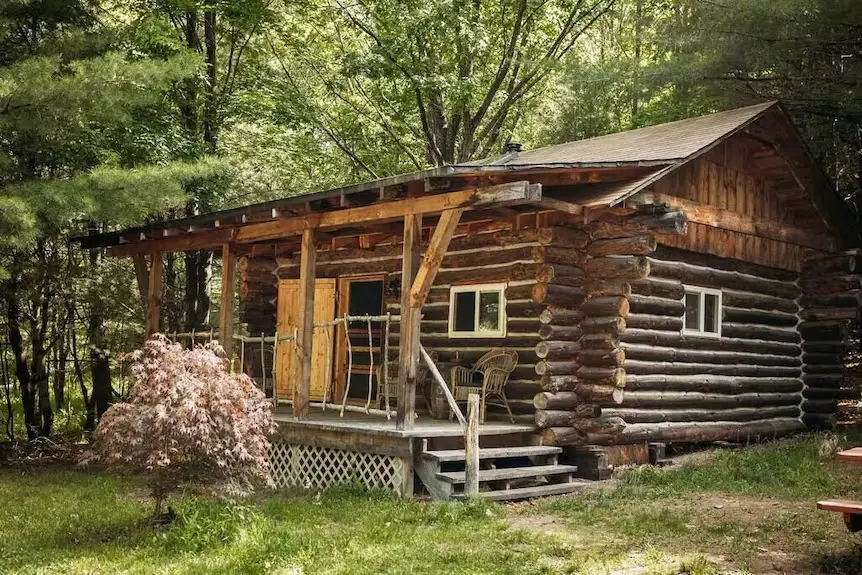
And me? I was left with a deteriorating wooden cabin somewhere in Alaska with unclear paperwork and vague coordinates—nothing more than a cruel joke.
As I ended the call, Derek Sloan, my 31-year-old fiancé, a sharply dressed banker, sneered at me. He spat the words “pathetic loser” directly in my face, threw the engagement ring onto the scratched wooden table, and slammed the door behind him.
The impact echoed so loudly that the entire hallway seemed to vibrate with whispers, leaving me standing there, exposed and humiliated.
Trembling, I opened the will envelope once more and discovered inside a tarnished key, an aged copy of a land deed bearing my grandfather Elias Mercer’s name in Talkeetna, Alaska, and a thin slip of paper with a brief note from my mother:
You will know why it had to be you.
PART ONE: THE INVISIBLE DAUGHTER
I was born into a family that appeared flawless from the outside, but inside there was an invisible barrier that divided us completely.
My father, Richard Collins, was a civil engineer—the embodiment of middle-class America. Awake before dawn, black coffee with no sugar, morning newspaper in hand, and a conviction that achievement only counted if it could be quantified in numbers—in concrete poured and bridges spanning rivers.
My mother, Elaine Mercer Collins, worked as a librarian at the local high school. She was gentle, patient, with the subtle scent of aged books clinging to the sleeves of her cardigan, but she was also someone who seldom contradicted my father. If he made a decision, she typically remained quiet, sometimes offering a small nod, as if already resigned to the idea that her opinions were never strong enough to shift the direction of our household.
My younger sister, Savannah, had been treated as precious from the moment she entered the world. She was stunning, intelligent, and naturally charismatic. She was perpetually the prom queen in her friends’ eyes, the pride of the school when she dominated debate competitions, the star cheerleader beneath the Friday night lights.
I still recall those crisp autumn evenings when the entire town gathered at the high school football field. My father sat in the bleachers, shouting himself hoarse cheering for the team. But truthfully, he was cheering for Savannah, waving her bright flag on the sideline.
And me? I sat quietly at the far end of the bench, clutching the draft of an essay my English teacher had praised as exceptional. I handed it to my mother, hoping she would read it while waiting for the game to start. But the essay was folded, tucked beneath a warm pizza box, and quickly forgotten.
That sensation—that regardless of how hard I tried, my efforts would never be sufficient to move anyone—haunted me throughout my childhood.
I, Maya, was always the one who shouldered the burden. I began working part-time at sixteen, waiting tables at diners, serving coffee at the corner café, saving every dollar I could to help cover the cost of books and school supplies.
Savannah, on the other hand, was given her first car the instant she was old enough to drive, just so she wouldn’t fall behind her friends.
When summer arrived, my sister attended art camp while I flew to Anchorage to stay with my grandfather, Elias Mercer. I helped him repair his wooden cabin, prepared meals, and listened to the stories he frequently shared on long afternoons by the Susitna River.
He was the only person in the family who made me feel like I wasn’t invisible. He would take me on walks along the river—sometimes in the biting cold of Alaska, sometimes beneath the glow of a blazing sunset—and tell me simple words that carved themselves into my memory.
“Never underestimate what others dismiss as worthless, Maya. Sometimes that’s where the real treasure lies.”
As a child, I assumed they were just words of comfort. But as I matured, I began to recognize that my grandfather carried a philosophy completely different from my father’s. While my father viewed the world through blueprints and calculations, my grandfather saw it through layers of time and patience.
That difference made me feel as though I never fully belonged to my parents’ world, yet I wasn’t strong enough to challenge it either.
I remember one moment vividly in my senior year of high school when I entered a national essay competition. My paper reached the finals and was even published in a small academic journal. I came home thrilled, placing the printed copy on the dinner table.
My mother gave me a faint smile, but my father only said, “What’s the purpose of writing? Do you plan to earn money from a few pages of paper?” Then he turned to Savannah, asking about her college applications, her choice of communications as a major, and how she planned to build her image effectively.
I sat there listening to the clinking of forks and knives against plates and felt as though my essay was nothing more than a worthless scrap of paper.
That moment became a wound I would never forget. It taught me that in my parents’ eyes, genuine value only existed when it was flashy, easy to see, and easy to boast about.
From that point forward, I understood why I chose a different path.
I didn’t measure life in numbers, in large houses, or in shiny new cars. I chose a career in content creation, a profession many people call vague, unstable, even frivolous. I wanted to tell stories, to discover meaning in small details. But that choice only made me fade further into the shadows of my family.
Savannah was the opposite. She knew how to make everything sparkle, from her social media accounts to her polished résumé. My parents adored that. They could proudly showcase their youngest daughter to their friends while I was rarely, if ever, mentioned in those conversations.
Yet, it was those summers in Alaska with my grandfather that planted a different seed in me—the seed of patience and the conviction that sometimes the most broken, overlooked things carried a value no one else could perceive.
PART TWO: THE WILL READING
I arrived at the will reading ten minutes early.
The law office was on the twenty-third floor of a glass tower in Midtown Manhattan, the kind of sterile, gleaming space where every footstep echoed like metal. I sat on a black leather chair by the window, holding a paper cup of water that had already softened from the sweat of my palm.
Abstract paintings hung on the walls, expensive in color but devoid of emotion, making me feel like an unnecessary detail.
Savannah walked in precisely on time, wearing a camel trench coat, her hair in waves, her eyeliner sharp as a statement. She smiled at the receptionist as if she were stepping onto a red carpet, then glanced at me with an expression halfway between pity and amusement.
Behind Savannah came Derek, crisp white shirt without a wrinkle, navy tie, and the cool scent of cologne. He didn’t hold my hand. Instead, he gave me a polite nod, the kind meant to smooth things over, as if his role today was to ensure I didn’t embarrass myself.
The conference room door opened, and the attorney, Mr. Lavine, a man in his early fifties with thin-rimmed glasses and a silver fountain pen, invited us to sit. On the table lay a stack of files bound in cream covers embossed with the Collins name.
The air was so heavy, I could hear the wall clock ticking with every second.
Mr. Lavine looked over at us, his voice steady and deliberate. “I’m sorry we meet under these circumstances. We will now proceed with the reading of the will.”
I clenched my hands, nails digging into my palms.
He began to read the legal language, steady and rhythmic, like the hum of a machine.
“The real estate located in Tarrytown, Westchester County, New York, appraised at seven hundred fifty thousand dollars, along with the majority of liquid assets, is hereby transferred to Miss Savannah Collins.”
A small sound escaped from Savannah’s lips—not quite surprise, more like confirmation of something she had already believed. She glanced at me, the corner of her mouth lifting.
“The trees in Tarrytown are gorgeous. Perfect atmosphere for me.”
I swallowed hard.
Mr. Lavine continued, “The parcel of land and any structures thereon, designated Mercer Lot Hassen 4, situated at the forest edge of Talkeetna, Alaska, along with all related documents, is hereby transferred to Miss Maya Collins.”
He paused, as if expecting someone to request clarification, but no explanation followed. Only the faint scratch of his fountain pen filled the room as he signed off on the reading.
I heard Derek let out a quiet laugh, the kind laced with disdain.
“Honey, glamping, or should we just call it what it is—a shack.”
Savannah tilted her head, her voice sweet as syrup but edged with steel.
“Honestly, this suits you better. Rustic, reclusive, vintage—a little rough around the edges.”
“I think it fits,” I muttered by reflex, the words falling onto the table like a shard of ice. “Thank you.”
Mr. Lavine closed the file and slid a thin manila envelope toward me—a key, a copy of the land deed, and a checklist of procedures to follow after transfer. Stamped on the cover was the old word MERCER in faded reddish brown.
I stared at that stamp the way one stares at a bruise just forming on the skin—not sharp pain, only a numbing weight.
We stood up in the hallway where fluorescent lights made everyone look paler than usual. Derek turned to me, his voice low enough that the receptionist couldn’t hear, but sharp enough that I did.
“I told you, Maya, life is about results, not feelings. I can’t build a future with someone like this.”
The words “like this” hung in the air, heavy enough for me to feel their full shape.
He tugged at his sleeve, adjusted his cuff links, and delivered the final blow.
“Pathetic loser.”
I heard the faint metallic ping of the ring he once wore brushing against the receptionist’s desk as he returned his guest badge. The receptionist looked up, startled. I gave her a small smile, an apology for bringing this scene into her quiet afternoon.
Savannah leaned against the wall, scrolling her phone, her flawless face caught in the glow of the screen. She leaned closer, her whisper carrying a hint of mint.
“Don’t be sad. Everyone has their own path, you know—the back-to-nature type.”
I didn’t answer. My stomach felt hollow, as though wind were moving through it.
PART THREE: THE JOURNEY TO ALASKA
That night I opened my laptop, my hands trembling but firm. I typed: JFK to ANC, Anchorage, Alaska.
The ticket was expensive. I knew that. But I booked it one way. When the screen flashed CONFIRMED, I felt hollow and weightless at the same time, as if I had just pushed myself out of the last comfort zone I had.
The flight from JFK was long and bleak. On the way to the gate, I watched couples and families wheeling shiny suitcases, hugging travel pillows, buzzing with excitement for their vacations. I, on the other hand, carried nothing but an old land deed and a silent key.
When the plane landed in Anchorage, the doors opened to a dense gray air, cold and dry, like a thousand tiny needles pressing into my face.
Anchorage wasn’t glamorous. It was practical, compact, with snow-lined streets, rumbling pickup trucks, and outdoor gear shops glowing late into the night.
I stopped at REI, a place packed with both locals and travelers. I picked up essentials—a multi-tool knife, a water filter, an emergency tent, and a box of protein bars.
From Anchorage, I rented an old but sturdy AWD truck, and the company arranged for a local driver to take me closer to Talkeetna. His name was Tom, a gray-bearded man of few words, his hands calloused from decades gripping a steering wheel on icy roads.
When the truck stopped at the Talkeetna roadhouse for me to rest, I stepped into a warm room filled with the smell of fresh pastries and strong coffee. The space was small, with low ceilings and black-and-white photos of Denali climbers covering the walls.
When we left Talkeetna, Tom drove for several more hours before stopping at a trailhead. He pointed toward a narrow path almost completely buried under snow.
“Your cabin’s that way, about a mile. I can’t go farther.”
I nodded, paid him, and thanked him.
I slung my backpack onto my shoulders, tightened the straps, and stepped into the forest. Each step sank deep into the snow with a creak, blending with the whistle of wind through the trees.
Through the entire walk, I thought about everything that had led me here—Savannah’s victorious smile, Derek’s contemptuous eyes, my parents’ silence when I had needed them most.
As darkness settled, I saw in the distance a slanted wooden roof peeking through the trees. That was it. Mercer Lot Hassen 4—the cabin my family had treated as a joke.
PART FOUR: THE BROKEN CABIN
The cabin appeared before me like an old wound in the snowy forest. The roof sagged like a weary back, the wood stained with patches of black mold. One window had long since shattered, leaving only an empty wooden frame like a hollow eye socket.
On the porch, deep claw marks slashed across the door, straight and ragged, almost certainly from a bear searching for food during a past winter.
I pushed the door open, the hinges shrieking, and a heavy wave of mildew and decay swept into my face.
Inside, the fireplace in the corner was rusted, its mouth blackened with old soot. The armchair nearby had collapsed, its cushion shredded by mice, yellowed stuffing spilling out.
I dropped my backpack, turned on my flashlight, and swept it across cracked walls and crooked frames of faded photographs.
That first night, I unrolled my sleeping bag in the corner of the room where the wind slipped in the least. I tried to light a fire in the stove, but the coals burned weakly, then died.
Outside, the wind howled through the pines, branches snapping with the sharp crack of breaking bones.
In the dark, I heard Derek’s voice: “Pathetic loser.” I heard Savannah’s: “Rustic suits you.” I heard my father’s: “What’s the point of writing?”
I whispered into the void, “Value is only money, isn’t it? Then I have nothing.”
When I closed my eyes, my grandfather Elias came back to me. The walks we took along the Susitna River, the way he pointed at a drifting log and said, “What others throw away may be the thing that lasts the longest.”
The next morning, gray light leaked through the broken window frame. I sat up, throat dry, body aching.
My first thought was to sell. But when my hand brushed against the envelope in my coat pocket, I remembered the scrap of paper from my mother.
You will know why it had to be you.
I pulled out my leather notebook and for the first time since arriving in Alaska, I wrote: “Mercer Lot Hassen 4, Day One.”
I began recording every detail—the sagging roof, the shattered window, the rusted stove. With a trembling but determined hand, I sketched a rough diagram of the cabin.
Then I took the old broom propped in the corner and swept a patch of floor clean. With every clump of dust I cleared away, I reclaimed a small piece of myself.
PART FIVE: THE HIDDEN TREASURE
On the third day of cleaning the cabin, I began to notice something strange on the living room floor. Most of the wooden planks were rotted and damp. But right in the center lay one that was different—darker in color, with the grain running the opposite direction.
I knelt down, shining my flashlight across it, and saw that it was fixed with old hand-forged nails, unlike the industrial steel ones holding the others in place.
I tapped it lightly. The sound rang hollow.
My heart quickened.
I pulled back the dust-covered rug. Beneath it, a rusted iron ring protruded from the corner of the darker plank.
I gripped the ring and pulled hard. The board gave way with a sharp crack, dust swirling into the air. A dark opening appeared, damp air rising from below.
Beneath the floorboards, a narrow wooden staircase led down into shadow.
I grabbed my flashlight and tested the first step. It creaked, but held.
At the bottom, my boots touched stone.
The cellar was larger than I expected, its walls built from hand-stacked rock. In one corner, wooden crates were stacked high, each faintly marked with the faded stencil “Mercer Co.”
I knelt and pried open one of the crates. Inside were heavy cloth sacks bound tight with rope. I tugged one open, and under the flashlight’s beam, a golden gleam burst forth.
Rows of gold coins lay neatly stacked. My breath caught.
I opened more sacks—silver bars still gleaming beneath their dust, necklaces set with finely cut stones, jade rings, an entire treasure hoard so dazzling it made my eyes blur.
I stepped back, my heart pounding.
At the far end stood a large chest set apart from the rest. I forced the lid open. Inside were thick, old leather-bound ledgers, their pages yellowed with age.
I flipped one open, the handwriting neat, signed “Elias Mercer.” Page after page detailed records of timber rights across thousands of acres of forest around Talkeetna.
Another ledger listed lease contracts for lithium, antimony, and rare earth mineral mining signed decades ago, complete with annual royalty payments.
I sat on the cold stone floor, holding a thick ledger in my hands. A rough calculation showed the gold, silver, and jewelry alone were worth several million. But the timber rights, the mineral leases, and the pipeline contracts were the true magnitude.
I pulled out my phone and with trembling fingers did the math.
Over eighty million dollars—perhaps more, if valued at today’s market rates.
I stayed there for a long time in the cellar, my back against the cold stone wall.
Everything I had believed to be rejection might never have been rejection at all. The decaying cabin wasn’t a cruel joke. It was a test.
And my mother had chosen me—the daughter who had always been overlooked, but who could stay silent, watch carefully, endure patiently, and keep a secret until the right time.
PART SIX: MY MOTHER’S LETTER
While leafing through one of the thick ledgers, I noticed a thin envelope tucked tightly against the back cover. At the corner was handwriting I recognized instantly—my mother, Elaine.
My heart lurched as I pulled it free.
Inside was a letter written in faded blue ink.
My dear Maya, if you are reading these words, it means your father and I are already gone.
I drew in a deep breath and forced myself to continue.
Your father is hot-tempered and sometimes he hurt you, but you must know he was not blind. He saw in Savannah the sparkle, the quickness that easily convinces the world. But in you, he saw something different. Endurance. Strength that does not need to show itself, only to last long enough to prove its worth.
I choked up as I read the next line.
We did not choose by noise. We chose by trust.
You think you were abandoned, but the truth is we trusted you to have the patience to keep, the quiet strength to protect. This cabin is not a joke. It is our bequest. Believe that we always saw you, even in silence.
My tears fell onto the page. I pressed the letter to my chest, feeling as if she were right there beside me.
That night, I sat by the fireplace, the letter resting on my lap. A strange peace settled over me.
For the first time, I no longer needed an apology from anyone.
PART SEVEN: PROTECTION AND GROWTH
I knew I couldn’t stop with scanned documents and a notebook. To protect this legacy, I needed a legal shield.
In Anchorage, I chose a small land-law firm. The attorney’s name was Howard, his hair silver, his voice measured.
He checked the chain of title—the ownership trail from my grandfather Elias down to me. Every seal, every signature, he verified as valid.
“You hold full legal rights,” he said firmly, “but you must be wise enough to keep them.”
I invited a mineral appraiser to the cabin. When he reached the words “rare earth,” his eyes lit up.
“If these contracts are still valid, the value isn’t just large—it’s enormous,” he whispered.
A forester I had called from Fairbanks also arrived. He said, “Selective logging is the wise choice. If you preserve it, the forest will sustain you for life.”
With their guidance, I created the Mercer Trust, a trust bearing my mother’s family name. The cabin and all rights from the ledgers were transferred into it.
At the same time, I registered a conservation easement on part of the forest, both to protect the land and reduce taxes.
As I repaired the cabin, I realized I too needed rebuilding.
I began running in the mornings on the thick snow. Some days I ran into town, stopping at a small café. The owner, a Native woman named Anna, told me, “Outsiders often think this land is only resources to be extracted. But for us, it is memory. It is home.”
Her words planted a new seed of thought in me.
That night, I opened my notebook and wrote out a long-term plan. I would only sign mineral agreements that carried strict environmental clauses. I even thought about creating the Mercer Scholarship Fund, using part of the profits to help Native Alaskan children access education.
Day by day, the cabin grew brighter. I laid down a new rug, hung photographs I had taken myself. At night, I lit oil lamps.
I grew accustomed to the silence. Instead of loneliness, I felt peace.
PART EIGHT: CLOSING DOORS
Just as I was beginning to settle, an unexpected email appeared.
Derek: I’m in SoHo. Please meet me. Just ten minutes. I owe you an apology.
I knew he must have caught whispers.
I decided to go—not to give him another chance, but to close the door myself.
A small café, golden lights. Derek sat waiting, wearing the expression of a man who had never done anything wrong.
When I walked in, he stood, smiling gently.
“Maya, I—”
I lifted my hand. “You don’t need to say anything more. I no longer need to prove anything to you.”
Then I stood and walked out of the café. No slammed doors, no tears—just an old door closed, firm, quiet.
That was my greatest victory.
Eventually, family came calling.
Savannah phoned, her voice unusually sweet.
“Maybe we could invest together, reconnect. We’re sisters, right?”
I drew in a breath and replied politely.
“Savannah, if you want a relationship built on equality, without conditions, I’m willing. But if it revolves around money, then no.”
On the other end was silence, followed by a long sigh.
EPILOGUE: TRUE VALUE
The following spring, I returned to the cabin. The snow had melted. A small stream burbled behind the house.
The cabin was no longer decayed. The roof was strong. The windows gleamed.
In the little kitchen, I hung a photo of my grandfather Elias. Beneath it, I left a letter to myself written by hand.
I no longer live to be chosen. I live to choose.
I sat on the porch, watching the sun sink behind the Susitna forest. The sunset poured down like liquid honey, painting the cabin in radiant gold.
In my hands was not just an eighty-million-dollar inheritance. The true value wasn’t in rankings or in proving who was richer, who had won.
It was in the leverage to become someone I respected—someone who could stand tall without needing anyone else’s approval.
I leaned back in the wooden chair, listening to the cool wind weaving through the trees. My mother’s voice rose in my mind.
We did not choose by noise. We chose by trust.
I smiled and whispered, as if to her, “I understand now.”
Sometimes what looks like exclusion is actually trust waiting for you to grow into it. My growth wasn’t about showing Savannah who had won. It was about knowing I no longer needed to “win” against anyone at all.
I was no longer the Brooklyn girl watching her essay folded under a pizza box. I was no longer the fiancée left behind with the sound of a ring clattering on a table.
I was the heir of a legacy.
And more than that, I was someone who had reclaimed her own worth through every patched plank, every scanned ledger, every step across the white snow.
For the first time in my life, I saw the cabin not as a symbol of abandonment, but as my home—a home that held not only treasure in gold and silver, but also the story of my growth, my silence, and the trust I was meant to carry.

Lila Hart is a dedicated Digital Archivist and Research Specialist with a keen eye for preserving and curating meaningful content. At TheArchivists, she specializes in organizing and managing digital archives, ensuring that valuable stories and historical moments are accessible for generations to come.
Lila earned her degree in History and Archival Studies from the University of Edinburgh, where she cultivated her passion for documenting the past and preserving cultural heritage. Her expertise lies in combining traditional archival techniques with modern digital tools, allowing her to create comprehensive and engaging collections that resonate with audiences worldwide.
At TheArchivists, Lila is known for her meticulous attention to detail and her ability to uncover hidden gems within extensive archives. Her work is praised for its depth, authenticity, and contribution to the preservation of knowledge in the digital age.
Driven by a commitment to preserving stories that matter, Lila is passionate about exploring the intersection of history and technology. Her goal is to ensure that every piece of content she handles reflects the richness of human experiences and remains a source of inspiration for years to come.