I’ve spent my entire life being the footnote in someone else’s story. The younger sister. The one who “never quite lived up to potential.” The girl my mother introduced with a sigh and a subtle shake of her head, as if my very existence required an apology.
My name is Rachel Morrison, I’m thirty-two years old, and I make pastries for a living. Not just any pastries—delicate, architectural creations that people photograph before they can bring themselves to eat. Éclairs that shimmer like stained glass. Tarts that look like they belong in a museum. Cakes that make grown men cry.
But to my family, I’m the daughter who “plays with flour” while my sister Victoria runs a successful marketing firm, married a corporate executive, and lives in a house that could fit three of my apartments inside it.
The wedding invitation arrived on cream-colored cardstock so thick it could stop a bullet. Embossed lettering. A wax seal. The kind of invitation that announces: We have money, and we want you to know it.
Victoria Anne Morrison and Gregory Charles Pemberton III
Request the honor of your presence…
I stared at it for a long time, sitting in my tiny studio apartment that smelled perpetually of butter and vanilla. The invitation didn’t come with a note. No “Hope you can make it, sis!” No “Can’t wait to celebrate with you!” Just the formal summons, like I was being called to court.
My mother called three days later.
“You got the invitation, I assume?” Her voice had that crisp, efficient tone she used when discussing matters of social importance.
“I did. It’s beautiful.”
“Good. Now, I need to talk to you about your… situation.”
My situation. That’s what she called my life—a problem to be managed.
“What about it, Mom?”
“Well, darling, we need to be realistic. Victoria’s wedding is going to be quite the event. Gregory’s family is very prominent—old money, you understand. And while we love you, of course, we need to be mindful of… optics.”
“Optics.”
“You know what I mean. Victoria has worked very hard to position herself well. This wedding is about presenting the right image. And while your little baking hobby is charming, it’s not exactly the kind of thing that impresses people like the Pembertons.”
I closed my eyes. Twenty years of this conversation in different forms. Twenty years of being told that what I loved, what I was good at, what made me happy—it all mattered less than appearances.
“What are you saying, Mom?”
“I’m saying that you’ll be seated near the back. It’s a very large wedding, you understand. We simply don’t have room for everyone at the front. And please, when people ask what you do, perhaps just say you work in hospitality? It sounds more… professional than ‘pastry chef.’”
She said “pastry chef” the way other people say “garbage collector.”
“I’ll see you at the wedding, Mom.”
I hung up before she could give me more instructions on how to minimize myself.
The Ceremony
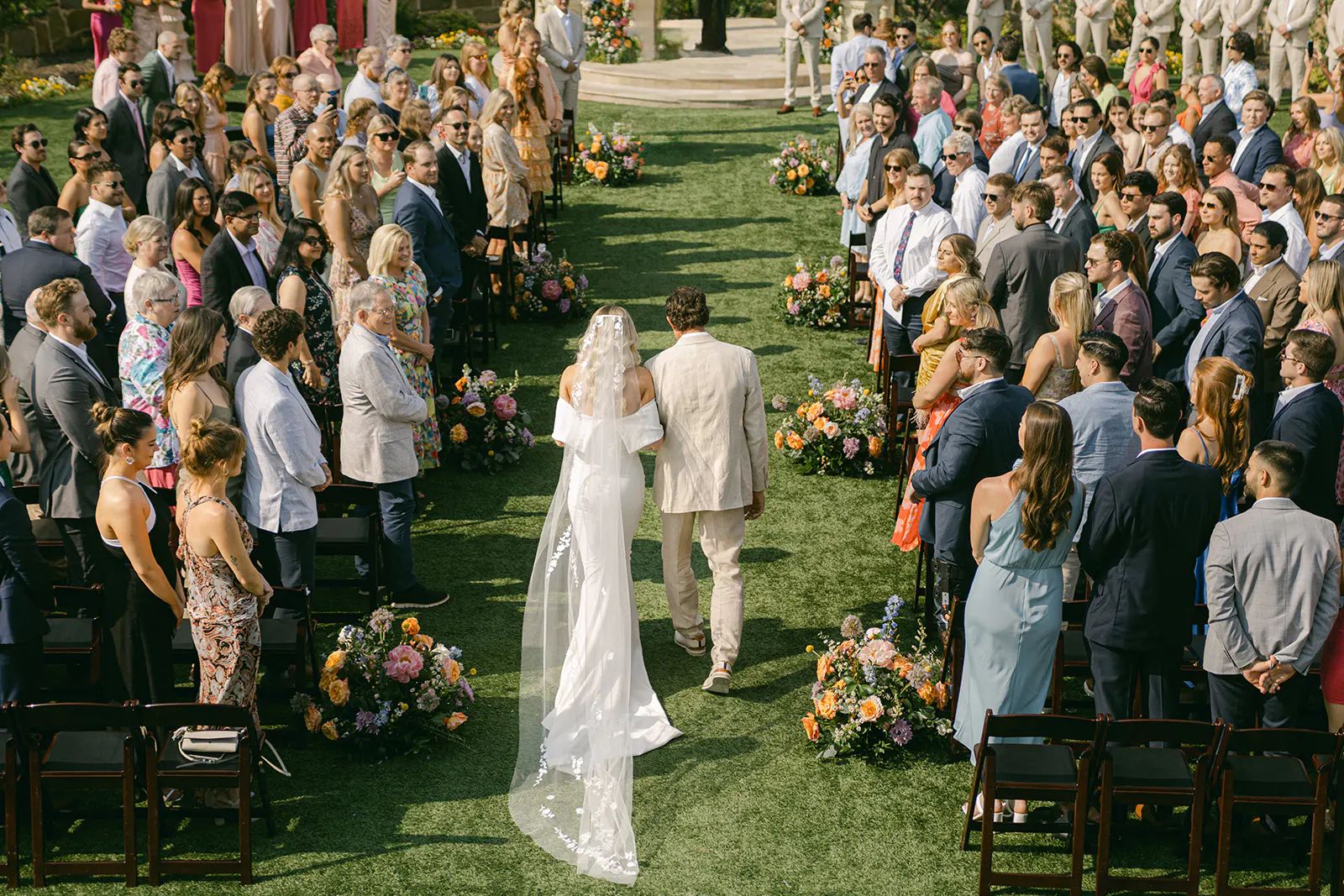
The venue was stunning—a historic mansion overlooking Puget Sound, everything draped in white silk and cream roses that probably cost more than my annual rent. Guests arrived in designer dresses and tailored suits, air-kissing and laughing with the easy confidence of people who’d never worried about money a day in their lives.
I wore a simple navy dress I’d found on sale. Nothing flashy. Nothing that would draw attention. Exactly what was expected of me.
The usher took one look at my name on his list and his eyebrows rose slightly. “Oh, you’re… right this way, please.”
He led me past rows of white chairs decorated with enormous floral arrangements, past where Gregory’s family sat in the front, past where my own parents were positioned prominently in the third row, past the middle section where I assumed normal family members would sit.
We kept walking.
And walking.
Until we reached the very back corner, behind a decorative pillar that partially blocked the view of the altar.
“Here you are,” he said cheerfully, gesturing to a folding chair that looked different from all the elegant chairs everyone else had. “Enjoy the ceremony!”
I sat down slowly, stunned. I was Rachel Morrison, sister of the bride. And I’d been seated worse than most of the plus-ones I could see scattered throughout the venue.
From my position behind the pillar, I could barely see Victoria when she made her entrance. I caught glimpses—a flash of white, her veil trailing, my mother dabbing at her eyes in the front row. The ceremony was lovely, I’m sure. I heard most of it, at least.
What I could see perfectly was the photographer, who never once turned his camera toward the back. Why would he? Nothing important was happening in the cheap seats.
That’s when I noticed him.
A man in a charcoal suit, also tucked behind the pillar on the opposite side, watching the ceremony with an expression that mirrored what I felt—a mix of bemusement and resignation. He was handsome in an effortless way, dark hair slightly tousled, strong jaw, eyes that looked like they didn’t miss much.
When the vows concluded and everyone stood to applaud, he turned to me.
“I’m Julian,” he said, extending his hand with a wry smile. “I’m here as someone’s plus-one, and I think we’ve both been banished to the land of misfit guests. Want to form a survival alliance?”
I couldn’t help but laugh. “Rachel. And yes, absolutely. Do we get to vote people off the island?”
“If we do, I nominate whoever decided these seating arrangements.”
“That would be the bride,” I said. “Who also happens to be my sister.”
His eyebrows shot up. “You’re Victoria’s sister? And you’re sitting here?”
“Apparently I don’t fit the aesthetic.”
Something shifted in his expression—surprise giving way to understanding, and then something sharper. Anger, maybe, on my behalf.
“That’s…” he paused, clearly editing his first response. “That’s unacceptable.”
“It’s family,” I said with a shrug that I’d perfected over the years. The shrug that said this is fine when nothing was fine.
“Family should be better than that.”
Should be. But often wasn’t.
The Reception
The reception was held in the mansion’s ballroom, all glittering chandeliers and floor-to-ceiling windows overlooking the water at sunset. A string quartet played while uniformed servers circulated with champagne and hors d’oeuvres that I recognized as expensive but uninspired—the kind of catering you get when you value price tag over creativity.
I found my place card at a table in the far corner, tucked near the kitchen entrance where servers rushed in and out. My tablemates were a collection of distant relatives and plus-ones who clearly didn’t know anyone. One of them was already scrolling on his phone, not even pretending to care about the festivities.
I was about to sit down when I felt a presence at my elbow.
Julian.
He picked up my place card, studied it, then looked around the room with the calculating gaze of someone used to reading power dynamics.
“There’s been a seating mistake,” he announced, loud enough that the nearby tables could hear.
“Julian, it’s fine—”
“It’s not fine.” He slid my hand into the crook of his arm. “Come on. Just follow my lead and pretend you’re my date.”
“But I’m not—”
“You are now. Trust me.”
He guided me across the ballroom to a table near the head table—one of the premium spots with a perfect view of everything, surrounded by people in expensive watches and designer dresses. The place cards read like a who’s who of Seattle’s business elite.
“James, Patricia, wonderful to see you again,” Julian said smoothly, pulling out a chair for me. “I’d like you to meet Rachel Morrison—Victoria’s sister and one of the most talented pastry chefs in the city. Rachel, this is James Hartley, VP at Pemberton Industries, and his wife Patricia.”
I sat, dazed, as Julian made introductions around the table. Gregory’s colleagues. A state senator. A tech CEO. People who would normally never give someone like me a second glance.
“Pastry chef?” Patricia leaned forward with genuine interest. “How fascinating! What kind of work do you do?”
And just like that, I was talking. Really talking, not the minimized version my mother preferred. I told them about my small but growing business, about the art of French pastry technique, about the satisfaction of creating something beautiful that also tasted incredible.
They listened. They asked questions. They treated what I did like it mattered.
James pulled out his phone. “Do you have a portfolio? We’re actually planning a major corporate event next quarter—sustainability summit, about five hundred guests. We’ve been struggling to find the right caterer for desserts.”
I showed him photos of my work, watching his eyes widen.
“This is exactly the level we’re looking for. Seriously, I’d love to discuss this further. Here’s my card.”
A real business card. A real opportunity. All because someone had treated me like I deserved a seat at the table.
Across the room, I saw my mother’s head turn. She’d spotted me at the premium table, seated next to a handsome man in an expensive suit, laughing with Gregory’s colleagues. Her expression was priceless—surprise, confusion, and something like recalculation.
She made her way over during dinner, her smile tight.
“Rachel, darling. I didn’t realize you were seated here.”
“Last-minute change,” Julian said before I could respond. “They needed to make room, and I insisted Rachel sit with me.”
My mother’s eyes traveled over Julian’s suit, his watch, the easy confidence in his posture. She was doing math, assigning value.
“And you are…?”
“Julian Reeves. Renewable energy consulting. Rachel and I have been seeing each other for a few months now.” He reached over and laced his fingers through mine under the table. “We’ve been keeping things quiet, but honestly, I couldn’t be prouder to be here with her.”
“Oh. I… I didn’t know Rachel was seeing anyone.”
“She’s remarkable,” Julian continued, his thumb stroking the back of my hand. “Talented, creative, driven. I’m the lucky one.”
My mother’s smile became slightly more genuine. “Well. How lovely.”
She drifted away, and I turned to Julian. “We’ve been seeing each other for months?”
“As of about thirty seconds ago, yes.” His eyes twinkled. “Play along. This is more fun.”
And it was fun. For the first time at a family event, I wasn’t invisible. I wasn’t the disappointing daughter in the corner. I was Rachel, successful pastry chef, girlfriend of Julian Reeves, someone worth knowing.
When Victoria gave her speech—thanking everyone who’d made the day special, listing off names that included our parents, Gregory’s parents, her bridesmaids, her wedding planner—she never once mentioned me. Not even as “and of course, my sister Rachel.”
I should have felt hurt. Instead, I felt… clear. Like a fog I’d been living in for years had suddenly lifted.
My family hadn’t made me invisible because I was worthless.
They’d made me invisible because they needed me to believe I was.
What Came After
Julian didn’t disappear after the wedding. I’d half-expected him to—the fake boyfriend who’d served his purpose and vanished. Instead, he called two days later.
“So,” he said. “I know we’ve supposedly been dating for months, but I realized I don’t actually know your favorite restaurant. Want to fix that?”
We met for dinner. Then coffee. Then a gallery opening one of his friends was hosting. He introduced me to people—real people, successful people who cared about what I did rather than what my last name was.
He was exactly what he’d seemed at the wedding: smart, funny, kind. A consultant who worked on major sustainability projects for corporations, someone who moved easily in the same circles as Gregory and Victoria but without any of their need to prove anything.
“Why did you help me?” I asked one night over wine at his apartment. “At the wedding. You didn’t know me.”
“Because it was wrong,” he said simply. “And because I know what it’s like to be underestimated. My dad was a janitor, my mom cleaned houses. I was the first person in my family to go to college. I’ve sat at a lot of tables where people assumed I didn’t belong.”
“But you made it.”
“So did you. You just haven’t realized it yet.”
The corporate event James Hartley had mentioned became real. A contract. A deposit. My biggest job to date, creating an elaborate dessert spread for five hundred guests at a sustainability summit that would be attended by CEOs, politicians, and environmental leaders from around the world.
I worked for weeks, perfecting recipes, testing presentations. When the day came, I created a garden of edible art—chocolate sculptures shaped like wind turbines, cakes decorated to look like forest canopies, individual desserts served in biodegradable containers shaped like leaves.
The response was overwhelming. People took photos. James Hartley personally sought me out to say it was the most talked-about element of the entire summit. I got six new inquiries within a week.
My business grew. Slowly at first, then faster. High-end weddings. Corporate events. A feature in a local food magazine.
Through it all, Julian was there—not as a savior or a benefactor, but as a partner. Someone who believed I’d always been enough, I just needed the right people to see it.
My mother called occasionally, her tone slightly warmer now that I was “dating well” and “making connections.” I kept the calls short.
Victoria and I barely spoke. When we did, it was surface-level pleasantries that fooled no one.
And then, six months after the wedding, my mother organized a family dinner.
The Dinner
“It’s time we all got together,” she’d said on the phone. “Just family. Celebrate Victoria and Gregory’s first months of marriage. You’ll come, won’t you, Rachel?”
Something in her tone suggested this wasn’t really a question.
“Where?”
“Canlis. Seven o’clock Saturday. Don’t be late.”
Canlis. One of Seattle’s most expensive restaurants, the kind of place where dinner for four could easily cost a thousand dollars. The kind of place my mother took people when she wanted to impress them.
I almost said no. But curiosity won. I wanted to see what this was really about.
I didn’t tell Julian. This felt like something I needed to face alone.
I arrived exactly on time, wearing a dress I’d bought with my first corporate event paycheck—nothing extravagant, but nicer than anything I’d owned before. The hostess led me to a private dining room where my parents, Victoria, and Gregory were already seated.
“Rachel!” My mother stood, air-kissing both my cheeks. “You look lovely. Sit, sit.”
I sat, feeling the familiar wariness creep back. This was too warm, too welcoming. My mother didn’t do family dinners without an agenda.
We made small talk over cocktails I didn’t order. My father asked vague questions about my business. Victoria pretended to be interested in my answers. Gregory checked his phone periodically, barely engaging.
Then the food came. Course after course. Appetizers, salads, entrees, sides, wine pairings. Everything expensive, everything carefully chosen to showcase the restaurant’s prestige.
My mother ordered the most expensive items on the menu. Victoria matched her. Gregory ordered a whiskey that cost seventy dollars a glass.
I had the salmon, mid-range, and stuck with water.
The conversation turned, as it always did with my mother, to appearances and achievements. Victoria had just landed a major client. Gregory was up for a promotion. They were looking at vacation homes in Tuscany.
“And how’s your little baking business, Rachel?” my mother asked, the warmth in her voice not quite reaching her eyes.
“It’s going well. Actually, I just booked—”
“That’s wonderful, dear. You know, we’ve always supported your hobbies. Haven’t we, Victoria?”
“Always,” Victoria said, sipping her wine.
Hobbies. After everything, that’s still what they called it.
The server cleared our plates, brought dessert menus. My mother waved them away.
“Just the check, please.”
The server nodded and retreated.
That’s when my mother turned to me with that smile I knew too well—the one that said she was about to ask for something and expected me to say yes.
“Rachel, darling, there’s something we need to discuss.”
Here it was. The real reason for this dinner.
“This meal has been lovely, hasn’t it? A proper family celebration. And we thought, given how well you’re doing with your little business, and how much we’ve supported you over the years—driving you to those baking classes when you were young, encouraging your creativity—it’s only fair that you contribute.”
I stared at her. “Contribute?”
“To tonight’s dinner, yes. We’d like you to cover the check.”
The server returned at that exact moment, as if choreographed, setting a small leather folder in front of me.
I opened it.
$3,270.
For a dinner I hadn’t chosen, at a restaurant I would never have picked, for food I hadn’t ordered.
Victoria was smiling. Not warmly—smugly. Like this was a test I was about to fail.
My mother’s expression was expectant. “You can afford it, can’t you? With all those corporate clients?”
My father wouldn’t meet my eyes.
Gregory had gone back to his phone.
I looked at that number. Three thousand, two hundred and seventy dollars. More than I charged for most of my cakes. Enough to cover my rent and utilities for a month. Money I’d earned through talent and hard work and countless hours perfecting my craft.
They wanted me to pay it. Not because I owed them. Not because it was fair. But because they could ask. Because they’d spent my whole life training me to say yes, to make myself smaller, to be grateful for scraps of attention.
I almost did what I’d always done: smiled, swallowed the hurt, and paid.
My hand was actually reaching for my purse when I felt it—a familiar presence behind my chair. A chair scraped. And that same calm, steady voice from the wedding, this time loud enough for the whole table to hear:
“Just a moment, please. You might want to rethink who’s really paying for what tonight.”
I turned.
Julian stood there in a dark suit, expression pleasant but with steel underneath. He must have followed me. Or maybe I’d mentioned the dinner without realizing. Either way, he was here.
“Julian,” my mother said, her smile faltering slightly. “What a surprise. We didn’t realize you’d be joining us.”
“I wasn’t planning to,” he said. “But I happened to be in the area and thought I’d stop by. Good thing, too.” He looked at the check in front of me. “Because it seems like there’s been a misunderstanding about tonight’s arrangements.”
“No misunderstanding,” Victoria said coolly. “We were just discussing how Rachel could contribute to family expenses. Given how much help she’s received over the years.”
“Help,” Julian repeated. The word hung in the air like a challenge. “Interesting perspective. Tell me, Victoria, when you started your marketing firm, didn’t your parents co-sign your business loan?”
Victoria’s smile froze.
“And Gregory, didn’t your father give you a VP position straight out of business school? No entry-level grunt work for you.”
Gregory set down his phone.
Julian pulled out the chair next to me and sat down, completely uninvited, his presence somehow making the whole table shrink.
“Rachel,” he continued, “has built her business entirely on her own merit. No family loans. No nepotism. No safety nets. She was seated in the worst spot at your wedding, Victoria, despite being your only sister. She’s been dismissed and minimized and treated like an inconvenience her entire life. And now you want her to pay for a meal she didn’t order at a restaurant she didn’t choose to prove… what, exactly? That you can still make her feel small?”
The silence was deafening.
My mother recovered first. “Julian, this is a family matter—”
“Rachel is family,” he said. “She’s been family this whole time. You’ve just been treating her like a convenient ATM who should be grateful for the privilege.”
He reached over, took the check from in front of me, and placed it in the center of the table.
“Here’s what’s going to happen. You four are going to split this check equally. Because you ordered it. You chose this restaurant. You made this expense. Rachel had the salmon and water. Her portion comes to about seventy-five dollars. She’ll pay that. The rest is on you.”
“This is ridiculous—” Victoria started.
“Is it?” Julian’s voice stayed level, but there was an edge now. “More ridiculous than ambushing someone with a three-thousand-dollar bill and calling it ‘family support’? More ridiculous than raising a daughter to believe her worth is measured by how invisible she can make herself?”
He turned to me. “Rachel, do you want to pay for this dinner?”
“No,” I said. My voice came out stronger than I expected. “I don’t.”
“Then don’t.”
I stood up. My hands were steady. My heart was racing, but not with fear—with something else. Something like freedom.
“I’ve spent thirty-two years trying to earn your approval,” I said, looking at each of them. “Trying to be good enough, quiet enough, small enough. Nothing was ever enough because you never intended it to be. You needed me to stay small so you could feel big.”
My mother’s face had gone pale. “Rachel, you’re overreacting—”
“I’m reacting appropriately for the first time in my life.” I pulled three twenties and a ten from my wallet and put them on the table. “Seventy dollars. That’s generous for what I actually consumed. The rest is yours.”
Victoria stood up, her voice sharp. “You can’t just walk out—”
“Yes,” Julian said pleasantly, “she can. Watch.”
He offered me his arm. I took it.
We walked out of that private dining room, through the restaurant, past the elegant bar and the floor-to-ceiling windows with their view of Lake Union. We walked out into the cool Seattle evening, and I breathed in air that tasted like salt water and possibility.
“Thank you,” I said when we reached the sidewalk.
“You don’t need to thank me. You were about to do it yourself. I could see it on your face.”
“Was I?”
“Yes. You’ve changed, Rachel. The woman I met at that wedding might have paid. The woman you are now? She was already deciding how to say no.”
He was right. Something had shifted in me over these months. The corporate events. The magazine feature. The clients who valued my work. Julian’s steady presence showing me what it looked like when someone saw you clearly and liked what they saw.
I’d remembered what I was worth.
Aftermath
My mother called the next day. Then the day after. I let them go to voicemail.
Victoria sent a long text about disrespect and family loyalty and embarrassment. I deleted it without responding.
My father sent a short email: Your mother is very upset. Please call her.
I didn’t.
A week later, a letter arrived. My mother’s handwriting on expensive stationery.
Rachel,
I don’t know what’s gotten into you lately, but your behavior at dinner was unacceptable. We raised you better than that. Walking out, making a scene, embarrassing us in front of Gregory—this is not who you are.
I think you owe us an apology. And I think you need to seriously consider whether this relationship with Julian is healthy. He seems to be encouraging a very selfish side of your personality.
We love you, of course. We only want what’s best for you. But you need to remember where you came from and who supported you when no one else would.
Please call when you’re ready to discuss this rationally.
Mother
I read it twice. Then I did something I’d never done before.
I wrote back.
Mother,
You’re right that I need to remember where I came from. I came from a family that valued appearance over substance, status over kindness, and control over love.
You raised me to believe I wasn’t enough. That my passion was a “hobby.” That my worth was measured by how little space I took up and how useful I could be.
Julian hasn’t changed me. He’s helped me remember who I was before you convinced me I needed to be smaller.
I don’t owe you an apology. I don’t owe you money. I don’t owe you anything except honesty, so here it is: I’m done making myself invisible so you can feel important.
If you want a relationship with me, it will be on terms of mutual respect. If you can’t offer that, then we don’t have anything else to discuss.
Rachel
I sent it before I could second-guess myself.
The response came three days later. Short. Cold.
If that’s how you feel, then perhaps some distance is best for everyone.
Mother
And that was it. No dramatic confrontation. No tearful reconciliation. Just… distance.
It hurt less than I expected.
Six Months Later
My business had doubled. I’d hired an assistant. I was booked solid for the next four months, with a waiting list for major events.
Julian and I had stopped pretending our relationship was fake somewhere around month three. Now we were planning a trip to Paris—his business, my education. He had meetings with European clients. I was taking a week-long intensive at Le Cordon Bleu.
I’d cut my parents’ number from my phone. Victoria and I exchanged exactly two texts: “Happy birthday” and “Same to you.”
It felt like loss. But it also felt like relief.
I was at my kitchen workspace, piping buttercream roses onto a wedding cake, when my phone rang. Unknown number.
I almost didn’t answer. Then curiosity won.
“Hello?”
“Rachel? It’s James Hartley. We met at the Pemberton wedding, and you did the desserts for our sustainability summit.”
“Of course, James. How are you?”
“Fantastic. Listen, I’m calling because we’re organizing something major—a three-day international climate conference next spring. Two thousand attendees. Heads of state, Fortune 500 CEOs, Nobel laureates. We want you to handle all the desserts.”
My hand stilled on the piping bag. “All the desserts?”
“All of them. Every meal, every reception. We’re talking a significant contract—I’m sending over the details, but ballpark is around $150,000.”
I set down the piping bag before I dropped it.
“James, that’s… are you sure?”
“Absolutely sure. Your work is exceptional, and honestly, you’ve become something of a legend in our circles. Gregory mentions you all the time—says you’re the most talented person in your family.”
Gregory. Who barely spoke to me at the wedding. Who’d been on his phone through that disastrous dinner.
“He said that?”
“All the time. He actually seems a bit embarrassed about how you were treated at the wedding. I think he’s realized who actually has the talent in the family.” James chuckled. “Between you and me, Victoria’s firm just lost the Pemberton account. Some kind of family drama that spilled into professional relationships. But hey, that’s their problem. Are you interested in this contract?”
Was I interested in a $150,000 contract that would establish me as a major player in high-end event catering?
“Yes,” I said. “Absolutely yes.”
“Excellent. I’ll have my assistant send over the details. This is going to be incredible, Rachel.”
When I hung up, I just stood there for a moment, staring at my workspace—the industrial mixer Julian had helped me pick out, the marble workspace I’d saved for months to buy, the shelves of ingredients I’d sourced from specialty suppliers around the world.
This was mine. Built by my hands, my vision, my talent. No family connections. No shortcuts. Just skill and determination and the willingness to bet on myself.
I called Julian.
“They offered me the climate conference,” I said.
“The big one? Rachel, that’s amazing! We’re celebrating. Where do you want to go?”
“Nowhere expensive,” I said. “Somewhere with good food and bad lighting where nobody cares what we’re wearing.”
He laughed. “That’s my girl.”
That night, over pizza at a dive bar we both loved, Julian raised his beer.
“To the woman who learned to stop making herself small.”
I clinked my glass against his. “To the man who saw me when I was invisible.”
“You were never invisible, Rachel. You were just surrounded by people who refused to look.”
He was right. I’d spent three decades believing my family’s version of who I was. It had taken one wedding, one man willing to call out injustice when he saw it, and one moment of clarity to realize:
They’d been wrong about me all along.
I wasn’t the one who needed to change. I wasn’t the one who wasn’t enough. I’d been enough this whole time—talented, creative, worthy of respect and love and a seat at any table I chose.
My family had needed me to believe I was small because my growth threatened their comfortable hierarchy. My success didn’t fit their narrative. My happiness didn’t require their approval.
So they’d tried to shrink me. And when that stopped working, they’d tried to make me pay for my own liberation.
But I’d learned something crucial: you can’t charge someone for refusing to stay in a cage.
Some families lift you up. Some hold you back. And some—like mine—do both, keeping you just close enough to use but never close enough to truly belong.
I’d finally walked away from the table where I wasn’t valued.
And I’d discovered something wonderful: the world was full of other tables. Better tables. Tables where my work was celebrated, my worth was recognized, and I didn’t have to pay for the privilege of being seen.
I was thirty-two years old, building a six-figure business from scratch, in love with a good man, and finally, finally free of the belief that I needed my family’s approval to be complete.
Some people would call that sad—losing your family over pride, over money, over refusing to stay small.
I called it the best investment I’d ever made.
After all, I was a pastry chef. I knew the value of starting with quality ingredients, following the recipe exactly, and never settling for anything less than perfection.
I’d finally applied those same standards to my life.
And the result?
It was delicious.

Ethan Blake is a skilled Creative Content Specialist with a talent for crafting engaging and thought-provoking narratives. With a strong background in storytelling and digital content creation, Ethan brings a unique perspective to his role at TheArchivists, where he curates and produces captivating content for a global audience.
Ethan holds a degree in Communications from Zurich University, where he developed his expertise in storytelling, media strategy, and audience engagement. Known for his ability to blend creativity with analytical precision, he excels at creating content that not only entertains but also connects deeply with readers.
At TheArchivists, Ethan specializes in uncovering compelling stories that reflect a wide range of human experiences. His work is celebrated for its authenticity, creativity, and ability to spark meaningful conversations, earning him recognition among peers and readers alike.
Passionate about the art of storytelling, Ethan enjoys exploring themes of culture, history, and personal growth, aiming to inspire and inform with every piece he creates. Dedicated to making a lasting impact, Ethan continues to push boundaries in the ever-evolving world of digital content.
The story was how would you say touching yet, it was inspirational and made me reflect on my past and how it influenced me and who I am today. Great story!!!!!!!