The Night I Found My Kids Staring at Empty Plates
On an ordinary Tuesday night, I walked into my in-laws’ house and found something that would change everything. What I saw in those first few seconds—the contrast, the deliberate cruelty wrapped in casual family dinner conversation—set in motion a series of decisions that would unravel six years of careful pretending in less than eighteen minutes.
I was still in my work heels, the kind that click against tile and announce your presence before you round the corner. My feet ached from a twelve-hour shift at the hospital, and I’d rushed straight from the parking lot because I’d promised the kids I’d pick them up by seven-thirty. I was only fifteen minutes late, but even through the front door, I could hear the sounds of a meal in full swing—laughter, the clink of silverware, someone asking for seconds.
When I stepped into the house, I saw it all at once.
The dining room table was set like something from a magazine spread. The “good” china—the Wedgwood service my mother-in-law only brought out for special occasions—gleamed under the chandelier. Crystal glasses caught the light. Cloth napkins, the ivory ones with the embroidered edges, were folded beside each plate. And the food. God, the food. A massive pan of lasagna, garlic bread stacked high in a basket, Caesar salad in a wooden bowl so large it could have served a restaurant.
My sister-in-law Payton sat at the head of the table, her daughter Harper beside her, both of them eating with the relaxed contentment of people who’d never once questioned whether there would be enough. Harper was on her third helping—I could tell by the way the sauce had pooled on her plate, by the satisfied way she twirled another forkful of pasta like she was auditioning for a commercial.
Fifteen feet away, in the kitchen, my children sat on bar stools at the counter.
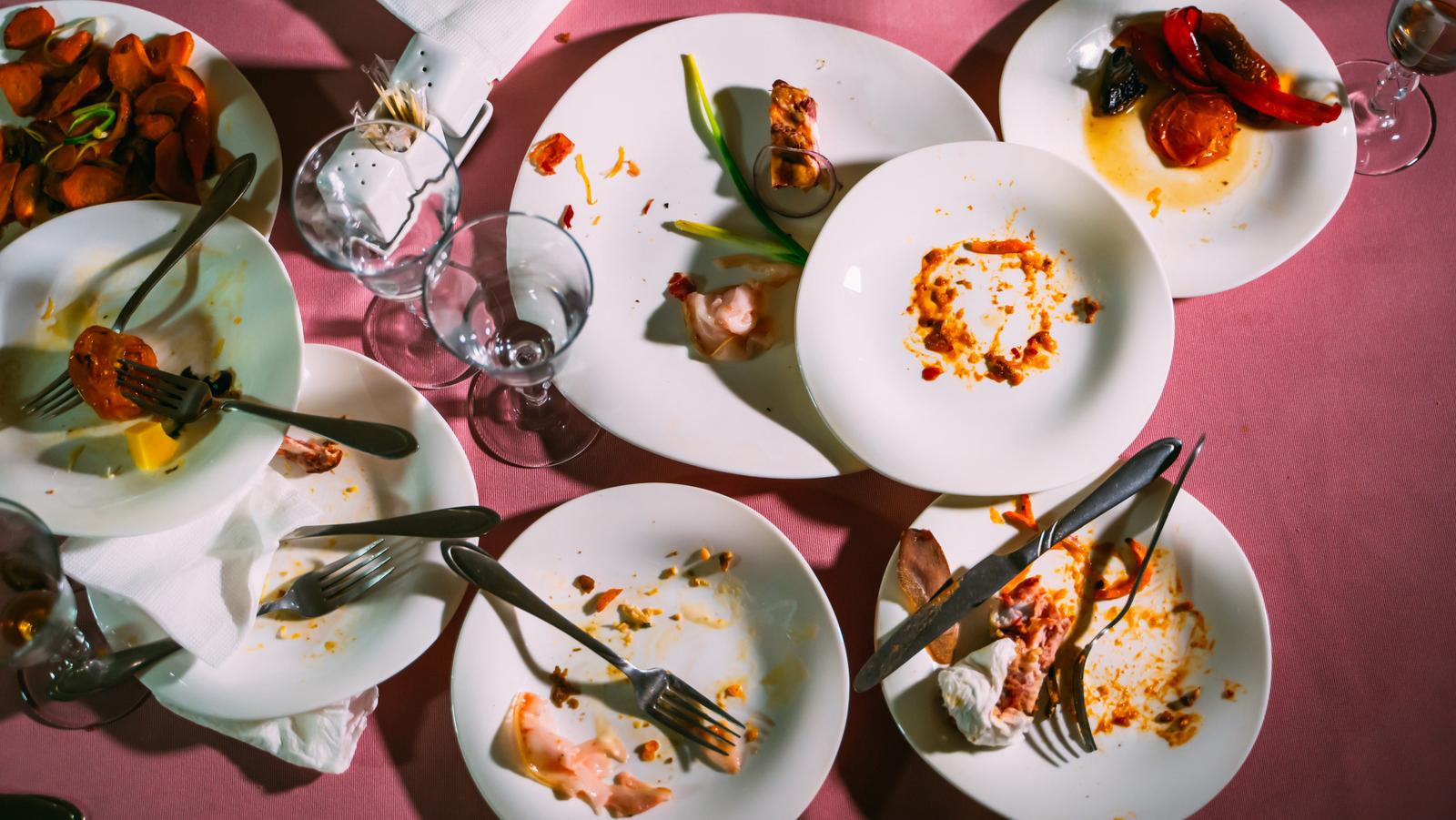
In front of completely empty plates.
Mia, my nine-year-old daughter, sat perfectly still, staring at her own reflection in the white porcelain. The plate was so clean it could have just come out of the cabinet. Beside her, Evan, seven years old, had his hands folded in his lap, the way I’d taught him to do when we went to restaurants and had to wait for our food.
But there was no food coming.
They weren’t waiting to be served. They were just… sitting there. Watching. While fifteen feet away, their cousins ate and laughed and asked for thirds.
I stood frozen in the doorway, my purse still on my shoulder, my keys still in my hand, trying to make sense of what I was seeing. Trying to find the explanation that would make this okay, that would transform this scene into something other than what it so clearly was.
“Oh, you’re here.” My mother-in-law, Addison, glanced up from where she was cutting another massive square of lasagna for Harper. Not surprised, not apologetic, just stating a fact.
I found my voice, though it came out smaller than I intended. “I texted that I’d be here by seven-thirty.”
“Mm-hmm.” She slid the lasagna onto Harper’s plate, where it joined the mountain already there. “We were hungry, so we went ahead and started.”
Started. That was one word for it.
I looked at my kids again. Mia’s eyes met mine for just a second before she looked back down at her empty plate, and in that flicker of eye contact, I saw something that made my stomach turn. Shame. She was ashamed. Like this was somehow her fault.
“Is there…” I walked toward the kitchen, my heels clicking too loud in the sudden silence my question had created. “Is there dinner for Mia and Evan?”
Payton’s fork paused halfway to her mouth. She looked at her mother, then at me, and smiled in a way that didn’t reach her eyes. “We didn’t know exactly when you’d get here. The kids were starving.”
“My kids are also starving,” I said, my voice still level, still polite, still playing the game we’d all been playing for six years.
Addison set down the serving spoon with a small sigh, the kind you make when someone is being deliberately difficult about something obvious. “My daughter’s kids eat first,” she said, as casually as if she were explaining a house rule about shoes in the entryway. “Her kids can wait for scraps.”
The words hung in the air like smoke.
Her kids. Not “the other kids.” Not “we’ll make them plates next.” Her kids. Scraps.
I opened my mouth, but before I could form a response, Payton leaned slightly toward Evan, her voice dropping to something almost sweet, almost conspiratorial. “You should know your place, sweetheart.”
From the living room, I heard Roger—my father-in-law—grunt in agreement from his recliner. I couldn’t see him from where I stood, but I could picture him perfectly: feet up, watching whatever game was on, nodding along like Payton had just commented on the weather forecast.
Something was happening to my body. My hands were shaking. Not visibly, not yet, but I could feel the tremor starting deep in my bones, working its way outward. My throat felt tight. The room seemed both too bright and too dim at the same time.
I walked over to where my kids sat and knelt down between their bar stools, bringing myself to eye level with them. I didn’t look at the dining room table. I didn’t look at Addison or Payton or the crystal glasses or the good china. I looked at my children.
“Hey, guys,” I said, and I was proud of how steady my voice sounded even though my hands were trembling so hard I had to clasp them together. “How was your day?”
Mia’s eyes filled with tears she was clearly trying to hold back. “It was fine.”
“Yeah,” Evan added quickly. “Fine.”
They always tried to pretend it was fine. They’d been doing it for years, and I’d been so busy trying to make this blended family work, trying to prove that we belonged, that I’d let them carry that weight. I’d taught them to swallow their hurt and smile and be grateful for whatever scraps—literal or metaphorical—came their way.
I stood up and turned toward the stove. The lasagna pan was sitting right there on the stovetop, still warm, aluminum foil peeled back to reveal at least six untouched servings. Enough to feed an army. Enough to feed my two children ten times over.
The story about “not enough for everyone” had been a lie. We all knew it. They knew it. My kids knew it. And they’d all just sat there anyway, watching my children go hungry for no reason other than cruelty dressed up as family hierarchy.
I picked up two plates from the cabinet—not the good china, just the everyday plates—and began serving lasagna. My hands were steadier now. Anger is clarifying that way. It burns away the uncertainty and leaves you with something cold and sharp and focused.
“They’ve already eaten,” Addison said from behind me.
I didn’t stop moving. Lasagna on the first plate. Lasagna on the second. Garlic bread. Salad.
“Did they?” I asked, my voice still calm. “Because when I got here, they were sitting in front of empty plates.”
“They had snacks earlier,” Payton chimed in. “Children don’t need full meals every single time, you know. Especially in blended families. Sometimes the blood grandkids eat first and the others wait.”
Blood grandkids.
The others.
I set the plates down in front of Mia and Evan and placed my hand on each of their shoulders. “Eat,” I said softly.
They looked at me like they were waiting for permission, or for someone to snatch the plates away, or for this to be some kind of trick. Finally, Mia picked up her fork.
Payton made a small sound of disapproval. “You’re teaching them to be entitled, you know. My kids understand that in a real family, there’s an order to things. Harper and Liam are blood. They come first. It’s just how it works.”
She said it like she was explaining gravity. Like she was sharing wisdom instead of cruelty.
My daughter was seven and nine years old, respectively, being taught their place by the people we’d been bailing out financially for six straight years. The people whose property taxes I’d paid. Whose medical bills I’d covered. Whose roof I’d helped replace.
That was the moment something in me went very, very cold.
I didn’t argue. I didn’t raise my voice. I microwaved the portions because they’d already cooled, set the plates back in front of my kids, and watched them eat like prisoners who’d been granted an unexpected meal—quickly, hunched over, protective.
“Get your things,” I said quietly when they’d finished. “We’re going home.”
Mia looked up, startled. “But we were going to watch a movie—”
“Now, please.”
They scrambled off their stools and disappeared toward the back room where they’d left their backpacks. I began collecting their lunch boxes from the counter, their water bottles, the small debris of children who’d been promised an evening with their grandparents and instead had been taught a lesson in hierarchy.
“You’re being dramatic,” Addison said, her voice sharp now. “We were going to feed them. You’re always so sensitive about everything.”
Roger finally spoke from the living room, not even bothering to turn away from the television. “It’s best they learn young. Life isn’t fair. Better they figure that out now from family than from strangers later.”
I stopped moving.
I turned to look at him—really look at him—for the first time in the entire interaction. He was still reclined, still comfortable, still utterly unconcerned. This wasn’t a one-off mistake. This wasn’t poor judgment or bad timing or a misunderstanding.
This was a system.
This was intentional.
“Let’s go,” I said when Mia and Evan reappeared with their things.
The drive home was silent in a way that felt different from normal quiet. It was the silence of children processing something they don’t have the words for yet. The silence of a mother trying not to explode while she’s behind the wheel.
We made it three blocks—I know because I counted them, watched each street sign pass, used them to anchor myself—before Mia’s small voice came from the backseat.
“Why don’t Grammy and Pop-Pop like us as much as Harper and Liam?”
My hands tightened on the steering wheel.
Evan, in his matter-of-fact seven-year-old way, added, “We’re not blood family. Aunt Payton said. That’s why.”
I pulled over.
I couldn’t see the road anymore. The streetlights were blurring into streaks of gold, and my eyes were burning, and my throat felt like someone had reached in and squeezed it shut. I put the car in park and just sat there, gripping the steering wheel, trying to breathe.
Every instinct in me wanted to turn around and give them the comforting lie. The one about how Grammy and Pop-Pop loved them just as much, about how this was all a misunderstanding, about how families are complicated but love is simple and they were cherished and wanted and valued.
But I couldn’t.
Not after what I’d just watched.
Not after six years of watching my children absorb the message that they were less-than, not-enough, tolerated rather than treasured.
I turned around in my seat to look at them. They were both staring at me with wide eyes, waiting for me to fix this, to explain it, to make it make sense.
“You deserved better,” I said, and my voice cracked on the last word. “You always deserved better.”
It wasn’t enough. It wasn’t the answer they needed. But it was the only true thing I could give them in that moment.
We drove the rest of the way home in silence.
After I got them to bed—after stories and water and one more hug and Mia asking if she’d done something wrong and me promising her she hadn’t, she never had—I went downstairs to the kitchen and opened my laptop.
The house was completely quiet. My husband was working late again, which was probably for the best because I didn’t trust myself to have a rational conversation. Not yet. Not while my hands were still shaking with a rage so pure it felt almost clarifying.
I opened our banking app and started going backward. Six years backward. Every transaction, every transfer, every check I’d written to his family because I wanted so badly to belong, because I thought generosity could purchase acceptance.
Property taxes for Addison and Roger: $8,400. Paid in full when Roger claimed the bill had gotten “lost in the mail” and they were facing a lien.
Medical procedure for Addison’s knee replacement: $12,000. Because their insurance had a high deductible and she was “in too much pain to wait.”
Roof repairs: $15,000. Conveniently needed right after I’d gotten my annual bonus.
A new truck for Roger: $18,000. Because his old one had “finally died” and he needed reliable transportation.
Custody lawyer for Payton: $22,000. For a custody battle she’d ultimately won because we’d paid for the better attorney.
Down payment on Payton’s apartment: $10,000. Because she needed to establish a stable home for Harper and Liam.
Car repairs. Emergency vet bills. Christmas gifts. Birthday parties. School supplies. Summer camp.
The list went on and on, scrolling backward through years of my money flowing in one direction with nothing—not even basic human decency toward my children—flowing back.
When I finally reached the total and saw the number, I had to close the laptop and put my head down on the kitchen table.
$134,000.
One hundred thirty-four thousand dollars.
To people who couldn’t be bothered to show up for a single one of Evan’s baseball games. Who’d missed every science fair, every school play, every birthday party we’d invited them to. Who’d canceled on Christmas twice because “Payton’s kids wanted a quiet holiday.” Who looked my children in the eye tonight and told them to wait for scraps.
I heard the front door open around eleven. My husband, Marcus, home from work, exhausted from his own twelve-hour day. He found me still sitting at the kitchen table, the laptop open in front of me, bank statements printed and stacked in a neat pile.
“Hey,” he said, dropping his bag by the door. “How was dinner at my parents’?”
I didn’t answer right away. I just looked at him—this man I loved, who’d promised when we got married that my kids would be his kids, that we’d be a family in every way that mattered.
“Sit down,” I said.
Something in my voice made him comply immediately. He pulled out the chair across from me, and I saw him notice the papers, the laptop, the expression on my face.
“What happened?”
So I told him. Everything. The empty plates. The “blood grandkids” comment. The casual cruelty delivered with a smile. The way our children had sat there, hungry and ashamed, while their cousins ate thirds off the good china.
I watched his face change as I talked. Confusion first. Then disbelief. Then something that might have been anger or might have been shame or might have been the dawning realization that this wasn’t new, I’d just finally stopped pretending it was acceptable.
“They probably just didn’t think—” he started.
“Don’t,” I said, and my voice was sharp enough that he stopped. “Don’t tell me they didn’t think. Don’t tell me it was a misunderstanding. Your mother looked me in the eye and said my kids could wait for scraps.”
“She didn’t mean—”
I slid the stack of bank statements across the table.
“Read it,” I said. “Out loud. Every check, every transfer, every time your mother cried on the phone and I reached for my wallet instead of my boundaries.”
He picked up the first page. Started reading. His voice got quieter with each line, until finally he set the papers down and just sat there, staring at the total I’d circled in red at the bottom.
“We’ve given them a hundred and thirty-four thousand dollars in six years,” I said. “And tonight they couldn’t give our children dinner. Not because there wasn’t enough food. Not because they didn’t have time. But because Harper and Liam are blood and Mia and Evan are not.”
“They’re going to pay us back,” Marcus said, but his voice was hollow. We both knew it was a lie.
“Show me,” I said. “Show me one dollar that’s ever come back our way.”
He couldn’t.
We sat in silence for a long time. Finally, Marcus stood up, ran his hands through his hair, and said, “I’ll talk to them. I’ll make this right.”
“No,” I said. “You won’t.”
“I’ll explain that they can’t treat the kids differently, that we’re a family—”
“Marcus.” I waited until he was looking at me. “You’ve been explaining that for six years. How’s it working out?”
He had no answer for that.
The next morning, I called my best friend Rachel on my way to drop the kids at summer camp. I was sitting in my car in the parking lot, too early for drop-off, running on three hours of sleep and pure anger.
“Tell me I’m not crazy,” I said when she answered.
She listened to the whole story without interrupting. Then she was quiet for a moment before asking, “Do you realize how much power you actually have here?”
“What?”
“Sarah. Think about it. Who co-signed their mortgage?”
“I did.”
“Who guaranteed the loan for Roger’s truck?”
“Me.”
“Whose credit is Payton’s apartment lease under?”
Oh.
“Walk me through it,” Rachel said, and I could hear her shifting into the analytical mode that made her such a good lawyer. “Make me a list. Every financial thread connecting you to them.”
So I did. And with each item, the picture became clearer. The mortgage I’d co-signed when they’d refinanced to pay off credit card debt. The personal loan I’d guaranteed for Roger’s truck, still being paid off at $400 a month. The apartment lease I’d vouched for because Payton’s credit was in shambles from her divorce.
Every beam, every nail, every brick in their comfortable life had my name on it.
“You’re not stuck here,” Rachel said quietly. “You know that, right? You’re not the one who needs them. They need you.”
“The kids asked if we’d be okay without Grammy and Pop-Pop,” I said, my voice breaking. “Like they think we’re the ones being supported. Like we’re dependent on people who wouldn’t feed them dinner.”
“So show them the truth,” Rachel said. “You’ve been carrying this whole family for six years. Maybe it’s time they learned to stand on their own.”
After I hung up, I sat in my car for a long time, watching other parents drop off their children, watching kids run toward the summer camp building with their backpacks and lunch boxes and the casual confidence of children who’d never been told to know their place.
I thought about Mia’s face when she stared at that empty plate. About Evan’s matter-of-fact acceptance that he wasn’t blood family. About six years of trying to buy my way into acceptance and all I’d purchased was the right to be used.
I pulled out my phone and scrolled through my contacts. My accountant’s number. My lawyer’s number. The bank’s number.
I thought about the promise I’d made to myself last night, after I’d tucked my children in and promised them they’d done nothing wrong: my children would never again sit and watch other people feast while they were told to know their place.
I checked the time. Exactly eighteen minutes had passed since I’d parked. The same amount of time my kids had sat in front of those empty plates last night.
Eighteen minutes.
That’s how long it had taken for everything to break.
I took a breath, lifted the phone to my ear, and dialed my accountant.
“Hi, David. It’s Sarah Chen. I need to talk to you about some co-signed loans and how to extract myself from them. Do you have time this week?”
“Of course,” he said. “Everything okay?”
I watched Mia and Evan through the rearview mirror as they climbed out of the car, their backpacks too big for their small frames, marker stains on their hands from yesterday’s art project.
“It will be,” I said.
The meeting with my accountant took two hours. The meeting with my lawyer took three. By the end of the week, I had a complete financial picture and a step-by-step plan.
The mortgage refinance was in both Addison and Roger’s names, but I was a co-signer guaranteeing the loan. I could remove myself with ninety days’ notice if the primary borrowers could qualify on their own—which they couldn’t. They’d need to refinance again or sell the house.
The truck loan was similar. I’d guaranteed it, but I wasn’t a co-owner. I could pull my guarantee with proper notice. Roger would have to refinance with his own credit or surrender the vehicle.
Payton’s apartment lease had me listed as a co-signer and financial guarantor. I could give sixty days’ notice that I wouldn’t be renewing my guarantee when the lease came up in three months.
Every thread connecting my financial stability to their comfortable life could be cut. Legally. Properly. With documentation and notice periods and everything done by the book.
“Are you sure?” my lawyer asked. “This is going to cause significant disruption to your in-laws’ lives.”
“I’m sure,” I said.
That night, I sat Marcus down again. This time I had documents. Plans. Numbers. The full picture of what I was about to do and why.
“This is nuclear,” he said, staring at the papers.
“They treated our children like they were less than dogs,” I said. “Dogs get table scraps out of kindness. Our kids were told it’s their place to go hungry.”
“If we do this, they’ll never forgive you.”
“Good,” I said. “I don’t want their forgiveness. I want them to feel a fraction of what Mia and Evan felt sitting in front of those empty plates.”
Marcus was quiet for a long time. Then he said, “Give me a week. Let me try talking to them one more time.”
“No.”
“Sarah—”
“They’ve had six years and a hundred and thirty-four thousand dollars to change. How much more are you willing to give them? How much more are you willing to take from our kids?”
He didn’t have an answer.
“I’m doing this,” I said. “You can support me or not. But I’m done paying for people who think my children should know their place.”
I sent the first letter on a Monday. Certified mail, return receipt requested, to the bank that held the mortgage. Notice of my intent to remove myself as co-signer on the refinanced loan effective ninety days from receipt.
The phone started ringing before the mail carrier probably even made it back to the truck.
I didn’t answer.
Tuesday, I sent the letter about the truck loan. Same process. Certified mail. Ninety days’ notice.
More calls. Text messages now. Then voicemails.
Wednesday, I contacted Payton’s landlord directly and gave notice that I wouldn’t be guaranteeing the lease renewal.
Thursday, my phone had forty-three missed calls from various members of Marcus’s family.
Friday, they showed up at my house.
I was ready for them. I’d actually been surprised it took this long.
Addison, Roger, and Payton stood on my front porch looking like I’d personally set their lives on fire—which, in a way, I suppose I had.
“We need to talk about these letters,” Addison said, her voice shaking with what I’m sure she thought was righteous anger.
“No, we don’t,” I said.
“You can’t just pull your support—”
“I can, actually. It’s all legal. It’s all documented. You’ll have ninety days to make other arrangements.”
Roger stepped forward, his face red. “You’re destroying this family over a simple misunderstanding about dinner?”
“No,” I said calmly. “I’m extracting myself from a financial arrangement that’s been one-sided for six years. The dinner just helped me see clearly.”
“Those loans are in our names,” Payton said. “If you pull out, we’ll lose everything—”
“Then you’ll know how my kids felt watching your kids eat off the good china while they sat in front of empty plates.”
The silence that followed was profound.
“It wasn’t like that,” Addison said, but her voice was weaker now. “We were going to feed them—”
“You had six servings of lasagna sitting on the stove,” I said. “You just didn’t think they deserved to eat at the same time as the blood grandkids.”
I watched the words land. Watched them realize I was quoting Payton directly.
“We’ll pay you back,” Roger said desperately. “Every dollar. Just don’t do this.”
“You’ve had six years to pay me back. Show me one payment. One dollar that’s come back to me.”
They couldn’t.
“You’re being vindictive,” Payton spat. “Cruel.”
“I’m being a mother,” I said. “Something you might try sometime. Now please leave my property.”
They did, eventually, after more threats and pleading and attempts to get Marcus to overrule me. But Marcus, to his credit, stood beside me on that porch and stayed silent.
After they left, he turned to me and said, “Are you really going through with this?”
“Yes.”
“They’re going to lose the house.”
“Then they should have thought about that before they taught my children their place.”
“My mother is sixty-two years old—”
“And my daughter is nine. Which one of them do you think I’m more worried about?”
He had no answer for that either.
The ninety days passed slowly and then all at once.
Addison and Roger tried to refinance the mortgage without me as a co-signer. They were denied—their credit scores weren’t high enough, their debt-to-income ratio was too poor. They put the house on the market.
Roger tried to get the truck loan refinanced under his own credit. Also denied. He surrendered the truck.
Payton found out her apartment application without me as a guarantor was rejected. She moved in with Addison and Roger, cramming her two kids into their already strained household.
The phone calls continued for a while—angry, desperate, pleading. I blocked most of them. The ones that got through, I let go to voicemail.
Marcus tried to play mediator. Tried to find a middle ground. Tried to get me to reconsider.
“You made your choice six years ago,” I told him finally. “You chose them. You chose to let your parents treat my kids like they were less than. You chose to keep writing checks instead of setting boundaries. I’m done choosing them. I’m choosing Mia and Evan.”
“That’s not fair—”
“You’re right. It’s not fair. It wasn’t fair when a seven-year-old had to sit and watch his cousin eat thirds while he went hungry. It wasn’t fair when my nine-year-old daughter was told she’s not blood family. Fair died the minute your mother said my kids could wait for scraps.”
Eventually, Marcus stopped trying to fix it. He just got quieter. More distant. Like he was mourning something, though I wasn’t sure if it was his family’s financial stability or the wife he thought he’d married.
I didn’t care.
For the first time in six years, I didn’t care what the Cole family thought of me.
Six months after I sent those first letters, Addison and Roger’s house sold. They downsized to a small condo. Payton found a cheaper apartment on the other side of town. Roger bought a used sedan with his portion of the house proceeds.
They were fine. Not comfortable, not living the life they’d become accustomed to on my dime, but fine.
And my kids? My kids stopped asking why Grammy and Pop-Pop didn’t love them. They stopped trying to earn affection from people who’d made them feel small. They stopped watching other children get things they were told they didn’t deserve.
We started new traditions. Found new people to spend holidays with. Built a life that didn’t require my children to know their place.
One Tuesday night—almost exactly a year after the empty plates—I made lasagna for dinner. The good kind, with homemade sauce and fresh mozzarella. I set the table with our regular dishes, nothing fancy, and called Mia and Evan to eat.
They came running, the way kids do when they smell garlic bread, and slid into their chairs. I served them each a generous portion and sat down with them.
“Mom?” Mia said, her fork halfway to her mouth. “Why are you smiling like that?”
I didn’t realize I had been.
“Just happy,” I said. “Just really happy to have dinner with my kids.”
She grinned and went back to eating, completely unaware of the significance of the moment. Unaware that a year ago she’d sat in front of an empty plate and learned to feel ashamed of existing. Unaware that her mother had spent six years trying to buy love and had finally learned that the only people who deserved that money were the two sitting at this table.
Later that night, after they were in bed, I sat in the quiet kitchen and thought about the phone call I’d made eighteen minutes after pulling into that summer camp parking lot. The first step in extracting myself from a family that had never really wanted me.
The best eighteen minutes I ever spent.
I thought about the $134,000 I’d given away trying to belong. About the house I’d helped them keep, the truck I’d helped Roger buy, the lawyer I’d hired for Payton. About all the ways I’d tried to prove I was worth keeping around.
And then I thought about Mia and Evan, asleep upstairs, full of lasagna and laughter and the security of knowing they would never again be told to wait for scraps.
Worth it.
Every single dollar would have been worth it if it had bought them that security.
But it hadn’t.
What bought them security was eighteen minutes of clarity in a parking lot, followed by six months of uncomfortable conversations and legal documents and standing firm while the people I’d supported for years tried to make me feel guilty for choosing my children over their comfort.
Marcus and I are in counseling now. He’s slowly starting to understand what those empty plates represented—not just one cruel dinner, but six years of letting his family teach our children they were less than. Six years of me trying to buy acceptance while he stood by and let it happen.
I don’t know if we’ll make it. Some days I’m not sure I want to.
But I know this: my kids will never again sit in front of empty plates while they watch other children feast.
They will never again be told to know their place.
And I will never again pay for the privilege of being treated like I don’t belong.
That’s worth more than $134,000.
That’s worth everything.
THE END

Lila Hart is a dedicated Digital Archivist and Research Specialist with a keen eye for preserving and curating meaningful content. At TheArchivists, she specializes in organizing and managing digital archives, ensuring that valuable stories and historical moments are accessible for generations to come.
Lila earned her degree in History and Archival Studies from the University of Edinburgh, where she cultivated her passion for documenting the past and preserving cultural heritage. Her expertise lies in combining traditional archival techniques with modern digital tools, allowing her to create comprehensive and engaging collections that resonate with audiences worldwide.
At TheArchivists, Lila is known for her meticulous attention to detail and her ability to uncover hidden gems within extensive archives. Her work is praised for its depth, authenticity, and contribution to the preservation of knowledge in the digital age.
Driven by a commitment to preserving stories that matter, Lila is passionate about exploring the intersection of history and technology. Her goal is to ensure that every piece of content she handles reflects the richness of human experiences and remains a source of inspiration for years to come.