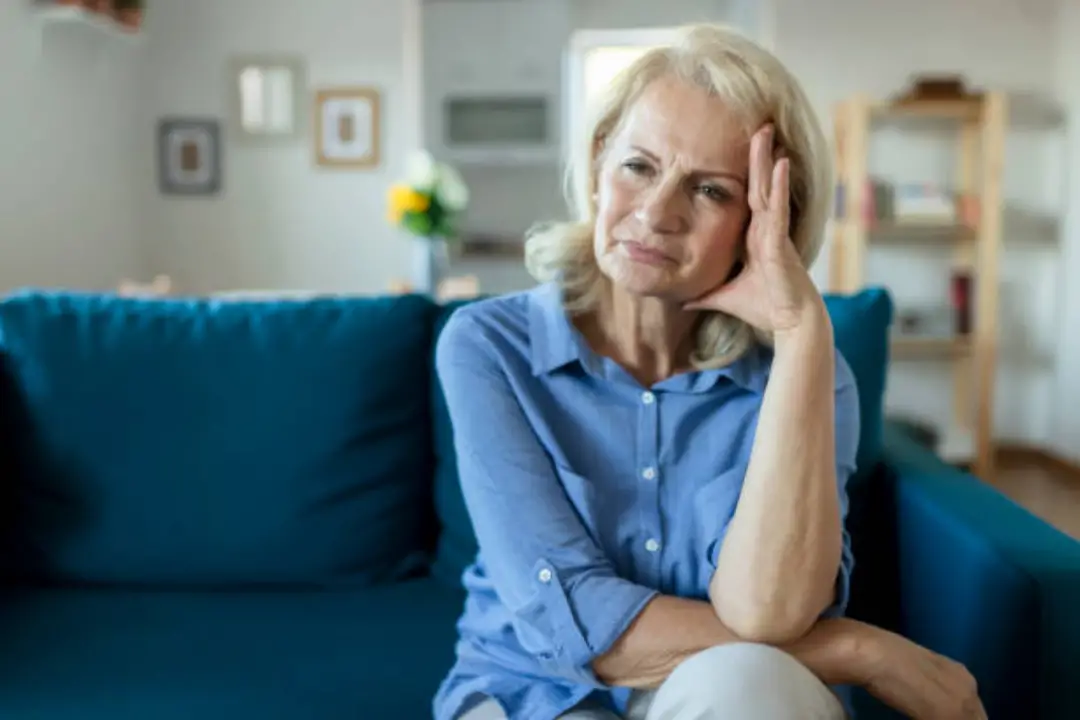
The apple pie was still warm in my hands when I stepped through Michael’s front door, the glass dish fogging slightly at the edges. I’d baked it that afternoon the way I always did—Granny Smith apples with just enough cinnamon, a lattice crust that Robert used to say looked like something from a magazine even though my hands always shook when I wove the strips together. Two years after his death, I still baked as if he might walk into the kitchen and cut himself a slice before it cooled, still measured the nutmeg the way he liked it, still left the edges a little darker because he always ate those pieces first.
“Mom, you made it,” Michael said, taking the dish from me with a smile that didn’t quite reach his eyes. There was something tight in his expression, something rehearsed in the way he kissed my cheek. I told myself it was stress from work, that thirty-four-year-old men with demanding jobs and four-year-old daughters were allowed to look tired on a Friday evening.
“Of course I made it,” I said, smoothing down my navy dress. “You invited me to dinner. I’m not going to show up empty-handed.”
Vanessa appeared from the kitchen in pressed slacks and a cream sweater that probably cost more than my monthly utility bill. Everything about my daughter-in-law was polished—her highlighted hair, her manicured nails, the way she moved through rooms like she was being filmed for a lifestyle blog. She smiled at me with her perfect white teeth, but her eyes had that same tightness Michael’s did.
“Brittney, you shouldn’t have,” she said, taking the pie. “We already have dessert.”
Something in her tone made my stomach flutter uncomfortably. Not quite dismissive, but not quite welcoming either. Like I’d brought something to a party where the menu had already been finalized without me.
The house smelled like roast chicken and rosemary, warm and inviting in the way that expensive candles try to replicate but never quite achieve. Classical music drifted from a speaker somewhere, something with strings that I didn’t recognize. Michael and Vanessa’s home always felt like a showroom to me—everything coordinated, nothing out of place, the kind of house where you worried about leaving fingerprints on the stainless steel appliances.
“Where’s Emma?” I asked, looking past them for my granddaughter’s wild curls and gap-toothed grin.
“Sleepover at Madison’s house,” Vanessa said quickly. “We thought it would be nice to just have the adults tonight. More relaxed.”
The explanation should have made sense, but it landed wrong somehow. Emma loved Friday nights with Grandma. She loved showing me her latest drawings, making me watch her do cartwheels in the backyard, begging me to read her the same three books over and over. The last time I’d been here, she’d cried when I had to leave.
“Oh,” I said, trying to keep the disappointment out of my voice. “I brought her some stickers. I’ll just leave them—”
“That’s sweet, Mom,” Michael interrupted, guiding me toward the dining room with a hand on my elbow. “She’ll love them. Come on, dinner’s almost ready.”
That’s when I saw it.
The dining room table was set beautifully—white tablecloth pressed without a single wrinkle, cloth napkins folded into elegant triangles with sprigs of fresh rosemary tucked into each one, wine glasses catching the candlelight and throwing small rainbows onto the walls. Everything was perfect in that studied way that told me Vanessa had probably consulted Pinterest for at least an hour.
But it was the number of place settings that made my breath catch.
Four plates.
Four wine glasses.
Four sets of silverware arranged with mathematical precision.
Four napkins with their little herb garnishes.
I counted the people in the house: Michael, Vanessa, me. Three. There were only three of us.
My eyes tracked to the fourth setting, positioned at the head of the table in what I immediately recognized as the “dad seat”—the place of honor, the spot where Robert had always sat at our own farmhouse table forty miles outside Millbrook. The chair that our kids had never fought over even as teenagers because some family positions were sacred, unchanging, permanent.
Except Robert had been dead for two years.
So why was there a place set for him?
My hands went numb. The room tilted slightly, the way it does when you stand up too fast or when the floor beneath you turns out to be less solid than you thought. I gripped the back of a chair to steady myself, my knuckles going white against the dark wood.
“Michael,” I said, and my voice came out strange and thin. “Why are there four places?”
My son went pale. Not the gradual pale of someone feeling sick, but the instant bloodless pale of someone who’s just been caught. His eyes darted to Vanessa, then back to me, and I watched him swallow hard enough that his throat moved visibly.
“Mom,” he started, then stopped. His mouth opened and closed like he was testing words that wouldn’t come out right.
Vanessa’s hand flew to her mouth, covering it like she was physically holding something back.
The classical music suddenly felt obscene, cheerful strings playing while my heart hammered against my ribs. I stared at that fourth place setting—the empty chair, the unused wine glass, the napkin folded with such care for someone who would never sit down.
“Michael,” I repeated, louder this time. “What is this? Is this some kind of memorial? Are we—are we supposed to pretend he’s here?”
The thought made my stomach turn. I’d spent two years learning how to exist in a world without Robert. I’d packed up his clothes, donated his tools, learned to sleep in the center of the bed instead of on my side. I’d survived the first Christmas, the first anniversary, the first spring planting season when I had to hire someone else to work the north pasture because I couldn’t bear to walk where he’d fallen. I’d done the impossible work of continuing to breathe when the person who’d shared my oxygen for forty-one years was gone.
And now my son wanted me to sit at a table and pretend? To perform grief like dinner theater?
“No, Mom, it’s not—” Michael’s voice cracked. He ran both hands through his hair, making it stand up in peaks. “It’s not a memorial. It’s—God, I don’t know how to say this.”
“Say what?” I demanded, and I could hear the edge of panic creeping into my voice.
Vanessa turned abruptly, her heels clicking hard on the hardwood floor. “I’ll get it,” she said to Michael, her voice barely above a whisper. “We can’t do this without showing her.”
“Get what?” I looked between them, my pulse pounding in my ears. “What are you talking about?”
Michael stepped toward me, hands raised like he was approaching a spooked animal. “Mom, please sit down.”
“I don’t want to sit down,” I said, but my legs were shaking and the chair was right there, so I sank into it anyway, gripping the edge of the table.
Vanessa disappeared down the hallway, her footsteps receding and then returning with purpose. When she came back, she was carrying something small cradled in both hands like it was made of glass—a wooden box, dark walnut with brass corners that caught the light.
My heart stopped.
I knew that box.
“That’s Robert’s,” I whispered. “That’s his father’s tackle box. The one his dad carved for him when he was twelve.”
“Yes,” Michael said quietly, pulling out the chair next to mine and sitting down heavily. He looked like he’d aged five years in the last five minutes.
“But that box is in our basement,” I said, my voice rising. “I saw it there last December when I was looking for the Christmas decorations. It was on the shelf next to the camping gear, exactly where it’s always been.”
Michael shook his head slowly. “That was a replica,” he said. “Dad made a second one before he… before everything. He wanted you to think the original was still at the farmhouse so you wouldn’t notice it was gone.”
The words didn’t make sense. They were English, arranged in grammatically correct sentences, but they refused to assemble into meaning in my brain.
“Why would he do that?” I asked.
Michael placed the box on the table in front of me with trembling hands. “Because this one has something in it that he didn’t want you to find. Not then. Not until now.”
I stared at the box like it might explode. The wood was smooth and dark, familiar in the way that objects you’ve seen for decades become extensions of memory. Robert used to keep fishing lures in it when we were young, back before the kids were born and we still had time for lazy Saturdays by the lake. I could picture his hands opening it, sorting through the colorful hooks and weights, telling me stories about the fish he was going to catch.
But Robert’s hands had been cold and still for two years now. I’d held them in the hospital, felt the warmth leave them, watched as they placed his wedding ring in a plastic bag with his other belongings.
“Michael,” I said, and I barely recognized my own voice. “What is this?”
He looked at me with eyes that were glossy with unshed tears. “Mom, there’s something we’ve never told you. About Dad. About what happened before he died.”
The room seemed to contract, all the air sucking out of it at once. “What do you mean, what happened before?” I whispered. “He had a heart attack. In the pasture. The doctor said it was instant, that he didn’t suffer.”
“I know that’s what they told you,” Michael said, and his voice broke on the last word.
Vanessa reached past me and gently lifted the lid of the box. The hinges made a soft creaking sound that seemed too loud in the silent room. Inside, I could see papers—an envelope with my name written on it in Robert’s careful handwriting, old photographs with yellowed edges, newspaper clippings that looked like they’d been handled many times.
My name on the envelope. Brittney. Not “my love” or “sweetheart” or any of the dozen endearments he’d used over four decades. Just my name, written like a label on a file.
“Before you open that,” Michael said, his voice shaking badly now, “you need to understand something. Dad wasn’t just a farmer from Millbrook. He wasn’t just the man who fixed fences and grew corn and read the Farmer’s Almanac.”
I stared at my son, waiting for the punchline to a joke that wasn’t funny.
“He was…” Michael took a shuddering breath. “Before he met you, before he bought the farm, Dad worked for the federal government. Financial crimes division. He investigated fraud, money laundering, organized crime. He helped build cases against people who made entire fortunes disappear, people who looked like respectable businessmen but destroyed lives.”
The words washed over me like cold water. I shook my head slowly, trying to reconcile what Michael was saying with the man who’d shared my bed for forty-one years, who’d taught our son to fish, who’d sung off-key in the shower and left his boots by the back door.
“No,” I said. “That’s not—Robert would have told me. We didn’t have secrets like that.”
“He wanted to protect you,” Vanessa said softly. “That’s what he told Michael. He said if you knew the truth, it would put you in danger.”
“Danger from what?” I demanded, my voice cracking.
Michael reached for the envelope, but I snatched it first. If there were answers, I wanted them now. I wanted them in Robert’s own words, not filtered through my son’s grief and guilt.
My hands shook as I pulled out the letter. The paper was thick, slightly yellowed at the edges, covered in Robert’s meticulous handwriting. I could picture him writing this, sitting at some desk somewhere, choosing each word with the same careful deliberation he’d used to write grocery lists and birthday cards.
The letter began simply: Brittney—
Just my name, like he was calling to me across a distance I couldn’t measure.
I forced myself to read, even though my vision kept blurring with tears I refused to let fall.
If you’re reading this, it means you made it through the part I hated most: the silence after I was gone. If you’re angry, you have every right to be. If you’re confused, I’m sorry. I didn’t deserve your trust the way I asked for it.
I need you to listen to me, Britt. Not as the widow they told you to be. As my wife. As the only person who ever really saw me.
They told you it was a heart attack. They told you it was instant. They told you I wouldn’t have felt a thing. That was the story you needed to survive. I’m sorry I let you believe it.
My breath caught in my throat. The room spun. I gripped the table edge with my free hand, willing the world to stay still.
“Mom,” Michael said quietly. “Keep reading.”
Brittney, the man you married was not only a farmer. The farm was real. The life was real. Our love was real. But it wasn’t the whole truth.
Before Millbrook, before the pasture, before the quiet life we built together, I belonged to another world. I worked in federal financial investigations. Not the kind with guns and raids. The kind with spreadsheets and bank records and the slow, methodical work of tracking money until it leads you to powerful people who don’t like being found.
Years ago, I helped build a case that put a very dangerous man in prison. The kind of man who has resources, connections, patience. When I left that work to marry you, they warned me: if you have a family, you make them targets. So I became someone else. A farmer. A quiet man in a quiet town. A person who didn’t draw attention.
I thought if I stayed invisible enough, the past would leave us alone.
I was wrong.
My hands were shaking so hard the paper rattled. I looked up at Michael through blurred vision. “What is he saying?” I whispered.
“Keep reading, Mom,” Michael said, and there were tears streaming down his face now.
Two months before you found me in that pasture, I learned the man I helped imprison was being released. Not just released—he was looking for me. He had resources, investigators, people who specialize in finding men like me who tried to disappear.
I contacted my old colleagues. I gave them information, did things I promised myself I’d never do again. And then they gave me a choice: disappear completely and let your family believe you’re dead, or stay and watch everyone you love become collateral damage.
The words on the page swam. I couldn’t breathe. The elegant dining room with its perfect place settings felt like a trap, the walls closing in.
So yes, Brittney. The heart attack story was a lie. Not to hurt you. To protect you.
On that morning in the pasture, I did collapse. But it wasn’t my heart. It was medication, carefully administered, designed to simulate cardiac arrest convincingly enough to fool everyone who needed to be fooled. There were doctors involved—good ones who owed me favors. It was the only way to make you grieve, to make you stop looking, to keep you safe from people who would have used you to get to me.
“No,” I said out loud, the word torn from somewhere deep in my chest. “No, this isn’t—this can’t be—”
“Mom,” Michael said, reaching for my hand, but I yanked it away.
“You let me bury him,” I said, my voice rising to something close to a scream. “There was a funeral. There was a casket. I stood there and I—” My voice broke completely. “I put flowers on a grave, Michael. Every month for two years, I drove to the cemetery and put flowers on an empty grave!”
“I know,” Michael sobbed. “Mom, I know, and I’m so sorry. But he made me promise. He came to me three weeks before it happened and told me everything. He gave me this box and made me swear I wouldn’t tell you for two years. He said you needed time to grieve, that if you knew the truth too soon you’d try to find him and that would get you killed.”
I stood up so fast my chair fell backward, clattering against the floor. “So you’ve known,” I said, turning on my son with fury I didn’t know I had in me. “For two years, you’ve watched me cry myself to sleep. You’ve watched me sell half the farm because I couldn’t run it alone. You’ve watched me learn how to be a widow. And you said nothing.”
“He’s alive, Mom,” Michael said, his voice breaking on the words. “I let you grieve because the alternative was letting you die.”
The room went silent except for my ragged breathing and Vanessa’s quiet crying at the end of the table.
I looked back down at the letter, my hands shaking so violently I could barely hold it.
I asked Michael to wait two years because that’s how long it takes for a trail to go cold. Two years for the people hunting me to believe the story. Two years for you to build enough scar tissue around the wound that maybe, maybe, you could handle the truth.
Brittney, tonight matters. That place setting matters. Because tonight is the night I can finally stop hiding.
The aftershave.
I smelled it suddenly, recognizing it from when I’d first walked in—that specific scent that Robert had worn, woody and clean and so familiar it made my chest ache. I’d noticed it when I entered the house but couldn’t place it because my brain refused to make the connection.
“Is he here?” I whispered.
Michael nodded, tears streaming down his face. “Yes.”
“Where?” I demanded.
Before Michael could answer, I heard it. Footsteps in the hallway. Not Vanessa’s sharp heels or Michael’s hesitant shuffle. Heavy, deliberate footsteps that I would have known anywhere, that I’d heard ten thousand times coming up the porch steps, crossing the kitchen floor, walking toward me in the dark.
The dining room doorway filled with a figure, and my heart stopped completely.
Robert stood there, older than I remembered, grayer, thinner in the face but unmistakable. He wore a dark jacket I’d never seen, but his eyes were the same—that steady brown that had looked at me across the breakfast table for four decades, that had watched our children grow, that had held mine the night we buried his father and the morning Emma was born.
“Britt,” he said quietly, and his voice cracked on my name the way it used to when he was trying not to cry.
For a moment I couldn’t move. Couldn’t breathe. Couldn’t process the impossibility of a dead man standing in my son’s dining room, saying my name like he’d just come home from checking the fence line.
Then my body moved without permission from my brain. I walked toward him on legs that didn’t feel like mine, crossed the space between us that felt like miles and inches at the same time.
“You’re dead,” I said, and it came out as barely a whisper. “I buried you.”
“I know,” Robert said, and tears were streaming down his face now. “I’m sorry. God, Britt, I’m so sorry.”
I reached out with one shaking hand and touched his chest, feeling for the heartbeat that couldn’t possibly be there. But it was—steady and strong under my palm, proof that my husband was alive, that everything I’d survived was built on a lie.
The touch broke something in me. I made a sound I’d never made before—something animal and raw—and collapsed against him. He caught me the way he’d always caught me, arms wrapping around me, one hand in my hair, murmuring apologies into my ear that couldn’t possibly be enough.
I cried against his chest, feeling the solid warmth of him, breathing in that aftershave I’d smelled when I walked in, feeling the rise and fall of his breathing. Real. Alive. Impossible.
“I mourned you,” I sobbed against his shoulder. “I mourned you for two years. I learned how to wake up alone. I learned how to run the farm without you. I learned how to be a widow.”
“I know,” Robert whispered, his voice thick with tears. “I know what I asked you to carry. I know it was too much.”
I pulled back enough to look at his face, this face I’d loved since I was twenty-three, now marked with two years of lines I hadn’t seen form. “Why couldn’t you just tell me?” I demanded. “Why couldn’t you take me with you?”
“Because you would have come,” he said simply. “And they would have found me through you. They would have used you, Britt. Used our son. Our granddaughter. I couldn’t—” His voice broke completely. “I couldn’t let them hurt you to get to me.”
I wanted to scream at him. I wanted to hit him. I wanted to collapse and never get up.
Instead, I said, “So you let me bury an empty casket.”
Robert’s face crumpled with grief. “It wasn’t empty,” he said quietly. “There were things in it. My father’s watch. My wedding ring from before I got the new one to throw them off. A letter I wrote to you that I couldn’t let you read yet. It wasn’t completely empty.”
The detail was somehow worse than if it had been nothing. He’d planned it, curated it, made it real enough to fool everyone including his own wife.
“How dare you,” I whispered.
Michael’s voice came from behind me, shaking. “Mom, he did it to keep you alive.”
I spun on my son. “And you helped him,” I said. “You stood at that funeral. You gave a eulogy. You cried at the graveside, and the whole time you knew he was breathing somewhere.”
“I know,” Michael said, his face streaked with tears. “I know how terrible that was. But Mom, the people who were hunting him—they killed someone last year. A witness who testified in the original case. They found him in Arizona and made it look like a car accident. If Dad had stayed, if you’d known, they would have come after you to find him.”
“He should have trusted me,” I said.
“I did trust you,” Robert said quietly. “I trusted you to survive. I trusted you to be strong enough to build a life without me. And you did, Britt. You did exactly what I knew you could do.”
“That’s not trust,” I said, my voice hard. “That’s manipulation.”
Robert flinched like I’d slapped him, but he didn’t argue. “You’re right,” he said. “You’re absolutely right.”
Silence fell over the room. The classical music had stopped at some point and nobody had noticed. The candles had burned down halfway, wax pooling at the bases. The fourth place setting sat there like an accusation.
“So what now?” I asked, my voice raw. “You just… come back? Pick up where we left off?”
“No,” Robert said firmly. “I’m not that naive. I don’t expect you to forgive me tonight or next month or maybe ever. I came back to tell you the truth. To answer every question you have. To let you be as angry as you need to be.”
“The threat is over,” Michael added quietly. “The man who was hunting Dad is dead. The investigation is closed. Federal prosecutors confirmed it. It’s safe now. That’s why Dad could come back.”
I looked at Vanessa, who’d been silent through all of this, standing at the edge of the room like she wasn’t sure if she belonged. “You knew too,” I said. It wasn’t a question.
“Not until six months ago,” Vanessa said quickly. “Michael couldn’t tell me at first. The fewer people who knew, the safer everyone was. But yes, I’ve known for six months and I—” Her voice cracked. “I hated lying to you. Every time you came over, every time you talked about Robert, I wanted to tell you.”
“But you didn’t,” I said.
“No,” she whispered. “I didn’t.”
I looked around at all of them—my son, my daughter-in-law, my supposedly dead husband—and felt something break and resettle in my chest. Not forgiveness. Not yet. But something else. Understanding, maybe. Or at least the beginning of it.
“Sit down,” I said finally, my voice flat. “If we’re going to do this, if we’re going to have this conversation, then we’re going to do it properly.”
Robert moved slowly to the head of the table, to that fourth place setting that now made terrible, perfect sense. Michael and Vanessa took their seats. I sat back down in mine, my whole body trembling with exhaustion and shock and emotions I couldn’t even name.
Michael poured wine with shaking hands. Nobody spoke.
Finally, I looked at Robert across the candlelight and said, “Tell me everything. From the beginning. And if you leave anything out, if you lie to me one more time, I will walk out that door and you will never see me again. Do you understand?”
Robert nodded, his eyes locked on mine. “I understand.”
And so he talked. For hours, he told me about the life he’d lived before he became my husband. About the cases, the threats, the reason he’d chosen a quiet existence on a farm in Pennsylvania. He told me about the call he’d received two and a half years ago, confirming that the man he’d helped imprison was being released early on a technicality. He told me about the plan, the staged collapse, the doctor who’d helped make it convincing, the federal agents who’d arranged his extraction.
He told me about the safe house in Montana where he’d spent the last two years, about the nights he’d lain awake listening to old voicemails I’d left him before he disappeared, about the moment he’d almost broken and come home after the first year when he heard through Michael that I’d sold the dairy cows because I couldn’t manage them alone.
As he spoke, I felt the shape of my marriage changing. Not disappearing—the love was still there, solid and real underneath everything else. But rearranging, like furniture in a familiar room suddenly pushed into new configurations.
When he finished, the candles had burned down to nubs and my throat was raw from crying. Michael had his head in his hands. Vanessa was crying silently into a napkin.
“I don’t know what to do with this,” I said finally, my voice barely above a whisper. “I don’t know how to be angry and relieved and heartbroken all at the same time.”
“You don’t have to know tonight,” Robert said gently. “You don’t have to decide anything tonight.”
I looked at him—really looked at him—and saw all the ways two years had changed him. The deeper lines around his eyes. The gray in his hair that had been salt-and-pepper before. The way he held himself, like a man who’d been carrying weight that had bent his spine.
“I’m glad you’re alive,” I said, and the words surprised me because I hadn’t known I was going to say them. “I’m furious and I’m devastated and I feel betrayed. But underneath all of that, I’m glad you’re alive.”
Robert’s eyes filled again. “That’s more than I deserve,” he whispered.
“Yes,” I agreed. “It is.”
Michael cleared his throat. “Mom, you can stay here tonight if you want. We have the guest room made up. Or if you want to go home, I can drive you—”
“I’ll drive myself,” I said, standing on shaky legs. “I need to think. I need to—I need space.”
Robert stood too, but didn’t move toward me. “Can I call you tomorrow?” he asked.
I considered it. “I don’t know,” I said honestly. “Ask me tomorrow.”
I gathered my purse and coat, moving mechanically. At the door, I turned back to look at the dining room—the table with four place settings, three of them used, one waiting for a dead man who turned out to be alive.
“The pie,” I said suddenly. “I made that pie for a dead man.”
Robert’s smile was sad. “You made it perfect,” he said. “Just like you always did.”
I nodded once, then walked out into the November night.
The drive home was a blur. I cried so hard I had to pull over twice, gripping the steering wheel until my knuckles ached. When I finally pulled into the farmhouse driveway, the place looked different somehow. Smaller. Less sacred.
Inside, I walked through rooms that had been a shrine to Robert’s memory. His chair by the fireplace. His reading glasses on the side table where I’d left them, unable to put them away. The framed photos of us on the mantle—our wedding, the kids as babies, that trip to the ocean when we were young and tan and didn’t know what grief felt like.
I sat in his chair and pulled the afghan around me—the one his mother had made, the one that still smelled faintly like him even after two years.
And I cried. Not the desperate, drowning sobs of new grief, but something older and deeper. Grief for the woman I’d been before tonight. Grief for the simple story I’d believed—loving husband, tragic death, widow learning to survive.
But underneath the grief was something else. Something fragile and frightening and unmistakably alive.
Hope.
Because my husband was alive. Flawed, secretive, manipulative in the way he’d protected me—but alive. And despite everything, despite the lies and the fake funeral and the two years of unnecessary mourning, I realized I still loved him.
Not the way I had before. That innocent, trusting love was gone, buried in an empty casket. But something else had survived—something tougher and more honest, built from the knowledge that love sometimes means making impossible choices and living with the consequences.
I didn’t know yet if I could forgive him. I didn’t know if we could rebuild what had been broken. But I knew I wanted to try.
That night, I slept in the center of the bed like I’d learned to do, but I didn’t feel alone. I felt like I was standing at the edge of something new and terrifying and maybe, possibly, worth the risk.
In the morning, my phone rang. Robert’s name appeared on the screen—a name I’d deleted and reinstalled a dozen times over two years, unable to let it go completely.
I stared at it for three rings, my thumb hovering over the answer button.
On the fourth ring, I answered.
“Hello,” I said.
“Britt,” Robert’s voice came through, rough with emotion. “Thank you for picking up.”
“I almost didn’t,” I admitted.
“I know,” he said. “Can I… can I see you today? No pressure. Just coffee. Just talking.”
I looked around the farmhouse kitchen—the space where we’d shared forty-one years of breakfasts, where he’d kissed me goodbye before walking out to the pasture that last morning, where I’d learned to cook for one.
“Yes,” I said. “But not here. Not yet. Meet me at the diner on Route 15. The one where we had our first date.”
I heard him smile. “I remember,” he said softly. “I’ll be there.”
When I walked into that diner two hours later, Robert was already in a booth by the window, hands wrapped around a coffee cup, watching the door. When he saw me, he stood, and I saw all the hope and fear and love in his face that I felt in my own chest.
I slid into the booth across from him and said the truest thing I knew: “I don’t know how to do this. I don’t know how to love a ghost who came back to life.”
“Neither do I,” Robert admitted. “But maybe we figure it out together.”
“Maybe,” I said.
And as the waitress poured coffee and the morning sun streamed through the windows of the diner where we’d fallen in love forty-two years earlier, I thought maybe that was enough.
Not a happy ending. Not yet.
But a beginning.
And sometimes, after you’ve survived the impossible, beginnings are the bravest thing you can give yourself permission to have.

Adrian Hawthorne is a celebrated author and dedicated archivist who finds inspiration in the hidden stories of the past. Educated at Oxford, he now works at the National Archives, where preserving history fuels his evocative writing. Balancing archival precision with creative storytelling, Adrian founded the Hawthorne Institute of Literary Arts to mentor emerging writers and honor the timeless art of narrative.