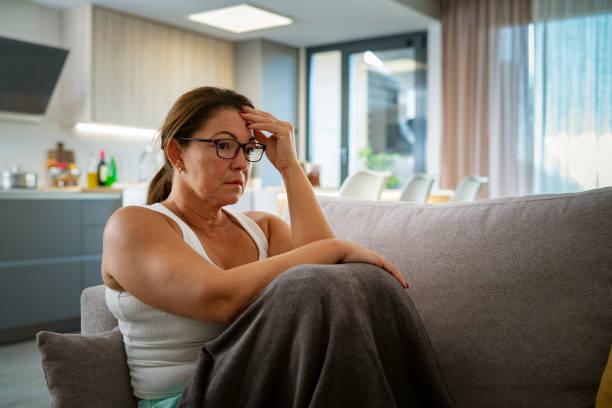
THE INHERITANCE
The morning Daniel died, I was standing at the kitchen window watching him tend his roses. He moved slowly that day, more carefully than usual, pausing between bushes to catch his breath. I’d noticed it for weeks—the way he’d stop halfway up the stairs, the slight tremor in his hands when he reached for his coffee, the pallor that had crept into his complexion despite all those years working on the water.
“Daniel,” I’d said that morning over breakfast, “maybe we should call Dr. Morrison. Just to check in.”
He’d waved me off with that stubborn smile I’d known for forty-one years. “I’m fine, Evie. Just getting old. Happens to all of us.”
Those were the last words we exchanged before I watched him collapse among the roses, the garden hose still running, water pooling around the pink blooms he’d been so proud of. I ran to him, called 911, held his hand while we waited for the ambulance, but I knew. I could feel it in the way his grip had already loosened, in the stillness that had settled over his features.
By the time the paramedics arrived, Daniel was gone.
My name is Evelyn Grace Miller. I’m sixty-four years old, and for the past forty years, I’ve been the invisible backbone of Miller Maritime—a shipping company my husband built from a single fishing boat and a dream. While Daniel was the face everyone knew, the captain everyone respected, the businessman everyone wanted to partner with, I was the one keeping the operation alive from a small desk by the harbor window.
I chased unpaid invoices when clients thought they could string us along. I soothed anxious crew wives when storms delayed ships and paychecks. I balanced the books when fuel costs spiked and insurance premiums threatened to sink us. I was there for every triumph and every crisis, my name on nothing, my work essential to everything.
Daniel knew it. He told me often, in the quiet moments between business calls and harbor emergencies, that Miller Maritime wouldn’t exist without me. But to everyone else—to clients, to crew, to our own son—I was just Daniel’s wife. The woman who answered phones and made coffee. The one whose contributions didn’t merit mention in trade magazine profiles or harbor association newsletters.
The funeral was well-attended. Daniel had been respected in the maritime community, and people came from up and down the coast to pay their respects. I stood beside his casket in a black dress I’d bought at Macy’s during their summer sale, accepting condolences from men who’d never learned my first name despite forty years of doing business with our company.
“Daniel was a great man,” they said, shaking my hand with practiced sympathy.
“Thank you,” I replied, over and over, until the words lost all meaning.
Michael stood on my other side throughout the service, tall and composed in his expensive navy suit, his wife Clara pressed against him in designer black that probably cost more than my dress and shoes combined. He accepted condolences with the gravitas of someone who’d lost a mentor, a friend, a pillar of wisdom—which always struck me as odd, since Michael had barely spoken to his father in the past five years beyond obligatory holiday dinners and birthday phone calls.
They’d had a falling out when Michael was twenty-eight, something about the direction of the business, about Michael wanting to expand into cruise ships and luxury charters while Daniel insisted on staying true to the working vessels that had built the company. Michael had stormed out of a board meeting, declared his father “stubbornly stuck in the past,” and started his own real estate investment firm with money he’d borrowed from Clara’s family connections.
He’d done well for himself, at least on paper. Multiple properties, a house in the expensive part of town, cars that cost more than most people’s annual salary. But I’d seen the credit card statements he’d accidentally left on our dining table once, had heard Clara on the phone talking about “managing cash flow” and “leveraging assets” in a tone that suggested things weren’t quite as secure as they appeared.
After the funeral, I hosted the reception at our house—the modest three-bedroom we’d bought when Michael was still in elementary school, with the harbor view Daniel had insisted on even though it stretched our budget at the time. I laid out food I’d prepared myself, made coffee in the thirty-cup percolator we’d bought for church functions, and listened to people tell stories about my husband that I’d heard a hundred times before.
Michael and Clara stayed until everyone else had left, helping me clean up in a way that felt more obligatory than genuine. Clara loaded the dishwasher with meticulous precision while Michael collected paper plates and plastic cups, and I found myself grateful for the activity, for something to do with my hands besides twist the tissue I’d been holding all day.
“You should come stay with us for a while,” Michael said as he tied off a garbage bag. “You shouldn’t be alone right now.”
“I’ll be fine,” I assured him. “I need to be in my own space.”
Clara looked up from the dishwasher, her perfectly made-up face arranged in an expression of concern. “Are you sure, Evelyn? The house must feel so empty now.”
It did. But their house—with its cold modern furniture and walls decorated by an interior designer who’d never met the people living there—would feel even emptier.
“I’m sure,” I said firmly. “But thank you.”
They left around eight, and I spent the rest of the evening washing casserole dishes and returning them to neighbors who’d brought food with good intentions and recipes that all tasted vaguely the same. By the time I finished, it was past midnight, and the house had settled into that particular silence that comes when you’re alone after years of sharing space with someone.
I sat in Daniel’s armchair by the window and listened to the clock tick and the waves break against the harbor wall, and I tried to imagine the rest of my life stretching out like this—alone, quiet, purposeful only in memory.
Two weeks later, I found myself in Arthur Blake’s office.
Arthur had been Daniel’s lawyer for thirty years, ever since Daniel had needed someone to draw up the partnership agreement that had allowed him to buy out his first business partner and take full control of Miller Maritime. He was in his seventies now, with silver hair and reading glasses that he wore on a chain around his neck, and he’d been there for every major decision Daniel had made—business acquisitions, property purchases, the restructuring of the company five years ago after Michael had left.
Michael sat across from me in the conference room, his navy suit perfectly tailored, his expression carefully neutral. Clara sat beside him, her manicure flawless, her phone face-down on the polished mahogany table in that way that suggested she was resisting the urge to check it.
Arthur opened a leather folder and began reading the will in that formal, measured tone lawyers use for such occasions. I tried to focus on the words, but my mind kept drifting to Daniel’s face the last time I’d seen him alive, the way he’d smiled at those roses like they were the most important thing in the world.
Then Arthur said something that snapped me back to attention.
“I hereby bequeath my entire estate, including all property, accounts, shares, and assets of Miller Maritime, to my beloved wife, Evelyn Grace Miller, to be held and managed at her sole discretion.”
Silence filled the room like water filling a sinking ship.
“All of it?” Michael’s voice was tight, controlled, but with an edge that made me look at him sharply.
“Yes,” Arthur confirmed, glancing down at the document. “Your father was very clear about his wishes. He left detailed instructions that the entire estate should pass to your mother with no conditions, no trusts, and no limitations on her authority.”
“But—” Michael leaned forward, his hands flat on the table. “There must be something. A trust fund. A percentage. Something.”
Arthur turned a page and read aloud: “Our son Michael has been provided for during his adult life through education, business loans, and family support. He is a capable adult with his own career and resources. This estate represents my life’s work and my wife’s, and I trust her completely to manage it according to her judgment and values.”
Clara’s smile—the one she’d been wearing since we arrived—finally wavered. Her fingers tightened around her phone, and I watched her exchange a glance with Michael that communicated something I couldn’t quite read.
“Dad would never cut me out like this,” Michael said, his voice rising slightly. “Not unless someone convinced him to. Not unless someone poisoned him against his own son.”
The implication hung in the air like smoke. Arthur’s expression hardened.
“Mr. Miller, your father was of completely sound mind when he drafted this will. I can assure you that no one exercised undue influence. In fact, he specifically anticipated that you might contest these arrangements, which is why he left this letter.”
Arthur pulled out a sealed envelope with Michael’s name written across it in Daniel’s distinctive handwriting. Michael stared at it like it might bite him, then finally reached across the table and took it.
He tore it open with more force than necessary, pulled out the single sheet of paper inside, and read in silence. I watched his face cycle through emotions—confusion, anger, hurt, and finally something harder, something calculating.
“What does it say?” Clara asked quietly.
Michael folded the letter and slipped it back into the envelope. “It says I made my choice five years ago when I left the company. It says he respects my decision to build my own success, so he’s leaving the business to someone who actually cared about it.”
His eyes met mine across the table, and I saw something in them I’d never seen directed at me before: resentment. Pure, undiluted resentment.
“Congratulations, Mom,” he said, standing abruptly. “I hope you enjoy your inheritance.”
Clara gathered her things quickly, following Michael toward the door. But she paused at the threshold, turning back to give me a smile that was all teeth and no warmth.
“Forty-eight million dollars is a lot to manage at your age, Evelyn,” she said sweetly. “I hope you know what you’re doing.”
They left, and Arthur and I sat in silence for a long moment.
“He’ll contest it,” Arthur said finally. “You should be prepared for that.”
“Can he win?”
“No. Daniel was meticulous. We have medical records proving his mental competence, witnesses to the signing, documentation of every decision. But Michael can make the process expensive and unpleasant.”
“He’s my son,” I said quietly. “Why would Daniel do this? Why not leave him something?”
Arthur leaned back in his chair, removing his glasses to clean them—a gesture I’d learned meant he was about to say something I needed to hear.
“Evelyn, Daniel came to see me six months ago. He said Michael had approached him about selling Miller Maritime to a development company that wanted to turn the harbor into luxury condos. Michael would have made a substantial commission. Daniel refused, and Michael said some things that—well, that made Daniel realize his son saw the business as nothing more than a potential payout.”
My stomach dropped. “Michael tried to sell his father’s company?”
“Not just the company. The entire harbor. The docks, the warehouses, everything. He’d already drawn up preliminary agreements with investors. He just needed Daniel’s signature.” Arthur replaced his glasses and looked at me seriously. “Your husband spent forty years building something that mattered to this community. He wasn’t going to let it be destroyed for profit. And he knew you wouldn’t either.”
I drove home in a daze, Daniel’s words from that morning echoing in my head: I’m fine, Evie. Just getting old. Had he known? Had he suspected his time was limited and made sure everything was in order before—
My phone rang. Michael.
“We need to talk,” he said without preamble. “Come to dinner tomorrow night. Seven o’clock.”
It wasn’t an invitation. It was a summons.
I almost said no. Almost told him I needed time, needed space to process everything that had happened. But he was my son. Despite everything, he was my son, and some part of me still hoped we could find our way back to each other.
“I’ll be there,” I said.
Michael’s house was in the new development on the hill, the kind of neighborhood where every yard looked professionally maintained and every mailbox matched. Clara met me at the door in a cashmere sweater set, her smile bright and brittle.
“Evelyn! So glad you could make it. Michael’s just finishing up a call. Come in, come in.”
The interior was exactly as I remembered—all clean lines and neutral colors, more showroom than home. The dining table was walnut, gleaming under cold LED light that made everything look sharp-edged and sterile. A stack of documents waited at my place setting.
Michael appeared from his home office, still in his work clothes, and gestured for me to sit. No hug. No small talk. Just straight to business.
“I’ve been thinking about Dad’s will,” he said, settling into his chair with the air of someone chairing a board meeting. “Obviously, it’s not what any of us expected. But we’re family, and family takes care of each other.”
He tapped the top document in the stack.
“This is a power of attorney. It gives me legal authority to manage the estate on your behalf. You’ll retain ownership, of course, but I’ll handle all the business decisions, the investments, the day-to-day operations. You can keep the house, a reasonable living allowance—everything you need to be comfortable. I’ll take care of the rest.”
Clara leaned forward, her voice dripping with artificial sweetness. “Michael’s very good with money, Evelyn. And let’s be honest—forty-eight million dollars is overwhelming. All those accounts, all those decisions. You’d have to hire lawyers, accountants, advisors. Why not let Michael handle it? You can enjoy your retirement without all that stress.”
I pulled the documents toward me and began reading. The language was dense, full of legal terminology designed to obscure its true purpose, but the meaning was clear enough: if I signed, Michael would have complete control over everything Daniel had left me. He could sell Miller Maritime. He could liquidate assets. He could do whatever he wanted with my inheritance, and I’d have no recourse.
My name on the signature line would mean nothing. His name beneath it as attorney-in-fact would mean everything.
“This isn’t what your father wanted,” I said quietly, pushing the documents back across the table.
Michael’s jaw tightened. “This is what’s fair. Dad built Miller Maritime for his family—for all of us. You don’t have the experience or the knowledge to manage that kind of wealth. You’ll make mistakes. You’ll waste it. Let me protect what Dad worked for.”
“By selling it to developers?” The words were out before I could stop them.
His expression went flat. “Arthur told you.”
“He told me you tried to convince your father to sell the entire harbor. That you’d already lined up investors. That you were going to destroy everything he built.”
“I was trying to maximize value!” Michael’s voice rose, frustration bleeding through his controlled facade. “That harbor is sitting on prime real estate. Dad could have retired rich instead of working himself to death. But he was too stubborn to see it.”
“He saw it perfectly,” I said. “He saw that you valued money more than legacy. More than community. More than the people whose livelihoods depend on that harbor.”
“This is exactly why you shouldn’t be making these decisions,” Clara interjected smoothly. “You’re being emotional. Sentimental. Business requires objectivity.”
I looked at my son—really looked at him—and tried to find the boy I’d raised. The child who’d spent summers at the harbor, who’d loved listening to the captains tell stories, who’d once said he wanted to be just like his father. That boy was gone, replaced by a man who saw his father’s life work as nothing more than an asset to be liquidated.
“No,” I said simply.
The word landed between us like a stone dropped into still water.
Michael’s nostrils flared. “If you don’t sign this, you’re making a serious mistake.”
“I’m making the choice your father wanted me to make.”
“The choice Dad wanted?” Michael’s laugh was harsh, bitter. “Dad didn’t know what he wanted. He was old, tired, and someone convinced him to shut his own son out of his inheritance.”
“He shut you out the moment you tried to sell his life’s work without his permission,” I shot back, my voice harder than I’d intended.
Silence fell over the table. Clara’s smile had vanished completely. Michael’s hands were clenched into fists on either side of his untouched plate.
“You know that condo you live in?” Michael said finally, his voice dangerously quiet. “The one overlooking the harbor? I own the building, Mom. I bought it two years ago as an investment property. And if you won’t cooperate, if you won’t do what’s right for this family, then you won’t be living there much longer.”
The threat was so casual, so matter-of-fact, that it took a moment to register. My own son was threatening to evict me. To make me homeless unless I handed over my inheritance.
“You wouldn’t,” I whispered.
“Try me.”
I stood, my chair scraping against the hardwood floor. “I’m leaving.”
“Sign the documents first.”
“No.”
I walked toward the door, my hands shaking, my vision blurring with tears I refused to let fall until I was safely away from this cold, sterile house and my son’s cold, calculating eyes.
“You’ll regret this!” Michael called after me. “You think you can manage without me? You think you can handle all of this alone? You’re going to lose everything!”
I kept walking.
Two days later, my keycard stopped working at the condo building. I stood in the lobby, trying it again and again, until the security guard approached with an apologetic expression and a printed letter from the building management.
Due to multiple violations of the lease agreement, your tenancy is hereby terminated effective immediately. You have 24 hours to remove your belongings.
The violations listed were fabricated—noise complaints from neighbors I’d never met, unauthorized modifications I’d never made, late rent payments that had never been late. It didn’t matter. Michael owned the building. Michael made the rules.
The security guard at least had the decency to let me access the back entrance to pack. I loaded two suitcases with clothes, toiletries, photographs, and the few pieces of jewelry Daniel had given me over the years. Everything else—furniture, kitchenware, books, forty years of accumulated life—would have to wait. Or be abandoned. I couldn’t tell which.
I loaded the suitcases into my car under a flat gray sky that threatened rain, and I sat in the driver’s seat for a long moment, trying to figure out where to go. A hotel would be easy but temporary. Friends would offer couches and spare rooms, but I couldn’t impose. I could call Arthur, but involving lawyers this early would only escalate things further.
Then I remembered: the house by the sea.
Daniel had bought it years ago, before Miller Maritime had really taken off, when we’d had just enough saved for a down payment on a small cottage overlooking the harbor. We’d lived there for five years before upgrading to the house where we’d raised Michael, but Daniel had never sold it. He’d kept it as an investment property, renting it out occasionally but mostly just maintaining it, keeping it ready for some future purpose he’d never quite articulated.
The key was still on my keychain, a small brass one I’d carried for decades without really thinking about why.
I drove there as the first drops of rain began to fall, navigating familiar streets that led down to the water. The cottage looked exactly as I remembered—weathered blue siding, white trim that needed repainting, a small front porch with a view of the harbor that had made Daniel fall in love with the place instantly.
I unlocked the door and stepped inside, half-expecting mustiness and neglect. Instead, I found a space that was clearly lived-in, maintained. Fresh paint on the walls. Clean windows. Furniture I recognized from storage.
On the kitchen table sat an envelope with my name written across it in Daniel’s handwriting.
My hands shook as I opened it.
Evie,
If you’re reading this, I’m gone and things have probably gotten complicated. I knew they would. I know our son.
This house is yours now. Always was, really. I had Arthur transfer the title to your name only six months ago, separate from the estate, so Michael couldn’t touch it. It’s yours free and clear, paid off, safe.
I also know what Michael’s been planning. The developers, the sale, all of it. Arthur’s been keeping me informed. I’m sorry I didn’t tell you, but I didn’t want you worrying while I was still here to handle it.
You’re going to doubt yourself now. You’re going to think you can’t do this, can’t manage the business, can’t stand up to Michael. But Evie, you’ve been running Miller Maritime from the shadows for forty years. You know every account, every contract, every relationship that keeps this company afloat. You’re more capable than you believe.
Keep it. Protect it. Use it as you see fit. You don’t owe anyone explanations, least of all our son. He made his choices. Now you make yours.
I trust you. I always have.
Love,
Daniel
I read the letter three times, then pressed it against my chest and let myself cry for the first time since the funeral. Not just for Daniel, but for the son I’d lost somewhere along the way, for the family that had fractured beyond repair, for the life I’d thought I was living versus the one I’d actually been living all along.
Then I dried my eyes, unpacked my suitcases, and called Arthur.
“I need you to help me,” I said. “I need to know everything about the estate. Every account, every asset, every detail. And I need to know how to protect it.”
“When do you want to start?”
“Now.”
What followed was the most intensive education of my life. Arthur walked me through every document, every investment, every property in Daniel’s portfolio. Marina Castellanos, the financial advisor Daniel had worked with for twenty years, came to the house with her laptop and showed me how to access accounts, monitor investments, track the company’s performance.
Tom Brewster, the harbor master who’d worked with Daniel since the beginning, brought boxes of logbooks and explained the daily operations of Miller Maritime—which captains were reliable, which routes were profitable, which maintenance issues needed attention.
Judge Eleanor Briggs, who’d been Daniel’s friend since law school and had watched our family drama unfold over the years, stopped by one afternoon with a bottle of wine and some extremely frank advice about dealing with difficult children.
“He’s testing you,” she said, sitting in Daniel’s favorite armchair by the window. “Michael thinks you’ll cave. Thinks you’ll get overwhelmed and hand everything over just to make the conflict stop. Don’t.”
“He’s my son.”
“He’s an adult making adult choices. And his choices have been selfish, shortsighted, and designed to enrich himself at your expense. You don’t owe him your inheritance just because he feels entitled to it.”
Over the next three weeks, I learned more about business, finance, and maritime operations than I’d absorbed in forty years of working in the background. I attended board meetings for Miller Maritime. I met with captains and crew. I reviewed contracts and approved expenditures. And slowly, gradually, I began to realize that Daniel had been right: I could do this.
I’d always been doing this. I just hadn’t had the authority to acknowledge it.
Then, three weeks after moving into the cottage, I received a text from Michael:
Tomorrow, 9:00 a.m. Coming to get Dad’s things from the house. Don’t make this difficult.
Not our house. Not even the house. Dad’s things. Like Daniel’s entire life could be reduced to belongings that needed collecting.
He thought he’d find me alone. Broken. Ready to surrender everything just to restore some semblance of family peace.
He was wrong.
At 8:55 the next morning, my kitchen table looked like a war room. Arthur sat with his briefcase open, notarized documents stacked beside him—proof of the title transfer, copies of the will, letters from Daniel’s doctors confirming his mental competence. Marina had her laptop open, every account and asset displayed across multiple screens, ready to prove that I was actively managing the estate with professional guidance.
Tom stood near the kitchen counter, Daniel’s logbooks spread out in front of him, pages marked with sticky notes highlighting entries where Daniel had written about the importance of keeping the harbor operational, keeping it accessible to working vessels, never selling to developers who would destroy the community that depended on it.
And in the armchair by the window, retired Judge Eleanor Briggs sat with her reading glasses perched on her nose and her shawl folded over her knees, watching the driveway like she was presiding over a courtroom.
“He’s going to be angry,” I said, my voice not quite steady.
“Let him be angry,” Eleanor replied calmly. “Anger is what people resort to when they can’t get their way through legitimate means.”
At exactly 9:00, Michael’s black SUV pulled into the driveway, gravel crunching under expensive tires. I watched through the window as he climbed out, shoulders squared, confidence radiating from every movement. Clara emerged from the passenger side, her designer sunglasses hiding half her face, her phone already in her hand.
They didn’t knock. Michael reached for the doorknob like he owned the place, like he had every right to walk in and claim whatever he wanted.
The door swung open.
Michael stepped inside, Clara half a step behind him, and stopped dead.
His eyes swept across the room—Arthur’s briefcase, Marina’s laptop, Tom’s logbooks, Eleanor’s steady judicial gaze—and I watched his confidence falter, watched the calculation happen behind his eyes as he realized this wasn’t going to go the way he’d planned.
“Mom,” he said slowly, his voice carefully controlled, “what is this?”
I stood, Daniel’s letter in my hand, and met my son’s eyes without flinching. For forty years, I’d been the woman who kept the peace, who smoothed over conflicts, who made everyone comfortable at her own expense. But Daniel’s words echoed in my mind: You don’t owe anyone explanations, least of all our son.
“This,” I said, my voice as calm as the water outside, “is what standing my ground looks like.”
Clara’s eyes narrowed. “You can’t be serious. You brought a judge to a family discussion?”
“I’m here as a friend,” Eleanor said mildly. “Though I’m happy to serve in a professional capacity if needed.”
Michael’s jaw clenched. “I came to collect Dad’s things. His personal effects. That’s all.”
“Everything in this house belongs to me now,” I said. “Including your father’s personal effects. If there’s something specific you’d like—a photograph, a memento—we can discuss it. But you’re not walking out of here with boxes of belongings you think you’re entitled to.”
“I’m entitled to my inheritance!” Michael’s control finally cracked. “That company should be mine. This house should be mine. Everything Dad built should have gone to me, not to someone who doesn’t even understand how business works!”
Arthur cleared his throat. “Mrs. Miller has been actively managing the estate for three weeks now, Michael. She’s met with every department head at Miller Maritime, reviewed every major contract, and made several quite intelligent decisions about investments and operations. She understands business perfectly well.”
“She’s a bookkeeper,” Michael spat. “She pushed papers while Dad did the real work.”
“I was a partner,” I corrected quietly. “I built that company alongside your father. Every decision he made, he made after consulting with me. Every risk we took, we took together. You just never bothered to notice because my name wasn’t on the door.”
Michael turned to Marina. “You’re her financial advisor? You’re actually going along with this?”
Marina closed her laptop and looked at him coolly. “I’m doing exactly what your father paid me to do—advising the estate holder on how to manage assets responsibly. Your mother has been an excellent client. Very thorough. Very decisive.”
“This is insane.” Michael ran his hands through his hair, his composure completely shattered now. “You’re all enabling her to destroy what Dad built. She’s going to run it into the ground!”
“Actually,” Tom interjected from his position near the counter, “the harbor’s been running smoother than it has in years. Your mother approved upgrades to three docks last week, negotiated better fuel contracts, and resolved a dispute with the crew union that’s been dragging on for months. She’s a natural.”
Michael’s face flushed red. “I don’t care what any of you say. That inheritance should be mine. I’m his son. I’m his only child. He couldn’t have actually wanted to cut me out completely.”
I pulled the envelope from my pocket—the one Daniel had left for me, not the one Arthur had given Michael at the will reading. This one was different. More personal. More painful.
“Your father left me this letter,” I said. “He knew you’d contest the will. He knew you’d try to pressure me into signing over control. He knew exactly who you’d become, Michael, and it broke his heart.”
“Let me see it.”
“No.” I held it against my chest. “This is between your father and me. But I’ll tell you what it says: it says you made your choice when you tried to sell his life’s work without his permission. It says he loved you but couldn’t trust you. It says he hoped you’d eventually understand that some things matter more than money.”
“Everything is about money!” Michael shouted. “That’s how the world works, Mom. Dad was just too sentimental to see it. And now you’re going to waste forty-eight million dollars on sentiment and nostalgia instead of doing what’s smart.”
“What’s smart,” I said, my voice steel, “is honoring your father’s wishes. What’s smart is protecting the livelihoods of three hundred people who work for Miller Maritime. What’s smart is preserving a harbor that serves this entire community instead of selling it to developers who’ll turn it into luxury condos for people who don’t give a damn about the families who built this place.”
Clara grabbed Michael’s arm. “Let’s go. She’s obviously not going to listen to reason.”
“I want what’s mine,” Michael insisted, shaking her off.
“You have what’s yours,” I replied. “You have your education, which we paid for. You have your business, which we helped fund. You have every advantage we could give you growing up. What you don’t have is your father’s estate, because you didn’t earn it. You didn’t work for it. You didn’t sacrifice for it. You just assumed you’d inherit it regardless of how you treated the man who built it.”
Michael stared at me like I’d become a stranger. Maybe I had. Maybe the mother he knew—the one who never made waves, never stood up for herself, never challenged anyone—had died the same day Daniel had.
“You’re going to regret this,” he said finally, his voice cold. “When you’re struggling to manage it all, when you make mistakes, when everything falls apart—you’ll regret not letting me help.”
“Maybe,” I acknowledged. “But they’ll be my mistakes to make. My decisions. My responsibility. That’s what your father wanted, and that’s what I’m going to do.”
Eleanor stood slowly, her shawl sliding from her lap. “I think it’s time for you to leave, Michael. You’re not welcome here if you can’t be respectful.”
“This is my father’s house!”
“This is your mother’s house,” Eleanor corrected firmly. “Legally transferred to her name six months ago. You have no claim to it, no right to be here, and if you don’t leave voluntarily, I’ll be happy to call the sheriff and have you removed.”
For a moment, I thought Michael might actually refuse. Might plant himself in the doorway and dare us to make him leave. But Clara was already pulling him toward the door, whispering urgently in his ear, and finally he turned and walked out without another word.
We watched through the window as they climbed into the SUV, as Michael sat gripping the steering wheel with white-knuckled hands, as Clara’s mouth moved in what looked like a very animated conversation. Then they pulled out of the driveway and disappeared down the road toward town.
I collapsed into a chair, adrenaline draining away and leaving exhaustion in its wake. “That was…”
“Necessary,” Arthur finished. “He needed to understand that you’re serious. That you have support. That he can’t bully or manipulate you into giving up what’s yours.”
“He’s going to contest the will anyway, isn’t he?”
“Probably. But he won’t win. Daniel was too careful. And frankly, after that display, I’d be happy to bring up his attempt to sell the harbor in court. No judge is going to look favorably on a son who tried to liquidate his father’s life’s work against his wishes.”
Marina started packing up her laptop. “For what it’s worth, Evelyn, you handled that beautifully. You were firm, clear, and you didn’t let him manipulate you emotionally. That’s exactly the kind of resolve you’ll need going forward.”
After everyone left, I sat alone in the cottage—my cottage—and read Daniel’s letter one more time. The sun was setting over the harbor, painting the water gold and pink, and I could hear the distant sounds of boats returning for the evening, crews calling to each other as they secured lines and prepared for tomorrow.
This was what Daniel had wanted me to protect. Not just the money, not just the company, but the community. The way of life. The possibility that something could exist for reasons beyond profit.
My phone buzzed. A text from Michael:
This isn’t over.
I set the phone down without responding. He was right—it wasn’t over. He’d make good on his threat to contest the will. He’d try to paint me as incompetent, as someone who’d manipulated his father, as anything that might convince a judge to overturn Daniel’s wishes.
But I had something Michael didn’t: I had the truth. I had forty years of partnership that Daniel had documented in letters and emails and conversations with lawyers and advisors. I had the respect of the people who actually knew how Miller Maritime ran. And I had Daniel’s trust, given freely, earned over a lifetime.
Six months later, Michael’s legal challenge was dismissed. The judge—not Eleanor, who’d recused herself, but a colleague of hers who’d known Daniel professionally—ruled that the will was valid, that Daniel had been of sound mind, and that Michael had no grounds to contest his father’s clearly stated wishes.
Miller Maritime continued to thrive under my management. I hired a CEO with actual shipping experience to handle day-to-day operations, but I remained actively involved in major decisions, showing up at board meetings, meeting with captains, maintaining the relationships that had always been the backbone of the business.
The harbor stayed operational. The docks got upgraded. The community remained intact.
Michael and I don’t speak anymore. He sends a card at Christmas, formal and impersonal, and I send one back with the same careful distance. Clara filed for divorce eight months after the will reading—apparently my inheritance wasn’t the only financial problem they’d been hiding.
Sometimes I see Michael around town, usually from a distance. He looks older, more worn, like the weight of his choices has finally caught up with him. Part of me wants to reach out, to rebuild something, to find the son I remember from before money and expectations changed him.

Lila Hart is a dedicated Digital Archivist and Research Specialist with a keen eye for preserving and curating meaningful content. At TheArchivists, she specializes in organizing and managing digital archives, ensuring that valuable stories and historical moments are accessible for generations to come.
Lila earned her degree in History and Archival Studies from the University of Edinburgh, where she cultivated her passion for documenting the past and preserving cultural heritage. Her expertise lies in combining traditional archival techniques with modern digital tools, allowing her to create comprehensive and engaging collections that resonate with audiences worldwide.
At TheArchivists, Lila is known for her meticulous attention to detail and her ability to uncover hidden gems within extensive archives. Her work is praised for its depth, authenticity, and contribution to the preservation of knowledge in the digital age.
Driven by a commitment to preserving stories that matter, Lila is passionate about exploring the intersection of history and technology. Her goal is to ensure that every piece of content she handles reflects the richness of human experiences and remains a source of inspiration for years to come.