The Last Moment
The clinic should have already been closed, but Dr. Ben Morrison was still standing by the cold metal examination table at 8:47 PM, looking at the large German Shepherd lying before him. Outside, rain hammered against the windows of the Riverside Veterinary Clinic, and the evening felt endless, heavy with a decision he didn’t want to make.
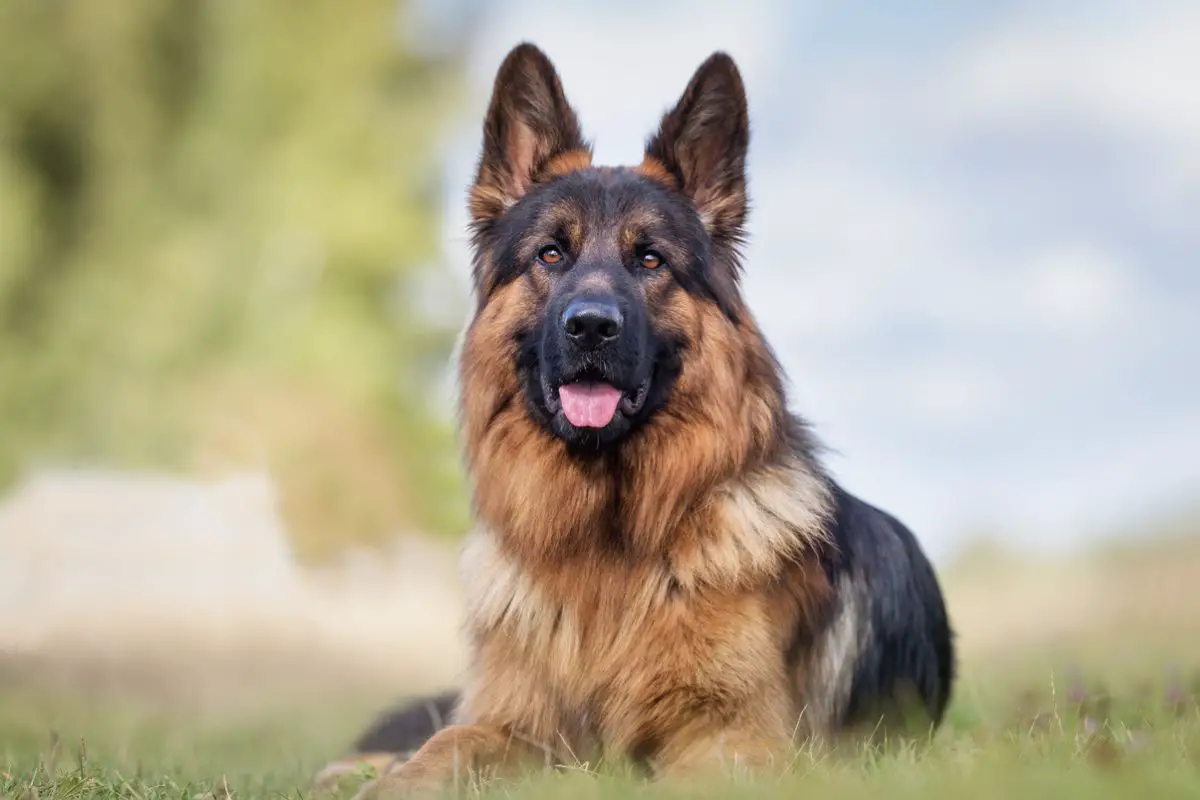
The dog’s name was Titan. Until three hours ago, he had been a decorated service dog with the Metro Police Department—strong, intelligent, with an impeccable seven-year record. But tonight, he had been brought in as a threat that needed to be eliminated.
Beside Ben stood Officer Mark Henley, his right arm wrapped in white bandages stained with spots of red. His jaw was clenched, his eyes hard as stone, and he kept one hand on his service weapon even though the dog was already secured to the table with a heavy leather restraint.
“We need to do this now, Doc,” Mark said for the third time, his voice tight. “I’ve got the authorization right here. Signed by the chief himself.”
He thrust a folder toward Ben, medical release forms and euthanasia approval documents stamped with official seals.
Ben took the papers slowly, scanning them even though he’d already read every word twice. The story was simple, brutal, and final: Titan had attacked Officer Henley during active duty without provocation. The bite had required twelve stitches. The dog was deemed dangerous to public safety and scheduled for immediate euthanization under municipal code 47-B.
“He just snapped,” Mark continued, his voice getting louder, more insistent. “No warning. No reason. I’ve worked with service dogs for fifteen years, and I’ve never seen anything like it. One minute he’s calm, the next minute he’s got my arm in his mouth.”
Ben listened in silence, though a heavy feeling weighed on his chest like a stone. He had been a veterinarian for twenty-three years. He had seen genuinely aggressive animals—dogs who’d been abused into violence, dogs whose brains had been damaged by disease, dogs who’d been bred and trained for fighting. He knew what real aggression looked like.
Titan didn’t look like those dogs.
The German Shepherd lay perfectly still on the table, his amber eyes clear and intelligent. He didn’t growl. He didn’t bare his teeth. He didn’t strain against the restraints. But his entire body was tense, coiled, watchful—like he was waiting for something. Protecting against something.
“His behavior assessment shows acute unpredictability,” Mark pressed on, pulling out another sheet of paper. “The K-9 unit psychologist evaluated him this afternoon. Her recommendation is immediate termination before he can hurt anyone else.”
Ben looked down at Titan. The dog’s eyes met his—not with defiance or fear, but with something that looked almost like pleading.
“How long have you worked with Titan?” Ben asked quietly.
“Three months. He was reassigned to me after his previous handler retired.”
“And in those three months, any other incidents?”
“No, but that’s exactly how it happens with these dogs. They’re fine until they’re not. Then someone gets killed.” Mark shifted his weight, wincing as the movement pulled at his injured arm. “Look, I don’t enjoy this any more than you do, but we can’t take the risk. Today he attacks a police officer. Tomorrow it could be a child.”
Ben nodded slowly because he was required to follow procedure, to trust the official documentation, to accept that sometimes dangerous dogs had to be put down for public safety.
But something felt wrong.
He was reaching for the syringe of pentobarbital when the door to the examination room slowly opened.
A little girl walked in.
She was maybe seven years old, soaked from the rain, wearing a bright yellow raincoat over jeans and sneakers. Her dark hair hung in wet tangles around her face. Her eyes—the same shade of brown as Officer Henley’s—were red from crying.
It was Lily Henley. Mark’s daughter.
“Lily! What the hell are you doing in here?” Mark’s voice cracked like a whip. “I told you to stay in the car!”
But the girl didn’t listen. She wasn’t looking at her father at all. Her eyes were locked on the examination table, on the dog strapped to the cold metal surface.
“Titan,” she whispered.
When Titan saw her, something happened that made Ben’s hand freeze over the syringe.
The dog flinched as if struck by electricity. A soft, plaintive whine escaped his throat—not aggressive, not threatening, but heartbroken. Despite the restraints holding him down, despite the sedative they’d already given him to make the process easier, Titan gathered every ounce of strength in his body and twisted on the table.
He wasn’t lunging to attack. He wasn’t trying to bite.
He was turning his body toward the little girl, positioning himself between her and her father, stretching out his neck as far as the restraints would allow, as if trying to shield her from everything around them.
“Lily, get back!” Mark shouted, moving toward his daughter. “Get away from that animal!”
But Lily didn’t retreat. She ran forward, her small sneakers slapping against the tile floor, and threw her arms around Titan’s neck. She pressed her face against his head, and her small body shook with sobs.
“He’s good!” she cried, her voice muffled against the dog’s fur. “Daddy, he’s good! He didn’t want to hurt you! He was protecting me! He’s always protecting me!”
“Lily, that’s enough.” Mark grabbed his daughter’s shoulder, trying to pull her away. “You don’t understand what happened. This dog is dangerous. He attacked me. He can’t be trusted.”
“No!” Lily screamed, holding tighter to Titan. “He didn’t attack you! You were yelling at me! You grabbed my arm really hard and it hurt, and Titan thought you were hurting me on purpose! He was trying to help!”
Mark’s face went pale. “That’s not—I wasn’t hurting you, I was just—you ran into the street, Lily. I was pulling you back before you got hit by a car.”
“But you were angry and you grabbed me and it scared me, and Titan got scared too!”
Ben watched this exchange carefully, his hand still hovering over the syringe but no longer moving toward it. Something was crystallizing in his mind, a pattern forming from fragments of information.
Mark tried again to pull Lily away from the dog, but Ben raised his hand.
“Wait,” he said firmly. “Just wait a minute.”
It was at that exact moment that Ben noticed something he’d missed during his initial examination—something hidden beneath Titan’s thick double coat of fur.
He moved closer to the table, gently pushing aside the dark and tan hair along the dog’s shoulder. There, beneath the fur, he found old scars—not from fights or abuse, but from what looked like a harness that had rubbed the same spot over and over for years. Service dog wear patterns.
But that wasn’t what made him stop the procedure.
Beneath Titan’s collar, barely visible, was a thin fabric bracelet—the kind children make at summer camp with colorful threads woven together. It had been tied there carefully, tucked under the leather so it wouldn’t be seen during official inspections.
The bracelet had a name embroidered in crooked, childish letters: LILY.
Ben’s eyes moved from the bracelet to the little girl still clinging to the dog, then to the way Titan was positioned—not randomly, but deliberately, his body creating a barrier between Lily and her father, the same way he’d been trained to create barriers between threats and the people he was sworn to protect.
“Officer Henley,” Ben said slowly, “when exactly did the bite occur?”
“I already told you. This afternoon. Around 3:30.”
“And where were you when it happened?”
“At the park. Washington Park. Lily wanted to go to the playground after school.”
“So you weren’t on active police duty. You were at a playground with your daughter.”
Mark’s jaw tightened. “I’m always on duty. I’m a police officer.”
“But you weren’t in uniform. You weren’t responding to a call. You were there as a father, not as an officer.”
“What difference does that make? The dog attacked me. That’s what matters.”
Ben looked at Lily, who had quieted but was still holding onto Titan like he was the only solid thing in a shifting world. “Lily, can you tell me what happened? In your own words?”
Mark moved to interrupt, but Ben held up his hand again. “She’s a witness, Officer Henley. She has a right to tell her version of events.”
Lily sniffled, wiping her nose on her yellow sleeve. “I was on the swings,” she said in a small voice. “There was a ball in the street, and I wanted to get it because it was rolling away. Daddy yelled at me to stop, but I didn’t hear him because I was running. Then he grabbed my arm really hard and pulled me back and he was yelling really loud.”
“I was keeping you from running into traffic,” Mark said defensively.
“I know,” Lily nodded. “But it hurt and I got scared. And Titan barked really loud and jumped between us. He didn’t bite you on purpose, Daddy. You were trying to push him away and your arm went in his mouth.”
Ben absorbed this information, his mind working through the scenario. A child running toward danger. A father reacting instinctively, grabbing her arm hard enough to hurt. A protective service dog interpreting the situation as a threat to the child he’d been conditioned to guard.
Not an attack. A defense.
Ben turned back to Titan, studying the dog more carefully now. The German Shepherd’s eyes were still locked on Lily, but there was no aggression in his posture. Only vigilance. Only devotion.
“How long has Titan been assigned to your family?” Ben asked.
“He’s not assigned to my family. He’s assigned to me, to the K-9 unit.”
“But he lives with you.”
“All K-9 officers live with their handlers. That’s standard.”
“And how does he behave around Lily normally?”
Mark hesitated. “He’s… fine with her. Gentle. She likes to play with him.”
“More than fine, I’d guess.” Ben gestured to the bracelet under the collar. “She made him a friendship bracelet. That suggests a pretty strong bond.”
“So what? Dogs bond with kids all the time. That doesn’t excuse violent behavior.”
“It doesn’t excuse it,” Ben agreed. “But it might explain it.”
He moved to his desk and pulled out his laptop, navigating to the clinic’s security camera footage. “Officer Henley, you brought Titan in at 7:15 this evening. The cameras in the waiting room caught your arrival. Would you mind if I reviewed the footage?”
“What for?”
“Professional due diligence. Before I euthanize an animal, I like to observe their behavior in different contexts.”
Mark looked uncomfortable but nodded. “Fine. Do what you need to do.”
Ben pulled up the footage and watched it play on the screen. At 7:13 PM, Mark’s police cruiser pulled into the parking lot. Mark got out of the driver’s side, opened the back door, and pulled Titan out—not gently, but with rough, jerking motions on the leash.
The dog resisted slightly but complied. Titan’s body language on the screen showed stress—ears back, tail low—but no aggression.
At 7:15, they entered the waiting room. Lily followed a few steps behind, her face already streaked with tears. As they approached the reception desk, Mark yanked the leash hard when Titan tried to turn back toward Lily.
“See?” Mark said, pointing at the screen. “He’s trying to get at her.”
“No,” Ben said quietly. “He’s trying to stay near her. There’s a difference.”
He advanced the footage. At 7:22, while Mark was filling out paperwork, Lily sat down on one of the waiting room chairs, crying. Titan immediately moved to sit at her feet, his body pressed against her legs—classic comfort positioning.
Mark noticed and pulled the dog away, dragging him toward the examination room. Titan whined, looking back at Lily.
“Officer Henley,” Ben said carefully, “you mentioned Titan was reassigned to you three months ago after his previous handler retired. Do you know who that handler was?”
“Yeah. Officer Sarah Chen. She retired after twenty-five years on the force.”
“And do you know why Titan was selected for reassignment rather than retirement? Service dogs usually retire when their handlers do, especially after seven years.”
Mark shifted uncomfortably. “I was told he still had good working years left. That he was too valuable to retire early.”
Ben nodded slowly. “Did Officer Chen have children?”
“I don’t know. What does that have to do with anything?”
“Just curious.” Ben pulled up his phone and made a quick search. “Officer Sarah Chen, Metro PD, retired June 2023.” He scanned the results. “Here we go. Retirement ceremony article from the Metro Times. There’s a photo.”
He turned the phone toward Mark. The image showed Officer Chen in dress uniform, standing next to Titan. Beside her was a young girl, maybe ten years old, holding the dog’s leash and smiling.
“That’s Officer Chen’s daughter, Emma,” Ben said. “According to this article, Titan served as both a police service dog and as an unofficial therapy dog for Emma, who has anxiety disorder. The article says Titan helped Emma through several difficult years and was considered part of the family.”
Mark stared at the photo. “I didn’t know that.”
“So Titan wasn’t just trained to protect police officers,” Ben continued. “He was trained to protect a child. For seven years, his primary off-duty mission was keeping Emma Chen safe. That’s not something a dog forgets in three months.”
He looked at Lily, still holding onto Titan. “And then he meets another little girl who needs protecting.”
The examination room fell silent except for the sound of rain against the windows.
Ben moved back to the table and carefully examined Titan’s mouth, checking his teeth and jaw. “Officer Henley, you said you required twelve stitches. That’s a serious bite.”
“Damn right it is.”
“But here’s what’s interesting.” Ben gently opened Titan’s mouth, showing the canine teeth. “A German Shepherd’s bite force is around 238 pounds per square inch. When they bite with intent to harm, they typically cause severe damage—torn muscle, broken bones, arterial damage. Your injury required twelve stitches, which suggests a bite that broke the skin but didn’t cause deep tissue trauma.”
“Are you saying I’m exaggerating my injury?”
“No. I’m saying that if Titan had bitten you with the intent to harm you, you’d have a lot more than twelve stitches. You’d likely have permanent nerve damage. What you have is consistent with a warning bite—teeth making contact but not applying full pressure.”
Mark’s face flushed red. “A warning bite is still a bite. The law doesn’t care about the dog’s intentions.”
“Actually, it does,” Ben said quietly. “Animal control regulations distinguish between predatory attacks and defensive behaviors. If Titan perceived a threat to a child he was bonded with and responded with minimal force necessary to interrupt that perceived threat, that’s not the same as an unprovoked attack on a police officer.”
“I’m his handler! I wasn’t a threat!”
“You weren’t a threat,” Ben agreed. “But Titan’s previous handler had a daughter he protected for seven years. You have a daughter Titan has been living with for three months. When he saw you grab Lily hard enough to hurt her, heard her cry out, saw her frightened… what do you think his trained response would be?”
Mark opened his mouth to argue, then closed it. His hand unconsciously went to his bandaged arm.
Lily spoke up, her voice small but clear. “Titan sleeps by my bed every night. When I have bad dreams, he puts his head on my chest until I stop crying. When I’m scared of thunderstorms, he sits between me and the window. He’s my best friend.”
Ben looked at the little girl, then at the dog who was still straining against the restraints to stay close to her. “Officer Henley, I’m going to be straight with you. If I euthanize this dog tonight based on the evidence I have, I’ll be killing an animal whose only crime was doing exactly what he was trained to do for seven years—protect a child he loves.”
“The authorization is signed,” Mark said, but his voice had lost its edge.
“The authorization says ‘unprovoked attack on a police officer.’ But this wasn’t unprovoked, and you weren’t acting as a police officer—you were acting as a father. If I’m going to end this dog’s life, I need to be certain that’s the right call. And right now, I’m not certain.”
Ben reached over and began unbuckling the restraints holding Titan to the table. Mark tensed, his hand moving toward his weapon.
“What are you doing?”
“Testing a theory.” Ben released the final strap. “If Titan is genuinely dangerous, if his attack was unprovoked aggression rather than protective instinct, he’ll show it now. But I don’t think he will.”
The moment the restraints were released, Titan jumped down from the table—not toward Mark, not toward Ben, but straight to Lily. He pressed his body against her legs, and she wrapped her arms around his neck, burying her face in his fur.
The dog stood perfectly still, his tail wagging slowly, his eyes soft. No aggression. No threat. Just a service dog doing his job—protecting the child he loved.
Mark watched this scene, and something in his face cracked. The hard lines around his mouth softened. His shoulders slumped.
“I grabbed her too hard,” he said quietly. “I saw her running toward the street and I just… I panicked. I didn’t mean to hurt her, but I grabbed her arm hard enough to leave bruises. She was crying, and I was yelling, and I didn’t even think about how it must have looked to Titan.”
“You were protecting your daughter,” Ben said. “And so was he. That’s not a failure on either part.”
Mark looked at his bandaged arm, then at Lily still holding onto Titan. “If I pull this authorization, if I tell the chief I overreacted… they might take him away anyway. They might say he’s unreliable.”
“Or,” Ben said, “you could tell them the truth. That Titan responded appropriately to what he perceived as a threat to a child in his care. That his behavior was consistent with his training and his bond with your daughter. That what happened was a misunderstanding, not a malfunction.”
Mark was quiet for a long moment. Then he reached into his jacket and pulled out the authorization papers. Slowly, deliberately, he tore them in half.
“No euthanization,” he said. “Not tonight. Not ever, if I have anything to say about it.”
Lily looked up at her father, her eyes wide with hope. “Really?”
“Really.” Mark knelt down beside his daughter, wincing as his injured arm protested the movement. “I’m sorry, sweetheart. I’m sorry I scared you. I’m sorry I scared Titan. I was just trying to keep you safe.”
“I know, Daddy.” Lily hugged her father with one arm while keeping the other around Titan’s neck. “Titan knows too. He’s not mad at you.”
Ben watched this reunion with a mix of relief and exhaustion. He’d been prepared to end a life tonight, to administer the injection that would stop Titan’s heart within seconds. Instead, he was witnessing a family—a father, a daughter, and a dog—finding their way back to trust.
“I’d like to recommend some follow-up,” Ben said. “A professional K-9 behavioral assessment, not from the department psychologist but from an independent expert. Someone who can evaluate Titan’s responses and confirm that what happened today was situational, not a pattern.”
“I’ll arrange it,” Mark agreed. “And I’ll talk to the chief, explain what really happened. If they want to reassign Titan, that’s their call, but I’m not going to let them put him down for doing his job.”
He looked at the dog, really looked at him, perhaps for the first time since the incident. “I’m sorry, boy. I know you were just trying to protect her. That’s what you’re supposed to do, isn’t it?”
Titan’s tail wagged faster. Not forgiveness—dogs don’t hold grudges the way humans do—but acknowledgment. Recognition. A restoration of trust.
As the Henley family prepared to leave, Lily hugged Ben tightly. “Thank you for not hurting Titan.”
“Thank you for being brave enough to tell the truth,” Ben replied. “That took a lot of courage.”
Mark shook Ben’s hand. “I owe you an apology, Doc. I came in here demanding you kill my daughter’s best friend because I was too proud to admit I might have been wrong about what happened. Thank you for seeing what I couldn’t.”
After they left—Lily walking beside Titan with her hand resting on his head, Mark carrying the torn authorization papers—Ben stood alone in the examination room.
He looked at the syringe of pentobarbital still sitting on the counter, unused. He’d come within minutes of using it, of ending a life because paperwork and fear had overridden observation and compassion.
His phone buzzed. A text from his wife: Coming home soon? Dinner’s getting cold.
Ben typed back: On my way. Sorry for the delay. Had to save a life tonight.
Human or animal?
Ben smiled as he typed his response: Both.
He cleaned up the examination room, putting away the unused injection, sterilizing the table, turning off the lights. Outside, the rain had stopped, and through the clinic windows he could see the evening sky beginning to clear.
As he locked the clinic door and walked to his car, Ben thought about the thousands of decisions veterinarians make over a career—which animals can be saved, which ones can’t, which ones deserve a second chance, which ones are too dangerous to risk.
Tonight, he’d made the right call. Not because the paperwork said so, or because protocol demanded it, but because a seven-year-old girl in a yellow raincoat had burst into his examination room and reminded him of something he’d always known but sometimes forgot: love speaks louder than fear, and sometimes the most dangerous thing you can do is ignore the truth sitting right in front of you.
Titan wasn’t a failed service dog. He was a dog who served exactly as he’d been trained to serve—protecting the innocent, defending the vulnerable, loving unconditionally.
And that, Ben thought as he drove home through the clearing evening, was the furthest thing from dangerous a dog could be.
THE END

Lila Hart is a dedicated Digital Archivist and Research Specialist with a keen eye for preserving and curating meaningful content. At TheArchivists, she specializes in organizing and managing digital archives, ensuring that valuable stories and historical moments are accessible for generations to come.
Lila earned her degree in History and Archival Studies from the University of Edinburgh, where she cultivated her passion for documenting the past and preserving cultural heritage. Her expertise lies in combining traditional archival techniques with modern digital tools, allowing her to create comprehensive and engaging collections that resonate with audiences worldwide.
At TheArchivists, Lila is known for her meticulous attention to detail and her ability to uncover hidden gems within extensive archives. Her work is praised for its depth, authenticity, and contribution to the preservation of knowledge in the digital age.
Driven by a commitment to preserving stories that matter, Lila is passionate about exploring the intersection of history and technology. Her goal is to ensure that every piece of content she handles reflects the richness of human experiences and remains a source of inspiration for years to come.