The Whisper That Saved Our Lives
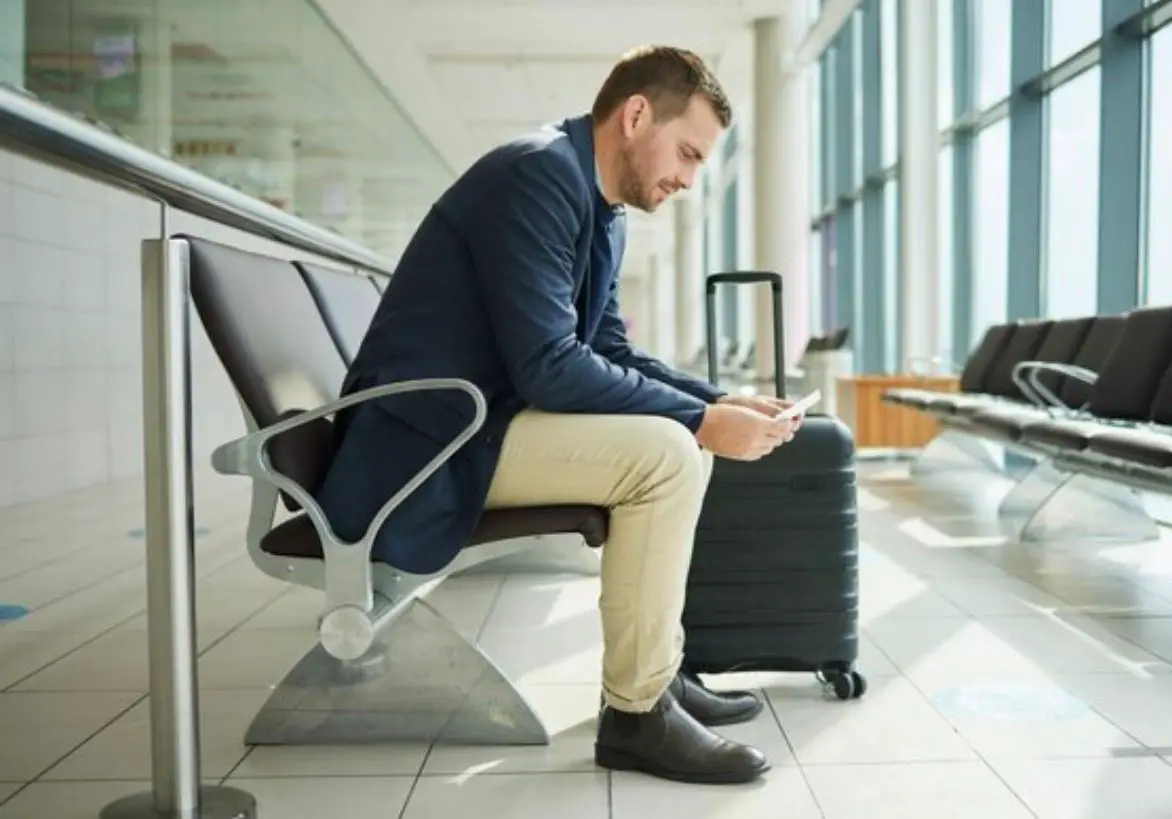
The fluorescent lights of the airport blurred as I watched my husband disappear through the gate. My six-year-old son’s hand tightened around mine with unexpected urgency, and what he whispered next would shatter everything I thought I knew about my marriage.
“Mom,” his small voice trembled. “We can’t go home.”
I didn’t understand. Not yet. Not standing there in that crowded terminal, surrounded by the ordinary chaos of travelers saying goodbye and hello, with the smell of airport coffee and the constant drone of departure announcements filling the air.
I had no idea that within hours, I would watch two strangers unlock my front door with my husband’s keys.
The Perfect Goodbye
My name is Emily Oliver, and that Thursday evening at Chicago O’Hare International Airport should have been routine. Just another business trip goodbye, the kind my husband Richard and I had choreographed dozens of times over our eight years of marriage.
But nothing about that night was routine, even if I couldn’t see it yet.
Richard stood beside me in his impeccable gray suit, the one I’d picked up from the dry cleaners that morning. His leather briefcase—the anniversary gift I’d saved for months to afford—rested at his feet. He wore the cologne I’d given him for his birthday, the expensive kind that made him smell like success and confidence.
To anyone watching us, we looked like the picture-perfect couple. The successful executive and his devoted wife, sharing a tender airport farewell before his important business trip to New York.
If only they knew what was hiding beneath that polished surface.
My son Matthew stood between us, unusually quiet. He’d always been an observant child, the type who preferred watching from the sidelines, absorbing everything with those serious brown eyes. But tonight, something felt different. There was a tension in his small body that I couldn’t quite identify, a fear lurking in his expression that made my maternal instincts prickle with unease.
“This New York meeting is crucial, honey,” Richard said, pulling me into what felt like a rehearsed embrace. His voice had that practiced warmth he used for clients and colleagues. “Three days maximum, then I’ll be home. You’ll take care of everything here, right?”
Take care of everything. The words I’d heard a thousand times. The invisible labor of keeping his world running smoothly while he built his empire, climbed his ladder, lived his dreams.
“Of course,” I replied automatically, because that’s what I’d learned to do over eight years. “We’ll be fine.”
Matthew’s grip on my other hand intensified until it almost hurt. I glanced down at him, concerned, but he was staring straight ahead at his father with an intensity that seemed strange for a six-year-old.
Richard crouched down to Matthew’s level, placing both hands on his small shoulders in that gesture he used whenever he wanted to project the image of the perfect father. For the cameras. For the observers. For the illusion.
“And you, champ, you take care of Mommy for me, okay?”
Matthew didn’t respond with his usual nod. Instead, he stared at Richard’s face as if memorizing every feature, as if he were looking at his father for the very last time. His eyes moved across Richard’s face with an adult’s awareness, a gravity that shouldn’t exist in a first-grader.
I should have noticed then. I should have recognized the warning signs screaming from my child’s behavior.
But we never see the danger when it’s wrapped in familiar faces, do we? We think eight years of marriage means we know someone completely. We think we’ve seen all their sides, understood all their depths.
How devastatingly wrong I was.
Richard kissed Matthew’s forehead, then mine. “I love you both. See you soon.”
The words rolled off his tongue so smoothly, so effortlessly. Like he’d practiced them. Like they were lines in a script he’d memorized years ago.
He stood, grabbed his carry-on, and walked toward the security checkpoint. I watched his gray suit disappear into the crowd of travelers, watched until I couldn’t see him anymore among the sea of people rushing to catch flights and chase destinies.
When I finally lost sight of him completely, I exhaled a breath I hadn’t realized I’d been holding.
“Come on, sweetheart. Let’s go home.” My voice came out tired, flat. All I wanted was to kick off these uncomfortable heels, collapse on the couch, and maybe watch something mindless on television until sleep finally claimed me.
We began walking down the long airport corridor, our footsteps echoing on the polished floor. Other families streamed past us—reunions filled with tears and laughter, businesspeople marching with determined strides, tired parents dragging equally tired children toward parking garages and waiting cars.
Matthew’s silence deepened with each step. I could feel the tension radiating from his small body through the hand clutching mine. The anxiety was palpable now, raising goosebumps on my arms despite the climate-controlled airport temperature.
“Everything okay, baby?” I tried to keep my voice light, casual. “You’ve been very quiet today.”
He didn’t answer immediately. We continued past closed shops, electronic flight schedules flashing departures and arrivals, and travelers hurrying in every direction. It wasn’t until we neared the exit—when those automatic glass doors were just ahead of us, when we were moments away from leaving the airport and driving home—that he stopped walking.
Stopped so suddenly and completely that I nearly stumbled.
“Matthew, what’s wrong?”
That’s when he looked up at me with an expression I will never forget as long as I live.
Pure, undiluted terror.
The kind of fear a six-year-old child should never have to experience, should never even know exists in the world.
The Warning
“Mom,” he whispered, his voice trembling like a leaf in a violent storm. “We can’t go back home.”
My heart performed a strange, sickening jump in my chest. The world seemed to tilt slightly on its axis. I crouched down immediately, gripping his small arms, bringing my face level with his.
“What do you mean, son? Of course we’re going home. It’s late and you need to sleep.”
“No.” His voice came out louder this time, desperate and raw. Several people turned their heads to stare at us—a mother and child having what looked like a meltdown in the middle of O’Hare International Airport.
He swallowed hard, his small throat working visibly, then continued in an urgent whisper that only I could hear. “Mom, please. We can’t go back. You have to believe me this time. Please. This time.”
Those last two words pierced through me like shards of ice, because he was right.
Just three weeks ago, Matthew had told me about a strange car parked across from our house. The same dark sedan, he’d insisted, three nights in a row. I’d dismissed it as coincidence, told him he was imagining patterns where none existed, assured him that lots of cars looked similar in the dark.
Two weeks ago, he’d sworn he heard his father talking quietly in the home office about “resolving the problem once and for all.” I’d brushed it off as work matters, told him not to eavesdrop on adult conversations, reminded him that Daddy had important business to handle.
I hadn’t believed him then.
And now he was begging me, with tears beginning to pool in those brown eyes so much like my own, to believe him this time.
“Matthew, you need to explain what’s happening. Right now.” My voice came out firmer than the trembling fear I felt inside. I needed to understand what had put this terror in my child’s eyes.
He glanced around nervously, as if afraid invisible ears might be listening. Then he pulled on my arm, forcing me to lean even closer, and whispered directly into my ear with hot, frightened breath.
“This morning, really early before the sun came up, I woke up thirsty. I went downstairs for water and I heard Daddy in his office. He was on the phone.” Matthew’s voice cracked. “He said that tonight, when we were sleeping, something bad was going to happen to us. He said he needed to be far away when it happened. That we… that we weren’t going to be in his way anymore.”
The world stopped spinning. My blood turned to ice in my veins, cold and sluggish, as if my body itself was trying to reject what I’d just heard.
“Matthew, are you absolutely certain? You’re sure about what you heard?”
He nodded frantically, desperately, his small head bobbing up and down. “He said there were people who were going to take care of it. He said he was finally going to be free. Mom, his voice… it wasn’t Daddy’s normal voice. It was different. It was scary. It was like… like he was a different person.”
Every instinct screamed at me to deny it, to rationalize it away, to insist my husband would never—could never—do something like that.
But then the memories began surfacing.
Small things I’d deliberately ignored or explained away.
Richard increasing his life insurance policy three months ago, casually mentioning it was “just a smart financial move.” Richard insisting I put everything—the suburban house, the car, even our joint bank accounts—solely in his name because it would “simplify our taxes.” Richard’s sudden anger when I mentioned wanting to return to work after years of staying home: “It’s not necessary. I take care of everything. Why would you want to work?”
The strange phone calls he took locked in his office, his voice dropping to whispers when I walked past. The increasingly frequent business trips that seemed to multiply over the past six months. That conversation I’d accidentally overheard two weeks ago when I thought he was already asleep, him muttering into his phone: “Yes, I understand the risk, but there’s no other way. It has to look completely accidental.”
At the time, I’d convinced myself it was about some risky business deal or difficult client situation. I’d forced myself to believe the innocent explanation because the alternative—the horrible, unthinkable alternative—was too monstrous to contemplate.
But what if I’d been wrong?
What if my instincts had been trying to warn me all along, and I’d been too afraid to listen?
I looked at Matthew—at his terrified face streaked with the beginning of tears, at his trembling hands clutching my coat, at the raw pleading in his eyes—and I made the most important decision of my entire life.
“Okay, son. I believe you.”
The relief that washed over his face was immediate and profound. For one beautiful second, his entire body seemed to relax, the terror easing just slightly.
But it lasted only seconds before the fear returned, harder than before.
“So what are we going to do, Mom?”
Excellent question. My brain scrambled into overdrive, racing through possibilities and consequences at lightning speed. If Matthew was right—and every cell in my body was beginning to scream that he was—then going home was a death sentence.
But where could we go? Every friend we had was also Richard’s friend, part of his carefully constructed social network. My family lived two states away in Michigan. And what if I was wrong? What if this was all some terrible, paranoid misunderstanding fueled by my child’s overactive imagination?
But what if it wasn’t?
What if my husband had actually arranged for someone to kill us tonight?
“Let’s go to the car,” I decided, my voice steadier than I felt. “But we’re not going home. We’re going to… we’re going to watch from a distance. Just to be sure. Just to know for certain. Okay?”
Matthew nodded, his small face pale in the harsh fluorescent lighting.
I took his hand again—God, it was so small and sweaty and trembling—and we walked toward the parking garage. My heart hammered so hard I could hear the blood pulsing in my ears, could feel my pulse throbbing in my throat. Every step felt like it weighed a thousand pounds.
We found our silver sedan in the far corner of level three—the “safe family car” that Richard had insisted on buying last year, with all the latest safety features to “protect his girls.” The irony of that phrase hit me like a physical blow.
I buckled Matthew into the backseat, then secured my own seatbelt with shaking hands. It took three attempts to start the engine because my hands were trembling so violently, the keys jingling like wind chimes in a storm.
“Mom.” Matthew’s voice sounded so small from the back seat.
“Yes, my love?”
“Thank you for believing me.”
The simple gratitude in his voice broke something inside my chest, something that had been cracking for weeks but finally shattered completely in that moment.
I looked at him in the rearview mirror. He was curled into the seat, hugging the dinosaur backpack he carried everywhere, his favorite companion since preschool.
“I’m always going to believe you, son. Always. I promise you that. I should have believed you before. I’m sorry I didn’t.”
In that moment, staring at my child’s reflection, I realized I should have said those words weeks ago. I should have listened from the very beginning. I should have trusted my child’s instincts instead of my desperate need to believe everything was fine, that my marriage was solid, that my life was exactly what it appeared to be.
The Stake Out
I drove in silence, deliberately taking an alternate route instead of heading straight to our suburban neighborhood. My hands gripped the steering wheel so tightly my knuckles turned white. My mind raced through scenarios, possibilities, prayers that Matthew was wrong and fears that he was right.
I found a parallel street that overlooked our block without us being easily visible from our house. Between two large oak trees that provided natural cover, I found a dark spot where I could park with a clear view and carefully maneuvered the car into position.
From this vantage point, we could see our house clearly—the well-maintained lawn Richard paid a service to mow every week, the front porch where we drank coffee on Sunday mornings, Matthew’s bedroom window on the second floor with the Batman curtains he’d picked out himself at Target.
Home. Our home.
Or at least, what I’d believed was our home.
I killed the engine and the headlights. Total darkness enveloped us. The only sounds were our shallow breathing and the distant hum of the city at night—traffic on the highway, a dog barking somewhere, the rustle of wind through the oak leaves above us.
“And now we wait,” I whispered into the darkness.
Matthew said nothing. He just kept his eyes fixed on the house, watching with that intense focus that had always made him seem older than his years, more aware than other children his age.
And so we sat there in the dark, waiting in our car like characters in some absurd thriller movie, not knowing that within the hour, my entire understanding of my life would completely crumble.
The dashboard clock read 10:17 p.m. when I started seriously questioning my sanity.
Here I was, hiding on a dark street with my six-year-old son, staking out my own house like some paranoid conspiracy theorist. What kind of mother does this? What kind of wife suspects her own husband of… of what, exactly?
I still couldn’t fully form the thought in my mind. It seemed too monstrous, too impossible to believe.
Richard had never raised a hand to me in anger. He’d never yelled at Matthew. He was an attentive father, a providing husband, a respected businessman in our community.
But was he a loving husband?
The question surfaced unbidden and unwelcome, demanding an answer I’d been avoiding for months.
When was the last time he’d looked at me with genuine affection instead of that practiced smile he wore like a mask? When had he last asked about my day and actually listened to the answer? When had he touched me in a way that felt real and present rather than mechanical, obligatory, a marital duty to be checked off his list?
When had I last felt truly loved rather than simply maintained, like a piece of property that needed upkeep?
“Mom, look!” Matthew’s urgent whisper snapped me from my spiraling thoughts.
“What? What do you see?”
“There. That car.” His small finger pointed toward our street with a trembling hand.
I followed his gesture and my heart stopped beating.
A vehicle was turning onto our quiet suburban street—but not just any vehicle. It was a dark van with no visible company decals, no logos, no identifying marks of any kind. Even from this distance, I could see the front license plate was missing or deliberately obscured. The windows were tinted so darkly it was impossible to see who or what was inside.
The van slowed as it passed each house, moving with deliberate, predatory purpose. Too slow to be someone simply driving through the neighborhood. Too focused to be lost or looking for an address.
It was searching.
My breath caught painfully in my throat when the van stopped.
Stopped precisely in front of our house.
Exactly at our address.
No mistakes. No hesitation.
“It can’t be,” I whispered, though the words felt hollow and meaningless even as I spoke them. “It can’t be.”
But it was.
The Nightmare Unfolds
The two front doors of the van opened simultaneously with mechanical precision. Two men emerged from the vehicle and even from this distance—we were parked maybe fifty yards away—even in the poor street lighting from the scattered lamps, it was obvious these weren’t utility workers or delivery drivers or anything remotely normal.
They wore dark clothing from head to toe. Hooded jackets that concealed their faces in shadow. The way they moved was furtive, practiced, purposeful. These were men who knew exactly what they were doing and had probably done it before.
They stood for a long moment in front of our gate, scanning the street methodically, checking their surroundings with the careful attention of professionals. Looking for witnesses. Looking for cameras. Looking for anyone who might interrupt what they’d come to do.
My first instinct was to scream, to call the police immediately, to do something—anything—to stop whatever was about to happen.
But I was paralyzed, frozen in place like a deer caught in headlights, watching this nightmare unfold as if I were trapped behind soundproof glass, unable to affect the scene playing out before my eyes.
One of them—the taller one, probably six feet or more—reached into his jacket pocket. I expected a crowbar, some breaking-and-entering tool, something that would indicate a common burglary.
That would be simple. I could handle a simple burglary. I could call the police, file insurance claims, replace stolen items, move forward with life.
But what he pulled from his pocket made my entire world collapse into fragments.
A key.
He was holding a key to our house.
Our house.
“Mom,” Matthew’s voice trembled with confusion and dawning horror. “How do they have our key?”
I couldn’t answer because I was too busy trying not to vomit all over the car’s interior. The nausea hit me in waves, each one stronger than the last.
The tall man opened our front gate as if he owned the property—no forcing, no breaking, no hesitation. Just smooth, authorized entry, like he’d done it a hundred times before. Like he belonged there.
Then he walked up to the front door and repeated the process.
Another key materialized from his pocket. He slid it into the lock with practiced ease. The door opened quietly, smoothly, without resistance.
I watched my front door—the door I’d painted robin’s egg blue last spring, the door I walked through every single day, the door that was supposed to keep danger out—swing open for two strangers.
Only three people in the entire world had keys to our house.
Me.
Richard.
And the spare key Richard kept locked in his home office desk drawer.
The realization hit me like a freight train. Richard had given them those keys. My husband had provided strangers with access to our home, to our sanctuary, to the place where his wife and son were supposed to be sleeping peacefully and safely.
The two men entered my house—the house where I’d slept last night, where I’d made Matthew breakfast this morning, where I’d felt safe and secure for eight years.
They didn’t turn on any lights. Through the curtained windows, I could see the dancing beams of flashlights as they moved through our rooms with purpose. First the living room, then the kitchen, then I watched the lights move upstairs toward the bedrooms.
They were looking for something.
Or preparing something.
I don’t know how long I sat there frozen, unable to move, unable to think clearly. Time had stopped meaning anything. All that existed was this horrifying vision: two strangers inside my home with keys that only my husband could have provided them.
Then I smelled it.
Faint at first, barely noticeable, just a strange odor drifting through the car’s air vents. But growing stronger with each passing second, more acrid, more chemical.
Gasoline.
“Mom, what’s that smell?” Matthew asked, his voice small and frightened in the darkness.
That’s when I saw it through the living room window.
Smoke.
Starting as thin wisps curling upward from somewhere inside, barely visible against the night sky. Then more substantial clouds from the kitchen window. And then I saw the glow—that sinister orange glow that could only mean one thing.
Fire.
They were burning our house.
With us supposedly inside.
“No.” I fumbled for the door handle with numb fingers. “No, no, no.”
Matthew’s hand shot out and grabbed my arm with surprising strength for such a small child. “Mom, no! You can’t go there! Please!”
He was right. I knew he was right. But it was my house. My things. My life.
The photo albums from Matthew’s birth that I’d carefully organized and labeled. The wedding dress preserved in the closet upstairs, still in its protective bag. The drawings Matthew had made in kindergarten that I’d stuck on the refrigerator with alphabet magnets. The blanket my grandmother had knitted before she died—the last thing I had from her, the only physical connection to her memory.
Everything was burning.
The flames grew with terrifying speed, faster than seemed possible. Within what seemed like mere minutes—though it might have been longer, time had lost all meaning—the entire living room was engulfed in fire.
Flames licked hungrily up the walls, reaching toward the ceiling with eager tongues. Windows shattered with explosive pops from the heat, the sound carrying across the quiet street. The fire climbed toward the second floor, toward Matthew’s bedroom, toward the space where we should have been sleeping.
That’s when the sirens began wailing in the distance, growing louder with each passing second. Someone must have seen the smoke and flames and called 911.
The dark van peeled away from the curb without turning on its headlights, disappearing around the corner like a ghost. They were gone mere seconds before the first fire truck came screaming onto our street, its red lights painting the neighborhood in hellish colors.
I was shaking so violently I could barely remain standing. Matthew was behind me outside the car now, hugging me tight, his small face buried against my back, sobbing with deep, wracking sounds that tore at my heart.
“Matthew was right,” I murmured to myself, to the universe, to whatever God might be listening. “You were right, son. You were completely right. If we’d gone home, if I hadn’t believed you, we would be in there right now. Sleeping. Unaware. Defenseless. And those men would have… would have…”
I couldn’t complete the thought because completing it meant acknowledging that my husband—the man I’d married, the father of my child, the person who’d vowed to love and protect me until death did us part—had just tried to murder us both.
My legs gave way and I collapsed to my knees right there on the dark street, still hidden by the oak trees, watching my entire life transform into smoke and ashes and memory.
My phone vibrated in my coat pocket.
With trembling hands that felt disconnected from my body, hands that seemed to belong to someone else entirely, I pulled it out.
A text message from Richard lit up the screen, the notification bright in the darkness.
“Honey, just landed in New York. Hope you and Matthew are sleeping well. Love you both so much. See you in a few days. ❤️”
I read the message once. Twice. Three times, each word burning itself into my brain.
Every word was a knife blade slicing into old wounds and creating new ones.
Every heart emoji was poison disguised as affection.
He knew.
Of course he knew exactly what was happening right now.
He was in another state at this very moment, hundreds of miles away, establishing his perfect alibi at a New York hotel or restaurant or bar. Meanwhile, hired killers had just set fire to our house with his wife and son supposedly sleeping inside.
And then he would return tomorrow or the next day as the devastated husband and grieving father. He would cry at our funeral, accept condolences from friends and neighbors, collect the insurance money, pay off whatever debts had driven him to this desperation, and move forward with his life.
Free.
That’s what Matthew had heard him say on the phone early this morning.
“I’m finally going to be free.”
Free of me. Free of his son. Free of the family that had apparently become obstacles to whatever life he really wanted, whatever future he’d been planning without us in it.
The nausea came hard and fast, overwhelming and unstoppable. I turned and vomited violently onto the sidewalk, purging everything I’d eaten that day and any remaining illusions I’d harbored about my marriage, my safety, my life.
When I finally stopped heaving, when my stomach had nothing left to give, I wiped my mouth with my sleeve and looked at Matthew.
He sat on the curb beside me, small arms wrapped around his knees, watching our house burn with an expression no six-year-old child should ever wear. An expression of premature understanding, of innocence shattered, of trust betrayed at its deepest level.
Tears rolled silently down his small face, catching the orange glow of the flames that consumed our home. But he wasn’t sobbing anymore—just watching with that terrible, adult-like awareness that people who are supposed to love you and protect you can actually want you dead.
I sat beside him and pulled him into the tightest embrace of his life, wrapping my arms around him as if I could shield him from everything that had happened and everything that was still to come.
“I’m so sorry,” I whispered into his hair, breathing in the familiar scent of his strawberry shampoo mixed with fear-sweat. “I’m sorry for not believing you sooner. I’m sorry for everything that’s happening. I’m sorry I didn’t protect you better.”
He clung to me as if I were the only solid thing in a world that had turned completely upside down, as if letting go meant floating away into chaos and terror.
And maybe I was.
Maybe we were all each other had now.

Adrian Hawthorne is a celebrated author and dedicated archivist who finds inspiration in the hidden stories of the past. Educated at Oxford, he now works at the National Archives, where preserving history fuels his evocative writing. Balancing archival precision with creative storytelling, Adrian founded the Hawthorne Institute of Literary Arts to mentor emerging writers and honor the timeless art of narrative.