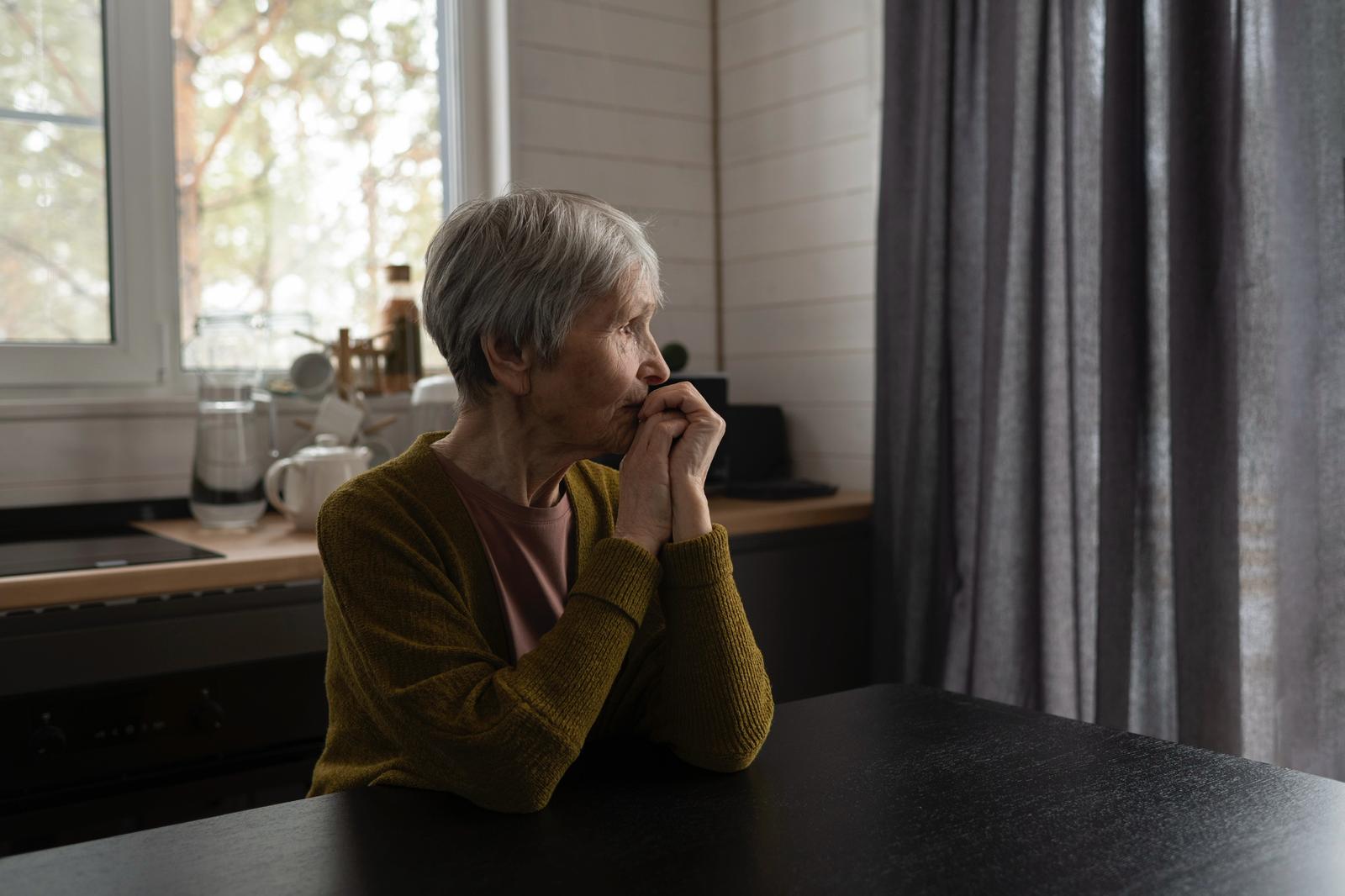
The House That Grief Built
There are moments in life when you realize that the person standing in front of you—the one you carried for nine months, nursed through fevers, taught to tie their shoes—has become a stranger wearing a familiar face.
For me, that moment came on a Tuesday afternoon when my key wouldn’t turn in the lock of my own front door.
My name is Emily Richardson. I’m fifty-three years old, a widow of fourteen months, and until very recently, I believed that the worst pain I would ever experience was watching my husband take his last breath in a hospital room that smelled like antiseptic and broken promises.
I was wrong.
The estate sits on twelve acres just outside Portland, hidden behind a row of Douglas firs that my husband Robert planted the year we bought the property. It’s not a mansion in the ostentatious sense—no marble columns or gold fixtures—but it’s substantial: five bedrooms, a wraparound porch, hardwood floors that Robert refinished himself one summer while I was pregnant with our son. There’s a greenhouse where I used to grow tomatoes, a workshop where Robert built furniture, and rosebushes lining the front walk that he’d planted on our tenth anniversary because I’d mentioned once, years before, that I loved the smell of roses in June.
We built that house slowly, carefully, with money we saved and dreams we shared and the quiet, stubborn belief that one day it would be filled with grandchildren and Sunday dinners and all the gentle chaos of a family that chooses to stay together.
Robert died on a Monday. Pancreatic cancer, diagnosed too late, gone too fast. One day he was complaining about back pain, and six weeks later I was standing in a cemetery watching them lower a box into the ground and wondering how a person just stops existing.
The grief was enormous. All-consuming. The kind that makes you forget to eat, forget to sleep, forget that the world is still turning even though yours has stopped. I moved through those first weeks in a fog, accepting casseroles from neighbors I barely knew, responding to condolences with automatic thank-yous, trying to remember how to breathe without feeling like my chest was caving in.
My son Daniel came to the funeral with his wife Jessica, a woman he’d married eight months earlier in a ceremony I’d paid for because they were “just starting out” and needed help. They stayed for three days after the service, helping sort through Robert’s things, fielding phone calls from the lawyer, making sure I was eating.
I thought they were being kind.
I didn’t realize they were cataloging assets.
The first sign came two weeks after the funeral.
Jessica found me in the kitchen one morning, still in my bathrobe at noon because I couldn’t remember why getting dressed mattered anymore. She was holding a folder I didn’t recognize, her expression arranged in what I would later understand was carefully practiced concern.
“Emily,” she said—she’d never called me Mom, which should have told me something—”we need to talk about the house.”
I looked up from my coffee, confused. “What about it?”
“Well,” she said, settling into the chair across from me with the folder placed precisely on the table between us, “Daniel and I have been talking, and we’re worried about you being here all alone. It’s so much space for one person. So much maintenance. And with your grief…” She let the sentence trail off meaningfully.
“I’m managing,” I said quietly.
“Are you?” She opened the folder, revealing what looked like legal documents. “Because from where we’re sitting, it seems like this house is too much for you right now. All these rooms, all these memories. Maybe it would be better—healthier, even—if you had something smaller. Simpler. Somewhere you could heal without constantly being reminded of what you’ve lost.”
There was a logic to her words that worked on my exhausted brain like a virus. Maybe she was right. Maybe the house was too much. Maybe I did need something smaller, quieter, less full of Robert’s ghost.
“What are you suggesting?” I asked.
She smiled. It was a kind smile, or at least it looked kind in that moment. Looking back, I can see the calculation behind it, but grief makes you vulnerable to kindness, real or performed.
“Just that you think about it,” she said. “Maybe sign some temporary paperwork giving Daniel power of attorney, just until you’re feeling stronger. Nothing permanent. Just… protection. For you.”
I should have called a lawyer. I should have asked questions. I should have done a hundred things differently.
Instead, I nodded and said I’d think about it.
The pressure came in increments, each one small enough to seem reasonable on its own.
Jessica started staying over more often, “to keep me company.” She’d make dinner—which was thoughtful—and then gently suggest that maybe I should go rest while she and Daniel cleaned up. Slowly, subtly, I was being edged out of my own kitchen.
Daniel started handling my mail, “so you don’t have to worry about bills right now.” He’d bring me things to sign—insurance forms, bank statements, legal documents I was too tired to read carefully—always with reassurances that he was just helping, just making things easier.
And then there was the guest house.
It had been built years ago, originally meant for Robert’s mother who never ended up moving in. A small, two-bedroom cottage behind the main house, charming in its way, with its own little kitchen and a view of the garden. Jessica suggested—so gently, so reasonably—that maybe I’d be more comfortable there while I was grieving. Fewer stairs. Less space to maintain. Quieter.
“Just temporarily,” she said. “Until you’re ready to handle the big house again.”
I moved into the guest house on a Thursday. Daniel and Jessica helped me carry my clothes, my books, a few photographs. They were so helpful, so solicitous, making sure I had everything I needed, promising they’d be right there if I needed anything.
The next morning, I walked up to the main house to get something from my closet—a sweater Robert had given me that still smelled faintly like him—and found that the locks had been changed.
I stood on that porch—my porch, the one Robert had built, where we’d drunk coffee every Sunday morning for twenty-three years—and my key wouldn’t turn in the lock.
I knocked. Waited. Knocked again.
Jessica answered, blocking the doorway with her body.
“Emily,” she said, surprise that didn’t quite reach her eyes. “What do you need?”
“I… I wanted to get something from my closet.”
“Oh.” She glanced back into the house—my house—like she was checking with someone. “Maybe text first next time? We’re trying to get the place organized, and it’s easier if we know when you’re coming.”
“Organized,” I repeated numbly.
“For the estate,” she said, as if this explained everything. “Daniel’s handling things now, remember? It’s all in the paperwork you signed.”
She closed the door.
I stood there for a long moment, feeling my heart pound in my chest, feeling something that might have been anger or might have been terror or might have been the first stirrings of understanding that I had made a terrible, terrible mistake.
The months that followed were a masterclass in incremental erasure.
I learned to text before approaching the main house. I learned to use the back entrance to the property instead of the main driveway. I learned to keep my voice quiet and my requests small and my expectations nonexistent.
I learned to disappear.
Daniel stopped visiting the guest house except to bring me mail or ask me to sign additional paperwork—always with that same reassuring tone, always temporary, always for my own good. Jessica redecorated the main house, removing photographs of Robert and me, painting over the colors we’d chosen, turning our bedroom into an office.
I watched my life being systematically erased, and I said nothing because I didn’t know what to say. Because some part of me still believed this was temporary. Because the person taking everything from me was my son, and surely that meant something. Surely he wouldn’t actually—
But he would. And he did.
My brother Michael lived in Seattle, about three hours north. We’d never been particularly close—different lives, different priorities—but we’d maintained the kind of casual sibling relationship that meant phone calls on birthdays and showing up for major holidays.
He hadn’t been able to make it to Robert’s funeral—something about a work emergency I’d barely processed at the time—but he’d been calling more frequently since, checking in, asking how I was managing. I gave him the same answers I gave everyone: I’m fine. Managing. Taking it day by day.
I never told him about the guest house. About the changed locks. About the way my own home had become a place I needed permission to enter.
But Michael was always observant in ways I’d forgotten, always able to see through the careful words to the truth underneath.
He called on a Wednesday morning and said, “I’m coming down this weekend. Don’t argue.”
I tried to argue anyway, but he’d already hung up.
Michael pulled into the driveway on a Saturday afternoon, his truck rumbling up the gravel path the way Robert’s used to. I was coming back from a walk, approaching from the back of the property—the route I’d learned to take to avoid awkward encounters—when I saw him park and climb out.
He looked at the main house. Looked at the guest house. Looked at me emerging from the trees like I was sneaking onto my own property.
His face went through a series of expressions I recognized from childhood: confusion, then calculation, then the particular kind of anger that comes from understanding something you wish you didn’t.
“Em?” he said. “Why are you coming from back there?”
Before I could answer—before I could formulate the careful, minimizing explanation I’d been preparing for months—the front door of the main house opened.
Daniel stepped out onto the porch, Jessica right behind him. My son had his shoulders back, his chin up, the posture of someone defending territory.
“Uncle Michael,” he said, his tone pleasant but with an edge underneath. “Didn’t know you were visiting.”
“Surprising my sister,” Michael said, his eyes never leaving me. “That a problem?”
“Not at all,” Daniel said. “But just so you know, if you’re looking for Mom, she’s staying in the guest house now. The main house belongs to my wife and her family.”
The words landed like stones in still water.
Michael’s entire body went rigid. “Excuse me?”
“The estate,” Daniel continued, and there was something almost rehearsed about his delivery, like he’d been practicing this speech. “It’s under our management now. Mom signed everything over. She’s more comfortable in the smaller space anyway, aren’t you, Mom?”
He looked at me expectantly. Waiting for me to confirm his version of reality. Waiting for me to shrink and smile and make this easier for everyone.
I opened my mouth. Closed it. Felt Michael’s eyes on me, felt the weight of all the months of silence pressing down on my chest.
“If Mom goes near the main house without permission,” Daniel added, his voice dropping into something harder, “I’ll make sure she’s sent right back. This is family property now. My family.”
The word “family” hung in the air like smoke.
Something in me went very, very still. That kind of still that happens when your body realizes before your mind does that you’re in danger, that the person in front of you is a threat, that survival means staying quiet and small and non-reactive.
But Michael had no such survival instinct about his own nephew.
“What did you just say to your mother?” he asked, his voice dangerously soft.
What happened next unfolded with the strange, crystalline clarity that comes from shock.
Michael walked toward Daniel, and I saw my son’s confidence waver for just a moment. Jessica put a hand on Daniel’s arm, but he shook her off, stepping forward to meet Michael like this was a challenge he needed to win.
“You heard me,” Daniel said. “This is our house now. Mom’s fine. She’s taken care of. But the property belongs to—”
Michael’s laugh cut him off. It wasn’t a humorous sound.
“Your mother,” he said, each word precise and hard, “is standing in her own driveway like a guest. Your mother, who built this place with her husband—your father—is living in a guest house while you play lord of the manor with your wife. Do you understand how insane that is?”
“It’s legal,” Daniel shot back. “She signed the papers. Power of attorney. It was her choice.”
“Her choice,” Michael repeated. “Her choice while she was barely functional with grief. Her choice when she probably didn’t even know what she was signing. Her choice because you and your wife—” he gestured at Jessica, “—decided to take advantage of a woman who’d just lost her husband.”
“That’s not—” Jessica started.
“Don’t,” Michael said, turning to her. “Don’t even try. I see exactly what you did here.”
He turned back to me, and his expression softened into something that made my throat tight.
“Em,” he said gently. “Tell me the truth. Did you want to sign this house over to them?”
The answer should have been simple. The answer should have been immediate. But I’d spent so many months practicing acceptable responses, making myself small, telling myself it was temporary, convincing myself that this was somehow okay—
“I don’t—” I started, then stopped. Tried again. “I thought it was just temporary. Just until I felt stronger. They said—”
“What did you sign?” Michael asked. “Exactly. Do you remember?”
I shook my head. “Forms. Legal papers. Daniel said it was just power of attorney, just to help with bills and estate management. Nothing permanent.”
“Did you read them?”
“I… no. I was so tired, and they kept saying it was fine, it was just protection, it was—”
Michael’s jaw clenched. He pulled out his phone.
“I’m calling my lawyer,” he said. “Right now. Because I’m willing to bet everything you signed was done under duress and probably isn’t even legal. And even if it is technically legal, it’s elder abuse, and—”
“Elder abuse?” Daniel’s voice rose. “She’s fifty-three, not ninety. She’s fine. She agreed to everything.”
“She was grieving!” Michael roared, and I’d never heard my brother yell like that, never seen that particular fury in his face. “She was vulnerable and in pain, and you—you vultures—circled her and took everything while she was too broken to fight back.”
The argument that followed was ugly. Shouting, accusations, Jessica crying and claiming they’d only been trying to help, Daniel defensive and angry and insisting everything was legal and proper and that I’d understood exactly what I was signing.
Michael told them to get a lawyer. Daniel said they already had one. Jessica threatened to call the police. Michael told her to go ahead, that he’d welcome the documentation.
Through it all, I stood frozen, watching my family tear itself apart over property and paperwork and power, feeling like I was observing from somewhere very far away.
Finally, Michael grabbed my hand.
“Come on,” he said. “You’re coming with me. Right now.”
“Where?” I asked.
“Anywhere but here. We’re going to get you a lawyer, and we’re going to figure out what you actually signed, and we’re going to fix this.”
“She can’t just leave,” Jessica said. “The property—”
“Is hers,” Michael snarled. “Every inch of it. And if you try to stop her, I swear to God I will make your life a legal nightmare you can’t even imagine.”
We left. I grabbed a bag from the guest house—clothes, documents, my phone—and I got into Michael’s truck and we drove away from the house Robert and I had built, the house my son had stolen, the life I’d let slip away while I was too grief-stricken to hold on.
Michael took me to his apartment in Seattle. Called his lawyer that same night. By Monday morning, I was sitting in a conference room with a legal team that looked at the documents I’d signed and exchanged the kind of glances that made my stomach drop.
“This is bad,” the lead attorney—a woman named Sharon with sharp eyes and sharper suits—said finally. “But it’s not unwinnable.”
She explained it to me in terms I could barely process: improper power of attorney obtained under duress, potential fraud, possible elder exploitation statutes even though I wasn’t technically elderly, questionable signatures on deed transfers I didn’t remember signing.
“Did you ever explicitly agree to transfer ownership of the property?” Sharon asked.
“No,” I said. “Never. They said it was just temporary management. Just until I felt better.”
“And you believed them.”
“He’s my son,” I said, and my voice broke on the word. “Why wouldn’t I believe him?”
Sharon’s expression softened slightly. “Unfortunately, Mrs. Richardson, family relationships are often where the worst exploitation occurs. People who should protect you, who you’re wired to trust—they have the most access and the most opportunity to take advantage.”
She slid a file across the table.
“There’s something else,” she said. “Something your brother found when he was going through your husband’s papers. Did Robert have a will?”
“Yes,” I said. “Standard stuff. Everything to me, then to Daniel when I passed.”
“Did you ever read it yourself?” Sharon asked. “Actually read it, all the way through?”
I hesitated. “No. Robert handled that stuff. He said it was simple, straightforward.”
Sharon opened the file and pulled out a document I’d seen once, briefly, when Robert’s lawyer had read it after the funeral. I’d been so numb that day that I’d barely processed the words.
“Your husband,” Sharon said slowly, “was apparently a very smart man. Read section seven, paragraph three.”
I read.
Then I read it again.
Then I looked up at Sharon with something that might have been hope or might have been devastation or might have been both at once.
“He knew,” I whispered. “Robert knew this might happen.”
Section seven, paragraph three of Robert Richardson’s last will and testament contained a clause I’d never known existed:
In the event that my wife Emily Richardson is pressured, coerced, or otherwise influenced to sign over control or ownership of our marital property within five years of my death, said transfers shall be considered void and the property shall revert to her sole ownership. Furthermore, any individual found to have exploited my wife’s grief for financial gain shall be immediately and permanently excluded from any inheritance or family trust.
Robert had put a trap in his will. A protection I’d never known I needed. A final act of love from beyond the grave.
“He was sick for a while before the diagnosis,” I said slowly, remembering. “He kept talking about ‘preparing for all possibilities.’ I thought he just meant making sure I’d be financially stable. I didn’t realize—”
“He was protecting you,” Sharon said. “From exactly this scenario.”
“But how did he know?” I asked. “How could he possibly—”
Michael cleared his throat from where he’d been sitting quietly in the corner.
“Robert called me,” he said. “About two months before he died. He said he had concerns about Daniel. About Jessica’s influence. He said he’d noticed changes, little things, the way Daniel started talking about ‘family assets’ and asking questions about the property value. He said it might be nothing, but—”
“But he wanted to be prepared,” I finished.
Michael nodded. “He made me promise that if anything happened to him, I’d keep an eye on you. Watch for signs that someone might be taking advantage. And if it happened—” He gestured at the will. “—he made sure there was a way to fix it.”
I put my face in my hands and cried for the first time since leaving the estate. Not grief tears this time, but something more complicated—relief and anger and gratitude all tangled together.
We filed the lawsuit two weeks later.
Sharon had been right about one thing: it was bad. Daniel and Jessica fought back with their own lawyer, producing the documents I’d signed, arguing that I’d been of sound mind, that they’d been acting in my best interest, that the will clause shouldn’t apply because I hadn’t been “coerced” but had made “voluntary decisions.”
The case dragged on for months. Depositions. Document reviews. Character witnesses on both sides. Daniel’s lawyer painted me as a grief-addled woman making poor decisions and later regretting them. My lawyer painted Daniel and Jessica as opportunistic vultures who’d preyed on a widow’s vulnerability.
Both versions had elements of truth. Both versions missed essential parts of the story.
The hearing was scheduled for a Tuesday in October, almost exactly one year after Robert’s death.
The courtroom was smaller than I’d expected from television, more bureaucratic and less dramatic. Fluorescent lights. Beige walls. Wooden benches that reminded me of church pews.
Daniel sat at one table with Jessica beside him and their lawyer—a man in an expensive suit who looked like he specialized in making uncomfortable truths disappear. They didn’t look at me when I entered. Jessica’s hands were folded on the table in front of her, perfectly still, perfectly composed.
Michael sat with me at our table, his presence solid and steady. Sharon shuffled through files with the efficiency of someone who’d done this a hundred times.
The judge was a woman in her sixties with gray hair pulled back severely and glasses that she peered over when she wanted to make a point. She looked at both sides with the kind of exhausted expression that suggested she’d seen every variation of family drama and believed in none of it.
“This is a property dispute,” she said, “involving a mother and son and the estate of the deceased father. I’ve reviewed the filings from both sides. We’ll start with testimony from the plaintiff. Mrs. Richardson, please take the stand.”
I walked to the witness stand on legs that felt disconnected from my body. The bailiff swore me in. I sat down and looked out at the courtroom—at Daniel refusing to meet my eyes, at Jessica’s careful blankness, at Michael’s encouraging nod.
And I told the truth.
Not the careful, minimized version I’d been telling myself for months. Not the story that made me less vulnerable or less foolish. The real story, with all its ugly edges and painful gaps.
I told them about the fog of grief. About the casseroles and condolences and the way time stopped meaning anything after Robert died. About Jessica’s “concern” and Daniel’s “help” and the slow, incremental way I’d been edged out of my own life.
I told them about signing papers I didn’t read because I was too tired to focus and too trusting to question. About the guest house and the changed locks and the way I’d learned to ask permission to enter my own home.
I told them about the rosebushes Robert had planted, about the hardwood floors he’d refinished, about the greenhouse and the workshop and all the pieces of our life that had been systematically stripped away.
When I finished, the courtroom was very quiet.
Daniel’s lawyer stood for cross-examination, trying to establish that I’d been capable of making decisions, that I’d understood what I was signing, that my son had been acting in my best interest.
I answered honestly: I didn’t know anymore what I’d understood in those grief-soaked weeks. I didn’t know if I’d been capable or just functional. I didn’t know if Daniel had started with good intentions that had curdled, or if the plan had been there all along.
Then it was Daniel’s turn to testify.
He spoke calmly, rationally, explaining that he’d only been trying to help. That the power of attorney was meant to protect me. That moving me to the guest house had been my idea—I’d said I needed something smaller, quieter.
Some of it was even true. That was the worst part.
Jessica testified next, all composed sympathy and reasonable concern. She talked about how worried they’d been, how overwhelmed I’d seemed, how the decisions had been made “together, as a family.”
By the time Sharon stood for our defense, I was exhausted. Hollowed out. Ready for this to be over regardless of the outcome.
“Your Honor,” Sharon said, “before we proceed with witnesses, there’s one more document that needs to go on record.”
She pulled a folder from her briefcase—worn at the edges, the kind that’s been handled many times—and walked it to the judge’s bench.
The judge opened it. Read silently for a long moment. Looked up at Sharon with an expression I couldn’t quite read.
“This is the deceased’s will,” the judge said. “I assume we’re looking at section seven, paragraph three?”
“Yes, Your Honor.”
The judge looked at Daniel and Jessica. Looked at me. Looked back down at the document.
Then she said four words that made my heart stop:
“Read it aloud.”
Sharon took the folder back and stood in the center of the courtroom, her voice clear and steady:
“In the event that my wife Emily Richardson is pressured, coerced, or otherwise influenced to sign over control or ownership of our marital property within five years of my death, said transfers shall be considered void and the property shall revert to her sole ownership.”
She paused, letting the words settle.
“Furthermore, any individual found to have exploited my wife’s grief for financial gain shall be immediately and permanently excluded from any inheritance or family trust. This includes, but is not limited to, my son Daniel Richardson and any person acting in concert with him.”
The silence that followed was absolute.
I watched Daniel’s face go white. Watched Jessica’s composure finally crack. Watched their lawyer lean over to whisper something urgent that they both ignored.
“Additionally,” Sharon continued, “Robert Richardson established a separate trust to be administered by his brother-in-law Michael Chen in the event of these specific circumstances. The trust contains detailed documentation of the property’s history, its development, and explicit instructions that it remain in Emily Richardson’s sole control.”
She looked up from the document.
“Your Honor, Robert Richardson knew his wife. He knew she would grieve deeply. He knew she might be vulnerable to manipulation. And he took steps—legal, binding steps—to protect her from exactly what happened here.”
The judge removed her glasses and rubbed the bridge of her nose.
“Mr. Richardson,” she said, addressing Daniel. “Did you know about this clause in your father’s will?”
“No,” he said, but his voice cracked on the word.
“Did you read the will yourself after his death?”
A pause. “Parts of it.”
“But not this section.”
“I… no.”
The judge looked at the documents in front of her, then back up at Daniel and Jessica.
“What I’m seeing here,” she said slowly, “is a pattern of behavior that began immediately after Robert Richardson’s death. I’m seeing a widow in acute grief being systematically isolated from her own property. I’m seeing power of attorney documents signed without proper legal counsel. I’m seeing a son and daughter-in-law who moved into a deceased man’s home while displacing his widow to a guest house.”
She paused.
“And I’m seeing a man who loved his wife enough to protect her from this exact scenario, even after his death.”
The judge’s ruling came swift and unequivocal.
All transfers of property, ownership, and control were void. The power of attorney was revoked. The property reverted immediately and completely to my sole ownership. Daniel and Jessica had thirty days to vacate the premises and remove their belongings.
Furthermore, per the terms of Robert’s will, Daniel was excluded from any inheritance or family trust. The money Robert had set aside for our son—money I didn’t even know existed—would instead go to a charitable foundation in Robert’s name.
Daniel and Jessica would leave with nothing but what they’d brought into the marriage.
The gavel came down with a sound like finality.
I moved back into the main house on a Saturday, exactly one year and two months after Robert’s death.
Michael helped me carry my things from the guest house, neither of us speaking much, both of us aware that this victory came with its own kind of grief. I’d won my home back, but I’d lost my son in the process. Or maybe I’d lost him months ago and was only now acknowledging it.
Daniel and Jessica moved out on a Thursday. I wasn’t there to watch. Michael handled the oversight, made sure they took only what was legally theirs, documented everything for the record.
When I finally walked back into that house—my house, Robert’s house, our house—it felt both familiar and strange. Jessica had redecorated, but not extensively. Most of our furniture was still there. Most of the bones of our life remained.
I spent the first week just walking through rooms, relearning them. Putting back photographs Jessica had removed. Repainting walls she’d changed. Sleeping in the bed Robert and I had shared, feeling the ghost of him in the spaces where he used to be.
The rosebushes were still blooming.
I’m writing this two years later, in the greenhouse Robert built, surrounded by tomato plants and the smell of earth.
I haven’t spoken to Daniel since the trial. He’s tried calling a few times, mostly in the beginning, before he realized I wasn’t going to answer. Jessica filed for divorce about six months after they lost the case. I heard through mutual acquaintances that she’s remarried, moved to California, started over somewhere she doesn’t have to explain what happened.
Daniel sends a card every Christmas. I don’t respond, but I don’t throw them away either. Maybe someday I’ll be ready to have that conversation. Maybe someday he’ll be ready to actually apologize, to understand what he did and why it was so unforgivable.
Maybe not.
Michael visits once a month. We have dinner, we talk about everything and nothing, we’ve rebuilt our sibling relationship into something stronger than it was. He’s the executor of my estate now, properly documented, with full understanding and legal counsel.
I’ve made my own will. Very clear, very specific, with its own protection clauses in case I ever become vulnerable again. I won’t be caught twice.
The house is quiet now, but it’s mine. I’ve started hosting Sunday dinners for friends from my book club, from my gardening group, from the grief support sessions I finally started attending. I’ve filled the rooms with different kinds of family, chosen family, people who see me as more than a resource to be managed.
Sometimes I stand in the greenhouse and talk to Robert, telling him about my day, thanking him for the protection he built into that will, asking him if he’s proud of me for finally fighting back.
I think he would be.
If there’s a lesson in all this, it’s not a comfortable one.
The people closest to you—the ones you trust most deeply, the ones your heart wants to believe in—those are often the ones who can hurt you most profoundly. Because they have access. Because they know your vulnerabilities. Because you’re wired to trust them even when the evidence says you shouldn’t.
Grief makes you vulnerable in ways you can’t anticipate. It strips away your defenses, clouds your judgment, makes you desperate for comfort and stability and someone to handle the impossible weight of daily existence.
And there are people—even people who share your blood, who sat at your dinner table, who you loved with your whole heart—who will see that vulnerability and exploit it.
I don’t think Daniel started out trying to steal my house. I think he started out trying to help, and somewhere along the way, with Jessica’s influence and his own growing sense of entitlement, “helping” became “controlling” became “taking.” I think he convinced himself he was doing the right thing, that I couldn’t handle the property, that he deserved it somehow.
I think he believed his own story right up until the moment that will was read aloud in court.
But intentions don’t erase harm. Believing your own justifications doesn’t make them true.
My name is Emily Richardson. I’m fifty-five years old. I’m a widow, a property owner, a survivor of family betrayal, and a woman who learned—painfully, expensively, almost too late—that sometimes the only way to save yourself is to stop trying to save the people who are hurting you.
The house still stands on its twelve acres, solid and real and mine.
The rosebushes still bloom every June.
And I’m still here, still learning how to live in a world without Robert but with the protection he left behind, still figuring out what it means to choose yourself when choosing yourself means walking away from your own child.
It’s not the life I imagined. It’s not the happy ending I wanted.
But it’s mine. Completely, legally, irrevocably mine.
And that’s enough.
THE END

Adrian Hawthorne is a celebrated author and dedicated archivist who finds inspiration in the hidden stories of the past. Educated at Oxford, he now works at the National Archives, where preserving history fuels his evocative writing. Balancing archival precision with creative storytelling, Adrian founded the Hawthorne Institute of Literary Arts to mentor emerging writers and honor the timeless art of narrative.