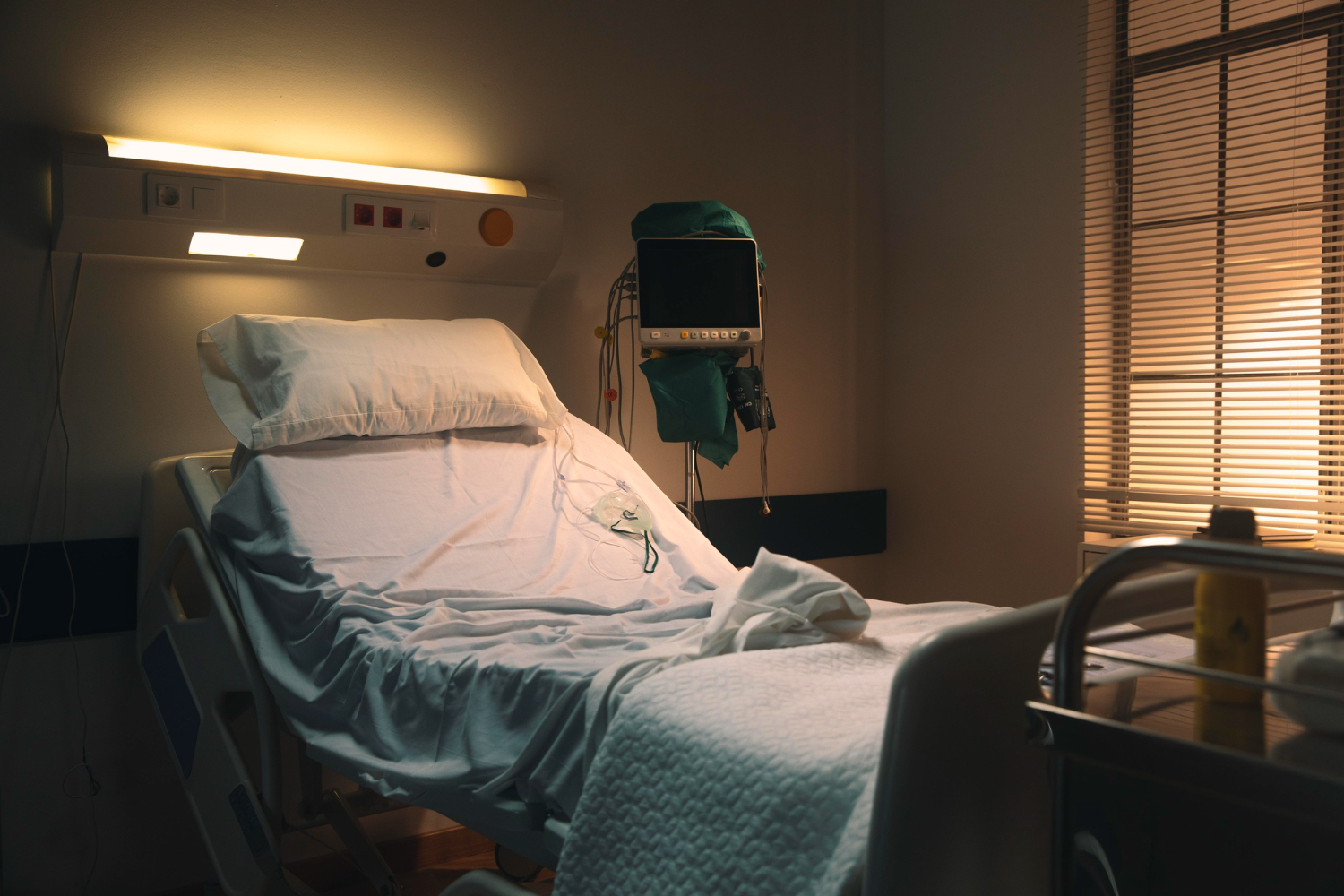
The fluorescent lights above me were just white smears, turning the trauma bay into a surreal tunnel. Every movement sent a hot, wet ache rolling through my abdomen. Somewhere nearby, monitors beeped in a rhythm that didn’t match my frantic heartbeat.
My phone was slippery in my hand—later I would realize it was sweat, but in the moment, I thought it might be blood.
The message from my mother glared up at me in the too-bright light of the screen.
Stop being dramatic, Lucy. You are killing the vibe. Jessica has been planning this outfit for months. We are at the concert. Call an Uber for the kids.
For a second my brain refused to process the words. My thumb smudged across the glass. Maybe I misread it.
I forced my fingers to move.
Mom, I am in the ER. Internal bleeding. They’re taking me to surgery. I NEED you to get the twins. Please.
The three dots never appeared. Instead, the text got a little gray exclamation point: Message not delivered.
I tried again. Message not delivered.
I tried my father. Jessica. Nothing.
I changed apps and went to my contact list, tapping my mother’s name.
The call ended instantly.
Slowly, as if the realization were rising through thick liquid, it hit me. They had blocked me. My parents and my sister had blocked my number.
A nurse leaned over me, her dark hair twisted into a bun, a crease between her brows. “Lucy? You with me? We’ve got your consent for surgery. The OR’s ready.”
“My kids,” I rasped. “They’re three. I need someone to get them from daycare.”
Her eyes softened. “We’ll get social work on it. Right now we need to get you upstairs before your blood pressure drops any further.”
I turned my head toward her, the motion sending a bolt of pain through my side. “I don’t have anyone. My family blocked me. To go to a concert.” A strangled laugh came out of me. “They blocked me so my medical updates wouldn’t interrupt their night out.”
Her fingers closed around my hand, strong and steady. “Hey. Focus on breathing. We’re going to take good care of you.”
Tears blurred my vision—not from the pain, not even from the fear that I might not wake up, but from something else. A raw, animal grief.
As they rolled my stretcher toward the OR, I thought of my twins. I saw their faces as clearly as if they were hovering over me: Ethan’s serious little frown when he was concentrating on a puzzle, Nora’s wild curls bouncing when she ran, her laugh bright and high.
I had dropped them at daycare that afternoon with a distracted kiss to each forehead. Thirty minutes later I was the patient, not the surgeon, doubling over in the locker room as pain tore through my abdomen. A ruptured ectopic pregnancy. The ultrasound images blurred on the screen, my colleagues speaking in calm, professional voices while my ears rang.
It had been automatic to call my parents. Automatic to believe they’d scoop up the kids, sit in the waiting room, bring me home afterward. All the things I’d done for them, all the money, all the sacrifices—how could they not?
As the anesthesiologist placed a mask over my nose and mouth, I had one last thought before the grayness swallowed me: If I survive this, everything changes.
When I woke up, the recovery room was dim and quiet. My mouth tasted like chemicals. Someone was saying my name.
“Lucy? Surgery went well. Your emergency contact at the hospital helped coordinate. The kids are with a nanny right now.”
I didn’t remember signing consent for that, but it sounded like something the rational part of me would have done in those last frantic minutes.
“Phone,” I whispered. “Please.”
She handed it to me.
There were no missed calls from my parents. No voicemails. No texts.
The pain in my chest was worse than the incision.
Instead of calling them again, I opened my banking app.
The numbers glowed up at me, familiar soldiers in neat columns. For eight years I’d checked this app obsessively—not because I was obsessed with money, but because I needed to see what fires I was putting out, what bills I was covering, who I was rescuing this month.
At the top of the page: $3,500 – Family Support – Pending (Processes 1st of the month)
For years that transfer had gone through like clockwork, sucked directly from my paycheck into my parents’ joint account. No thank you. No acknowledgement beyond the occasional text from my mother complaining that it was late.
My thumb hovered over the screen for one second.
Then I pressed “Cancel.”
Are you sure you want to cancel this recurring transfer?
Yes.
Gone.
I scrolled down. My mother’s health insurance premium. Cancel. Jessica’s Range Rover lease payment. Cancel. Country club membership dues—my father’s pride and joy. Cancel.
From a hospital bed, IV still taped to the back of my hand, I began to dismantle my parents’ entire lifestyle with a series of small, calculated taps.
Each cancellation felt like another stitch closing a wound.
Three days after surgery, I went home. Home was a two-bedroom apartment that smelled faintly of coffee and baby shampoo. I paused in the doorway of the kids’ bedroom.
Nora and Ethan were asleep, sprawled across their little beds, cheeks flushed. My chest tightened. These tiny people. My whole world.
And my family had chosen a concert over them. Over me.
After I thanked the emergency nanny and sent her home, I sat at the kitchen table and opened my laptop. Inside a folder labeled simply “Family,” a spreadsheet waited. Eight tabs—one for each year since my parents had first started asking for “a little help until we get back on our feet.”
I had started keeping track not because I thought I’d ever need the numbers, but because some small, rational part of my brain needed the record. Needed proof that I wasn’t insane.
The number at the end of the last column made my stomach flip: $450,000.
I said it out loud, testing the word. “Four hundred and fifty thousand dollars.”
That was a house. A very nice house. That was my entire medical school debt wiped out with money left over. That was college for two kids. That was safety.
That was my life.
I scrolled up slowly, line by line, feeling the past eight years unspool. Medical school loans I’d refinanced at a lower rate so I could send my parents extra. The surprise “assessment” from their country club. The new roof. The Range Rover down payment. The kitchen renovation with marble counters because “all our friends have updated kitchens.”
The vacations. Those hurt the most. Santorini. The Maldives. Aspen at Christmas. Trips I’d only seen in photos and Instagram posts—my parents on yachts, drinks in hand, smiling like they owned the world. Jessica in bikinis, lips pouted, captions about “living her best life.”
All while I worked double shifts, ate cold takeout, and came home to kiss my sleeping babies goodnight.
I’d given them almost half a million dollars. And when I lay on a hospital stretcher with blood pooling in my abdomen, they had blocked my number because I was “killing the vibe.”
I leaned back and stared at the ceiling. Something clicked into place with terrifying clarity.
To me, $450,000 was a staggering sacrifice. Years of my life. Hours spent in operating rooms, the weight of strangers’ lives literally in my hands, turned into numbers on a screen and siphoned into their accounts.
To them, it wasn’t a gift. It was rent. Rent for existing.
I had been paying, month after month, for the privilege of still being considered their daughter.
The bank of Lucy Whitmore was officially closed.
Nothing happened at first. Two days. Three. A week. No calls. No texts. No emails.
The silence was not indifference. It was punishment. They were waiting for me to break, to apologize for “overreacting,” to beg for forgiveness for having a medical emergency that inconvenienced them.
Then the first of the month rolled around. My $3,500 didn’t.
That afternoon, I found an envelope taped to my locker at the hospital. Cream-colored, expensive stationary. My name in my mother’s looping script.
For one brief, stupid heartbeat, childish hope flared. Maybe it’s a get well card.
I tore the envelope open. There was no card inside. Just a printed screenshot of a bank notification: Transfer Failed – $3,500.
On top, attached with a pink sticky note, was my mother’s handwriting: There is a glitch with the account. Fix it immediately. Jessica’s lease payment is due on the 5th and she is incredibly stressed. Do not make this difficult.
I started laughing. It came out in short, breathless bursts, then as a full, aching thing that bent me at the waist.
They hadn’t even asked if I was alive. They just assumed I was functional enough to process a wire transfer.
That evening, my friend Sophie sent me a text: Don’t watch this if you’re not ready.
Below was a TikTok link.
The video showed Jessica with perfect lighting, eyes shiny with almost-tears. The caption read: When you have to cut off toxic family to protect your peace
“It’s just really hard,” Jessica whispered. “When someone you love becomes so negative and unstable that they start ruining your mental health, you have to draw a line.”
The comments flooded in: You’re so brave, queen. Proud of you for setting boundaries. Toxic people don’t deserve your energy.
I watched it again. And again.
I wasn’t hurt. If anything, I felt vindicated. This wasn’t about me—it was about her audience. About attention. About the narrative.
To them, I was now “toxic.” Which, in their language, meant “no longer profitable.” A broken ATM.
If they wanted to paint me as a villain, fine. I could be a villain. But I would be a villain with receipts.
The phone call came two days later.
“Lucy, it’s Vincent.”
I straightened instinctively. Uncle Vincent—my father’s older brother, a retired corporate litigator who’d spent his career dismantling corrupt CEOs in courtrooms.
“I heard you had a little trouble,” he said, his voice holding dry humor. “I also saw Jessica’s TikTok. ‘Toxic family.’ Interesting choice of words.”
“Yeah, well. They had to get in front of the narrative somehow.”
There was a pause. “Listen, Lucy. I’m throwing a retirement party next month. Big thing. On the yacht. I sent invitations to the whole family.”
I could picture my parents getting that envelope, the way my mother’s hands would shake as she opened it.
“I’ve heard my brother and Patricia have been begging for an invite for years,” Vincent continued. “They think this is their ticket to validation. High society. Whatever they’re chasing.”
“I don’t think I’m up for a party, Uncle Vincent.”
“It’s not a party,” he said, a smile in his voice. “It’s a court date. And I’m giving you the gavel. I want you to give the family toast. You can say whatever you want. And I’ll make sure the microphone is very, very loud.”
A chill ran down my spine. The image assembled itself: a gleaming yacht, glittering guests, my parents dressed to the nines. And me. With a microphone.
“Why?” I asked quietly. “Why do you care?”
“I grew up with Gregory. I know exactly what he is. But there’s a difference between being an ass and leaving your kid to bleed out.”
Something moved in my chest. “Will you come?” he asked.
I thought of my spreadsheet. My bank app. That envelope on my locker. Jessica’s tearful TikTok about toxic family.
“I’ll be there,” I said.
“Good girl. Bring your evidence. I like a well-prepared witness.”
For the next week, I prepared like I was prepping for surgery. I printed bank statements, highlighting transfers and payments. Screenshots of texts and emails. My hospital records from the night of the ectopic pregnancy.
I printed Jessica’s TikTok transcript. The letter on my locker. Everything went into neat plastic sleeves in a black portfolio.
As I slid each page in, one thought kept circling: This isn’t revenge. This is evidence.
The day before the party, I met with a lawyer Vincent had recommended. I slid the most important document across the desk.
She read it, eyebrows rising. “You’ve been the owner of this property for five years?”
I nodded, my mind sliding back to that day.
Five years earlier, my parents had sat across from me in my tiny kitchen, my mother’s mascara smeared, my father’s tie askew.
“We’re going to lose the house,” my mother had whispered. “We’re going to be homeless.”
They had named a number—more than my entire yearly salary. “I’d have to take out a loan in my name,” I’d said.
“Of course, we’d make payments,” my father had said quickly. “You’d just be consolidating. You’re helping yourself as well as us.”
My mother squeezed my hand. “You would be saving us, Lucy.”
They’d had to sign the deed over to me—the bank required collateral. I took out a massive loan, paid off their debts, and became the legal owner of the property.
They signed the quitclaim deed with trembling hands. “You saved us,” my mother had sobbed. “We’ll never forget this.”
They did forget. Almost immediately. Within months, it was as if the house had always been theirs. They made plans for renovations, talked about “when we leave this to you girls.” They asked me to cover the repairs, the taxes, the landscaping.
I paid the mortgage every month while they treated me like a tenant.
The lawyer slid the signed deed back toward me in the present. “Everything is in order. You are the sole owner. Thirty-day notice to vacate will suffice.”
I signed.
The morning of the party, I drove to Newport. The yacht was enormous—a smooth white vessel floating on glassy water. On the dock, my parents stood like royalty. My mother wore a gown I recognized from a boutique she’d sent me pictures of months ago. My father was in a tux, cigar already in hand.
I walked past them, heels clicking on the wooden planks.
“Hello, Mother,” I said.
They turned. Shock. Relief. Then, when they saw how I held myself—no slump, no tentative smile—fear.
“Lucy,” my father said. “There you are. We were worried—”
“Really?” I asked mildly. “My hospital chart doesn’t show any calls.”
His mouth snapped shut.
My mother’s eyes darted over me. “You look fine. We’ll talk about your little stunt with the bank later. This is Vincent’s party. Don’t make a scene.”
I smiled. “Don’t worry. I’m going to make an impression no one will ever forget.”
On board, the yacht was a floating palace. Through the windows, I could see mansions perched on cliffs, boats bobbing at expensive docks.
Jessica was on the upper deck, phone in hand, trying out angles for selfies.
Vincent found me near the bar, surrounded by people who radiated wealth. “Glad you made it,” he said, handing me water instead of champagne. “We’ll start in twenty.”
Then Vincent tapped his glass with a silver spoon. The clear ting-ting-ting cut through the laughter.
“Attention, everyone. I want to thank you all for coming. But tonight is about family. And there’s one person here who’s earned her place on this boat more than anyone else. My niece, Dr. Lucy Whitmore.”
He offered me the microphone.
My heart thudded once, hard. Then everything went very still.
“Thank you, Uncle Vincent,” I said, my voice echoing through the speakers.
“When my parents raised me, they drilled one lesson into my head: family comes first. Family shows up. Family sacrifices. I took that lesson very seriously. So seriously that when they needed help, I gave it. Financially, emotionally, practically.”
I looked at them. My mother’s mouth tightened.
“I also believed that if the tables ever turned—if I found myself in crisis—they would show up for me.”
I took a remote from my pocket and clicked it.
Behind me, a large projection screen flickered to life. On the left: my hospital admission record. Patient name. Date. Status: Critical – Internal Hemorrhage.
On the right: screenshots of my texts.
Mom, I’m in the ER. Internal bleeding. Please pick up the twins. I need you.
Stop being dramatic. You’re killing the vibe. Call an Uber for the kids.
Message not delivered.
The silence that fell over that deck wasn’t just quiet. It was a vacuum.
“I almost died that night,” I said. “I was lying on a stretcher, bleeding internally, trying to make sure my three-year-old twins would be safe. This was the response.”
Every face turned toward my parents.
My mother had gone very pale. My father’s cigar slipped from his fingers, ash scattering.
I clicked the remote again. New images appeared. Bank statements. Highlighted transfers.
“For the past eight years, I have been paying my parents thirty-five hundred dollars a month in ‘family support.’ I have also paid their country club dues, my mother’s health insurance, their renovations, and my sister’s car lease. In total, I have given them four hundred and fifty thousand dollars.”
A murmur rippled through the crowd. Someone sucked in a breath.
“In all that time, I never got a thank you. When I sent thousands of dollars, the best I got was a thumbs up emoji. When I dared to ask for help—the one time in my life I truly needed them—they blocked my number so my medical updates wouldn’t interrupt a concert.”
My mother moved then, pushing through the crowd. “Turn it off,” she hissed. “Turn it off right now, you ungrateful, unstable little liar.”
She grabbed at the microphone stand. “She’s crazy. The accident scrambled her brain. She’s on painkillers. She’s an addict.”
Gasps. People stepped back.
“I am reporting you to the medical board tomorrow,” she shrieked. “I will have your license stripped. You are mentally unfit to be a surgeon.”
I watched her calmly.
For years, my parents had pulled levers—guilt, manipulation, anger—and been rewarded with my compliance. Now I wasn’t moving. So they were pressing harder, screaming louder.
I let her rant until she paused for breath.
Then I lifted the microphone. “When a manipulator realizes they’ve lost control, they don’t negotiate. They detonate.”
I reached into my bag and pulled out the black folder, handing it to my father.
“You can try to take my medical license. But you’re going to have a hard time finding a mailbox.”
His hands shook as he opened it. The first page: the quitclaim deed. His signature in neat blue ink, transferring full ownership of the family home to me.
His eyes widened. His face went gray.
The second page: the thirty-day notice to vacate.
“What is this?” he whispered.
“It’s called a consequence. Legally, you transferred the house to me five years ago when I bailed you out of foreclosure. I have paid the mortgage, the taxes, the maintenance. I own that house. I am your landlord.”
I stepped closer. “You didn’t kick your daughter out. You kicked out your landlord. Consider this your official notice. You have thirty days to get out of my house.”
Behind us, the projection screen shifted. An image of the house appeared, bathed in sunset light. Under it, in bold letters: Owner: Dr. Lucy A. Whitmore.
My mother swayed. “You wouldn’t,” she whispered.
“I would. I did. The paperwork’s already filed.”
I turned to the guests. “I didn’t want to do any of this. I spent my entire life trying to earn their love. But love that can be bought isn’t love. It’s a subscription. And when the subscription runs out, the service ends.”
I handed the microphone back to Vincent.
For a heartbeat, no one moved. Then, slowly, Vincent began to applaud. The sound was sharp and deliberate. Then another. Then the entire deck filled with the noise.
Not joyous applause. Something more complicated. Something like respect.
Vincent gestured to security. They approached my parents calmly. “Mr. and Mrs. Whitmore, this way, please.”
My mother looked around wildly, searching for a friendly face. She found none.
Jessica tried to push past security. “This is karma,” she hissed at me. “You’re toxic, Lucy.”
I looked at her. “Maybe. But I’d rather be toxic than used.”
As they disappeared down the dock, an odd feeling washed over me. Not triumph. Not even relief.
Lightness.
Vincent came to stand beside me at the railing, handing me scotch. “That was the best closing argument I’ve ever seen.”
“You know,” he said after a moment, “I always wondered how long you were going to let them bleed you.”
“You knew?”
“I suspected. I should have intervened sooner. I’m sorry.”
I shook my head. “It wasn’t your job. It was mine.”
“No,” he said gently. “It never should have been.”
For the first time in my life at a family gathering, I felt no need to perform, no urge to prove, no pressure to be the peacemaker.
I just existed. And it was enough.
I didn’t go to the eviction. Thirty days later, I was at the hospital, hands steady as I guided a scalpel. While I worked, movers trundled in and out of the house I’d grown up in.
They moved into a two-bedroom condo. It was perfectly nice—clean, modern, in a decent neighborhood. For people like them, it might as well have been prison. No sweeping staircase for Instagram photos. No dock. No oversized closet.
Jessica sold the Range Rover. There were no dramatic TikToks—just filtered posts about “minimalism” and “focusing on what really matters.” Sophie’s social media lurking revealed Jessica had taken a job at a high-end boutique, making content about “understanding fashion from the inside” while folding sweaters between selfies.
I sold the house. I didn’t move into it—it had never felt like home. The market was strong. Between the equity and rising prices, I cleared enough to pay off every debt I’d ever had.
I sat in my lawyer’s office, signing papers for trust funds with my twins’ names on them.
“For education?” she asked.
“For whatever they need to build a good life,” I said. “College. A down payment. Therapy.” I smiled wryly. “Definitely therapy.”
I found a new house. Not a mansion—a modest, solid home in a quiet neighborhood with tree-lined streets. It had a big backyard.
The first time we saw it, Nora ran across the grass, arms out like she was going to take off. Ethan knelt to examine ants carrying crumbs.
“Can we live here?” Nora asked, breathless.
I looked at the sunlight through the leaves. The swing set. The kitchen with wide counters, perfect for little hands.
“Yes,” I said. “We can live here.”
We moved in on a Saturday. No catered appetizers. No hired movers. Just me, friends from the hospital, and a lot of boxes.
We ate pizza sitting on the kitchen floor.
“Where are Grandma and Grandpa?” Ethan asked.
“They’re in their own house,” I said carefully. “We don’t see them very much right now.”
“Why?” Nora asked.
“Because sometimes grownups don’t know how to be kind. And when people aren’t kind, even if they’re family, we have to make space to keep ourselves safe and happy.”
They both considered this with serious intensity.
“Like when someone bites at daycare,” Ethan said. “They have to sit by themselves ’til they’re gentle.”
“Yes. A little like that.”
“Okay,” Nora said. “Can I have a purple room?”
“Yes. You can have a purple room.”
That night, after tucking them into mattresses on the floor, I stood in the doorway for a long time. The house was quiet, but not heavy. Empty, but not lonely. Mine. Ours.
Later, lying in my own bed, I thought about the $450,000 again. Once, that number had made me feel sick with regret.
Now it felt like something else. A ransom. I had paid $450,000 to buy my freedom. My sanity. To purchase the moment I stood on that yacht and said “enough.”
Seen that way, it was a bargain.
My parents tried, of course. I started receiving emails from unfamiliar addresses.
There’s been a misunderstanding, can we talk?
Whatever this is, we can fix it. Family sticks together.
You’re breaking our hearts.
The words washed over me like water on stone. I set up filters. The emails went straight to a folder I didn’t open.
One afternoon at the hospital, Aunt Marianne approached me. “Your mother is beside herself. They’re talking about selling the boat. Your father hardly goes to the club anymore.”
“I imagine they do,” I said.
“Look, I’m not saying what they did was right. But eviction? That’s extreme.”
“Exactly. I get one set of parents. And they chose a concert over me and my kids. So I’m choosing me and my kids over them.”
She sighed. “You’re different.”
“Good,” I replied.
I started seeing a therapist. In our second session, she asked, “If your parents called tomorrow and apologized sincerely, what would you want?”
I stared at the ceiling. “I don’t think they’re capable of a sincere apology.”
“I didn’t ask if they were. I asked what you would want if they did.”
“I’d want boundaries. Real ones. I’d want them to see me as a person instead of a resource.”
“Do you believe they could?”
I shook my head.
“Then maybe the grief you’re feeling isn’t for the loss of the relationship you had. It’s for the relationship you never did.”
That landed with a resonant thud. I wasn’t mourning them. I was mourning the parents I never had, and never would.
On a bright, cool morning months later, I sat on the back step with coffee while the twins played in the yard. Nora was making “soup” of leaves and grass. Ethan tracked a beetle with intense concentration.
I checked my phone. An email notification: Quarterly interest credited – Beneficiaries: Ethan and Nora Whitmore.
I smiled. I wouldn’t be able to shield them from every hurt. But they would never have to beg for love. Never have to buy approval. Never have to wonder if I would show up when they needed me.
I would. Every time.
Someone once told me that the hardest part of healing from a toxic family is accepting that you might have to become the villain in their story.
To my parents, I am the ungrateful daughter who abandoned them after all their “sacrifices.”
To Jessica, I am the jealous sister who sabotaged their lives.
They can have their story. I have mine.
Mine includes trauma stretchers and spreadsheets, yes. It includes an expensive yacht and an eviction notice. But it also includes Saturday morning pancakes in a slightly messy kitchen, with Nora standing on a chair to stir batter and Ethan lining up blueberries.
It includes laughing with Sophie over coffee. It includes quiet nights on the couch, a book in my lap, the house humming softly. It includes walking into the hospital every day not as someone trying to prove she deserves to be there, but as someone who knows she does.
Sometimes, when I’m tired, I hear my mother’s voice: You’ll regret this.
Maybe, in small ways, I do. There are no grandparents at school plays. No doting relatives at birthday parties.
But then I remember the price of those things. Remember my mother’s text: Stop being dramatic. You’re killing the vibe.
And I think: some vibes deserve to be killed.
If you’re reading this and feeling a familiar weight in your chest—if you’re thinking of your own spreadsheet of ways you’ve contorted yourself to earn love—you’re not alone.
It’s terrifying, stepping off the stage. Letting the applause die. Walking away from the only script you’ve ever known.
But there’s something waiting on the other side: You. Your life, arranged around your values instead of someone else’s convenience. Your peace, defended by clear, healthy boundaries.
You don’t owe anyone your survival.
Not the parents who raised you. Not the sibling who weaponizes vulnerability. Not the family friends who tsk when you stop playing your assigned role.
You owe yourself, and the people who truly love you, a life built on truth.
Sometimes that truth looks like a daughter standing on a yacht with receipts, saying “no more” in front of everyone her parents tried to impress.
Sometimes it looks quieter: a phone call not returned, a bill not paid, a letter unopened, a house key turned in one direction instead of another.
Whatever it looks like for you, know this: You are not insane for wanting respect. You are not dramatic for needing help. You are not toxic for choosing yourself.
I used to think the bravest thing I’d ever done was step into an operating room and take responsibility for another human life.
I was wrong. The bravest thing I ever did was step out of a role I was never meant to play.
I stopped buying love.
And I started living free.

Adrian Hawthorne is a celebrated author and dedicated archivist who finds inspiration in the hidden stories of the past. Educated at Oxford, he now works at the National Archives, where preserving history fuels his evocative writing. Balancing archival precision with creative storytelling, Adrian founded the Hawthorne Institute of Literary Arts to mentor emerging writers and honor the timeless art of narrative.