The Broom That Broke a Family’s Heart
The silence in my house felt different that morning—heavy with anticipation, thick with the kind of nervous energy that comes before family gatherings. It was my seventieth birthday, and despite everything that had happened over the years, I’d spent three days preparing for this moment.
I’d cooked Alex’s favorite pot roast, the way I’d made it when he was eight years old and scraped his knee falling off his bike. I’d baked the chocolate cake that used to make him smile on difficult days when his father wasn’t coming home. I’d set the dining room table with the good china—the set I’d bought piece by piece from thrift stores and garage sales, dreaming of the family dinners we’d have someday.
Someday had arrived, and I was seventy years old, standing in my small kitchen, wondering if my son still remembered the woman who’d raised him.
My name is Margaret Walsh, and this is the story of the day I learned that love without respect is just elaborate servitude.
The doorbell rang at exactly noon. Through the frosted glass, I could see familiar shapes—Alex tall and broad like his father, Sarah petite and sharp-edged, and little Lily bouncing with the restless energy of a six-year-old who’d been told to behave.
Behind them came the others: Alex’s business partners, Sarah’s sister with her husband, neighbors who’d known our family for decades. A dozen people total, all here to celebrate another year of Margaret Walsh’s life.
Or so I thought.
“Mom!” Alex called as he pushed through the front door, arms full of shopping bags and winter coats. “We’re here!”
The house exploded with noise—conversations overlapping, children’s laughter, the shuffle of boots being kicked off in the entryway. I stood in the kitchen doorway, watching my home fill with people, and felt something twist in my chest.
No one looked at me. No one said happy birthday. No one asked how I was feeling or thanked me for cooking or acknowledged that this was supposed to be my special day.
I was invisible in my own house.
“Grandma!” Lily finally broke free from the crowd and threw her arms around my waist. “I made you a picture at school!”
She held up a crayon drawing of two stick figures holding hands under a bright yellow sun. “That’s you and me,” she announced proudly. “And we’re happy.”
“It’s beautiful, sweetheart,” I whispered, kneeling down to hug her properly. “Thank you.”
At least someone remembered this was my birthday.
The next hour passed in a blur of serving and smiling and pretending my heart wasn’t breaking a little more with each dismissive comment. I carried platters from the kitchen while the guests chatted about work and vacation plans and everything except the woman whose birthday they were supposedly celebrating.
“Margaret, could you grab some more napkins?” Sarah called from the dining room, not bothering to look up from her conversation about her new yoga instructor.
“Margaret, the coffee’s getting cold,” added one of Alex’s partners, pushing his empty cup toward me like I was hired help.
“Mom, where’s the good serving spoon?” Alex shouted from across the room. “Sarah wants to take some of that potato salad home.”
I found the spoon. I refilled the coffee. I brought the napkins. I smiled and nodded and played the role of the gracious hostess while inside I felt myself disappearing piece by piece.
This was my house. My birthday. My family.
So why did I feel like the hired help?
After lunch, as I was clearing plates and wrapping leftovers, Alex stood up and clapped his hands for attention.
“Okay, everyone! Time for presents!”
My heart lifted slightly. Maybe this was when the celebration would really begin. Maybe this was when someone would acknowledge that today was about honoring the woman who’d raised a successful son, who’d built a warm home, who’d spent seven decades learning how to love people who didn’t always love her back.
Alex disappeared into the hallway and returned carrying a long, oddly-shaped package wrapped in newspaper. The wrapping was hasty, careless—the kind of job you do when you remember something at the last minute and grab whatever’s handy.
“Here you go, Mom,” he said, thrusting the package toward me with a grin that didn’t quite reach his eyes. “Something to help you out around the house.”
I took the package, confused by its weight and shape. The room had gone quiet, everyone watching with the eager anticipation of people waiting for a punchline they’re not sure they understand.
I tore away the newspaper and revealed what was inside.
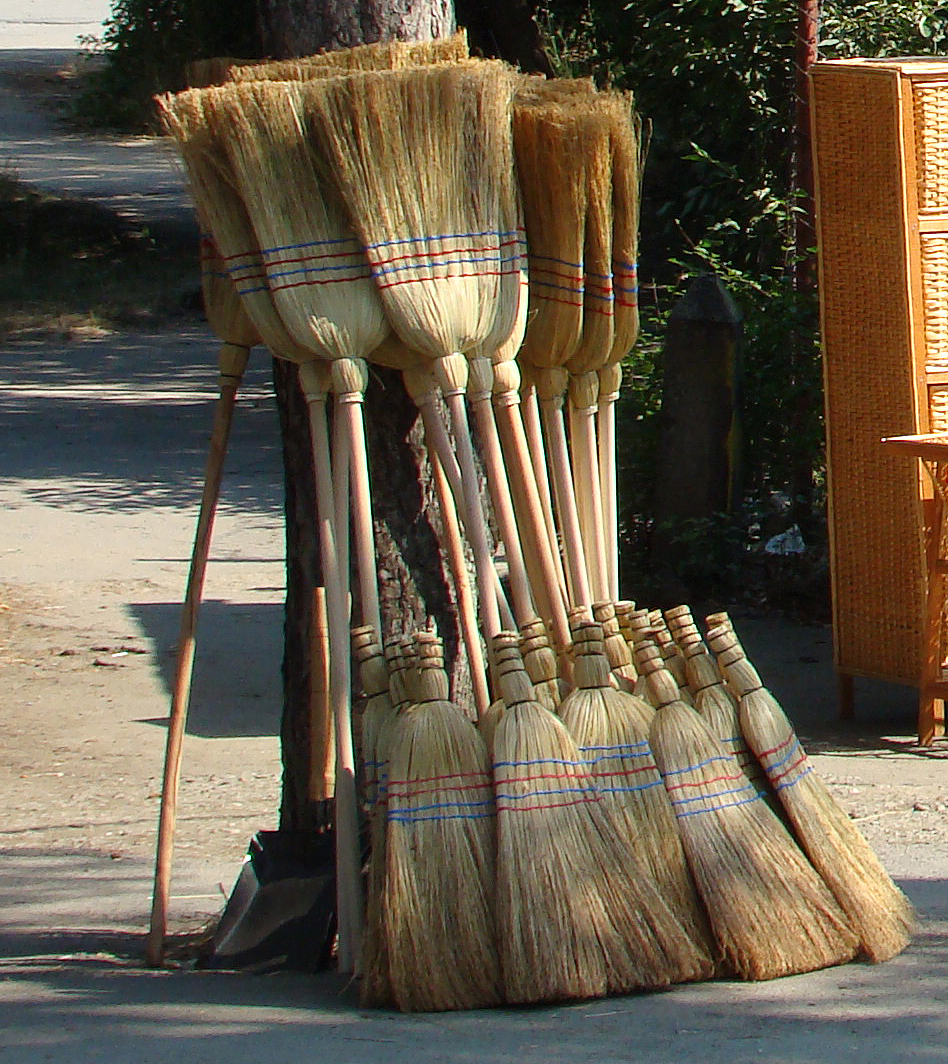
A broom.
Not a beautiful broom, not an antique broom with sentimental value, not even a new broom with fancy bristles. Just a cheap, plain, utilitarian broom—the kind you buy at the hardware store when you need something functional and forgettable.
I stared at it, trying to process what I was seeing. Around me, the silence stretched like a held breath.
Then Alex delivered the punchline.
“So you don’t forget your place!” he announced, his voice carrying to every corner of the room.
The laughter started immediately. Not the warm, affectionate chuckles of people sharing a gentle family joke, but the sharp, knowing laughter of people who understood exactly what was being said and approved of it.
Sarah giggled behind her hand. Alex’s business partners snorted with amusement. Even the neighbors—people who’d known me for twenty years—were smiling and nodding like they’d just witnessed something clever.
I stood there holding a broom in front of a room full of people who found it hilarious that my own son had just reduced me to a cleaning lady on my seventieth birthday.
That’s when something inside me snapped.
Not broke—snapped. Like a rubber band stretched too far, like a tree branch loaded with too much weight. Something fundamental and irreversible happened in that moment, and suddenly I could see everything with perfect, painful clarity.
I slowly set the broom down on the table and looked around the room at faces that were still flushed with laughter. Then I looked at my son—this forty-two-year-old man I’d raised from nothing, who was grinning at me like he’d just delivered the perfect gift.
“Do you think this is funny, Alex?” I asked quietly.
His grin faltered slightly. “Mom, it’s just a joke—”
“A joke,” I repeated, my voice growing stronger. “Everyone laughed, so it must be hilarious. Let me see if I understand the punchline.”
I picked up the broom again and held it like evidence in a courtroom.
“The joke is that your mother—the woman who raised you alone after your father abandoned us—should remember her place as the family servant. The joke is that the woman who worked two jobs to pay for your college education exists to clean up after people who can’t be bothered to say hello when they walk into her house.”
The laughter had died completely now. The room was so quiet I could hear the kitchen clock ticking.
“The joke is that on my seventieth birthday, surrounded by people I’ve fed and housed and supported for decades, the most appropriate gift my successful son can think of is a reminder that I’m here to sweep up the messes other people make.”
Alex was pale now, his mouth opening and closing without sound. Sarah had stopped giggling and was staring at her plate. Even Lily seemed to sense that something important was happening.
I stood up slowly, my arthritis protesting, and looked directly at my son.
“You know what, Alex? You’re absolutely right. I do need to remember my place. My place is not as your unpaid housekeeper. My place is not as the invisible woman who exists to make your life more convenient. My place is not standing in my own kitchen while my own family treats me like hired help they don’t have to pay.”
I moved around the table, still holding the broom, my voice growing steadier with each word.
“Let me tell you about my place, since you seem confused about it. My place was working double shifts at the diner so you could have new school clothes. My place was staying up all night when you had pneumonia at age seven, because I couldn’t afford to miss work to take you to the doctor. My place was selling my wedding ring to pay for your college textbooks, because I believed education was more important than sentimental jewelry.”
The silence was deafening now. I could see people shifting uncomfortably in their seats, suddenly very interested in their coffee cups and dessert plates.
“My place was sacrificing every luxury, every comfort, every dream I ever had for myself so that you could have opportunities I never did. My place was loving you unconditionally even when you grew up to be the kind of man who humiliates his mother in front of strangers for entertainment.”
I stopped directly in front of Alex, who was now visibly shaking.
“But you’re right about one thing. I do need to remember my place. And my place is not in a house where my own son treats me with contempt. My place is not at a table where people laugh while I’m being degraded. My place is not anywhere that I have to accept cruelty disguised as humor.”
I set the broom down very carefully and looked around the room one final time.
“So here’s what’s going to happen. You’re all going to leave. Right now. And you’re not going to come back until you can treat me with the basic respect that any human being deserves—not because I’m your mother or your mother-in-law or your neighbor, but because I’m a person who has value beyond what I can do for you.”
The silence that followed was different from any quiet I’d ever heard. It was the silence of people realizing they’d just witnessed something they couldn’t take back or pretend didn’t happen.
Sarah was the first to move, gathering her purse with shaking hands. “Come on, Lily,” she whispered. “We need to go.”
But Lily didn’t move. She was staring at me with wide, serious eyes.
“Grandma,” she said in a small voice, “are you sad?”
I knelt down to her level, my heart breaking for this innocent child caught in the wreckage of adult failures.
“Yes, sweetheart, I am sad. But sometimes being sad helps us understand important things.”
“Like what?”
“Like the difference between people who love you and people who just want you to serve them.”
She nodded solemnly, then did something that nearly destroyed my composure. She reached into her pocket and pulled out a small wrapped package.
“I got you a real present,” she whispered, pressing it into my hands. “Mommy said we didn’t have time to wrap it nice, but I wanted you to have something pretty.”
Inside was a small glass figurine of an angel with silver wings. Probably cost three dollars at the drugstore, probably chosen by a six-year-old who just wanted her grandmother to smile.
It was the most beautiful gift I’d received in years.
“Thank you, Lily,” I whispered, kissing her forehead. “This is perfect.”
One by one, the guests filed out. No one spoke. No one met my eyes. No one apologized.
Alex was the last to leave. He stood in my doorway for a long moment, looking like a little boy who’d just realized he’d done something terrible but didn’t know how to fix it.
“Mom,” he started, his voice cracking slightly.
“Not today, Alex,” I said firmly. “Today you need to think about what kind of man you’ve become. When you’re ready to have a real conversation—one that starts with a genuine apology and includes some serious changes—you know where to find me.”
He opened his mouth as if to argue, then closed it and walked away.
I closed the door behind him and leaned against it, suddenly exhausted. My house was quiet again, but it felt different now. Not empty—liberated.
I looked around at the aftermath of my birthday party: dirty dishes, half-eaten cake, and one cheap broom lying on my dining room table like evidence of a crime.
Then I started laughing.
Not the bitter laughter of someone who’d been hurt, but the incredulous laughter of someone who’d just realized how absurd her life had become. I’d spent seventy years learning to love people who saw me as a convenience. I’d spent decades sacrificing my dignity for the privilege of being taken for granted.
And it had taken a five-dollar broom to finally wake me up.
I picked up the broom and carried it to the kitchen. Then I did something I probably should have done years ago.
I put it in the closet and left the dishes in the sink.
For the first time in seven decades, Margaret Walsh was off duty.
The next morning brought an unexpected gift: silence. No phone calls demanding my attention, no visits from family members who needed something, no obligations pulling me in twelve different directions.
Just me, a cup of coffee, and the novel realization that I could spend my day however I wanted.
I’d forgotten what that felt like.
I called my doctor and made an appointment for the physical I’d been putting off for two years. I called the community college and asked about their art classes. I called my old friend Helen, who I hadn’t seen since Alex’s wife decided she was “too negative” for family gatherings.
“Margaret!” Helen’s voice was warm with surprise. “I was just thinking about you. How are you, dear?”
“Honestly? I’m better than I’ve been in years.”
I told her about the broom, about the birthday that became a declaration of independence, about the strange freedom of finally saying no to people who’d never learned to hear it.
“Good for you,” Helen said firmly. “You know, I’ve been wondering for years when you’d finally stand up to that boy of yours.”
“You never said anything.”
“You weren’t ready to hear it. Now you are.”
We made plans to have lunch that weekend—the first social engagement I’d made for myself in months.
Over the following weeks, my house stayed quiet. Alex didn’t call. Sarah didn’t drop by with laundry for me to do. Even the neighbors seemed to be avoiding me, as if my newfound backbone might be contagious.
I discovered I didn’t miss the chaos.
Instead, I took the art class. I learned to paint watercolors—clumsy at first, then with growing confidence. I painted my garden, my cat, the view from my kitchen window. Each small canvas felt like a reclaimed piece of myself.
I joined a book club at the library, full of women my age who had stories and opinions and lives that didn’t revolve around their ungrateful children. I learned about places I’d never traveled and books I’d never had time to read.
I volunteered at the animal shelter, where the dogs and cats needed care but never criticized my cooking or forgot to say please and thank you.
Slowly, carefully, I began to remember who Margaret Walsh had been before she became everyone’s convenient solution to inconvenient problems.
Three months after my birthday, Alex finally called.
“Mom? It’s me.”
His voice was different—smaller somehow, less sure of itself.
“Hello, Alex.”
“I… I wanted to talk to you. Could I come over?”
“That depends. Are you coming to apologize, or are you coming to explain why what you did was actually my fault?”
Silence on the other end of the line.
“To apologize,” he said finally. “Really apologize. If you’ll let me.”
I considered it. Part of me wanted to say no, wanted to let him understand what it felt like to be shut out by someone who’d once loved you unconditionally. But part of me—the part that remembered holding him when he was sick, teaching him to ride a bike, believing he would grow up to be better than his father—wanted to hear what he had to say.
“You can come,” I said. “But Alex? I’m not the same woman you left here three months ago. Don’t expect me to pretend that what happened didn’t matter.”
“I know, Mom. I know.”
He arrived that evening carrying flowers—not the expensive arrangements he used to grab from the grocery store at the last minute, but a small bouquet of daisies that looked like he’d chosen them carefully.
He was thinner than I remembered, and there were dark circles under his eyes that spoke of sleepless nights and difficult conversations.
“Hi, Mom.”
“Alex.”
We sat in my living room, the same room where he’d humiliated me in front of a dozen people. But the dynamic was different now. I was no longer the woman desperately seeking approval from her son. I was Margaret Walsh, and I was worth more than a broom.
“I’ve been thinking,” he began, his voice unsteady. “About that day. About what I did. About who I’ve become.”
I waited.
“Sarah left me,” he said quietly. “Two weeks after your birthday. She said I was cruel and disrespectful, and she didn’t want Lily growing up thinking it was normal for men to treat women that way.”
I felt a stab of sympathy for little Lily, caught between her parents’ failures. But I felt no sympathy for Alex.
“I’m sorry to hear about your marriage,” I said carefully. “But I hope you’re not here because you need me to help you fix it.”
“No,” he said quickly. “No, Mom, that’s not why I’m here. I’m here because I finally understand what I lost that day.”
He looked at me directly for the first time since he’d arrived.
“I lost my mother. Not because you died, but because I killed the relationship with my own selfishness and cruelty. I turned the woman who sacrificed everything for me into a servant, and then I mocked her for serving.”
Tears were running down his cheeks now, and I felt something soften in my chest despite myself.
“I don’t know how to fix this,” he whispered. “I don’t know how to undo forty years of taking you for granted. But I want to try. If you’ll let me.”
I studied his face, looking for signs of manipulation or self-pity. Instead, I saw genuine remorse and something that looked like humility.
“What does ‘trying’ look like to you, Alex?”
“It looks like treating you like a person instead of a resource. It looks like saying please and thank you and asking how you’re doing before I tell you what I need. It looks like understanding that your time and energy and love aren’t unlimited, and I have no right to demand them.”
He paused, wiping his eyes.
“And it looks like admitting that the broom wasn’t a joke. It was cruelty. It was my way of putting you in your place because I was too immature and selfish to appreciate what you’d given me.”
I sat quietly for a long moment, feeling the weight of four decades of motherhood and all the ways love can be twisted into something destructive when it’s not balanced with respect.
“Alex,” I said finally, “I will always be your mother. But I am not your servant. I will not go back to being the woman who exists to make your life easier while you make mine harder.”
“I understand.”
“I’m not sure you do. But here’s what I’m willing to offer: we can start over. Not as the mother and son we were, but as the adults we are now. You’ll treat me with the same courtesy you’d show any other person you respect. I’ll treat you with the same kindness I’d show any other person I care about.”
I looked at him seriously.
“But understand this: the days of me dropping everything to solve your problems are over. The days of you showing up here expecting me to cook and clean and listen to your complaints without offering anything in return are finished. If you want a relationship with me, it will be a relationship between equals.”
He nodded, wiping his nose with the back of his hand like the little boy he used to be.
“What about Lily?” he asked. “I know Sarah is angry, but Lily keeps asking when she can see Grandma again.”
For the first time since he’d arrived, I smiled.
“Lily is always welcome here. She’s the only one who remembered to bring me a real birthday present.”
We talked for another hour—carefully, cautiously, like two people learning a new language. When Alex left, he hugged me goodbye, and for a moment I remembered the child he’d been before life taught him that love was something you could take for granted.
Six months later, we were still learning how to be family without me being the sacrifice that held everything together. Alex visited regularly but called first. He brought groceries when I needed them but didn’t assume I would cook them for him. He asked about my art classes and my book club and the volunteer work that made me feel useful without feeling used.
It wasn’t the relationship we’d had before. It was better.
Lily came for sleepovers where we painted pictures and read stories and made cookies that we didn’t have to share with anyone else. She never mentioned the day her father gave her grandmother a broom, but sometimes she would hug me extra tight and whisper, “I love you, Grandma.”
Sarah and I maintained a cordial distance. I understood her anger at Alex, but I also understood that sometimes people have to break before they can learn to bend.
One evening, as I was cleaning my brushes after a particularly satisfying painting session, Alex called.
“Mom? I just wanted to say thank you.”
“For what?”
“For not giving up on me. For loving me enough to let me fall down so I could learn to stand up properly.”
I smiled, looking at my latest painting—a self-portrait of a woman with silver hair and knowing eyes, surrounded by flowers she’d planted herself.
“That’s what real love looks like, Alex. It’s not about making life easy for people. It’s about helping them become strong enough to handle whatever life brings.”
“I’m still learning,” he admitted.
“We all are, sweetheart. We all are.”
That night, I put my brushes away and looked around my quiet house. On the mantle sat Lily’s little angel, watching over a home that was finally peaceful. In the closet, the broom Alex had given me gathered dust—not because I was too good to clean my own house, but because cleaning was now something I did for myself, not something I was expected to do for everyone else.
I’d learned that the most important place to remember is your own worth. Everything else is just details.
And sometimes, if you’re very lucky, the people who love you learn to remember it too.

Lila Hart is a dedicated Digital Archivist and Research Specialist with a keen eye for preserving and curating meaningful content. At TheArchivists, she specializes in organizing and managing digital archives, ensuring that valuable stories and historical moments are accessible for generations to come.
Lila earned her degree in History and Archival Studies from the University of Edinburgh, where she cultivated her passion for documenting the past and preserving cultural heritage. Her expertise lies in combining traditional archival techniques with modern digital tools, allowing her to create comprehensive and engaging collections that resonate with audiences worldwide.
At TheArchivists, Lila is known for her meticulous attention to detail and her ability to uncover hidden gems within extensive archives. Her work is praised for its depth, authenticity, and contribution to the preservation of knowledge in the digital age.
Driven by a commitment to preserving stories that matter, Lila is passionate about exploring the intersection of history and technology. Her goal is to ensure that every piece of content she handles reflects the richness of human experiences and remains a source of inspiration for years to come.