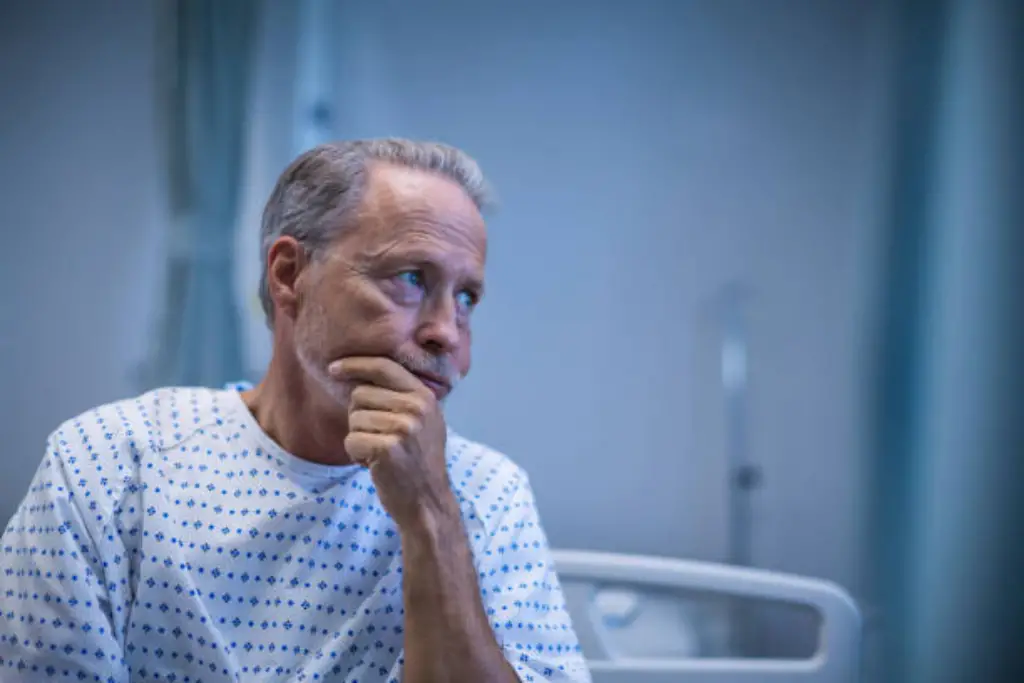
I woke from the darkness with a weight pressing against my chest and the mechanical rhythm of machines breathing for me. My eyelids refused to open, heavy as stones, yet somewhere beneath the fog my mind began to stir and reassemble itself. Sound returned first—the steady beep of monitors, the soft hiss of oxygen, the rustle of fabric. Then voices. Familiar voices that I knew better than my own heartbeat. The voices of my children.
“As soon as she passes, we send Dad to a long-term care facility,” a man said in a low tone, measured and clinical. The voice belonged to my son Aaron, though it carried none of the warmth I remembered from bedtime stories and baseball games. “He won’t notice anything in his condition. The doctors already said he might never wake up. Even if he does, the stroke damage will be severe. He’ll be a vegetable.”
A woman exhaled with sharp impatience. My daughter Bianca. I recognized the sound she’d made since she was a teenager whenever something inconvenienced her. “And after that we sell the house quickly. The market is good right now. We could get eight hundred thousand, maybe more. It’ll be so much easier once both of them are out of the way. We just need to act devastated for a few weeks. People expect that. Then we move on.”
Cold spread through me faster than any medicine flowing through my veins. I wanted to open my eyes, to sit up, to scream at them that I could hear every word. Instead I remained perfectly still, trapped in my unresponsive body, listening to every cruel syllable. The children Lucinda and I had raised with endless sacrifices—the children we’d worked two jobs to put through college, the children whose weddings we’d helped pay for, whose mistakes we’d forgiven, whose dreams we’d supported—were discussing our disappearance like a real estate transaction.
“What about the insurance?” Aaron asked. I could picture him checking his phone, already calculating figures. “Dad’s policy is what, three hundred thousand?”
“Three fifty,” Bianca corrected. “Plus Mom’s is another two hundred. The 401k accounts, the investment portfolio Dad built up—we’re looking at over a million total, easily. Maybe closer to one point five if we’re smart about it.”
“We’ll need to be careful,” Aaron said. “Can’t look too eager. We play the grieving children for at least six months. Maybe a year. Then we can start actually enjoying it.”
Their footsteps moved toward the door, voices fading as they discussed which funeral home offered the best value. The room returned to the quiet hum of machines and my own thundering heartbeat. I forced myself to breathe slowly, evenly, giving no indication that I’d heard. If they knew I was awake, I had no idea what they might be capable of. Maybe nothing. Maybe everything. I couldn’t take that risk.
The doctor had told them I was unlikely to recover after the massive stroke that had put me here. They had accepted that verdict with what I now realized was suspicious speed. Our home was paid in full after thirty years of mortgage payments. Our retirement savings were solid, carefully built through decades of careful planning and sacrifice. Our insurance was generous—too generous, apparently, for our children to resist the temptation.
I had always known Aaron had a mercenary streak. He’d chosen corporate law specifically because it paid well, not because he cared about justice. Bianca had married for money the first time, love the second time, and I suspected she was already eyeing a third option now that husband number two’s startup had failed. But I never imagined they would look at their parents and see nothing but assets to be liquidated.
Late that night, when the hallway had gone quiet and the shift had changed, a nurse came in to adjust my blanket and check my vitals. I gathered every ounce of strength I possessed and parted my lips just enough to whisper.
“Please.” The word came out like gravel. “Call my wife. Tell her to speak only with me. No one else.”
The nurse—her name tag said Patricia—stared at me in shock, her hand flying to her mouth. Then she leaned close and whispered, “You’re awake. I need to get the doctor.”
“No.” I managed to make the word sharp. “Please. My children. They can’t know. Not yet. Just my wife. Please.”
Patricia looked at me for a long moment, and I saw the understanding dawn in her eyes. She’d been a nurse long enough to have seen everything. She nodded once and squeezed my hand. “I’ll call her myself. From my personal phone. Give me ten minutes.”
Lucinda arrived after midnight, her hair loose and uncombed, her eyes swollen from crying. She’d clearly thrown on whatever clothes were closest—yoga pants and one of my old Stanford sweatshirts that she wore when she needed comfort. Patricia led her in and closed the door firmly behind her, stationing herself outside like a guard.
When I told Lucinda what I’d heard, she covered her mouth to hold back a scream. Tears rolled silently down her cheeks, and I watched fifty years of motherhood shatter in her eyes. We’d raised those children. We’d sacrificed everything for them. Lucinda had given up her career as a teacher to stay home when they were young. I’d worked seventy-hour weeks to make sure they never wanted for anything. We’d been there for every school play, every soccer game, every tearful breakup and triumphant achievement.
“What did we do wrong,” she whispered, her voice breaking. “How did they become this? Were we too soft? Too generous? Did we fail them somehow?”
“We gave them everything,” I said quietly, my voice still rough from disuse. “Maybe that was the problem. They never learned to value what they didn’t earn.”
“What do we do?” She gripped my hand like I was the only solid thing in a collapsing world. “Do we confront them? Do we—”
“We leave,” I interrupted. “Before sunrise. No arguments. No discussions. We disappear.”
She stared at me like I’d suggested we fly to the moon. “David, you just had a massive stroke. You’re in a hospital bed. You can’t just—”
“Watch me.” I pressed the call button. When Patricia entered, I said, “I want to leave. Against medical advice if necessary. What do I need to sign?”
Patricia looked between us, then nodded slowly. “I’ll get the paperwork. And I’ll make sure the cameras in this hallway have a convenient malfunction for the next hour. You never know when these old systems will glitch.”
And that was exactly what we did.
By dawn I had signed discharge papers that released the hospital from all liability. Patricia helped coordinate everything with the kind of efficiency that suggested she’d helped other patients escape before—though probably not from their own children. A private ambulance company she trusted transferred me to a small clinic outside the city, one that catered to patients who valued discretion. From there, a driver took us directly to a private airfield where I’d arranged a charter flight using a credit card my children didn’t know existed.
Our children returned to the hospital later that morning with flowers and rehearsed grief, probably planning to sit vigil beside my bed while discussing paint colors for the house they’d sell. My bed was empty. A nurse—not Patricia, who’d conveniently switched shifts—simply told them I’d been discharged early for private care at an undisclosed facility. Hospital policy, she explained with bureaucratic sympathy. Privacy laws. She couldn’t say more.
They never saw us again that day. They never imagined we were already thirty thousand feet above the Atlantic, flying toward a continent they didn’t know we’d ever dreamed of visiting.
When the plane lifted above the clouds and the eastern seaboard disappeared below us, I closed my eyes. My heart felt like it had been wrapped in barbed wire, yet a strange clarity settled over me. The betrayal was real. The escape was real. Everything we’d built was ashes. But we were alive, and we were free, and that was something.
Lucinda sat beside me, her hand gripping mine, staring out the window at an endless expanse of blue. “Where are we going?” she finally asked.
“Valparaíso,” I said. “Chile. Remember? I told you once I wanted to see the ocean there before I died.”
“I remember.” Her voice was soft. “I never thought we’d actually go.”
“Neither did I. I certainly never expected it would be because we were running from our own children.” The words tasted bitter.
We landed in Santiago and took a smaller plane to Valparaíso, a port city perched on steep hillsides overlooking the Pacific. I had researched it years ago for a retirement trip we’d never taken, always putting it off for one reason or another. The children had needed help with down payments. There had been grandchildren’s college funds to contribute to. There had always been something.
The air smelled of salt and sunlight when we stepped off the plane. Colorful houses—pink and yellow and bright blue—clung to the hillsides like stubborn hope. The city moved slowly, as if it had no interest in our past and no judgment about our present.
We rented a small apartment through a contact I’d made online, someone who specialized in helping people who needed to disappear for various reasons. The apartment came furnished with simple, clean furniture and a balcony overlooking the harbor. Fishing boats rocked gently below. Church bells rang in the distance. The whole place felt like it existed in a different century, far removed from the digital surveillance and relentless connectivity of American life.
But freedom did not erase shock, and distance did not heal trauma. Lucinda woke from nightmares every night, gasping and reaching for me, convinced we were back in that hospital room hearing those terrible words. I spent hours on legal documents, my laptop screen casting blue light across our small kitchen table as I worked to protect what remained.
I revoked every power of attorney we’d granted. I changed beneficiaries on every account, replacing our children’s names with charities we’d supported for years. I moved funds into accounts at Chilean banks, beyond the reach of American court orders. I hired a lawyer in Santiago who specialized in international estate planning. Every signature reminded me of what had broken, but also of what I was protecting.
One afternoon Lucinda watched me struggle to pour coffee with my left hand, which still trembled from the stroke. My right side had mostly recovered, but my left remained weak and uncertain.
“Do you think they ever loved us,” she asked quietly, not looking up from the book she wasn’t really reading.
I set down the coffee pot carefully. “I think they loved the idea of us. The parents who would always be there. The safety net. The inheritance.”
“That’s not the same thing.”
“No. It’s not.”
We had attended every school event, even the ones that bored us to tears. We had paid tuition without complaint. We had stayed up through fevers and heartbreaks and teenage rebellion. We had done what parents do—what we thought good parents were supposed to do. And still they had chosen greed over gratitude, inheritance over integrity.
To distract ourselves, we walked the steep streets of Valparaíso. Vendors sold fresh fruit from carts. Old men played chess in small plazas. Street artists painted murals on weathered walls. Strangers greeted us with warm smiles and “buenos días” even though our Spanish was terrible. The world felt large again, full of people living their lives without the poison of betrayal. Yet the wound inside remained, deep and tender.
One night my phone—the new one I’d purchased with cash at a small shop in Santiago—lit up with a familiar number. Bianca. Lucinda froze across the room, her wine glass halfway to her lips. I let it ring until silence returned. Seconds later a message appeared.
“Father please call me. It is urgent.”
I deleted it without reading it again.
The next morning an email arrived to an account I’d thought was secure.
“We know you are alive. We need to talk. This is serious.”
My stomach tightened. Had they found us? Had someone betrayed our location? Had I left a digital trail I’d thought was covered? I closed the laptop and suggested a walk. Lucinda sensed the fear but didn’t push me to explain until we were sitting on a bench overlooking the harbor, far from any devices that might be listening.
By the water, watching ships drift toward distant horizons, I realized the truth. Disappearing was not an ending. It was only the first move in a long game.
The following weeks became a dance of shadows. New emails arrived at different addresses. Missed calls from numbers I recognized and numbers I didn’t. Aaron tried a different approach, his message appearing on LinkedIn of all places.
“You cannot hide forever. Call me. You will regret this. We can work this out.”
Regret. The word ignited something new inside me. After what he’d said beside my hospital bed, after he’d discussed my death like a financial opportunity, he had the audacity to tell me I would regret protecting myself. Not panic anymore. Not sorrow. Anger. Quiet and sharp and clarifying.
I blocked every contact. I deleted every message. I changed email addresses again. Yet the weight remained, the constant awareness that somewhere thousands of miles away, my children were hunting for us like we were prey.
One evening Lucinda sat beside me on our balcony. The sunset painted the ocean gold and orange, and fishing boats were returning to harbor with their day’s catch. It should have been peaceful. It should have been beautiful. Instead it felt like we were waiting for the other shoe to drop.
“You are carrying all of this alone,” she said. “You need to talk to me.”
So I did. I told her about the shame I felt—shame that my children had become people I didn’t recognize, shame that I’d somehow failed as a father despite trying so hard. I told her about the disbelief that still struck me at odd moments, the surreal sense that this couldn’t really be happening. I told her about the twisted love that still existed despite everything, the parental instinct that made me want to protect them even as I protected myself from them.
She held my hands and said something I needed to hear: that survival sometimes meant choosing peace over blood ties, that family was supposed to be sanctuary not siege, and that walking away from toxic people—even if they shared your DNA—wasn’t failure. It was self-preservation.
Peace came slowly, like learning to walk again after the stroke. Then a letter arrived from my cousin Esteban in Miami, forwarded through three addresses to reach us.
“Your children are calling everyone in the family. They claim you are mentally unfit, that you are being manipulated by scammers or that you have dementia. They are trying to get court orders to access your medical records and financial accounts. They have hired a lawyer. Be very careful.”
I folded the letter, my hands shaking with something beyond stroke damage. This was war. That night I contacted the lawyer in Santiago again. We worked through the night to finalize protections that would lock our estate away from Aaron and Bianca forever. I wrote a detailed statement describing everything I had heard in that hospital room, including dates, times, and specific quotes. I signed it. I had it notarized. I sealed it with instructions that it be opened if anything happened to Lucinda or me under suspicious circumstances.
This was not revenge. This was defense. This was making sure that if my children wanted my money, they would have to wait until I was actually dead—and even then, they would be disappointed.
I also did something else. I hired a private investigator in the United States to document my children’s activities. Within two weeks I had photographs of Aaron meeting with estate lawyers, copies of court filings attempting to have me declared mentally incompetent, and transcripts of voicemails they’d left with various family members claiming I’d been kidnapped or was being held against my will.
The investigator’s final report was damning: “Your children are engaged in a coordinated campaign to gain control of your assets by having you declared legally incompetent. They have made false claims to medical professionals, family members, and legal authorities. You were wise to remove yourself from their reach.”
I sent copies of this report to my lawyer with instructions to release it publicly if my children continued their harassment. The messages stopped within a week.
The silence that followed felt uneasy at first, like the quiet before a storm. But gradually it became simply silence—empty of threat, full of possibility.
Lucinda and I rebuilt our life piece by piece. We found a local market where we bought fresh bread and vegetables each morning. We learned enough Spanish to have simple conversations with our neighbors. We discovered a café where the owner, Rosa, made the best empanadas we’d ever tasted and didn’t ask questions about why two Americans had suddenly appeared in her city.
We learned the rhythms of Valparaíso—the morning fog that rolled in from the ocean, the afternoon warmth that sent everyone indoors for siesta, the evening breezes that made the balcony perfect for watching sunsets. We learned which streets were too steep for my weakened left side and which offered handrails and places to rest. We learned that healing happened slowly, in moments so small you almost missed them.
One afternoon about six months after we’d arrived, I realized I’d gone an entire day without thinking about Aaron and Bianca. The realization hit me while I was watching Lucinda haggle cheerfully with a fruit vendor in broken Spanish, laughing when she got the words wrong. She looked lighter somehow, younger, like the woman I’d married fifty-three years ago before mortgages and parenthood and responsibility had settled on our shoulders.
That night on our balcony, I told her what I’d realized.
“I think we might actually be happy here,” I said. “Is that wrong? Should we feel guilty about being happy when our children—”
“Don’t.” She cut me off gently. “Don’t give them that power. They made their choices. We made ours. We chose life. We chose each other. We chose peace. There’s no guilt in that.”
“I still love them,” I admitted. “Some part of me always will. They’re my children.”
“I know. I do too. But loving someone doesn’t mean letting them destroy you. We can love them from a distance. A very great distance.”
We sat in comfortable silence, holding hands, watching the harbor lights flicker on as darkness settled over the water.
One year after our escape, I stood on that same balcony watching ships drift toward distant horizons. My body had recovered remarkably well—the physical therapist I’d found in Santiago said I’d regained ninety percent of my function, far better than expected. My heart had not fully healed, and perhaps it never would. But I was alive. I was free. And I was learning that those two things were enough.
Sometimes I wondered if Aaron and Bianca ever felt guilt. Sometimes I wondered if they told themselves a story where we were the villains who’d abandoned them, where they were the victims of paranoid parents who’d cut them off without reason. Sometimes I wondered if they even remembered what they’d said in that hospital room, or if they’d rationalized it away as something taken out of context or misunderstood.
I no longer needed answers to those questions.
I had learned a brutal truth that I wished I’d never had to learn: parenthood does not guarantee gratitude. Love does not guarantee loyalty. Sacrifice does not ensure appreciation. And survival sometimes requires walking away from the very people you once trusted most.
If someone had told me five years ago that I would flee from my own children to protect my wife and myself, I would have called it impossible. I would have said that could never happen to our family, that we’d raised our children better than that, that blood was thicker than greed.
Yet here I was. Breathing ocean air. Holding Lucinda’s hand. Choosing peace every single day.
Rosa from the café had invited us to her daughter’s wedding. Esteban had visited us twice, marveling at how healthy I looked and how our “retirement adventure” had transformed us. We’d made friends with a couple from Germany who were also starting over in Valparaíso. We’d built a small, quiet life full of simple pleasures—morning coffee, afternoon walks, evening conversations, the kind of life we’d always said we’d have someday.
Someday had arrived, though not in the way we’d planned.
I turned from the balcony and went inside to where Lucinda was making dinner. She looked up and smiled, and I was struck by how much I’d almost lost. If I’d died in that hospital bed, she would have been alone, vulnerable, probably pressured into signing documents and making decisions while drowning in grief. My children would have gotten exactly what they wanted.
Instead, I was here. We were here. Safe and scarred but surviving.
When I woke from that coma and heard the future they’d planned for us, I’d refused to die quietly. I’d chosen life. I’d chosen dignity. I’d chosen escape. I’d chosen the woman I’d loved for more than half a century over the children who’d forgotten how to love us back.
The rest of the story belonged to the sea—to the rhythm of waves and the cry of gulls and the slow passage of ships across distant waters. It belonged to sunsets on a balcony and fresh empanadas from Rosa’s café and the gradual healing that comes from knowing you made the right choice, even when the right choice breaks your heart.
It belonged to us.

Ethan Blake is a skilled Creative Content Specialist with a talent for crafting engaging and thought-provoking narratives. With a strong background in storytelling and digital content creation, Ethan brings a unique perspective to his role at TheArchivists, where he curates and produces captivating content for a global audience.
Ethan holds a degree in Communications from Zurich University, where he developed his expertise in storytelling, media strategy, and audience engagement. Known for his ability to blend creativity with analytical precision, he excels at creating content that not only entertains but also connects deeply with readers.
At TheArchivists, Ethan specializes in uncovering compelling stories that reflect a wide range of human experiences. His work is celebrated for its authenticity, creativity, and ability to spark meaningful conversations, earning him recognition among peers and readers alike.
Passionate about the art of storytelling, Ethan enjoys exploring themes of culture, history, and personal growth, aiming to inspire and inform with every piece he creates. Dedicated to making a lasting impact, Ethan continues to push boundaries in the ever-evolving world of digital content.