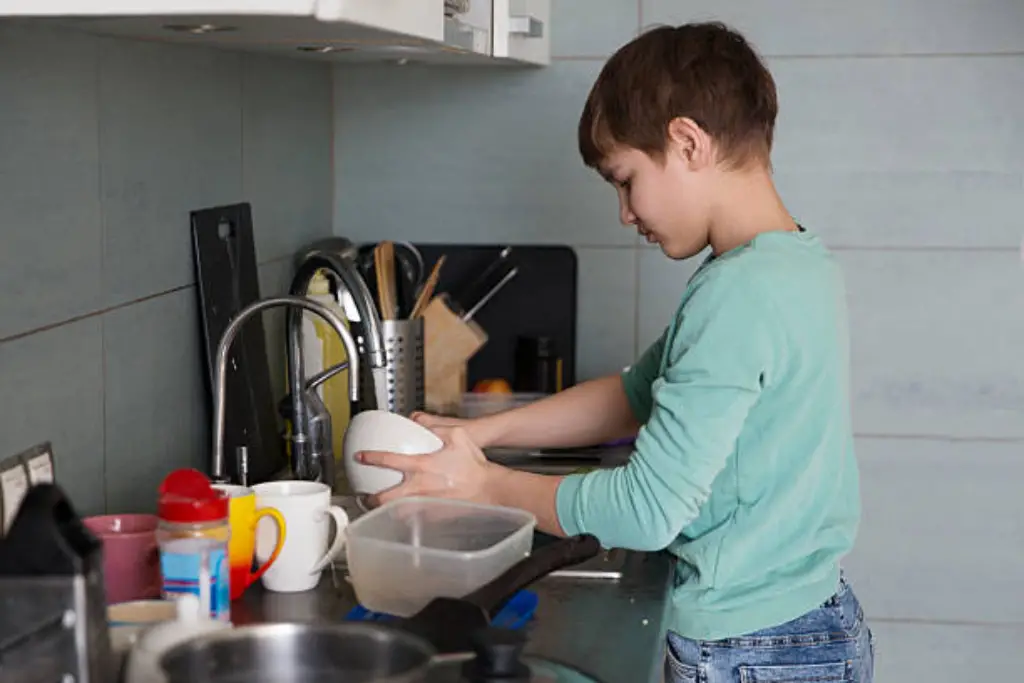
I was at the sink one Thursday afternoon, wrist-deep in soapy water, when my mother decided I was helping around the house too much. The irony of that statement would have been funny if it hadn’t been so utterly predictable. She marched up to the countertop I’d just scrubbed spotless—still damp, still smelling of bleach—and shoved a piece of paper toward me like it was a legal summons.
“It’s time for you to stop overstepping,” she said, her voice sharp enough to cut. “This states you will do exactly fifty percent of everything this family needs. No more, no less.”
My father materialized behind her, arms crossed, wearing that smug grin he got whenever he thought he’d outmaneuvered someone. They stood there like a unified front, like parents who actually parented, when the truth was I’d been running this household since I was seventeen years old.
I looked down at the paper. It was typed, printed on our ancient inkjet, the kind of document someone creates when they want their pettiness to look official. “Household Responsibility Agreement,” it said at the top, followed by a list of chores divided mathematically down the middle. Fifty percent cooking. Fifty percent cleaning. Fifty percent childcare. Fifty percent of everything, calculated and assigned like I was a business partner being bought out of the company I’d built with my own exhausted hands.
The absurdity should have made me laugh. Instead, something inside me went very still and very cold.
I’d dropped out of high school at seventeen—not because I wanted to, but because someone needed to keep my younger siblings alive while our parents chased whatever high or drama or chaos suited them that week. I’d cooked every meal, scrubbed every dish, helped with every homework assignment, packed every lunch, signed every permission slip with a forged signature because my parents couldn’t be bothered to show up for parent-teacher conferences or school functions or anything that required them to be sober and present.
And now, after years of sacrifice, after giving up my education and my future and any semblance of a normal teenage life, they were putting me “in my place” with a contract that limited how much I was allowed to care.
I looked from the paper to my siblings standing in the doorway. Amy, sixteen, and Finn, fourteen, both smirking like they’d just witnessed their older sibling get taken down a peg. They’d never appreciated what I did for them—the hot meals, the clean clothes, the fact that they got to stay in school while I didn’t. All they saw was someone bossing them around, making them do chores they thought were beneath them.
The only person who looked genuinely distressed was Amelia, my ten-year-old sister, standing beside me and gripping my hand so tightly her knuckles had gone white. She was small for her age, quiet in the way children become when they learn early that speaking up only makes things worse. Her eyes were wide and frightened, like she could sense something breaking that couldn’t be put back together.
I picked up the pen my mother had placed pointedly on the counter. I signed my name on the designated line, my handwriting steady despite the rage burning in my chest.
“You’re right,” I said, my voice calm and measured. “Thank you for putting me in my place.”
My mother’s expression flickered with something—surprise, maybe, that I wasn’t arguing. My father’s grin widened. Amy and Finn exchanged victorious looks, already imagining a future where they could sleep in on weekends and leave dishes in the sink without consequence.
“Thank goodness,” they said almost in unison, like they’d rehearsed it.
Amelia’s grip on my hand tightened even more. I looked down at her, at her worried face and the way she was biting her lower lip to keep from crying, and something in my heart cracked. But I didn’t let it show. I just squeezed her hand back, a silent promise that I’d figure this out somehow, and then I let go and walked away from the kitchen that had been my domain for three years.
The next morning, I made myself breakfast and nothing else. Just eggs and toast for one person, cooked in a single pan, plated on a single dish. I sat at the kitchen table eating slowly, deliberately, while my siblings wandered in one by one and stared at the empty stove like it might spontaneously generate pancakes out of guilt.
Amy was the first to break the silence. “Where’s breakfast?”
I gestured to the paper still taped to the refrigerator, my mother’s proclamation displayed like a trophy. “That’s more than fifty percent of the cooking, Amy. I’m sure Mom will help you figure it out.”
The look that crossed her face was almost worth the years of thankless work. Almost. It was confusion mixed with outrage, the expression of someone who’d never actually considered that actions might have consequences. She opened her mouth to argue, then seemed to realize she had no ground to stand on. The rules were the rules, after all. That’s what they’d wanted.
Finn stumbled in next, still half-asleep, and went directly to the cabinet where I usually kept breakfast supplies organized. He stared at the empty shelves—I’d stopped restocking them two days ago—and his face went blank with incomprehension.
“Where’s the cereal?” he demanded.
“Grocery shopping is more than fifty percent of household responsibilities,” I replied, taking another bite of toast. “Maybe you should ask Dad to take you to the store.”
Within three days, the house began to collapse like a structure that had been held together by a single support beam suddenly removed. The power got cut for several hours because the utility bill notice got buried under a pile of pizza boxes no one bothered to throw away. Nobody had thought to check the mail—that was my job, apparently, though it had never been written down anywhere. Just assumed.
Finn got suspended from school after a blowup at the playground when other kids started making comments about his hygiene. He’d worn the same shirt three days in a row, hadn’t showered, and smelled bad enough that classmates noticed. The school called home. My mother, caught off guard and unprepared, had fumbled through the conversation and promised it wouldn’t happen again. But she didn’t know how to fix it. She’d never had to learn.
Amy got detention for stealing another student’s lunch. The truth came out during the disciplinary meeting—there was no food at home. Our parents hadn’t bought groceries in over a week. The guidance counselor made a note in Amy’s file, and I wondered if anyone would actually follow up or if this would be another warning sign that slipped through the cracks.
They were all falling apart, and fast.
The only one I couldn’t stand to watch suffer was Amelia. While I held firm on the fifty percent rule with everyone else, I started sneaking her sandwiches when no one was looking. I’d find her in her room doing homework at night and quietly help her with math problems, keeping my voice low like we were conspirators. I brushed her hair before school in the mornings, whispering that she was smart and kind and not a burden, trying to counteract the neglect that was now obvious to anyone paying attention.
She moved through the house like a ghost, trying not to take up space, trying not to need anything. It broke my heart in ways I couldn’t articulate.
Two weeks into the fifty percent experiment, my parents called a family meeting. We gathered in the living room, a space that had always been more symbolic than functional—the place where we pretended to be a normal family when social workers or relatives visited. Now it just felt like a courtroom.
“This is insane,” my father started, his voice rising with each word. “You’re destroying everything just to prove a point. Look at this house. Look at your siblings. This is your fault.”
My mother’s face was streaked with tears, real ones this time, though whether they were from genuine emotion or frustration at losing her unpaid housekeeper, I couldn’t tell. “How could you do this to us?” she asked, her voice breaking. “This is your family.”
Amy, to my surprise, turned on them with fury I hadn’t seen before. “You started this stupid fifty-percent thing! You told her to stop doing so much!”
The room went silent. For a moment, I thought maybe something would change. Maybe they’d realize what they’d done, what they’d been doing for years. Maybe they’d apologize.
Instead, my mother’s face hardened into something cold and bright and mean. “If you can’t be part of this family properly,” she said, her voice like ice, “then leave. Get out.”
The words hung in the air, sharp and final. Everyone waited for me to beg, to apologize, to back down and return to my role as the family servant. They were so certain I’d break.
“Okay,” I said, standing up. “I’ll pack my things.”
The shock on their faces would have been comical in any other context. My father’s mouth actually fell open. My mother blinked rapidly, like she couldn’t process what she was hearing. Amy and Finn looked at each other, suddenly uncertain.
I walked past all of them toward my room, my heart pounding but my steps steady. I could hear Amelia crying in her room as I passed, but when I knocked softly on her door, she wouldn’t come out. I stood there for a long moment, my hand pressed against the wood, wanting to comfort her but knowing I couldn’t—not without breaking down myself.
I packed one duffel bag with clothes and essentials, grabbed my phone charger and the small amount of cash I’d hidden in my dresser drawer, and walked out of the house I’d kept running for three years. My friend Marcus had told me I could crash at his place if I ever needed to. I’d never imagined I’d actually take him up on it.
A week later, I was stocking shelves at my night job when my phone buzzed. Unknown number. I almost didn’t check it, but something made me look.
Can we meet? the text said.
Who is this? I typed back.
Amelia. Borrowed phone. Please.
My hands started shaking. I texted her back immediately, asking when and where. She suggested McDonald’s, the one near her school. I told her I’d be there tomorrow at three-thirty.
I barely slept that night, my mind spinning through worst-case scenarios. Amelia wouldn’t reach out unless something was seriously wrong. She was too careful, too afraid of making waves.
The next afternoon was eighty-five degrees, humid enough that the air felt thick. I got to McDonald’s early, bought two orange juices and some fries, and waited in a booth by the window. When Amelia walked in, my stomach dropped.
She was wearing a thick hoodie with the hood pulled up, despite the heat. Her face was pale, her eyes red-rimmed like she’d been crying. She moved carefully, like someone who’d learned to minimize their presence, and when she slid into the booth across from me, she wouldn’t meet my eyes.
“Amelia,” I said gently. “What’s going on?”
She glanced around the restaurant first, nervous, checking to see if anyone was watching. Then, slowly, she pushed the hood back.
I had to physically force myself not to gasp. Her hair was uneven in patches, like it had been pulled hard enough to leave spots thin and bare. Some sections were matted. Others looked like they’d been cut with dull scissors. When she reached for the orange juice I’d bought her, her sleeve slipped up, and I saw faint circular marks on her forearm—not fresh, but not old enough to have faded completely. Burn marks, I realized with horror. Cigarette burns.
“Amelia…” My voice came out strangled. “What happened?”
She yanked her sleeve down quickly, panic flashing across her face. “I’m the only one who can’t do my chores right,” she said, matter-of-fact, like she was explaining a simple math problem. Like this was normal.
“Amy and Finn don’t live there anymore,” she added, staring at the table. “Grandma took them after the school called about Finn’s suspension. It’s just me now.”
My mind raced, trying to process this information. Grandma had taken Amy and Finn but not Amelia? Why would they split up the kids?
“I have to do every chore perfectly,” Amelia continued, her voice barely above a whisper. “If I mess up, I…” She trailed off, her whole body starting to tremble.
Then she glanced down at the borrowed phone like it had just betrayed her. Her face went white.
“I only have twenty minutes,” she whispered urgently. “I have to go. I’m late.”
“Late for what?” I reached across the table, trying to catch her hand gently.
Her eyes filled with tears. “Please let me go,” she begged, her voice breaking. “I don’t want to go in the basement with Daddy again.”
Before I could respond, she pulled away and ran out of the McDonald’s. I sat frozen for several seconds, my brain struggling to make sense of what I’d just heard. The basement. The burns. The hair. The fear in her voice when she said “again.”
I couldn’t call CPS and hope they’d show up in time. I’d seen how that system worked—reports filed, investigations opened, weeks passing while children stayed in danger. I couldn’t call the police and trust that my parents wouldn’t manipulate the situation, wouldn’t coach Amelia into recanting, wouldn’t paint me as a bitter daughter making false accusations.
But I remembered Marco. We’d been in the same grade back in junior year before I’d dropped out. He’d cleaned up his life since then, built a legitimate security company, become someone people trusted. He’d told me once, half-joking, that he owed me a favor for helping him pass English when he’d been failing. I’d never imagined I’d need to collect.
My hands shook as I pulled out my phone.
“Marco,” I said when he answered. “Remember when you said you owed me one? I need to cash that in. Tonight.”
I explained everything—the McDonald’s meeting, the marks, the basement, the terror in Amelia’s voice. Marco listened without interrupting, and when I finished, he was quiet for a long moment.
“This is serious,” he finally said. “If what you’re telling me is true, we need to do this right. But if we’re wrong, we could both end up in jail.”
“We’re not wrong,” I said. “I saw the marks, Marco. I heard her say it.”
“Give me your parents’ address,” he said. “I’ll be there in thirty minutes with backup. We’re going to document everything, and the second we find evidence, we call 911. Understood?”
Twenty minutes later, Marco pulled up to my parents’ house in his company van with two employees—Gilbert, a former bouncer who looked like he could lift a car, and Dante, younger but solid. All three of them wore company shirts and had body cameras clipped to their vests.
“Your parents home?” Marco asked as I climbed out of my car.
I nodded, my stomach churning with fear and adrenaline.
Marco looked at his guys. “This is about a kid. We go in, we find evidence, we call it in. No vigilante bullshit. We’re witnesses, not heroes. Clear?”
They nodded.
We walked up to the front door together. I knocked, my hand trembling. My father opened it, saw me, and his face immediately darkened with rage.
“You have some nerve showing up here—”
Marco stepped forward, his presence commanding. “We need to talk about your daughter. The one you’ve been keeping in your basement.”
My father’s expression flickered—just for a second, but I saw it. Fear. “What basement? We don’t have a—”
But Gilbert had already pushed past him, and suddenly we were inside the house I’d fled two weeks ago. It smelled worse than I remembered—stale smoke, unwashed dishes, the sour tang of neglect. My mother appeared from the kitchen, her face going pale when she saw us.
“Get out!” she shrieked. “You’re trespassing! I’m calling the police!”
“Please do,” Marco said calmly, already pulling out his phone. “I’m about to do the same thing.”
Gilbert had found it—the basement door, hidden behind a bookshelf that my parents had always claimed was “too heavy to move.” He pushed it aside with one hand, and the door creaked open, revealing stairs descending into darkness.
My father started yelling about lawsuits and illegal entry and rights. My mother was crying, saying we’d broken in, that this was assault. None of it mattered. Marco was already on his phone, giving the address to 911, his voice steady as he reported a child in danger.
I followed Gilbert down the stairs, my legs shaking so badly I had to grip the railing. The smell hit me before we reached the bottom—stale, sour, wrong. The basement was smaller than I remembered from childhood, before they’d sealed it off. There was a thin mattress on the concrete floor with no sheets or blanket. A plastic bucket in the corner that I didn’t want to think about. Heavy locks on the inside of the door, the kind designed to keep someone from getting out.
And in the center of the floor, a folding chair with an old tin can sitting on it, the rim stained dark with something I recognized with sick certainty as cigarette ash.
Then I heard it—a small, broken whimper from behind a stack of boxes.
I moved around the clutter and found Amelia curled in the corner, pressed against the wall like she was trying to disappear into it. When she saw me, her whole body started shaking harder, and I realized she was terrified—not relieved. She didn’t know if I was there to save her or punish her for running away.
“Amelia,” I said, dropping to my knees. “I’m here. You’re safe now. I promise.”
She stared at me for a long moment, then threw her arms around my neck and sobbed into my shoulder. I held her, feeling how thin she’d gotten, how small she felt, while upstairs my parents shouted and Marco’s calm voice cut through their hysteria, explaining to emergency services exactly what we’d found.
Gilbert stood nearby, his camera recording everything—the mattress, the bucket, the locks, the chair, the burns on Amelia’s arms when I gently pushed back her sleeves to show him. Evidence that couldn’t be explained away or denied.
The sirens came fast. Heavy boots on the stairs, flashlights sweeping the basement, voices asking questions. A female officer knelt beside us, speaking to Amelia in gentle tones, asking if she was hurt, if she needed a doctor.
Amelia wouldn’t let go of me. She pressed her face into my shoulder and whispered over and over that she was sorry, that she’d tried to do everything right, that she didn’t mean to make anyone angry.
“This isn’t your fault,” I told her, my own voice breaking. “None of this is your fault.”
Upstairs, my mother was screaming that we’d broken in, that this was illegal, that we’d assaulted them. An officer told her calmly to sit down and be quiet. Another cop was photographing the basement, documenting every detail. An ambulance arrived, more voices layering over each other.
They asked me to step back so they could examine Amelia properly. The female officer helped her stand and guided her toward the stairs, talking to her quietly the whole time. Outside, I could see the flash of lights through the basement window—red and blue painting the walls.
An officer pulled me aside for questioning. I tried to follow Amelia, but he told me firmly that she was being taken care of and I needed to stay and explain what happened. How we knew to come here. Why we’d entered the house without permission.
I told him everything, my words tumbling out in a rush. The McDonald’s meeting. The marks. The fear in her voice. The basement she’d mentioned. How I’d been so afraid that if I waited for proper channels, it would be too late.
Marco stood nearby giving his own statement, explaining that he’d called 911 the moment we found evidence of a child in danger, that his company had body camera footage of everything. That we’d acted in good faith to save a child we believed was being tortured.
An hour later, a detective arrived—an older man with tired eyes and coffee stains on his collar. He listened to our statements, asked pointed questions about how we’d entered the home, then went down to the basement himself. When he came back up, his entire demeanor had changed.
“Sir,” he said to the officer who’d been questioning me, “I need you to expand the crime scene documentation. This is attempted murder at minimum.”
He sat me down at the kitchen table—the same table where my mother had made me sign that fifty percent agreement—and told me to start from the beginning. Every detail. Every moment. Why I’d left. Why I’d come back. What Amelia had told me.
I talked until my voice was hoarse. Around midnight, a CPS worker arrived with a briefcase and the exhausted expression of someone who’d seen too much. She explained that Amelia was being taken to the hospital for a full examination and that CPS was assuming emergency custody immediately.
“Can she go to my grandmother’s house?” I asked. “My other siblings are already there.”
The caseworker wrote this down, said they’d look into kinship placement, that it was always the first option if the home was safe. She asked about my grandmother’s address, her age, her ability to care for three children.
I answered everything I could, feeling the weight of exhaustion settling over me like a blanket made of lead.
At the hospital, they let me see Amelia for a few minutes. She sat on an exam table in a hospital gown, a social worker beside her. When she saw me, she reached for my hand like it was a lifeline.
“Do I have to go back home?” she asked, her voice so small.
I promised her she didn’t. I promised her she was safe. I promised her she’d never have to go back to that basement again. Her eyes filled with tears, but she didn’t cry. She just held my hand tighter than I thought possible for a ten-year-old.
Later, the detective found me in the waiting room. He wanted more details about the fifty percent rule, about why I’d left, about what had made my grandmother take Amy and Finn but not Amelia. I told him everything I knew—how the school had called about Finn’s suspension, how Grandma had shown up that same day and taken both older kids, but somehow Amelia had been left behind.
“Do you know why your grandmother didn’t take Amelia?” he asked.
“No,” I admitted. “I was already gone by then. I didn’t even know she’d taken the others until Amelia told me today.”
The detective made notes, his expression grim. In the hallway, I could see another officer questioning Marco, asking sharp questions about his company, about whether he understood he could face trespassing charges, about the legality of forcing entry into a home.
Marco stayed calm, kept repeating that he’d called 911 immediately upon finding evidence of child abuse, that everything was on camera, that protecting a child in imminent danger was justifiable.
Eventually they released us with warnings that criminal charges might be filed later but that we were free to go for now. My parents were held for questioning. I heard someone mention that child endangerment charges would be filed in the morning.
At Marco’s apartment, I collapsed on his couch. He brought me blankets, made coffee I couldn’t drink, and sat across from me looking more serious than I’d ever seen him.
“We might both end up with criminal records for this,” he said quietly. “Even though we did the right thing. You need to understand that.”
I nodded, too exhausted to care about consequences that felt distant compared to the image of Amelia in that basement.
I didn’t sleep well. Fragments of dreams—Amelia’s face, the basement, the smell, the marks on her arms. I woke up disoriented, unsure for a moment where I was, until I saw Marco’s apartment in the early morning light.
My phone showed six missed calls from my grandmother. When I called back, she answered immediately, her voice shaking with a mixture of anger and fear.
“What happened?” she demanded. “CPS called me at six in the morning. They’re bringing Amelia too. They want to do another home study because it’s three kids now instead of two.”
I told her everything. The McDonald’s meeting. The basement. What we’d found. My grandmother went silent, and I could hear her breathing, harsh and unsteady.
“I didn’t know,” she finally said. “When I took Amy and Finn, your mother told me Amelia was at a friend’s house for the week. I believed her. I should have checked. I should have—” Her voice broke.
“It’s not your fault,” I said, though I wasn’t sure I believed it. “Can you take her? Can you make it work?”
“I’ll make it work,” she said firmly. “I’m sixty-eight years old and this is a lot, but I’ll figure it out.”
Over the next few days, everything moved fast and slow at the same time. My phone filled with texts—Amy apologizing, saying she hadn’t known how bad it had gotten. Finn sending short, clipped messages asking if Amelia was okay. I didn’t respond to either of them, still too angry, too raw.
I had to call out from my stocking job. My manager, fed up with my absences, told me one more missed shift and I was fired. I felt the floor drop out from under me—that job was my only income, and I was barely making rent as it was.
A CPS caseworker called asking me to come to her office. When I arrived, she told me my parents were claiming I’d broken in to kidnap Amelia because I was “unstable and vindictive” about being kicked out. She needed to hear my side.
I showed her the photo I’d taken of that fifty percent agreement still taped to my parents’ refrigerator. I explained how I’d raised my siblings for years while my parents were absent. I told her about the McDonald’s meeting, about Amelia’s burns, about her terror.
The caseworker’s expression changed as she listened. She leaned back in her chair and told me something that made my blood run cold: there had been two previous CPS investigations into my family. One when I was fifteen, another when I was sixteen. Both had been closed due to lack of evidence after my parents cleaned up temporarily and coached us on what to say to investigators.
“The system failed you,” she said quietly. “I’m sorry.”
That evening, a lawyer called. Her name was Sabine Hunt, and she worked for legal aid. She told me I was likely facing misdemeanor trespass charges and possibly other legal trouble because of how we’d entered the house.
“I’ll represent you for free,” she said. “But you need to understand something: even when you do the right thing, there can be legal consequences. We can’t just force our way into someone’s home, even when we believe we’re saving someone.”
She asked if I was going to jail. She said probably not for a first offense with these circumstances, but I needed to prepare for court dates and possible probation or community service.
The next day, I met with her at her tiny office. She walked me through what to expect and gave me one firm instruction: “No more confrontations with your parents. From now on, you let the system work. Promise me.”
I promised.
Two days later, the detective called with an update. School records supported the pattern of neglect—Finn’s suspension, Amy’s detention for stealing food, Amelia missing fourteen days of school in two months. Medical records from Amelia’s hospital exam confirmed injuries consistent with abuse and restraint.
Three days after that, my grandmother called. The home study was approved for temporary kinship placement. CPS would provide financial support and connect her with services. I could visit Amelia, but it had to be supervised until my background check cleared.
The first supervised visit happened at my grandmother’s small house. Amelia ran to me the moment I walked in, wrapping her arms around my waist like she’d been holding her breath since the basement. We sat together on the couch doing homework while the caseworker watched from the doorway.
When Amelia asked if our parents were going to jail, I told her I didn’t know, but she was safe now. The caseworker nodded approval.
My parents posted bail and were released pending trial. Hearing that made my hands shake, but Sabine reminded me there were protective orders in place—they couldn’t contact me or come near Amelia.
A week later, Sabine forwarded a threatening letter from my parents’ attorney. She told me to ignore it. “They’re desperate,” she said. “Throwing anything at the wall to see what sticks.”
The detective called again. They’d gotten a search warrant and found the fifty percent agreement still on the fridge, detailed chore charts, and a notebook where my father had tracked every mistake Amelia made, each one tied to punishments. The evidence was overwhelming.
Sabine explained that family court was separate from criminal proceedings. A guardian ad litem would be appointed to represent Amelia’s interests independently of what any adult wanted. I’d also need to deal with my own charges—the deferred prosecution agreement came through: fifty hours of community service, monthly check-ins, no new arrests for twelve months, and the charge would be dismissed.
I signed it with shaking hands.
The family court hearing was hard. My parents’ lawyer tried to paint them as reformed, but the judge wasn’t swayed. My grandmother got temporary guardianship. I got regular supervised visitation. My parents got supervised visitation denied after Amelia said she didn’t want to see them.
I found a tiny room to rent—four hundred a month, barely big enough for a bed and a dresser, but it was mine. I set up a corner with art supplies for Amelia’s visits.
My probation officer told me I could count GED classes toward my community service hours. I enrolled immediately.
The detective called with the final outcome: my parents accepted a plea deal. Three years probation, mandatory classes and treatment, random drug testing, no contact with us kids unless court-approved. They’d have to pay for Amelia’s medical bills and therapy.
I attended the plea hearing. My mother cried and said she was sorry. My father’s apology sounded hollow. The judge warned them that any violation would send them straight to jail.
I started GED classes and discovered I was actually good at the work. The instructor said I tested higher than most students who’d stayed in school. For the first time in years, I had a goal beyond survival.
At the three-month review, the judge extended my grandmother’s custody arrangement. My parents’ request for supervised visitation was denied again when Amelia’s therapist said she wasn’t ready.
I passed my GED on the first try with scores high enough to qualify for community college. The instructor handed me information about grants and part-time programs. College felt like a door I’d never known I was allowed to open.
The six-month review hearing converted temporary custody to long-term kinship guardianship. I was granted regular unsupervised visitation and listed as a backup emergency contact. My parents could request supervised visitation in another six months if they stayed compliant.
It wasn’t perfect, but it was stable and safe.
My grandmother called with updates: Amy had graduated and gotten into community college with financial aid. Finn was doing better, even made the basketball team. Grandma said she was proud of me too.
I started thinking about college myself, specifically social work. After watching how the system worked—how it helped, how it failed, how it could still make the difference between life and worse—I wanted to be part of fixing it.
I filled out applications for spring semester. The financial aid office said I qualified for grants that would cover everything. Planning months ahead felt strange but good, like learning a new language.
Eight months after that night in the basement, I completed my deferred prosecution requirements. The charges were dismissed. Amelia was thriving in therapy, her nightmares less frequent, her hair growing back in the thin spots. She laughed more easily now, talked about her friends at school, made plans for the future.
We went back to that same McDonald’s, the place where she’d first shown me what was happening. This time she ordered a Happy Meal without hesitation, told me about her best friend and their plans for Halloween. She dipped chicken nuggets in sauce and talked about her reading level going up two grades, and I watched her with something that felt like hope.
My parents are still on probation with no contact allowed. My grandmother has full guardianship and the support she needs. I’ve got my GED, my community service completed, and I’m starting community college next month with a plan to study social work.
The problems aren’t magically fixed. The damage doesn’t just disappear. But we’re all in a better place than we were. I’m learning to set boundaries and ask for help instead of doing everything alone. Some days are still rough—I wake up anxious about money or worried about Amelia—but we’re moving forward together.
That fifty percent rule my mother created to put me in my place ended up being the catalyst that saved Amelia’s life. By forcing me to stop holding everything together, it made the dysfunction visible. The house fell apart, Amy and Finn were removed, and Amelia’s isolation became obvious enough that she knew to reach out.
Sometimes the worst thing someone does to you becomes the thing that sets you free. My mother thought she was winning when she made me sign that agreement. Instead, she signed away her own children and gave me the chance to finally choose myself.
The papers with my college acceptance letter sit on my small desk in my small room. Amelia’s drawing of our family—her, me, Amy, Finn, and Grandma, all holding hands with our parents nowhere in sight—hangs on the wall above them.
We’re not a traditional family. We’re broken and healing and figuring it out as we go. But we’re together in the ways that matter, and for the first time in my life, I’m building something for myself while still being there for the people I love.
That’s not the ending I expected when my mother shoved that contract across the counter. But it’s the one we’ve earned, one painful step at a time, and it’s enough.

Lila Hart is a dedicated Digital Archivist and Research Specialist with a keen eye for preserving and curating meaningful content. At TheArchivists, she specializes in organizing and managing digital archives, ensuring that valuable stories and historical moments are accessible for generations to come.
Lila earned her degree in History and Archival Studies from the University of Edinburgh, where she cultivated her passion for documenting the past and preserving cultural heritage. Her expertise lies in combining traditional archival techniques with modern digital tools, allowing her to create comprehensive and engaging collections that resonate with audiences worldwide.
At TheArchivists, Lila is known for her meticulous attention to detail and her ability to uncover hidden gems within extensive archives. Her work is praised for its depth, authenticity, and contribution to the preservation of knowledge in the digital age.
Driven by a commitment to preserving stories that matter, Lila is passionate about exploring the intersection of history and technology. Her goal is to ensure that every piece of content she handles reflects the richness of human experiences and remains a source of inspiration for years to come.