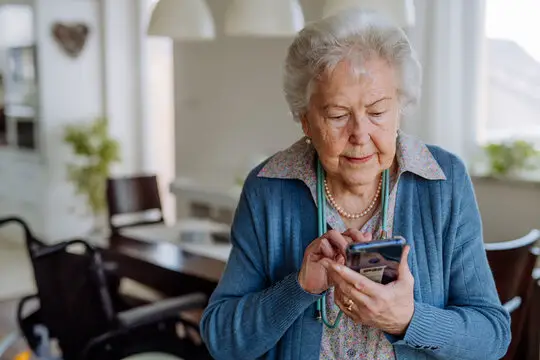
The Mother’s Day Betrayal
My son told me to be ready at 4:00 p.m. for a special Mother’s Day surprise.
I spent hours curling my hair and ironing my best silk dress, thinking—foolishly, hopefully—that he finally wanted to spoil me.
But when he pulled into the driveway, he wasn’t alone.
His mother-in-law stepped out of the back seat like she owned the world, and she didn’t just have jewelry on—she had a statement. She lifted her wrist, letting the diamonds catch the Florida sun, and waved it in my direction as if the bracelet itself were saying, Look what your son bought for my daughter’s mother.
My son looked at me, blocking the car door so I couldn’t get in, and laughed. “Mom, snap a photo of us.”
Then, with the same casual cruelty you’d use to swat a mosquito, he added, “Did you really think this fancy dinner was for you?”
I didn’t scream. I didn’t argue. I just watched them drive away.
But at 8:15 p.m., my phone wouldn’t stop ringing.
“Mom, they blocked the card. The waiter is threatening to call the cops. I need cash urgently.”
He was in a complete panic.
The Morning Light
The morning sun in Naples, Florida has a way of finding every speck of dust on the glass sliders, like it’s on a mission to expose whatever you’ve been too tired—or too lonely—to scrub away. But that morning, I didn’t mind.
It was Mother’s Day.
The light pouring into my living room felt different. Brighter. Maybe even hopeful.
My name is Suzanne.
I turned sixty-seven last month, and for the first time in years, I wasn’t dreading a Sunday.
Mother’s Day is usually quiet in this house. My husband, Frank, passed away five years ago. After he died, the silence moved in like an unwanted roommate, spreading out, taking up space, growing heavier as the seasons turned. You get used to it. You learn to live with the hum of the refrigerator and the soft tick of the clock like they’re the only voices that still remember you exist.
But that morning, the quiet felt temporary—like the pause before a celebration.
I sat with my coffee and watched the neighbors across the street. A minivan had pulled up an hour earlier, and I saw a young man unloading a massive bouquet of pink lilies for his mother. The flowers looked almost ridiculous—too big, too perfect, like something out of a commercial. The woman who received them—Mrs. Chen, a petite lady who always wore cardigans even in the heat—clasped her hands to her chest and actually teared up right there on her front lawn.
I smiled into my mug.
For once, I didn’t feel that sharp pang of jealousy. I didn’t have to pretend I wasn’t looking. Today, I had plans.
My son, Louis, was coming for me.
I glanced at the clock on the microwave. Only 9:00 a.m. Hours to go, but my mind was already replaying the phone call from Tuesday. That call had been my lifeline all week. I must’ve replayed it a hundred times, examining every word, every inflection, looking for hidden meaning the way you might study a treasure map.
Louis isn’t a bad man, not in the way people mean when they say that. He’s just… busy. Life gets in the way. He has his wife, Valerie, and his job at the insurance company, and I understand I’m not the center of his universe anymore. That’s the natural order of things, isn’t it? We raise them to leave us. We give them roots so they can grow wings. All those platitudes that sound beautiful until you’re the one left behind in an empty nest that echoes.
But lately, busy had started to feel a lot like indifferent.
He forgot birthdays. Or he’d send a text two days late like a receipt you didn’t ask for, words so generic they could have been generated by a computer: Sorry Mom, crazy week. Love you.
Last Christmas was a twenty-minute visit because they “had to get to Valerie’s parents’ house.” They’d arrived at 11:00 a.m., stayed long enough to exchange gifts—a candle set I was mildly allergic to and a calendar featuring cats, though I’ve never owned a cat—and left before I’d even finished brewing the coffee I’d bought specially because Louis mentioned once, years ago, that he liked hazelnut.
So when I saw his name on my caller ID on Tuesday, I expected the usual—rushed voice, half attention, maybe a favor he needed. Could I watch their dog? Did I still have his old baseball cards? Could I loan him money until Friday?
Instead, his voice was booming, full of an energy I hadn’t heard since he was a boy showing me a good report card.
“Mom,” he said, “don’t make any plans for Sunday. I’m taking care of everything.”
I remember gripping the phone tighter, pressing it against my ear as if I could physically hold onto the warmth in his voice.
“Everything?” I asked, my own voice smaller than I intended. “You mean dinner?”
“I mean a real outing, Mom,” he said, as if this was the most obvious thing in the world. “I made a reservation at that new place downtown—you know, Sapphire Coast? The one with the white tablecloths and the ocean view? They were booked solid, but I pulled some strings. Be ready at 4:00 p.m. sharp. I’m taking you somewhere special. You deserve to be spoiled.”
You deserve to be spoiled.
Those words stuck to my ribs like a warm meal on a cold day.
When you get to my age and you’re living alone, nobody talks about spoiling you anymore. They talk about managing you. They talk about your health, your safety, your medications, your finances. They talk about you like you’re a problem to be solved rather than a person to be celebrated.
But to be spoiled… to be treated like the prize, not the burden…
I had tears in my eyes right there in my kitchen, standing by the sink with dish soap still on my hands.
After I hung up, I stood for a long moment with the phone in my hand, as if the warmth of his words might leak out if I set it down too quickly. I walked to the hallway mirror and ran a hand over my hair, studying my reflection with the critical eye of a woman preparing for an inspection. The gray was more prominent than I remembered. The lines around my mouth had deepened. But my eyes—my eyes still had life in them.
I wanted to be perfect. If my son was going to show me off at a fancy restaurant, I wasn’t going to embarrass him.
But if I’m being honest—and I think I can be honest here—there was a tiny knot of worry in my stomach, small but persistent, like a pebble in your shoe.
It was about money.
It always is, isn’t it?
Louis has a good job, but he and Valerie live loud. New cars every three years. Brand-name clothes with the labels still visible. Weekend getaways with glossy photos posted online like proof they’re winning at life—beach sunsets, champagne flutes, restaurant plates arranged like art. And I knew how expensive Sapphire Coast was. I’d looked it up once, curious, and nearly choked on my coffee. Dinner there for three could easily run six or seven hundred dollars, maybe more with wine.
My thoughts drifted to the emergency joint account.
A few years ago, after a scare with my blood pressure that landed me in the ER overnight, I added Louis to my main savings account. It was supposed to be for emergencies—if I ended up in the hospital and couldn’t pay a bill, if I needed something urgent and couldn’t get to the bank myself, I wanted him to be able to handle it without red tape or legal complications.
It was about trust.
It was my safety net. The nest egg Frank and I built over forty years of hard work—his hands calloused from fixing cars at the dealership, mine worn from double shifts as a school secretary.
I trust Louis. I do. He’s my son. My only child. The boy I carried, the man I raised.
But sometimes the lines get blurry for him.
Sometimes “emergency” means different things to different people.
I reminded myself he wouldn’t be reckless. Not today. Not on Mother’s Day. He promised he was treating me. Surely that meant he had saved up for it, planned ahead, set money aside specifically for this occasion.
He wouldn’t use my own money to take me out, would he?
That would be tacky. Cruel, even.
I pushed the thought away like an unwanted visitor at the door.
Stop it, Suzanne, I scolded myself. Don’t ruin this.
I looked out the window again. The neighbor was hugging her son on the front lawn, both of them laughing about something. The lilies sat in a vase on her porch railing, impossibly pink against the white paint.
I took a deep breath and let it out slowly.
Today wasn’t about bank accounts or past disappointments or the careful mental arithmetic I did every time Louis called. It was about a promise.
Louis promised he’d pick me up at 4:00 p.m.
He promised it would be special.
For the first time in a long time, I let myself believe things were turning a corner. I wasn’t asking for the world. I wasn’t asking for every Sunday or even every month. I just wanted a few hours where I wasn’t invisible. Where I mattered to someone whose DNA I shared.
I went to my bedroom and laid out my dress—a soft blue silk, the color of Gulf water when the sky is clear and the storms are far away. I smoothed the fabric over my bedspread like I was preparing for a royal inspection, running my hand over the material to check for wrinkles, for pulls in the fabric, for any imperfection that might betray my age or my circumstances.
Frank bought me this dress fifteen years ago for our anniversary. He’d seen it in a shop window and insisted I try it on, even though I protested it was too expensive, too fancy for someone like me.
“You’re not someone like anyone,” he’d said, kissing my forehead. “You’re Suzanne. And Suzanne deserves silk.”
I was going to look beautiful. I was going to be ready.
I just hoped he’d be on time.
The Preparation
By 2:30 that afternoon, the house was quiet, but my bathroom was a flurry of activity—steam from the shower, the whir of the hair dryer, the soft clink of makeup brushes against glass.
I laid everything out on the bed like a checklist for the woman I used to be: the blue silk dress, my nude pumps with the modest heel, the pearl earrings Frank gave me for our thirtieth anniversary, the little clutch that only held lipstick and a tissue and maybe a breath mint.
I took my time in the shower, letting the hot water work out the permanent ache in my shoulders. I didn’t want to rush.
Today wasn’t just about going to dinner. It was about the ritual of being a woman again, of caring how I looked, of having somewhere to be and someone to be beautiful for.
When you live alone, the days bleed into each other. You stop wearing nice perfume because, well… who’s going to smell it? You stop putting on jewelry because you’re just going to Publix or the pharmacy or the doctor’s office. You stop trying because trying requires an audience, and there’s no one in the audience anymore except you.
But that afternoon, I reached for the expensive bottle of perfume tucked behind the other lotions on my vanity—the one I’d been saving for a special occasion that never seemed to come.
Jasmine.
I dabbed it on my wrists and behind my ears, and the scent filled the small room. It smelled like memories. It smelled like the years when my calendar was full and my house was loud and someone always needed me for something.
Getting into the dress was a battle, the kind of small physical struggle that reminds you you’re not as young as you feel in your mind. That’s the thing nobody tells you about aging alone.
The zippers.
I did that little dance—twisting my arm behind my back at an angle that would make a yoga instructor wince, holding my breath, trying to catch the tab with fingers that weren’t as nimble as they used to be.
When it finally zipped, I let out a long breath and turned to the full-length mirror on the back of my bedroom door.
I stood there for a long time.
The woman looking back at me wasn’t the same as ten years ago. The blue silk still fit, but it hugged softer curves. My arms weren’t as firm. The lines around my eyes had deepened into permanent grooves, the kind that tell stories whether you want them to or not. My neck wasn’t as smooth as I remembered—there was that gentle sagging that no amount of cream could fix, no matter what the commercials promised.
For a split second, that familiar wave of insecurity tried to wash over me—the voice that whispers, Who are you trying to fool, Suzanne? You’re an old woman playing dress-up.
But I stopped it.
I straightened my spine. I lifted my chin like Frank used to tell me to do when I doubted myself.
“No,” I whispered to the empty room. “Not today.”
Those wrinkles weren’t flaws. They were a map. They were the road of a life that survived raising a son, burying a husband, and keeping a household afloat alone for five years. The lines around my mouth came from laughing at Louis’s jokes when he was small, from smiling through Frank’s terrible puns, from years of speaking kindly even when kindness wasn’t returned.
I looked dignified. I looked like someone with stories to tell, with wisdom earned, with a life fully lived.
I smoothed the fabric over my hips.
Today, I thought, I am not just a widow. I am not just a grandmother-in-waiting. And I am certainly not just a bank account for emergencies.
Today I am a mother, and my son is coming to claim me.
I felt good. I felt visible.
At 3:45 p.m., I moved into the living room.
I didn’t want to sit on the couch and risk wrinkling the dress, so I stood by the front window like a teenager waiting for prom, peeling back the curtain every time a car rolled past, my heart doing a little jump each time before settling back down when it wasn’t him.
My heart fluttered in my chest—nervous, giddy energy I hadn’t felt in years. It reminded me of first dates, of waiting for Frank to pick me up when we were courting, of that delicious anticipation that makes time slow down and speed up simultaneously.
I checked my phone.
3:55 p.m.
“He’ll be here any minute,” I said aloud.
The sound of my own voice startled me. The house was so quiet even a whisper felt loud, intrusive, like I was disturbing some sacred silence.
I checked my purse again: ID, lipstick, credit card tucked in the back slot just in case—though I prayed I wouldn’t need it. The credit card was there like an insurance policy, like carrying an umbrella to prevent rain.
The digital clock on the cable box flipped from 3:59 to 4:00.
I stared at the driveway, expecting Louis’s silver sedan.
Nothing.
Just the empty street and the neighbor’s sprinkler hitting the pavement in rhythmic sweeps, creating little rainbows in the afternoon light.
“That’s fine,” I told myself, forcing my voice to sound casual, unconcerned. “It’s exactly 4:00. He’s probably just turning onto the street.”
I paced.
Five minutes. Ten.
4:10 p.m.
My palms started to sweat despite the air conditioning. I wiped them carefully with a tissue so I wouldn’t stain the silk, so I wouldn’t leave marks on the fabric Frank had bought me all those years ago.
The excitement curdled into anxiety, the way milk turns when it sits out too long.
My mind did that terrible thing it does when you’re waiting—it started inventing scenarios, creating elaborate explanations to protect my heart from the simpler, harsher truth.
Did I get the time wrong?
I unlocked my phone and scrolled back through our texts even though I had memorized them, even though I’d read them fifty times already.
There it was, timestamped Tuesday at 2:17 p.m.
Pick you up at 4, Mom. Be ready.
I wasn’t wrong.
4:15 p.m.
I went back to the window, lifting the curtain with trembling fingers.
The sun was dipping, casting longer shadows across the lawn, turning everything golden and nostalgic.
The silence in the house began to change. It wasn’t peaceful anymore. It felt suffocating, oppressive, like the walls were slowly moving inward.
The fear of being forgotten is a cold thing. It starts in your stomach and spreads out to your fingertips, numbing them, making everything feel distant and unreal.
It’s the fear that you’re sitting there dressed in your best clothes, wearing perfume, holding a purse with nothing to do, and the person you’re waiting for hasn’t thought about you once all day.
I checked my phone volume for the third time.
Maybe I’d missed a call. Maybe there was a voicemail I hadn’t noticed.
No. The ringer was up. The screen showed nothing.
“Traffic,” I said, forcing a smile and catching my reflection in the dark TV screen. “It has to be traffic.”
Naples traffic during season can be a nightmare. Snowbirds who don’t know the roads, tourists who slow down to look at every mansion, construction zones that pop up overnight. If there was an accident on U.S. 41 or a backup near the turnoff for Fifth Avenue, he could be stuck in bumper-to-bumper gridlock, watching the minutes tick by, stressed and unable to call.
He’s probably stressed, I told myself. Trying to find a moment to call but focusing on driving safely.
He’s a good driver. He wouldn’t text and drive. That would be dangerous.
I refused to sit down. Sitting down would be admitting he was late, would be acknowledging that something might be wrong. Standing by the window meant I was just… ready. Prepared. Waiting appropriately.
A black car slowed in front of my house.
My heart leaped into my throat.
I grabbed my purse, checking one last time that I had everything.
But the car sped up and kept going, and I realized it was just someone turning around, using my driveway approach to correct their course.
My hand dropped to my side.
4:20 p.m.
“He’s coming,” I insisted to the empty room, but my voice sounded smaller, less convinced.
He promised. He wouldn’t do this. Not today. Not on Mother’s Day, of all days.
I turned my back on the window and went to the kitchen for a glass of water. My throat was dry, like my body knew before my mind could admit it, like my physical self was already preparing for disappointment even as my heart clung to hope.
I wouldn’t let doubt ruin the day.
Just traffic. Just holiday chaos. Just the normal complications of modern life.
He was coming. He had to be.
The Arrival
At 4:35 p.m., the sound of an engine finally broke the hush of my street.
Relief washed over me like cool water on a burn.
See?
He made it.
I grabbed my purse from the entryway table where it had been sitting, waiting, ready. I checked my lipstick one last time in the hallway mirror, making sure it hadn’t smudged, that my hair was still in place, that I looked like someone worth taking to dinner.
Then I opened the front door, stepping out into the warm Florida afternoon.
A sleek silver Lexus SUV idled in my driveway, engine purring like a contented cat.
It wasn’t Louis’s usual car—his sedan was older, more modest—which confused me for a second until I remembered he’d mentioned something about upgrading, about how the insurance company was doing well and he deserved to treat himself.
The SUV gleamed under the Florida sun, looking like it had just rolled off a showroom floor.
I stepped out, locked the door behind me with fingers that trembled slightly from excitement, and put on my best smile—the one I’d been practicing in the mirror, warm but not desperate, happy but not needy.
The driver’s door opened. Louis stepped out in a navy suit I loved, the one that made his shoulders look broad and his frame commanding. Fresh haircut. Confident smile. He looked successful, put-together, like the kind of son any mother would be proud to claim.
My heart swelled with pride.
That’s my boy, I thought. That’s my son.
“Hi, honey,” I called, waving.
But before he could answer, before I could take another step toward the car, the passenger door opened.
Then the back door.
Valerie, his wife, stepped out of the front seat in a fitted cream cocktail dress that probably cost more than my monthly grocery budget. Her hair was professionally styled, swept up in an elegant chignon. Her makeup was perfect.
And then…
Then Bessie climbed out of the back.
Now, I have nothing against Bessie in principle. She’s Valerie’s mother, which makes her grandmother to my future grandchildren, just like I am. We’re connected by family, by circumstance, by the marriage that binds our children together.
But seeing her there on Mother’s Day felt strange, off-balance, like a equation that doesn’t quite add up.
Louis hadn’t mentioned a group dinner. He’d said he was taking me somewhere special. The reservation was for three, he’d said on Tuesday, but I’d assumed that meant Louis, Valerie, and me.
I tried to adjust my expectations quickly, forcing my smile to stay in place.
Okay, I thought. Joint celebration. The more the merrier. Two mothers, one day. That’s fine. That’s generous, even.
But then I really looked at her.
Bessie wasn’t dressed for dinner. She was dressed for a gala, for a red carpet event, for somewhere cameras would flash.
Shimmering gold gown, tight enough to look uncomfortable, the fabric straining slightly across her midsection. Heavy gold earrings that caught the light. Thick necklace with stones that might have been real.
And on her right wrist—flashing in the sunlight like a beacon—was a diamond tennis bracelet so bright it looked like it could blind you.
I know jewelry.
Frank was a jeweler for thirty years. He taught me how to spot quality, how to distinguish real stones from cubic zirconia, how to read the way light bends and fractures through genuine diamonds.
That bracelet wasn’t costume.
It was real.
It was expensive.
Worth a small fortune.
Worth more than my car.
Bessie saw me looking. She must have, because she didn’t say “Happy Mother’s Day, Suzanne.” She didn’t smile warmly or move to embrace me the way family sometimes does on special occasions.
She just lifted her wrist deliberately, purposefully, and gave it a little shake so the diamonds sparkled and danced in the afternoon sun.
The gesture felt less like a greeting and more like a queen dismissing a servant, like a peacock displaying its feathers to warn off rivals.
Look what I have, the gesture said. Look what was bought for me.
I swallowed the lump in my throat and kept walking, kept moving forward because stopping would mean admitting something was wrong.
I reached for the back door handle, figuring I’d squeeze in beside her, that we’d all ride together, that this would be fine.
“You look beautiful, Mom,” Louis said, walking around the front of the SUV.
“Thank you, Louis,” I said, my hand on the door handle, ready to climb in. “I’m ready.”
I tried to sound light, breezy, like I hadn’t been staring out my window for forty minutes, like I hadn’t been counting every minute past 4:00 p.m.
But Louis’s voice sharpened, taking on an edge I recognized from childhood, from the times he was about to tell me something I didn’t want to hear.
“Wait, Mom.”
I froze.
My hand hovered inches from the handle, suspended in air.
“What?”
He stepped between me and the car, his body physically blocking my access to the back seat.
He wasn’t opening the door for me. He was blocking it.
Louis reached into his pocket and pulled out his iPhone—the newest model, I noticed, the kind that costs as much as I spend on groceries in two months.
“The lighting is incredible right now,” he said, sounding rushed, almost impatient. “The sun’s hitting the driveway perfectly. Can you snap a quick picture of us by the car? We want to post it before we leave. You know how Instagram is—the algorithm favors fresh content.”
I stared at the phone like it was a foreign object, like he’d just handed me something from another planet.
“A picture?”
“Yeah,” Valerie chimed in, smoothing her dress and checking her reflection in the SUV’s tinted windows. She linked her arm through Louis’s, fitting perfectly against his side.
Bessie waddled into place right between them, making sure that bracelet was front and center, positioning her wrist exactly where it would catch maximum light, resting it proudly on Louis’s shoulder.
“Come on, Suzanne,” Bessie said, her voice grated with impatience, with the tone of someone whose time is being wasted. “We’re losing the light.”
I took the phone. My hands were shaking. I felt cold despite the eighty-degree heat, despite the sun beating down on my shoulders.
“Just press the big round button,” Louis said, as if I didn’t know how to use a phone, as if I were some technologically incompetent relic. “Make sure you get the car in the shot. It’s a rental—top of the line. We want to show it off.”
I stepped back. I lifted the phone.
On the screen, I saw the three of them—my son, his wife, and her mother—beaming like a magazine ad, like models selling a lifestyle I couldn’t afford.
And I was on the other side of the glass.
I was the photographer, not the subject.
I was the help.
I tapped the button.
Click.
“One more,” Louis said, grinning. “Horizontal this time. And step back a little more—get more of the car.”
I turned the phone.
Click.
I lowered it and handed it back, my fingers numb.
Louis checked the photos, swiping through them, zooming in to examine the details.
“Awesome. Thanks, Mom. These came out great. The light is perfect.”
He turned and headed for the driver’s side without another word.
Valerie got back into the front seat, settling in with a satisfied smile.
Bessie hoisted herself into the back, her gold dress rustling.
And I stood there on the driveway, clutch purse tight in my hand, watching them climb in without me, watching the doors close one by one.
“Louis,” I said.
My voice came out as a whisper, barely audible over the engine.
I cleared my throat and tried again, louder this time.
“Louis.”
He paused with his hand on the door and looked back at me like I’d asked something ridiculous, like I’d interrupted an important moment with something trivial.
“Yeah?”
I gestured to the empty space in the back seat, to the leather interior I could see through the window.
“Aren’t I coming?”
Louis laughed.
Short. Dry. Humorless.
He looked at Valerie, then back at me with the kind of expression you’d wear if a child asked to drive the car, if someone suggested something absurd and impossible.
“Mom… did you really think this was for you?”
He didn’t sound angry. He sounded amused. Entertained.
Like I’d told a joke.
“This is Sapphire Coast. It’s a high-end place. It’s not really your scene. Plus, the reservation is only for three people. It’s a special treat for Valerie and Bessie. Mother’s Day for the important mothers, you know?”
My mouth opened but no sound came out.
“But…” My throat tightened. “You said… you said you were taking me somewhere special. You said I deserve to be spoiled.”
“I said I was handling everything,” he replied, checking his watch—an expensive one I didn’t recognize, another upgrade. “And I did. I stopped by to say hi, didn’t I? I mean, look—I’m here. I showed up. That counts for something. Look, we really have to go. They’ll give our table away if we’re more than fifteen minutes late, and this reservation was impossible to get.”
He got in. He slammed the door, the sound final and dismissive.
Through the tinted glass, I saw Bessie lean forward and say something to him. They all laughed—Louis, Valerie, and Bessie—their mouths opening wide, their heads tilting back.
The engine revved.
Louis didn’t wave. He didn’t mouth “sorry” through the window. He didn’t acknowledge me at all.
He just backed out of my driveway and sped off, leaving me standing in the exhaust fumes in my blue silk dress and pearls, holding a purse that had no reason to be held.
The silence rushed back into the neighborhood—louder than before, heavier, suffocating.
They hadn’t forgotten me. That would’ve been cruel, but accidental.
This was deliberate. This was planned.
He came to my house, used me as a prop for his social media photo, and left me on the curb like trash waiting for collection.
The dinner wasn’t for me. It never was.
I stared at the faint tire marks on my pavers, still fresh, still warm from where the SUV had been parked moments before.
Then my eyes flashed again to Bessie’s wrist in my memory—that bracelet, those diamonds, that deliberate little shake.
Something cold settled in my stomach.
Something was very, very wrong.
I turned and walked back to my front door.
I didn’t rush. I didn’t cry.
I walked with purpose, with the measured steps of someone forming a plan.
The Florida heat prickled at the back of my neck, but inside I felt frozen.

Lila Hart is a dedicated Digital Archivist and Research Specialist with a keen eye for preserving and curating meaningful content. At TheArchivists, she specializes in organizing and managing digital archives, ensuring that valuable stories and historical moments are accessible for generations to come.
Lila earned her degree in History and Archival Studies from the University of Edinburgh, where she cultivated her passion for documenting the past and preserving cultural heritage. Her expertise lies in combining traditional archival techniques with modern digital tools, allowing her to create comprehensive and engaging collections that resonate with audiences worldwide.
At TheArchivists, Lila is known for her meticulous attention to detail and her ability to uncover hidden gems within extensive archives. Her work is praised for its depth, authenticity, and contribution to the preservation of knowledge in the digital age.
Driven by a commitment to preserving stories that matter, Lila is passionate about exploring the intersection of history and technology. Her goal is to ensure that every piece of content she handles reflects the richness of human experiences and remains a source of inspiration for years to come.