If you’d asked me that gray October afternoon what grief felt like, I would’ve told you it was weight. Not the dramatic kind people talk about in movies—no wailing in the rain, no collapsing into someone’s arms. Just weight. In your chest. In your bones. In your hands when you reach for something familiar and remember the person who owned it is gone.
That day, the weight came wrapped in an envelope.
“Warren Parker only,” the funeral director said, pressing it into my palm like it might bite. I stared at my own name on the front, black ink on cream paper, and for a second my brain refused to accept that this was real—refused to accept that my son could leave me anything at all because my son wasn’t supposed to be someone who left. He was supposed to outlive me.
Donovan was the kind of man people described with their whole face—eyes wide, voice full. “Brilliant.” “Good-hearted.” “The kid who never forgot where he came from.” He’d been the kind of boy who fixed broken toys for other kids, then grew into the kind of man who fixed entire systems. MIT graduate. Twelve patents. Automotive engineer with the kind of mind that saw problems like puzzles and people like responsibilities.
And still—still—he’d stop at Pete’s gas station every Friday on his way home, just to ask about the Tigers and help someone who couldn’t afford a mechanic. That was my kid. And now his funeral was over.
People shuffled in slow circles beneath the fluorescent lights of Henderson Funeral Home—neighbors from Maple Street, my old coworkers from the Ford plant, engineers Donovan had mentored who looked like they couldn’t understand how someone like him could be reduced to a casket and a program. Old Pete stood with tears carving tracks down his weathered cheeks.
“He was a good boy, Warren,” he whispered at the viewing. “Smart as a whip, but he was still your boy.”
I nodded because my throat didn’t work.
Mrs. Henderson—Helen—had driven me there, insisting I shouldn’t be alone. She’d been my neighbor since before my hair went gray, and she had that sharp, gentle kind of loyalty you only get from people who’ve lived through winters together.
After the service, we gathered for the reading of the will in a small side room that smelled like coffee and lilies. Delilah sat beside me. Donovan’s wife. Her hand rested on my arm like she owned the space there. She dabbed at her eyes with a tissue and wore grief like a tailored coat—perfectly fitted, expensive, and never wrinkled.
She’d been “devastated” since the accident three weeks ago, and I’d done my best to support her because that’s what men like me do. We show up. We endure. We keep the wheels turning even when our insides feel like splintered wood.
The attorney cleared his throat. The house on Elmwood Drive: Delilah. The life insurance payout: Delilah. “Two point eight million dollars,” he said, like it was just another line on a list. Helen’s sharp intake of breath cut the room. Donovan’s investment accounts. Savings. Everything with real weight, real value—Delilah.
Then the attorney looked down again. “And to my father, Warren Parker, I leave my 2018 Ford F-150 pickup truck with the hope that it serves him as faithfully as he served our family.”
That was it. A beat-up truck with one hundred fifty thousand miles on it. A truck Donovan loved, sure—but still just a truck.
The room went quiet in the way communities get quiet when something feels wrong but nobody wants to be the first to say it. In Dearborn, you take care of your people. Sons take care of their fathers. Especially when the father worked double shifts for forty years and wore his hands down to the bone to give the kid a ladder out of poverty.
I felt eyes on me. I nodded anyway. You don’t make scenes at funerals.
Delilah leaned toward me, and her perfume—too sweet, too expensive—filled my nose. “Warren,” she said softly, reaching into her purse. “Here are the keys.” She placed them in my palm. Her fingers lingered long enough to feel like a statement. “I’m sure Donovan had his reasons. You know how much he loved that truck.”
And then, as she stood, I caught it. Not a smile. A smirk. Just for a second. Quick and private. Like she’d handed a dog a bone.
“How fitting,” she murmured, low enough that only I could hear. “Junk for a useless old fool.”
Then she turned away, tissue still pressed to her eyes, and let the room believe she was grief-stricken and generous.
Helen squeezed my shoulder. “I’ll wait in my car, Warren. Take your time.”
But I couldn’t take time. Not there. Not with those eyes on me. I walked out into the parking lot with that keyring digging into my skin. The wind cut through my old black suit. The sky was low and heavy, the kind of Michigan gray that makes even noon feel like late afternoon.
Donovan’s F-150 sat alone near the edge of the lot, paint chipped, tailgate scratched, the kind of truck you could tell had been worked hard, not babied. I unlocked it and climbed into the driver’s seat.
The familiar scent hit me immediately—leather, pine air freshener, and faint engine oil. The seat was adjusted for his longer legs. I had to scoot it forward. The cup holder still held his travel mug, the one that said Built Ford Tough like he’d bought it as a joke. The glove compartment had engineering manuals. A socket set rattled in the center console like it belonged there.
Everything in that truck was him.
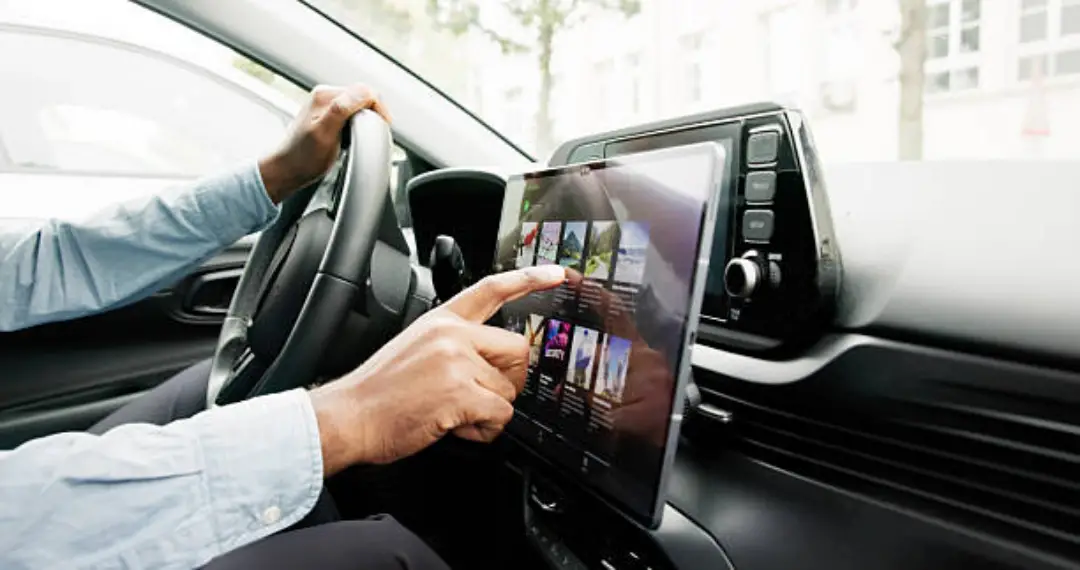
And that’s when I noticed the dashboard. The GPS display was blinking. Not the normal “update available” kind of blinking. This was pulsing, deliberate, like it was trying to get my attention. I stared at it until my eyes stung, my heart doing that painful thing where it tries to leap out of your chest just to feel alive.
I didn’t know then that the only thing Delilah had given me was the last piece of my son she couldn’t steal. And my son—my brilliant, stubborn engineer son—had turned that “junk inheritance” into a lifeline.
It took a week before I could bring the truck into my garage without my throat tightening. Grief makes your own home feel unfamiliar. The garage had been our place—ours and Donovan’s. Saturday afternoons. Two stools. A radio tuned to Motown. Wrenches clinking. The smell of grease and coffee.
Now his tools still hung on the pegboard like a museum display. The oil stain from the ’92 Mustang we restored together looked like a bruise on the concrete. I sat in the driver’s seat with my reading glasses perched on my nose and the owner’s manual open like it was a foreign language textbook.
Donovan had always teased me about technology. “Dad,” he’d laugh, “you can rebuild an engine in the dark, but you treat Bluetooth like it’s witchcraft.”
“I don’t need Bluetooth,” I’d snap back. “I need a screwdriver.”
But grief makes you do strange things. It makes you chase anything that looks like your loved one’s shadow. So I pressed buttons. I squinted. I muttered about “touchscreens” like they were disrespectful.
And then, by accident or fate, the GPS system chimed. The screen lit up. Map of Michigan. Options: Home. Work. Recent destinations. And one entry that didn’t belong.
DAD’S LEGACY
My hands went cold. I touched it.
The screen changed. Instead of a route, text appeared—paragraph after paragraph, scrolling slowly like Donovan knew his old man’s eyes couldn’t keep up with fast-moving words.
“Dad, if you’re reading this, I’m gone. And if I’m gone the way I think I might be, then you need to know the truth. I programmed this message three months ago, and I’ve updated it every week since. I hope I’m being paranoid. I hope you never see this. But if you do, please read everything. I built this system myself—custom firmware, encrypted, impossible to delete remotely. Delilah doesn’t know it exists. Nobody does except you, now.”
My vision blurred. I blinked hard, forcing myself to focus.
“I think Delilah is planning something. I don’t have proof yet, but I have patterns. Six months ago, she started asking about my life insurance. Not casual questions—detailed ones. Beneficiaries. Payout structures. What happens if I die in an accident versus natural causes. She thought she was being subtle. She wasn’t.”
The words kept scrolling.
“Then the arguments started. She wanted me to update my will, said it wasn’t ‘fair’ that you had any claim to my estate if something happened. I told her you were my father, that you’d sacrificed everything for me, that of course you’d be taken care of. She smiled and dropped it. But Dad, she dropped it too easily. Like she’d just filed the information away for later.”
I gripped the steering wheel. The garage felt too small, too quiet.
“Two months ago, my brakes failed. I’m an automotive engineer, Dad. I know the difference between wear-and-tear and tampering. The brake line had a puncture—small, precise, in a spot that would cause gradual fluid loss. I took it to a buddy at the shop, told him not to file a report, just fix it. I didn’t want to believe what I was thinking. I wanted to be wrong.”
The text paused. Then: “I wasn’t wrong.”
“Last month, she invited me to go hiking. Delilah doesn’t hike. She complained the entire time until we got to this cliff overlook. Then she got quiet. Too quiet. I saw her looking at the edge, then at me, calculating something. I made an excuse and we left. That night, I started documenting everything.”
My chest felt like someone had reached inside and squeezed.
“I’ve been collecting evidence, Dad. Bank statements showing her transferring money to an account I’m not supposed to know about. Emails with someone named Marcus—they’re careful, but not careful enough. References to ‘the plan’ and ‘after it’s done’ and ‘making it look natural.’ I saved everything to a secure drive. I’ve hidden things she can’t find. I’ve built a trail.”
The text scrolled faster now, like Donovan had been typing urgently.
“If you’re reading this, it means my paranoia was justified. It means she succeeded. And Dad, I need you to know—I don’t blame you for anything. You gave me everything. You worked yourself to exhaustion so I could have opportunities you never got. You taught me to be honest, to work hard, to fix things instead of replacing them. You made me who I am. And who I am is someone who doesn’t let the people he loves get used.”
The screen changed again. A new heading appeared: THE EVIDENCE.
“I’ve created a route for you. It’s programmed into this GPS as ‘DAD’S LEGACY.’ It has seven stops. At each stop, you’ll find something I’ve hidden—documents, recordings, proof. The route is designed so that if you follow it in order, you’ll build an airtight case. Everything is waterproof, fireproof, hidden in places only someone who really knows me would think to look. I’ve left instructions at each location.”
My hands were shaking. I set the reading glasses on the dashboard and rubbed my eyes until I saw stars.
“The last stop is the most important. It’s a storage unit I rented under a company name Delilah doesn’t know about. Inside is everything you need—organized, labeled, ready to hand to the police. But Dad, you have to follow the route. Don’t skip steps. Trust me. I’ve thought this through.”
The text stopped scrolling. A final message appeared: “I love you, old man. I’m sorry I couldn’t tell you this in person. I’m sorry if I’m making you carry this weight. But you’re the strongest person I know. You’ve survived worse than Delilah could ever throw at you. Finish what I started. Make her answer for what she’s done. And Dad? Don’t let her make you feel small. You are not junk. You are not useless. You are my father, and that makes you the most important person in my world. Always. —Donovan”
The screen went dark except for a single button: START ROUTE.
I sat in that truck in my garage for twenty minutes, shoulders shaking, face wet, breathing in ragged gasps that sounded too loud in the silence. My boy had known. He’d known he was in danger, and he’d spent his last months building me a roadmap to justice.
When I could finally breathe again, I pressed the button.
The GPS chimed cheerfully, like we were just heading to the hardware store. “Proceeding to destination one: Belle Isle Park. Distance: eight point three miles.”
I wiped my face with my sleeve, started the engine, and backed out of the garage. Helen was watering her roses next door. She waved. I waved back, and somehow that small, normal gesture steadied me. The world was still turning. People were still living their lives. And I had work to do.
Belle Isle Park was quiet on a Tuesday morning. Joggers traced the path along the river. A few people sat on benches feeding pigots. I parked near the conservatory and checked the GPS. It had switched to a detailed map showing a specific location—the old fountain near the rose garden.
I walked slowly, my knees complaining about the cold. The fountain had been drained for winter, leaves gathering in the basin. I circled it twice before I saw what Donovan meant. Behind the fountain, tucked into a gap between the stone base and the ground, was a small waterproof container—the kind you’d use for camping supplies.
Inside was a USB drive and a note in Donovan’s handwriting: “Dad, this drive contains six months of bank statements. Delilah has been moving money from our joint account to a private account in the Cayman Islands. Small amounts, spread out, meant to look like normal spending. But I tracked every transaction. The pattern is clear. She’s been preparing to disappear with everything. The password is your birthday—0847. Love you. Next stop: Pete’s garage.”
Pete’s garage. Of course. The place Donovan stopped every Friday, the place where he’d learned half of what he knew about engines from a man who’d known him since he was eight years old. I drove there with the USB drive in my jacket pocket, feeling its weight like a talisman.
Pete was under a Chevy when I arrived, his legs sticking out, wrench clanging against metal. “Be right with you,” he called. Then he rolled out on his creeper, saw me, and his weathered face softened. “Warren. Good to see you, son. How you holding up?”
“Getting by, Pete. Listen, Donovan ever leave anything here for me?”
His eyes sharpened. He stood slowly, wiping his hands on a rag that had been gray for twenty years. “Wondered when you’d come asking. Follow me.”
We walked to his office, a cluttered space that smelled like coffee and motor oil. Pete pulled a metal box from under his desk. “Donovan brought this by about six weeks ago. Said if anything happened to him, I should keep it safe until you came for it. Didn’t ask questions. Figured the boy had his reasons.”
Inside the box was another USB drive, a small digital recorder, and a note: “Dad, the recorder has audio from an argument Delilah and I had. She didn’t know I was recording. Listen to it when you’re ready. She admits things she shouldn’t have. The USB has emails between her and Marcus Holloway—her personal trainer, in case you’re wondering. They’ve been planning this for over a year. Next stop: the house on Elmwood Drive. I left something in the garage, hidden in the rafters above where we built the Mustang. Be careful. Delilah might be home.”
Pete watched me read. “Donovan was smart,” he said quietly. “Smartest kid I ever knew. But more than that, he was good. Whatever he left you, Warren, it’s because he knew you’d do the right thing with it.”
I thanked him, my voice rough. “Pete, did he seem scared? Those last few weeks?”
Pete considered this. “Not scared. Careful. Real careful. Like a man checking his rearview mirror more than usual.” He paused. “Warren, if that boy left you a trail, you follow it. And if someone hurt him—” His jaw tightened. “You make sure they answer for it.”
The drive to Elmwood Drive felt longer than it was. The house sat behind manicured hedges, all clean lines and expensive landscaping. Delilah’s Mercedes was in the driveway. I parked down the street and sat for a moment, gathering courage.
This was my son’s home. The place where he’d lived his last days, where he’d smiled at dinner parties and pretended everything was fine while his wife plotted against him. The thought made my stomach turn.
I walked up like I belonged there—because I did. Donovan’s father had every right to visit his son’s house. I knocked. Delilah answered wearing yoga pants and a tank top, her hair pulled back, face free of makeup. For a second, she looked surprised. Then the mask slid into place.
“Warren. What a surprise.”
“I wanted to pick up some of Donovan’s things,” I said. “Personal items. His tools, maybe.”
She hesitated, and I saw the calculation in her eyes. Saying no would look bad. “Of course. The garage is open. Take whatever you like.” Her smile didn’t reach her eyes. “I’ve been meaning to clean it out anyway.”
The garage was attached, accessible through the kitchen. I walked through the house trying not to look at the photos on the walls—Donovan and Delilah on vacation, at their wedding, smiling like they had forever. My chest ached.
In the garage, I found his workspace untouched. Tools organized on pegboards. His helmet from the motorcycle he’d sold two years ago. And there, in the rafters above the old Mustang’s parking spot, I saw it—a metal box wrapped in plastic, secured with duct tape.
I pulled over a ladder, climbed carefully, and retrieved it. Inside was a tablet, fully charged, with a note taped to the screen: “Dad, this tablet has everything. Photos of documents. Video recordings. A timeline I built showing Delilah’s movements the day my brakes failed. She was in my garage that morning. The security camera across the street caught her leaving. I contacted the neighbor, told him to save the footage if anything happened to me. His name is Robert Chen, and he knows to cooperate with police. The password for this tablet is ‘Mustang92.’ Next stop: storage unit. The address is programmed in the GPS. This is the big one, Dad. Everything else leads here.”
I heard footsteps behind me. Delilah stood in the doorway, arms crossed, watching. “Find what you needed?”
“Just memories,” I said, climbing down with the box tucked under my arm. “This old toolbox. Donovan and I used it on the Mustang.”
Her eyes flicked to the box, then to my face. “That’s fine. Like I said, take whatever you want.” But something in her expression had shifted. Suspicion, maybe. Or concern. “Warren, are you doing okay? You seem… distracted.”
“Just missing my son,” I said, meeting her gaze. “Hard not to think about how he died. So sudden. So convenient for some people.”
Her face went very still. “Convenient?”
“Figure of speech,” I replied. “Grief makes you think strange things.”
I walked past her, the box under my arm, and left through the front door. My hands didn’t start shaking until I was back in the truck.
The storage unit was in a facility off I-94, the kind with orange doors and concrete walls. Unit 237. The GPS guided me right to it. The key was magnetic, stuck to the underside of the truck’s frame near the rear axle. Donovan had thought of everything.
Inside the unit was a filing cabinet, a laptop, and a sealed envelope with my name on it. I opened the envelope first. Donovan’s handwriting filled three pages:
“Dad, if you’ve made it this far, you have everything you need. The filing cabinet is organized chronologically. Every piece of evidence is labeled, cross-referenced, and documented. I’ve prepared a summary for the police that lays out the entire case. The laptop has digital copies of everything, plus video recordings I made explaining what I found and when I found it. I’ve also included a letter to the district attorney.”
“Here’s what I know: Delilah and Marcus Holloway have been having an affair for eighteen months. Six months ago, they decided I was worth more dead than alive. The life insurance policy is two point eight million. Delilah is the beneficiary. My estate is worth another three million. If I died in an accident, she’d inherit everything. She thought she was smarter than me. She thought I’d never notice the tampered brake line, the ‘accidental’ food poisoning that landed me in the ER, the pattern of small, escalating attempts.”
“I documented all of it. I installed hidden cameras in our house. I recorded conversations. I hired a private investigator who confirmed the affair and found evidence that Marcus has done this before—his first wife died in a ‘hiking accident’ four years ago. He walked away with a million-dollar insurance payout. The investigator’s report is in the cabinet.”
“I made one mistake, Dad. I waited too long. I thought I could gather enough evidence to confront her, divorce her, and walk away clean. I underestimated how desperate she’d become. But I didn’t underestimate you. I knew if anything happened, you’d fight for me. You’d make sure the truth came out. That’s why I built this trail. That’s why I made sure you got the truck. The one thing Delilah wouldn’t want, the one thing she’d happily let you have because she thought it was worthless.”
“Take everything in this unit to Detective Sarah Morrison at Dearborn Police Department. I’ve already made contact with her about an ‘unrelated matter.’ She knows to expect you. She’s good, Dad. She’ll listen. And when she sees what you have, she’ll act.”
“I’m sorry I put this on you. I’m sorry I didn’t tell you sooner. I was trying to protect you from the mess. But you’ve spent your whole life protecting me. It’s only fair you get to protect my memory too.”
“I love you, old man. Finish this.”
I sat in that storage unit for a long time, reading and re-reading the letter. Then I opened the filing cabinet. Donovan hadn’t exaggerated. Bank statements. Emails printed and highlighted. Photos of Delilah and Marcus together. Security footage timestamps. The private investigator’s report, thick as a phone book. Medical records from Donovan’s ER visit showing elevated levels of antifreeze in his system—something the doctors had noted but attributed to accidental exposure.
Everything pointed to the same conclusion: Delilah had been trying to kill him for months. And eventually, she’d succeeded.
The official report said Donovan’s truck had gone off the road during a rainstorm, rolled down an embankment, and caught fire. Accident. Tragic. Unavoidable.
But the evidence in this filing cabinet told a different story.
Detective Sarah Morrison was a woman in her forties with sharp eyes and a handshake like a vice. I sat across from her in an interview room at Dearborn Police Department, the filing cabinet’s contents spread across the table like pieces of a puzzle finally coming together.
“Mr. Parker,” she said slowly, “this is extensive.”
“My son was thorough.”
She picked up the private investigator’s report, flipping through it. “Marcus Holloway. We looked at him when his first wife died, but everything seemed clean. Witnesses said she slipped. No evidence of foul play.” She tapped the report. “But this… this is a pattern.”
I pushed the tablet across the table. “Video recordings. Donovan explains everything here. Dates, times, what he found and when. He also installed cameras in his house. The footage is on there too.”
Morrison spent the next two hours going through everything. She called in another detective, a younger man with glasses who took notes and muttered under his breath. They reviewed the security footage from Donovan’s neighbor showing Delilah in the garage the morning his brakes failed. They read the emails between Delilah and Marcus, messages that danced around direct admissions but made their intent clear enough.
“We can do handwriting analysis on these transferred fund documents,” Morrison said. “And the antifreeze in his system—we can reopen the autopsy, look at his accident from a new angle.”
“What about the truck?” I asked. “The one he died in?”
“Burned pretty thoroughly. But we kept the wreckage. If there was tampering, our forensics team might still find it.” She looked at me, and her expression softened. “Mr. Parker, I’m sorry for your loss. And I’m sorry it’s taken this long to see the truth. But your son… he built you one hell of a case.”
Three weeks later, I sat in that same interview room while Morrison laid out what they’d found. Forensic analysis of the wreckage showed the fuel line had been deliberately compromised. The fire had been accelerated, not accidental. Handwriting analysis confirmed that Delilah had forged Donovan’s signature on documents transferring additional assets to her name just days before his death.
Most damning: Marcus Holloway’s phone records placed him near Donovan’s usual route home the night of the accident. Cell tower data didn’t lie.
“We arrested them this morning,” Morrison said. “Both of them. Delilah tried to lawyer up immediately. Marcus cracked in about forty minutes. Gave up the whole plan. Said it was her idea, that she convinced him Donovan was abusive, that they were ‘helping’ each other escape bad situations.” Her expression was disgusted. “They thought they were clever.”
“My son was cleverer,” I said quietly.
“Yes, he was.” Morrison slid a folder across the table. “We also recovered the jewelry and cash Delilah had hidden in a safety deposit box under an alias. Items she claimed were stolen during a burglary last year. Turns out she was staging her exit.”
The trial took eight months. I sat in the courtroom every single day, in the same seat, wearing my good suit, watching as prosecutors dismantled Delilah’s lies piece by piece. The jury saw the emails. They heard the audio recordings. They watched Donovan’s video testimony from beyond the grave, my brilliant boy explaining how he’d documented his own murder before it happened.
Delilah’s lawyer tried to argue that the evidence was circumstantial, that grief had made me paranoid, that Donovan had been mentally unstable. But you can’t argue with timestamps and phone records and forensic evidence. You can’t explain away your client’s emails about “making it look natural” and “splitting the insurance money.”
The jury deliberated for four hours. Guilty on all counts. Murder in the first degree, conspiracy to commit murder, insurance fraud. Marcus got the same.
When the verdict was read, Delilah’s face went white. She looked at me across the courtroom, and for just a second, I saw her as she really was—not the grieving widow, not the sophisticated woman in pearls, but someone small and cruel who’d thought she could get away with killing my son.
I didn’t smile. I didn’t gloat. I just held her gaze until she looked away.
Outside the courthouse, Helen was waiting with Pete and a few of Donovan’s old friends from the plant. “Justice,” Pete said gruffly, clapping my shoulder. “The boy would be proud.”
“He made it easy,” I replied. “Did all the work for me.”
That night, I drove the F-150 back to my garage and sat in the driver’s seat, the way I had that first day. The GPS was dark now, the messages delivered, the route completed. But I turned it on anyway and scrolled through the saved locations. Belle Isle. Pete’s garage. The storage unit. All the places Donovan had led me, breadcrumbs of justice he’d scattered knowing I’d follow.
I touched the screen where “DAD’S LEGACY” had been. The system had archived it, saved it as a completed route. Seven stops. Seven pieces of evidence. One unshakeable case.
My son had given me more than a truck. He’d given me purpose when grief tried to hollow me out. He’d trusted me to finish what he started. And in doing so, he’d shown me that even in death, love finds a way to protect the people who matter.
The next morning, I drove to Henderson Funeral Home. They’d kept Donovan’s ashes at my request, waiting until I was ready. I signed the papers and took the simple urn to Belle Isle Park, to the spot where this whole journey had begun.
The fountain was running now, spring having finally arrived. Water sparkled in the morning sun. I opened the urn and scattered my son’s ashes into the rose garden his mother had loved, the place where he’d taken his first steps as a toddler, where we’d come every Sunday when he was small.
“You did good, kid,” I said to the wind. “Real good. Smarter than all of them. Braver too.” My voice cracked. “I’m proud of you. Always was. Always will be.”
A breeze stirred the roses, and for just a moment, I could almost hear his laugh—that bright, surprised sound he made when something delighted him. I could almost see him as a boy, running through this same garden, calling, “Dad, look!” at every butterfly and bird.
I stayed until the urn was empty and the sun was high. Then I walked back to the F-150, climbed in, and started the engine. The GPS chimed: “Where would you like to go?”
I thought about that. Thought about the house that felt too empty, the garage full of memories, the years stretching ahead without my son in them.
Then I pressed the button for “Home” and pulled out of the parking lot.
Because that’s what you do. You go home. You keep living. You honor the people you’ve lost by refusing to let their absence define you. Donovan had taught me that, in his own way. He’d spent his last months making sure I’d have justice, closure, and the knowledge that he’d trusted me with the truth.
That trust was worth more than any inheritance Delilah could have stolen.
The truck ran smooth and steady beneath me, carrying me forward the way it had carried my son—faithfully, reliably, with the quiet dignity of something built to last. One hundred fifty thousand miles and counting. Plenty of life left in it yet.
Just like me.
In the end, Delilah had been right about one thing: Donovan had left me junk. A beat-up truck with chipped paint and a rattling toolbox. But she’d been wrong about what made it valuable. It wasn’t the vehicle itself. It was what my son had turned it into—a vessel for truth, a monument to his love, a final gift that proved even in death, he was still taking care of his old man.
And that was worth more than two point eight million dollars. More than houses and investment accounts and all the things Delilah thought mattered. My son had given me justice. He’d given me purpose. He’d given me one last chance to be his father, to protect him the way he’d always protected others.
I drove home with the windows down and the radio playing Motown, the same station we’d always listened to in the garage. The sun was warm on my face. The road stretched out ahead, familiar and certain.
And in my rearview mirror, I could have sworn I saw him—just for a second, just a flicker—my boy giving me that crooked smile, the one that said he knew exactly what he was doing and everything was going to be okay.
I smiled back and kept driving. Toward home. Toward tomorrow. Toward whatever came next, knowing that some legacies can’t be stolen, and some love can’t be buried, and some stories—the ones that matter most—never really end. They just find new ways to continue, carried forward by the people left behind who refuse to let the truth stay hidden.
That’s what sons do for their fathers. And that’s what fathers do for their sons. We carry each other. We fight for each other. We make sure that even when the world tries to reduce us to nothing, we stand up and prove our worth.
Donovan had proven his. And in following the map he left behind, I’d finally proven mine.

Ethan Blake is a skilled Creative Content Specialist with a talent for crafting engaging and thought-provoking narratives. With a strong background in storytelling and digital content creation, Ethan brings a unique perspective to his role at TheArchivists, where he curates and produces captivating content for a global audience.
Ethan holds a degree in Communications from Zurich University, where he developed his expertise in storytelling, media strategy, and audience engagement. Known for his ability to blend creativity with analytical precision, he excels at creating content that not only entertains but also connects deeply with readers.
At TheArchivists, Ethan specializes in uncovering compelling stories that reflect a wide range of human experiences. His work is celebrated for its authenticity, creativity, and ability to spark meaningful conversations, earning him recognition among peers and readers alike.
Passionate about the art of storytelling, Ethan enjoys exploring themes of culture, history, and personal growth, aiming to inspire and inform with every piece he creates. Dedicated to making a lasting impact, Ethan continues to push boundaries in the ever-evolving world of digital content.