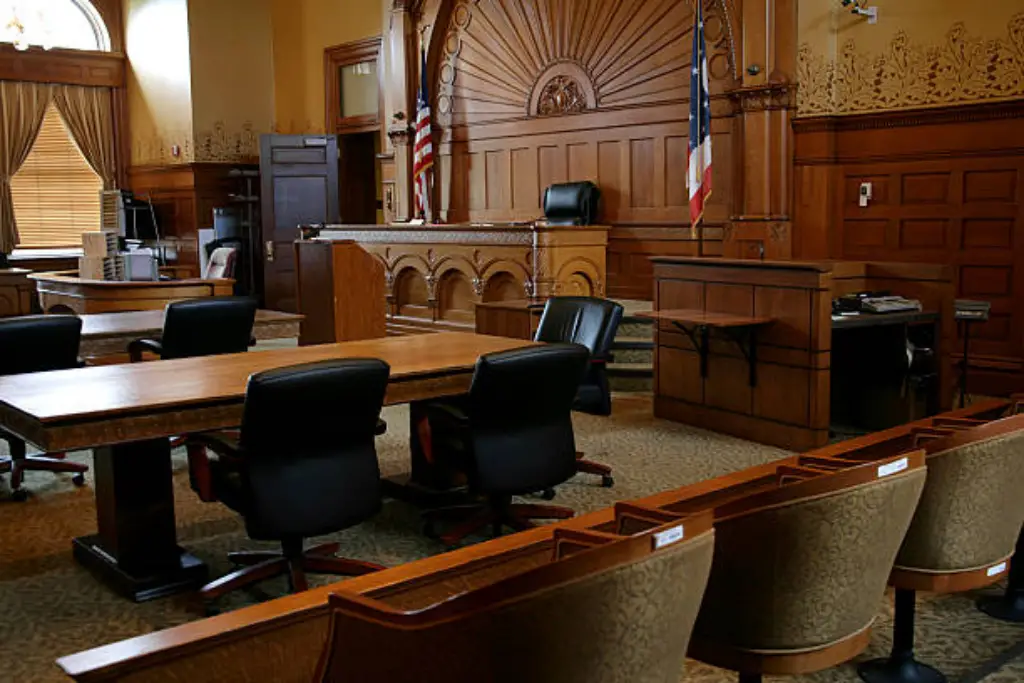
The courtroom feels impossibly cold as I stand before Judge Gregory, my seventy-two-year-old hands trembling against the polished oak table. My son Ryan is pointing at me like I’m a stranger, like I’m some obstacle blocking his path to fortune rather than the woman who gave him life. His voice cuts through the air with a venom I never imagined could come from the child I rocked to sleep countless nights.
“She doesn’t even know how to handle what she was left,” he declares, his words dripping with contempt. “This old woman is just wasting what she doesn’t deserve.”
Judge Gregory nods thoughtfully, reviewing the stack of legal documents before him. Ryan’s lawyer, a severe woman in a charcoal power suit named Miss Shaw, smiles with the confidence of someone who has already won. I watch that smile, feeling the ground shift beneath my feet, wondering how my life spiraled to this moment where I’m defending myself against my own child in a court of law.
But what none of them know, what not even Ryan suspects, is that I’m about to speak three words that will drain the color from the judge’s face and leave my son utterly speechless. Three words that will change everything.
Six months ago, my world was entirely different. My husband Arthur was still alive, though cancer was slowly stealing him from me. We had been married for forty-five years, building a life from absolutely nothing. When we married, Arthur owned only a battered pickup truck and an impossible dream of starting his own trucking company. I cleaned houses to help him afford gas. We survived on boxed macaroni and cheese for months, saving every penny we could scrape together.
Through sacrifice and determination, we built an empire. One truck became two, then five, then twenty. We employed fifty families, good people who depended on us. We bought a beautiful home where we raised Ryan, celebrating every birthday and Christmas, creating memories we thought would last forever.
Ryan was our pride and our joy. We gave him everything we never had: excellent schools, new clothes, vacations, opportunities neither Arthur nor I could have dreamed of as children. Arthur worked grueling hours so our son would never experience the poverty we knew. And Ryan seemed to appreciate it. He was affectionate, respectful, visiting every week, hugging me and saying, “Mom, you’re the best.” Arthur and I would exchange those knowing looks that only parents understand, silently agreeing that we had succeeded in raising a good man.
Everything changed three years ago when Ryan met Genevieve at a business conference. She was elegant and polished, always perfectly dressed in expensive clothes and heels that clicked authoritatively wherever she walked. From the moment he brought her to our home, my instincts screamed warnings. The way her eyes assessed everything, calculating worth rather than appreciating beauty. The false politeness masking barely concealed contempt. But Ryan was intoxicated by what he thought was love.
They married just six months after meeting. During the ceremony, Arthur squeezed my hand and whispered, “I hope we’re wrong about her.” My heart already knew we weren’t.
Ryan’s visits became increasingly sporadic. Every two weeks became monthly, then only special occasions. He always had excuses: work, traffic, commitments with Genevieve’s family. When he did visit, she accompanied him, her calculating gaze never ceasing its silent inventory of our possessions.
Then Arthur received his diagnosis. Pancreatic cancer, advanced stage. The doctors gave us six months, perhaps a year if we were fortunate. I called Ryan sobbing, needing my son desperately, needing him to see his father before time ran out. Ryan came, but Genevieve remained in the car, claiming allergies to hospitals. Arthur looked at me with those tired but still perceptive eyes, seeing truths I wasn’t ready to acknowledge.
During Arthur’s final months, I devoted myself entirely to his care. I administered medications, bathed him when he grew too weak, read his favorite books aloud, and held his hand through endless nights of pain. Ryan’s visits grew even rarer, always brief, with Genevieve waiting impatiently somewhere nearby.
Two weeks before Arthur died, he requested his longtime attorney and family friend, Ruth. They closeted themselves in his study for two hours while I waited anxiously outside, hearing only muffled voices. When Ruth emerged, tears glistened in her eyes. She hugged me tightly and said, “Margaret, your husband is a wise man. Trust him, even after he’s gone.”
Arthur died at home in our bed, my hand in his. His final words were, “Forgive me for what’s coming, my love, but it was necessary. Protect her.” I didn’t understand then. I simply wept and held his cooling body.
The funeral overflowed with people whose lives Arthur had touched. All fifty families from the company came to honor the man who had provided their livelihoods. Ryan attended in black, Genevieve beside him in a wine-colored dress that seemed inappropriately festive for a funeral. My son didn’t shed a single tear for the father who had given him everything.
A week later, Ruth arrived with Arthur’s will. As I expected, everything was left to me, but with unusual conditions. Arthur had handwritten special clauses stipulating that assets would remain in trust under my management until Ryan demonstrated the character, honor, and respect we had tried to instill in him. There were additional provisions Ruth didn’t read aloud that day, mysterious clauses about specific conditions under which Ryan could permanently forfeit his inheritance.
When Ryan heard the terms at the official reading, his face tightened with barely suppressed anger. Genevieve’s lips compressed into a thin white line. But they said nothing that day.
I tried continuing with life in our suddenly empty house. Every corner reminded me of Arthur. His coffee mug remained where he’d left it that final morning. His favorite shirt still hung in our closet. I would wake reaching for his warmth, finding only cold sheets.
Ryan stopped visiting entirely. His phone calls consisted only of excuses about being busy, having plans, promising to visit next week. Next week never arrived.
Two months after the funeral, Ryan invited me to dinner at his house. My heart leaped with hope for reconciliation. I baked his favorite apple pie and arrived with a genuine smile, imagining we might rebuild our family.
Genevieve opened the door without warmth. The house was immaculate but cold, decorated in sterile whites, grays, and blacks. No family photographs adorned the walls. Ryan sat in the living room with wine, barely acknowledging my arrival. The pie sat untouched all evening.
Dinner was unbearably tense. Finally, Genevieve dropped her fork with a sharp clink. “Let’s discuss Arthur’s money,” she announced.
My heart began racing.
“Don’t play ignorant, Margaret,” she continued with condescension. “Arthur left a considerable fortune. The company is worth millions, plus properties and bank accounts, and you control everything.”
“Genevieve, please,” Ryan interjected weakly.
She ignored him. “Ryan is the only son, the rightful heir. It’s unfair that you, a woman your age who never really worked, who was just a stay-at-home mom, controls all that money.”
The words felt like a physical blow. “Who never worked?” I repeated, my voice trembling. “I cleaned houses for years so Arthur could buy his first truck. I raised your husband. I kept our home running while Arthur built his company.”
“That’s not real work,” Genevieve said dismissively. “Anyone can clean and cook. What Arthur built was through his intelligence and effort, not yours. Now you, an old woman who probably can’t even use a computer, will waste everything he achieved.”
I looked at Ryan, waiting for him to defend me, to tell his wife she was completely out of line. But my son simply stared at his wine glass, swirling it slowly.
“Ryan,” I said brokenly. “Do you believe this?”
He finally met my eyes, and I saw something I’d never seen before. Not hatred but something worse: complete indifference. I was merely an obstacle to be removed.
“Be reasonable, Mom,” he said tiredly. “You don’t need millions of dollars. You live alone in that huge house with minimal expenses. I have plans, projects, ideas to expand the business. I can multiply what Dad built.”
“Your father left very clear instructions,” I replied, fighting tears. “He knew exactly what he was doing.”
Genevieve laughed bitterly. “Of course he knew. He knew you manipulated him on his deathbed when he was weak and confused from medication. You convinced him to leave you everything.”
I stood so abruptly my chair nearly toppled. “I will not stay here listening to this. Arthur was perfectly lucid when he made his will to protect his legacy.”
“Protect it from whom?” Genevieve shouted, also standing. “You’re a selfish, manipulative woman, Margaret. A leech who lived off her husband and now plans to keep everything he earned through his own effort.”
I fled that house with my heart shattered. I didn’t even take the pie I’d baked with such love. I drove home crying so hard I could barely see the road.
Genevieve’s words echoed endlessly: leech, manipulator, old woman wasting money. But worse than her cruelty was Ryan’s silence. My own son hadn’t spoken a single word in my defense.
I couldn’t sleep that night. Sitting on the bed I’d shared with Arthur for forty-five years, I stared at his photograph on the nightstand. “Why did you do this?” I asked his frozen smile. “Why did you put these conditions in the will? You knew this would happen.”
Photographs don’t answer, and the dead keep their secrets.
The following weeks brought silent torment. Ryan called once to apologize for Genevieve’s behavior, but his words sounded hollow and rehearsed. “She was stressed, Mom. She didn’t mean those things. But you have to understand our position. We need that money. You can’t be selfish enough to keep everything just because Dad left it to you.”
“Your father left it to me for a reason,” I replied, feeling something harden inside me. “When the time is right, you’ll receive what you’re owed.”
Ryan sighed with frustration. “And when will that be? When you’re ninety? When I’m too old to enjoy it? It’s not fair, Mom.”
He hung up without goodbye. I stood holding the phone, listening to the dial tone like the sound of my heart breaking repeatedly.
I began managing the company with Ruth’s guidance, discovering Arthur’s meticulous organization. Every document was perfectly filed. Every decision backed by detailed analysis. The company wasn’t just successful; it was solid as bedrock.
But I also discovered something disturbing: outstanding invoices in Ryan’s name. Loans Arthur had quietly paid over the past two years. Thirty thousand here, fifty thousand there. All marked “personal loan to Ryan, confidential.”
My son had been borrowing money from his father, and I’d never known.
“Why didn’t Arthur tell me?” I asked Ruth, pointing to the documents with shaking hands.
She sighed deeply. “Because he knew you’d defend Ryan regardless. Arthur wanted to protect you from the truth as much as he wanted to protect his company. That’s why he put those clauses in the will. He saw something you didn’t want to see.”
That night in Arthur’s study, I discovered a letter hidden among business papers, addressed to me in his shaky handwriting from his final days.
“My dearest Margaret,” it began. “If you’re reading this, I’m no longer with you, and Ryan is probably pressuring you for money. Forgive me for not telling you sooner, but our son has problems I tried solving in silence. He has gambling debts, Margaret. Large ones. For two years, I’ve been paying them secretly, hoping he would mature and leave those vices behind. But every time I paid one debt, another appeared. Genevieve knows. In fact, I think she encourages him.”
I stopped reading as tears blurred my vision. My innocent little Ryan, corrupted beyond recognition. How had this happened?
I continued, heartbroken. “I didn’t tell you because I know how much you love our son. I know you would have sold everything, mortgaged our house, left yourself with nothing to save him. But Margaret, some people don’t want to be saved. Some people just want more and more until they destroy everything. That’s why I made the will this way. To protect you, to protect what we built together, and to give Ryan one last chance to show who he really is. If he comes to you with humility, respect, and true love, then you’ll know my son still exists inside that man. But if he comes with lawyers, demands, and cruelty, then you’ll know we lost him long ago. In that case, Margaret, show no mercy. Activate the special clause in the will. Ruth knows what to do. Protect our legacy. Protect the fifty families depending on the company. And above all, protect yourself. I love you beyond death. Forever yours, Arthur.”
I cried for hours, holding that letter to my chest. Arthur had known everything. He had seen the future with clarity I, blinded by maternal love, never possessed. Now he’d left me with an impossible decision: believe in my son or believe in my husband.
Three months after the funeral, while I was still processing the truth about Ryan, the final blow came. A courier delivered a yellow envelope containing a court summons. Ryan was suing me for everything. Absolutely everything. The company, properties, bank accounts, even the house where I’d raised him.
His legal argument was devastating: I was an elderly woman, mentally incompetent, incapable of managing a company, and he was the rightful heir unjustly stripped of his rights by a will written under undue influence.
I sat on the living room floor with that summons, feeling the world stop. My son didn’t just want money. He wanted to declare me incompetent. He wanted to humiliate me publicly. He wanted to destroy me.
I called Ruth immediately. She arrived that afternoon with an expression mixing sadness and determination.
“I knew this would happen,” she said. “Arthur warned me. That’s why we drafted the will specifically this way. Remember the special clause I mentioned?”
I nodded weakly.
“It’s time you knew everything,” Ruth continued, extracting another document from her briefcase. “Arthur wrote: ‘If my son Ryan legally attempts to take what I have left my wife, if he sues her, takes her to court, attempts to declare her incompetent, or in any way uses the law to strip her of her inheritance, then he automatically and irrevocably forfeits all right to receive any part of my estate. Not only does he lose his future inheritance, but he is explicitly excluded forever. In that case, my wife has complete authority to dispose of all assets as she deems appropriate, including donations, sales, or any other action that protects the legacy we built together.'”
The silence following Ruth’s words was profound.
“You’re saying if I go to court, Ryan loses everything automatically?” I asked barely audibly.
Ruth nodded slowly. “Exactly. Arthur knew that if your son went to the extreme of suing you, it meant nothing remained of the man you raised. This was his way of giving you definitive proof while protecting the company and everything he built.”
I walked to the window, gazing at the garden Arthur and I had planted together years ago. The rose bushes he’d pruned every spring now grew wild without his careful hand.
“What if I just give him what he’s asking for?” I asked without turning.
“Then you’d betray your husband’s final wish,” Ruth replied firmly. “And you’d allow Ryan and Genevieve to destroy in months what took decades to build. Margaret, I’ve done some investigating. I know why they need money so desperately. Your son has gambling debts exceeding two hundred thousand dollars. Genevieve has credit card balances totaling another hundred fifty thousand. Together they owe so much that if you give them the company, they’ll sell it piecemeal to pay creditors. The fifty families depending on those jobs will be left on the street.”
That information hit like a physical blow. This wasn’t just about Ryan and me. Fifty families trusted the company to keep running. Fathers feeding their children with those salaries. Mothers paying for school and medicine.
Did I have the right to sacrifice all that to save a son who clearly didn’t want saving?
“There’s something else,” Ruth said, placing a folder on the table. “I hired a private investigator. What he discovered about Genevieve is disturbing. Read it when you’re ready.”
After Ruth left, I stared at that folder for hours before finally opening it. What I read chilled my blood.
Genevieve had been married twice before. Both marriages ended after she emptied her husbands’ bank accounts. The pattern was identical: marry, gradually take control of finances, accumulate debts in their names, then disappear with whatever she could carry before they realized what was happening.
The report included photographs. Genevieve at casinos signing large checks. Genevieve with a man who wasn’t Ryan, entering expensive hotels, dates corresponding to the six months after Arthur’s death.
My daughter-in-law hadn’t just manipulated my son into suing me. She was cheating on him while doing it.
I spent those two weeks before the hearing in constant agony. Every time the phone rang, I hoped it would be Ryan calling to apologize, to say he’d made a terrible mistake, that he would drop the lawsuit. But he never called. Not once.
I tried calling him three times, hanging up each time before it rang. What would I say? The fourth time, I let it ring. Genevieve answered.
“What do you want, Margaret?” she asked coldly.
“I need to talk to my son,” I replied, trying to keep my voice steady.
“Your son is busy preparing for the trial. The trial where he’ll finally get back what rightfully belongs to him.”
“Genevieve, please,” I begged, hating myself for pleading but unable to stop. “It doesn’t have to be this way. We can sit down, talk like family—”
She laughed cruelly. “Family? You stopped being family the day you decided to steal the money that belonged to Ryan. See you in court, old woman. Prepare to lose everything.”
She hung up. I stood holding the phone, feeling the last hopes of reconciliation vanish like smoke.
The night before the hearing, I read Arthur’s letter again. This time I didn’t cry. I felt something different growing inside me. Not hatred or revenge but clarity. Arthur had left me this test knowing exactly what would happen. He’d given me the tools to protect myself.
“It’s okay, my love,” I told Arthur’s photograph. “I’ll do what you asked. I’ll protect our legacy and let Ryan face the consequences of his decisions.”
I slept better that night than I had in three months. For the first time since Arthur died, I felt I wasn’t completely alone.
The morning of the hearing, I wore a pearl-colored dress Arthur always said made me look dignified and strong. I did my makeup carefully, not to hide my age but to show that a seventy-two-year-old woman could possess all the dignity and strength in the world.
Ruth picked me up early. In the car, we reviewed the strategy.
“Ryan is going to try painting you as a senile old woman who knows nothing about business,” Ruth explained. “They’ll bring false witnesses. They’ll manipulate numbers. They’ll do everything possible to make you look incompetent.”
“What do we do?” I asked, feeling nerves climb my spine.
Ruth looked at me with a small but determined smile. “We let them bury themselves. We let them present their case, tell all their lies, show exactly who they are. When it’s your turn to speak, you’ll simply tell the truth. The truth Arthur left in writing. The truth none of them know yet.”
We arrived at the courthouse thirty minutes early. The building was imposing, with tall columns and hallways echoing with every step. I sat on a polished wooden bench, waiting, feeling every minute stretch into eternity.
Then I saw them arrive. Ryan entered first in a black suit that made him look like a stranger. This wasn’t the boy I’d raised, who used to hug me and call me the best mom in the world. This was a man I didn’t recognize, with hard eyes and a clenched jaw.
Behind him came Genevieve in an ivory-colored dress and impossibly high heels that clicked against the marble floor. She looked at me with a triumphant smile, as if she’d already won.
Their lawyer, Miss Shaw, was a tall, severe woman with aggressively cut black hair, carrying an expensive leather briefcase and an expression that said she never lost cases. She shook my hand with a cold, calculating grip.
Ryan didn’t look at me once. He walked past as if I were invisible, as if I weren’t the woman who’d carried him for nine months, who’d walked floors with him all night when he had colic as a baby, who’d sold her own mother’s jewelry to help pay for his college tuition.
That indifference hurt more than any insult.
“All rise,” the bailiff announced as Judge Gregory entered. He was a man in his sixties with perfectly combed gray hair and gold-rimmed glasses, wearing the expression of someone who’d seen too many families destroy each other over money.
Miss Shaw opened with a perfectly constructed narrative, speaking of Ryan as a devoted son unjustly stripped of his inheritance by a will drafted under questionable circumstances.
“Your honor,” she said in a clear, professional voice, “my client is the only son of the late Arthur Miller. Throughout his life, he was an exemplary son who visited his parents regularly, supported them emotionally, and was present for every important moment.”
I had to bite my tongue to stop from shouting that it was a lie. For the past three years, Ryan had been absent more than present. But Ruth placed her hand on mine under the table, reminding me to wait.
“However,” Miss Shaw continued, “after his father’s death, my client discovered he’d been almost completely excluded from the inheritance. Everything was left in the hands of Mrs. Margaret Miller, a seventy-two-year-old woman with no business experience, no formal education in administration, and without the necessary skills to manage a company worth over five million dollars.”
Five million. Hearing that figure spoken aloud made it real. Arthur and I had built something worth five million dollars from a single old truck. And now my son wanted to take it all.
“Your honor,” the lawyer pulled documents from her briefcase, “we have evidence that Mrs. Miller has been making questionable financial decisions since her husband’s death. She’s rejected lucrative buyout offers for the company. She’s held onto properties that could be sold for significant profit. And most worryingly, she’s been refusing to consult with her son, the natural heir, on any important decisions.”
All lies. I hadn’t rejected any offers because I hadn’t received any. I held the properties because they generated steady income. And the reason I didn’t consult Ryan was that he’d never asked about the business until discovering how much money was involved.
They called their first witness, a man introducing himself as a financial adviser who’d supposedly worked with Arthur. I’d never seen him before in my life. He testified that Arthur had expressed concerns about my mental capacity in his final months, claiming I was confused, forgetting important things, having difficulty understanding basic financial concepts.
He lied brazenly under oath.
Ruth stood immediately. “Objection, your honor. This witness never worked with Mr. Arthur Miller. He doesn’t appear in any company documents. There are no records of payments in his name. There are no emails or correspondence proving he had any contact with the deceased.”
Judge Gregory frowned at Miss Shaw. “Do you have proof this witness actually worked with Mr. Miller?”
The lawyer hesitated barely perceptibly, but I saw it. “He worked as an external consultant, your honor. Not all consultants appear on the official payroll.”
The judge didn’t look convinced but allowed the testimony to continue.
The supposed adviser kept lying, claiming Arthur had mentioned several times wanting Ryan to control the company, but that I’d manipulated him to change the will. When that witness finished, they called another, then another, each with different stories, all painting me as senile, manipulative, and incapable.
I wondered where they’d found all these people willing to lie under oath. Then I remembered Ryan and Genevieve’s debts. When you owe that much money, finding people to lie is just a matter of paying them.
Finally, after two hours of false testimony, the moment I’d been dreading arrived. Miss Shaw called Ryan to the stand.
My son walked with steady gait, raised his right hand, swore to tell the truth, then sat and looked directly at me for the first time all morning.
His eyes were filled with resentment. Pure, simple resentment.
“Mr. Miller,” his lawyer began in a soft, almost motherly voice, “tell us about your relationship with your mother.”
Ryan sighed as if it pained him to speak. “My mother was always very controlling,” he said, each word like a knife in my heart. “Even when I was a kid, everything had to be her way. My father was always working, so she was the one who really ran the house.”
A lie. I’d been strict when necessary, like any mother, but never controlling. I’d supported Ryan’s every decision, every dream, every plan.
“When my father got sick,” Ryan continued, his voice taking on a perfectly rehearsed victim tone, “she wouldn’t let me be alone with him. She was always there, monitoring every conversation, controlling who could visit and when. I understand why now. She was making sure my father would change his will in her favor.”
“That’s not true!” I shouted, unable to stop myself.
The judge banged his gavel. “Order in the court. Mrs. Miller, you’ll have your chance to speak. For now, you must remain silent or I’ll have you removed.”
I bit my lip until I tasted blood. Ruth squeezed my hand hard.
Ryan kept talking, building a narrative where I was the villain and he was the poor son robbed by his own greedy mother. He talked about how I’d cut off all contact with him after Arthur’s death, how I refused to answer his calls or meet with him. He omitted the part where he’d stopped visiting me first, that his only calls were demands for money, that our only meeting ended with his wife calling me a leech.
“My mother never worked a single day in her life,” Ryan said with conviction that made me wonder if he actually believed his own lies. “Everything we have was built by my father. He was the genius, the hard worker, the visionary. She was just a housewife. And now she’s pretending to control an empire she didn’t build, doesn’t understand, and is destined to destroy through her own ignorance.”
Every word was like venom. Is this how my son saw me? Did he not remember the nights I spent ironing his clothes so he’d look nice for school? Did he not remember I’d sold the only gold ring my mother left me to pay for his summer camp? Did he not remember I’d worked cleaning houses on my knees on other people’s floors so his father could buy that first truck?
Ryan’s voice broke with emotion that would have seemed genuine if I didn’t know the truth. “I’m here because I have no other choice. My mother has become irrational. She spends money on unnecessary things. She rejects advice from professionals. And what’s most worrying is that she’s showing clear signs of mental decline. She forgets conversations. She confuses dates. Sometimes she doesn’t even remember if she’s taken her medication.”
I shot up from my chair so fast it fell backward with a crash echoing through the room.
“Liar!” I screamed with all my strength. “How dare you? How dare you invent those lies about your own mother?”
Judge Gregory banged his gavel repeatedly. “Mrs. Miller, this is your final warning. Sit down immediately or I’ll have you removed from this courtroom.”
Ruth pulled me down by the arm, whispering urgently. “Margaret, control yourself. This is exactly what they want. They’re trying to make you look unstable. Don’t give them what they’re looking for.”
I sat down, trembling with rage and pain. Ryan looked at me with an expression that could have passed for concern if I hadn’t seen the hidden satisfaction in his eyes. He was enjoying this. My son was enjoying watching me suffer.
Miss Shaw used my outburst perfectly. “As you can see, your honor, Mrs. Miller is exhibiting erratic and irrational behavior. She cannot control her emotions even in a formal setting like this court. How can we trust her to make rational decisions about millions of dollars and the future of fifty families depending on that company?”
Then Genevieve was called to the stand. She swore to tell the truth with her hand on the Bible, and I wondered if the book would burst into flames from contact with such falsehood.
She sat with perfect posture, crossed her legs elegantly, and began her performance. “My mother-in-law has always treated me with hostility,” she said in a soft victim-like voice. “From the day I met Ryan. I think she couldn’t accept that her son had his own life, his own family. I tried to get close to her many times. I’d invite her to dinner. I’d call her. I’d send flowers on her birthday. But she always rejected me with coldness.”
Lies. All lies. I’d welcomed her into my home with open arms. I’d tried to know her, to understand her, to love her like a daughter. But she’d always looked at me with those calculating eyes, evaluating, measuring, planning.
“After my father-in-law passed away,” Genevieve continued, her voice adopting a tone of deep sadness, “the situation got worse. Margaret became paranoid. She accused us of only wanting the money. She would scream at us when we tried to visit. One time, she even threatened to call the police if we didn’t get off her property.”
That part had happened, but she conveniently left out that they’d shown up unannounced with a notary demanding I sign papers giving them power of attorney over my bank accounts. Of course I kicked them out. Any sane person would have.
“What worries me most,” Genevieve said, looking directly at the judge with eyes glistening with perfectly timed fake tears, “is that Margaret is putting Arthur’s legacy at risk. He worked his entire life to build that company, and now it’s in the hands of someone who knows nothing about business, who refuses to listen to advice, who is letting it all deteriorate out of sheer pride and stubbornness.”
Judge Gregory was taking notes as Genevieve spoke. I tried to read his expression, but it was impossible. He’d perfected the art of not showing what he was thinking.
When Genevieve finished, she returned to her seat next to Ryan, who took her hand in a gesture of support that made me sick.
Miss Shaw approached the judge’s bench with the confidence of victory. “Your honor, we have clearly demonstrated that Mrs. Margaret Miller lacks the mental capacity and necessary experience to manage an estate of this magnitude. We’ve shown her behavior is erratic, her decisions questionable, and she represents a real risk to the economic well-being not only of my client but of the fifty families depending on that company.”
She paused dramatically. “Therefore, we request that Mrs. Miller be declared incompetent to manage the inheritance, that she be removed as executor of the will, and that all assets be immediately transferred to my client, Ryan Miller, who, as the only son and rightful heir, has the legal and moral right to receive what his father built.”
The judge nodded and looked toward our table. “Does the defense wish to present its case?”
Ruth stood slowly with the calm of someone holding a winning hand. “Yes, your honor, and it will be brief because the truth doesn’t need to be complicated.”
My heart was pounding so hard I thought everyone could hear it. This was the moment.
Ruth began in a clear voice. “Your honor, everything you’ve heard this morning is a carefully constructed narrative based on lies, false witnesses, and emotional manipulation. The truth is much simpler and is documented in the original will of Arthur Miller, a document drafted with full mental lucidity, certified by doctors and witnessed by public notaries.”
She pulled a folder from her briefcase. “But before we get into legal details, I’d like Mrs. Margaret Miller to share something with this court, something her son has clearly forgotten or chosen to ignore. Margaret, please take the stand.”
I stood on trembling legs. I walked to the stand, feeling the weight of all those eyes on me. The bailiff had me swear to tell the truth. I put my hand on the Bible and swore, knowing every word I was about to say was true, even if it hurt, even if it destroyed my son, even if it ended any chance of reconciliation.
I sat down and looked Judge Gregory directly in the eye. “Your honor, my name is Margaret Miller. I am seventy-two years old. I was married to Arthur Miller for forty-five years until his death six months ago. And I’m here because my only son is suing me for money he believes belongs to him.”
My voice sounded firmer than expected. Ruth had prepared me for this moment, but nothing could truly prepare me to look my son in the eye as I destroyed his lies one by one.
“My son says I never worked. That is a lie. I worked cleaning houses for ten years so his father could buy his first truck. I worked in the company office for another twenty years doing bookkeeping, handling clients, organizing routes. I don’t have a college degree in business. That’s true. But I built this company alongside my husband, brick by brick, with my own hands.”
I saw Ryan’s jaw clench. Genevieve was whispering something in his ear, probably telling him to stay calm.
“My son says I excluded him from my life after his father’s death. That is also a lie. He stopped visiting me long before that. The only times he’s called me in the last six months have been to demand money.”
“My son says I show signs of dementia, that I forget things, that I’m irrational. That is completely false.”
I took a folder from my bag that Ruth had given me that morning. “I have medical reports here from the last three months. Complete cognitive exams performed by three different neurologists. They all certify that I’m in full command of my mental faculties. My memory is perfect. My judgment is clear. And I’m more than capable of making my own decisions.”
Judge Gregory held out his hand and the bailiff took the documents to him. I watched as he reviewed them carefully, his eyebrows raising slightly.
“These are very thorough reports,” he commented. “Why did you decide to have these exams, Mrs. Miller?”
“Because my lawyer warned me this would happen,” I replied, looking directly at Ryan. “She told me my son would try to declare me incompetent to steal what his father left me. So I prepared. I made sure I had all the necessary documentation to prove I’m perfectly sane and capable.”
Ruth approached with another folder. “Your honor, we also have the company’s financial statements for the last six months since Mrs. Miller took full control. The company has increased its profits by twenty-two percent. She’s closed three major new contracts. She’s improved working conditions for employees. And she’s maintained zero debt. For someone supposedly incompetent, those are extraordinary results.”
I saw Miss Shaw’s face turn pale. They clearly hadn’t expected such thorough documentation.
The judge reviewed the financial statements with growing interest. “These numbers are impressive,” he admitted. “Mrs. Miller, how did you achieve this growth?”
“By listening to the people who actually know the business,” I answered honestly. “The managers my husband trained for years, the drivers who’ve been with us from the beginning. I don’t pretend to know everything, your honor. But I know how to recognize talent and loyalty when I see them. And I know my responsibility isn’t just to protect the money but to protect the fifty families depending on this company to survive.”
Then Ruth dropped the bomb I’d been waiting for. “Your honor, there’s something the plaintiff and his counsel don’t know about Arthur Miller’s will. Something that changes this case completely.”
She took out a thick document and placed it before the judge. “This is the complete will, not the summarized version read after the funeral. It contains specific clauses that were never publicly disclosed.”
The judge took the document and began reading. The silence in the room was so deep I could hear my own breathing. I watched the judge’s eyes move from line to line, his expression gradually changing from neutral to surprised and then to something that looked like respect mixed with sadness.
“This is extraordinary,” the judge muttered, more to himself than to the room.
He looked up and stared directly at Ryan. “Mr. Miller, did you know about this clause in your father’s will?”
Ryan looked confused. “What clause, your honor? I read the will. Everything was left to my mother with some vague promise I’d get my share when appropriate.”
“There’s more to it than that,” the judge said gravely. “Much more.”
He looked at Ruth. “Do you want to explain or would you prefer I read it aloud?”
Ruth looked at me and I nodded. It was time for the whole truth.
“Allow me,” Ruth said, taking the document. Her voice filled the room with the words Arthur had written, knowing exactly what would happen.
“The will of Arthur Miller. Special clauses drafted two weeks prior to his death. I, Arthur Miller, being of sound mind and body, as certified by the doctors present, do hereby establish the following: All my assets are to be placed in a trust managed by my wife, Margaret Miller. My son Ryan is not excluded from this inheritance, but his access to it is conditional.”
Ryan leaned forward in his chair, finally paying full attention.
“The conditions are these,” Ruth continued. “Ryan will receive his inheritance when he fulfills any of the following requirements: First, that he demonstrates for a minimum period of two years that he can hold a stable job and live within his means without accumulating gambling debts or irresponsible loans. Second, that he shows genuine respect toward his mother and acknowledges the sacrifice both his parents made for him. Third, that he demonstrates real interest in the well-being of the company and its employees, not just in its monetary value.”
Ryan’s face had gone from confusion to horror.
“But there is an additional clause,” Ruth said, her voice turning harder, “a clause Arthur hoped never to use, but which he included as a precaution. I quote directly: ‘If my son Ryan sues his mother, takes her to court, attempts to declare her incompetent, or in any way uses legal means to try and strip her of what I have left her, then he automatically and irrevocably forfeits all right to any part of my estate. In that case, Margaret will have absolute authority to dispose of all assets as she deems appropriate, including full donation if she so chooses.'”
The silence that followed was deafening.
I watched the color drain from Ryan’s face. I saw Genevieve half-rise from her chair in disbelief. I saw Miss Shaw close her eyes, knowing she’d just lost the case before it ever really began.
“No,” Ryan whispered. “That can’t be real. My father wouldn’t do that.”
Judge Gregory held up the document. “This will was drafted before three public notaries, two doctors who certified Mr. Miller’s mental capacity, and was legally registered. It is completely valid.”
I stood up from the stand. Ruth had told me this was my moment, the moment to say the three words that would change everything.
I walked to the center of the room, looking my son directly in the eyes for the first time with absolute clarity about who he really was.
“I inherited nothing,” I said, my voice clear and strong, echoing in every corner of that room.
The three words I’d rehearsed, that I’d dreaded saying, but now came out with absolute certainty.
Everyone stared at me, uncomprehending.
Judge Gregory frowned. “What do you mean by that, Mrs. Miller?”
I took a deep breath before continuing. “I mean exactly that, your honor. I inherited nothing. My husband did not leave me his fortune. What my husband did was put me in charge of protecting his legacy until his son proved himself worthy of receiving it. I am not the owner of those five million dollars. I am the guardian, the protector. And my job was to wait and see what kind of man my son would become when faced with the temptation of easy money.”
I saw Judge Gregory begin to understand. I saw something in his expression change as if he were seeing the brilliance of Arthur’s plan for the first time.
“Your husband created a test,” he said slowly.
“A test of character,” I nodded, feeling the tears finally start to roll down my cheeks, but making no attempt to stop them. “Exactly. Arthur knew that money changes people. He wanted to know if his son valued his fortune or his family more. He wanted to know if Ryan would be able to wait, to respect, to trust, or if he would immediately run to the courts to take by force what his father wanted to give him with love.”
I turned to Ryan, who now had his head in his hands. “And now I have my answer. Now I know what you chose, son. You chose the money. You chose to believe a woman you’ve known for three years over the mother who raised you. You chose to humiliate me in public, to declare me incompetent, to destroy my reputation. And because of that choice, by bringing this case to court, you’ve activated the clause your father dreaded having to use.”
Ryan’s head snapped up, his eyes red. “This is a trap,” he shouted, jumping to his feet. “It’s a cruel trap. My father set me up so I could never get what’s mine.”
His voice was breaking with every word, but I no longer felt pity for him, only the terrible weight of the truth Arthur had seen long before I had.
“It wasn’t a trap,” I said, my voice firmer than I felt inside. “It was an opportunity. An opportunity to prove you’d learned the values we tried to teach you. Your father loved you so much that he was willing to risk his entire legacy just to give you one last lesson about what really matters in life. Not money, not power, but character, integrity, respect.”
Judge Gregory banged his gavel, demanding order, because Genevieve had also stood up, screaming that this was all a conspiracy, that Ruth and I had forged documents, that we’d manipulated the will after Arthur’s death. But her voice sounded desperate, like someone watching their house of cards collapse.
“Order,” the judge roared with authority that made everyone fall silent instantly. “Sit down immediately or I’ll clear this courtroom.”
Genevieve and Ryan slumped back into their chairs. Miss Shaw had her head down, frantically shuffling through papers as if she could find some legal escape from this disaster.
Ruth used the moment to present more evidence. “Your honor, there’s something else the court needs to know. Something that explains why Ryan needs this money so desperately.”
She pulled out another folder filled with documents I’d reviewed weeks ago but which still pained me every time I saw them.
“For the last three years, Ryan Miller has accumulated gambling debts totaling two hundred forty-three thousand dollars. We have records from casinos, receipts from private lenders, and bank statements showing constant withdrawals and deposits that don’t correspond to any known legitimate income.”
Ruth placed documents on the judge’s desk one by one, painting a devastating picture. Ryan was as pale as a ghost.
“Additionally,” Ruth continued without mercy, “his wife Genevieve has credit card debts of one hundred sixty-two thousand dollars. Together, they owe over four hundred thousand dollars to various creditors. Some of those creditors are not exactly legitimate banking institutions. We’ve identified at least three loans with organizations that could be described as predatory lenders with connections to criminal activities.”
Judge Gregory looked at the documents with an increasingly serious expression. “Are you saying the plaintiff and his wife are being pressured by criminals to pay these debts?”
Ruth nodded. “Exactly, your honor. This lawsuit was never about inheritance rights or genuine concern for Margaret’s well-being. It was a desperate attempt to get fast cash to pay off dangerous debts.”
“That’s not true,” Genevieve shouted, but her voice lacked conviction. “You’re making all this up to make Ryan look bad.”
Ruth turned to her with a look that could cut steel. “Would you like me to bring the lenders in as witnesses? Because several of them would be happy to testify about the missed payments and the threats they’ve made. In fact, we have recordings of phone calls where they discuss exactly that.”
Genevieve fell silent, finally defeated.
Ryan had his head in his hands again, his shoulders shaking. I didn’t know if he was crying or just trying to disappear. Part of me, the part that was still his mother, wanted to go to him, to hug him and tell him everything would be okay. But the other part, the part Arthur had prepared for this moment, knew I needed to see this through to the end.
“There is one final piece of evidence,” Ruth said, and her voice now held a note of genuine sadness, “something Margaret didn’t want us to present. But I insisted because the court needs to see the full picture.”
She took out a manila envelope and extracted several photographs. “These are photographs taken by a private investigator over the last three months. They show Genevieve Miller in the company of another man, not her husband, entering hotels, expensive restaurants, always paid for with credit cards in both of their names.”
The photographs were passed from hand to hand until they reached the judge.
I didn’t want to look, but I couldn’t help it. There was Genevieve laughing with a younger man, entering a luxury hotel, her hand on his back with a familiarity that left no doubt. The dates on the photos corresponded to days when she’d told Ryan she had work meetings or family commitments.
Ryan finally looked up as the bailiff placed the photographs before him. I saw the exact moment his world fell apart. I watched him look at each image, his face shifting from disbelief to recognition and then to total devastation.
He turned slowly toward Genevieve, who was now staring at the floor with no defense possible.
“Genevieve.” His voice was just a broken whisper. “What is this?”
She didn’t answer. She couldn’t. There were no words that could explain the inexplicable. There were no excuses that could justify the unjustifiable. Her silence was answer enough.
“Your honor,” Ruth said, retaking control of the room, “we present all this evidence not to humiliate the plaintiff, but to show the full context of this lawsuit. Ryan Miller didn’t come to this court because he was worried about his mother’s well-being or his father’s legacy. He came because he’s desperate, manipulated, and trapped in a situation he created with his own bad decisions. And instead of asking his family for help, he chose to destroy it.”
Judge Gregory leaned back in his chair, taking off his glasses to rub his tired eyes. He’d seen many horrible family cases in his career, but even for him, this seemed particularly painful.
“I need a recess,” he finally announced. “Thirty minutes. When I return, I’ll give my verdict.”
He stood and left through a back door. The bailiff announced the recess, and suddenly everyone was in motion.
Ryan was still sitting motionless, staring at the photographs as if he could change what they showed just by looking at them long enough.
Genevieve stood up quickly and tried to leave the courtroom, but Ryan grabbed her by the arm.
“Don’t you dare leave,” he said in a voice I’d never heard from him before, a voice full of pain and rage and betrayal. “You stay here and face what you did. You owe me that much at least.”
She ripped her arm away with a violent tug. “I don’t owe you anything. You’re just as guilty as I am. You’re the one who agreed to sue your own mother. I just gave you the push you needed.”
“For the money?” Ryan asked, tears streaming freely down his face. “You did all this for money? The hotels with that man? Convincing me to destroy my relationship with my mother? All for money?”
Genevieve laughed bitterly. “And why did you do it? For the love of justice? Don’t be a hypocrite, Ryan. We both wanted the money. The difference is, at least I’m honest about it.”
She left then, her heels echoing on the marble floor like gunshots. Ryan was left alone at his table, surrounded by the wreckage of his life.
Miss Shaw gathered her things quickly and left too, probably already calculating how to distance herself from this disastrous case before it affected her reputation.
I slowly approached Ryan. Ruth tried to stop me, but I shook my head. I needed to do this.
I sat in the chair next to him where Genevieve had been sitting moments before.
“Mom,” he said without looking at me, his voice broken into a thousand pieces. “I’m sorry. I’m so sorry. I don’t know how I got to this point. I don’t know when I became this person.”
I placed my hand on his, the hand I’d held when he took his first steps, that I’d bandaged when he scraped his knees playing, that I’d clapped for at every one of his achievements.
“I don’t know either, son,” I said softly. “But I know your father saw this coming long before any of us. That’s why he did what he did. Not to punish you, but to give you a chance to wake up before it was too late.”
“But it is too late,” Ryan whispered. “I’ve lost everything. The inheritance, my marriage, your respect, everything.”
I looked at him then, really looked at him, trying to find the boy he’d been in the broken man who sat before me.
“You haven’t lost everything,” I said softly. “You’re still alive. You can still change. You can still become the man your father hoped you would be. But Ryan, that has to start with you. Not with money, not with inheritances, but with looking in the mirror and deciding who you want to be.”
He finally looked at me, his eyes red and swollen. “Can you ever forgive me?”
The question broke my heart because I didn’t have an easy answer.
“I don’t know,” I admitted honestly. “What you did today, how you humiliated me, the lies you told about me, that doesn’t get erased easily. But you are my son, and that’s a connection that not even you could completely break, even though you tried with all your might.”
The bailiff announced that the judge was returning. Ryan and I separated, each returning to our side of the room. But something had changed in those thirty minutes. It wasn’t reconciliation. It wasn’t even forgiveness. It was simply the acknowledgment of a painful truth we’d both have to carry for the rest of our lives.
Judge Gregory entered with a solemn expression. He sat, organized his papers, and looked at all of us with the gravity of someone about to change lives forever.
“I’ve reviewed all the evidence presented. I’ve read the complete will of Arthur Miller multiple times, and I must say, in thirty years on the bench, I’ve never seen a document so meticulously designed, nor a situation so tragically predictable.”
He paused, letting his words settle in the room.
“Mr. Arthur Miller was not just a successful businessman. He was a man who deeply understood human nature. He saw the weakness in his son, and instead of simply disinheriting him, he gave him a test, an opportunity to prove that the values he tried to instill in him his entire life had taken root enough to withstand the temptation of easy money.”
The judge looked directly at Ryan. “Mr. Miller, you failed that test. You didn’t just fail it. You failed it in the most spectacular way possible. You sued your own mother. You attempted to declare her incompetent with false testimony. You humiliated her publicly with baseless accusations. And you did it all while your wife was deceiving you and you were both racking up debts you planned to pay with your family’s money.”
Ryan had lowered his head again, unable to meet the judge’s gaze.
“Therefore,” Judge Gregory continued, his voice resonating with final authority, “in accordance with the specific clauses of the will of Arthur Miller, I declare that Ryan Miller has irrevocably forfeited all right to any part of his father’s inheritance. The lawsuit is dismissed with prejudice, meaning it cannot be filed again. And Mrs. Margaret Miller maintains complete authority over all assets of the estate to dispose of them as she deems appropriate.”
The gavel struck the desk with a sound that signaled the end of everything.
There were no shouts, no protests, just a heavy, definitive silence.
I left the courthouse with Ruth by my side. The sun was shining outside, a cruel contrast to the darkness of what had just happened inside.
“You did it,” Ruth said, putting a hand on my shoulder. “You protected Arthur’s legacy exactly as he wanted.”
I nodded, but I didn’t feel victorious. I just felt an enormous emptiness where my family used to be.
Two weeks after the trial, I made a decision. I called Ruth and asked her to set up a meeting with the company’s senior managers and employee representatives.
When everyone was gathered in the conference room Arthur had used for decades, I explained my plan.
“The company is worth five million dollars,” I began, looking at the faces of people who’d worked faithfully beside my husband for years. “And after much reflection, I’ve decided what to do with it. I’m going to create a trust that will ensure the company continues to operate, that all of you keep your jobs, and that profits are distributed fairly among everyone who contributes to its success.”
I saw surprise on their faces.
“Additionally,” I continued, “I’m going to donate two million dollars to organizations that help people with gambling addictions and victims of financial abuse. I’ll do it in Arthur’s name because I know he would have wanted his legacy to help prevent other families from going through what we went through.”
One of the oldest managers, a man named Caesar who’d worked with Arthur from the beginning, raised his hand. “And what about you, Mrs. Miller? What will you do with the rest?”
I smiled for the first time in weeks. “With the rest, I’m going to live modestly, just as Arthur and I always lived. I don’t need mansions or luxuries. I need peace and the knowledge that I honored the final wish of the man I loved for forty-five years.”
One month after the trial, Ryan showed up at my door. I hadn’t spoken to him since that day in court. He looked different: thinner, with deep dark circles under his eyes, wearing simple clothes instead of expensive suits.
“Can I come in?” he asked in a barely audible voice.
I let him in, and we sat in the same living room where we used to watch movies when he was a boy.
“I divorced Genevieve,” he said after a long silence. “Or rather, she divorced me the moment it was clear there would be no money. She disappeared with that man from the photographs. Didn’t even leave a note.”
I didn’t say anything. I just waited for him to continue.
“I sold everything I owned to pay the most urgent debts. My car, my furniture, my expensive clothes, everything. And I still owe almost one hundred thousand dollars. Money I’ll probably never be able to repay.”
“Why are you here, Ryan?” I finally asked.
He looked at me with eyes that finally seemed to see reality clearly. “Because I need to tell you something. Something I should have said months ago. You were right. Dad was right. I became someone unrecognizable. I let greed and Genevieve and my own weaknesses turn me into a monster capable of destroying his own mother for money.”
The tears were streaming down his face now. Genuine tears of remorse that no performance could fake.
“I’m not here to ask for forgiveness because I know I don’t deserve it. I’m not here to ask for money because I know I lost that right forever. I’m just here to tell you that I’m sorry. I’m sorry for every cruel word I said in that courtroom. I’m sorry for every lie I told. I’m sorry for wasting the last lesson Dad tried to teach me.”
I felt something inside me begin to soften, but not completely. The pain was still too fresh, the betrayal too deep.
“I appreciate you coming to say this,” I replied carefully. “But Ryan, words are easy. True repentance is shown through actions over time, not with an apology in a moment of desperation.”
He nodded, wiping his tears. “I know. That’s why I’m not asking you to forgive me now. I’m just telling you that I’m going to spend the rest of my life trying to become the man Dad hoped I would be. The man you and he deserved as a son. Even if it’s too late to get back what I lost, it’s not too late to change who I am.”
He got up to leave, but before he reached the door, he turned back one last time.
“One more thing, Mom. Thank you.”
I frowned, confused. “Thank you for what?”
“For not giving up on Dad’s will. For being strong enough to do what he asked, even though it meant losing me. Because if you had given me that money when I demanded it, I would have ended up dead or in jail. By denying me, even though it doesn’t seem like it now, you probably saved my life.”
He left then, and I was alone again in that house full of memories. But this time, the silence felt different. It wasn’t the silence of defeat but the silence of resolution.
Six months later, the company was still growing. The employees worked with renewed pride, knowing they were part of something bigger than just a business. The families who depended on those salaries could sleep peacefully. And the name Arthur Miller had become synonymous with integrity in our community.
Ryan got a job as a truck driver, the same job his father had done forty-five years ago when he started. I saw him occasionally, always from a distance, always with that look of humble determination of someone rebuilding his life from scratch. We hadn’t spoken again since that day in my living room, but I kept up with him through other people. I heard he was paying off his debts little by little. I heard he’d started attending meetings for people with gambling addictions. I heard he was living in a small apartment and that every penny he earned went toward what he owed or his basic needs.
One evening, while looking through old photographs of Arthur and me, I found one last letter he’d hidden between the pages of our wedding album. It was addressed to me with instructions to open it only “after it’s all over.”
With trembling hands, I broke the seal.
“My dearest Margaret,” it said in his familiar handwriting. “If you’re reading this, it means my plan worked, though probably at a terrible cost to your mother’s heart. I know you loved Ryan more than your own life. I know that protecting him was your strongest instinct. That’s why I knew I needed to make this decision for you. Not because I didn’t trust you, but because I know you too well. You would have sacrificed everything. You would have given every last cent just to save our son. And in doing so, you would have destroyed him completely.”
“Sometimes the greatest love is letting people face the consequences of their actions. It’s the hardest thing a parent can do, but it’s the only thing that can truly save them. I hope Ryan understands this one day. I hope he uses this second chance we gave him. And if he doesn’t, at least you’ll know we tried everything we could.”
“I love you beyond time and death. And even though I’m not there to hold your hand, I hope you feel my presence every time you have to make a hard decision, because the best decisions are rarely the easy ones. Forever yours, Arthur.”
I folded the letter carefully and held it to my heart. Arthur was right, as always.
The best legacy isn’t the money you leave. It’s the character you build. It’s the strength you inspire. It’s the love that holds firm even when it hurts.
That night, for the first time since his death, I slept soundly. I dreamed of Arthur when he was young, with his bright smile and strong hands, building something beautiful from nothing. And when I woke up, I knew with absolute certainty that I had honored his memory in the only way that truly mattered.
The real legacy isn’t what you leave in the bank. It’s what you leave in people’s hearts. And money can never buy what Ryan lost that day in court: the unconditional love and respect of his mother. But it also can’t buy what he finally gained: the chance to become the man he was always supposed to be.
If you’ve ever been betrayed for money, if your own family has ever turned its back on you out of greed, remember this: dignity is not inherited, it is built. And sometimes true love means saying no, even when it breaks your heart. Because only in the deepest darkness can we find the strength to become who we’re meant to be. The three words “I inherited nothing” didn’t just save Arthur’s legacy. They saved my son’s soul, giving him the chance to rebuild his life on a foundation of character rather than cash. And in the end, that was the greatest inheritance of all.

Sophia Rivers is an experienced News Content Editor with a sharp eye for detail and a passion for delivering accurate and engaging news stories. At TheArchivists, she specializes in curating, editing, and presenting news content that informs and resonates with a global audience.
Sophia holds a degree in Journalism from the University of Toronto, where she developed her skills in news reporting, media ethics, and digital journalism. Her expertise lies in identifying key stories, crafting compelling narratives, and ensuring journalistic integrity in every piece she edits.
Known for her precision and dedication to the truth, Sophia thrives in the fast-paced world of news editing. At TheArchivists, she focuses on producing high-quality news content that keeps readers informed while maintaining a balanced and insightful perspective.
With a commitment to delivering impactful journalism, Sophia is passionate about bringing clarity to complex issues and amplifying voices that matter. Her work reflects her belief in the power of news to shape conversations and inspire change.