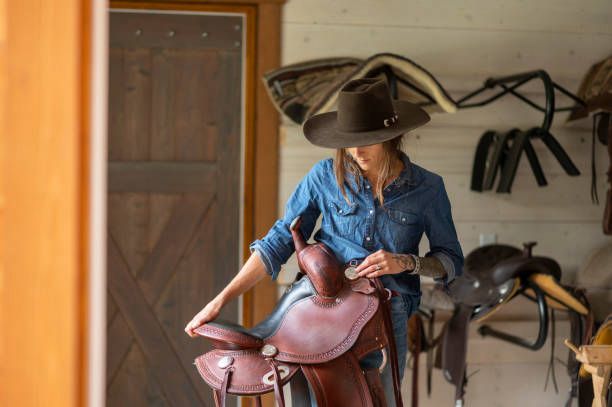
They Call Me Cowgirl Barbie—They Don’t Know I Run Everything
I don’t usually get riled up about strangers. After five years of running this ranch alone, I’ve developed what my grandmother used to call a “thick hide”—the ability to let ignorance roll off my back like water off a duck.
But today? Today I nearly snapped.
It wasn’t the first time someone had looked at me and seen exactly what they expected to see: blonde hair, young face, maybe playing rancher until something easier came along. It happened at the feed store, at the livestock auction, at the bank when I applied for equipment loans. Always that same look, that same dismissive assessment.
What they didn’t see was the calluses on my palms, the scar on my forearm from barbed wire, the confidence in how I moved—the muscle memory of someone who’d been doing this work so long it was second nature.
They didn’t see someone who’d earned every acre.
But I was about to teach them a lesson they wouldn’t forget.
Chapter One: The Feed Store
It started at Morrison’s Feed & Supply, the only agricultural store within fifty miles of my ranch. I’d been up since four-thirty that morning dealing with a breach in the fence line where a tree had fallen during last night’s storm. By the time I made it to town, I was running on black coffee and determination, my truck bed already loaded with the fallen branches I’d chainsawed and cleared before the cattle could escape.
I walked into Morrison’s wearing my usual work uniform—mud-caked Ariat boots that had seen five hard years of daily use, faded Wrangler jeans with a tear in one knee from catching on barbed wire last week, and a long-sleeved shirt that had once been navy blue but had faded to something closer to dusty gray. My blonde hair was pulled back in a practical braid and tucked under a beat-up ball cap. I probably had dirt smudged on my face, and I definitely smelled like a combination of cattle, hay, and honest sweat.
The young guy behind the counter—couldn’t have been more than twenty-two, with the kind of soft hands that told me he’d never hauled hay or pulled a calf—looked up from his phone and gave me a once-over that made my jaw tighten. His eyes lingered on my blonde braid, then traveled down to my boots, and I saw the exact moment he made his assessment and filed me under “clueless city girl playing farm.”
“Can I help you, ma’am?” he asked, his tone just polite enough to avoid being outright rude, but with that undertone of condescension I’d heard a thousand times before.
“I need six mineral blocks, a roll of high-tensile wire—the 12.5 gauge—and a box of those insulated staples,” I said, pulling out the list I’d made that morning. “Also need to pick up the order I called in yesterday—gate hinges and a new post driver.”
He blinked at me like I’d just spoken Mandarin. “Uh, sure. Let me just… Is your husband coming in to load all that? That wire’s pretty heavy.”
I felt my smile go tight and cold. “My husband left five years ago,” I said evenly. “Took his truck, his hunting rifles, and his dignity. Left me with 240 acres, a herd of Red Angus cattle, and a mortgage. The cows didn’t seem to care one way or another, and I’ve been loading my own damn truck ever since.”
The kid’s face went red. “I didn’t mean—”
“I know exactly what you meant,” I interrupted, keeping my voice calm even though my heart was pounding with frustration. “You looked at me and saw blonde hair and assumed I was picking up supplies for someone else. That I couldn’t possibly know the difference between 12.5 gauge wire and baling twine. That I need a man to lift fifty pounds.”
I leaned against the counter, meeting his eyes directly. “I birth calves at two in the morning in February snowstorms. I haul hundred-pound hay bales from sunup to sundown. I’ve fixed broken water lines in negative-degree weather with frozen fingers. I can back a trailer through a narrow gate better than most truckers, and I can tell you the medication schedule and birth weight of every single one of my cattle without consulting a record book. So yes, I can load my own truck.”
The silence in the store was deafening. An older farmer who’d been browsing in the back aisle gave me a subtle nod of approval before ducking his head and pretending he hadn’t heard the exchange.
“I’m sorry, ma’am,” the kid finally mumbled. “Let me get your order together.”
I waited while he gathered everything, and when it was time to load, I did it myself—all of it, including the 80-pound roll of wire that I heaved into the truck bed with the ease of long practice. The kid watched from the doorway, probably waiting for me to struggle.
I didn’t give him the satisfaction.
As I climbed into my truck, I caught sight of myself in the rearview mirror. Blonde braid, dirt-smudged cheek, exhaustion around my eyes. I understood, in some distant, logical part of my brain, why people made assumptions. I didn’t look like what they expected a rancher to look like.
But if anyone bothered to look closer, they’d see someone who’d earned every acre. Someone who refused to quit no matter how many times she was underestimated.
Someone who was about to face a threat far worse than casual sexism.
Chapter Two: The Ranch That Built Me
My ranch—officially called the Double M Ranch, named for my grandmother Martha Mae—sits in the rolling hills of Central Texas, where the land transitions from flat prairie to something wilder and more challenging. It’s not the prettiest land or the most fertile. The soil is rocky, the climate harsh with scorching summers and unpredictable winters, and every pasture has to be fought for against invasive cedar and mesquite.
But it’s mine.
Well, mine and the bank’s for another ten years, but I’d made every payment on time, even in the lean years.
I’d inherited the place from my grandmother when I was twenty-seven, newly married to Daniel and pregnant with optimism about building a life together. Grandma Martha had been a rancher herself, widowed young and too stubborn to sell even when everyone told her a woman couldn’t make it alone. She’d proved them all wrong, running the ranch for forty-three years before her heart finally gave out.
“This land has a way of showing you what you’re made of,” she’d told me the last time I saw her, her weathered hand gripping mine with surprising strength. “It doesn’t care if you’re pretty or plain, man or woman. It just cares if you’re willing to do what needs doing.”
When Daniel and I took over, I’d been naive enough to think we’d grow old here together. He had different ideas. Turned out he’d wanted to marry a rancher’s granddaughter, not actually do the work of ranching. He stuck it out for two years of early mornings, veterinary emergencies, and the endless, backbreaking labor before deciding he’d rather work in his cousin’s air-conditioned office in Austin.
“This isn’t a life, Sarah,” he’d said, packing his things. “This is just existence. I want more than mud and manure.”
“Then go get it,” I’d replied, too tired and too hurt to fight him.
He’d left on a Tuesday morning, and by Tuesday afternoon I was birthing a calf that couldn’t wait for my marriage to finish falling apart. That’s when I learned the most important lesson of ranching: the work doesn’t care about your personal drama. The cattle still need feeding. The fences still need mending. Life goes on, whether you’re ready or not.
Five years later, I’d built something I was proud of. My herd was healthy and growing. I’d upgraded the barn, installed solar panels to offset electricity costs, and implemented a rotational grazing system that had improved pasture health dramatically. The west pasture—thirty acres that had been overgrazed and nearly dead when I inherited it—was now my pride and joy, restored through careful management and sheer stubborn determination.
I did it all alone. Or mostly alone. Roy, my closest neighbor at sixty-eight years old, helped sometimes with the heavy machinery work. Lucia, my best friend from high school who’d stayed in the area, would come over on weekends to help with whatever needed doing. The local large-animal vet, Dr. Patterson, had become a friend through countless emergency calls.
But day to day, hour to hour, it was just me and Pepper, my Australian Shepherd. We’d wake up before dawn, do the morning check of the herd, fix whatever had broken overnight, handle any emergencies, and fall into bed exhausted only to do it all again the next day.
People in town still treated me like I was playing rancher. Like any day now I’d wake up, realize this was too hard, and sell to one of the developers who’d been circling like vultures as the area slowly gentrified.
Even my neighbors—good people who I’d helped more times than I could count—had a tendency to treat me like I was fragile. Roy once drove through a snowstorm to check on me, worried I wouldn’t be able to handle it alone, only to find I’d already repaired the frozen water line to his cattle tank because I’d heard it had burst and knew his arthritis made it hard for him to work in the cold.
“You didn’t need to do that, Sarah,” he’d said, looking embarrassed.
“I know,” I’d replied. “But you’re my neighbor. That’s what neighbors do.”
Still, I saw it in his eyes—the surprise that I’d handled it, the grudging respect mixed with discomfort that a young woman had rescued him instead of the other way around.
I understood it, even if I resented it. We all carry our assumptions. But understanding didn’t make it any less exhausting to constantly prove myself.
And I was about to discover that some people would do far more than underestimate me.
Some would actively try to destroy everything I’d built.
Chapter Three: The Letter
That day, after the incident at the feed store and the long drive home with a truck full of supplies, I pulled up to my barn and immediately knew something was wrong.
Pepper, who’d been waiting for me in the shade of the barn, wasn’t doing her usual happy dance of greeting. Instead, she stood rigid, her tail low, her attention fixed on the barn door. A low growl rumbled in her throat—something she never did unless there was genuine danger.
“What is it, girl?” I asked, stepping out of the truck carefully.
That’s when I saw it. A piece of white paper, nailed to my barn door with what looked like a railroad spike. The paper fluttered slightly in the afternoon breeze, and even from a distance, I could see the dark, bold handwriting.
My heart started pounding as I approached. Pepper stayed close to my leg, still growling softly. I pulled the spike out—it had been driven deep into the old wood—and unfolded the paper with shaking hands.
The message was short and menacing:
“I know what you did with the west pasture. You took something that wasn’t yours to take. There will be consequences.”
No signature. No explanation. Just that cryptic, threatening message that made my stomach drop and my hands go cold despite the Texas heat.
I stood there for a long moment, reading and rereading the words, trying to make sense of them. The west pasture? The land I’d spent three years restoring, turning from overgrazed wasteland into productive, healthy grassland? What could anyone possibly have against that?
Unless someone thought I’d stolen the land somehow? But that was ridiculous—I had the deed, clear title going back to my grandmother’s purchase forty years ago.
So what the hell did this mean?
I looked around, suddenly very aware of how isolated I was out here. The nearest neighbor was Roy, two miles away. The road to my ranch was a long, winding dirt track that saw maybe three vehicles a week besides my own.
If someone wanted to threaten me, this was the perfect place to do it.
Pepper nudged my hand with her nose, whining softly. I reached down and scratched behind her ears, taking comfort in her solid presence.
“It’s okay, girl,” I said, trying to convince myself as much as her. “Probably just some idiot trying to scare me.”
But as I carried my supplies into the barn, I couldn’t shake the feeling of being watched. The hair on the back of my neck stood up, and I found myself constantly looking over my shoulder, scanning the tree line and the hills beyond my property.
That night, I barely slept. Every sound made me jump—the barn cat knocking something over, a coyote yipping in the distance, the normal settling sounds of an old house. I kept the letter on my nightstand, reading it over and over by the light of my phone, trying to decode some hidden meaning.
The next morning, exhausted and anxious, I went out to do my usual dawn check of the herd. Everything seemed normal until I reached the west pasture.
There, in the soft dirt near the pond I’d worked so hard to restore, were fresh footprints. Large boots, men’s size judging by the shape, made sometime during the night. They approached the fence line, walked along it for about twenty feet, then headed back toward the county road.
Someone had been on my property. Someone had been watching.
My hands were shaking as I pulled out my phone and took pictures of the prints. Then I noticed something else—subtle scratches on the barn door near where the letter had been nailed, like someone had tested the wood first before driving in the spike.
This wasn’t just a prank. This was deliberate, calculated intimidation.
And I was scared.
But I was also angry. This was my land. My home. My grandmother’s legacy. And no one—absolutely no one—was going to scare me away from it.
Chapter Four: Calling in Reinforcements
I’m not too proud to admit when I need help. That’s one thing five years of solo ranching had taught me—there’s a difference between independence and foolish stubbornness. Independence means doing what you can on your own. Foolish stubbornness means refusing help when you clearly need it.
I needed help.
I called Roy first. He answered on the second ring, already sounding concerned because I never called this early unless there was an emergency.
“Sarah? What’s wrong? The cattle okay?”
“Cattle are fine,” I said, surprised by how steady my voice sounded given the fear churning in my stomach. “But Roy, someone’s been leaving threatening letters. And there are footprints by my west pasture pond. Someone’s been on my property at night.”
There was a long pause. Then: “I’m on my way. Don’t go out there alone. You armed?”
“Shotgun’s in the house,” I confirmed. Grandma Martha’s old Remington, which I kept clean and loaded for coyotes and the occasional rattlesnake.
“Good. Keep it close. I’ll be there in fifteen minutes.”
My second call was to Lucia. She worked as a paralegal in the county courthouse and knew everyone in local law enforcement.
“You need to file a report with the sheriff’s department,” she said immediately after I explained the situation. “This is trespassing and harassment at minimum. Do you have any idea who might be doing this?”
“No clue,” I admitted. “The letter mentioned the west pasture specifically. It said I ‘took something that wasn’t mine to take.’ But I don’t know what that means.”
“Have there been any property disputes? Anyone claiming you encroached on their land?”
“Nothing like that. I had the property surveyed two years ago when I put up new fencing. Everything’s exactly where it should be.”
“Okay, I’m calling Deputy Martinez right now,” Lucia said. “He’s good people, and he won’t brush this off. And Sarah? I’m coming over after work. You shouldn’t be alone out there right now.”
By the time Roy arrived in his old Ford truck, I’d made coffee and was sitting on my porch with the shotgun leaning against my chair and Pepper at my feet. Roy took one look at me and the gun and his weathered face hardened.
“Show me,” he said simply.
We walked the property together, Roy examining the footprints with the careful attention of someone who’d tracked cattle and wildlife for fifty years.
“Single person,” he said. “Heavy—probably a man, but could be a large woman. Work boots, fairly new judging by the tread pattern. Came from the county road, walked the fence line, left the same way.” He stood up, his knees popping. “Professional or at least methodical. This wasn’t some drunk kid wandering onto your property by accident.”
“Professional?” The word made my fear spike. “What do you mean, professional?”
Roy’s expression was grim. “Someone who knew exactly what they were doing. Checking out your property, your security, your routine. Sarah, this feels like surveillance.”
The word hung between us like a dark cloud. Surveillance meant planning. Planning meant something worse was coming.
The sheriff’s deputy, Martinez, arrived an hour later. He was in his mid-thirties, professional and thorough. He took statements, photographed the footprints and the barn door scratches, and carefully bagged the threatening letter as evidence.
“Ms. Carter,” he said, “I’m going to be honest with you. This is concerning. The letter alone might be dismissed as a prank, but combined with the trespassing and surveillance, we’re looking at something more serious.”
“Do you have any idea what it might be about?” I asked.
“Not yet. But I’m going to run the property records, see if there’ve been any recent inquiries about your land. Sometimes these things are about development pressure—someone wants your property and is trying to scare you into selling.”
Development. The word hit me like a punch to the gut.
Of course. The area had been slowly changing, Austin’s sprawl reaching further out every year. Ranch land was being sold and subdivided, replaced with housing developments and strip malls. I’d been approached twice by developers offering to buy my land, and both times I’d declined firmly.
“There’s a property consulting firm that’s been active in this area,” Martinez continued, flipping through his notebook. “Highland Development Group. They’ve been involved in several… let’s call them ‘aggressive’ acquisition strategies. Legal, but ethically questionable. Sending letters, making lowball offers, sometimes even spreading rumors about property problems to drive down values.”
“You think they’re behind this?”
“I don’t know. But I’m going to find out.” He handed me his card. “In the meantime, I want you to be careful. Don’t go out alone at night. Keep your phone charged and with you at all times. If you see or hear anything suspicious, call 911 immediately. And consider getting a security camera system installed.”
After he left, Roy and I sat on the porch in silence for a while.
“You thinking about selling?” he finally asked.
“Hell no,” I said immediately. “This is my land. My grandmother’s land. No one’s scaring me off it.”
Roy nodded approvingly. “Good. But Sarah, if this is about development, it might get worse before it gets better. These companies—they don’t like taking no for an answer.”
“Then they’re going to learn,” I said, surprised by the steel in my own voice. “I’ve dealt with floods, droughts, cattle disease, market crashes, and a failed marriage. I can handle some corporate bully trying to intimidate me.”
Roy smiled for the first time that morning. “There’s Martha’s granddaughter. Stubborn as the day is long.”
But as he drove away, leaving me alone on my porch with Pepper and the shotgun and the growing shadows of late afternoon, I felt that stubbornness waver.
What if they came back? What if they did more than leave letters?
What if I couldn’t protect this place alone?
Chapter Five: Escalation
Over the next week, things escalated in small, unsettling ways that kept me constantly on edge, never quite letting me relax into the rhythm of normal ranch work.
A section of fence was cut—not broken by weather or wandering cattle, but cut with wire cutters, clean and deliberate. Two of my cattle got out onto the county road before I noticed. Thankfully, a passing driver called me before anyone got hurt or caused an accident, but the close call left me shaking.
My mailbox was knocked down. Not unusual in rural areas where kids sometimes play mailbox baseball, except mine was set in concrete and would have taken significant force to topple. Someone had hit it multiple times with something heavy, leaving dents and scratches that looked almost angry.
Strange tire tracks appeared on the access road to my property, stopping just short of my cattle guard. Someone was driving out here regularly, watching, planning. The tracks were always fresh in the morning, meaning they came at night when I was alone and vulnerable.
I installed motion-sensor lights around the barn and house, spending money I didn’t really have but knowing I needed the security more than I needed the cash reserves. Lucia came over one weekend and helped me set up a trail camera near the west pasture pond, hidden in the brush where it wouldn’t be easily spotted.
Roy made a point of driving by twice a day, his presence both comforting and a reminder of how serious this situation had become. Word spread through the local ranching community that I was having trouble. Suddenly, neighbors I barely knew were calling to check in, offering to help with anything I needed.
It was touching, but it also made me angry. Where was all this community support when I was struggling through my first years alone? When I was learning to do everything by myself, making mistakes, barely holding on? Why did it take threats and danger to make them see me as someone worth helping?
But I pushed that resentment down. Pride was a luxury I couldn’t afford right now.
Deputy Martinez stopped by three days after taking my initial report. He had news, and from his expression, I could tell it wasn’t good.
“We found something interesting,” he said, accepting the coffee I offered and sitting at my kitchen table. “There’s a truck that’s been spotted on the county roads near your property multiple times over the past two weeks. White Ford F-250, commercial plates. Registered to Highland Development Group.”
My suspicion had been right. “What can we do about that?”
“By itself? Not much. It’s a public road, and they have every right to drive on it. But we ran the company and found something more interesting.” He pulled out a folder and spread several documents across my table. “They’ve been quietly buying up properties in this area for the past year. They’re planning a large development—residential and commercial mixed-use. Your property is right in the middle of their planned acquisition zone.”
He pulled out a map and showed me. My ranch, along with Roy’s property and two others, formed a gap in what would otherwise be a contiguous development area stretching for miles.
“They need your land,” Martinez explained, pointing to the map. “Without it, their development plans are significantly complicated. They’d have to route roads around you, deal with access issues, potentially redesign the entire project. You’re what’s called a holdout property. And holdouts make developers very, very nervous.”
“I never even knew they wanted my property,” I said, studying the map with growing unease. “No one’s made me an offer recently.”
“That’s the thing,” Martinez said, pulling out another document. “They did make an offer, about six months ago. Do you remember getting a letter from a law firm in Austin? Caldwell and Associates?”
I thought back, trying to remember. Six months ago I’d been dealing with a drought, struggling to keep my cattle hydrated, spending every day hauling water and praying for rain. “Maybe? I get a lot of junk mail. I might have thrown it away without reading it carefully if it looked like spam.”
“They probably counted on that,” Martinez said. “It’s a known tactic. They make a lowball offer through a law firm with an official-looking letterhead, hoping you’ll either ignore it or not take it seriously. Then they can claim they made a good-faith effort to purchase. After that, if you haven’t responded, they start making life difficult, hoping you’ll sell just to get away from the harassment.”
“That’s insane,” I said, my hands tightening around my coffee mug. “And it has to be illegal.”
“It is. But proving it is another matter. We need evidence that directly connects the harassment to Highland Development, and right now all we have is circumstantial.” He paused, studying my face. “I have an idea, if you’re willing to be patient and brave enough to try it.”
Something in his tone made my stomach tighten. “What kind of idea?”
“We set a trap.”
Chapter Six: The Trap
Martinez’s plan was simple but required nerves I wasn’t sure I had. We’d set up additional cameras—hidden ones with better night vision and audio capabilities—around the property. We’d make it look like I was gone for a few days, hoping whoever was harassing me would get bolder and make a move we could actually prosecute.
“They think you’re scared and alone,” Martinez explained. “They think you’re on the verge of breaking. So we make them think they’re winning. You go stay with your friend Lucia for three or four days. We watch the cameras remotely. Eventually, they’ll make a move we can catch them in the act.”
I hated the idea of leaving my ranch, even for a few days. Who would feed the cattle? Check the water? Handle emergencies that always seemed to happen at the worst possible time?
Roy solved that problem before I could even voice the objection. “I’ll handle your morning and evening chores,” he insisted. “It’s only a few days, and I can manage that just fine. My knees might complain, but they’ve been complaining for twenty years anyway.”
Lucia was more direct when I called to explain the plan. “Pack a bag. You’re staying with me, and we’re going to drink wine and watch movies and pretend you’re not terrified. It’ll be like a sleepover, except we’re both too old and tired for actual fun.”
So I did it. I packed a bag with clothes and toiletries, made sure Roy had detailed instructions for the cattle care—feeding schedules, which pasture to check when, emergency numbers for the vet. We set up the hidden cameras with Martinez and a tech specialist from the sheriff’s department, positioning them to cover the barn, the west pasture, and the main approach roads.
Then I drove to Lucia’s house in town with Pepper in the passenger seat, feeling like a coward for running away from my own home.
It felt wrong, leaving. Like I was abandoning my post, letting fear drive me away from my land. But I also understood the strategy. Sometimes retreating is the smartest advance. Sometimes you have to let your enemy think they’re winning in order to catch them.
The first night at Lucia’s, I barely slept. I kept checking my phone for alerts from the camera system, jumping at every notification, convinced something was happening even when it was just Roy doing the evening chores.
Nothing unusual happened.
The second night, around 2 AM, my phone buzzed with a motion alert. I was instantly awake, my heart pounding as I pulled up the camera feed on my phone.
A vehicle—the white Ford F-250 Martinez had mentioned—pulled up to my gate. Two men got out. Even in the night vision footage, I could see they were dressed professionally—button-down shirts, nice boots, the kind of clothes you wore to an office, not a ranch.
These weren’t random vandals. These were businessmen conducting what they probably thought of as business.
I watched, my hands shaking, as they walked around my property with purpose and precision. They took measurements of something with a laser measuring device. They photographed the fence lines and buildings from multiple angles. One of them pulled out what looked like a surveying wheel and walked the perimeter of my west pasture, recording data on a tablet.
They were surveying. Planning. Treating my land like it was already theirs, like my ownership was just a temporary inconvenience they were working around.
I called Martinez immediately, my voice tight with anger. “They’re here. Two men, the white Ford truck. They’re surveying my property like they own it.”
“Stay where you are,” he said, and I could hear him moving, getting dressed quickly. “I’m calling for backup and heading there now. Do not—and I mean do not—leave Lucia’s house. Let us handle it.”
The fifteen minutes while I waited were excruciating. I watched the camera feed obsessively, watching these strangers walk around my property, pointing at my barn, my pastures, my pond—everything I’d worked for, everything I’d built. Lucia made tea I couldn’t drink. Pepper whined and paced, picking up on my anxiety even though she couldn’t understand what was happening.
Finally, on the camera feed, I saw lights approaching. Multiple vehicles—Martinez’s patrol car and two others, plus what looked like Roy’s truck bringing up the rear.
The men by my property fence froze like deer in headlights. Then they bolted for their truck, moving fast for men in nice boots on rough terrain.
They didn’t make it far. Martinez had blocked their exit route with his patrol car, boxing them in against the cattle guard they couldn’t cross.
On the camera feed, I watched them realize they were trapped. Watched them try to bluster and explain. Watched Martinez calmly take them into custody while other officers searched their truck.
“Got them,” Martinez texted me a few minutes later. “Stay put. We’ll talk in the morning.”
I sat in Lucia’s living room with my best friend beside me and Pepper’s head in my lap, and I let myself cry. Not from fear or sadness, but from a relief so intense it felt like something breaking loose in my chest.
They’d thought I was weak. They’d thought I’d run.
They were wrong.
Chapter Seven: Consequences
The two men turned out to be employees of Highland Development Group—a surveyor named Marcus Webb and a “property consultant” named Derek Simmons, which apparently was corporate code for someone who pressures people into selling their land.
They had bolt cutters in their truck, explaining my cut fence. They had detailed architectural plans for my property showing how it would be subdivided into residential lots, with my barn designated for demolition and my carefully restored west pasture marked as a drainage retention pond.
Everything I’d built, everything I’d worked for, reduced to lines on a blueprint. Erased like I didn’t matter, like my years of blood and sweat and tears were just obstacles to their profit margin.
They were arrested for criminal trespassing, vandalism, and criminal mischief. But more importantly, their arrests opened up an investigation into Highland Development Group’s broader practices in the area.
It turned out I wasn’t their first target. Over the next week, as Martinez dug deeper, he uncovered a pattern of harassment spanning at least three other properties in the county. Highland Development had used similar tactics on all of them—threatening letters, property damage disguised as accidents, spreading false rumors about environmental problems or title issues.
Two of those property owners had sold at significantly below-market prices just to escape the constant stress and fear. One elderly couple had sold their family ranch of forty years for barely more than the land value, losing hundreds of thousands in potential development profit because they were too scared to fight back.
The county commissioner got involved. The local paper ran a front-page story. Suddenly, Highland Development Group was facing not just criminal charges but a public relations nightmare and potential civil lawsuits from multiple property owners who’d been victimized.
A week after the arrests, I received a formal letter from Highland Development’s CEO—a carefully worded legal document drafted by expensive attorneys. It admitted no wrongdoing but expressed “regret for any confusion or distress” caused by “overzealous employees acting outside company policy.”
It was a lie, obviously. Companies don’t hire surveyors and send them to private property in the middle of the night without high-level approval. But it was also a white flag.
They were withdrawing all interest in my property and the surrounding area. The development was being “postponed indefinitely pending further community consultation.”
Translation: they’d been caught, and it was easier to retreat than fight.
I won.
But it didn’t feel like victory yet. Not quite.
My property had been violated. My sense of safety had been shattered. And I’d learned that my land—my grandmother’s legacy—was valuable enough that people would break the law to take it from me.
That knowledge felt heavy, like a responsibility I hadn’t asked for but couldn’t avoid.

Adrian Hawthorne is a celebrated author and dedicated archivist who finds inspiration in the hidden stories of the past. Educated at Oxford, he now works at the National Archives, where preserving history fuels his evocative writing. Balancing archival precision with creative storytelling, Adrian founded the Hawthorne Institute of Literary Arts to mentor emerging writers and honor the timeless art of narrative.