The ocean doesn’t lie. It doesn’t negotiate, doesn’t bluff, doesn’t care whose name appears on expensive letterhead or whose signature graces country club membership cards. That November morning, the Atlantic stretched before me like hammered steel—dark, restless, sharp with the kind of clarity that comes before everything changes.
I stood on the weathered deck of the beach house with my coffee mug warming my hands, watching the first slice of sunrise lift itself over the horizon. Behind me, the house held its breath the way it always did in the hours before my family arrived. My phone buzzed once—7:03 AM—a calendar reminder I’d set weeks ago: “Harrison Demolition Day (They Think).”
I took another sip of my French roast and exhaled slowly. The same trip where I’d discovered this particular coffee blend three years earlier was the trip where I’d signed papers that made me a very different person than my family believed me to be.
Gravel crunched in the driveway, followed by my mother’s voice floating up like perfume sprayed over something rotten. “Maya, you really should leave now. The crew needs to start working, and I’d hate for you to see this. It must be so difficult for you.”
Manufactured concern, perfectly calibrated—the tone she used when she wanted to sound gentle while doing something cruel.
“I’m fine right here, Mom,” I called back, not turning around.
Another crunch, sharper this time. Expensive shoes on weathered wood. My brother Derek climbed the steps like he owned them, his loafers too clean for a place this salty, his hair still holding the shape of whatever product convinced him he was a serious adult.
At thirty-five, Derek had spent the last decade riding our father’s coattails through mediocre real estate deals and country club handshakes. He was the kind of man who called himself an entrepreneur because he knew the right people and had never been told no by anyone who mattered.
“Still in denial,” he said, shaking his head with theatrical disappointment. “Classic Maya.” He leaned over the railing, looking out at the ocean like he was auditioning for a lifestyle magazine. Then he looked back at me, grin sharpened. “The house is coming down today whether you accept it or not.”
My fingers tightened around the mug. Not because I was scared—because I was counting. Counting the lies, the assumptions, the money they’d already spent on this fantasy.
Behind Derek, my father stepped out of his Mercedes with blueprints tucked under his arm and that familiar posture he wore like armor—chin up, shoulders squared, expression built for boardrooms and bank meetings. Robert Harrison, founder of Harrison Coastal Properties, the man who’d built his reputation on turning “underutilized beachfront assets” into luxury retreats with names like SeaGlass and Dune Crest.
The fact that this particular asset had been in our family for forty years meant nothing to him. If anything, it offended him, because it wasn’t his. Not really.
He walked toward the crew trucks with booming authority. “Gentlemen, thank you for accommodating an early start.” My mother followed behind, phone already raised, filming in portrait mode. She’d dressed like this was a ribbon cutting—white linen, oversized sunglasses, that bright smile she saved for charity galas.
“As you can see,” my father continued, tapping the blueprint roll against his palm, “this structure has significant deterioration—foundation issues, outdated electrical, probable mold in the walls. It’s a safety hazard at this point.”
I almost smiled. The house had been renovated eighteen months ago. New foundation, completely rewired, hurricane-rated windows, state-of-the-art moisture barriers, structural reinforcement designed to handle Category 4 winds without flinching. I had every invoice, every permit, every inspection report filed neatly in my attorney’s system—along with several other documents my family knew nothing about.
“The new build will be spectacular,” my mother chirped, spinning in a slow circle with her camera. “Six bedrooms, eight bathrooms, infinity pool. We’re calling it Harrison’s Retreat. It’ll be the crown jewel of the coastline.”
At the edge of the driveway, the demolition crew stood clustered near their trucks—sun-faded jackets, steel-toe boots, thermoses of coffee. They had the posture of people used to doing their job without caring about family drama. But the foreman, a weathered man in his fifties, kept looking down at his tablet with a frown that wasn’t going away.
“Mr. Harrison,” he said finally, holding the tablet up slightly. “I need to verify something. The property deed on file shows—”
“All handled,” my father cut in smoothly. “The title company confirmed everything yesterday. This property has been in my family for decades.” He said it like lineage was a deed, like blood was paperwork.
He turned slightly to include me without looking directly at me. “My daughter was living here temporarily.”
Temporarily. Like I was a houseguest. Like I’d been squatting on family charity.
Derek snorted. “She thinks she’s being dramatic. Like, sorry Maya, but you don’t get to cling to a crumbling shack because you’re sentimental.” He leaned closer, voice lower, meant only for me. “You know, if you’d gotten a real job instead of playing around with your little consulting thing, maybe you could afford your own place. Then this wouldn’t be so painful.”
My little consulting thing. Summit Strategy Group—seven years old, forty-three employees across Portland, Boston, and Atlanta, revenues last year that would’ve made Derek’s eyes water if he understood numbers that didn’t involve commission checks and Daddy’s introductions.
I took one slow breath. “I appreciate your concern, Derek.”
“Don’t patronize me,” he snapped, face reddening the way it always did when he felt small. “You’ve always thought you were better than us. Too good for the family business. Too good to listen to Dad’s advice.” He gestured toward the bulldozer now crawling up onto the packed sand path. “And where has it gotten you? You’re about to be homeless.”
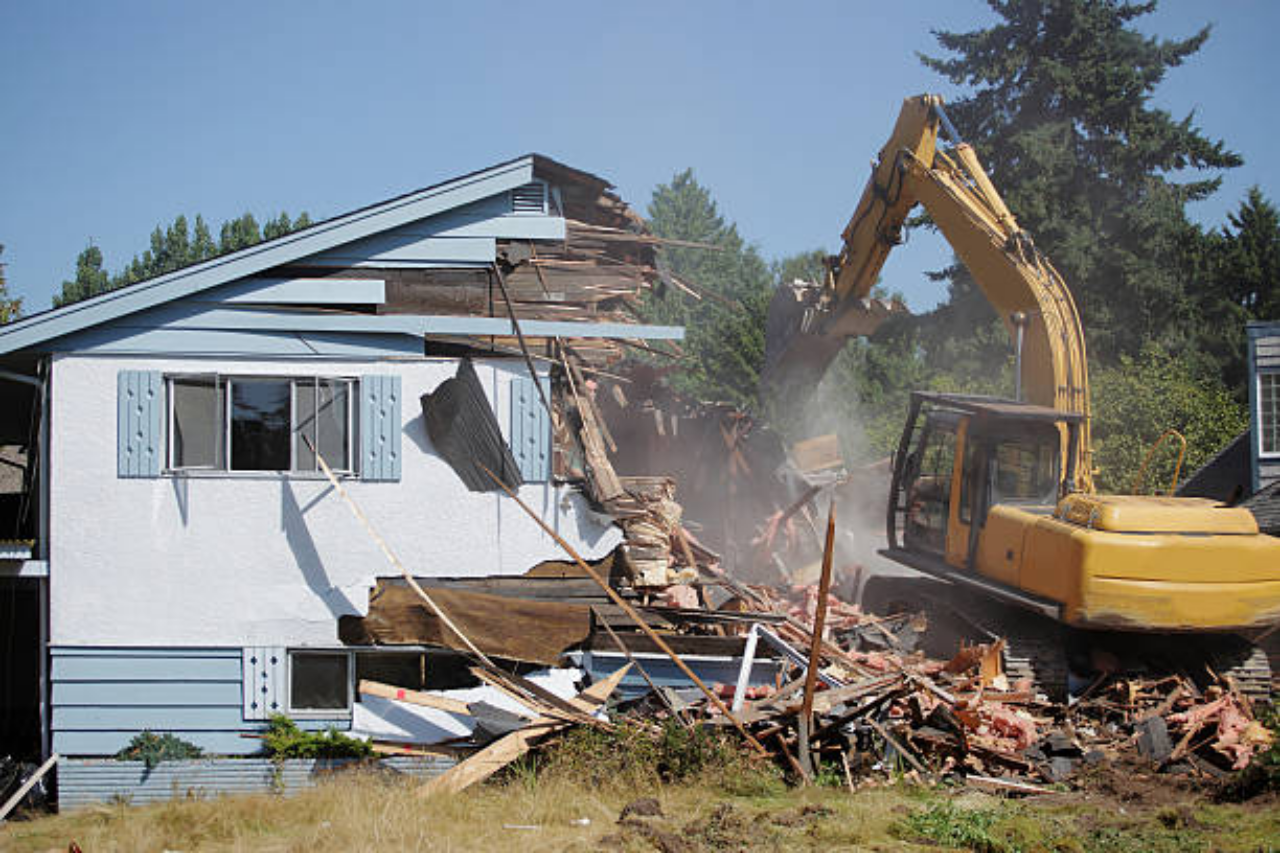
The lead operator climbed into the cab. The engine roared to life with a mechanical growl that made the gulls scatter from the dunes, the sound rolling through my chest like thunder.
My mother actually clapped. “Robert, you should record this for the company social media. Out with the old, in with the extraordinary! That could be our tagline.”
I finished my coffee and set the mug down on the railing. The ceramic was from a set Grandpa Joe bought in 1983, each piece hand-painted with a different seashell. My favorite had a scallop shell, faded blue now. Inside the house, my mother had already tagged furniture and boxes for “disposal.” Forty years of memory labeled like trash.
My father stepped closer to the foreman, impatience flashing under his professional mask. “What’s the delay?”
The foreman hesitated. “There’s a discrepancy between the ownership listed on the demolition permit and what the county parcel database shows.”
My father’s smile tightened. “I assure you it’s fine.”
“I need to see supporting documentation,” the foreman said firmly. “We can’t proceed until we verify owner authorization. Liability’s too high.”
For a moment, my father looked like he might explode. Then he did what he always did when challenged—tried to charm his way through. “Of course. Derek, grab the folder from the back seat.”
Derek puffed up as if he’d been given a critical mission and jogged down the steps.
This was the moment I’d been waiting for. Not with rage, not with a revenge speech, but with the calm certainty that comes from having every fact, every document, every legal detail on your side. Grandpa Joe taught me that. Real power doesn’t announce itself, doesn’t posture, doesn’t threaten. Real power is quiet, documented, and absolute.
I walked down the deck steps and crossed the sandy driveway toward the foreman. Up close, I could read his name patch: Thomas Werner—Site Supervisor.
“Mr. Werner,” I said quietly, before my father could waste his time with whatever fantasy folder he’d printed, “I need to show you something.”
Thomas’s eyes flicked to my face, then to the tablet, then to my father. He looked like a man caught between a loud client and a serious mistake.
I pulled out my phone and opened the secure app connected directly to my attorney’s document vault—county property records, updated daily, with certified copies. I tilted the screen toward him.
“This is 847 Coastal Highway,” I said. “Owned by Horizon Holdings LLC.” Thomas’s frown deepened as he scrolled. “And I’m the sole member and manager of that LLC. The deed is recorded. Taxes are current. Title is insured. There are no liens.”
Thomas’s expression shifted from confusion to comprehension to the kind of professional concern that meant he was already imagining the lawsuit. He looked up. “Miss Harrison?”
“Miss Foster,” I corrected gently. “I went back to my mother’s maiden name three years ago.”
My mother’s head snapped toward us at the sound. Thomas kept scrolling. The deed was clean—recorded February 15, 2019. Consideration: $1.2 million. Grantor: Estate of Joseph Harrison. Grantee: Horizon Holdings LLC.
Derek returned with a thick folder and a triumphant grin. “Here. Trust documents, transfer agreements, the whole thing.” He stopped when he saw Thomas’s face. “What’s going on? Why’s he looking like that?”
Thomas raised the tablet slightly. “I need you to look at this.”
My father took it, confidence still radiating from him like cologne. That confidence lasted exactly fifteen seconds. I watched his eyes move, watched his jaw tighten, watched the color drain.
“This is wrong,” he said flatly.
My mother rushed forward, heels sinking into gravel. “Robert, what’s happening? Why aren’t they starting?”
“There appears to be an ownership issue,” Thomas said diplomatically. “Miss Foster is showing documentation that she owns this property through an LLC. Until we resolve it, we cannot proceed.”
“An LLC?” Derek’s voice went up an octave. “Maya doesn’t have an LLC. She doesn’t have anything. She’s broke.”
I didn’t blink. “Horizon Holdings LLC was established January 2019. Registered with the state. Annual filings up to date. It acquired this property from Grandpa Joe’s estate for $1.2 million—paid in full. Cash transaction.”
The date landed like a body blow. February 15, 2019. Three weeks after Grandpa Joe died. The reading of the will had been February 22.
My mother’s face went pale. “But the will said the house went to the family trust. We were all there. The attorney—”
“The will said the house would be offered to the family trust at fair market value,” I corrected. “With a thirty-day right of first refusal. I made an offer on day fifteen. The independent executor—appointed by the probate court, not by you—accepted on day twenty.”
Derek took a step toward me like he wanted to shake the truth out of my mouth. “With what money? You were working some nothing job. Where did you get one point two million?”
This was the part I’d looked forward to. Not because I wanted to rub it in, but because I was done being invisible.
“Summit Strategy Group landed its first major client in 2017,” I said evenly. “A pharmaceutical company that needed help navigating FDA approval. Our consulting fees for that project were $800,000.” Derek blinked fast, like his brain couldn’t render the number. “By the end of 2018, we had seven corporate clients. Revenues exceeded $3.4 million. I took a salary of $180,000 and reinvested the rest—except $1.2 million I set aside for something that mattered to me.”
The bulldozer engine was still running, but the operator had cut the throttle. The crew had gone quiet, watching like this was better than any morning radio.
My father’s voice came out strained. “Joe would never have sold to you without telling us.”
“He didn’t sell behind anyone’s back,” I said. “The estate sale was legal, properly documented, properly offered. Any of you could’ve made an offer. You just assumed that because you wanted the house, you’d get it.”
My father stared at the tablet as if it might change if he stared long enough. Then he looked up, and for the first time in my life, his eyes held something other than dismissal. Shock.
“How long have you been planning this?” he asked.
“I haven’t been planning anything,” I said quietly. “I bought the house because I loved it. Because Grandpa Joe loved it. I didn’t tell you because you never asked.”
My mother’s voice cracked. “We’re family. Family doesn’t do this to each other.”
“You spent sixty thousand dollars on permits and architects based on your assumptions,” I said. “I never told you this house was yours. I never agreed to demolition. You decided what you wanted reality to be and got angry when reality didn’t comply.”
Derek’s face turned purple. “You sneaky, manipulative—”
“Careful,” I said, voice soft. “We’re on my property. I can have you removed for harassment.”
Thomas Werner exhaled hard, already signaling his crew. “Pack it up. Job’s canceled.”
The words hit my mother like a slap. Her perfect smile collapsed. Thomas turned to my father with genuine sympathy. “Sir, I’m sorry. We can’t proceed. The documentation Miss Foster is showing clearly establishes ownership. If we demolished without authorization, we’d be liable for—”
“I understand,” my father said, distant. He watched his bulldozer like a man watching a dream deflate.
Derek started pacing, already on his phone, voice tight. “My attorney says we can challenge the estate sale. Undue influence. Exploitation. Fraud—”
“Your attorney is welcome to try,” I said calmly. “Grandpa Joe was seventy-eight, mentally sharp, and the executor was independent. The sale was at fair market value, properly noticed, with a waiting period that exceeded legal requirements. But sure, waste more money on legal fees. Seems like a family specialty.”
My mother stared at me like I was a stranger. “I don’t even know who you are anymore.”
“I’m the same person I’ve always been,” I said. “You just never paid attention.”
The last of the crew trucks rolled out of the driveway, tires crunching gravel. And then, as if the universe wanted to underline the lesson, another car pulled in—a black BMW, clean and quiet.
A woman stepped out with a leather briefcase and the posture of someone who didn’t bluff. Jennifer Park, forty-five, senior partner at Park & Associates, meticulous and ruthless with paperwork.
She glanced at the scattered drama, then at me. “Miss Foster, I got your text. Is there a problem?”
“No problem,” I said. “Just clarifying ownership for some confused parties.”
Jennifer’s gaze swept over my family like she was scanning for termites, then she walked straight up to my father. “Mr. Harrison, I’m Jennifer Park. I represent Miss Foster and Horizon Holdings LLC.”
My father’s face twitched, trying to rebuild his professional mask. “There was a misunderstanding about ownership.”
Jennifer opened her briefcase, pulled out a tablet, and tapped twice. “A misunderstanding that resulted in a demolition permit being issued based on a fraudulent ownership claim. The Coastal Development Board takes that very seriously.”
That name—Coastal Development Board—hit my father differently than “court” ever did. Because the Board wasn’t family, wasn’t emotional. It cared about records, violations, and penalties.
Derek jumped in desperately. “We had a good-faith belief—”
“Based on what?” Jennifer asked without even turning to him. “Did you check the deed? Verify the parcel record? Or did you assume because you wanted something, it belonged to you?”
My mother’s voice rose, trembling. “This is unnecessary. Maya, we can work it out as a family—”
“There’s nothing to work out,” I said. “This is my house. I’m keeping it. Your plans for Harrison’s Retreat will need a different location.”
Derek scoffed. “You’re being selfish. This property could’ve been worth eight million once we developed it.”
“I’m not costing you anything,” I said. “I’m keeping my property. If you want to develop beachfront real estate, buy your own land.”
Jennifer cleared her throat like a judge calling order. “Mr. Harrison, my client is willing to forgo immediate legal action regarding the fraudulent permit—if you agree in writing to never make future claims on this property, directly or through any entity.” She held out a document. “We need it signed today.”
My father’s eyes narrowed. “I’ll have my attorney review.”
“No review,” Jennifer said pleasantly. “Sign now, or Miss Foster files a formal complaint with the county and the Coastal Development Board. That will trigger an investigation into your permit filings, your representations, and your development practices. And those investigations rarely stay small.”
For a moment, my father looked like he might fight out of sheer pride. Then the businessman in him did the math. He took Jennifer’s pen and signed. He didn’t look at me while he did it, but I watched his hand shake.
Jennifer tucked the paper away like it was a check. “I’ll email copies by end of day.” Then she turned to me. “Miss Foster, anything else?”
“No. Thank you for coming.”
“That’s what you pay me for,” she replied dryly. She nodded once at my family—pure professionalism, no warmth—and walked back to her car.
The BMW backed out and disappeared down the road. Suddenly it was just my family standing on my driveway in the brightening morning, left with nothing but their assumptions and the sound of waves.
“I think you should leave now,” I said calmly. “I have work to do inside.”
“Work?” my mother echoed, voice small.
“Summit Strategy Group has a major client presentation Monday. I need to finalize the analysis.”
Derek looked like his brain was buffering. “The consulting thing is real?”
“Very,” I said. “Seven point two million in revenue last year. Forty-three employees. Offices in Portland, Boston, and Atlanta.”
My father straightened his shoulders like dignity was something you could press back into shape. “I suppose congratulations are in order for your business success.”
“Thank you,” I said. Then, because I couldn’t resist the smallest truth: “Though this whole situation could’ve been avoided with one question. You could’ve asked, ‘Maya, do you own this house?’ I would’ve said yes. And we’d have skipped this entire scene.”
My mother dabbed at her eyes. “So what happens now? Do we just not see each other anymore?”
I looked past her at the house—my house—sunlight starting to catch the new windows, turning them into sheets of gold. “That’s up to you. My door is open. But not for people who think they can bulldoze my life to suit their plans.”
Derek started toward his car, shaking his head. “This is insane. You’ve always been difficult, Maya, but this is next level.”
“Goodbye, Derek.”
He didn’t answer. Gravel sprayed as his tires spun out of the drive. My parents lingered a moment longer, suddenly smaller than I’d ever seen them.
“Your grandfather would be proud,” my father said finally, eyes fixed on the deck. “He always said you had his head for business.”
“He did,” I said softly. “You just never listened.”
My mother paused at the passenger door, looking back. “The house looks beautiful. From what I could see.”
“Thank you.”
“Maybe we could visit sometime. Just to see what you’ve done.”
I held her gaze. “When you’re ready to see it as my home instead of your missed opportunity.”
She nodded once, like that hurt, and got in. The Mercedes rolled away, taillights flashing red against the white sand.
And then they were gone. Just me, the house, the waves, and the gulls reclaiming the sky.
I walked back inside and stood in the living room where Grandpa Joe’s seashell mug sat on display, the one with the faded scallop shell. Morning light spilled across the refinished hardwood floors. Framed photographs lined the mantle—three generations, frozen in smiles that hadn’t always meant what they looked like.
My phone buzzed. A text from Jennifer: “Property rights established. They won’t be back. Well done.”
I exhaled and set my phone down, then opened my laptop on the kitchen table—the same table where Grandpa Joe taught me tide charts, taught me the difference between what you own and what you think you deserve.
Monday’s client presentation was waiting. A pharmaceutical company, a cancer treatment, real stakes, real work.
Outside, the ocean kept moving, patient and indifferent, like it had been moving long before the Harrisons and would keep moving long after.
And for the first time in a long time, I felt the kind of quiet power Grandpa Joe always talked about. Not loud, not performative. Just true.
The ocean has a way of telling the truth. Not with words—never with words—but with pressure, with tide, with wind that doesn’t care whose last name is on the mailbox or whose logo is on the blueprint. And that morning, standing in my home that I’d bought with my own money, protected with my own preparation, and defended with my own resolve, I finally understood what Grandpa Joe had been trying to teach me all along.
Real power isn’t about control. It’s about clarity. It’s about knowing what’s yours and having the documentation to prove it. It’s about letting other people’s assumptions crash against the rocks of reality until they finally understand that wanting something doesn’t make it yours.
My father had spent his entire career turning beachfront property into profit, but he’d never understood the most basic truth: the ocean doesn’t negotiate, and neither does a properly recorded deed.
I sat down at Grandpa Joe’s table and got back to work, while outside my house—my legally owned, fully paid for, perfectly renovated house—the Atlantic rolled on, indifferent and eternal, exactly as it should be.

Ethan Blake is a skilled Creative Content Specialist with a talent for crafting engaging and thought-provoking narratives. With a strong background in storytelling and digital content creation, Ethan brings a unique perspective to his role at TheArchivists, where he curates and produces captivating content for a global audience.
Ethan holds a degree in Communications from Zurich University, where he developed his expertise in storytelling, media strategy, and audience engagement. Known for his ability to blend creativity with analytical precision, he excels at creating content that not only entertains but also connects deeply with readers.
At TheArchivists, Ethan specializes in uncovering compelling stories that reflect a wide range of human experiences. His work is celebrated for its authenticity, creativity, and ability to spark meaningful conversations, earning him recognition among peers and readers alike.
Passionate about the art of storytelling, Ethan enjoys exploring themes of culture, history, and personal growth, aiming to inspire and inform with every piece he creates. Dedicated to making a lasting impact, Ethan continues to push boundaries in the ever-evolving world of digital content.