Daniel Whitaker discovered the letter on a Tuesday morning, wedged between his electric bill and a grocery store circular. It was folded with military precision, the Brookside Estates HOA seal embossed on cream-colored paper that probably cost more per sheet than his entire monthly coffee budget.
He was standing in his kitchen, still in his pajama pants, holding a mug that said “World’s Okayest Engineer” when he read the first line. Then he read it again, certain he’d misunderstood.
“Mr. Whitaker, your boat violates HOA guidelines. All watercraft must be stored out of view when not in active use. Failure to comply will result in fines and possible removal at owner’s expense.”
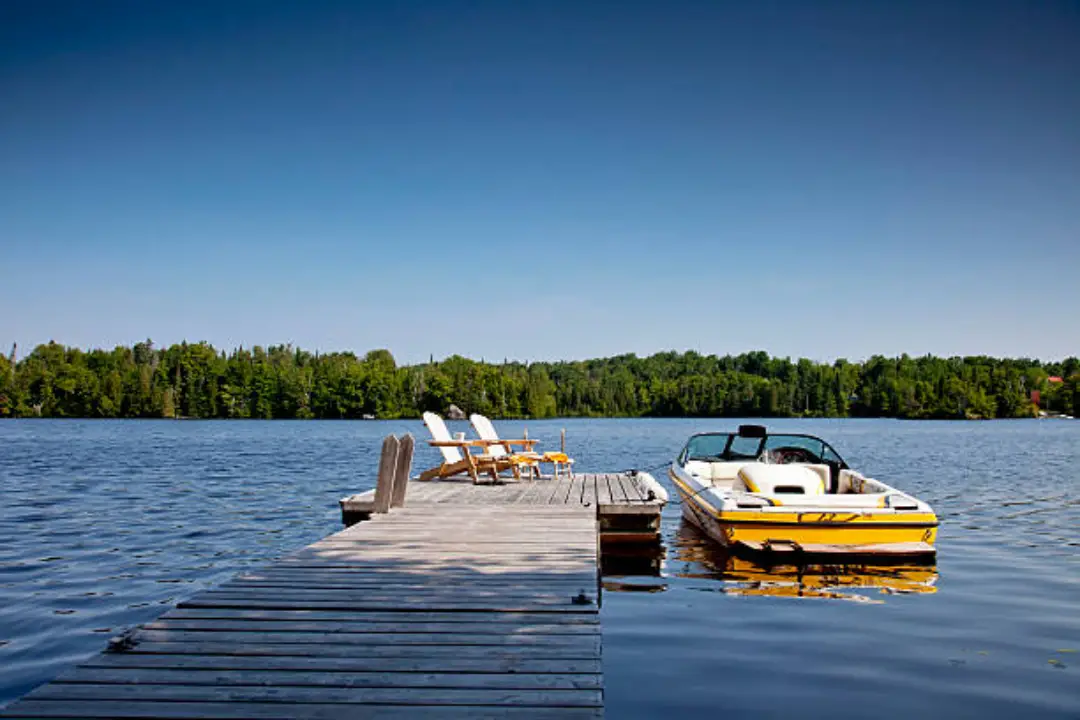
Daniel set down his coffee and walked to his back window. Through the glass, he could see exactly what had offended someone enough to file a complaint: his twenty-two-foot pontoon boat, gleaming white and forest green, tied peacefully to a small wooden dock. Beyond it stretched the lake—smooth as polished glass in the morning stillness, surrounded by weeping willows whose branches dipped into the water like fingers testing the temperature.
He’d lived in Brookside Estates for less than a year, having moved to this quiet North Carolina neighborhood specifically for the lake. Not for the community—he wasn’t the social type, preferring solitude to block parties and his own company to HOA meetings. But that lake, that perfect mirror of water behind his house, had sold him on the property the moment he’d seen it.
Every morning, he took his coffee out to the deck, cast a line, and let the quiet hum of the water wash away whatever stress the previous day had left behind. To him, that lake wasn’t just scenery. It was sanctuary.
And now someone wanted to take his boat away from it.
At first, Daniel laughed. Surely this was a mistake, some administrative error by an overzealous board member who’d confused his property with someone else’s. But the letter was addressed to him specifically, referenced his lot number, and included a grainy photograph of his dock taken from what looked like a telephoto lens.
Someone had been watching. Someone had been documenting. Someone cared very much about where he kept his boat.
Two days later, his doorbell rang at precisely nine in the morning—early enough to catch most people before work, late enough to seem civilized. Daniel opened the door to find Carol Jennings standing on his porch, clipboard in hand, wearing the kind of smile that had probably terrified subordinates in whatever corporate job she’d retired from.
She was a woman in her early sixties, impeccably dressed in khaki slacks and a navy blazer despite the humidity, her silver hair styled with the rigid perfection of someone who scheduled salon appointments six months in advance. Everything about her posture screamed authority, from her squared shoulders to the way she held her clipboard like a shield.
“Mr. Whitaker,” she began without preamble, her voice crisp as fresh lettuce. “I’m Carol Jennings, president of the Brookside Estates Homeowners Association. I assume you received our letter regarding your boat?”
Daniel leaned against the doorframe, deliberately casual. “I did. And I assume you’re here to explain why my boat, sitting on my dock, behind my house, is somehow your business?”
Her smile tightened. “It’s become the business of several concerned residents who feel that visible watercraft detract from the aesthetic harmony of our community. The HOA bylaws are quite clear—all boats, trailers, and recreational vehicles must be stored out of sight when not in active use.”
“Out of sight,” Daniel repeated. “Carol, my backyard faces the lake. The only people who can see my boat are people standing on the lake shore. Which, last I checked, is private property.”
“Community property,” she corrected, and there was steel beneath the pleasant tone now. “The lake is a shared amenity for Brookside Estates residents. Your boat is visible from the walking path and creates an eyesore for those trying to enjoy the natural beauty of the area.”
Daniel felt something shift in his chest—not anger exactly, but a kind of amused disbelief. “An eyesore? It’s a brand-new pontoon boat, Carol, not a rusted-out fishing trawler held together with duct tape.”
Her expression hardened. “Be that as it may, the rules are the rules. If the boat isn’t moved to approved storage by the end of the week, we’ll be forced to take action. That could include fines of up to five hundred dollars per day, and if you remain non-compliant, we have the authority to have the boat towed or impounded at your expense.”
The threat hung in the air between them like smoke. Daniel studied her face—the set jaw, the unwavering eye contact, the absolute certainty that she would win this argument because she always won. This was a woman who loved rules the way some people loved their children, who found comfort in structure and power in enforcement.
“I’ll take that under consideration,” Daniel said finally. “Thanks for stopping by.”
He closed the door before she could respond, listening to the sharp click of her heels retreating down his walkway. Through the window, he watched her climb into a silver Mercedes that probably cost more than his entire year’s salary, make a three-point turn with unnecessary precision, and drive away.
The moment her taillights disappeared around the corner, Daniel walked to his home office and pulled a thick manila folder from the bottom drawer of his desk. Inside were the documents he’d received when he purchased the property—deed transfers, title insurance, survey maps, and one particular set of papers he’d filed away carefully, knowing they might be important someday.
The lake deed. The actual ownership papers for the entire body of water.
Daniel spread the documents across his desk and allowed himself a slow, satisfied smile. Because here’s what Carol Jennings and her clipboard and her five-hundred-dollar daily fines didn’t know: Brookside Lake wasn’t community property. It wasn’t a shared amenity. It had never belonged to the HOA.
When Brookside Estates was first developed fifteen years ago, the construction company had sold off the residential lots but retained ownership of the lake itself, keeping it as a separate parcel. The developer had allowed residents to use it under an informal gentleman’s agreement—no fees, no restrictions, just neighborly goodwill.
But three years ago, when the developer retired and liquidated his assets, the lake went up for sale. And Daniel, who’d been searching for property in the area, had bought it. Not the house—he’d purchased that separately through normal channels. But the lake, the shoreline, the fishing rights, the docks, every single square foot of water and the land surrounding it—all legally his.
He’d done it partly as an investment and partly because he’d fallen in love with the place. The fact that the house he eventually bought happened to back directly onto his own private lake had seemed like fate.
The HOA had no authority over the lake because they didn’t own it. They never had. They’d been operating under an assumption that had become tradition, and tradition had become perceived right.
And now they were threatening to tow his boat off his own property.
Daniel leaned back in his chair, fingers drumming on the desk. He could ignore Carol’s letter, of course. Let them try to enforce rules that didn’t apply. But something about her tone, her certainty, her casual dismissal of his rights as a property owner, had gotten under his skin.
He picked up his phone and called Marcus Webb, the attorney who’d handled his property purchase. Marcus was a property law specialist with a reputation for being both brilliant and slightly mischievous—the kind of lawyer who genuinely enjoyed a good legal puzzle.
“Marcus,” Daniel said when the attorney answered. “Remember that lake I bought?”
“The one the HOA thinks they own? Hard to forget.”
“They just threatened to tow my boat.”
There was a pause, then a delighted laugh. “Oh, this is going to be fun. Want me to draft a response?”
“I want you to draft cease-and-desist letters. For everyone who’s been using my property without permission.”
“All of them?”
“All of them,” Daniel confirmed. “Especially the fishing club.”
Because that was the other thing Daniel had discovered in his first few months at Brookside Estates. Every Saturday morning like clockwork, a group of men—maybe a dozen strong—would gather on the lake shore with fishing rods, coolers full of beer, and the kind of loud camaraderie that carried across water. They’d set up folding chairs, grill hot dogs by noon, and leave behind cigarette butts and crushed cans in the grass.
Daniel had tried to be neighborly at first, waving when he saw them. They’d stared at him like he was an intruder, then turned back to their conversation without acknowledgment. The message was clear: he wasn’t welcome in their club, and his presence on “their” lake was tolerated at best.
He’d let it go then, figuring there was enough water for everyone. But now, looking at Carol’s letter, connecting the dots to her husband Rick who led the fishing club, Daniel understood. This wasn’t about aesthetic harmony or community standards. This was about control. About putting the newcomer in his place.
They’d picked the wrong newcomer.
Three days later, Daniel hand-delivered envelopes to every member of the Brookside Fishing Club. He’d gotten their names from Marcus, who’d cross-referenced HOA records with county property databases. The letters were printed on Marcus’s law firm letterhead, written in the kind of formal legal language that made the message unmistakable.
“To Whom It May Concern: You are hereby notified that the body of water known as Brookside Lake is privately owned property. As of the date of this letter, all unauthorized access to the lake, shoreline, docks, and surrounding land is prohibited. Any continued trespassing will result in legal action. Sincerely, Daniel Whitaker, Property Owner.”
He also posted copies on the community bulletin board and sent digital versions to the HOA email distribution list that someone had helpfully created years ago for sharing neighborhood news.
By Saturday morning, his phone was ringing off the hook.
The first call was Carol, her voice shaking with what Daniel assumed was rage masquerading as concern. “This is absurd! You can’t just block access to a community lake! People have been fishing there for years!”
“Carol,” Daniel said calmly, putting her on speaker while he made breakfast, “it’s not a community lake. It’s my lake. I own it. Check the county records if you don’t believe me. The parcel number is on the letter.”
“This is harassment! We’ve been maintaining that water, stocking it with fish, keeping the shoreline clean—”
“Without permission from the legal owner. Which makes all of that trespassing, technically.” He cracked an egg into a pan. “Look, I’m not trying to be difficult. But your husband and his friends have been treating my property like their personal clubhouse. And now you’re threatening to tow my boat? That’s not how this works.”
“We had an arrangement with the previous owner—”
“Which ended when I bought the property. You want access? We can negotiate a lease agreement. Otherwise, stay off my land.”
She hung up without another word. Daniel had barely set his phone down when it rang again. Rick Jennings this time, his voice low and careful in a way that suggested he was trying very hard not to shout.
“Whitaker, we need to talk. Man to man. This letter is going to cause problems.”
“Only for people who keep trespassing on my property,” Daniel replied.
“Look, we’ve been using that lake for eight years. We’ve put time and money into maintaining it. We’ve created a community tradition—”
“On someone else’s land. Rick, I’m not trying to destroy your fishing club. But you can’t just assume you have the right to use my property because the previous owner didn’t enforce his boundaries. If you want to keep fishing, we can discuss terms. But the days of showing up whenever you want and leaving trash behind? Those are over.”
Rick’s voice turned cold. “You’re making a big mistake. This neighborhood takes care of its own. You’re going to find out what it’s like to be on the outside.”
Daniel felt something harden in his chest. “Is that a threat?”
“It’s a fact. You want to play hardball? Fine. But don’t say I didn’t warn you.”
The line went dead.
That night, Daniel stayed up late, unable to shake the feeling that Rick’s words had been more than just bluster. He’d made enemies, that much was clear. But he’d also done nothing wrong. He’d simply informed people that they were using his property without permission and asked them to stop.
The fact that this was controversial spoke volumes about the entitlement that had festered in Brookside Estates for years.
The following Thursday, Daniel came home from work to find his pontoon boat vandalized. Someone had slashed the seats with a knife, spray-painted obscenities across the hull in dripping red letters, and cut the mooring lines so the boat had drifted into the reeds at the far end of the lake.
He stood on the dock, staring at the damage, his jaw tight with anger. The boat had cost him thirty thousand dollars. The repairs would run into the thousands. And more than that, someone had come onto his property—his clearly marked, legally owned property—to commit a crime.
He called the police. Officer Martinez arrived forty minutes later, a young cop with sympathetic eyes who took photos, filled out a report, and asked questions in a tone that suggested he already knew this wouldn’t lead anywhere.
“Let me guess,” Daniel said as Martinez was finishing up. “Rick Jennings plays poker with the sheriff.”
Martinez didn’t confirm or deny it, but his slight grimace was answer enough. “I’ll file the report. If we find evidence, we’ll pursue it. But without witnesses or cameras…”
“I understand,” Daniel said, though he didn’t, not really. What he understood was that in small communities with long-standing social networks, newcomers were always outsiders. And outsiders didn’t get the benefit of the doubt.
That night, Daniel ordered six security cameras online and paid extra for overnight shipping. By the weekend, he had them installed—two on the dock, two on the shoreline, two facing the street. He also put up “No Trespassing” signs every fifty feet around the lake perimeter, each one clearly stating that the property was privately owned and violators would be prosecuted.
If they wanted to play dirty, he’d play smarter.
Two weeks later, an emergency HOA meeting was called. The subject line in the email invitation read: “Community Lake Access Dispute—Mandatory Attendance Requested.”
Daniel showed up wearing jeans and a button-down shirt, carrying a leather folder. The community center was packed—standing room only, easily sixty people crammed into a space meant for forty. Carol sat at the head of the table, flanked by Rick and three other board members. The air felt electric with tension, conversations dying as Daniel walked in.
Carol banged her gavel like she was sentencing someone. “Mr. Whitaker, thank you for joining us. We’re here to discuss your recent actions regarding the lake and the disruption they’ve caused to our community.”
Daniel took a seat in the front row. “Happy to discuss.”
Carol cleared her throat, consulting her notes like a prosecutor building a case. “The HOA bylaws clearly state that all residents have equal access to community amenities. Brookside Lake has been a shared resource for nearly a decade. Your unilateral decision to restrict access is not only contrary to community spirit but potentially in violation of our governing documents.”
“Correction,” Daniel interrupted calmly. “The lake has never been a community amenity. It’s private property. Always has been. The fact that the previous owner allowed access doesn’t create a legal right for anyone else to use it.”
Rick leaned forward, his face flushed. “We’ve been maintaining that lake for years. We’ve paid for weed control out of our own pockets. We’ve stocked it with bass and bluegill. We’ve organized cleanup days to keep the shoreline pristine. And now you want to just lock us out?”
“I didn’t ask you to do any of that,” Daniel pointed out. “You performed unauthorized work on someone else’s property. That doesn’t give you ownership rights.”
“This is ridiculous!” someone shouted from the back. “He’s trying to steal our lake!”
The room erupted in agreement. Voices overlapped, anger rising. Carol banged her gavel repeatedly. “Order! Order, please!”
When the noise died down, Carol tried a different approach. “Mr. Whitaker, we’re prepared to offer a compromise. If you allow continued access to the fishing club and withdraw your cease-and-desist letters, we’ll drop the complaint about your boat and waive any fines related to HOA violations.”
Daniel actually laughed. “You can’t drop a complaint that was never valid in the first place. And no, I’m not granting free access to people who vandalized my property and threatened me.”
“That’s an unfounded accusation,” Rick snapped.
“Is it? Funny how my boat got destroyed right after I told your club to stop trespassing.” Daniel pulled a document from his folder and held it up. “This is the deed to Brookside Lake, registered with the county clerk’s office. I own every inch of it. The water, the shoreline, the fishing rights, all of it. If anyone sets foot on that property without my written permission, I will have them arrested for criminal trespassing.”
He laid the deed on the table in front of Carol. “And if my property gets vandalized again, I’ll file a civil suit against every member of that fishing club and the HOA itself for creating a hostile environment.”
The room exploded into chaos. People shouting, accusing, demanding. Carol’s gavel pounded uselessly. Daniel stood up, collected his folder, and walked out.
Behind him, the noise swelled like a storm breaking.
The next morning, a certified letter arrived from the HOA’s attorney, threatening legal action for “tortious interference with community enjoyment of shared resources and creating undue hardship for residents.”
Daniel forwarded it to Marcus, who called an hour later laughing so hard he could barely speak.
“They have nothing,” Marcus said when he caught his breath. “Less than nothing. They’re bluffing, hoping you’ll back down.”
“So what do we do?”
“I’ll respond with a very polite letter explaining that their case has no legal foundation and that any further harassment will result in a countersuit for vandalism, trespassing, and intentional infliction of emotional distress. Trust me, once their attorney sees your deed and realizes you actually own the lake, they’ll drop this faster than a hot coal.”
Marcus was right. Within a week, the HOA attorney withdrew the threat with a tersely worded letter that barely qualified as professional.
But Rick Jennings and his fishing club weren’t done.
The following Saturday, Daniel woke to chanting outside his house. He pulled back the curtains to find twenty people gathered on the public road adjacent to his property, holding signs made from poster board and markers.
“SAVE OUR LAKE” “WHITAKER = TYRANT” “COMMUNITY OVER GREED”
One man had brought a megaphone and was leading chants. A few neighbors held their phones up, recording. Someone had called the local news; Daniel spotted a camera crew setting up across the street.
He made coffee, called Marcus, and watched from his window.
“They’re on public property,” Marcus confirmed. “Technically legal as long as they don’t block traffic or trespass. Just document everything. If anyone steps onto your land, call the police immediately.”
The protest lasted three hours. By noon, most people had gotten bored and left. But Carol and Rick stayed, standing at the edge of his property line, staring at his house with expressions of pure loathing.
Daniel waved at them from the window. Carol’s face turned purple.
That night, reviewing footage from his security cameras, Daniel noticed something strange. The motion sensors had triggered three times between midnight and three AM over the past week—times when no legitimate visitor would be on the property. He’d been so focused on daytime activity that he’d ignored the nighttime alerts.
Now, scrolling through the archived footage, he watched a figure emerge from the shadows, moving quickly but not carefully enough. The person was carrying something—plastic bags that clinked and rustled. At the water’s edge, the figure swung the bags, launching their contents into the lake with practiced motions. Beer bottles splashed. Something heavier sank with a dull thud.
Daniel’s jaw tightened as he watched the figure repeat this process: arrive around two AM, dump trash, leave. Sometimes alone, sometimes with another person who stayed in the shadows. The pattern was deliberate, malicious. This wasn’t accidental littering. This was sabotage.
He rewound to the clearest footage—Tuesday night, two-fifteen AM. The streetlight at the property edge provided just enough illumination. Daniel zoomed in frame by frame until he caught it: the figure turning toward the camera for just a second, face visible in the ambient light.
Rick Jennings. No question. The sharp nose, the receding hairline, the specific way he walked with a slight hitch in his left leg from an old football injury he’d mentioned at the HOA meeting.
Daniel sat back, feeling cold fury settle over him. This wasn’t just about access to the lake anymore. Rick had graduated from vandalism to environmental crimes, deliberately polluting the water out of spite.
He saved the footage to three separate drives—one for Marcus, one for the police, one for his own records. Then he spent another hour combing through all the archived footage, documenting every instance of Rick’s trespassing. Seven separate incidents in ten days. Each one timestamped, each one showing clear intent.
When he finally called Marcus at eight the next morning, he had a comprehensive file ready.
“I’ve got him,” Daniel said.
“Got who?”
“Rick Jennings. On camera. Dumping garbage into my lake at two in the morning. Trespassing, illegal dumping, possibly environmental crimes.”
Marcus whistled low. “Send me everything. I’ll file a police report and request a restraining order. And Daniel? This might be grounds for a substantial civil suit.”
“How substantial?”
“Depends on the environmental damage and the extent of the harassment. But we’re looking at tens of thousands, easily. Plus legal fees.”
“Do it,” Daniel said.
The lawsuit hit like a bomb. Daniel’s attorney filed a comprehensive complaint: criminal trespassing, vandalism, harassment, illegal dumping, intentional infliction of emotional distress, and tortious interference with property rights. The security footage was damning—multiple instances of Rick on Daniel’s property, clear shots of him dumping trash, even audio of him bragging to someone on the phone about “making that bastard pay.”
Rick’s attorney tried to argue the footage was inadmissible, that the lighting made identification uncertain, that Daniel had somehow entrapped his client. None of it stuck. The timestamps, the gait analysis, the clear facial recognition—it all held up.
The HOA board panicked. Carol resigned quietly, claiming “health reasons.” Two other board members followed within a week. The fishing club disbanded. Members deleted their group chat and pretended they’d never been involved.
Rick settled out of court for thirty-five thousand dollars, signed a permanent no-contact agreement, and listed his house for sale within a month.
With the lawsuit settled and the neighborhood finally quiet, Daniel had a decision to make. He could keep the lake entirely private, a personal sanctuary that no one else would ever use. He’d certainly earned that right after everything he’d been through. Or he could open it up on his terms, create something better than what had existed before.
He spent two weeks thinking it over, walking the shoreline at dawn, considering the possibilities. The lake was beautiful, peaceful, and big enough to share. The old system hadn’t failed because people didn’t deserve access—it had failed because there was no structure, no accountability, no respect for boundaries. What if he could fix that?
Daniel drafted a new lake access agreement with Marcus’s help, revising it four times until it was ironclad but fair. Any Brookside Estates resident who wanted to use the lake could apply for an annual permit. The fee was fifty dollars—low enough to be accessible to most families, high enough to ensure people took it seriously. The money would go into a dedicated account for lake maintenance, fish stocking, and shoreline preservation.
The rules were simple and clear: no littering, respect quiet hours after nine PM, no harassment of other users, no alcohol except in designated picnic areas, and absolutely no damage to the property or wildlife. Violations would result in warnings, then temporary suspension, then permanent revocation of access. No exceptions.
The fishing club members and anyone who’d participated in the harassment campaign were permanently banned, their names listed in the agreement as individuals prohibited from entering the property under any circumstances.
Daniel had the agreement printed on professional letterhead, created a simple application form, and posted information on the community bulletin board and website. He expected maybe ten or fifteen applications. He got forty-three in the first two weeks.
People he’d never met knocked on his door to thank him, apologizing for not speaking up during the conflict. Young families with children asked if they could teach their kids to fish. An elderly couple who’d lived in Brookside for twenty years admitted they’d been afraid to use the lake when Rick’s club dominated it, but now they’d love to walk the shoreline in the evenings.
To his surprise, most of the neighborhood not only signed up but followed the rules religiously. Without Carol and Rick’s toxic influence, people were actually reasonable, even grateful. Families started bringing their kids to fish on Saturday mornings, teaching them to bait hooks and identify different species. Couples walked the shoreline path at sunset, hand in hand. The lake became what it was always meant to be—a peaceful, shared space that enriched the community instead of dividing it.
But this time, everyone knew who was in charge.
Daniel built a second dock for community use, installed picnic tables near the water, and even hosted a neighborhood barbecue the following summer. More than forty people came. They thanked him, apologized for the earlier hostility, and admitted they’d been wrong.
One man, a retired teacher named George, pulled Daniel aside at the barbecue. “I want you to know,” George said quietly, “some of us never agreed with what Rick and Carol did. We just didn’t have the spine to speak up against them. You standing your ground—that changed things here. Made it okay to push back against bullies.”
Daniel nodded, accepting the sentiment. “I wasn’t trying to be a hero. I just wanted to fish in peace.”
“Sometimes that’s enough,” George replied.
Four years later, Daniel still lives in Brookside Estates. His pontoon boat—repaired and repainted after the vandalism, now better than new—still sits on the dock, gleaming in the morning sun. The lake is quieter now, more respectful, more alive with the right kind of activity.
He’s added a small pavilion for community gatherings, complete with grills and picnic tables made from reclaimed wood. He’s planted native flowers along the shoreline—cardinal flowers and blue flag iris that attract butterflies and hummingbirds. He’s worked with a local conservation group to monitor water quality and maintain the delicate ecosystem. The permit fees, now collected from sixty-eight households, have funded everything from new benches along the walking path to a small environmental scholarship for local high school students interested in aquatic biology.
People wave when they see him now—genuine waves, not the suspicious glances of those early months. Some stop to chat, ask about fishing conditions, report a particularly good catch, or thank him for keeping the lake open. Families he doesn’t know by name bring their children year after year, and he watches those kids grow from toddlers afraid of worms to teenagers who can cast a line with perfect form.
The transformation hasn’t been just about the lake itself. The entire neighborhood dynamic has shifted. Without Carol’s iron-fisted rule, the new HOA board actually listens to residents. Without Rick’s fishing club monopolizing the water, diverse groups have formed—a kayaking club, a bird-watching group, even a volunteer lake cleanup crew that meets once a month. The community newsletter now includes a section thanking Daniel for his stewardship, and parents have told him their children write school reports about the lake’s ecosystem, taking pride in this resource in their own backyard.
Carol and Rick moved away two years ago, their reputations beyond repair. Daniel heard through the neighborhood grapevine that they’d divorced—the stress of the lawsuit and the social fallout had been too much. He felt no satisfaction in that news, only a vague sadness that they’d let bitterness consume what could have been good years of retirement.
The fishing club property on the opposite side of the lake—once marked by trampled grass and scattered debris—has been transformed by the new owners, a young couple with environmental science degrees who’ve installed a rain garden and native plant buffer zone. They’d approached Daniel in their first week, asking permission to kayak on the lake, and seemed stunned when he welcomed them warmly and gave them their permits free for the first year as a housewarming gift.
Every morning, Daniel still takes his coffee out to the deck, casts a line, and watches the sun rise over the water that is legally, undeniably his. But he’s also added a new ritual: every Sunday at dawn, he walks the entire shoreline perimeter, checking for damage, picking up any stray litter, documenting wildlife he spots in a journal he’s kept for three years now. He’s seen osprey return to nest, watched a family of otters establish territory near the north shore, documented the recovery of the native fish population now that the ecosystem is properly managed.
The lake is his sanctuary, just like it always was. But now it’s a sanctuary he’s willing to share—with people who respect it, people who understand that access is a privilege earned through responsibility, not a right demanded through entitlement.
Because at the end of the day, he learned something important through all the conflict: ownership isn’t just about having power. It’s about using that power wisely. The lake was never really about keeping people out. It was about teaching them the difference between privilege and entitlement, between access granted and access demanded.
Sometimes the best way to do that is to take away the privilege entirely, show people what it feels like to lose something they took for granted, and then give it back—on terms that benefit everyone, not just the loudest voices or the oldest residents.
The lake is still his. Every legal document confirms it. Every property tax bill reminds him. But in a way that matters more than ownership papers, it belongs to the community too now—the community that learned to ask instead of assume, to appreciate instead of demand, to share instead of claim.
And that, Daniel thinks as he reels in his line and watches a young family set up fishing rods on the community dock, is exactly how it should be. Not because he had to share, but because he chose to. Not because the HOA demanded it, but because decent people asked respectfully.
The morning sun catches on the water, turning it to liquid gold. A bass jumps near the shore, rings spreading across the surface. Somewhere behind him, children laugh.
Daniel smiles and casts his line again, the weight of the lure arcing through the air before splashing into his lake—his sanctuary, his investment, his small piece of the world that he fought to protect and then freely chose to share.
That’s the real victory, he realizes. Not the lawsuit or the settlement or even the vindication. The real victory is standing here four years later, coffee in hand, watching people enjoy something beautiful because he made it possible.
Because in the end, the lake that changed everything wasn’t just about property rights or HOA battles. It was about what happens when someone draws a line, holds it firmly, and then—once the dust settles and the bullies retreat—decides that some things are better when shared with people who understand their value.
The lake is his legacy now. Not because he kept it from anyone, but because he made sure only the right people, the respectful people, the grateful people, got to enjoy it.
And every morning when he sits on that dock with his coffee and his fishing rod and his hard-won peace, he knows that’s worth more than all the boats and lawsuits and property deeds in the world.
It’s worth the quiet understanding that sometimes, you have to fight for what’s yours—not to keep it, but to make sure it survives intact for everyone who comes after, everyone who learns to ask instead of take, everyone who understands that respect and gratitude are the true currency of community.
The lake glitters in the morning light, patient and eternal and finally, finally at peace.
Just like Daniel himself.

Lila Hart is a dedicated Digital Archivist and Research Specialist with a keen eye for preserving and curating meaningful content. At TheArchivists, she specializes in organizing and managing digital archives, ensuring that valuable stories and historical moments are accessible for generations to come.
Lila earned her degree in History and Archival Studies from the University of Edinburgh, where she cultivated her passion for documenting the past and preserving cultural heritage. Her expertise lies in combining traditional archival techniques with modern digital tools, allowing her to create comprehensive and engaging collections that resonate with audiences worldwide.
At TheArchivists, Lila is known for her meticulous attention to detail and her ability to uncover hidden gems within extensive archives. Her work is praised for its depth, authenticity, and contribution to the preservation of knowledge in the digital age.
Driven by a commitment to preserving stories that matter, Lila is passionate about exploring the intersection of history and technology. Her goal is to ensure that every piece of content she handles reflects the richness of human experiences and remains a source of inspiration for years to come.