The Midnight Message That Changed Everything: How One Text Destroyed a Marriage and Started a War
My name is Clara Jensen, and I’m thirty-four years old. If you had told me a year ago that my life would implode in the middle of a quiet Tuesday night, that I would discover my marriage was a lie through a single phone notification, that I would lose everything I thought I knew about love and trust in the span of three cruel sentences—I would have smiled politely and changed the subject. I was good at that: deflecting, smoothing over, pretending everything was fine even when the foundation was already crumbling beneath my feet.
But we don’t get to choose when our worlds fall apart. We don’t get warnings or preparation time. Sometimes destruction arrives in pixels on a screen at 2:47 in the morning, and all you can do is decide who you’re going to be when the dust settles.
This is the story of that night, and everything that came after.
The Quiet Before
Let me take you back to the beginning of that Tuesday, before everything changed. It started like any other day in the life I’d carefully constructed—a life that looked perfect from the outside but had been slowly hollowing out from within, though I refused to see it.
I woke up at six-thirty, made coffee in the machine Ethan’s mother had given us for our third anniversary, and reviewed my work emails before my feet even touched the bedroom floor. I was a senior financial analyst at a mid-sized consulting firm downtown, the kind of job that sounds impressive at dinner parties but mostly means staring at spreadsheets until your eyes cross and attending meetings that could have been emails.
Ethan had already left for the airport by the time I emerged from the shower. He was heading to Las Vegas for a three-day conference—something about new developments in digital marketing strategy, though I’ll admit I’d stopped listening closely to the details of his work trips months ago. Maybe even longer. When did I stop paying attention? When did the distance between us grow wide enough that I could stand in it and not even notice the gap?
He’d left a note on the kitchen counter, scrawled on the back of a utility bill: “Gone to Vegas. Back Friday. Love you.” The handwriting was rushed, the words perfunctory. I folded it and threw it in the recycling bin without a second thought.
The day crawled by with agonizing normalcy. Meetings. Lunch at my desk—the same sad salad I ate every Tuesday. A conference call that ran forty minutes over. My colleague Jennifer asking if I wanted to grab drinks after work, and me declining because I was tired, always tired lately, though I couldn’t quite say why.
I drove home through rush-hour traffic, listening to a true crime podcast I’d already heard twice before. I stopped at the grocery store and bought ingredients for a dinner I wouldn’t eat, then got home and realized I had no appetite anyway. The house felt bigger when Ethan was gone, emptier, like it was holding its breath.
By nine o’clock, I was on the couch with a glass of wine I wasn’t enjoying, watching a cooking competition show I wasn’t following. The television was more light and sound than actual entertainment—a distraction from the silence that had become too loud to ignore.
I fell asleep somewhere around eleven, still in my work clothes, with the TV on mute and my phone charging on the coffee table beside me.
And then came 2:47 a.m.
The Message
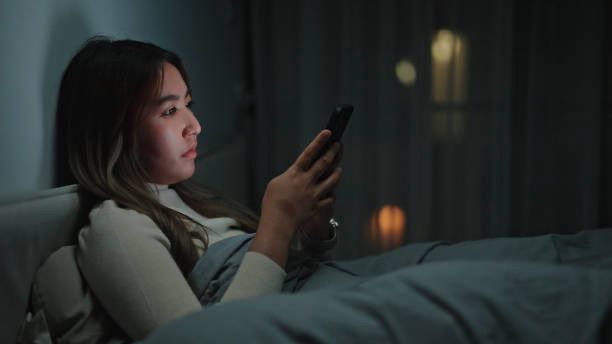
The buzzing woke me from a dreamless sleep. For a moment, I was disoriented—the room bathed in the ghostly blue light of the television, shadows stretching long and strange across the walls. My neck ached from the angle I’d been sleeping at. My mouth tasted stale.
I reached for my phone out of habit, expecting nothing. Maybe a work email from someone in a different time zone. Maybe a notification from some app I’d forgotten to silence. Maybe Ethan, sending a tipsy message from whatever casino bar he’d ended up in, telling me he missed me in that casual way that meant nothing and everything at once.
The screen lit up, and I saw his name. A photo was loading, the progress bar crawling across the screen with maddening slowness. I waited, half-awake, my brain not yet processing what I was seeing.
Then the image resolved.
Ethan. My husband of six years. The man I’d married in a small ceremony at a vineyard upstate, surrounded by seventy-five of our closest friends and family. The man who’d promised to love me in sickness and in health, for richer or poorer, until death did us part.
He was standing beneath a neon sign that screamed “Chapel of Love” in hot pink and electric blue. Next to him stood Rebecca Chen, his coworker from the marketing department—a woman I’d met exactly twice at company functions, a woman who’d smiled at me over champagne and shrimp cocktail and asked polite questions about my work while secretly sleeping with my husband.
They were holding what appeared to be marriage certificates.
She had a bouquet of flowers that looked like they’d been purchased from a gas station—plastic roses in garish colors that would never wilt because they’d never been alive. His arm was around her waist, possessive and triumphant. Her dress was white. His grin was enormous.
And then, below the photo, the text appeared. Letter by letter, word by word, each one landing like a physical blow:
“Just married Rebecca. Been sleeping with her for eight months. You’re pathetic btw. Your boring energy made this easy. Enjoy your sad little life.”
I read it once. Twice. Three times. The words didn’t change. They sat there on my screen, glowing in the darkness, impossible and undeniable.
Eight months.
While I was sleeping beside him every night, while I was doing his laundry and splitting the mortgage and planning what we’d do for our seventh anniversary, he was with her. Eight months of lies, eight months of another life running parallel to ours, eight months of coming home and kissing me hello while smelling like her perfume.
I should have cried. I should have screamed. I should have called him immediately, demanding answers, begging for explanations, falling apart the way people do when their marriages implode at 2:47 in the morning.
But I didn’t.
Instead, something strange happened. Something I didn’t expect and couldn’t quite explain. The shock crystallized into something else—something cold and clear and absolutely certain.
I felt my hands stop shaking. I felt my breathing slow and steady. I felt a kind of calm settle over me that was probably unhealthy but felt like survival.
My fingers moved across the screen, typing a single word:
“Cool.”
I sent it before I could second-guess myself. Then I watched the message turn to “delivered,” then to “read.”
Three dots appeared immediately. He was typing something back—probably confused, probably angry that I hadn’t reacted the way he’d wanted, that I hadn’t given him the satisfaction of my pain.
I didn’t wait to see what he wrote. I turned off my phone and set it face-down on the coffee table.
And then I went to work.
The Reckoning
Not work at my office—work at destroying the life Ethan thought he could simply walk away from.
I turned my phone back on and opened my laptop, pulling up every account, every password, every shared document and digital connection that tied us together. Years of marriage meant years of entanglement, but I’d always been the organized one. I’d always been the one who handled the finances, who paid the bills, who made sure we didn’t overdraw our accounts or miss our credit card payments.
Ethan had always been too “creative” for that kind of thing, too focused on the big picture to worry about mundane details like money management. He’d signed over power of attorney for our accounts years ago, grateful to have someone else handle the boring stuff while he focused on his career.
That gratitude was about to cost him everything.
I started with the credit cards. We had three—two in my name with him as an authorized user, and one in his name that I’d co-signed for when his credit wasn’t good enough to get approved on his own. I called the twenty-four-hour customer service numbers, one by one, and reported the cards as compromised.
“I need to remove an authorized user,” I said to the first representative, my voice steady despite the fact that my hands were trembling. “My husband. We’re separating.”
“I’m so sorry to hear that,” the woman said, sounding genuinely sympathetic. “Let me help you with that right away.”
Click. Remove. Confirm. The entire process took less than five minutes per card.
Next came the bank accounts. The checking account was in both our names, but I’d been the primary account holder since we’d opened it. I transferred every dollar into a new account I created on the spot, one with only my name attached. I left him exactly one hundred dollars—legally, I probably should have left more, but I figured he could use his new wife’s money to survive until the divorce was finalized.
The savings account—the one we’d been building for years, the one with the emergency fund and the down payment for the bigger house we’d talked about buying someday—that was trickier. Legally, it belonged to both of us. But morally? I’d contributed seventy percent of that money over the years. I’d been the one sacrificing, saving, planning for our future while he’d been planning his future with Rebecca.
I transferred it anyway. All of it. He could fight me in court if he wanted, but for now, it was mine.
Next came the utilities. I called the electric company, the gas company, the internet provider, the water department. Every single one, I switched to my name only. Ethan Jensen was removed from every account, every bill, every trace of shared responsibility.
At 3:30 a.m., I found a twenty-four-hour locksmith service online. The reviews were decent, and they advertised emergency services. I called the number, expecting voicemail.
A man answered on the third ring, his voice gravelly with sleep. “Delta Security. This is Mike.”
“I need an emergency lock change,” I said. “Tonight. Right now. I’ll pay double your normal rate.”
There was a pause. “Everything okay, ma’am?”
“My husband just married his mistress in Vegas and texted me about it,” I said flatly. “I want him locked out of my house before he gets back.”
Another pause, longer this time. Then: “I’ll be there in thirty minutes.”
“Thank you.”
I gave him my address and hung up, then moved through the house like a ghost, gathering every item that belonged to Ethan and piling it in the garage. His clothes. His shoes. His laptop. His gaming system. The expensive watch his father had given him. The golf clubs he’d used twice. Every book, every piece of mail, every random tchotchke he’d accumulated over the years.
I worked mechanically, without emotion, like I was cleaning out the apartment of a stranger who’d died. In a way, I suppose I was. The Ethan I thought I knew—the man I’d married, the man I’d trusted—that person was dead. This new Ethan, the one who could cheat for eight months and then text me about it with a “btw” like it was a casual afterthought, was someone I’d never met.
By the time the locksmith arrived at 4:00 a.m., I had everything ready. Mike turned out to be a barrel-chested man in his fifties with kind eyes and no wedding ring. He took one look at me—still in my work clothes from the day before, hair tangled, eyes probably wild—and didn’t ask any more questions.
“All the exterior doors?” he asked.
“Every single one,” I confirmed. “And the garage code. And can you recommend someone who can change the security system password?”
“I can do that too,” he said. “Gonna cost you, though.”
“I don’t care what it costs.”
He nodded and got to work.
I sat on the porch steps and watched him work, the early morning air cold enough to make me shiver. The neighborhood was silent except for the sound of Mike’s drill and the distant bark of a dog somewhere down the street. The sky was that particular shade of pre-dawn darkness, not quite black anymore but not yet showing any signs of light.
I thought about Rebecca. I wondered if she knew what she was getting into, if Ethan had sold her the same fairy tale he’d sold me six years ago. I wondered if she believed him when he said I was boring, pathetic, the reason he had to seek excitement elsewhere. I wondered how long it would take before he got bored of her too, before he started looking for the next upgrade, the next adventure, the next woman who didn’t know yet that his charm was just a mask for selfishness.
Part of me wanted to warn her. Part of me wanted to call her and say, “Congratulations on your new husband. Here’s what you should know: he’ll never remember to take out the trash without being asked three times. He’ll promise to be home for dinner and then show up two hours late without calling. He’ll forget your birthday but remember every slight you’ve ever committed against him. He’ll make you feel crazy for asking where he’s been, who he’s been with, why he smells like someone else’s perfume. He’ll tell you you’re too sensitive, too demanding, too boring. And then, one day, he’ll marry someone else and text you about it in the middle of the night.”
But I didn’t call her. She’d learn soon enough.
By 5:30 a.m., Mike was done. He handed me a set of new keys and a piece of paper with all the new codes written in neat block letters.
“You take care of yourself,” he said, and there was something in his voice that made me think he’d been through this before, on one side or the other.
“I will,” I said. “Thank you.”
He drove away, and I went back inside my house—my house now, truly mine—and locked the new locks behind me. I walked through the rooms, turning on every light, reclaiming every space. This was my home. My sanctuary. Ethan had given up any right to be here the moment he’d married someone else.
I climbed the stairs to the bedroom and collapsed onto the mattress still wearing my clothes. My phone was buzzing again—probably Ethan, probably panicking as his cards were declined and his access was revoked, probably realizing that I wasn’t going to be the pathetic victim he’d expected.
I turned the phone off without looking and closed my eyes.
For the first time in eight months—maybe longer—I felt like I could breathe.
The Morning After
I woke to the sound of pounding.
Someone was hammering on my front door with enough force to rattle the frame. I jolted upright, disoriented, my heart racing. Sunlight was streaming through the bedroom windows—it was morning, though I had no idea what time. I’d slept hard and dreamless, the kind of sleep that comes from complete emotional and physical exhaustion.
The pounding continued, insistent and angry.
I grabbed my phone from the nightstand and turned it on. 8:17 a.m. The screen immediately flooded with notifications—forty-three missed calls, sixty-seven text messages, multiple voicemails. All from Ethan.
The pounding got louder.
I crept down the stairs, trying to quiet the panic rising in my chest. Through the peephole, I could see two uniformed police officers—one older with graying hair and a weathered face, the other younger and stone-faced, already looking tired despite the early hour.
My stomach dropped.
I unlocked the new deadbolt and opened the door just wide enough to speak through the gap, keeping the chain engaged.
“Can I help you?” My voice came out steadier than I expected.
The older officer spoke first. “Ma’am, I’m Officer Reeves, and this is Officer Huang. We received a call about a possible domestic situation at this address. May we come in?”
“A domestic situation?” I repeated, genuinely confused.
“Your husband called from Las Vegas,” Officer Huang said, consulting a small notebook. “Ethan Jensen? He says you’ve locked him out of his house, stolen his money, and are refusing to communicate. He’s concerned about your mental state and requested a welfare check.”
The audacity of it hit me like a physical force. He’d married another woman, texted me about it in the cruelest possible way, and now he was playing the concerned husband worried about his unstable wife.
I almost laughed. Almost.
“Officers, may I show you something?”
They exchanged glances. “Of course.”
I closed the door long enough to unhook the chain, then opened it fully and stepped back, allowing them to enter. They came inside warily, hands resting near their belts in that casual-but-ready stance that police officers develop over years of never knowing what they’re walking into.
I picked up my phone from the coffee table where I’d left it and pulled up the text message from Ethan. I handed the phone to Officer Reeves without a word.
His expression changed as he read. He showed the screen to Officer Huang, whose jaw tightened.
“This was sent at 2:47 this morning,” I said quietly. “From Las Vegas, where my husband of six years apparently married his coworker. As you can see, he informed me that he’s been having an affair for eight months. I responded by securing my assets and my home. Everything I did was legal. This house is in my name. The accounts I closed were in my name. I broke no laws.”
Officer Reeves handed back my phone, his expression sympathetic now. “No, ma’am, you certainly didn’t. I apologize for the intrusion.”
“He told us you’d stolen from him,” Officer Huang said, and he sounded almost embarrassed. “That you’d locked him out of his property.”
“His property?” I felt a surge of anger break through the calm. “Would you like to see the deed? Would you like to see the mortgage statements with my name on them? I’ve been paying for this house for four years, long before we got married. Ethan contributed exactly nothing to the down payment and approximately thirty percent of the monthly payments. This has never been his property.”
“Ma’am, you don’t need to justify yourself to us,” Officer Reeves said gently. “We can see what’s happened here. I’m very sorry for what you’re going through.”
“Is there anything else you need from me?”
“No, ma’am. We’ll note in our report that we found you safe and sound, and that there’s no domestic situation here beyond a marriage ending badly.”
“Thank you.”
They turned to leave, but Officer Reeves paused at the door. “For what it’s worth,” he said, “I’ve been a cop for twenty-six years. I’ve seen a lot of these situations. The way you handled this—calmly, legally, protecting yourself—that took strength. Don’t let him make you doubt that.”
Something in my chest cracked, just a little. “I appreciate that.”
They left, and I closed the door behind them, engaging all three new locks. Through the window, I watched them get in their patrol car and drive away. The moment they were out of sight, my legs gave out and I sank to the floor, my back against the door, shaking.
The adrenaline was wearing off. The reality was setting in.
My husband had married someone else. Had sent police to my door to harass me. Had tried to make me look unstable, dangerous, like I was the problem in our marriage.
And somewhere in Las Vegas, he was probably laughing about it.
The Aftermath
The next seventy-two hours were a blur of phone calls, meetings, and paperwork. I took Wednesday and Thursday off work, something I’d never done before—I was the person who came in sick, who worked through holidays, who prided myself on perfect attendance. But Jennifer, my supervisor, took one look at my face when I called her and simply said, “Take all the time you need. We’ll be here when you’re ready.”
I hired a divorce attorney on Wednesday morning. Her name was Patricia Morrison, and she came highly recommended by a colleague who’d gone through her own messy divorce two years earlier. Patricia was in her fifties, sharply dressed, with the kind of no-nonsense demeanor that made me feel immediately safer.
“Tell me everything,” she said, and I did.
I showed her the text message. The photos. The timeline of events. The financial records proving that the house, the accounts, everything was legally mine or in my name as primary holder.
Patricia listened without interrupting, taking notes in swift, efficient shorthand. When I finished, she looked up and smiled—not a warm smile, but the smile of a shark that’s just spotted blood in the water.
“Mrs. Jensen,” she said, “your husband is an idiot.”
I laughed, surprising myself. It was the first time I’d laughed in three days.
“He’s committed bigamy,” she continued. “He married another woman without divorcing you first. That’s a crime in Nevada and a crime here. Now, granted, Nevada will likely void the second marriage once they realize he’s still married to you, but the intent was there. The fraud was there. And more importantly for our purposes, he’s provided us with written, photographic evidence of adultery and abandonment.”
“What does that mean?”
“It means you’re going to walk away from this divorce with everything you want, and he’s going to be lucky if he doesn’t end up facing criminal charges. It means you hold all the cards, Clara. He just doesn’t know it yet.”
“He tried to report me to the police,” I said. “Told them I was unstable.”
“And they found no evidence of that, correct? In fact, you showed them evidence of his betrayal and they left satisfied that you were the victim here. That’s in the police report, which we can use. Everything he does from this point forward just makes our case stronger.”
I felt something unknot in my chest, some tension I’d been carrying since Tuesday night finally loosening its grip.
“When will he be back from Vegas?” Patricia asked.
“He said Friday, but I have no idea if that’s still the plan.”
“Doesn’t matter. We’ll have divorce papers drawn up by end of business today. I’m going to recommend we file for immediate separation of assets, a restraining order to keep him away from the house, and full dissolution of the marriage based on adultery and abandonment. Does that work for you?”
“Yes.”
“Good. Now, is there anything else you need to tell me? Any other assets, any children, any complications I should know about?”
“No children, thank God,” I said, and meant it. “No other assets that I can think of. We kept things pretty separate, financially. I always earned more than him and managed better, so most things ended up in my name by default.”
“That’s going to work very much in your favor. And emotionally? How are you holding up?”
I paused, considering the question honestly. “I don’t know yet. I keep waiting to fall apart, but I feel more angry than sad. Is that normal?”
“Completely normal. The sadness will come, probably when you least expect it. But anger is healthy. Anger is fuel. Use it to build the life you deserve.”
I left Patricia’s office feeling something I hadn’t felt in years: hopeful.
Friday
Ethan came home on Friday afternoon.
I was upstairs in the bedroom when I heard his car pull into the driveway. I stood at the window and watched him get out, looking rumpled and exhausted in the same clothes he’d worn in the wedding photo. Rebecca wasn’t with him—I supposed even she wasn’t stupid enough to show up at my house.
He walked to the front door with his suitcase, confident as ever, probably assuming I’d taken his calls, read his messages, was ready to forgive him or at least engage with him.
I watched him pull out his keys. Insert the old key into the new lock. Frown when it didn’t turn. Try again. Realize what had happened.
He pounded on the door. “Clara! Clara, open the door! We need to talk about this!”
I stood at the window, watching, saying nothing.
“Clara, I know you’re in there! Your car’s here! Stop being childish and open the door!”
Still, I said nothing.
He tried the garage code. It didn’t work. He went around to the back door. That key didn’t work either. I watched him circle the house like a wolf around a fence, growing more agitated with each failed entry point.
Finally, he stood in the front yard and called my phone.
I let it ring once, then declined the call.
He texted: “You can’t keep me out of my own house.”
I typed back: “Not your house. Never was. Check the deed.”
Then I sent him Patricia’s contact information and added: “All communication goes through my attorney now. You’re being served with divorce papers on Monday. Do not contact me again.”
“You crazy bitch!” he screamed at the house, loud enough that I could hear him through the closed windows. “You think you can just throw away six years of marriage? I made a mistake! People make mistakes!”
I opened the window just wide enough to speak through. “You didn’t make a mistake, Ethan. You made a choice. Every day for eight months, you chose to lie to me. You chose to sleep with her. You chose to marry her. Those weren’t mistakes. They were decisions. And now I’m making mine.”
“Where am I supposed to go?” he shouted, and he actually sounded bewildered, like it genuinely hadn’t occurred to him that there would be consequences.
“You just married someone,” I said calmly. “I’m sure your wife will take you in.”
I closed the window and drew the curtains.
He stayed in the yard for another twenty minutes, alternating between shouting and pleading, between anger and victim-playing. The neighbors definitely heard—I saw curtains twitching in the house across the street—but no one came out. Maybe they figured it was none of their business, or maybe they’d seen the police visit earlier in the week and assumed I had things handled.
Eventually, he gave up. He got in his car and drove away, and I watched until his taillights disappeared around the corner.
Then I sat down on the bedroom floor and cried for the first time since Tuesday night. Not because I missed him—I was surprised to realize I didn’t, not really. I cried for the time I’d wasted, for the trust that had been broken, for the future I’d imagined that would never exist. I cried for the woman I’d been on Tuesday morning, who’d still believed her marriage was solid even if it wasn’t exciting, who’d still thought “boring” was a temporary problem that could be fixed with date nights and better communication.
I cried until I had nothing left, and then I got up, washed my face, and ordered Thai food for dinner.
Life went on.
Six Months Later
The divorce was finalized on a gray Tuesday in November, exactly six months after that terrible text message. Patricia had been right—Ethan didn’t have a leg to stand on. Nevada had voided his marriage to Rebecca the moment they realized he was still legally married to me. He’d tried to argue for half the house, half the savings, spousal support. The judge had listened to Patricia present the evidence—the texts, the photos, the timeline of adultery—and awarded me everything.
The house: mine. The savings: mine. The car we’d bought together two years ago: mine. The debt from his credit cards: his.
He was ordered to pay my legal fees. The judge stopped just short of calling him a contemptible human being, but the implication was clear.
Rebecca had apparently dumped him three weeks after the Vegas wedding, once she’d realized he was broke, homeless, and facing potential legal troubles. Last I heard through the office gossip network, he was living with his mother in Ohio and working at a grocery store.
I felt nothing about that. Not satisfaction, not pity, nothing. He’d become irrelevant to my life, which felt like the greatest victory of all.
As for me, I’d started therapy in June. Dr. Williamson helped me understand that the “boring energy” Ethan had complained about was actually depression—clinical, medical depression that I’d been ignoring for years while I focused on being the perfect wife, the perfect employee, the perfect everything. I’d been so busy keeping all the plates spinning that I’d forgotten to check if I was even happy.
I wasn’t. Hadn’t been for a long time.
The divorce forced me to confront that. Forced me to ask myself what I actually wanted from life, not what I thought I was supposed to want.
I cut my hair short. I started painting again, something I’d loved in college but abandoned when “real life” took over. I said yes to drinks with Jennifer and discovered I actually enjoyed having friends. I adopted a cat from the shelter—a grumpy orange tabby named Pumpkin who hated everyone but tolerated me.
I went on a few dates, mostly disasters, but that was okay. I wasn’t looking for another relationship. I was looking for myself, and that took time.
The house felt different now. Lighter. I’d repainted the bedroom a soft blue, replaced the couch where I’d received that text, filled the rooms with plants and art and things that made me happy. It was mine in a way it had never been before, even when I’d lived there with Ethan.
Sometimes, late at night, I’d remember that terrible Tuesday. The shock of seeing that photo, reading those words. The cold clarity that had settled over me in the aftermath. The locksmith at 4:00 a.m., changing the locks while I sat on the porch steps and watched the sky lighten.
I’d handled it well, I thought. Better than I would have expected from boring, pathetic Clara who’d been too depressed and tired to notice her husband was living a double life.
But I’d learned something important: I was stronger than I’d known. More capable. More resilient.
Ethan had thought destroying me would be easy, and I’d proven him spectacularly wrong.
That knowledge carried me through the hard days, the lonely days, the days when I questioned everything and wondered if I’d ever trust anyone again. I would heal. I was already healing. And someday, when I was ready, I’d build something new—something real, something honest, something worthy of the woman I was becoming.
But for now, I was content with where I was: free, independent, and finally, after so many years of sleepwalking through my own life, fully awake.
Epilogue: One Year Later
A year to the day after that text message, I woke up in my blue bedroom with Pumpkin curled up on the pillow beside me, purring like a small engine. Sunlight was streaming through the windows—I’d replaced the heavy curtains with sheer ones that let the light in, stopped being afraid of being seen.
I made coffee in a new machine I’d bought myself, one that actually made coffee the way I liked it instead of the way Ethan’s mother thought coffee should taste. I sat on my back porch—I’d added a porch swing in the spring—and watched the birds at the feeder I’d installed.
My phone buzzed. For a split second, my stomach clenched—trauma has a long memory, and Tuesday mornings would probably always make me a little nervous.
But it was just Jennifer, sending me a meme about our upcoming work presentation and adding a string of laughing emojis.
I smiled and typed back a response.
Life was good. Not perfect—I still had bad days, still struggled with trusting people, still sometimes lay awake at night wondering how I’d missed the signs for so long. But I was happy in a way I couldn’t remember being in years. Maybe ever.
I’d learned that boring isn’t the opposite of love. That steady isn’t the same as broken. That the person who made me feel inadequate wasn’t the person who deserved me—he was the person I needed to leave behind so I could find myself.
Patricia had been right: anger was fuel. I’d used it to rebuild my life into something better, something mine.
And Ethan? Ethan was just a character in a story I sometimes told at dinner parties, when someone asked if I’d ever had a really bad breakup. He was a cautionary tale, a lesson learned, a chapter that ended the moment I typed “Cool” and started taking my power back.
I never heard from him again after the divorce was finalized. Never wondered where he was or what he was doing. He’d made his choices; I’d made mine.
And I’d chosen myself.
That Tuesday morning that had started with destruction had ultimately led to reconstruction. The old Clara—depressed, anxious, trying so hard to be enough for someone who would never value her—she was gone. In her place was someone I was actually proud to be.
I finished my coffee, went inside, and started my day.
Somewhere in the world, in a timeline that no longer intersected with mine, Ethan Jensen was living whatever life he’d built from the rubble of his own selfishness.
But in my timeline, in my house, in my beautifully boring and wonderfully peaceful life, I was free.
And that was more than enough.
THE END

Adrian Hawthorne is a celebrated author and dedicated archivist who finds inspiration in the hidden stories of the past. Educated at Oxford, he now works at the National Archives, where preserving history fuels his evocative writing. Balancing archival precision with creative storytelling, Adrian founded the Hawthorne Institute of Literary Arts to mentor emerging writers and honor the timeless art of narrative.