The Necklace
When I was looking for my late wife’s necklace—the only thing I truly had left of her—my daughter stood in my kitchen in Phoenix, wiped her hands on a dish towel, and said, in the same flat voice she used to complain about traffic, “The necklace has been sold. I needed the money for a vacation.”
I stared at her, not really understanding the words at first, the way you don’t quite hear the pilot on a plane when turbulence hits. Then the meaning landed.
Sold.
Eleanor’s necklace.
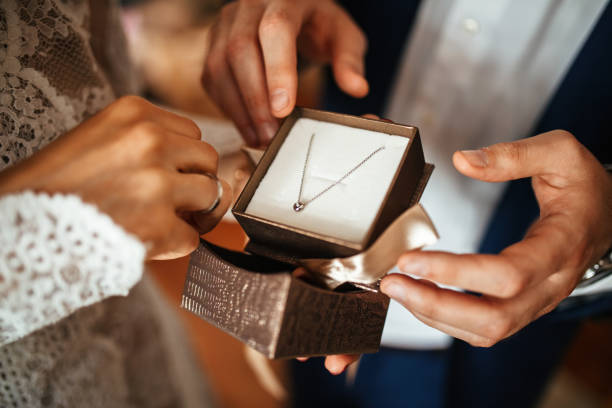
My hands were still shaking from the search. Upstairs, in the master bedroom of the house we’d bought in 1985, the empty velvet box sat in my top dresser drawer like an accusation. Cream satin interior, nothing inside but the faint outline where the gold heart-shaped locket had rested for forty years. I’d torn through that room—socks dumped on the bed, coat pockets turned out, shoe boxes opened—until panic started pressing tight against my ribs.
Today was Eleanor’s birthday. Three years since she passed. I’d planned to spend the morning quietly in that room with her necklace in my hands, the way I had on other hard days, letting the cool weight of it pull her closer in my mind.
But the box was empty.
Downstairs, the house did not care about my panic. The old air conditioner hummed against the Arizona heat. The big-screen TV in the living room poured out some football rerun. My son-in-law, Michael, sprawled across my couch with his feet propped on the armrest, a bag of chips balanced on his chest. My granddaughter Amber perched on the stairs with her phone to her ear, complaining about how boring Phoenix was. My daughter Jennifer moved around the kitchen like she owned it, knife in hand, chopping vegetables with sharp, angry movements.
“Jennifer,” I said, stepping into the doorway. “Have you seen Eleanor’s necklace?”
“I’m busy, Dad.” She didn’t look up. The knife kept hitting the cutting board in a hard, steady rhythm. “Check your room. You probably forgot where you put it.”
“I did check my room,” I said, trying to keep my voice level. “I’ve checked everywhere. The necklace is gone.”
She let out a long, practiced sigh, the kind I’d heard nearly every day since she and her family moved in after Eleanor died. The sigh that said I was an inconvenience.
“No one wants your old stuff, Dad,” she said. “You’re always misplacing things.”
“It was your mother’s,” I said. My throat tightened. “It was the only thing I kept.”
“Then you should’ve been more careful with it.”
I watched her chop celery into tiny, brutal pieces, felt something in my chest go cold. Not hot, raging anger—cold, like the air in the house just before a desert thunderstorm breaks.
“Jennifer,” I said quietly. “I need to know what happened to it.”
For the first time, she set the knife down and turned fully toward me. Her eyes held no warmth at all.
“Fine,” she said. “I sold it. Desert Gold Pawn Shop over on Thomas Road. We needed eight hundred dollars for Hawaii. You said no when I asked, so I found another way.”
The words hung there between us, strange and heavy.
“You what?” I whispered.
“We needed the money,” she said, shrugging. “It was just sitting there. You never wore it. Mom’s gone.”
From the living room, Michael called out without taking his eyes off the TV. “It was just sitting there, Wilbur. Dead people don’t need jewelry.”
On the stairs, Amber laughed. “Grandpa, you’re being dramatic,” she said. “It’s just a necklace. Mom got us an awesome vacation.”
I looked at her—really looked. Twenty-three years old. Eleanor’s granddaughter. She had Eleanor’s cheekbones and none of her gentleness.
“Your grandmother wore that every day for forty years,” I said softly.
Amber shrugged, already turning back to her phone. “Well, now somebody else gets to wear it.”
I stood there in my own kitchen, in the one-story stucco house where Eleanor and I had built our life, listening to my daughter, her husband, and their child talk about my wife’s necklace like it had been a forgotten lamp left by the curb.
I turned, walked back upstairs, and closed my bedroom door with a soft click. The empty velvet box sat on the dresser, the afternoon sun catching its worn red edges.
I picked it up. Opened it. Closed it. Opened it again.
Something had settled inside me—something heavier. I wasn’t breaking; that had happened three years earlier in a hospital room when Eleanor’s hand went slack in mine. This was different. This was a clarity I hadn’t possessed an hour earlier.
They had gone into my private drawer, taken the one thing I treasured, and turned it into spending money.
I set the box carefully on the dresser, reached for my phone, and opened my browser.
“Pawn shops Phoenix,” I typed.
The sixth shop answered on the second ring.
“Desert Gold Pawn,” a man said. “This is Harold.”
“I’m looking for a gold necklace with a heart-shaped locket,” I said. “I believe it was sold to you yesterday.”
There was a pause long enough for my heart to pound once, twice.
“Oh yes,” he said. “I remember that piece. Beautiful craftsmanship. Are you the husband?”
My chest tightened. “I am. My wife passed three years ago.”
“I’m very sorry,” he said, and I believed him. “Sir, there’s something you should know about that locket. When I was examining it, the locket opened. There was a small note inside. I removed it carefully so it wouldn’t get lost. It has numbers written on it—some kind of bank information.”
For a second, the room tilted.
“A note?” I repeated. “I didn’t know it opened.”
“I’m not sure the woman who sold it knew either,” he said. “She was in a hurry.”
Of course she was. I could picture Jennifer rushing in, seeing only the gold weight, not the tiny clasp on the side of the heart.
“I need to buy it back,” I said. “How much?”
“I gave her eight hundred,” he said. “Fair value is closer to twelve hundred. It’s fourteen-karat gold, and the craftsmanship is exceptional.”
“I’ll pay twelve hundred,” I said. “Can I pick it up today?”
“Come by anytime before six,” Harold replied. “I’ll hold it for you. And sir? I won’t sell this to anyone else. It’s yours.”
Desert Gold Pawn sat in a small strip mall between a nail salon and a tax preparation office. Inside, the shop smelled faintly of metal polish and old leather. Behind the counter stood a small man in his fifties with neatly trimmed gray hair and reading glasses.
“Mr. Davis?” he asked when I stepped in.
“That’s me,” I said.
He disappeared into a back room and returned carrying a small bundle wrapped in soft cloth. He unfolded it on the counter with care.
There it was. The gold heart glowed under the fluorescent lights exactly the way it had glowed against Eleanor’s collarbone for forty years. For a second, I couldn’t speak.
He slid a small envelope across the counter. “The note,” he said. “I put it in here so it wouldn’t get lost.”
“Thank you,” I managed.
I drove three blocks before I had to pull into a grocery store parking lot. My hands were shaking. I took the necklace out of the cloth, held it up to the light, and found the barely visible indentation on the side of the heart. I pressed it with my thumbnail.
The locket sprang open.
Inside, rolled impossibly tight, was a piece of paper no bigger than my pinky nail. I coaxed it out and unrolled it against my thigh.
Eleanor’s handwriting stared back at me: small, precise, familiar.
Bank of Arizona. Box 4782.
Eleanor had a safe-deposit box at the Bank of Arizona. In all our years of marriage, she’d never mentioned it.
By morning, the decision was made. I drove downtown to the Bank of Arizona’s main branch. Inside, the lobby was all cool marble and hushed voices.
A young woman sat behind the information desk. “I need to access a safe-deposit box,” I said.
She studied my documents, then typed into her computer. “Box 4782. Yes, I see it here. Opened in 2019. Last accessed the same year—about six years ago.”
- Eleanor hadn’t gotten sick until 2022. She’d set this up long before either of us knew what was coming.
She led me through a heavy steel door into the vault. Walls of metal drawers in neat rows. She used her key and a second key, slid out a long metal container, and placed it in my hands.
In a small windowless room, she set the box down. “Take all the time you need.”
When the door closed, I lifted the lid.
Neat stacks of envelopes sat inside, secured with rubber bands. Each envelope contained crisp hundred-dollar bills. I counted quickly. Twenty thousand. Then more underneath.
Underneath the cash lay a sealed envelope with my name written on it in Eleanor’s careful script.
Wilbur.
I broke the seal with trembling fingers.
My dearest Wilbur, if you’re reading this, I’m gone, and you’ve found what I hid.
The first line hit me so hard I had to close my eyes. I could hear her voice.
I saved this money over thirty years. Little bits at a time from each paycheck. Please don’t be angry with me for keeping it quiet. I did it because I love you, and because I know what’s coming.
I read faster.
Jennifer has always been difficult. You remember when she was twenty-five and demanded we pay for her entire wedding, then refused to invite your brother because he couldn’t afford an extravagant gift. That was when I saw her true nature—the way she treats people as transactions, the way nothing is ever enough.
I remembered. Eleanor had been upset for weeks.
After I’m gone, she will see you as a resource to drain. Michael will encourage it. And Amber will learn from them. I’m sorry to write these things, but you need to see them clearly.
My jaw clenched. Eleanor had tried to warn me over the years. I had brushed her off.
These savings are for you, my dear. Twenty-seven thousand dollars tucked away to protect you when you finally see what I saw. Don’t let them turn you into a victim. You are stronger than you know. The house, the money, everything—you earned it. Don’t let them take it out of guilt or obligation.
I stopped, pressed the letter to my chest, then read the last paragraph.
I wish I could be there to protect you, but I trust you’ll know what to do when the time comes. You have always been thoughtful, methodical, careful. Use those strengths now. Don’t be pushed around. And know that I love you more than anything in this world.
Forever yours, Eleanor.
I sat in that small room, surrounded by steel boxes full of strangers’ secrets, and let her words sink in. The cash came close to fifty thousand dollars. She had built this quietly over decades.
Eleanor had seen the truth about our daughter long before I had.
Over the next two weeks, I worked methodically. I pulled three years of bank statements and went line by line, highlighting every transfer to Michael: $500 for “car repairs,” $1,200 for “emergency dental work,” $2,000 for an “investment opportunity.” The total climbed: $18,500 over three years. The repayment column stayed at zero.
I found credit card statements Jennifer had been having mailed to my address without asking. The Hawaii trip was there: over $4,200 for flights, hotel, excursions—plus the $800 from pawning Eleanor’s necklace.
I created a binder: labeled tabs for photographs, financial records, household bills, property documents. I printed the house deed showing my name alone.
When the house was empty one afternoon, I installed a camera system. It looked like an ordinary smoke detector. On my phone, the app showed a clear view of the living room and kitchen.
By late March, I had hours of footage. I sat at my bedroom desk and watched.
On the screen, Jennifer stood in the living room, arms folded.
“I can’t believe he spent twelve hundred dollars on that stupid necklace,” she said. “That’s our money.”
Michael lay on the couch. “He’s being selfish,” he said. “When this house is ours, first thing I’m doing is remodeling.”
“We might not have to wait too long,” Jennifer said. “He’s sixty-seven. How many good years has he got left?”
I saved the clip.
In another clip, Amber sat on the stairs, phone pressed to her ear.
“My grandpa is such a pain,” she said. “He got all weird because Mom sold some old necklace. Honestly, I’ll be glad when this house is ours.”
The more I watched, the less surprised I felt. Eleanor’s letter had warned me.
On a Tuesday morning in early April, I sat in the office of Patricia Morrison, Elder Law attorney.
I set my evidence folder on her desk and opened it. “My daughter and her family have been living in my house for three years,” I said. “They don’t pay rent. They don’t contribute to expenses. They’ve been taking money from me and waiting for me to die. I have proof.”
She examined the documents, watched clips from my laptop, reviewed the spreadsheet of loans, the property documents, the photographs.
After twenty minutes, she set her pen down.
“Mr. Davis,” she said, “this documentation is excellent. Under Arizona law, your daughter and her family are tenants at will. You’re fully within your rights to establish rental terms. If they refuse, we can pursue eviction.”
She slid a retainer agreement toward me. “My retainer is three thousand dollars.”
“That’s fine,” I said.
She hesitated. “You’re certain you want to do this? They’re your family.”
I thought of Eleanor’s letter. Of the empty velvet box. Of Michael pushing me against the counter.
“My wife warned me this would happen,” I said. “I should’ve listened sooner.”
I signed the retainer with a steady hand.
A week later, a notary arrived at my door to serve the rental agreement.
Jennifer appeared from the kitchen. “Who is this?” she demanded.
The notary placed the document on the table. “Ms. Thompson, I’m here to serve you with a formal rental agreement for this property.”
Jennifer snatched the document and scanned it. Her face reddened.
“Fifteen hundred a month? Utilities? This is insane.”
“These are the proposed terms of your continued residency,” the notary said calmly.
“I’m not signing anything,” Jennifer snapped.
“That’s fine,” the notary said. “Service is still complete.”
After she left, Jennifer rounded on me.
“What is this?” she demanded. “Some kind of joke?”
“It’s a rental agreement,” I said. “Legally required if you’re going to continue living here.”
“This house belongs to us,” she said.
“This house belongs to me,” I said. “The deed is in my name.”
Michael came in from the living room, read the agreement, and stepped closer, crowding my space.
“You’re not thinking clearly, Wilbur,” he said. “Maybe you need a doctor to evaluate your mental state.”
“My mental state is fine,” I said. “We’ll see what a judge says.”
He stepped even closer. “You have no idea what you’re starting, old man,” he said.
“You have thirty days,” I said. “After that, the decision won’t be yours anymore.”
The harassment escalated. One evening, as I was making tea, Michael positioned himself between me and the doorway.
“Excuse me,” I said.
He didn’t move. Instead, he put a hand flat on my chest and shoved—hard enough to make me stumble back against the counter.
“Careful, old man,” he said. “Accidents happen at your age.”
The camera captured everything.
I transferred the footage to my laptop and emailed Patricia with a subject line: Escalation.
Her reply came within minutes. Call me immediately.
“Wilbur, this changes everything,” she said when I called. “The shove is assault. I’m filing for an emergency eviction and a restraining order. We’ll be in front of a judge within two weeks.”
The emergency hearing took place in a cool courtroom with an American flag hanging behind the bench. Judge Margaret Stone presided. Patricia sat beside me, two accordion files stacked in front of her.
Judge Stone reviewed the documents, then looked up. “I’d like to see the video recordings.”
Patricia connected my laptop to the courtroom monitor and played the clip of Michael pushing me.
The judge’s expression hardened. “That will be sufficient,” she said. “Assault is assault, regardless of family relationship.”
She looked at Michael. “Mr. Thompson, I am issuing a temporary restraining order. You are to maintain a distance of at least ten feet from Mr. Davis at all times.”
She turned to Jennifer. “As for you, Ms. Thompson, you have been given reasonable rental terms. You refused. You have engaged in financial abuse and harassment. I am granting the emergency relief. A full eviction hearing is set for July second.”
Outside the courthouse afterward, Patricia closed her files. “We’re winning,” she said simply.
Two weeks later, I sat across from a real estate agent at my dining room table.
“If you’re sure you want to sell,” Robert Santos said, “I’ll do everything I can to make the process smooth.”
“I’m sure,” I said. “I want a clean slate.”
He walked through the house, taking photographs and notes. In the backyard, Jennifer stormed out.
“Dad, what is going on?” she asked.
“I’m selling the house,” I said.
“No, you’re not,” she said. “This is our home.”
“It’s my home,” I said. “My name is on the deed.”
Within a week, the listing was ready. Robert suggested $385,000.
“List it tomorrow,” I told him.
The For Sale sign went up two days later. Within three days, a young couple made an offer: $383,000.
“Take it,” I told Robert.
While the sale moved forward, Jennifer tried to mount a defense. I watched from my window as she stopped neighbors on the sidewalk, asking them to testify that she took care of me. They all declined.
July second arrived. At the courthouse, Patricia laid everything out: the videos, the financial records, the documentation of harassment.
“This is not a simple family disagreement, Your Honor,” Patricia said. “This is a sustained pattern of financial exploitation.”
Judge Stone listened to Jennifer’s attorney attempt to counter, then picked up her pen.
“I am granting the eviction,” she said. “You will vacate the premises no later than August first.”
Jennifer burst into tears. “Where are we supposed to go?”
“You have thirty days,” the judge said.
On July nineteenth, a rental truck pulled into the driveway. I stayed in my bedroom, door closed, listening to furniture being dragged and boxes thudding.
Eventually, there was a knock. Jennifer stood there, hair frizzy with sweat.
“Are you happy now?” she asked.
“I didn’t want this,” I said. “You forced it.”
“I’ll never forgive you,” she said.
“I don’t need your forgiveness,” I replied. “I have Eleanor’s.”
A few minutes later, the truck pulled away.
Four weeks later, I sat in a title company conference room across from Sarah and Marcus Chen, the young couple buying my house. I signed my name over and over, then slid the keys across the table.
Sarah handed me an envelope. “We wrote you a letter,” she said. “We wanted to say thank you.”
When I walked out of that office, the heat in the parking lot felt different.
I drove not to my old house, but to my new one: a modest two-bedroom apartment in a 55-plus community in Scottsdale. I’d bought it outright with Eleanor’s hidden savings and part of the house proceeds. No mortgage. No roommates. No one telling me I was selfish.
Inside, the apartment smelled of fresh paint. I’d already moved the basics. The second bedroom was set up as a workshop.
I opened Sarah’s envelope at my dining table.
Mr. Davis, we want you to know how grateful we are. We promise to fill it with laughter and love and to honor what you built there. — Sarah & Marcus
I folded the letter and placed it in my desk drawer next to Eleanor’s letter.
In the weeks that followed, I opened a new bank account and transferred approximately $210,000. I set up automatic payments. I answered to no one.
Jennifer called. I let it go to voicemail. Michael called from a number I didn’t recognize. I blocked it. Amber texted. I blocked that too, then changed my phone number entirely.
Late in August, there was a knock on my apartment door. I checked the peephole and saw Jennifer.
“Dad, I know you’re in there,” she said. “Please, we need to talk.”
I stood in my living room and listened without moving.
A door down the hall opened. My neighbor Bill poked his head out.
“Ma’am, if he’s not opening the door, you need to leave,” he said. “Or I’ll call security.”
Her footsteps retreated. Silence.
I felt no guilt. Only relief.
Two days later, on the anniversary of Eleanor’s death, I sat at my kitchen table with a cup of coffee and her necklace resting in my palm. Outside, the Scottsdale sky was relentlessly blue.
I’d built a shadow box in my workshop. The necklace would hang inside, protected but visible.
I opened the locket one more time. The tiny compartment where her note had been was empty now, but the words were imprinted in my mind.
Be strong. Live for yourself.
“I did it, Eleanor,” I said softly. “I’m free.”
Tears came, but they weren’t desperate tears. They were release.
That night, back in my workshop, I ran my hand over the smooth sides of a new oak box I’d just finished. I didn’t know yet what I’d use it for. Maybe I’d give it to my friend Dennis. Maybe I’d keep it for small things that mattered only to me.
It didn’t really matter.
What mattered was that the life around me now was one I had chosen.
In the living room, Eleanor’s necklace hung in its shadow box, catching the lamplight. The TV was off. The apartment was quiet except for the hum of the air conditioner.
For the first time in years, the future felt like an open road instead of a trap. I had no idea what would happen six months from now. I just knew that whatever came next, it would be on my terms.
I turned off the workshop light, walked into my little kitchen, and started making dinner for one.
Exactly enough.

Lila Hart is a dedicated Digital Archivist and Research Specialist with a keen eye for preserving and curating meaningful content. At TheArchivists, she specializes in organizing and managing digital archives, ensuring that valuable stories and historical moments are accessible for generations to come.
Lila earned her degree in History and Archival Studies from the University of Edinburgh, where she cultivated her passion for documenting the past and preserving cultural heritage. Her expertise lies in combining traditional archival techniques with modern digital tools, allowing her to create comprehensive and engaging collections that resonate with audiences worldwide.
At TheArchivists, Lila is known for her meticulous attention to detail and her ability to uncover hidden gems within extensive archives. Her work is praised for its depth, authenticity, and contribution to the preservation of knowledge in the digital age.
Driven by a commitment to preserving stories that matter, Lila is passionate about exploring the intersection of history and technology. Her goal is to ensure that every piece of content she handles reflects the richness of human experiences and remains a source of inspiration for years to come.