For five years, I watched my neighbor Dorothy transform from an enthusiastic newcomer into the self-appointed savior of our supposedly struggling household. What started as awkward kindness evolved into something far more sinister—a pattern of boundary violations disguised as charity that would eventually unravel in the most unexpected way.
I’m a graphic designer who works from home, and my wife Sarah is a nurse at the county hospital. We’re both in our early thirties, financially stable, and perfectly capable of feeding ourselves. But Dorothy had decided otherwise, and once Dorothy made up her mind about something, changing it was like trying to redirect a freight train with your bare hands.
She moved into the house next door five years ago, a recently retired woman in her mid-sixties with too much time and an overwhelming need to feel necessary. Within days of unpacking, she was knocking on doors up and down our street, introducing herself as someone who loved sharing her cooking with “less fortunate neighbors who probably don’t eat well.”
The first time she appeared at our door, she was holding a casserole dish with both hands, her smile bright and insistent. “I made way too much chicken tetrazzini last night,” she announced before I could even say hello. “I just couldn’t bear to see it go to waste, and I immediately thought of you two hardworking young people who probably don’t have time to cook proper meals.”
I glanced at the casserole. The cheese on top had that grayish tint that happens when dairy sits too long. The smell was vaguely sour beneath the heavy scent of garlic and herbs she’d clearly added to mask it.
“That’s very kind,” I said carefully, “but we actually just finished dinner. We cook every night, so—”
Her face crumpled instantly, eyes going shiny with tears. “Oh, I understand. You’re too proud to accept help from neighbors. I get it. Some people just can’t admit when they need a little support.” She thrust the dish toward me anyway. “But please, take it. I’ll feel terrible throwing it away when there are people who could use it.”
The implication was clear: we were those people who could use it.
Against my better judgment, I accepted the dish just to end the uncomfortable interaction. The moment I closed the door, Sarah emerged from the kitchen where she’d been listening.
“Please tell me you’re throwing that away,” she said, eyeing the casserole with her nurse’s instinct for potential health hazards.
“Immediately,” I confirmed.
That should have been the end of it. But Dorothy was just getting started.
Over the following weeks, she established a pattern. Every few days, she’d appear with containers of leftovers that were always just past the point of being safely edible. Soups with separation that suggested they’d been sitting in her fridge for days. Meat dishes with that telltale smell of protein starting to turn. Vegetables that had gone slimy in their own juices.
Each time, she’d stand at our door with the same performance: she’d made too much, couldn’t bear the waste, thought of us immediately. If we tried to refuse, she’d get emotional, talking about how hard it was to be a good neighbor when people were too proud to accept kindness.
If we didn’t answer the door—and we started avoiding her when we saw her coming—she’d leave the containers on our porch where they’d sit in the sun until we got home from work, the contents growing even more questionable in the heat.
She had a perfect view of our front door from her living room window, and she’d watch to see if we brought the containers inside. Then, without fail, she’d text: “Hope you enjoyed the stroganoff! Let me know what you thought of my special sauce!”
We’d throw everything straight in the trash and text back generic thank-yous to avoid confrontation. Dorothy would beam at us the next time we saw her, already planning what to bring next, convinced she was performing some vital charitable service.
Then her campaign escalated from leftovers to something even more disturbing: she started using us as a dumping ground for her expired groceries.
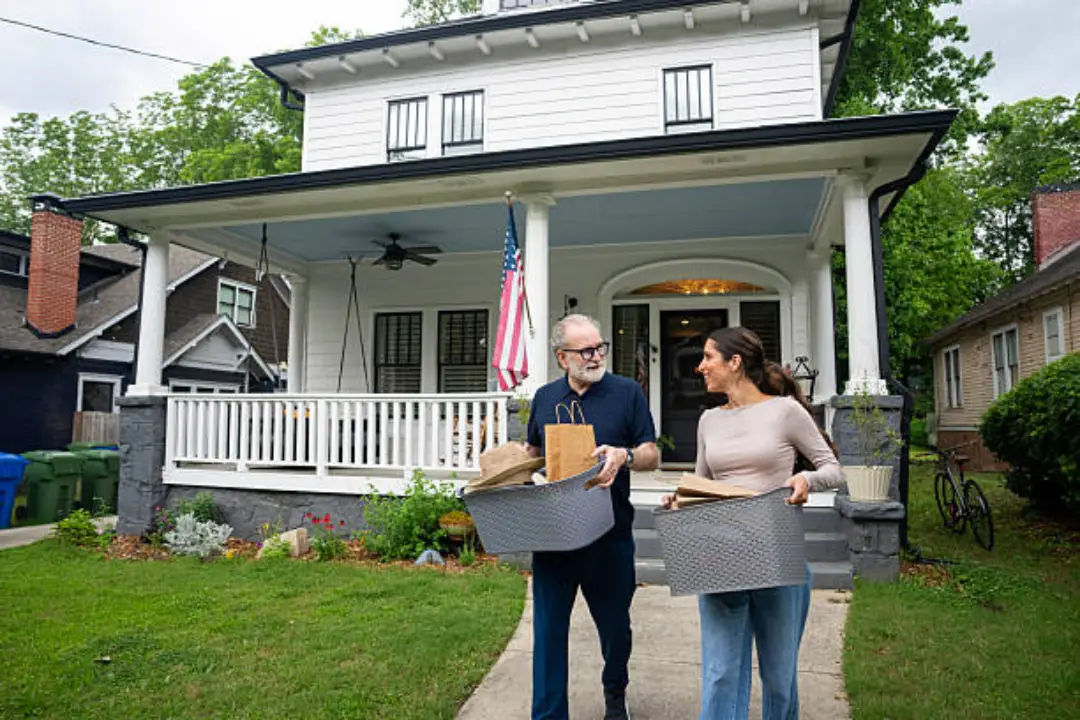
She’d clean out her refrigerator and pantry, package everything in decorative baskets like some kind of twisted gift basket, and deliver it with great ceremony. Milk two weeks past its expiration date. Bread with spots she insisted were “just flour.” Eggs that would have floated in water if we’d bothered to test them. Yogurt containers that had started to bulge ominously.
“I noticed you don’t go grocery shopping very often,” she’d say with concern dripping from every word. “I wanted to make sure you had the basics. These are all perfectly good items I just don’t have room for.”
Sarah made the mistake once of mentioning that we’d just returned from the grocery store. Dorothy’s response was immediate and cutting: “Well, you obviously don’t know how to shop smart if you’re wasting money on fresh food when I’m providing perfectly good items for free. Some people just don’t understand how to budget properly.”
The real damage, though, came from what Dorothy was telling the other neighbors.
At the annual block party that summer, I was getting a burger when Dorothy’s voice carried across the yard, loud and performative. “I make extra portions every single night for that poor couple next door who can’t afford proper meals. Someone has to look out for them.”
I turned to see several neighbors looking at me with undisguised pity. Mrs. Chen from across the street gave me a sad smile. The Hendersons exchanged meaningful glances. Jack and Caroline, the elderly couple next to Dorothy, nodded approvingly at her supposed generosity.
When we hosted a dinner party a month later—fresh seafood, expensive steaks, good wine—Dorothy apparently told the entire neighborhood that we’d maxed out our credit cards to show off when we should have “just accepted our situation” and lived within our means.
The narrative she’d constructed was complete and utterly false: we were a struggling young couple too proud to admit we needed help, and she was the selfless neighbor keeping us fed through her generous charity.
The absurdity would have been funny if it hadn’t been so invasive and damaging to our reputation.
Things got even stranger when Dorothy started going through our garbage on trash days. She’d wait until we put our bins out, then rifle through them after dark, checking whether we’d thrown away her food deliveries. If she found them—which she always did, because we threw away everything she gave us—she’d show up at our door in tears.
“How could you waste food when children are starving?” she’d wail, sometimes for an hour or more. “Do you know how privileged you are to be able to throw away perfectly good meals? I didn’t raise you to be wasteful neighbors!”
The “I didn’t raise you” comment was particularly bizarre since we’d only known her for a couple of years and were grown adults.
She’d actually retrieve the containers from our trash and bring them back to our door, insisting we should at least try the food before throwing it away. The fact that the food had been sitting in our garbage can didn’t seem to register as a problem for her.
One evening, I was taking out the trash when Dorothy appeared seemingly out of nowhere. She’d seen me throw away a block of cheese she’d given us the day before—cheese that had been covered in fuzzy green mold.
“You’re so wasteful!” she snapped, actually raising her voice at me. “You could have just cut around the mold. That’s what people who understand the value of food do. But I guess you wouldn’t know about that.”
The breaking point came the Monday after Thanksgiving.
Dorothy appeared at our door carrying a large container, her smile triumphant. “I saved the leftover turkey especially for you two. I know how expensive holiday meals can be, so I wanted to make sure you got to enjoy Thanksgiving dinner even if you couldn’t afford your own.”
The smell when she opened the container was overwhelming. Sarah, who was standing behind me, actually gagged. The turkey had turned a greenish-gray color and had visible mold growing on the skin.
“That’s very kind,” I started, “but I don’t think—”
“Nonsense,” Dorothy interrupted, pushing past me into our kitchen. “It’s just herbs making it look like that. You’re being dramatic.” She opened our refrigerator and shoved the container inside, right next to our own perfectly fresh leftovers from the Thanksgiving dinner we’d hosted for Sarah’s family.
“I’ll check tomorrow to make sure you’ve eaten it,” she announced. “I didn’t raise wasteful neighbors, and I won’t start now.”
She left before we could respond, and Sarah immediately grabbed the container and threw it in the outside garbage bin.
“That turkey could literally kill someone,” she said, her medical training making her voice shake with anger. “The bacteria growing on meat that old and that poorly stored—people die from that. Children and elderly people especially.”
We thought that was the end of it. We were wrong.
Two days later, Dorothy saw us throwing the turkey away. She watched from her window, and within minutes she was on our porch, screaming. Not crying this time—actually screaming about ingratitude and disrespect and waste.
“I’m calling the health department!” she yelled. “You’re running an illegal meal service from your home, serving unsafe food to the neighborhood! Someone needs to stop you before you hurt people!”
Sarah and I stood there, stunned, as Dorothy stormed back to her house and actually made the call. Through our window, we could see her on her phone, gesturing wildly, her face red with anger.
The health inspector showed up the next afternoon.
I opened the door to find a tired-looking man in his fifties holding a clipboard and looking vaguely apologetic. “I’m Robert Chen from the county health department. I received a complaint about unsafe food handling at this address.”
Dorothy’s curtains twitched. I could see her watching from her window, a small smile on her face.
“Come in,” I said, opening the door wide. “I think there’s been a misunderstanding.”
Inspector Chen walked through our kitchen, opening our refrigerator and checking the temperature gauge, examining our storage practices, looking at the dates on everything. Our kitchen was spotless—Sarah’s medical background made her fastidious about cleanliness, and my work-from-home schedule meant I cleaned throughout the day.
“Everything here is in perfect order,” he said, making notes. “Well above standard for a residential kitchen. Someone obviously made a false report.” He paused, looking at me carefully. “The complaint mentioned you were serving food to neighbors. Is that accurate?”
“Absolutely not,” I said. “But our neighbor Dorothy has been bringing us expired and spoiled food for years. We’ve been throwing it away because we’re concerned about food safety. I think she’s confused about who’s doing what.”
Inspector Chen’s expression changed. “This neighbor—does she regularly share food with multiple households in the area?”
“Yes. She brings food to almost everyone on the block.”
He flipped through his notes, his jaw tightening. “If she’s distributing food regularly to multiple residences, that potentially qualifies as food distribution under county regulations. That comes with specific safety requirements.”
He closed his notebook and looked toward Dorothy’s house. “Which residence is hers?”
I pointed next door.
“I’ll need to speak with her. Thank you for your time.”
I watched through our window as Inspector Chen walked to Dorothy’s door. She answered holding a container—apparently on her way to deliver food to Jack and Caroline across the street. Her confident smile faltered when he introduced himself.
“I need to inspect your kitchen, ma’am. You’re actively distributing food, and I’ve had a complaint about food safety concerns.”
Dorothy tried to refuse, but he calmly explained that he could see she was literally holding food intended for distribution right now, and given that he’d already received a complaint, he was within his authority to inspect.
What he found made my stomach turn even though I was watching from a distance.
The inspection took over an hour. Through the windows, I could see Inspector Chen photographing everything, his expression growing grimmer with each discovery. Dorothy followed him around, her voice getting higher and faster, making excuses and explanations that clearly weren’t helping her case.
When he finally emerged and walked back to our house, his professional mask had slipped slightly. “May I come in to explain what I found?”
Sarah had just gotten home from her shift. We sat at our kitchen table while Inspector Chen went through his notes, and the list of violations was staggering.
Dorothy’s refrigerator was running at fifty-two degrees—well into the danger zone where bacteria multiplies rapidly. Her freezer wasn’t cold enough to keep food properly frozen. She had food stored that was months past expiration, with yogurt dated from four months ago and lunch meat that had turned gray.
She had cross-contamination issues everywhere—raw meat stored above ready-to-eat foods, cutting boards with grooves so deep they couldn’t be sanitized, reused containers with cracks that harbored bacteria.
Her pantry had canned goods with rust eating through the seams and bags of flour with visible insects crawling inside. When he’d pointed out the bugs, she’d told him “a little protein never hurt anyone.”
The casserole dish with visible mold that she’d insisted was “just seasoning that had separated” was photographed as evidence.
“I’m issuing citations for multiple critical violations,” Inspector Chen said. “She’s being ordered to stop all food distribution immediately until she passes a follow-up inspection. I’m filing a formal report with the county.”
Sarah leaned forward. “Does she understand how serious this is?”
He shook his head. “She seems to think I’m being unreasonable. She argued with every violation, had an excuse for everything. She doesn’t seem to grasp that her food could genuinely harm people.”
After he left, Sarah and I sat in silence for a long time. Through the window, we could see Dorothy pacing in her kitchen, talking frantically on her phone.
“We did the right thing,” Sarah finally said, but she sounded like she was trying to convince herself as much as me.
Within two days, the entire neighborhood knew about the inspection and the distribution ban. The reaction surprised us both.
Jack came over while I was getting the mail. “I need to tell you something,” he said, looking embarrassed. “I’ve been throwing away Dorothy’s food for years. I felt too guilty to say anything, but I’m actually relieved someone finally reported it.”
His wife Caroline joined us on the sidewalk. “I got food poisoning from her potato salad two summers ago,” she admitted. “I was sick for three days. I never connected it until now because I didn’t want to hurt her feelings.”
One by one, other neighbors approached us with similar confessions. The young couple two doors down had been composting all her deliveries. The family with three kids said their children refused to eat anything Dorothy brought because it “always smelled weird.”
Everyone had been throwing away her food. Everyone had felt trapped by her aggressive generosity. Nobody wanted to be the villain who rejected help from someone who seemed so caring.
The next morning, I found a three-page handwritten letter taped to our door.
Dorothy’s note alternated wildly between fury and guilt-tripping. One paragraph called us ungrateful and selfish. The next claimed she’d only ever tried to help us and we’d repaid her kindness with betrayal. She insisted the inspector had been biased, that her kitchen was perfectly fine, that the violations didn’t really exist.
She wrote that she’d been feeding half the neighborhood for years without a single complaint until we “decided to cause problems.” The note ended with her saying she’d never forgive us for what we’d done to her reputation.
Sarah read it after her shift and shook her head. “She still doesn’t understand that her food was actually dangerous. She thinks this is about us being mean, not about legitimate safety concerns.”
We kept the note, unsure if we’d need it as documentation later.
Three weeks later, at our regular block party, the atmosphere was completely different. People talked openly about their experiences with Dorothy’s food. The elderly couple next to her revealed she’d cried on their porch for an hour when they’d suggested they didn’t need her help anymore. They’d accepted her food for two more years just to avoid upsetting her again.
Multiple families admitted they’d believed Dorothy’s story about us struggling financially and had almost started a collection to help us out. When we explained that we both had good jobs and had never needed her help, people seemed embarrassed they’d accepted her narrative without asking us directly.
Then Jack called me in a panic. Dorothy had brought him a casserole despite the distribution ban, claiming it didn’t apply to helping elderly neighbors “who might not eat otherwise.” The casserole smelled off, and Jack had immediately called the health department.
The same inspector returned the next day. He stayed in Dorothy’s house for forty-five minutes, and when he came out, his expression was grim.
He stopped by our house on his way to his car. “Her kitchen is completely unchanged from the first inspection. She hasn’t fixed anything or thrown away any expired food. She just waited for the ban to be lifted.” He was filing an additional violation report for distributing food while under a distribution ban.
A week later, a woman named Rachel knocked on our door, introducing herself as Dorothy’s sister. The health department had contacted her as Dorothy’s emergency contact after issuing more serious penalties, including mandatory food safety training and a formal warning that future violations could result in legal action.
Rachel had driven in from two states away and was clearly devastated. “I knew something was wrong with Dorothy, but I had no idea it was this bad,” she said, sitting at our kitchen table with tears running down her face. “She’s always had control issues, but they got so much worse after she retired.”
Rachel stayed for a week, and we watched through our windows as she helped Dorothy clean out her entire kitchen. They filled multiple dumpsters with expired food and unsafe containers. Rachel scrubbed everything, brought in new storage containers and label makers, and completely reorganized Dorothy’s food storage systems.
Before she left, Rachel gave us her phone number and asked us to call if Dorothy started distributing food again. She’d arranged for Dorothy to see a therapist who specialized in hoarding behaviors and compulsive helping patterns.
The following months were quiet but tense. Dorothy completed her required food safety training and eventually passed a follow-up inspection. Rachel’s weekly phone calls and the new organizational systems were apparently working.
Dorothy left a note in our mailbox—a formal, stiff apology that felt like someone had helped her write it. She wanted to work toward being “cordial neighbors” again.
Sarah and I discussed what kind of relationship we could handle going forward. We agreed on polite waves and brief small talk, but nothing more. No food gifts under any circumstances. No long conversations. Just basic neighborly courtesy.
I wrote back suggesting we start with friendly waves and short conversations to rebuild trust. Dorothy texted that she appreciated our willingness to try.
The transformation was gradual but real. Dorothy started volunteering at the local food bank three days a week, channeling her desire to help people into a structured environment with proper supervision and protocols. Rachel told us Dorothy seemed genuinely happier there, getting the satisfaction of helping people access food without the compulsive controlling behavior.
Six months after the initial inspection, Dorothy completed her food safety training and the distribution ban was lifted. But something fundamental had changed. She didn’t resume her old patterns.
When she invited neighbors over for a small gathering, she served only store-bought items still in their original packaging, repeatedly pointing out the expiration dates and explaining where everything came from. She seemed genuinely anxious about hosting, but she was trying.
When Jack mentioned that Dorothy had recently offered him tomatoes from her garden and accepted his refusal without any drama or guilt-tripping, it felt like a miracle. The woman who’d once cried for hours if anyone declined her help had learned to respect a simple “no thanks.”
The neighborhood slowly returned to normal. People weren’t avoiding Dorothy anymore, but they also weren’t walking on eggshells around her. When the block party planning committee asked her to help organize the event, she volunteered to handle decorations instead of food—and everyone was relieved.
A year after everything started, Dorothy knocked on our door holding a small potted plant from the garden center, price tag still attached. It wasn’t food. It wasn’t something from her house. It was just a simple neighborly gesture.
Sarah and I accepted it and gave her a generic gift card in return. The entire exchange took maybe three minutes and felt completely, wonderfully normal.
Two years later, I sat on our front porch on a Saturday morning, watching the neighborhood wake up slowly. Dorothy was in her side yard working in the raised vegetable beds she’d built to grow produce specifically for the food bank. She looked up, saw me, and waved. I waved back. The interaction lasted two seconds and felt absolutely ordinary.
Sarah came out with her coffee and sat beside me. We watched Jack and Caroline walk past on their morning walk, stopping to chat briefly about the upcoming block party. Everything felt functional and appropriate—good boundaries, genuine friendliness, mutual respect.
The whole situation had resolved itself in the messy but ultimately positive way real conflicts sometimes end. Speaking up had been hard and uncomfortable, but it turned out to be necessary for everyone’s wellbeing.
Dorothy got the help and accountability she needed to grow instead of continuing harmful patterns. We got our boundaries respected and our actual circumstances recognized. The neighborhood learned that being polite didn’t mean accepting behavior that made people uncomfortable.
Sometimes people can actually change when they have proper support and consequences that push them toward better behavior. Dorothy found her place as someone who contributed positively to the community through appropriate channels. We found our place as working professionals who were friendly but private.
Looking back, I don’t regret reporting her to the health inspector. Sarah reminded me during one of my moments of guilt that Dorothy’s food could have seriously hurt someone—maybe killed someone elderly or immunocompromised. We didn’t report her to be mean or get revenge. We reported legitimate safety concerns to the appropriate authority.
What happened after that was because of Dorothy’s choices and actions, not ours.
The experience taught us both that real kindness sometimes means setting firm boundaries to protect yourself and others. That being a good neighbor doesn’t mean accepting whatever behavior someone directs at you. That speaking up about problems is usually better than avoiding them and hoping they’ll resolve themselves.
And most importantly, that sometimes the people who seem to need control the most are actually the ones who need help learning to let go.
Dorothy learned to let go. We learned to stand firm. And somehow, against all odds, everyone ended up better for it.

Sophia Rivers is an experienced News Content Editor with a sharp eye for detail and a passion for delivering accurate and engaging news stories. At TheArchivists, she specializes in curating, editing, and presenting news content that informs and resonates with a global audience.
Sophia holds a degree in Journalism from the University of Toronto, where she developed her skills in news reporting, media ethics, and digital journalism. Her expertise lies in identifying key stories, crafting compelling narratives, and ensuring journalistic integrity in every piece she edits.
Known for her precision and dedication to the truth, Sophia thrives in the fast-paced world of news editing. At TheArchivists, she focuses on producing high-quality news content that keeps readers informed while maintaining a balanced and insightful perspective.
With a commitment to delivering impactful journalism, Sophia is passionate about bringing clarity to complex issues and amplifying voices that matter. Her work reflects her belief in the power of news to shape conversations and inspire change.