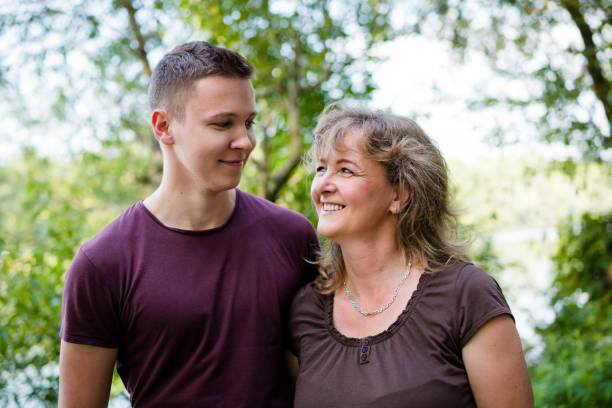
The front door banged against the wall with such force that every picture frame on the hallway wall rattled in protest. The brass doorknob spun wildly, keys clinked together in an angry symphony, and a thick gust of humid Georgia air swept into my quiet Savannah home, dragging with it the heavy scent of freshly cut grass and car exhaust—the kind of oppressive summer heat that makes tempers feel like they’re already lit and just waiting for a spark.
I had just set down my basket of carefully folded laundry on the hallway table when Marcus’s voice thundered through the house like a physical force. His footsteps pounded across the hardwood floor with a rhythm that was both fast and heavy, each impact carrying a rage that felt completely foreign in what had always been my peaceful sanctuary.
“Mom, what the hell did you do?” he shouted, his voice echoing off the walls.
I turned to face him, my hands instinctively gripping the doorframe of the living room for support. My son—my forty-two-year-old son—stood before me with his face flushed a deep, angry red, his green eyes flashing with the same storm I remembered from his teenage years when he’d been caught doing something he knew was wrong and couldn’t accept the consequences.
“Chloe just called me in tears,” he continued, his voice rising with each word. “She was absolutely humiliated. You changed the password on your credit card, Mom. She was standing in the middle of the grocery store with a cart full of food she couldn’t pay for, and everyone was staring at her like she was some kind of criminal. Do you have any idea how embarrassing that was for her? For us?”
I stayed where I was in the doorway, one hand braced against the trim, the other still holding a folded towel from the basket, using these small domestic gestures to keep myself steady when everything in my world felt like it was tilting dangerously off its axis. The porch light behind the frosted glass door burned with its steady glow—that same light I’d turned on every evening for decades, the light that had welcomed Marcus home from school, from dates, from college. The light that represented stability, home, safety.
Now my home felt like a battleground.
“Marcus,” I said, forcing my voice to remain calm and measured despite the trembling in my hands, “I changed the password because it’s my card. My money. My account. I’m not obligated to leave it accessible to anyone else—not even family.”
He threw his hands in the air with such violence that I actually flinched. The gesture sliced through the space between us like a knife, sharp and threatening.
“We’re family!” he shouted, his voice cracking with emotion that sounded more like outrage than hurt. “You can’t just block us out like that, like we’re strangers trying to steal from you. Chloe was buying necessities—food, cleaning supplies, things we need to live. You made her look like a fool in front of everyone. You humiliated my wife.”
The words stung—not because of their surface meaning, but because of the contempt that dripped from every syllable. The assumption that my money was somehow communal property, that setting a boundary was an act of aggression rather than self-preservation.
For forty-two years, I had carried this man. I had raised him alone after his father died, sacrificed everything I had to give him opportunities I never had myself. I had worked double shifts at Memorial Hospital until my feet bled and my back screamed in protest, all so he could stay in school, go to college, build a life. And now he stood in front of me with his fists clenched, looking at me not with love or even basic respect, but with the cold calculation of someone who believed he had a right to everything I owned simply because I had given birth to him.
I took a deep breath, feeling the cool hardwood floor through my thin socks, grounding myself in the physical reality of my own home—the home I had paid for with my own labor, maintained with my own hands, protected with my own determination.
“Marcus,” I said, keeping my voice steady even as my heart raced, “I need you to lower your tone. We’re educated people. We can have a conversation without screaming. If you need help—genuine help—we can sit down and talk about it like adults. But my credit card is not a family service that I’m required to provide. It’s my financial security, and I have every right to protect it.”
His jaw tightened, the muscles working visibly beneath his skin. He took two steps closer—close enough that I could see the sweat beading at his hairline, close enough that I could smell the coffee on his breath, close enough that for the first time in his entire life, I felt a knot of fear tighten in my stomach.
Not fear that he would physically harm me—I didn’t believe that, not really. But fear of the vast, unbridgeable distance that had somehow grown between us without my noticing. A distance so wide and so deep that my only son, the baby I had nursed and rocked and protected, could stand in my living room and look at me like I was an obstacle to be removed rather than a person to be loved.
The laundry basket still sat in the hallway, mundane and ordinary, a reminder of the quiet domestic life I had been living just minutes before this confrontation shattered my peace. But I no longer cared about folded shirts and fresh linens. The fight that had begun in a grocery store checkout line was now rooted firmly in my living room, spreading like poison through the foundation of our relationship.
The TV remote lay crooked on the coffee table like a tool someone had surrendered mid-task. Even my houseplants—the jade and the pothos I’d been nurturing for years—seemed to lean away from the heat radiating from Marcus’s anger.
I steadied myself, though my knees felt weak and my hands trembled, and I looked him straight in the eye with all the maternal authority I could summon.
“Marcus, do you remember how I worked nights at Memorial Hospital after your father passed away? Do you remember how I took every extra shift they offered, no matter how exhausted I was, so that you could stay in that private school you loved? I paid your college tuition when the scholarships ran out and the financial aid wasn’t enough. I gave you the down payment for your condo when you wanted a place of your own—$15,000 I had saved for my own retirement. Everything I had, everything I earned, every sacrifice I made went toward making sure you could stand on your own feet and build a good life.”
He folded his arms across his chest, his posture rigid and defensive. The tendons in his forearms stood out like cords pulled tight, and for a second I saw a flash of the teenage boy who used to cross his arms exactly the same way when I told him he had to be home by ten, when I said no to something he wanted, when reality didn’t bend to his desires.
“That was your duty as a mother,” he said, his voice cold and matter-of-fact. “You’re acting like you did me some kind of extraordinary favor. Parents are supposed to sacrifice for their children. That’s what parents do. It’s not something I’m supposed to be grateful for—it’s the basic requirement of being a mother.”
The words landed harder than any physical blow could have. Each syllable felt like a small stone thrown at my chest, knocking the breath from my lungs.
Duty. As if forty-two years of exhaustion, missed meals, aching joints, and loneliness had been nothing more than items on a checklist I was obligated to complete by virtue of giving birth. As if every hour I gave, every dream I deferred, every sacrifice I made had been a debt I owed rather than a gift I chose to give out of love.
My chest ached with the weight of memories—coming home at dawn after twelve-hour shifts, my feet so swollen I had to cut my shoes off, slipping through the door as quietly as possible so I wouldn’t wake him. Skipping meals so he could have seconds. Wearing the same three outfits for years so he could have new clothes for school. Sitting alone in this house night after night, so tired I could barely move, but staying up anyway to help him with homework, to listen to his problems, to be present even when I had nothing left to give.
All of it reduced to “duty.”
“Marcus,” I said softly, my voice breaking despite my efforts to stay strong, “I did it because I loved you. Because I wanted you to have the life your father and I dreamed of giving you. It wasn’t duty—it was devotion.”
He shook his head, dismissing my words like they were meaningless sentiment getting in the way of his point. “Then why are you turning against us now? Chloe is family. She’s my wife. Her needs are our needs—they’re family needs. You’ve always been generous with us. Why are you suddenly being so selfish and difficult?”
I searched his face desperately for some trace of the boy I had raised—looking for the freckle by his left eye, the way he used to bite the inside of his cheek when he was nervous before asking for gas money, the dimple that appeared when he smiled genuinely. I was looking for anything that would argue against the cold stranger standing in my living room, anything that would prove this was just a bad moment and not who he had actually become.
But I found only the hardened lines of a man who saw me not as a mother, not as a person with her own needs and rights, not as someone worthy of basic respect—but as a vault that had suddenly and inexplicably closed, denying him access to what he believed was rightfully his.
The son I had once carried in my arms now carried only expectations that stripped me of my dignity. And his voice was only growing sharper, more demanding, more threatening.
The Beginning: When Love Looked Like Manipulation
I remember so clearly the first evening Marcus brought Chloe to my home. It was early spring, and the porch light drew a soft circle on the red brick steps, moths skimming its edge like the doubts I was already pretending not to see. He parked crooked in the driveway—the way he always did after a particularly happy day, wheels at an angle like his joy couldn’t be contained enough for precision—and they walked up the brick steps hand in hand.
The porch light caught on her engagement ring, making it sparkle brilliantly, and also illuminated the small American flag I keep clipped to the mailbox year-round, a tribute to Robert’s military service.
Marcus was grinning in a way I hadn’t seen since his college graduation—that boyish, unguarded excitement lighting up his entire face as he held her hand possessively, proudly. Chloe walked beside him with the kind of perfect poise that looked practiced, her nails immaculately manicured, her hair professionally styled to frame her delicate features just so.
She carried herself as though she naturally belonged in every room she entered, as though the world naturally made space for her presence. I served them my famous baked macaroni and cheese—the dish Marcus had been requesting since he was five years old, the comfort food that had gotten him through bad days and celebrated good ones.
Chloe praised it generously, even effusively, insisting with wide-eyed sincerity that she had never tasted anything quite like it, that I absolutely had to give her the recipe.
Her laughter was light and musical. Her smile was warm and seemed genuine. And in that moment, sitting at my dining room table watching them together, I let myself believe she might become the daughter I had never had. I imagined holidays filled with feminine conversation, shopping trips together, someone to share recipes and stories with, someone who would love my son and by extension, become part of my small, precious family.
I was so desperately hopeful that I ignored the small warning signs flickering at the edges of my awareness.
The early days were filled with small requests—so small and reasonable they seemed completely harmless, even natural.
“We’re a little short this month, Sylvia,” Chloe would say sweetly, glancing at Marcus as though embarrassed by having to ask. “Could you lend us maybe $200? Just until Friday when Marcus gets paid. We’ll pay you back as soon as the check clears, I promise.”
Friday always came right on schedule. But repayment never materialized—only new emergencies, each one accompanied by explanations that sounded entirely reasonable in the moment.
Soon $200 became $500. Then $800. Each excuse was carefully polished with just enough sincerity and detail to keep me quiet, to make me feel like questioning her would be cruel and distrustful.
When Chloe asked to borrow my credit card “just for one day” to buy medicine for her mother who was sick, I handed it over without a moment’s hesitation. What kind of person would deny medicine to someone’s sick mother?
That night, I sat at my kitchen counter with my worn laptop, the screen’s glow turning the white tile a soft, ghostly blue. I pulled up my bank statement, expecting to see a single pharmacy charge for perhaps $50 or $75.
Instead, I stared in disbelief at the list of transactions.
There was indeed a pharmacy charge—$42.37 for prescriptions. But there was also a $247 charge from a boutique on Broughton Street, one of Savannah’s upscale shopping areas. And another charge for $186 for dinner at The Olde Pink House, one of the city’s finest and most expensive restaurants.
I sat in the blue glow of that laptop screen, torn between anger and disbelief, between confrontation and denial. The numbers didn’t lie, but confronting her would mean acknowledging that the daughter-in-law I wanted to love, the woman my son had chosen, was stealing from me while looking me in the eye and lying.
I didn’t confront her. Instead, I folded the evidence into silence, telling myself it must have been a misunderstanding, that perhaps Marcus had taken the card afterward without knowing it was supposed to be for medicine only, that maybe she was young and didn’t understand proper boundaries yet.
The pattern repeated itself again and again over the following months. Each “emergency” that required my financial help was inevitably accompanied by charges that spoke of luxuries rather than survival—designer coffee drinks, salon services, retail therapy at stores that sold wants rather than needs.
The silence I kept became its own kind of prison, a fragile attempt to preserve family peace that only allowed the cracks in our relationship to deepen and spread like roots undermining a foundation. By the time I finally recognized the danger of my own restraint, my own desperate need to believe the best, it had already become their expectation—their assumption that my money was theirs to access whenever they chose.
The Discovery That Changed Everything
After the incident at the grocery store—after I had finally, finally worked up the courage to change my credit card password and protect what was left of my savings—I went straight to the metal lockbox I kept in my bedroom closet.
It was a simple fireproof box with a stubborn latch that clicked like a tiny door closing on secrets. Inside were the essential documents of my life, carefully organized in manila folders—property deeds, insurance policies, Robert’s will and death certificate, my birth certificate, my social security card.
I pushed the folders aside, my hands trembling, searching for reassurance that everything important was still safe and secure. The sharp, distinctive smell of old paper and manila folders rose up—the smell of years filed away, of a life documented and preserved.
My hands stilled when I saw a folded sheet of paper tucked beneath my passport, partially hidden as though someone had wanted it accessible but not immediately visible.
I unfolded it with shaking fingers, and the air seemed to leave my chest all at once.
The copier ink had bled slightly at the corners, creating a faint halo around the numbers and text—as if the paper itself knew it was holding something illicit, something that shouldn’t exist.
It was a photocopy of my credit card—both front and back—including the three-digit security code on the back. And in the margin, written in a looping, feminine handwriting I recognized all too well, were the words: “For emergencies. See?”
My fingers trembled so badly I nearly dropped the paper. This was the proof I had been dreading, the confirmation of what I had suspected but desperately hoped wasn’t true.
Chloe hadn’t just borrowed my card with permission for specific purposes. She had systematically created herself a permanent key to my financial accounts. She had photocopied my card—both sides, including the security information needed for online purchases—and kept it for whenever she wanted access to my money.
The violation felt intimate and horrifying, like discovering someone had been secretly living in your house, going through your belongings, helping themselves to whatever they wanted while you slept.
When I confronted Marcus with the photocopy, showing him the undeniable evidence of his wife’s deception, his reaction cut deeper than the discovery itself.
“Mom, you’re imagining things,” he said dismissively, barely glancing at the paper in my trembling hands. “Chloe would never do something like that. You’re being paranoid.”
“Marcus, look at it,” I insisted, my voice shaking. “Her handwriting is right here in the margin. This is a photocopy of my credit card with all the security information. She made this without my permission so she could use my card whenever she wanted.”
He finally looked at the paper, but only for a brief second before pushing it back across the table toward me like it was contaminated.
“You’re being paranoid,” he repeated, his tone growing harder. “You’ve been forgetting things lately, Mom. Maybe you’re not keeping accurate track of what you give us and what you don’t. Maybe you told her she could make a copy and you just don’t remember.”
The words struck me like a physical blow, knocking the breath from my lungs.
Paranoid. Forgetful. He wasn’t just defending his wife—he was actively working to make me doubt my own mind, my own memory, my own perception of reality.
“Marcus,” I said quietly, feeling tears beginning to burn behind my eyes, “I know what I’ve seen. I know what I’ve lived through. I am not confused, and I am not imagining this.”
But he only shook his head, his expression shifting to something that looked disturbingly like pity mixed with irritation—the look you might give to an elderly relative who’s starting to lose their grip on reality.
“Maybe it’s time someone else helped you manage your finances,” he said, his voice taking on a tone of false concern that made my skin crawl. “Maybe you need assistance with these things now. It’s nothing to be ashamed of—it happens as people get older.”
It was in that moment, sitting at my own kitchen table while my son suggested I was becoming incompetent, that I finally understood with perfect, devastating clarity.
My own son no longer saw me as a capable, independent woman. He saw me as a liability, an obstacle standing in the way of his wife’s ambitions and his own financial convenience. The ground beneath our relationship had shifted into something I no longer recognized—something toxic and dangerous.
The Ultimatum
Two days after that painful confrontation, my doorbell rang in the late afternoon. I looked through the peephole to see Marcus and Chloe standing on my porch, both wearing carefully arranged smiles—the kind of expressions that looked rehearsed in a mirror, as if the shouting and accusations and hurt of our previous encounters had simply never happened.
I considered not answering, but curiosity and some stubborn hope that maybe they had come to apologize made me open the door.
They came in speaking gently, almost tenderly, their voices coated in artificial sweetness like honey poured over poison.
“Mom,” Marcus began, settling into the armchair across from me without waiting for an invitation, “Chloe and I have been talking, and we’ve been doing a lot of thinking about the situation. We want to make things easier for everyone involved. No more confusion, no more arguments, no more tension.”
Chloe leaned forward, her hands clasped together in front of her as though she were about to make an incredibly generous offer, a gift I should be grateful to receive.
“Exactly,” she chimed in, her voice dripping with false reasonableness. “We don’t want to burden you by constantly asking for help. That’s stressful for you, and it’s embarrassing for us. If you simply gave us a fixed amount every month—say $1,500—then we’d know exactly what we could count on, and you wouldn’t feel invaded by our requests. It’s really the perfect solution for everyone.”
The number hung in the room like a price tag placed on my life—$1,500, the approximate size of a mortgage payment, stated as though it were a completely reasonable monthly expense.
The refrigerator hummed in the kitchen. Somewhere down the block, a pickup truck downshifted, the engine noise briefly intruding on our tense silence. I could taste something metallic at the back of my tongue, the flavor of adrenaline and fear.
Fifteen hundred dollars a month. That was nearly my entire Social Security check—the money I lived on, paid my bills with, bought my groceries with, kept myself housed and fed with.
Her words were wrapped in the language of reason and compromise, but I heard only the naked entitlement beneath—the kind that arrives with perfect posture, manicured nails, and what amounts to an invoice for my love.
I shook my head slowly, firmly, feeling something harden inside my chest. “No. I can’t agree to that, and I won’t agree to that. The answer is no.”
The mask of patient reasonableness slipped from both their faces almost simultaneously. Marcus’s jaw clenched, the muscles working beneath his skin. Chloe’s eyes went cold.
“Mom, you’re being completely unreasonable,” Marcus said, his voice rising. “Chloe and I are trying to build a future together, and you’re making everything harder than it needs to be. If you don’t want to help your own family, if you can’t handle your financial responsibilities anymore, then maybe we need to ask the court to decide whether you’re actually capable of managing your own money.”
I froze, my entire body going rigid as the meaning of his words sank in.
“What are you saying?” I whispered, though I already knew. I already understood exactly what he was threatening.
He didn’t flinch, didn’t look away, didn’t show even a flicker of shame or hesitation. “Guardianship, Mom. If you can’t properly manage your finances, if you’re making irrational decisions that could harm you, the law allows family members to step in. It’s designed to protect elderly people from their own mistakes. It would actually be for your own good.”
The word protect wrapped around my throat like velvet-covered wire, soft on the surface but designed to strangle.
The term “guardianship” slid across the coffee table like a cold coin, coming to rest next to the water ring Marcus had left there last Thanksgiving—a small stain from a time when we had still been family.
The room seemed to contract around me, the walls pulling inward. The thermostat clicked. The air conditioning vent hissed. The curtains drew a fraction tighter against the afternoon sun. For a moment, I heard an echo of the pharmacy intercom from my night shifts at Memorial, the coded way they would announce bad news: “Code quiet,” meaning the kind of stillness that settles over a room before hard truth is delivered.
The boy I had raised—the infant I had nursed at three in the morning when I could barely keep my eyes open, the toddler whose fevers I had monitored through endless nights, the teenager I had cheered through exams and consoled through heartbreaks, the young man I had sacrificed everything to give opportunities to—this person was now threatening to strip away the very independence I had fought my entire life to maintain.
He was threatening to have me declared incompetent. To take legal control of my money, my decisions, my life. To reduce me to a ward of the court, a dependent without autonomy, a person whose wishes could be legally overridden by others who claimed to know better.
I felt my voice begin to tremble, but I forced it to steadiness through sheer will. “Get out of my house.”
The living room clock ticked twice, impossibly loud in the sudden silence. Dust motes hung suspended in the strip of golden sunlight coming through the back window, floating like slow snow in the frozen moment.
I kept breathing—four counts in, four counts out, the way the trauma nurse had taught me decades ago when I was learning to stay calm during medical emergencies. I breathed and I waited and I held my ground until finally, finally, the doorknob turned.
Sneakers scuffed against my porch. The screen door gave a long, protesting squeal from hinges that needed oil. Summer light pooled across the wooden boards like spilled milk while keys fumbled and jangled.
The air conditioning kicked back on with a mechanical sigh. A cicada started its rhythmic song somewhere in my oak tree. The car engine idled in my driveway, low and uneven, then a turn signal began clicking—click, click—that tiny sound of hesitation made audible, as though the car itself wasn’t sure whether to leave or stay.
Red taillights washed over my front steps like a warning that had made the decision to depart. Heat shimmered in visible waves above the driveway’s asphalt. Somewhere nearby, a neighbor’s dog offered a single bark, then sensing the weight of the moment, thought better of continuing.
My mailbox cast its sharp little flag-shaped shadow across the brick. The flag itself stayed down—no mail today, nothing incoming, just emptiness.
The silence that followed their departure expanded until it seemed to touch every picture frame on every wall, every surface, every corner of the home I had worked so hard to make safe.
I set the folded towel I’d been clutching on the table and did not pick it up again.
They had left without slamming the door, but the silence they left behind pressed heavier than any echo of anger could have. And I knew with absolute certainty that I could no longer face this battle alone.
A Neighbor’s Truth and a Lawyer’s Strength
That night, I sat in my kitchen staring at a cup of tea that had long since gone cold, the word “guardianship” echoing in my mind until I thought the sound of it alone might crush me under its weight.
I had endured sleepless nights before—when Robert was dying of cancer, when Marcus was a colicky infant who wouldn’t sleep, when hospital shifts ran long and I came home too wired with exhaustion to rest. But this was different. This was a battle I absolutely could not fight alone, and I was terrified of what would happen if I tried.
The next morning, I found myself standing on Alma Green’s front porch, knocking on her screen door. It tapped against the jamb twice before settling, and I could smell the peppermint from the little planter box she kept by her steps, the scent somehow both energizing and calming.
Alma had lived across the street for fifteen years—a retired high school English teacher with a sharp mind, a sharper tongue when needed, and a steady, unflappable way about her that had always made me feel safe.
When she opened the door and saw my face, she didn’t ask questions. One look at my expression was enough.
“Come in, honey,” she said softly, stepping aside to let me enter.
I sat at her kitchen table and poured out everything—the credit card incidents, the photocopy I’d found with Chloe’s handwriting, the threats of guardianship, the way Marcus had started treating me like I was incompetent and confused. The words tumbled out in a rush, sometimes coherent and sometimes not, but Alma listened to every word without interrupting.
Her kettle had just finished boiling, sitting on the stove with an occasional tick as it cooled. Two mugs waited upside-down on a tea towel, as if she had somehow known I was coming and would need comfort.
When I finally finished, emptied of words and nearly emptied of tears, Alma leaned back in her chair and pressed her lips into a thin, determined line.
“Sylvia,” she said firmly, “I’ve been watching this situation develop from across the street for longer than you probably realize. I’ve seen Chloe at your table with that sweet face she puts on, and I’ve seen her eyes when she thinks nobody’s watching—eyes that calculate and assess and count value like an accountant tallying assets. You’re not imagining any of this. You’re not confused or paranoid or forgetful. She’s been systematically manipulating Marcus for years, and now they’re coming for everything you have, including your freedom.”
Her certainty, her absolute belief in my reality, steadied me like an anchor in a storm.
“But what can I do?” I whispered, feeling helpless and small. “He’s my son, Alma. He’s all I have.”
“You fight,” Alma said, her voice hard as steel. “And you don’t fight alone. I know someone who can help—Vincent Hail. He’s an attorney downtown who specializes in exactly these kinds of cases—elder financial abuse, guardianship challenges, family exploitation. You need him, Sylvia. You need him right now.”
The Evidence Speaks
Two days later, I sat in Vincent Hail’s downtown office, surrounded by tall stacks of legal files and case books. The venetian blinds were partially open, throwing gray ladder-shadows across his desk. A framed law degree from the University of Georgia watched us from the wall. Somewhere in the outer office, a copy machine was warming up with a sleepy mechanical whirr.
Vincent was in his early sixties, with silver hair, kind eyes behind reading glasses, and a quiet competence that immediately put me at ease. He listened carefully to my story, asking precise, specific questions, taking detailed notes, never once suggesting I might be exaggerating or confused.
When I finished, he leaned back in his chair and said simply, “I’m going to need to see your bank statements. All of them, going back as far as you have records. Can you provide those?”
Within a week, his forensic accountant had completed a thorough analysis. The printer chattered out page after page like a mechanical confession. Vincent capped his yellow highlighter and slid the thick stack of papers toward me, his finger steady on each damning total.
The findings were devastating and undeniable: $25,000 had been drained from my savings account over the past eighteen months. But it was worse than that—there were also three credit card accounts that had been opened in my name, accounts I had never seen or authorized, with a combined debt of $15,000.
All the statements for these fraudulent accounts had been sent to Marcus’s address. All the charges were for luxury items, restaurant meals, shopping trips, entertainment—none of it necessary, all of it stolen.
The numbers spread across Vincent’s desk in black and white were irrefutable proof that my silence, my desire to keep the peace, my desperate hope that things would get better had been weaponized against me by the very people who were supposed to love me.
“Mrs. Harrington,” Vincent said quietly, using my formal name in a way that somehow conveyed both respect and determination, “what they’ve done to you is criminal. It’s financial exploitation of an elder—a serious crime in Georgia. But more than that, they’re now threatening to use the legal system itself as a weapon against you. We’re going to fight this. And we’re going to win.”
The Courtroom Battle
The morning of the guardianship hearing, Alma rode with me to the Chatham County Courthouse. We drove past Forsyth Park with its famous fountain that tourists photograph in every season. A streetcar bell rang somewhere behind us, cheerful and ordinary, such a contrast to the dread sitting heavy in my chest.
I realized my hands had been clenched into tight fists for the entire drive, my nails digging crescents into my palms.
The old stone façade of the courthouse seemed to loom over us, its weight pressing down like the humid coastal Georgia air. My hands shook as I clutched the file folder Vincent had prepared for me, though he carried his own thick binder of evidence and legal documents.
I told myself to breathe, reminded myself that I had nothing to hide, that truth was on my side. But the thought of facing Marcus in that courtroom—of seeing my own son trying to have me declared incompetent—nearly broke my resolve entirely.
Inside the courtroom, Marcus and Chloe sat with their attorney, a young man who looked fresh out of law school, all three of them whispering with their heads tilted together like conspirators. The fluorescent panels above buzzed faintly, casting that particular flat, shadowless light that only exists in government buildings. The seal of the State of Georgia hung behind the judge’s bench, official and intimidating. The air conditioning hummed like a held breath.
Chloe’s eyes met mine briefly across the courtroom—cool, steady, showing no trace of shame or regret—before she deliberately looked away. Marcus never looked up at all, keeping his gaze fixed on the papers in front of him as though I didn’t exist.
I sat beside Vincent, my heart beating so loudly I was certain everyone in the courtroom could hear it, a drum announcing my fear and pain.
When the hearing began, their attorney painted a picture of me as confused and forgetful, unable to keep track of my own financial accounts, making irrational accusations against family members who only wanted to help.
Then Marcus took the witness stand, and I had to sit there and watch my own son lie under oath.
“She’s not the mother I grew up with,” he said, his voice heavy with practiced sorrow that might have convinced me if I didn’t know better. “She forgets conversations we’ve had. She accuses us of things we never did. She’s becoming paranoid and suspicious of everyone, even family who love her. We’re only trying to help her before she does something that really harms herself financially.”
Chloe sat in the gallery dabbing at her eyes with a tissue, nodding along with every word Marcus spoke, playing the role of the concerned daughter-in-law to perfection.
Then it was Vincent’s turn.
He rose calmly, buttoning his suit jacket with a small, deliberate motion that somehow commanded attention. The courtroom seemed to lean forward, even the air itself paying attention.
He presented bank statements showing charges I could never have made—purchases at stores I’d never visited, in cities I’d never been to, at times when I was documented to be somewhere else entirely. He produced documentation of the three fraudulent credit card accounts, all opened without my knowledge or consent, all with statements sent to Marcus’s address to keep me unaware.
He displayed photographs of the photocopy I had found in my lockbox—my credit card, front and back, with Chloe’s handwriting clearly visible in the margin.
Finally, he called my physician to testify. Dr. Morrison had been my doctor for over twenty years. She took the stand and stated clearly, professionally, authoritatively that my recent mental and neurological examinations were completely normal for a woman of my age, showing no signs of cognitive decline, dementia, or impaired judgment.
“Mrs. Harrington is as mentally competent as anyone in this courtroom,” she said. “Her memory is excellent. Her reasoning is sound. There is absolutely no medical basis for questioning her ability to manage her own affairs.”
The judge leafed through the evidence Vincent had presented, his expression unreadable. Paper whispered like dry leaves in autumn. The second hand on the courtroom clock swept through fifteen bright, merciless ticks while we all waited.
The silence stretched until I could barely breathe, my lungs tight with anticipation and fear. Somewhere in the back row of the courtroom, someone coughed once and then seemed to apologize to the silence by remaining absolutely still.
Then the judge’s voice cut through the tension like a blade.
“This court finds Mrs. Sylvia Harrington to be fully competent and capable of managing her own affairs. The petition for guardianship is dismissed with prejudice, meaning it cannot be refiled without substantial new evidence.”
I felt something inside me collapse with relief—straight through the floor of my fear and back up again as I remembered how to breathe.
“Furthermore,” the judge continued, his voice hardening, “this court orders full restitution of $25,000 to be paid by Marcus Harrington to his mother, with a repayment schedule to be established within thirty days. The fraudulent credit card accounts opened in Mrs. Harrington’s name are to be immediately canceled, and all negative marks are to be removed from her credit report.”
The gavel still hadn’t fallen, but I felt the weight of injustice lifting from my shoulders.
“Additionally, this court is issuing a restraining order prohibiting Marcus Harrington and Chloe Harrington from direct contact with Sylvia Harrington for a period of one year, with any necessary communication to go through attorneys only.”
Paper rustled throughout the courtroom. Pens stopped moving. Under the table, Alma’s hand found mine and squeezed until my bones remembered I was strong, I was capable, I belonged to myself.
The words should have filled me with triumph, but my eyes went across the courtroom to Marcus. Over the judge’s bench, the state seal caught a bar of white afternoon light and threw it back like a promise I could choose whether or not to believe.
My son kept his gaze fixed rigidly on the table in front of him, his shoulders hunched and tense. Not once—not one single time—did he turn to look at me.
When it was over, when the judge had left the bench and people began gathering their things, Alma squeezed my hand again and Vincent nodded with quiet satisfaction. On paper, I had won. My money was protected. My independence was affirmed. My dignity was legally recognized.
Yet as I walked out of that courthouse into the bright Savannah sunlight, the weight pressing on my chest told me I had lost something far more precious than money—something I could never recover, no matter how many legal victories I won.
I had lost my son.
The Quiet After the Storm
The day after the court hearing, I returned home carrying a manila folder full of papers that declared me victorious—legal documents still warm under my arm from the walk to my car in the courthouse parking lot.
Yet I felt no triumph, no satisfaction, no sense of winning anything that mattered.
I carried the folder into my house and set it on the dining room table, next to the crystal vase of fresh azaleas I had cut from my garden that morning—their pink blooms nodding gently, oblivious to human drama.
Outside, my garden glowed in the soft Savannah sunshine. The blossoms swayed in the breeze as though the world had simply kept turning, utterly indifferent to the fracture running through the center of my life.
I took up my garden hose and watered the flower beds, finding comfort in the familiar rhythm even if it couldn’t touch the ache in my heart. The spray hissed over basil and rosemary. The scent of wet earth rose rich and loamy, smelling like a kitchen in July. Water beaded on the azalea leaves like hundreds of tiny decisions I could finally make for myself without asking permission or fearing judgment.
The restraining order gave me legal protection, but it couldn’t fill the emptiness that had taken up residence in my home. It couldn’t give me back the future I had imagined.
For years—decades—I had pictured Sunday dinners in this house. I had imagined Marcus at the head of the table where his father used to sit, Chloe bringing a dish to share, and perhaps eventually grandchildren filling these rooms with laughter and chaos and life.
Instead, the silence pressed against me, thicker and more suffocating than even the humid Georgia air.
Meals became a solitary ritual that felt like an act of defiance against loneliness. I cooked smaller portions, set one plate instead of three, and tried desperately not to glance at the empty chairs that seemed to grow more accusing with each passing day.
I ate in silence, listening to the faint tick of the clock on the wall—each second a small hammer strike reminding me that hours were passing, days were passing, life was passing without the conversations I had always imagined would fill my later years.
At night, I sat in my favorite armchair—the same chair where I had once cradled infant Marcus, rocking him through colic and teething and nightmares—and I stared at the phone that no longer rang. The lamp made a small circle of warm light on the carpet and a larger halo around my shoulders, as though trying to comfort me with illumination when nothing else could.
The notification bar on my phone stayed blank like a held breath, a constant reminder of messages that would never come.
Independence had been won in that courtroom. My competence had been legally affirmed. My rights had been protected. But it had come at a cost I hadn’t fully anticipated—the quiet tax no legal ruling could ever refund.
The freedom I had fought so hard to keep now felt like a cage of my own making, its bars forged from betrayal and loss and the unbridgeable distance between what should have been and what actually was.
Yet even as the quiet closed in around me, even as the loneliness threatened to overwhelm me completely, some stubborn part of my soul refused to surrender to despair.
Something deep inside me whispered that the story of my life wasn’t finished yet—that the garden wouldn’t be the only thing to bloom again when the season was right.
An Unexpected Spring
At first, Vincent came to my home only out of professional duty and genuine kindness. He would pause on my porch like a man trying to decide whether he was knocking on the past or stepping toward the future.
He wanted to ensure the court-ordered repayment was being followed, to update me on the legal proceedings, to verify that Marcus and Chloe were respecting the restraining order. He carried his briefcase and spoke in the precise, careful language of the courtroom—always calm, always measured, always professional.
But after each visit, he lingered just a little longer. And I found myself putting on a pot of coffee before he even knocked, anticipating his arrival in a way that surprised me.
Soon our conversations stretched far beyond legal paperwork and case updates. He asked about my garden, about Robert and our years together, about my decades working night shifts at Memorial Hospital. In return, he told me about his wife—gone five years now to breast cancer—and about his three grown children scattered across the country, too busy with their own lives to visit often.
We discovered a shared love of reading—he favored historical biographies and books about the Civil War, while I leaned toward novels with complicated characters and emotional depth. We began trading recommendations like schoolchildren comparing treasures, scribbling titles on scraps of paper torn from his legal pads, tucking dog-eared library cards into the margins of books we loaned each other.
One warm afternoon while I served him homemade pecan pie on the back porch—Robert’s favorite recipe that I hadn’t made in years—Vincent pointed toward the Spanish moss draping gracefully from the ancient oak trees beyond my fence.
“You know,” he said thoughtfully, “people think Spanish moss is a parasite, but it’s actually an epiphyte. It doesn’t harm the tree at all—it just uses it for support while it reaches for sunlight. I think that’s rather beautiful.”
Then he talked about Savannah’s history, about how this city had endured devastating fires, brutal wars, deadly hurricanes, and crushing economic depressions—and yet still stood proud, still beautiful, still full of life and hope.
“Resilience is woven into the very fabric of this place,” he said, his eyes meeting mine with unexpected intensity. “It’s in the architecture, the trees, the river, the people who choose to stay and rebuild rather than abandon what they love.”
His words struck something deep inside me, because I realized that resilience wasn’t just woven into Savannah—it was woven into me, too. I had survived Robert’s death. I had survived betrayal by my only son. I had survived a legal battle that could have stripped away everything I’d worked for. And I was still here, still standing, still capable of joy even if I’d forgotten how to recognize it.
The house that had felt so heavy with silence began to feel warm again, gradually filling with something I hadn’t experienced in years—companionship without obligation, conversation without calculation, presence without agenda.
Laughter crept back into these rooms, tentative at first and then more confident. Not the laughter I had dreamed of sharing with Marcus and grandchildren, but laughter all the same—genuine, unforced, healing.
Vincent’s presence softened the sharp edges of my loneliness like sea glass smoothed by endless waves. He never treated me like a burden or an obligation. He never hinted at what I owed him or what he expected in return. He simply valued my company for its own sake—and that was something I hadn’t felt in longer than I cared to admit.
Little by little, meeting by meeting, conversation by conversation, I allowed myself to trust him. Not as an attorney who had saved me, not as a savior I was indebted to, but as a man who saw me—really saw me—as more than my money, more than my mistakes, more than my maternal failures.
And in that trust, in that simple recognition of my full humanity, something long buried and nearly forgotten began to stir—a fragile, precious hope that life might still hold space for unexpected joy.
A New Beginning
The months that followed were steady and gentle—like the tide smoothing rough sand after a violent storm, erasing the evidence of chaos and leaving something clean and new in its place.
Vincent continued to visit, but he no longer brought files or legal updates. Instead, he arrived with fresh stories from his day, recommendations for new books, occasional flowers from his own garden, and a smile that made my heart feel lighter than it had in years.
Alma, ever observant and ever loyal, teased us both about how obvious it was becoming, how we looked at each other, how we found excuses to extend our visits, how we had both started dressing a little nicer on days when we knew we’d see each other.
By the time spring arrived—real spring, with azaleas blooming in impossible shades of pink and white, with dogwoods creating canopies of delicate flowers, with the air finally losing its winter edge—the decision felt as natural as breathing, as though life itself had been gently nudging us toward it all along.
We were married on a mild April afternoon beneath the oak trees in my own backyard, the same yard where Robert and I had planted a garden forty years earlier, the same yard where Marcus had played as a child.
Sunlight pooled along the porch railing like a ribbon someone had just remembered to untie, warm and golden and full of promise. The light breeze lifted the Spanish moss and cooled the back of my neck. The pastor from St. John’s Episcopal Church read a short blessing, lost his place for half a second when the wind turned the page of his prayer book, then smiled and continued as though the interruption had been planned.
A neighbor’s wind chime answered the breeze with soft, musical tones that sounded like a quiet amen to our vows.
Vincent’s thumb trembled slightly when he slid the simple gold wedding band onto my finger. The metal was cool at first, then warmed quickly against my skin, absorbing my pulse, becoming part of me. Our breaths hitched at exactly the same moment, and I saw tears shining in his eyes that matched the ones streaming down my cheeks.
Alma stood as my witness, her hands clasped together in front of her chest in an expression of quiet pride and fierce joy. Vincent’s brother had traveled from Charleston to stand for him, driving three hours to be present for this unexpected celebration.
There was no music except the birdsong filling the air—cardinals and mockingbirds and mourning doves creating a natural symphony. There was no elaborate gown, just the soft blue dress I had owned for years, the one that had always been my favorite. There was no expensive catered reception, no crowd of guests, no extravagance of any kind.
Just flowers I had tended myself—azaleas and geraniums and roses blooming as if in blessing, as if the garden itself approved of this new beginning.
As we exchanged vows—simple, traditional words that had been spoken by countless couples before us but felt utterly unique in that moment—I felt the weight of the past begin to lift piece by piece, like a heavy coat being removed one button at a time.
I had lost nearly $40,000 to theft and exploitation—money drained not just from my bank account but from my sense of security, my trust, my faith in family. And with that money, I had lost my only son to his own terrible choices, to his wife’s manipulation, to a greed I still couldn’t fully comprehend.
That grief would never completely vanish. That loss would always leave a scar. But it no longer defined me. It no longer controlled my present or dictated my future.
What remained—what I had fought for and won—was my dignity, intact despite all the battles. My independence, legally affirmed and fiercely protected. My sense of self, stronger than it had ever been. And now, unexpectedly, beautifully, a love that asked for nothing but my companionship in return.
The House That Love Built
Our home together—the house that had witnessed so much pain and betrayal—became a place transformed by laughter, by quiet companionship, by the simple pleasure of shared lives.
Books stacked on every available surface, our reading tastes mingling and cross-pollinating. We spent evenings in the garden as the sun fell low, holding coffee mugs and discussing everything from politics to theology to whether the tomatoes needed more water.
When dusk settled in, the porch light clicked on automatically—the same light that had welcomed Marcus home so many times, now welcoming Vincent as he returned from errands or appointments. The kitchen lamp answered with its own warm glow, creating overlapping circles of illumination that made the house feel full even when it was just the two of us.
We argued cheerfully about whether the porch light should use warm or daylight bulbs, a debate that became a running joke between us. The neighbor’s orange tabby cat seemed to monitor these discussions from the fence, and we both swore the cat thought we were ridiculous.
It was not the life I had once imagined when Marcus was a baby in my arms, when I had dreamed of grandchildren and holiday gatherings and a family that would surround me in my later years.
But it was my life—chosen freely, built consciously, protected fiercely. And it was enough. More than enough. It was joy I hadn’t known I was still capable of feeling.
Sometimes, in the quiet moments between sleep and waking, I would think about Marcus. I would wonder if he ever regretted his choices, if he ever missed me, if he ever understood what he had destroyed with his greed and his wife’s manipulation.
But mostly, I chose to focus on what I had rather than what I had lost. I chose gratitude over resentment, hope over bitterness, life over the slow death of perpetual grieving.
When the night insects started their thin orchestra and the mailbox stood quiet under its own small rectangle of moonlight, I remembered something essential: I had chosen the lock that protected my boundaries, and I had kept the key to my own freedom.
Epilogue: The Wisdom of Boundaries
If you found yourself in my place—threatened by the very people you had sacrificed everything for, facing the possibility of losing not just your money but your autonomy, your dignity, your very self—what would you choose?
Would you cling to the idea of family even as that family actively worked to betray your trust and steal your independence?
Or would you choose to live on your own terms, here in a country that promises liberty but requires you to fight for it yourself, with your head held high and your heart steady even when it’s breaking?
I chose myself. I chose truth over comfortable lies. I chose legal protection over false peace. I chose my own freedom over my son’s approval.
And while that choice cost me dearly—cost me the relationship I valued most in this world—it also saved me. It saved my independence. It saved my dignity. It saved my future.
Most importantly, it taught me that love—real love, healthy love—never demands you sacrifice your selfhood, never requires you to become less so that others can take more, never asks you to set yourself on fire to keep someone else warm.
The love I share with Vincent is proof that it’s never too late for new beginnings. That life can surprise you with joy when you’ve learned to protect yourself. That sometimes the family you choose is more loyal than the family you were born into.
My garden still blooms every spring. The azaleas still turn my yard into a celebration of pink and white. The Spanish moss still sways in oak trees that have stood for centuries, witnessing the rise and fall of countless human dramas.
And I am still here—not as a victim, not as a cautionary tale, but as a woman who learned that protecting yourself isn’t selfish, it’s essential.
If this story resonated with you—if you’ve faced similar battles with family members who saw you as a resource to exploit rather than a person to love—please know you’re not alone. Share your story in the comments. Let others know they’re not imagining it, they’re not overreacting, and they have every right to protect themselves.
Please subscribe, like, and share this story with anyone who needs to hear that it’s never too late to choose yourself, that being older doesn’t mean being powerless, and that sometimes the greatest act of love is refusing to let others destroy you in its name.
Your boundaries matter. Your dignity matters. Your freedom matters. And you are worth fighting for—even if the battle is against people you once thought would protect you forever.

Lila Hart is a dedicated Digital Archivist and Research Specialist with a keen eye for preserving and curating meaningful content. At TheArchivists, she specializes in organizing and managing digital archives, ensuring that valuable stories and historical moments are accessible for generations to come.
Lila earned her degree in History and Archival Studies from the University of Edinburgh, where she cultivated her passion for documenting the past and preserving cultural heritage. Her expertise lies in combining traditional archival techniques with modern digital tools, allowing her to create comprehensive and engaging collections that resonate with audiences worldwide.
At TheArchivists, Lila is known for her meticulous attention to detail and her ability to uncover hidden gems within extensive archives. Her work is praised for its depth, authenticity, and contribution to the preservation of knowledge in the digital age.
Driven by a commitment to preserving stories that matter, Lila is passionate about exploring the intersection of history and technology. Her goal is to ensure that every piece of content she handles reflects the richness of human experiences and remains a source of inspiration for years to come.