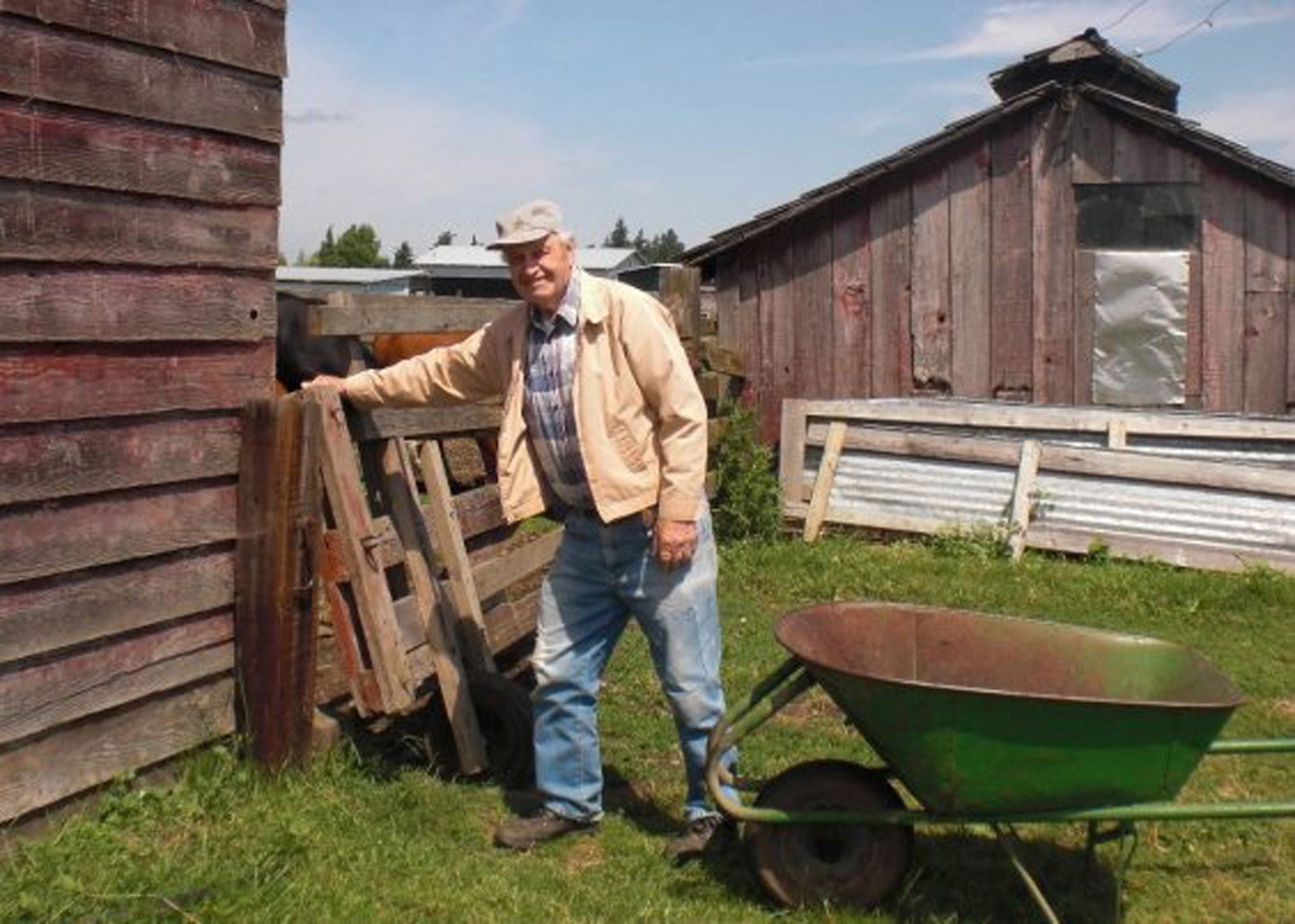
The Inheritance They Sold Before I Landed
There are moments in life when time collapses—when the present you’re standing in suddenly reveals itself as the aftermath of decisions made weeks or months ago, decisions you weren’t consulted about, weren’t warned of, weren’t even aware were being considered. You arrive thinking you’re at the beginning of something, only to discover you’re actually standing in the rubble of the ending, and everyone else has already moved on.
I had that moment on a grey afternoon in early November, driving down County Road 18 with my duffel in the back seat and six thousand miles of travel fatigue sitting heavy in my bones.
My name is Paige Mercer. I’m thirty-three years old, active-duty United States Air Force, currently—or recently—stationed at Ramstein Air Base in Germany. I say “recently” because my relationship with that posting, with that life, with the entire architecture of my military career, was about to fundamentally shift in ways I couldn’t have predicted when I boarded the transport plane in Frankfurt with my discharge papers still warm from processing.
For twelve years, “home” had existed for me as a fixed point I carried through deployments like a photograph in a wallet—something I could pull out and look at when I needed to remember what I was protecting, what I was working toward, what would be waiting when the rotations finally ended.
That home was specific and unchanging in my mind: a white farmhouse off County Road 18 in rural Kansas, with green shutters that needed repainting and a wraparound porch where the boards creaked in a pattern I’d memorized as a child. A red barn set back from the road, listing slightly to the northeast from decades of winter wind. Fields that stretched toward a horizon so flat and wide it made you understand why early settlers had called this place the Great American Desert before they learned to work with the land instead of against it.
And my grandfather.
Robert Mercer. Seventy-eight years old when he died, though he’d seemed ageless to me—one of those men who’d looked sixty since he was forty and would probably have looked sixty at ninety if he’d made it that far. His hands always smelled like hay and motor oil, like work and competence and the particular kind of knowledge that comes from spending seventy years learning one piece of land so thoroughly you could read its moods like weather.
He’d raised me, more or less. Not officially, not through any legal custody arrangement, but through the practical reality that my mother had left when I was four and my father had decided parenting was something that happened around the margins of his actual life, which consisted of working construction jobs in different states and coming home when it was convenient.
Grandpa had been the constant. The one who taught me to drive a tractor at twelve, to read a property survey at fourteen, to understand that land wasn’t just dirt and grass but history and responsibility and something you protected for the people who’d come after you.
“This’ll be yours someday, Paige,” he’d told me more than once, usually standing at the fence line looking out over fields he’d worked for five decades. “Not because you’re entitled to it, but because you’re the only one who understands why it matters.”
He’d died four months ago while I was deployed.
I’d gotten the call at 0300 hours local time—my father’s voice crackling over a connection that kept cutting out, telling me Grandpa had passed peacefully in his sleep, that the funeral would be small and quick, that I shouldn’t worry about getting emergency leave because “we’ll handle everything.”
I’d tried anyway. Filed the paperwork, made the case to my CO, explained that this wasn’t just my grandfather but the man who’d raised me.
Request denied. Mission critical operations. Personnel shortage. Try again in sixty days.
So I’d mourned from six thousand miles away, standing in the shower at 0400 so my roommate wouldn’t hear me cry, staring at photos on my phone of a place I couldn’t reach, promising myself I’d visit as soon as my rotation ended.
Four months later, I’d finally made it.
And the first thing I saw when I turned onto County Road 18 was wrong.
The Sign
It was staked into the ground at the end of the long gravel driveway like a grave marker, white vinyl letters on a dark blue background that you could read from fifty yards away:
ESTATE AUCTION SATURDAY, NOVEMBER 9TH ALL ITEMS MUST GO CALLOWAY ESTATE SERVICES
I stopped the car in the middle of the road, engine idling, staring at that sign like it was written in a language I didn’t quite speak.
Estate auction.
The words made sense individually but not together, not in connection with this place, not when applied to my grandfather’s farm.
My phone buzzed in the cup holder. A missed call from my father. No voicemail.
I didn’t call him back.
Instead, I pulled out the slip of paper I’d written the number on—the contact information from the auction sign—and dialed before I could talk myself out of it.
It rang three times.
“Calloway Estate Services, this is Brenda speaking.”
Her voice was professionally pleasant, the kind of warmth that came from years of dealing with grief and logistics in equal measure.
“Hi,” I said, and my voice came out rougher than I’d intended. “I’m calling about the Mercer property auction on County Road 18. I’m the granddaughter. I just got back from overseas and I’m trying to understand what’s happening.”
There was a pause on the other end—not long, maybe two seconds, but weighted with the particular hesitation of someone who’d just realized they were about to deliver bad news.
“Oh honey,” Brenda said, and her voice shifted into something softer, more careful. “I’m so sorry. That auction… everything was sold last month.”
The words didn’t land right. They bounced off my comprehension like stones off water.
“What do you mean last month?” I said. “The sign says November 9th.”
“That’s our final clearing date,” Brenda explained gently. “When we remove remaining items and do the property walkthrough. But the actual estate auction—where we sold the contents—that was October 12th. Your father arranged everything. Said the family had agreed to liquidate the estate and he’d handle distribution of proceeds.”
The family had agreed.
I hadn’t agreed to anything.
I hadn’t been asked.
“Who bought everything?” I asked, my voice going very quiet.
“I can’t disclose buyer information without executor permission,” Brenda said apologetically. “But if you contact your father, he should have all the documentation. He was very thorough about the paperwork.”
“I’m sure he was,” I said, and ended the call before she could offer condolences I didn’t want from a stranger.
I sat in my car at the end of that driveway for maybe ten minutes, watching the farmhouse through the windshield, trying to reconcile what I was seeing with what I’d been carrying in my head for twelve years.
From the outside, it looked the same. White clapboard siding that needed painting. Green shutters. The porch with the swing Grandpa had built the summer I turned eleven, teaching me to measure twice and cut once, to sink screws straight, to build things that would last.
But it wasn’t the same.
It was a shell. A stage set. The bones of something that had already been gutted.
My phone buzzed again. My father.
I put the car in gear and drove up to the house without answering.
Whatever’s Left
The front door was unlocked.
That alone was wrong. Grandpa had been religious about locks—not because of crime, but because of principle, because you protected what was yours, because respect started with boundaries.
I stepped inside and stopped.
The house smelled different. Not like decay or abandonment, but like strangers. Like cardboard and packing tape and the particular mustiness of things being moved by people who didn’t know where they belonged.
I could hear voices from the kitchen—my father’s low rumble, my sister Elaine’s sharper tone, my brother Mark’s occasional comment.
The family.
The ones who’d agreed.
I walked toward the kitchen with my duffel still over my shoulder, feeling like an intruder in a house where I’d spent half my childhood.
They were packing. Systematically, efficiently, with the kind of practiced coordination that suggested they’d been at this for a while.
Dad was wrapping dishes in newspaper. Elaine was labeling boxes with a Sharpie, her handwriting precise and unforgiving. Mark was loading things into a wheeled cart, earbuds in, barely present.
None of them looked up when I entered.
“Hey,” I said.
Elaine glanced over her shoulder, registered my presence with the kind of acknowledgment you’d give a delivery person, and turned back to her labeling.
“You made it,” she said. Not welcome home. Not we missed you. Just statement of fact.
“I made it,” I confirmed. “Four months late for the funeral and apparently five weeks late for the estate sale nobody told me about.”
My father set down the plate he was wrapping with deliberate care.
“Paige,” he said, and his voice already had that warning edge that meant don’t make this difficult. “We tried to reach you. You were deployed.”
“I had email,” I said. “I had a phone number. I had an APO address. What I didn’t have was a single message saying you were auctioning off Grandpa’s entire life.”
“We made the decisions we had to make,” Dad said. “The property taxes were due. The utilities needed paying. We couldn’t just let everything sit for four months waiting for you to maybe show up.”
“Maybe show up?” I repeated. “I told you I was coming as soon as my discharge processed. I told you that in August.”
“Plans change,” Elaine said without looking up. “We couldn’t wait indefinitely.”
I looked around the kitchen—at the empty cabinets, at the boxes stacked and labeled, at the systematic dismantling of a home that had stood for eighty years.
“Where’s Grandpa’s desk?” I asked. “The roll-top in the study?”
“Sold,” Mark offered, pulling out an earbud. “Got decent money for it too. Antique dealer from Wichita.”
“The bookshelf? With his collection of Westerns?”
“Sold,” Elaine said. “Books went separately. Some collector bought the whole lot.”
“What about his tools? The ones in the barn?”
“Estate sale,” Dad said. “Most of it went to local farmers. Good tools shouldn’t sit unused.”
I walked through the house then, needing to see for myself what “whatever’s left” actually meant.
The living room was mostly bare—furniture staged for removal, personal items gone. The walls showed pale rectangles where photographs had hung for decades.
In Grandpa’s bedroom, the drawers of his oak dresser hung open and empty. The closet where he’d kept his Sunday suit and his Air Force uniform from Korea was bare except for wire hangers.
And the safe.
The small fireproof safe he’d kept in the back of the closet, the one he’d shown me when I was sixteen and said, “Important papers go here, Paige. Deeds, titles, insurance policies. If something happens to me, you look here first”—
That safe was gone.
I walked back to the kitchen with something cold settling in my chest.
“Where’s the safe from Grandpa’s closet?” I asked.
Elaine’s hand paused mid-label. Just for a second. Just long enough.
“What safe?” she said, but she said it too quickly, her eyes sliding away toward the window.
“The fireproof safe where he kept documents,” I said slowly. “Where is it?”
“Dad took it,” Mark said, oblivious to the tension. “Had all the estate paperwork in it. Legal stuff.”
I turned to my father.
“I need to see what was in that safe.”
“It’s been handled,” Dad said. “Everything was processed through the estate attorney. Distributed according to the will.”
“What will?” I asked. “Grandpa told me he’d set up a trust. A family trust with specific provisions.”
Something flickered across my father’s face—not quite surprise, not quite guilt, but close to both.
“There was a will,” he said carefully. “Simple document. Standard distribution among children and grandchildren.”
“Where’s the trust?”
“There was no trust,” Dad said, and his voice had gone very flat. “Whatever Grandpa told you, he never finalized it.”
I stared at him, feeling pieces click into place—the speed of the auction, the missing safe, Elaine’s too-quick denial, the systematic removal of anything that might contain documentation.
“You’re lying,” I said quietly.
His jaw clenched.
“You weren’t here, Paige,” he said. “For twelve years, you chose the military over family. You chose deployment over being present when your grandfather needed you. You don’t get to show up now and question how we handled things in your absence.”
The words landed like a slap.
Because he wasn’t entirely wrong. I had been gone. I had chosen service over proximity.
But he was wrong about what that choice meant, about what it entitled him to do, about whether my absence was permission to erase me from the inheritance Grandpa had specifically intended me to have.
“I’m going to town,” I said. “Don’t touch anything else until I get back.”
“Paige—”
I left before he could finish.
The County Clerk and the Wrong Date
The county clerk’s office occupied the same building it had since 1952—a low brick structure across from the courthouse, with fluorescent lighting that made everyone look slightly ill and filing cabinets that predated digital records by several decades.
The woman behind the counter looked up when I entered, her reading glasses on a beaded chain around her neck.
“Help you?” she asked.
“I need copies of recent filings related to the Mercer property on County Road 18,” I said. “Estate documents, transfers, anything from the last six months.”
She typed something into her computer, squinted at the screen, and disappeared into a back room.
The air smelled like copier toner and old coffee. Industrial carpet that had been beige once and was now an indeterminate shade of grey-brown. Water-stained acoustic ceiling tiles.
The kind of government office that looked exactly the same in every small town in America.
The clerk returned carrying a thin manila folder.
“Not much here,” she said, sliding it across the counter. “Property deed transfer filed in September, estate tax assessment, and…” she paused, flipping through papers, “…a power of attorney filing from August.”
August.
Grandpa had died in May.
I opened the folder with hands that had started to shake.
The first document was straightforward—a transfer of property title from “Estate of Robert Mercer” to “James Mercer” (my father), dated September 15th.
A week before the auction.
But it was the second document that made my breath stop.
Power of Attorney, granted by Robert Mercer to James Mercer.
Dated August 3rd.
Three weeks before my grandfather died.
I read the date three times, my brain trying to make the math work, trying to find some explanation that didn’t involve fraud.
Power of attorney granted in August.
Grandfather died in May.
That wasn’t an error. That wasn’t a filing delay.
That was impossible.
Unless someone had backdated the document. Or forged it entirely. Or filed paperwork after his death using documents that had never been properly executed.
“Is there any way to verify when this was actually signed versus when it was filed?” I asked.
The clerk shrugged. “Filing date is what’s in the system—September 8th. When it was signed…” she tapped the document. “Says August 3rd, but we don’t witness these ourselves. We just record what we’re given if it looks properly notarized.”
“Can I get copies?”
“Three dollars per page.”
I handed her a twenty and waited while she made copies, my mind already racing through implications.
Someone had filed a power of attorney three months after my grandfather’s death, claiming it had been signed before he died.
Someone had used that power of attorney to transfer property into my father’s name.
Someone had then authorized an estate auction to liquidate everything before I could return.
And every step had been documented just carefully enough to look legal while being just wrong enough to fall apart under scrutiny.
The clerk handed me the copies.
“Thank you,” I said, and walked outside into air that felt too thin.
I sat in my car in the parking lot, staring at documents that proved my family had systematically defrauded me out of my inheritance.
My phone buzzed.
Unknown number. A text message:
“You’re asking the wrong questions.”
I stared at the screen until it went dark, my pulse hammering in my ears.
Someone was watching what I was doing.
Someone knew I’d gone to the clerk’s office.
Someone wanted me to know they were paying attention.
And someone thought I wasn’t looking in the right direction.
The Attorney Above the Hardware Store
I found Peter Callahan the next morning after a night spent in a Holiday Inn twenty miles away, staring at the ceiling and running through scenarios that all ended with my father in handcuffs or me losing everything or some combination of both.
His office was where it had been for thirty-five years—above Morrison’s Hardware on Main Street, accessed by a narrow staircase that creaked ominously with every step.
The waiting room was small and dated in a way that suggested either character or neglect. Outdated legal magazines. A potted plant that might have been plastic but was dusty enough to seem neglected. A receptionist desk that was currently empty.
I knocked on the inner office door.
“It’s open,” a voice called.
Peter Callahan was in his late sixties, with white hair that needed cutting and glasses that sat slightly crooked on his nose. His desk was buried under files and coffee mugs and yellow legal pads covered in handwriting that looked like controlled chaos.
But his eyes were sharp when he looked up at me.
“Help you?” he asked.
“I hope so,” I said. “My name is Paige Mercer. My grandfather was Robert Mercer. He died four months ago, and I think my father forged documents to steal my inheritance.”
Callahan sat back in his chair, studying me with the kind of attention that made me feel like he was already assembling a case in his mind.
“That’s quite an accusation,” he said. “Sit down. Tell me everything.”
So I did.
I told him about being deployed when Grandpa died. About the denied emergency leave. About coming home to an auction sign and an estate already liquidated. About my father’s dismissive “you weren’t here” and Elaine’s “whatever’s left.” About the missing safe and the documents at the clerk’s office showing a power of attorney dated three months before it could have legally existed.
Callahan listened without interrupting, occasionally making notes on a legal pad.
When I finished, he was quiet for a long moment.
Then he opened a drawer in his desk, pulled out a file folder, and slid it across to me.
“Your grandfather was a client of mine,” he said quietly. “Had been for over twenty years. Good man. Careful man. The kind who documented everything.”
I opened the file.
The first page was a family trust document.
Dated eighteen months ago.
My hands started shaking before I even read the details.
“He established this trust in May two years ago,” Callahan explained. “Put the farm, the house, all his assets into it. Named you as primary beneficiary, with specific monetary provisions for your father and siblings but explicitly excluding them from inheriting the property itself.”
My name was there in clean black ink.
Paige Elizabeth Mercer – Primary Beneficiary
Not maybe. Not conditional. Primary beneficiary.
Grandpa had left me the farm.
I felt tears prickling and forced them back because I wasn’t done reading yet.
Callahan’s finger moved to a handwritten note in the margin.
“This is where it gets complicated,” he said. “About two months before your grandfather died, your father came to see me. Said he had power of attorney and wanted to make changes to the trust.”
My stomach dropped.
“What kind of changes?”
“He wanted to withdraw the trust entirely,” Callahan said. “Revert all assets back to your grandfather’s name so they’d pass through standard probate instead of the trust distribution.”
“Did you let him?”
“Absolutely not,” Callahan said firmly. “I told him I’d need your grandfather to request that change in person, with documentation of mental competency. I told him I wouldn’t process any modifications to a trust without seeing my client face-to-face and ensuring he understood what he was signing.”
“What did my father say?”
“He said he’d ‘take care of it.’ I never heard from him again.”
Callahan pulled out another document—a death certificate dated May 17th.
“Your grandfather died six weeks after that conversation,” he said. “And based on what you’re telling me, your father filed fraudulent power of attorney paperwork after Robert’s death, used it to claim executor authority, and liquidated the estate before you could return and discover the trust existed.”
I stared at the papers spread across the desk—the trust that should have protected my inheritance, the notes documenting my father’s attempt to undo it, the timeline that showed clear premeditation.
“Why didn’t you contact me?” I asked. “When you heard Grandpa died, why didn’t you reach out about the trust?”
Callahan looked genuinely pained.
“I tried,” he said. “I sent a registered letter to the address I had on file—your grandfather’s house. I called the phone number in my records, but it went straight to a disconnected message. I assumed your father, as next of kin, would inform you about the trust. I assumed he’d handle the estate according to Robert’s documented wishes.”
“He intercepted the letter,” I said slowly. “And the number you had was probably my old cell from before I deployed. I canceled it when I went overseas.”
Callahan nodded. “I should have tried harder. Should have tracked you down through military channels. I failed you, Paige. I’m sorry.”
“What can I do now?” I asked. “Is there any way to recover what he’s taken?”
Callahan leaned forward, his expression grave.
“Legally? Yes. You have strong grounds to challenge the estate distribution. The trust is valid, properly executed, and clearly establishes your inheritance rights. The power of attorney your father filed is fraudulent—the dates alone prove that. You can file suit to reverse the property transfer, recover liquidated assets, and potentially pursue criminal charges for fraud and forgery.”
“But?” I prompted, hearing the unspoken caveat.
“But it will be expensive, ugly, and time-consuming. You’ll be suing your own father. It will destroy whatever relationship remains with your family. And even if you win—and you should win—there’s no guarantee you’ll recover everything. Assets sold at auction are scattered. You’d need to track down buyers, negotiate purchases at current market rates. Some things are just gone.”
I sat with that for a moment, feeling the weight of it.
“And if I do nothing?” I asked.
“Then your father keeps the property. Your siblings keep whatever they took. And your grandfather’s wishes—the trust he spent time and money creating specifically to protect you—mean nothing.”
I looked at the trust document again, at my name in black ink, at the careful legal language that represented my grandfather thinking about my future, protecting me even knowing his own son might try to undo it.
“File everything,” I said. “I want my inheritance back. And I want everyone who participated in this held accountable.”
Callahan allowed himself a small smile.
“I was hoping you’d say that.”
The Text Message
I left Callahan’s office with copies of the trust documents and a retainer agreement I’d signed after transferring a significant portion of my savings to his operating account.
He’d promised to file preliminary paperwork within forty-eight hours—starting with a challenge to the property transfer, a motion to freeze any further asset sales, and a demand for full accounting of estate liquidation.
But he’d been clear about timeline: months, possibly years, of legal proceedings. Depositions and discovery and court dates that would require me to either stay in Kansas or handle remotely from whatever came next in my military career.
Except I didn’t have a military career anymore.
I’d taken the early discharge. Burned the bridge. Come home to something that was supposed to be solid and found it already dismantled.
I was sitting in my car outside Callahan’s office, staring at the trust document with my name on it, when my phone rang.
My father.
This time I answered.
“Paige.” His voice was tight, controlled, but I could hear the edge underneath. “We need to talk.”
“I agree,” I said. “Let’s start with the family trust you tried to dissolve after Grandpa died.”
Silence.
Then: “Who have you been talking to?”
“Does it matter?”
“You need to understand the full situation—”
“I understand perfectly,” I interrupted. “You filed fraudulent power of attorney paperwork. You transferred property that wasn’t legally yours. You liquidated an estate specifically to cut me out of an inheritance Grandpa explicitly wanted me to have. What am I misunderstanding?”
“You weren’t here,” Dad said, and his voice had gone cold. “For twelve years, Paige. Twelve years of choosing the military over family. Over your grandfather. You don’t get to show up after he’s gone and claim you deserve anything.”
“He established a trust,” I said quietly. “With my name on it as primary beneficiary. That’s not me claiming anything—that’s him deciding. And you knew about it. That’s why you tried to undo it before he died.”
“That trust was a mistake,” Dad said. “Made when he was getting old and sentimental. He didn’t understand what he was doing—”
“He was sharp until the day he died,” I snapped. “Don’t insult his memory by pretending he was incompetent just to justify stealing from me.”
“What do you want, Paige?”
The question was delivered like a negotiation. Like we were haggling over something that hadn’t already been decided by legal documents and my grandfather’s clearly stated wishes.
“I want what’s mine,” I said. “The farm. The house. The inheritance Grandpa intended me to have.”
“That’s not going to happen.”
“Then I’ll see you in court.”
I hung up.
My hands were shaking—not from fear, but from adrenaline and clarity and the particular rage that comes from being underestimated by people who should have known better.
My phone buzzed again immediately.
Unknown number. Another text:
“Check the oak tree. East side. Three feet down.”
I stared at the message, my pulse accelerating.
The oak tree by the fence line. Where Grandma was buried.
Someone was telling me to dig.
What Was Buried
I drove back to the farm at dusk, when the light was going golden and long and the property looked almost peaceful despite everything that had been stolen from it.
No cars in the driveway. No one visible inside.
I parked near the barn and grabbed the folding shovel I kept in my emergency kit—military habit, always carry tools—and walked to the oak tree.
It stood massive and ancient at the eastern fence line, branches spreading wide enough to shade half an acre. My grandmother’s grave marker sat at the base—simple granite with her name, her dates, and the single word “Beloved.”
East side, the text had said. Three feet down.
I started digging.
The ground was hard, sun-baked from a dry autumn, and my shoulders burned after ten minutes. But I kept going, driven by the focused determination that came from knowing something important was waiting.
At two and a half feet, my shovel hit metal.
I dropped to my knees and cleared the remaining dirt with my hands, revealing a metal box—not large, shoebox-sized, wrapped in plastic bags and sealed with weatherproof tape.
Someone had buried this recently. The tape was still sticky.
I pulled the box free and sat back, my heart hammering.
Inside was a thick envelope with my name written on the outside in handwriting I recognized immediately.
Grandpa’s.
I opened it with shaking hands.
Inside were three things:
A handwritten letter.
A USB drive.
And a copy of the family trust—signed, notarized, dated eighteen months ago, with a note paper-clipped to the front in Grandpa’s writing: “Original filed with P. Callahan. This is Paige’s copy. Do not let James destroy this.”
I read the letter sitting under that oak tree as the sun set.
Paige—
If you’re reading this, I’m gone and something went wrong.
I’ve known for a while your father’s been pressuring me to change my will. He thinks you don’t deserve the farm because you “abandoned” us for the military. I’ve tried to make him understand—you didn’t abandon anyone. You’re serving your country, just like I did in Korea. But he can’t see past his own bitterness about choices he didn’t make.
I established the trust to protect you. Everything I have—the farm, the house, the land—it’s yours. Not because you’re entitled, but because you’re the only one who ever understood why this place matters. You’re the only one who saw it as more than property to be divided and sold.
Your father will try to undo this. I know him well enough to be certain. That’s why I’m giving you this copy. That’s why I’ve documented everything on the USB drive—conversations I recorded, emails I saved, attempts he made to manipulate me. I didn’t want to believe my own son would go this far, but I learned to trust evidence over hope.
Fight for this, Paige. Not because of money or land, but because you have every right to receive what I’m choosing to give you. Don’t let him guilt you. Don’t let him make you feel like serving your country somehow disqualified you from being part of this family.
This is your home. It always has been.
I love you. I’m proud of you. And I’m sorry I won’t be there to see you stand your ground.
—Grandpa
I sat under that oak tree as darkness fell, holding my grandfather’s letter, crying for the first time since I’d learned he died.
Not sad tears. Not grief tears.
Tears of rage and gratitude and the particular ache of knowing someone loved you enough to protect you even from their own child, even from beyond death.
The Evidence
The USB drive contained exactly what Grandpa had promised.
Audio files of conversations where Dad pressured him to “be reasonable” about the will, to “think about all your children,” to “stop letting Paige manipulate you from overseas.”
Email threads where Dad suggested Grandpa was “getting confused,” might “need help managing affairs.”
Scanned documents showing multiple attempts to get Grandpa to sign new paperwork—paperwork that would have invalidated the trust or transferred authority to my father.
And a video file, dated eight weeks before Grandpa died, showing him sitting at his kitchen table speaking directly to camera.
“My name is Robert James Mercer. Today’s date is March 22nd. I’m recording this to establish, clearly and without ambiguity, that I am of sound mind and body. I am not confused. I am not being manipulated. I am making my own decisions about my estate.
“I established a family trust eighteen months ago with the specific intention of leaving my farm and property to my granddaughter, Paige Elizabeth Mercer. This is my choice. My son James disagrees with this decision and has been pressuring me to change it. I am refusing.
“If any documents surface after my death claiming I changed my mind or granted power of attorney to James, those documents are fraudulent. I have not changed the trust. I will not change the trust. My wishes are documented with my attorney, Peter Callahan, and are final.
“Paige, if you’re watching this, something went wrong. Don’t let them take what’s yours. Fight for it. You have every legal right and every moral right to this property.
“James, if you’re watching this… I love you. But I don’t trust you. And that’s a failure I have to own as your father. I raised you to value property over people, money over relationships. That’s on me. But I won’t let that mistake continue into the next generation.
“This farm goes to Paige. That’s final.”
The video ended.
I watched it three times, memorizing every word, the absolute clarity in his voice, the love and disappointment and protective determination.
Then I sent the entire USB contents to Peter Callahan with a message: “File everything. I want my inheritance back and everyone involved held accountable.”
His response came within the hour: “This changes everything. We’re going to win.”
The Confrontation
My father showed up at my hotel the next morning.
I’d been expecting it—the moment when he’d realize I wasn’t backing down, wasn’t disappearing, wasn’t going to accept “whatever’s left” and quietly fade away.
He knocked at 7 AM.
When I opened the door, he looked like he hadn’t slept.
“We need to talk,” he said.
“Then talk,” I replied, not inviting him in.
“Not here. At the farm.”
“The farm you stole from me?”
His jaw clenched. “I didn’t steal anything. That property has been in this family for three generations—”
“And Grandpa wanted it to stay in the family by leaving it to me,” I interrupted. “What part of that is confusing?”
“You weren’t here,” Dad said again, like repetition would make it true. “For twelve years, Paige. Twelve years. You chose the military over this family. You chose deployment over being here when your grandfather needed you. You don’t get to claim you care about this place now that it’s convenient.”
“I was serving my country,” I said quietly. “Something Grandpa understood because he did the same thing. Something you’ve never understood because you’ve never prioritized anything except your own comfort.”
“This isn’t about comfort—”
“Then what is it about?” I asked. “Because from where I’m standing, it looks like you saw an opportunity to take something that wasn’t yours, and you took it. You forged documents. You filed fraudulent paperwork. You liquidated an estate specifically to cut me out before I could get home. That’s not family. That’s theft.”
“I’m your father—”
“You’re a man who betrayed his own father’s clearly documented wishes for money,” I said. “That’s all you are to me now.”
Something flickered across his face—desperation, maybe, or the dawning realization that intimidation wasn’t going to work this time.
“If you pursue this,” he said slowly, “if you take this to court, you’ll destroy this family. Mark and Elaine will never forgive you. You’ll be completely alone.”
“I’m already alone,” I said. “You made sure of that when you excluded me from every decision about Grandpa’s estate. The only difference now is I’m alone with legal standing, documentation, and video evidence proving I’m right.”
“Paige—”
“Get away from my door,” I said. “And tell your lawyer I’ll see him in court.”
I closed the door and locked it.
Eight Months Later
The legal battle took exactly eight months and cost me most of my savings.
Peter Callahan filed motions to freeze the estate, reverse the property transfer, recover liquidated assets, and hold my father accountable for fraud.
Dad hired an expensive attorney from Kansas City who tried every argument: the trust was invalid, Grandpa had been mentally incompetent, I’d “abandoned” my claim by being overseas, the power of attorney was legitimate.
Grandpa’s video destroyed every single argument.
The judge watched it twice, reviewed the trust documents, examined the timeline of fraudulent filings, and issued a ruling that was unambiguous:
The property was mine. All transfers were reversed. Dad was ordered to pay restitution for assets that couldn’t be recovered and was permanently barred from serving as executor of any estate.
Criminal charges followed—fraud, forgery, exploitation of the elderly. Dad took a plea deal: probation, community service, restitution, and a permanent record.
Mark and Elaine never spoke to me again.
I’d expected that.
What I hadn’t expected was the letter that arrived three months after the judgment, forwarded from Callahan’s office.
From my father.
I almost threw it away unopened.
But something—curiosity, maybe, or the faint hope that twelve months of consequences had produced something resembling insight—made me open it.
It was short. Handwritten.
Paige—
I don’t expect forgiveness. I don’t deserve it.
I told myself I was protecting the family legacy. That you’d left and therefore forfeited your claim. That I was being practical.
The truth is simpler and uglier: I was jealous. Of the relationship you had with Dad. Of the fact that he chose you, trusted you, believed in you in ways he never quite believed in me.
I spent my whole life trying to earn his respect and never quite getting there. And you had it without even trying, just by being who you are.
So I tried to take from you what I couldn’t earn for myself.
I’m sorry.
I know that’s not enough. But it’s true.
—Dad
I read it once, folded it, and put it in a drawer.
Maybe someday I’d respond.
But not today.
Home
I live on the farm now. Full time.
I’ve repaired the barn roof, replanted Grandma’s garden, and started learning how to actually run a working farm instead of just visiting one.
It’s hard. It’s lonely sometimes. It’s nothing like the structured life I had in the military.
But it’s mine.
Every morning I wake up in the house my grandfather built, in the room where I slept as a child, and I look out at forty acres that represent more than property—they represent someone believing I was worth protecting, worth trusting, worth fighting for even after he was gone.
I host a farmers market on the east field every Saturday. Local vendors, fresh produce, community gathering.
Grandpa would have loved it.
Last week someone asked if I ever regret the legal battle, if I wish I’d let it go and kept the peace.
I thought about it for exactly two seconds.
Then I said no.
Because this farm isn’t just land.
It’s proof that I belonged somewhere. That someone saw me clearly enough to know I’d protect what mattered. That my service didn’t disqualify me from receiving what I’d been promised.
My father tried to steal that.
I fought back.
And I won.
Not because I’m entitled or vindictive or unforgiving.
But because my grandfather trusted me to stand my ground.
And I refused to let him down.
THE END

Adrian Hawthorne is a celebrated author and dedicated archivist who finds inspiration in the hidden stories of the past. Educated at Oxford, he now works at the National Archives, where preserving history fuels his evocative writing. Balancing archival precision with creative storytelling, Adrian founded the Hawthorne Institute of Literary Arts to mentor emerging writers and honor the timeless art of narrative.