The Life She Left Behind
Rachel and I had been inseparable since we were teenagers, the kind of friendship that forms when two people recognize something essential in each other that no one else seems to see. We met on the first day of high school in the lunch line, both of us eyeing the suspicious gray meat loaf with identical expressions of horror. She’d turned to me and said, “I think it’s moving,” and I’d laughed so hard I’d snorted milk through my nose. From that moment on, we were bound together by shared jokes, whispered secrets, and the deep understanding that comes from truly seeing another person.
College came and went, then jobs, then marriages, then children—each new phase bringing us closer rather than pulling us apart the way adulthood does to so many friendships. Rachel married Daniel first, a quiet man with kind eyes who looked at her like she was the answer to every question he’d ever asked. I married Tom two years later, and when Rachel held my bouquet during the ceremony, she cried harder than I did.
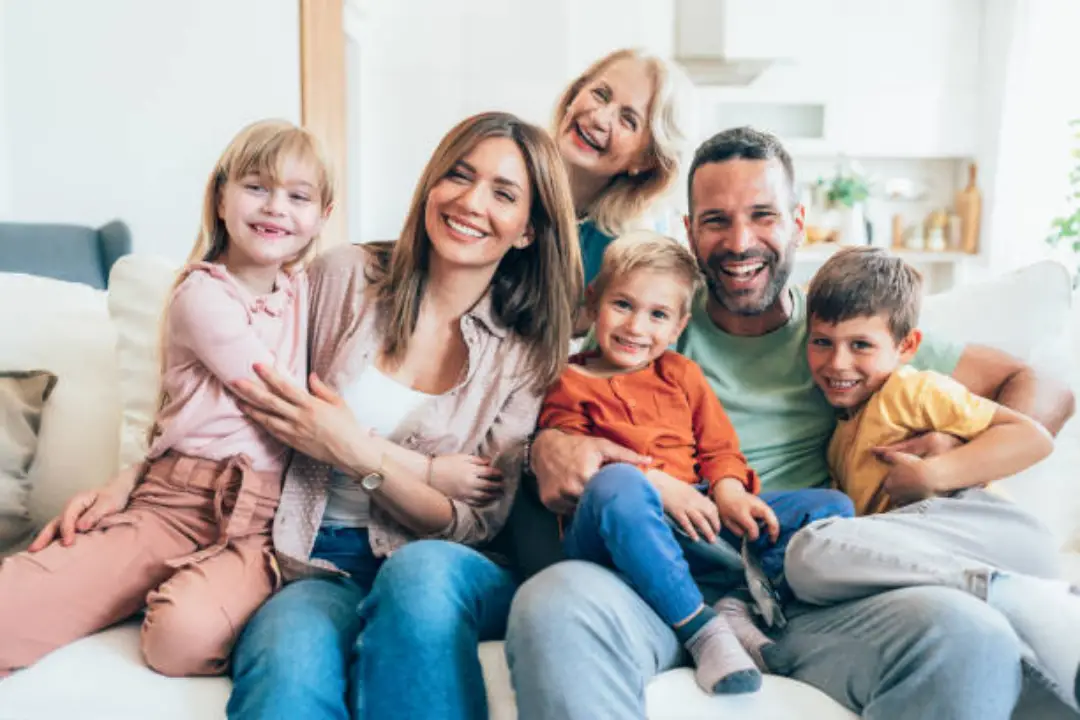
Our families grew up together. Rachel had four children in quick succession—Emma, bright and serious at eight; Lucas, perpetually in motion at six; the twins Sophie and Noah, barely four and convinced they could communicate telepathically. I had two: my daughter Lily, who was Emma’s age and her constant companion, and my son Jack, who followed Lucas everywhere like a devoted shadow.
Rachel was the kind of mother who remembered everyone’s birthday, who never raised her voice even when the twins painted the dog blue, who somehow made chaos feel not just manageable but joyful. She kept a garden where vegetables grew in wild, abundant tangles. She baked bread from scratch every Sunday, filling her house with warmth and the smell of yeast and honey. Being a mother was her greatest joy, and you could see it in everything she did—the way she listened when her children spoke, the way she kissed their foreheads, the way she seemed to expand with love rather than be diminished by exhaustion.
Her home was always noisy, cluttered, alive. Toys scattered across floors, children’s artwork taped to every available wall surface, music playing from somewhere even when no one could remember turning it on. My house was quieter, more orderly, but when our families came together—shared holidays, joint vacations, backyard barbecues where the kids ran wild and caught fireflies in mason jars—I felt the rightness of it, the way some lives are meant to intertwine.
Rachel and I would sit on her porch on summer evenings, drinking wine from mismatched glasses while the children played capture the flag in the darkening yard. We talked about everything and nothing—books we’d read, frustrations with our husbands, dreams we’d abandoned or clung to, the small daily miracles of watching our children grow. Sometimes we’d fall into comfortable silence, just existing together, and that was enough.
I thought I knew everything about her. Every story from her childhood, every heartbreak and triumph, every secret fear. I was wrong.
One ordinary afternoon in October, everything shattered.
Daniel died in a car accident on his way home from work. A truck ran a red light at an intersection he’d driven through a thousand times before. The police said he died instantly, as if that made it better, as if the speed of death could somehow soften its violence.
I remember the phone call. Rachel’s voice wasn’t screaming or hysterical. It was worse. It was empty, flat, as if her soul had stepped outside her body and left only a shell holding the phone. “He’s gone,” she said, and I couldn’t immediately understand who she meant because Daniel couldn’t be gone—he’d been supposed to pick up milk on the way home, Rachel had texted him the reminder just hours before.
The weeks that followed were a blur of funerals and casseroles and whispered condolences from people who didn’t know what else to say. Rachel tried to stay strong for the children, but grief hollowed her out from the inside. She lost weight, her clothes hanging off her frame like they belonged to someone else. She stopped sleeping, and when she did, she woke up crying. I’d find her at three in the morning sitting in her kitchen in the dark, staring at nothing, her hands wrapped around a cold cup of tea she’d forgotten to drink.
I moved in for those first weeks, sleeping on her couch, making sure the children got to school, making sure they ate something even if Rachel couldn’t. Tom took over at our house, managing our kids with a patience I hadn’t known he possessed. Emma stopped speaking except in whispers. Lucas broke things—not violently, not in anger, just accidentally, his hands suddenly too clumsy for the world. The twins clung to Rachel with desperate intensity, as if they could keep her from disappearing too if they just held on tight enough.
Slowly, impossibly slowly, Rachel began to function again. Not heal—healing seemed too ambitious a word—but function. She went through the motions of living. She got the children to school. She paid bills. She smiled at appropriate times, though the smile never reached her eyes.
And then, as if fate hadn’t already taken enough, she received another blow.
Cancer. Stage four pancreatic cancer, the doctor said in a gentle voice that couldn’t disguise the death sentence. Aggressive, advanced, unforgiving. Six months, maybe a year if the treatment worked. But the treatment almost never worked.
I remember sitting beside Rachel in the oncologist’s office when she received the diagnosis. The doctor kept talking—about treatment options, about clinical trials, about palliative care—but Rachel had stopped listening. She was staring at a calendar on the wall, at all those empty squares representing days she wouldn’t get to have.
I moved into survival mode immediately. I took her children to school every morning. I cooked meals and brought them over in containers Rachel could heat up when she had the energy. I folded her laundry, somehow more intimate than any other help I could offer. I sat with her during chemotherapy sessions while the poison dripped into her veins and she tried to joke through the nausea, her humor the last thing cancer couldn’t steal.
She never complained—not once. Not even when her hair fell out in clumps that I helped her shave away in her bathroom, both of us crying while I ran the clippers over her skull. Not even when she became too weak to lift the twins. Not even when she knew, with the certainty that comes from being intimately acquainted with your own dying body, that the treatments weren’t working.
Six months later, she was gone.
I was sitting beside her hospital bed when she took her last breath. Her hand was small and cold in mine, her breathing ragged and then not. The machines beeped their urgent warnings, but I already knew. I could feel the absence of her, the way you notice when someone leaves a room even when you’re not looking.
“Promise me,” she’d whispered the night before, barely audible. “Promise me you won’t let them be alone.”
I didn’t hesitate. “I promise. I swear.”
Those words felt like the hardest promise I would ever make. I was wrong again.
Rachel and Daniel had no close relatives willing—or able—to take in four grieving children. Rachel’s parents had died years ago, she’d said, and Daniel’s family had never been in the picture. When social services approached us after the funeral, my husband and I looked at each other across the kitchen table and knew the answer before the question finished.
We would adopt all four.
I’d expected hesitation from Tom, or at least a long conversation about logistics and finances and the reality of doubling our family overnight. Instead, he’d simply nodded and said, “Of course we will. What else would we do?”
The paperwork was endless—home studies, background checks, financial reviews, interviews where strangers evaluated whether we were suitable parents for children who already called me Aunt Claire and had been sleeping in our guest rooms for weeks. Rachel had prepared legal documents before her death, naming us as guardians, but the system still required its rituals.
Six months after Rachel’s funeral, the adoption was finalized.
Overnight, our family doubled. Six children. Six beds. Six sets of fears, nightmares, grief, and questions we couldn’t always answer.
The early days were brutal. Emma became my shadow, following me from room to room as if afraid I might disappear if she lost sight of me. Lucas grew angry, slamming doors and shouting at anyone who tried to comfort him. The twins regressed, Sophie wetting the bed nightly and Noah refusing to speak to anyone except his sister. My own children struggled too—Lily withdrawn and anxious, Jack confused about why he had to share his room and his parents with kids who cried all the time.
There were tantrums and silence, clinginess and anger. Rachel’s youngest cried every night for months, calling for her mother in heartbroken wails that echoed through the house and left all of us raw. Her oldest stopped speaking at school, answering teachers’ questions with blank stares until they stopped asking.
I lay awake many nights wondering if love was enough. Wondering if I was equipped for this, if I had the strength to hold all these broken pieces together while my own heart was still bleeding from losing Rachel. I’d go into the bathroom and cry quietly with the water running so the children wouldn’t hear, then splash my face and go back out to referee another fight or soothe another nightmare.
Tom and I moved through those months like soldiers in a war, communicating in shorthand, dividing and conquering, falling into bed too exhausted to speak. Our marriage strained under the weight, but it held. Barely, sometimes, but it held.
And then, so slowly I almost didn’t notice it happening, things began to change.
Emma smiled at breakfast one morning, a real smile, when Jack told a terrible joke about a chicken. Lucas joined a soccer team and came home muddy and happy, talking a mile a minute about the goal he’d almost scored. The twins stopped having nightmares every night—first it was every other night, then twice a week, then only occasionally.
Sophie and Noah began to call me Mom without the hesitation that had preceded it before. It happened naturally, unconsciously, the word slipping out and then being repeated until it felt normal. Emma took longer, still calling me Aunt Claire most of the time, but one night when she was sick with the flu, delirious with fever, she’d reached for me and whispered, “Mom, I don’t feel good,” and I’d held her and cried into her hair while she drifted back to sleep.
Our house filled with laughter again, genuine laughter that wasn’t forced or performative. Birthdays were celebrated with too much cake and terrible singing. We established traditions—Friday movie nights, Saturday morning pancakes shaped like animals, Sunday hikes where the children raced ahead on the trail and we’d find them waiting at scenic overlooks, proud of themselves for getting there first.
Years passed. The children grew. Emma excelled in school, serious and studious, planning for college with the intensity of someone who knew life could be ripped away at any moment. Lucas discovered a love for art, filling sketchbooks with intricate drawings that captured light and shadow with surprising skill. The twins remained inseparable, finishing each other’s sentences, communicating in the wordless language that only twins seem to possess.
Life stabilized. The grief didn’t disappear—it never does—but it transformed into something we could carry, integrated into who we were rather than something that defined us. We talked about Rachel often, keeping her memory alive, showing the children old photos and sharing stories so she wouldn’t fade into abstraction.
I thought we had settled into our new normal. I thought the hardest part was behind us.
Until one quiet afternoon, when I was home alone, folding laundry in the living room while afternoon sunlight streamed through the windows.
The knock at the door was firm, deliberate. Not the casual rap of a neighbor or the tentative tap of a delivery person. Something else.
I opened it to find a woman standing on my porch—elegantly dressed in a dove-gray suit that probably cost more than my monthly mortgage payment, her silver hair cut in a sharp bob, her expression unreadable but controlled. She looked like someone accustomed to boardrooms and country clubs, to spaces where decisions were made that affected ordinary people without those ordinary people ever knowing.
“You’re Rachel’s friend,” she said, not asking, stating. “The one who adopted her children.”
My heart skipped, years of protective instinct flaring immediately. “Yes. Who are you?”
“My name is Margaret Whitmore. I knew Rachel. Or rather, I knew who she used to be.” The woman’s gaze moved past me, scanning the interior of my house visible through the doorway—the toys still scattered despite my best efforts, the children’s artwork on the refrigerator, the photographs crowding the mantle. “You deserve to know the truth. I’ve been trying to find you for a long time.”
My stomach tightened with a fear I couldn’t name. “What truth?”
She held out a manila envelope, thick and formal-looking. “She wasn’t who she said she was. Read this. It’s from her. She wrote it before she died and asked me to deliver it to you, but only after enough time had passed. Only when I was certain the children were safe.”
Before I could ask another question, before I could demand to know what she meant or who she really was, Margaret Whitmore turned and walked back to the sleek black car parked at my curb. She got in, and the car pulled away, leaving me standing in my doorway holding an envelope that suddenly felt like it weighed a thousand pounds.
Inside the envelope was a letter. Rachel’s handwriting, unmistakable—the looping cursive she’d perfected in high school and never changed, the way she dotted her i’s with little circles instead of simple points.
My hands shook as I sat down on the couch and began to read.
Dearest Claire,
If you’re reading this, I’m gone. And if Margaret found you, it means enough time has passed that what I’m about to tell you can’t hurt my children anymore.
I’ve lied to you. Not about everything—not about the important things, not about who I am at my core—but about where I came from. About my past. About Daniel’s past.
My real name isn’t Rachel Morrison. It’s Rachel Elizabeth Ashford-Crane.
The name hit me like a physical blow. I’d seen it in newspapers, in magazines, on buildings downtown. Ashford-Crane Industries, a massive conglomerate worth billions, controlling everything from pharmaceuticals to real estate. The kind of wealth that ordinary people couldn’t even conceptualize.
My family has money. Old money, the kind that comes with expectations and obligations and a life that looks perfect from the outside but feels like a cage. My parents—your grandparents, in their minds—built an empire and expected their children to serve it. Every moment of my life was planned. My education, my interests, my friends, even my eventual marriage—all designed to maintain the family’s position, to strengthen connections, to expand the empire.
I couldn’t breathe in that world, Claire. I tried. I went to the right schools, wore the right clothes, said the right things at the right parties. But I was suffocating. And then I met Daniel.
His real name was Daniel Hartman. He worked for my father’s company, a junior accountant who’d discovered some financial irregularities he wasn’t supposed to see. He was supposed to keep quiet. Instead, he came to me—he’d seen me at company events and somehow sensed I was different, that I might help.
We fell in love, but more than that, we became allies. We planned our escape for two years, careful and methodical. We changed our names legally in a different state. We severed all connections. We moved to a small town where no one knew the Ashford-Crane name or cared about society pages. We became ordinary people living ordinary lives.
For fifteen years, it worked. We had our children. We built a home. We found you, and you became the sister I’d never had, the family I’d chosen instead of the one I’d inherited. Those years were the happiest of my life. I meant that every time I said it.
I had to stop reading. Tears blurred the words, and my breath came in sharp gasps. Rachel, my Rachel, had been living a lie the entire time I’d known her. No—not a lie. A different truth. A chosen truth.
Daniel’s accident wasn’t random, Claire. I don’t have proof, not the kind that would hold up in court, but I know. My family had finally found us. They’d been searching for years, hiring private investigators, monitoring social media, following threads. Daniel’s death happened three days after a man in an expensive suit showed up at his office asking questions about his previous employment.
When I got sick, I knew it was over. Not just my life, but my ability to protect our children. I knew they would come for them—not because they loved them, but because Ashford-Crane children are assets, pieces on a board to be positioned strategically.
So I chose you.
I chose you because you’re invisible to that world. Ordinary, in the best possible way—no wealth, no connections, no value to them except as an obstacle. I chose you because I knew you would love my children without conditions, without calculating their worth or potential. I chose you because you’re the strongest person I’ve ever known, even though you don’t see it yourself.
Everything is arranged legally. The adoption is ironclad. I worked with lawyers my family doesn’t know about, created trusts that can’t be touched, established guardianship protections that would require them to prove unfitness in court—and you’re not unfit. You’re perfect.
They’ll try, Claire. They might send lawyers with offers, with threats. They might claim I was mentally unstable when I made these arrangements, that you manipulated me, that the children belong with “real family.” Don’t believe them. Don’t let them make you doubt.
The children are yours now. Legally, morally, in every way that matters. My family can’t take them, no matter how much money they throw at the problem. I made sure of that.
I need you to know I didn’t betray you. I didn’t lie about the important things. Every moment of our friendship was real. Every late-night conversation, every shared laugh, every time I held your hand through your own struggles—that was Rachel Morrison, the woman I chose to become.
Rachel Ashford-Crane was a role I played in a life I never wanted. Rachel Morrison was who I truly was.
Protect them, Claire. Keep them ordinary. Let them grow up without the weight of that name, without the poison that comes with that much money and power. Let them choose their own lives, make their own mistakes, find their own happiness.
You’ve already given them more than my family ever could—you’ve given them real love.
Thank you for being my friend. Thank you for keeping your promise.
With all my love, Rachel
By the time I finished reading, I was sobbing so hard I could barely breathe. My hands clutched the letter, wrinkling the paper, as the full weight of what Rachel had carried alone crashed over me.
She’d escaped from a world of wealth and power, built a new life from nothing, protected it for fifteen years, and then in her final months, knowing she was dying, she’d arranged everything to keep her children safe from the family she’d fled.
And she’d done it all without telling me, bearing that burden alone, because telling me would have made me complicit, would have put me at risk too.
Margaret Whitmore. I grabbed my laptop and searched the name, my fingers clumsy on the keys. She appeared in dozens of results—a high-powered attorney specializing in family law, known for taking on cases involving wealthy families and custody disputes.
One article mentioned her representation of clients leaving controlling family situations. Another discussed her work establishing legal protections for domestic abuse survivors. She wasn’t working for the Ashford-Crane family. She was working against them.
Rachel had thought of everything.
The doorbell rang, and I nearly jumped out of my skin. But when I looked through the window, it was just Emma, home from soccer practice, digging in her bag for her key. I stuffed the letter back in the envelope and shoved it under a couch cushion, then went to open the door, wiping my face quickly.
“Hey, Mom,” Emma said, dropping her bag in the entrance. “Why do you look like you’ve been crying? Are you okay?”
Mom. She called me Mom without thinking now, without the hesitation that used to precede it. I looked at her—fifteen years old, Rachel’s eyes in a face that was becoming its own person—and felt the weight of the promise I’d made, the one I’d just learned was even bigger than I’d realized.
“I’m fine, sweetheart. Just thinking about your mom. About Rachel.”
Emma’s expression softened. “I miss her too. Do you think she’d be proud of us? Of how we’re doing?”
I pulled her into a hug, this girl who’d been eight years old when her mother died and was now taller than me. “I think she’d be more than proud. I think she’d be amazed by the person you’re becoming.”
Over the next hour, the house filled with noise as the other children arrived home—Lucas from art class, the twins from their friend’s house, my own two from various activities. Dinner was the usual chaos: overlapping conversations, negotiations about vegetables, someone spilling their water, accusations about who’d stolen whose phone charger.
Tom got home late from work, tired and stressed, but he kissed my forehead and asked about everyone’s day before collapsing into his chair. Our life was loud, messy, complicated, stretched thin financially and emotionally.
It was also precious beyond measure.
That night, after dinner was cleaned up and homework was checked and showers were supervised and the eternal battle over bedtime was finally won, I tucked all six children into their beds one by one. Emma first, reading in her room, accepting a goodnight kiss on her forehead with the tolerance of a teenager. Lucas already half-asleep, his sketchbook fallen open beside him. The twins in their bunk beds, Noah on top whispering something to Sophie below, both giggling in that secret language they shared. Then Lily and Jack in their rooms, my biological children who I sometimes felt I’d neglected in my focus on helping the others heal.
I kissed each forehead. Turned off each light. Whispered the same words to each child: “I love you. Sleep well. I’m here if you need me.”
When I finally made it to my own bedroom, Tom was already in bed, but not asleep. “You okay?” he asked, knowing me well enough to read my face even after a day spent pretending everything was normal.
I sat on the edge of the bed, suddenly exhausted. “Can I tell you something? Something big?”
He sat up, immediately alert. “What’s wrong?”
I told him everything. About Margaret Whitmore’s visit. About the letter. About Rachel’s real identity, her escape, the life she’d left behind. About the wealth and power we’d never known existed in her past, and about the legal protections she’d established to keep her children—our children—safe from it.
Tom listened without interrupting, his face cycling through shock and disbelief and, finally, a kind of awed respect. When I finished, he was quiet for a long moment.
“So we might have some billionaire lawyers showing up trying to take the kids?” he finally asked.
“Maybe. Rachel said she made the adoption ironclad, but—”
“But nothing,” Tom said firmly. “Those kids are ours. Legally, morally, every way that matters, like she said. Let them come. Let them try. We’ll fight.”
I leaned against him, feeling some of the weight lift off my shoulders. “What if they offer us money? A lot of money? Enough to put all six kids through college, to not worry about—”
“No,” he said, cutting me off. “I don’t care how much they offer. Those children are not for sale. Rachel trusted us. We keep that trust.”
I started crying again, but differently this time—not from grief or fear, but from gratitude for this man who’d agreed to double our family without hesitation, who’d worked extra hours to make ends meet, who’d held me through the hardest years without complaint.
“I don’t know if I can do this,” I whispered. “If they really come, if they have that kind of money and power—”
“You can,” Tom said simply. “You’ve already done the hard part. You kept them safe. You kept them together. You made them happy again. Everything else is just paperwork and lawyers, and we can handle that.”
I wanted to believe him.
Three weeks passed. Every knock at the door made my heart race. Every unfamiliar car on our street caught my attention. I found myself researching the Ashford-Crane family obsessively—reading articles about their business empire, looking at photos from society events, trying to find some mention of a missing daughter.
There was nothing. Rachel had erased herself so completely from their world that even the internet barely remembered she’d existed. One old article mentioned “the family’s tragic loss” of a daughter in her twenties, but it was vague, implying death without stating it explicitly. They’d written her out of their story, or she’d written herself out so thoroughly that even they’d accepted the fiction.
I kept expecting lawyers to show up, or private investigators, or family members demanding DNA tests and custody hearings. But nothing happened. The ordinary days continued.
Emma got her learner’s permit and started driver’s ed, making Tom age five years every time she got behind the wheel. Lucas won an art competition at school, his piece selected for a state exhibition. The twins turned eleven with a birthday party in the backyard that involved a water balloon fight that left everyone soaked and happy. Lily made the honor roll. Jack joined the debate team.
Our life continued, loud and messy and financially tight and absolutely full of love.
Then, on a Saturday morning six weeks after Margaret Whitmore’s visit, she returned.
I was making pancakes, the kitchen full of children in various states of wakefulness, when I saw her car pull up. My stomach dropped. This was it. Whatever she’d been waiting for, whatever protection had been keeping us safe, it was ending now.
I met her on the porch before she could knock, closing the door behind me so the children wouldn’t hear. “What do you want?”
Margaret smiled, and for the first time, it seemed genuine, reaching her eyes. “To tell you it’s over. They’re not coming.”
“What?”
“The Ashford-Crane family. They’re not pursuing custody. They’ve accepted the situation.”
I couldn’t process what she was saying. “Why? How?”
Margaret handed me another envelope, this one thinner. “Read this.”
Inside was a legal document, dense with legalese, but the essence was clear: the Ashford-Crane family had signed away any claim to Rachel’s children. They’d acknowledged the adoption, accepted its terms, and agreed never to contact the children or attempt to establish a relationship without the children’s consent as adults.
“I don’t understand,” I said, still staring at the paper. “Why would they do this?”
“Because I made them understand what would happen if they didn’t.” Margaret’s voice was harder now, and I caught a glimpse of the formidable lawyer she must be in a courtroom. “Rachel gave me information before she died—documentation of certain business practices that wouldn’t look good in the public eye. Nothing illegal, technically, but ethically questionable enough to cause significant damage if it became public.”
“She blackmailed them from beyond the grave?”
“She protected her children,” Margaret corrected. “There’s a difference. And she was right to do so. When I initially approached them about honoring Rachel’s wishes, they were dismissive. They saw the children as property to be reclaimed. But when I showed them what Rachel had documented, what she was willing to have revealed if they pursued custody, they reconsidered.”
Margaret’s expression softened. “They’re not good people, Claire. Rachel was right to run from them. But they’re smart people, and they understand cost-benefit analysis. The damage to their reputation and business interests far outweighed any benefit from claiming grandchildren they’d never actually love.”
I sank into one of the porch chairs, legs suddenly weak. “So it’s really over?”
“It’s really over. They’ve moved on. Publicly, they’ll maintain the fiction that Rachel died young and tragically. Privately, they’ve accepted they lost her twice—once when she left, and again when she died. The children are yours. Fully, permanently, without any threat hanging over you.”
I started laughing, maybe a little hysterically, relief flooding through me so intensely it felt like pain. “She did it. She actually did it.”
“She was extraordinary,” Margaret said quietly. “In all the years I’ve practiced law, I’ve never seen someone plan so thoroughly for something they knew they wouldn’t live to see. She thought of everything. Every angle, every possibility. All to protect four children who’ll never know how many moves she made on their behalf.”
“Should I tell them?” I asked. “When they’re older? About where they really came from?”
Margaret considered this. “That’s your decision. Rachel left it to you. But if you do tell them, remember this: their grandmother was Rachel Morrison, the woman who baked bread on Sundays and couldn’t keep a garden weeded but loved them with her whole heart. Their ancestry doesn’t change that. The Ashford-Crane name is just biology. You and Rachel—you’re their real family.”
She stood to leave, then paused. “One more thing. Rachel set up education trusts for the children. Nothing extravagant, but enough to ensure they can all go to college without drowning in debt. The money is clean—it was hers before she left, set aside in an account her family couldn’t touch. It’s managed by an independent trustee. You’ll receive information about accessing it when each child turns seventeen.”
I stared at her. “She thought of everything.”
“She loved them,” Margaret said simply. “Love makes you thorough.”
After she left, I sat on the porch for a long time, holding the legal document that made my children—I could finally think of them that way without guilt—truly, permanently mine.
Inside, I could hear the morning chaos: someone shouting about the last of the orange juice, the twins arguing about whose turn it was to set the table, Tom’s voice rising above it all trying to restore order. Normal sounds. Ordinary sounds. The sounds of a family that worked despite having been assembled from broken pieces.
I thought about Rachel, about the friend I’d thought I’d known completely. In one sense, I hadn’t known her at all—I’d never known about the wealth she’d left behind, the family she’d escaped, the name she’d erased. But in every way that mattered, I’d known her perfectly. I’d known her kindness, her strength, her capacity for love. I’d known that she would do anything to protect her children.
She’d proven that in the end, hadn’t she? She’d arranged everything, planned everything, protected everything, all while dying, all while trying to make her last months with her children meaningful instead of shadowed by fear.
I went back inside, where Tom had successfully gotten everyone seated around the table, pancakes stacked high and syrup bottles being passed around. Emma was telling a story about something that happened at school, using elaborate hand gestures. Lucas was drawing on his napkin despite knowing he’d get in trouble for it. The twins were giggling at some private joke. Lily was helping Jack cut his pancakes.
They looked up when I came in, six pairs of eyes, six children who were mine in every way that mattered.
“Everything okay, Mom?” Emma asked, the question so casual it took my breath away. This was normal for them now. I was Mom. This was home. The grief and loss that had brought us together had integrated into who we were, but it no longer defined us.
“Everything’s perfect,” I said, and meant it.
That night, after all six children were finally in bed—a process that somehow took longer every year despite them all getting older—I went to Rachel’s memorial box, the one I kept in my closet with photographs and letters and small mementos. I added the envelope containing her final letter, the truth she’d hidden and finally revealed.
Someday, I’d show it to the children. When they were old enough to understand, when they asked questions about their mother beyond the stories I’d been telling for years. I’d tell them about Rachel Ashford-Crane who’d been brave enough to walk away from billions of dollars because she wanted to breathe freely. I’d tell them about Rachel Morrison who’d built a beautiful, ordinary life through sheer force of will and love.
But for now, I’d let them be children. I’d let them grow up normally, without the weight of the wealth and name and legacy that Rachel had fought so hard to escape. I’d let them think they came from ordinary people who’d had ordinary dreams.
Because that’s what Rachel had wanted. Not to erase where they’d come from, but to give them the choice of where they’d go, unencumbered by expectations and obligations that had nothing to do with who they really were.
I closed the box and turned off the light, whispering the same promise I’d made years ago beside her hospital bed, the promise I now understood had been bigger and more complicated than I’d ever imagined.
“You’re safe. You’re home. And I’m not going anywhere.”
Rachel had never been running from her past, I realized. She’d been running toward their future. Toward a life where her children could be whoever they wanted to be, free from the cage she’d escaped.
And I would protect that future with everything I had. Not because a dead friend had asked me to, but because I was their mother now, and that’s what mothers do.
We protect. We sacrifice. We fight for our children’s right to grow up ordinary and loved and free.
Just like Rachel had taught me.

Adrian Hawthorne is a celebrated author and dedicated archivist who finds inspiration in the hidden stories of the past. Educated at Oxford, he now works at the National Archives, where preserving history fuels his evocative writing. Balancing archival precision with creative storytelling, Adrian founded the Hawthorne Institute of Literary Arts to mentor emerging writers and honor the timeless art of narrative.