My name is Ray Nelson. I’m 67, newly retired, and I didn’t come out here to reinvent myself. I came out here to finally stop living on other people’s clocks.
For years my mornings began the same way—keys in hand, a lanyard badge by the door, the soft elevator ding, then a long stream of headlights that felt like a second job before the first one even started. Thirty-five years as a project manager at a construction firm. Thirty-five years of other people’s deadlines, other people’s emergencies, other people’s expectations.
Even after I retired, my body still woke up braced for requests.
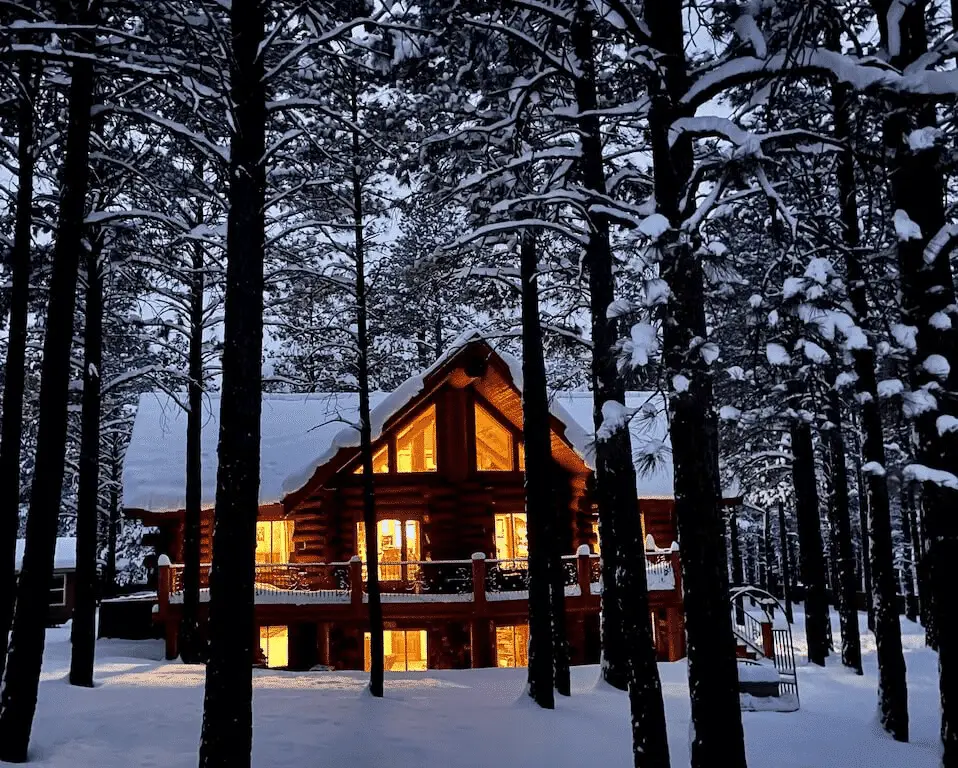
So I bought a cabin outside a small Wyoming town called Pine Ridge, far enough that the air tasted clean and the nights went quiet in a way the city never allows. It’s small on purpose—one bedroom, one table, one porch chair facing a wall of pines like they’re guarding a promise.
The first morning, I drank my coffee slowly and listened to the wind comb through the treetops. No horns, no voices through thin walls, no buzzing phone telling me I owed someone my time.
I unpacked the way I lived my whole life—orderly and calm. Tools lined up on hooks in the shed, pantry stacked with enough supplies for winter, everything put where my hands could find it without thinking, because peace is fragile when you’ve spent decades earning it.
That afternoon I called my daughter, Bula, because I wanted at least one voice to hear the relief in mine.
“Dad! How’s the cabin?”
“Perfect,” I said, and I meant it. “Quiet. Exactly what I needed.”
She sounded happy for me, but tired underneath it, talking about her son’s school and another parent meeting she’d been dreading like it was a storm on the calendar.
“How’s Marcus handling everything?” I asked carefully. Marcus—her husband—had always been territorial about family decisions.
“He’s… he’s stressed. Work stuff. His parents are having issues with their landlord, so things are tense.”
I made a sympathetic noise but didn’t press. Bula had enough on her plate.
An hour after we hung up, Marcus called.
He didn’t ask if the drive was safe. He didn’t say congratulations on the retirement. He spoke like the decision had already been made without me.
“Ray, my parents need a place to stay for a while. Their landlord is selling the building. They’re coming up to your cabin this Friday.”
I set down my coffee. “Excuse me?”
“My parents. Leonard and Grace. They need somewhere to stay while they figure things out. You’ve got that cabin now with all that space. It’s perfect.”
“Marcus, this is a one-bedroom cabin. I just moved in. I’m not set up for guests.”
“Come on, Ray. It’s temporary. A few weeks, maybe a month. They’re family.”
“They’re your family. I don’t even know them.”
“Exactly. So it’s not like you have any reason to say no. You’re retired. You’ve got nothing but time. If you don’t like it, you can always move back to the city for a while.”
The audacity of that sentence hung in the air between us like a slap I was supposed to accept politely.
“Marcus—”
“They’ll be there Friday evening. I already told them it’s fine. Don’t make this difficult.”
I didn’t argue because arguing would’ve handed him a scene to repeat later, with me cast as the unreasonable old man in the woods who couldn’t do a simple favor for family.
I let the silence sit there for a second, heavy and clean, then I said, “Okay,” and ended the call.
The Preparation
That night, I stared at my keys until they stopped feeling like freedom and started feeling like a boundary.
I opened a small notepad and wrote down only what mattered. Not feelings. Steps.
Marcus had assumed my “okay” meant compliance. It didn’t. It meant I’d heard him. What I did with that information was my choice, not his.
The next morning I drove into town. Pine Ridge was the kind of place where everyone knew everyone, where the hardware store owner greeted you by name after one visit, where the diner still had a physical bulletin board with index cards offering firewood and piano lessons.
I stopped at the county clerk’s office first.
“Mr. Nelson,” the clerk said warmly. “How’s the cabin treating you?”
“Real good, Margaret. Listen, I need some information about property rights and tenant law in Wyoming.”
She raised an eyebrow but pulled out the relevant pamphlets without judgment. Small-town clerks know when to ask questions and when to just help.
I spent an hour reading. Wyoming is a landlord-friendly state, but it’s also clear about one thing: if you don’t invite someone to stay and they don’t have a lease, they’re not tenants. They’re trespassers.
Even family.
Next stop was the hardware store. I bought a smart lock with a keypad, battery-powered, easy to install. I bought security cameras—two of them, one for the front porch, one for the driveway. I bought a small laminating machine and card stock.
The clerk rang me up with a knowing smile. “Setting up security?”
“Something like that.”
“Good idea. Lot of folks out here do the same. Bears, mostly.”
“Yeah,” I said. “Bears.”
Back at the cabin, I moved calmly, the same way you move when you’re preparing for weather.
I installed the smart lock on the front door, replacing the old keyed deadbolt. I mounted the cameras—one aimed at the porch, one covering the driveway approach. I linked everything to my phone and tested it. Crystal clear video, motion alerts, the works.
Then I sat down at my kitchen table and typed up a document on my laptop. I printed it, read it twice, made one edit, then printed it again. I laminated it and hung it on the front door in a clear plastic sleeve, right next to the new keypad lock.
It read:
NOTICE TO VISITORS
This is a private residence. Entry is by invitation only.
This property is equipped with security cameras and electronic locks. Unauthorized entry constitutes trespassing under Wyoming State Law § 6-3-303.
If you were told you could stay here without the owner’s direct consent, you were misinformed.
For questions, contact the property owner at the number below.
Ray Nelson [My cell number]
I didn’t do anything dramatic and I didn’t do anything cruel. But I did make sure the porch could answer for me before I ever had to raise my voice.
Friday evening, I was in town having dinner at the diner when my phone buzzed with a motion alert. I opened the app and watched the live feed.
A silver sedan rolled up my driveway, tires crunching gravel like they owned the sound.
Leonard and Grace stepped out—a couple in their mid-sixties, dressed like they were visiting a vacation rental they’d booked on Airbnb. Grace had a floral suitcase. Leonard carried two grocery bags.
They climbed my porch steps like the place was already theirs, and Leonard reached for the door like access was a given.
The motion-sensor porch light clicked on.
He stopped, because the old lock was gone. In its place was a keypad with a tiny red indicator, and a plastic-sleeved card taped neatly beside the frame.
Grace leaned in to read, her eyes moving line by line, until they landed on the last part. Her mouth tightened like she’d tasted something sour.
Leonard tried the handle anyway. Locked.
I watched them stand there for a full minute, re-reading the notice. Grace pulled out her phone. Leonard started pacing.
My phone rang. I didn’t recognize the number, but I knew who it was.
I let it ring.
They left a voicemail.
I waited five minutes, finished my coffee, then played it.
“Mr. Nelson, this is Leonard Barrett. Marcus’s father. We’re at your cabin and… well, there seems to be some confusion. We were told we could stay here. Can you please call us back?”
Polite. Confused. The voice of someone who genuinely believed they’d been given permission.
I called Marcus first.
“What the hell, Ray?” he answered. “My parents just called me. You locked them out?”
“I didn’t lock them out. I never let them in. There’s a difference.”
“This is ridiculous. I told you they were coming.”
“You told me. You didn’t ask me. And you definitely didn’t get my permission.”
“They’re family!”
“They’re your family. I’ve never met them. And this is my home. My retirement. My peace. You don’t get to give that away without asking.”
“So what, they’re supposed to just leave? Where are they supposed to go?”
“That’s not my problem, Marcus. You created this situation. You fix it.”
“You’re being selfish.”
“I’m being clear. If you want to help your parents, help them. But don’t volunteer my space, my time, or my hospitality without asking me first.”
“Bula’s going to hear about this.”
“I’m sure she will. And when she does, tell her the whole story. Tell her you told your parents they could stay at my cabin without asking me. Tell her I found out an hour after I moved in. See how that sounds.”
I hung up.
My phone buzzed immediately—another call from Leonard. I answered this time.
“Mr. Nelson?”
“Leonard. I got your message.”
“I’m very confused. Marcus told us you’d agreed to let us stay for a few weeks while we sorted out our housing situation.”
“Marcus didn’t ask me. He informed me. And I didn’t agree.”
Silence.
“I… I don’t understand.”
“It’s simple. This is my home. I just retired. I moved out here for peace and quiet. I’m not running a bed and breakfast. I’m not looking for houseguests. Marcus assumed I’d say yes without asking me, and that was his mistake.”
“But we drove all the way out here.”
“I’m sorry about that. But that’s between you and Marcus.”
“Where are we supposed to go?”
“There’s a motel in Pine Ridge. The Pine View Lodge. It’s clean, affordable. If you need the number, I can text it to you.”
“Mr. Nelson, please. We’re not trying to impose. We just need a little help.”
“I understand. But I’m not the person to ask. You should talk to your son about other options.”
I could hear Grace in the background, her voice rising.
“This is incredibly rude,” Leonard said, his tone shifting.
“What’s rude is showing up at someone’s home uninvited and expecting to be welcomed.”
“Marcus said—”
“Marcus was wrong. I’m sorry you were misled. But my answer is no. The door stays locked. If you try to force entry, I’ll call the sheriff. Have a good evening.”
I hung up.
On the security camera, I watched them stand on my porch for another ten minutes, Leonard on the phone—probably with Marcus—Grace pacing with her arms crossed.
Finally, they got back in their car and left.
The Fallback
Bula called an hour later. Her voice was tight.
“Dad. What’s going on? Marcus is furious.”
“Did he tell you what happened?”
“He said you locked his parents out of the cabin. That you embarrassed them.”
“Did he tell you he promised them they could stay without asking me first?”
Pause.
“What?”
“He called me two days after I moved in. Told me his parents were coming to stay. Didn’t ask. Told me. And when I said it wasn’t a good time, he told me I could move back to the city if I didn’t like it.”
“He… he said that?”
“Word for word.”
I heard her exhale, long and slow. “He didn’t tell me that part.”
“I didn’t think he did.”
“But Dad, they drove all the way out there. They don’t have anywhere to go.”
“They have options. There’s a motel in town. Marcus can help them find an apartment. What they don’t have is permission to stay in my home.”
“It just seems harsh.”
“Bula, I love you. But I spent thirty-five years managing other people’s problems. I retired so I could finally have some peace. I moved out here to be alone. Your husband tried to give away my space without asking, and when I said no, he accused me of being selfish. That’s not harsh. That’s a boundary.”
She was quiet for a long time.
“I didn’t know he did that.”
“I figured. He probably told you a version where I was the bad guy.”
“He made it sound like you just… refused to help family.”
“I’m not refusing to help. I’m refusing to be volunteered. If Leonard and Grace had called me directly and asked, we could have had a conversation. But Marcus decided for me. And that’s not okay.”
“You’re right,” she said quietly. “I’m sorry. I’ll talk to him.”
“Thank you.”
“Where did they end up?”
“Last I saw, they were driving toward town. I gave them the number for the motel.”
“Okay. I’ll make sure they’re settled.”
“Good. And Bula? I’m not mad at you. You didn’t do anything wrong.”
“I know. I just… I hate being in the middle.”
“You’re not in the middle. This is between me and Marcus. You don’t have to fix it.”
She sighed. “I love you, Dad.”
“Love you too, sweetheart.”
The Aftermath
Leonard and Grace spent three nights at the Pine View Lodge before Bula and Marcus found them a short-term rental apartment back in the city. Marcus stopped speaking to me entirely, which honestly felt like a gift.
Bula visited two weeks later, driving up with her son, my grandson Eli, for a weekend.
“I’m sorry about all this,” she said as we sat on the porch, Eli exploring the woods nearby.
“You don’t need to apologize.”
“Marcus was out of line.”
“Yeah. But you’re not responsible for his choices.”
“I talked to him. Really talked to him. He admitted he didn’t ask you. He said he just assumed you’d say yes because you didn’t have anything else going on.”
I laughed, sharp and bitter. “I didn’t have anything else going on. Like retirement isn’t something. Like peace isn’t something.”
“I know. He doesn’t get it. He’s used to… to managing things. Controlling things. He thought he was solving a problem.”
“By creating a bigger one.”
“Yeah.”
We sat in silence, watching Eli chase a squirrel.
“For what it’s worth,” Bula said, “I’m proud of you. For setting the boundary. I think… I think I need to do more of that too.”
I looked at my daughter and saw the exhaustion I’d been ignoring. The weight she carried trying to keep everyone happy.
“You can’t make everyone happy, Bula. You’ll kill yourself trying.”
“I know.”
“And you shouldn’t have to choose between your husband and your father. But if he makes you choose? That says more about him than it does about you.”
She nodded, eyes wet.
“He’s not a bad person, Dad. He’s just… used to getting his way.”
“I know. But used to it doesn’t make it right.”
Six Months Later
It’s been six months since Leonard and Grace showed up at my cabin.
Marcus and I have spoken exactly twice—both times briefly, both times through Bula. I don’t expect that to change, and I’m okay with it.
Bula visits once a month now, sometimes with Eli, sometimes alone. We hike. We fish. We sit on the porch and don’t talk about Marcus unless she brings him up.
She’s started setting boundaries with him too. Small ones at first—saying no to his family’s standing Sunday dinners, taking time for herself, pushing back when he makes decisions without consulting her. It’s not easy, but she’s trying.
Leonard and Grace sent me a card last month. A stiff, formal apology for “the misunderstanding.” I didn’t respond. There was nothing to say. They’d been pawns in Marcus’s game, and they’d learned the same lesson I had: you can’t assume someone’s hospitality without asking.
The cabin is exactly what I hoped it would be. Quiet. Peaceful. Mine.
I wake up when I want. I drink my coffee slowly. I read books I’ve been meaning to read for decades. I fix things that need fixing and leave things that don’t.
Sometimes people from town stop by—the hardware store owner, the diner waitress, the postal carrier. They bring me jars of jam or fresh bread or just conversation. It’s the kind of community I’d forgotten existed, where neighborliness is offered, not demanded.
Last week, a young couple moved into a cabin about two miles down the road. They stopped by to introduce themselves, nervous and polite, asking if I needed anything.
“Just wanted to let you know we’re here,” the husband said. “In case you ever need help with anything.”
“Appreciate that,” I said. “Same goes for you.”
They smiled and left, and I realized that’s how it’s supposed to work. Neighborliness. Community. Mutual respect.
Not demands. Not assumptions. Not someone else deciding what you owe them.
I think about that phone call sometimes—Marcus’s voice, so sure of himself, so confident that my retirement meant I had nothing better to do than host his parents.
People confuse your quiet with an empty guest room they can claim.
They mistake your peace for availability.
They assume your boundaries are negotiable because you’re too polite to defend them loudly.
But here’s what I learned in sixty-seven years: peace isn’t something you find. It’s something you protect.
And sometimes protecting it means saying no to people who think they’re entitled to yes.
The smart lock is still on my door. The cameras are still recording. The laminated notice is still hanging by the frame, though I’ve taken it down now that the message has been delivered.
But I know where it is. In a drawer in my kitchen, ready to go back up if I ever need it.
Because the world is full of people who will mistake your kindness for weakness, your quiet for submission, your retirement for an invitation.
And I’ve earned the right to say no.
I’ve earned this cabin. This peace. This quiet life in the pines.
And I’ll be damned if I let someone take it from me without asking.
I’m Ray Nelson. I’m 67 years old.
And I’m finally living on my own clock.

Lila Hart is a dedicated Digital Archivist and Research Specialist with a keen eye for preserving and curating meaningful content. At TheArchivists, she specializes in organizing and managing digital archives, ensuring that valuable stories and historical moments are accessible for generations to come.
Lila earned her degree in History and Archival Studies from the University of Edinburgh, where she cultivated her passion for documenting the past and preserving cultural heritage. Her expertise lies in combining traditional archival techniques with modern digital tools, allowing her to create comprehensive and engaging collections that resonate with audiences worldwide.
At TheArchivists, Lila is known for her meticulous attention to detail and her ability to uncover hidden gems within extensive archives. Her work is praised for its depth, authenticity, and contribution to the preservation of knowledge in the digital age.
Driven by a commitment to preserving stories that matter, Lila is passionate about exploring the intersection of history and technology. Her goal is to ensure that every piece of content she handles reflects the richness of human experiences and remains a source of inspiration for years to come.