The House That Wasn’t Mine Anymore
Some betrayals arrive all at once, like a storm that tears the roof off in a single gust. Others creep in slowly, accumulating like snow on a branch until the weight becomes unbearable and everything snaps. What happened to me was both—a sudden exclusion that revealed years of quiet dismissal I’d been too loyal to see.
I should probably start by telling you that I used to believe in showing up. Not the casual kind of showing up where you arrive when it’s convenient, but the bone-deep, no-matter-what kind. The kind where you drive through whiteout conditions on bald tires because someone said they needed you. The kind where you answer calls at three in the morning and don’t complain about losing sleep. I was the daughter who made herself useful, who solved problems, who kept the family machinery running even when no one bothered to oil the gears.
My name is Olivia Carter, and for twenty-nine years, I wore the role of “the reliable one” like it was a badge of honor. I didn’t know it was actually a target on my back.
This story begins three days before Christmas, but really, it started years earlier—in all the moments I said yes when I should have said no, in all the times I made myself smaller so someone else could take up more room, in all the hours I spent convincing myself that loyalty was the same thing as love.
The text message arrived at 5:47 AM on December 22nd.
I was already awake, nursing my first cup of coffee in the Denver apartment I could barely afford, watching snow fall against the streetlights outside. My phone buzzed on the kitchen counter—a group text from a number I had saved as “Dad” for as long as I’d owned a cell phone.
“Christmas dinner is family only this year. Everyone already knows the plan.”
I read it three times before the words made sense. Then I scrolled up through our chat history, searching for the conversation he referenced—the one where “everyone already knows” what was happening. There was nothing. Our last exchange had been two weeks prior, when I’d asked what I could bring to dinner and he’d replied, “Whatever you want, sweetheart.”
Family only.
The phrase sat in my chest like a stone. I was family. I was his daughter. I was the one who’d driven him to physical therapy appointments after his knee surgery. I was the one who’d sent him five hundred dollars when his truck needed a new transmission. I was the one who’d spent every Christmas for the past decade making sure he wasn’t alone.
My hands shook as I typed back: “What do you mean? I’m family.”
The three typing dots appeared. Disappeared. Appeared again.
Then: “Don’t make this difficult, Olivia. We’ve already discussed it.”
We hadn’t discussed anything.
I called him. It rang four times and went to voicemail. I tried again immediately—same result. By noon, I’d called six more times. He finally responded with a text: “I’m busy. Stop calling.”
My brother Evan didn’t respond to my messages at all.
I spent the rest of that day in a fog, moving through my apartment like a ghost haunting her own life. I cleaned the kitchen that was already clean. I folded laundry that had been sitting in the basket for three days. I stared at the small, carefully wrapped presents I’d bought for Dad and Evan—a leather wallet for my father because his was held together with duct tape, a set of vintage fly-fishing lures for my brother because he’d mentioned wanting to try the sport.
The presents sat on my coffee table, mocking me with their shiny paper and hopeful bows.
That night, I barely slept. I kept checking my phone, waiting for the apology that would explain this was all a misunderstanding, a cruel joke, a mistake that would be corrected. Morning came with silence. Christmas Eve arrived the same way.
By 2 PM on December 24th, I’d made a decision that my therapist would later tell me was “emotionally unwise” but that I still believe was necessary: I was going to drive to my father’s house.
Not to cause a scene. Not to force my way in. Just to… see. To understand. To know if this exclusion was real or if I’d somehow misread everything.
The drive from Denver to Dad’s place outside Colorado Springs usually took about ninety minutes. That day, with snow coming down in sheets and ice forming on the highway, it took nearly three hours. I gripped the steering wheel so hard my knuckles went white, leaning forward to peer through the windshield as my wipers fought a losing battle against the accumulation.
I probably shouldn’t have made that drive. The roads were dangerous, visibility was terrible, and I was operating on two hours of sleep and a nervous system that felt like it had been stripped of insulation. But I needed to know. I needed to see with my own eyes whether my father had really meant what he’d said.
I arrived just after 5 PM, when the winter sun was already setting and the world had turned that particular shade of blue-gray that makes everything feel like a memory. I parked at the end of the long gravel driveway, my headlights off, my engine idling quietly. The house—the same ranch-style home I’d grown up in, with its weathered siding and crooked front porch—glowed with warm yellow light.
Through the large front window, I could see everything.
The dining room table was set for six people. Not seven. Six. There was my father at the head, wearing the red flannel shirt I’d given him two Christmases ago. There was Evan, my younger brother, sitting to Dad’s right in the position of honor I used to occupy. Evan’s wife Melissa was there, and their two kids. And there was someone else—a woman I didn’t recognize, blonde and polished, sitting close to my father in a way that suggested familiarity.
I watched as Dad raised his glass—bourbon, I knew without seeing the label, because he only drank Maker’s Mark on special occasions. I watched as everyone clinked glasses and smiled. I watched as he handed Evan a large, carefully wrapped present and clapped him on the shoulder with obvious pride.
I watched my father be happy in a room that had no space for me.
There was no extra plate on that table. No empty chair. No wrapped present with my name on it sitting under the tree I could see twinkling in the corner. Nothing to suggest that anyone in that warm, bright room remembered they had another family member who might be missing this moment.
Something happened to me in that car, watching through the frosted window. Something broke—not loudly, not dramatically, but completely. It was the feeling you get when a bone fractures deep inside, when the damage is internal and invisible but absolute. The part of me that had spent decades bending and stretching to maintain connection simply… stopped.
I didn’t cry. I didn’t scream. I didn’t get out of the car and pound on the door demanding to be let in. I just sat there in the gathering dark, engine running to keep the heat on, and felt the weight of my own foolishness settle over me like snow.
How many times had I put my father first? How many times had I rearranged my life to accommodate his needs? How many times had I swallowed my own hurt to keep the peace, convinced myself that if I just tried harder, loved better, showed up more consistently, I would finally be enough?
The answer didn’t matter anymore.
I put the car in reverse, backed out of the driveway, and drove away. I didn’t go home. Instead, I drove to a small highway diner off Exit 132, a place truckers stopped at during long hauls. I ordered black coffee and a slice of pecan pie I couldn’t taste, let alone finish. I sat in a corner booth with my coat still on and made one decision that would change the entire trajectory of my life:
If I wasn’t welcome in his house, I would build a home of my own.
Not an apartment. Not a rental. A real home. A place where I set the rules, where I decided who was welcome, where I would never again wait for permission to exist in my own space.
I pulled out my phone and started searching. I’d been saving money for years—money I’d told myself was for emergencies, for helping family, for being the kind of daughter who could fix things. I had more than I’d realized. Enough for a down payment. Enough to start over.
By the time I left that diner, I had a plan.
One week later, on New Year’s Day, I was on a cramped regional flight to Missoula, Montana. I’d spent the previous seven days in a focused frenzy of research, scrolling through real estate listings in states I’d never visited, looking for something I couldn’t quite name but would recognize when I saw it.
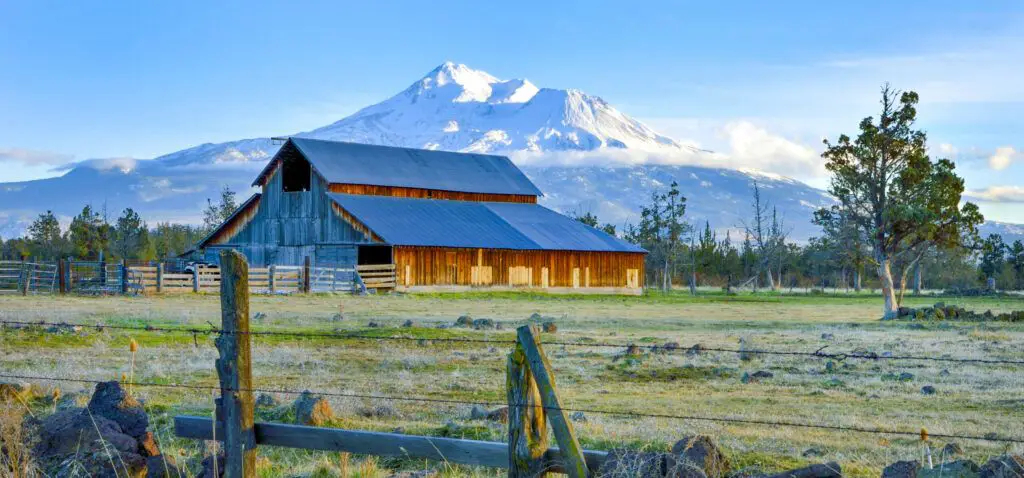
I found it on a listing that had been sitting unsold for eight months: a forty-acre ranch in the Bitterroot Valley, with a main house that needed work, a barn that was half-collapsed, and a price tag that was almost insulting in its lowness. The listing photos showed weathered wood, overgrown fields, and mountains in the distance that made my chest ache with their beauty.
The realtor—a practical woman named Jean who wore Carhartt overalls and drove a truck older than I was—met me at the property on a frigid January morning. She was honest in a way I wasn’t used to.
“This place needs a lot of work,” she said as we walked the property line. “The roof leaks, the plumbing’s questionable, and you’re twenty miles from the nearest grocery store. Winter up here isn’t like Colorado. It’s meaner. Longer. You sure you’re ready for this?”
I looked out at the land—at the wild, untamed expanse of it, at the way the morning light hit the frozen grass, at the mountains standing sentinel in the distance.
“I’m sure,” I said.
We closed on January 15th. I signed the deed with my hand shaking and my heart pounding, and when Jean handed me the keys, I cried for the first time since Christmas Eve. Not sad tears. Not happy ones either. Something else—the kind of tears you cry when you realize you’ve finally given yourself permission to leave.
I moved in three days later with two suitcases, a sleeping bag, and a determination that scared me a little. The house was worse than the photos suggested—water damage in the ceiling, mice in the walls, a kitchen that looked like it hadn’t been updated since 1987. But it was mine. My name on the deed. My decision who could enter.
I installed new locks on every door. I put up motion-sensor lights around the perimeter. I bought two simple security cameras—one at the front gate, one pointed at the driveway—because years of being overlooked had taught me to protect my boundaries.
For three weeks, I existed in a kind of beautiful isolation. I woke with the sun and went to bed exhausted from physical labor. I tore out rotted floorboards and learned to patch drywall from YouTube videos. I burned old wood in the fireplace and ate simple meals I cooked on a portable camping stove while the kitchen was being renovated.
I didn’t call my father. He didn’t call me.
Evan sent one text: “Dad says you’re being dramatic.”
I deleted it without responding.
I was learning to live without the weight of their expectations, and it felt like breathing for the first time in years.
And then the letter arrived.
It came on a Tuesday in early February, delivered to the rural mailbox at the end of my long driveway. The envelope was from a law office in Colorado Springs—Hendricks & Associates, a firm I didn’t recognize. My name was on the envelope, but as I opened it, I saw another name printed on the documents inside.
“Client: Evan Carter.”
My stomach dropped.
It was a foreclosure notice. A failed financing application. And scattered through the legal jargon was a property description that matched my ranch exactly—the acreage, the location, the parcel number.
My brother had tried to buy my land.
Not before I bought it. After.
He’d submitted a financing application for this specific property two weeks after I’d closed on it, claiming he had a “verbal agreement” with the “previous owner” and that the sale to me had been made “in error.”
I read the letter three times, my hands shaking harder with each pass. The financing had been denied because the title was clear—the property was legally mine, with no encumbrances or competing claims. But the fact that he’d tried, that he’d gone to a lawyer and attempted to undo my purchase, felt like a violation I couldn’t quite process.
I was still sitting at my kitchen table, staring at the letter, when my phone rang.
Dad’s name on the screen.
I almost didn’t answer. But some old, stubborn part of me—the part that still wanted an explanation, an apology, something—made me pick up.
“You bought property,” he said. Not hello. Not how are you. Just an accusation, tight and cold.
“I did,” I said carefully.
There was a pause. Then: “Evan needs that land.”
Four words that explained everything and nothing.
“Evan needs it,” Dad repeated, like I hadn’t heard him. “He had a deal lined up. That property was supposed to be his.”
“It’s mine,” I said. “I bought it legally. I own it.”
“You need to sell it to him.”
The audacity of it stole my breath. “No.”
“Olivia, don’t be selfish about this. Your brother has a family. He’s trying to build something. This is important.”
“So am I,” I said, my voice shaking. “I’m building something too.”
“It’s different. He needs—”
“Why wasn’t I invited to Christmas?”
Silence.
“Answer me,” I said. “Why was I excluded from my own family’s Christmas?”
More silence. Then, quietly: “That’s not—this isn’t about that.”
“Then what is it about?”
“You’re being difficult,” he said, and I could hear the frustration creeping into his voice. “This isn’t about you. This is about Evan’s future. He needs that property for his business plans. You need to sell it to him—or sign it over.”
“Sign it over,” I repeated slowly. “You want me to just… give him my ranch.”
“It would be the right thing to do.”
Something in me went very, very quiet.
“No,” I said.
“Olivia—”
“No,” I said again, and hung up.
I sat there in my half-renovated kitchen, holding my phone, shaking with adrenaline and fury and something that felt like grief. My father had called me—not to apologize, not to explain the Christmas exclusion, not to ask how I was doing in my new home—but to demand I give it up for my brother.
The brother who couldn’t be bothered to respond to my messages. The brother who’d tried to claim my property was sold to me “in error.” The brother who apparently needed my ranch more than I needed my own fresh start.
I didn’t sleep that night. I sat up researching property law, adverse possession claims, and what rights someone might have if they claimed a verbal agreement predated a legal sale. I read legal forums until my eyes burned. I called a lawyer first thing the next morning.
Her name was Patricia Morrison, and she specialized in property disputes. I explained the situation as clearly as I could—the purchase, the foreclosure notice with my brother’s name, my father’s demand.
“Do you have any documentation of a verbal agreement between your brother and the previous owner?” she asked.
“No. Because there wasn’t one. I bought it through a standard sale.”
“Then you’re fine,” Patricia said. “Your title is clear. Your brother has no legal claim. But I’d recommend documenting everything going forward. Keep records of all communication. If he escalates, we’ll want evidence.”
I thanked her and hung up, feeling slightly better but still deeply unsettled.
Two days later, Dad called again.
This time I didn’t answer. He left a voicemail: “You’re making this harder than it needs to be. Call me back so we can figure this out like adults.”
Evan texted: “Just sell me the land. Don’t be a bitch about this.”
I blocked his number.
A week passed. Then two. I started to think maybe they’d given up, that my refusal had been clear enough to end the conversation.
I should have known better.
On a cold morning in late February, I was in the barn trying to figure out which beams needed to be replaced when I heard vehicles coming up the driveway. Two of them—a truck I didn’t recognize and a sedan that looked expensive and out of place on my dirt road.
I walked out of the barn, wiping sawdust off my jeans, and stopped cold.
My father was getting out of the truck. Evan climbed out of the passenger side. And from the sedan emerged a woman in business attire carrying a leather portfolio.
A realtor.
They’d brought a realtor to my property.
I stood there, fifteen feet from my own front door, covered in dust and sweat from morning work, and watched my family walk toward me like they had every right to be there.
“Olivia,” Dad said, nodding like this was a normal visit. “We need to talk.”
“You need to leave,” I said.
“Don’t be dramatic,” Evan said. “We’re here to help you understand—”
“I understand perfectly. You want my ranch. I said no. Now you’re trespassing.”
The realtor—a polished woman with shellacked hair and a fixed smile—stepped forward. “Ms. Carter, I’m Rebecca Chen with Premier Properties. I understand there’s been some confusion about this property sale. If we could just sit down and discuss—”
“There’s no confusion,” I said. “This is my property. I own it legally. And you’re all trespassing.”
“Olivia, be reasonable,” Dad said, his voice taking on that edge I remembered from childhood—the tone that meant he was running out of patience with my stubbornness. “Evan has a business opportunity that requires this land. He’s willing to pay you fair market value—”
“I don’t want fair market value. I want my home.”
“You’ve been here a month,” Evan scoffed. “It’s not like you’ve built a life here. Just take the money and find something else.”
I looked at my brother—really looked at him—and saw a stranger. Someone who thought my choices mattered less than his convenience. Someone who believed he could show up with a realtor and pressure me into giving up something that was mine.
“No,” I said.
The realtor tried again. “Ms. Carter, perhaps if you understood the full scope of your brother’s plans—”
“I don’t care about his plans.”
“You’re being selfish,” Dad said, and there it was—the accusation I’d been waiting for. “Your brother has a family to provide for. He has responsibilities. This land could change his life.”
“What about my life?” I asked quietly.
Dad frowned like I’d asked a confusing question. “You’re fine. You have your job. You don’t need forty acres.”
“And I didn’t need to be excluded from Christmas either, apparently.”
His face hardened. “That’s not relevant to this conversation.”
“It’s entirely relevant,” I said, my voice rising. “You cut me out of the family and now you want me to hand over my property? Do you hear how insane that sounds?”
“Keep your voice down,” Dad said, glancing at the realtor like he was embarrassed.
“Get off my land.”
“Olivia—”
“GET OFF MY LAND.”
The realtor took a small step back. Evan’s jaw clenched. Dad just stared at me like he was seeing someone he didn’t recognize.
“Fine,” he said finally. “But you’re making a mistake. And when you change your mind—”
“I won’t.”
They left. But as I watched them drive away, I had a terrible feeling that this wasn’t over.
I was right.
Over the next week, I received three more visits—first from the realtor alone, then from a man who claimed to be a land surveyor but was clearly trying to find some technicality with my property lines, and finally from Evan himself, who showed up drunk and belligerent at 9 PM demanding to “talk this out man to man.”
I called the sheriff that night.
Deputy Marshall was a patient man in his fifties who took my statement seriously and issued Evan a warning about harassment. He also suggested I consider getting legal representation if the situation escalated further.
I called Patricia Morrison again. This time, I told her everything—the Christmas exclusion, the repeated visits, the pressure campaign.
“I think you need more than a property lawyer,” she said. “You need someone who can handle family law and potential harassment issues. I’m going to refer you to someone.”
That someone was Captain James Hartley, a JAG lawyer who’d retired from the Army and now practiced civil law in Montana. He was exactly the kind of person you wanted in your corner—calm, strategic, and utterly unbothered by intimidation tactics.
“Here’s what we’re going to do,” he said during our first meeting. “We’re going to document everything. Every visit, every call, every text. We’re going to send your father and brother a formal cease and desist letter. And we’re going to make it very clear that this property is yours, legally purchased, and that any further harassment will result in legal action.”
The letter went out on March 1st.
For two weeks, I had peace.
Then, on March 15th, they came back.
All of them this time—Dad, Evan, Melissa, and the realtor. But this time they’d brought something else: a claim that they’d found an “original deed” showing the property had been in our family generations ago and that the sale to me was therefore invalid.
It was complete fabrication. Captain Hartley proved it in under an hour with a title search that showed clear chain of ownership going back a hundred years with no connection to the Carter family.
But they’d shown up with this fake claim, demanding entry to my house to “verify family heirlooms” they claimed were still inside.
I refused. They pushed back. And that’s when I made the call that ended everything.
I called the sheriff’s office and Captain Hartley simultaneously, putting both on speaker. I stood on my porch with my phone in one hand and my security camera footage queued up on my laptop in the other.
“They’re trespassing,” I said calmly. “I have it on camera. I have a cease and desist order they’ve violated. And I need them removed from my property.”
Twenty minutes later, Sheriff Morrison himself arrived with Deputy Marshall. Captain Hartley pulled up five minutes after that.
What followed was the most satisfying conversation of my life.
My father tried to explain about the “family deed.” Captain Hartley produced the title search showing it was fiction.
Evan tried to claim I’d stolen his “business opportunity.” Sheriff Morrison pointed out that you can’t steal something that was never yours.
The realtor tried to play mediator. Captain Hartley informed her that she was potentially complicit in harassment and fraud.
And through it all, I stood on my porch—my porch, on my land, in my home—and watched my father’s face as he realized I wasn’t the reliable daughter anymore. I was the woman who knew her rights, protected her boundaries, and refused to be bullied.
“Mr. Carter,” Sheriff Morrison said finally, “if you or your son set foot on this property again without Ms. Carter’s explicit permission, you will be arrested for trespassing. If you continue this harassment, she can pursue a restraining order. Am I clear?”
Dad looked at me, something like disbelief in his eyes. “You’d really do this? To your own family?”
“You did it first,” I said. “On Christmas.”
He had nothing to say to that.
They left. This time for good.
The months that followed were quiet in the best possible way. I finished renovating the house. I planted a garden. I bought two rescue horses and learned to care for them. I hired a local contractor to help me rebuild the barn, and in the process, I made actual friends—people who showed up because they wanted to, not because I’d made myself useful.
I got a new job working remotely for a nonprofit. I started therapy to work through decades of people-pleasing and boundary violations. I learned to sit with silence without needing to fill it with productivity or usefulness.
I learned to be enough just by existing.
On Christmas Eve, nearly a year after the exclusion that started everything, I hosted my own dinner. Small. Intimate. Just three people—Jean, my realtor-turned-friend; Captain Hartley and his wife; and Maria, the contractor who’d become something like the older sister I’d never had.
We ate ham and mashed potatoes. We laughed. We toasted to new beginnings.
And when I looked around my table, at the faces of people who’d chosen to be there, who valued my presence instead of my utility, I felt something I hadn’t felt in years:
Home.
My phone buzzed once during dinner—a text from an unknown number: “Merry Christmas. We miss you. -Dad”
I read it. Considered responding. Then I turned my phone face-down and went back to my people.
Some bridges you burn for warmth. And some families you build for yourself, one chosen connection at a time.
I chose this life. This land. This home.
And I would never again apologize for taking up space in my own story.
THE END

Lila Hart is a dedicated Digital Archivist and Research Specialist with a keen eye for preserving and curating meaningful content. At TheArchivists, she specializes in organizing and managing digital archives, ensuring that valuable stories and historical moments are accessible for generations to come.
Lila earned her degree in History and Archival Studies from the University of Edinburgh, where she cultivated her passion for documenting the past and preserving cultural heritage. Her expertise lies in combining traditional archival techniques with modern digital tools, allowing her to create comprehensive and engaging collections that resonate with audiences worldwide.
At TheArchivists, Lila is known for her meticulous attention to detail and her ability to uncover hidden gems within extensive archives. Her work is praised for its depth, authenticity, and contribution to the preservation of knowledge in the digital age.
Driven by a commitment to preserving stories that matter, Lila is passionate about exploring the intersection of history and technology. Her goal is to ensure that every piece of content she handles reflects the richness of human experiences and remains a source of inspiration for years to come.