The General’s Return
I hadn’t been home in seventeen years. Not since the night my father told me to get out and never come back.
“You’re choosing to be a soldier?” he’d said, his face purple with rage. “A Davis? Carrying a rifle like some common grunt? You’re dead to me.”
I was eighteen. I left with a backpack and my enlistment papers. I didn’t look back.
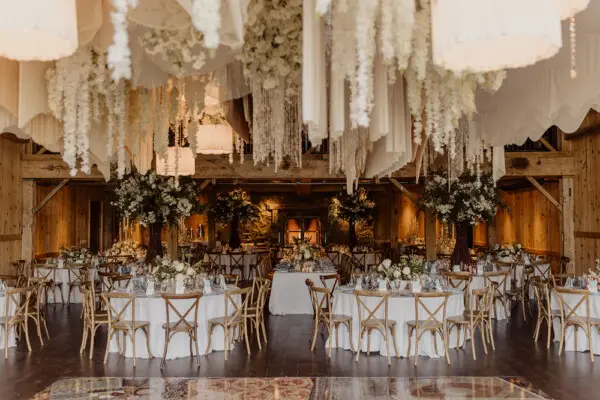
Now, standing in the shadows of the Pierre Hotel’s Grand Ballroom, I wondered why I’d even bothered to come. The place smelled like money—white lilies, expensive perfume, and that underlying scent of desperation that rich people give off when they’re pretending everything’s fine.
I’d positioned myself behind a marble pillar, back to the wall. Old habit. Twenty years in the military teaches you never to let anyone sneak up behind you. My suit was good—custom-made on Savile Row—but I’d chosen charcoal gray. Nothing flashy. Nothing that would draw attention. I looked like hired security, maybe. Or some accountant they’d invited out of obligation.
That was the whole point.
In the center of the room, my father was holding court under a chandelier the size of a small car. Robert Davis, sixty-five, squeezed into a tuxedo that was a size too small. He was laughing too loud at some Senator’s joke, slapping backs, swirling his scotch like he owned the world.
He had no idea he was three months away from losing everything.
Three months ago, his bank had started foreclosure proceedings on the family estate. His shipping company was drowning in debt. Bad investments. Refusing to adapt. The sheriff’s sale was scheduled, and Robert Davis was about to lose the house he’d lived in for forty years.
Then, seventy-two hours before the auction, an anonymous wire transfer hit the bank. $2.4 million. From a company called Vanguard Holdings.
The foreclosure stopped. The house was saved.
My father never knew who saved him.
He walked right past my pillar, his eyes sliding over me like I was part of the furniture. Then he stopped. I saw the moment recognition hit—not warmth, not joy. Annoyance.
He stepped away from his circle of admirers and leaned in close. His breath reeked of expensive scotch and something rotten underneath.
“Try not to eat too much, Thomas,” he whispered, smile plastered on his face for anyone watching. “We’re paying per head. Frankly, you’re not worth the plate.”
I met his eyes. I could see the broken blood vessels in his nose. The fear he was hiding behind all that arrogance. He was drowning, and he didn’t even know it.
“Good evening, Father,” I said quietly.
“Don’t call me that here.” His smile never wavered, but his voice was pure venom. “You’re a guest. Barely. You’re lucky Michael insisted on inviting you. If it were up to me, you’d still be rotting in whatever gutter you crawled into after you ran away.”
I didn’t flinch. Didn’t argue. I just watched him walk away.
He had no idea I owned that plate he was talking about. I owned the table. The wine he was drinking. The roof over his head.
I was here for Michael. My little brother. He was ten when I left—when I was kicked out. He’s the only one who stayed in touch over the years. Secret emails. Updates about his life. Today he was marrying Sophia, and I’d actually flown in from overseas just to be here.
I liked Sophia. Met her once. She had this look in her eyes—like she could see right through people’s bullshit.
Across the room, the photographer started gathering people for the family portrait. Michael saw me and his whole face lit up. He waved me over, mouthing “Come on!”
I hesitated. I wasn’t really part of this family anymore. I was a ghost they couldn’t quite get rid of.
But for Michael, I’d do it.
I stepped forward, out of the shadows.
That’s when Aunt Linda struck.
She moved like a snake in a Chanel dress, intercepting me before I could reach the group.
“Step aside!” She laughed, that fake high-pitched sound rich women make. Her hand hit my chest—not a gentle touch. A shove.
“Aunt Linda?”
“Oh, Thomas, don’t be dense.” She kept smiling for the cameras. “We’re taking the family portrait. We only want the successful people in the shot. You understand, right? It’s for posterity. We don’t need a reminder of… well, of your choices.”
Michael saw what was happening. His face went red. “Aunt Linda, stop it. He’s my brother. He belongs in the photo.”
“He’s a grunt, Michael.” My father didn’t even look at me. He adjusted his bow tie, talking to the air like I was a bad smell. “He chose to carry a gun instead of a briefcase. He chose to be a servant. If it weren’t for pity, no one would have invited a disgrace like him. Let him stand in the back where he belongs.”
The photographer looked uncomfortable. “Sir, usually we include all the siblings—”
“Take the damn photo!” my father boomed. “We don’t have all night. Thomas, move.”
I looked at Michael. He was ready to fight. Ready to ruin his own wedding day to defend me.
I gave him the smallest shake of my head. Don’t.
I stepped back into the shadows.
“Perfect!” Aunt Linda chirped, sliding into the spot where I should have been. “Everyone smile!”
The flash went off.
There it was. The Davis Family. Wealthy. United. Perfect.
All lies.
They had no idea that family portrait was paid for by the son they’d just erased from it.
I sipped my sparkling water. The bubbles burned going down. I wasn’t hurt—you can’t be hurt by people you don’t respect. I was just watching them. Analyzing. In the military, we call it “intelligence gathering.” You study the enemy. Their movements. Their weaknesses.
My father’s weakness was obvious. He was running on fumes and delusion.
The DJ announced speeches were starting. That’s when I saw Sophia walking toward the stage. She looked like she was marching into battle, not a wedding reception.
She stopped right in front of my pillar.
“Are you leaving?” she asked quietly.
“I think it’s best,” I said. “I don’t want to cause a scene.”
“You aren’t the one causing scenes.” She looked me dead in the eye. “Stay. Please.”
“Sophia, my father—”
“Your father thinks he’s the host.” She cut me off. “I think it’s time we corrected the record.”
She turned and walked to the stage. Picked up the microphone.
“Testing,” she said.
The feedback screech cut through every conversation in the room. Everyone went silent.
My father leaned back in his chair at the head table, swirling his scotch. I could hear him whispering to Aunt Linda, gesturing at the flower arrangements—the $15,000 arrangements I’d paid for last week when his credit card got declined.
“Wait till she thanks us for the venue,” he said, loud enough for nearby tables to hear. “I told everyone I pulled strings to get this date. The Senator’s impressed.”
On stage, Sophia stood tall. She wasn’t looking at her new husband. She wasn’t looking at her parents.
She was scanning the back of the room. Searching the shadows.
“I want to thank everyone for coming,” she began, voice steady. “My parents, for their love. And of course, the Davis family, for welcoming me.”
My father raised his glass, preening. He nodded to the room like he was accepting an award.
“But,” Sophia continued, her tone shifting, getting sharp, “there’s a lot of deception in weddings. We pretend things are perfect. We pretend we have endless resources. We pretend we did things we didn’t do.”
The room went dead quiet. Silverware stopped clinking. My father’s smile froze.
“I come from a military family,” Sophia said. “My grandfather was a Marine. He taught me that stolen valor is a sin. That claiming credit for another soldier’s work is the lowest form of cowardice. That the loudest man in the room is usually the weakest.”
I put my hand on the door handle. Every instinct was screaming at me to leave. I’d spent seventeen years being invisible. The “Gray Man.” Silent. Efficient. I commanded thousands of troops, managed budgets bigger than some countries’ GDP, briefed members of Congress. I didn’t need attention. Didn’t want drama.
“I believe in honor,” Sophia said, voice rising. “And I believe credit should go where it’s due.”
She looked directly at the exit.
“Don’t go anywhere,” she commanded.
Every single head in that ballroom turned. Three hundred people following her gaze to the solitary figure by the door in a plain gray suit.
My father half-stood. “Sophia? What are you doing? That’s just Thomas. Ignore him.”
Sophia ignored him completely. She stepped away from the microphone. Turned her body toward the back of the room.
Then she stood at attention. Perfect military posture. Chin high.
She raised her right hand to her forehead in a crisp salute.
The silence was suffocating.
“Please raise your glasses,” Sophia’s voice rang out like a bell, “to the man who paid for this wedding. The man who saved the Davis family estate from bankruptcy three months ago. The man who is the highest-ranking officer this town has ever produced.”
She held the salute, eyes locked on mine.
“Major General Thomas Davis.”
The gasp that went through the room was like a physical wave.
Major General.
My father choked on his scotch. Started coughing violently, wine spilling down his white shirt. “Major… General?” he sputtered. “That’s impossible. He’s a grunt. He’s an enlisted nobody. He washes trucks!”
Judge Harrison, sitting at a nearby table, whispered loud enough for everyone to hear: “He commands the 10th Mountain Division, Robert. Do you have any idea what that means? That’s two stars. He reports directly to the Joint Chiefs.”
I slowly removed my hand from the door.
I couldn’t leave now. Walking out would disrespect the salute. Would disrespect the bride who’d just thrown a grenade into her own reception to defend me.
I took a breath.
I let the mask drop.
I straightened my spine—the posture I’d earned over two decades of command. Of briefing presidents. Of leading men through hell. The transformation was instant. The room seemed to shrink around me.
I returned her salute. Sharp. Precise. Perfect.
“As you were,” I said softly.
But in that dead silence, my voice carried across the entire ballroom like thunder.
Sophia lowered her hand, smiling. “Thank you, General.”
My father stood up fully, legs shaking. He looked around at the guests—all of them whispering now, pointing. Judge Harrison was standing out of respect. The Senator was staring at me with sudden intense interest.
My father tried to take control. Tried to be the patriarch one last time.
“Thomas!” His voice cracked. “Get over here! Explain yourself! Did you lie to us?”
I looked at him across that expanse of white tablecloths. The distance between us wasn’t measured in feet. It was measured in character.
I started walking toward him.
The crowd parted instantly. People who’d ignored me five minutes ago were pulling their chairs back, making a path.
I stopped ten feet from the head table.
“I didn’t lie, Father,” I said calmly. “You just never asked. You saw a suit and assumed I was a clerk. You saw silence and assumed weakness. You assumed I was a failure because I didn’t chase your version of success.”
“But… the money,” he stammered. “Vanguard Holdings? That was you?”
“That’s my private investment firm,” I said. “I started investing my hazard pay in tech startups fifteen years ago. Made some good bets. Got smart about it.”
“You paid for the house?” Aunt Linda’s face had gone white as paper.
“I bought the debt,” I corrected. “Which means I own the mortgage. Which means, Aunt Linda, you’re currently drinking champagne in a house that belongs to the ‘disgrace’ you just shoved out of the family photo.”
Aunt Linda looked like she might pass out. She rushed forward, pushing past a waiter, her face transforming into this desperate mask.
“Thomas! My nephew! A General! Why didn’t you say anything? Oh, we’re so proud of you! Come, come take a picture with the bride! We need to redo that portrait! The photographer’s still here!”
She reached for my arm—the same arm she’d shoved away minutes before.
I stepped back. Smooth. Simple. Let her hand grab nothing but air.
“I believe you only want ‘successful’ people in the shot, Linda,” I said coldly. “And by your definition, I’m just a disgrace who carries a gun.”
“We were joking!” my father said, sweating now, practically trembling. “It’s family banter! You know how we are! Thomas, listen—if you have money, the logistics business could really use an investor like you. We could rename it ‘Davis & Son.’ Think about the legacy! General Davis and his father, side by side!”
He was trying to rewrite history in real time. Trying to pivot. It was pathetic—watching a drowning man claw at air.
“There is no ‘Davis & Son,'” I said. “There’s just you, living on charity from a stranger you kicked out at eighteen.”
I turned away from him. Walked over to Michael and Sophia.
Michael was crying. He grabbed me in a tight hug, holding on like he was afraid I’d disappear.
“I didn’t know,” he whispered. “I knew you were doing okay, but I didn’t know… this. I didn’t know you saved the house.”
“I wanted you to have a good day,” I said. “I didn’t do it for him. I did it for you.”
I reached into my jacket pocket. Pulled out a thick envelope. Handed it to Michael.
“What is this?”
“The deed to the estate,” I said. “I transferred it into your name and Sophia’s this morning. It’s your wedding gift.”
My father gasped. “You gave it to him? But I live there! That’s my house!”
I looked at him over Michael’s shoulder.
“You live there at their pleasure now,” I said. “Michael owns it. If he wants to keep you, that’s his choice. But you’ll never hold a roof over his head again. You’ll never threaten him with inheritance. Because you have nothing left to give.”
I turned to Sophia. “Thank you for the salute. You didn’t have to do that.”
“Yes,” she said firmly. “I did. Honor has to be paid. And bullies have to be stopped.”
I nodded. “I have to go. My leave ends at 0800.”
I turned toward the exit.
My father tried to block my path—just like he’d done at the entrance. But now he looked small. Desperate. A king whose crown had turned to paper.
“You can’t just walk away!” he shouted. “I’m your father! I made you!”
I stopped.
Looked down at him.
He seemed shorter than I remembered.
“No, Robert,” I said quietly. “The Army made me. The wars made me. You just made me leave.”
I walked past him.
He didn’t reach out. Couldn’t.
I’d built a wall he couldn’t climb.
Outside, the night air was cool and clear. The silence was a relief after all that noise.
A black SUV with tinted windows sat at the curb, engine running. Two men in dark suits stood by the doors.
My aide, Captain Lewis, opened the rear door. Snapped a salute.
“Good evening, General,” Lewis said. “Eventful night?”
“Mission accomplished, Captain,” I said, sliding into the leather seat. “Target secured. Hostiles neutralized.”
I looked back at the hotel entrance one last time.
My father stood under the awning, watching the car. He looked like a man who’d just realized he’d thrown away a winning lottery ticket because it had a crease in it.
He wasn’t mourning the loss of his son.
He was mourning the loss of the asset. The bragging rights. “My son, the General.” He’d try to say it tomorrow. But everyone in that ballroom knew the truth now.
I didn’t feel angry anymore. Didn’t need his validation.
The salute from Sophia. The hug from Michael.
That was real. That was enough.
“Where to, sir?” Lewis asked from the front seat.
“The airfield,” I said, unbuttoning my jacket. “Wheels up in forty minutes. We’ve got work to do.”
“Copy that, sir.”
The car pulled away. I watched the hotel shrink in the rearview mirror. The lights faded, replaced by highway streetlights.
My phone buzzed.
One notification.
Friend Request: Robert Davis
I stared at the name for a long moment.
I remembered the boy who’d begged for his approval.
The teenager who’d been told he was worthless.
The man who’d been shoved out of a family photograph.
I pressed Delete.
Then I pressed Block.
Some bridges you burn for a reason—to keep the enemy from following you home.
I put the phone away and looked forward, into the darkness, toward the horizon where my real family was waiting.
My division.
My brothers and sisters in arms.
The people who’d never measured my worth by a stock portfolio or a country club membership.
The car accelerated onto the highway, and I didn’t look back again.

Lila Hart is a dedicated Digital Archivist and Research Specialist with a keen eye for preserving and curating meaningful content. At TheArchivists, she specializes in organizing and managing digital archives, ensuring that valuable stories and historical moments are accessible for generations to come.
Lila earned her degree in History and Archival Studies from the University of Edinburgh, where she cultivated her passion for documenting the past and preserving cultural heritage. Her expertise lies in combining traditional archival techniques with modern digital tools, allowing her to create comprehensive and engaging collections that resonate with audiences worldwide.
At TheArchivists, Lila is known for her meticulous attention to detail and her ability to uncover hidden gems within extensive archives. Her work is praised for its depth, authenticity, and contribution to the preservation of knowledge in the digital age.
Driven by a commitment to preserving stories that matter, Lila is passionate about exploring the intersection of history and technology. Her goal is to ensure that every piece of content she handles reflects the richness of human experiences and remains a source of inspiration for years to come.
Great story of courage, perseverance, and dedication to a goal… And, he achieved it! Parents should support the decisions of their children, and uphold those decisions…