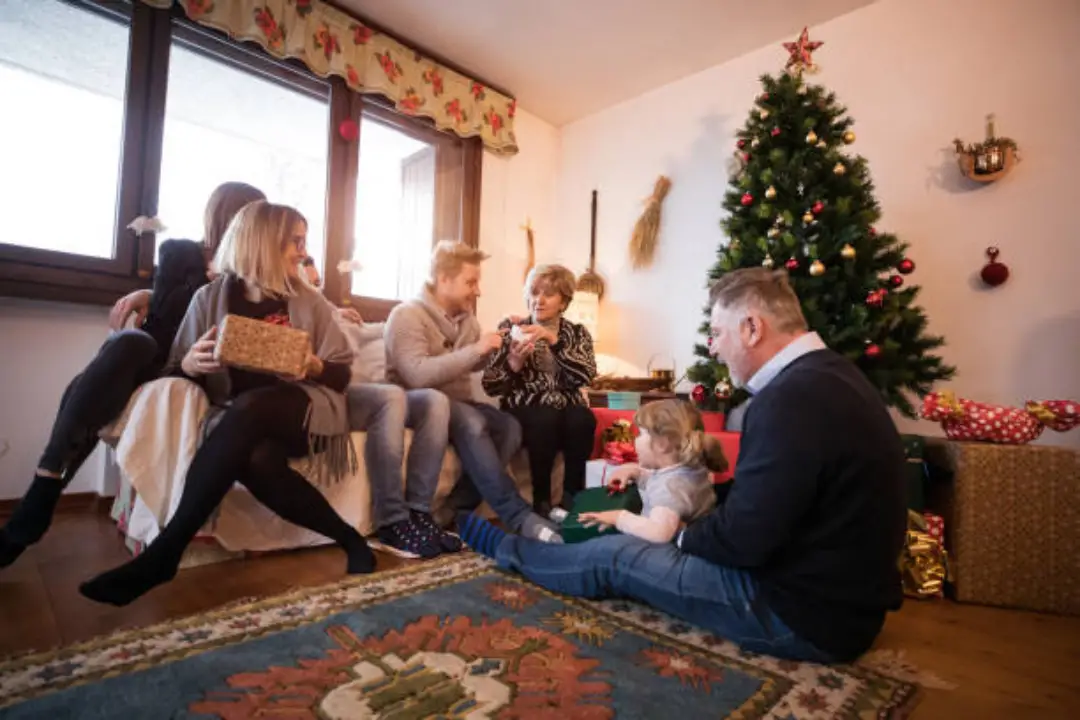
My name is Sienna Hudson, I’m thirty-two years old, and last Christmas my brother-in-law’s carefully constructed facade shattered in front of my entire family. For eight years, my parents had worshiped Derek—the Harvard Law graduate, the partner-track attorney, the man who gave my sister Vivien the “perfect” life they’d always wanted for their daughters. And for eight years, they’d told me I’d settled by marrying Marcus, a man who builds custom furniture with his hands instead of arguing cases in courtrooms.
What Derek whispered to me in my parents’ backyard that night—wine-soaked breath hot against my ear—changed everything. What happened at the dinner table three hours later left my mother speechless and my sister finally, desperately free.
But I’m getting ahead of myself. To understand how everything unraveled, you need to know where it started.
Five years ago, on Thanksgiving, I brought Marcus home to meet my family for the first time. I remember the weight of his hand in mine as we walked up my parents’ driveway, and the way he carried the gift he’d made—a hand-carved walnut rocking chair, three months of meticulous work in every curve and joint—like it was both an offering and a prayer.
My mother opened the door, and her smile flickered when she saw him standing there in his simple button-down shirt, sawdust probably still under his fingernails despite his best efforts.
“You must be Marcus,” she said, her eyes dropping immediately to the chair. “Oh. That’s… rustic. Derek got Vivien a Cartier bracelet last month.”
I felt Marcus’s fingers tighten around mine briefly, then deliberately relax like he’d practiced absorbing that kind of blow. “It’s very nice to meet you, Mrs. Hudson,” he said with genuine warmth.
My father appeared behind her and shook Marcus’s hand the way you might shake hands with a door-to-door salesman you’re already planning to dismiss. “So, carpentry,” Dad said, skipping pleasantries entirely. “Is that sustainable long-term? Do you have a 401(k)? Health insurance?”
Before Marcus could answer, a sleek black Tesla pulled into the driveway with the kind of expensive purr that made my parents’ heads turn automatically.
My sister Vivien stepped out first—blonde hair perfectly styled, designer coat draped over her shoulders like she’d stepped straight from a magazine spread. Derek followed, tall and polished and perfect, every inch the successful attorney my parents had always dreamed of having in the family.
My mother transformed instantly, like someone had flipped a switch. “There they are!” She rushed past us without a backward glance to embrace Vivien. “Derek, you look wonderful as always. How’s the partner track going?”
Derek flashed the kind of white-toothed smile that probably won over juries. “Should know by spring, Linda. Fingers crossed.”
Dad clapped him on the back with genuine affection. “That’s my boy. That’s exactly what I like to hear.”
I watched Marcus quietly set the rocking chair in the corner of the living room, carefully positioning it so it wouldn’t be in anyone’s way. No one mentioned it again that entire night—not once. But here’s the thing that still gets me: five years later, that chair sits in my mother’s reading nook and she uses it every single day. She’s never once admitted it’s the most beautiful piece of furniture in her house, but her actions tell the truth her words won’t.
That Thanksgiving was the first time I saw the pattern clearly—the way my family elevated Derek while diminishing Marcus, the way they measured worth in job titles and salary figures rather than character. I just didn’t know how deep that pattern went, or how much it would cost all of us before it finally broke.
Over the next five years, the comparisons became a constant background hum at every family gathering. My parents would mention Derek’s latest case, his newest promotion, the expensive vacation he’d taken Vivien on, always with a pointed glance in my direction as if to ask: See what you could have had?
Two weeks before last Christmas, I was standing in our kitchen watching Marcus sand a custom dining table in his workshop through the window when my mother called with her usual blend of concern and criticism.
“Did you hear the news? Vivien and Derek just bought a house in Brookline. Four bedrooms, a pool, brand new construction.”
“That’s nice, Mom,” I said neutrally.
“It’s more than nice, sweetheart. It’s what success looks like.” She paused—that particular pause that always preceded the knife. “I just wish you had aimed higher, honey. Marcus is nice, don’t get me wrong. But you settled. You know you did.”
I didn’t respond. What could I say that I hadn’t said a hundred times before?
“A carpenter, Sienna,” she continued, her voice heavy with disappointment. “My daughter married a carpenter.”
Through the window, Marcus looked up. He’d heard—the phone volume too loud, or maybe my mother’s disappointment just carried that well. He didn’t react, didn’t show any emotion. He just returned to his work, sandpaper moving in slow, deliberate strokes across the wood grain.
After I hung up, he came inside with sawdust in his hair and those callused hands my mother thought weren’t good enough for her daughter.
“You okay?” he asked quietly.
I nodded, and we both knew it was a lie we’d been telling for five years.
What my mother didn’t know—what none of them knew—was that Marcus had just been commissioned for a project that would make Derek’s impressive salary look modest by comparison. A boutique hotel chain had hired him to design and build custom furniture for twelve properties across New England. It was the kind of contract that changes lives.
But that’s not even the part that matters. What matters is this: I was starting to realize that my silence, my constant peace-keeping, wasn’t protecting my family or my marriage. It was slowly killing both.
That same night, lying in bed unable to sleep, I catalogued the evidence I’d been avoiding for years. Five years of holiday dinners where Marcus excused himself earlier each time. Five years of him never suggesting we visit my parents voluntarily. Five years of silence on the car rides home, his jaw tight and his eyes fixed on the road ahead.
I’d told myself it was fine, that he understood, that our love was strong enough to absorb my family’s constant disappointment. But love doesn’t work that way. Contempt is corrosive—it seeps through cracks you didn’t know existed until the whole foundation starts to crumble.
Six months before that sleepless night, Marcus had asked me something while we were doing the most mundane task imaginable—folding laundry together.
“Do you ever defend us to them?” he’d said, his voice quiet and sad rather than angry.
I’d frozen with a pillowcase in my hands. “I mean,” he’d continued, “I hear what they say about me, about us. And I never hear you push back.”
I’d mumbled something about keeping the peace, about not making things worse, about choosing my battles. He’d nodded slowly and said just one word: “Okay.”
That single word carried more weight than any argument could have. It told me he’d stopped expecting me to stand up for him, stopped hoping I’d choose him over my parents’ approval.
I found out later that he’d written a letter to my parents—three pages, carefully handwritten—explaining his work, his values, his love for me and his hopes for our future. He’d spent two weeks crafting it, revising it, making sure every word was right.
He never sent it. When I asked him why, he just shrugged and said, “What’s the point? They’ve already decided who I am.”
The truth of that statement hit me like a physical blow.
As a trauma therapist, I spent my days helping patients recognize toxic patterns in their relationships. I taught them about coercive control, about emotional manipulation, about the importance of setting boundaries with family members who refused to respect them.
At work, I was Dr. Hudson—respected, competent, an expert in recognizing when relationships had become destructive.
At my parents’ house, I became someone smaller. Someone who let her husband be insulted and said nothing. Someone who prioritized her parents’ comfort over her partner’s dignity.
The disconnect was staggering, and I couldn’t ignore it anymore.
By the time Christmas arrived, I’d made a decision: this year would be different. I wouldn’t stay silent. I wouldn’t swallow the comparisons and pretend they didn’t cut. I had no idea that my small act of courage would collide with something much bigger—secrets that had been festering in my sister’s perfect marriage for years.
December 24th, 4:47 PM. Marcus and I pulled into my parents’ driveway, Christmas lights wound around the porch railings like they’d been copied from a magazine spread. A perfect wreath hung on the red front door.
“You ready?” Marcus asked, his hand on the gearshift.
“No,” I admitted. “But you never really are for these things.”
He grabbed the gift bag from the back seat—a jewelry box he’d carved from reclaimed oak with mother-of-pearl inlay, easily twenty hours of meticulous work—and took my hand.
“Whatever happens tonight,” I said, squeezing his fingers, “I’m on your side. I should have been all along, but I am now.”
He looked at me and something shifted in his eyes. Surprise, maybe. Or hope.
Inside, the house smelled like pine and roasting turkey, picture-perfect as always. My father sat in his leather armchair reading the paper. My mother fussed with place settings at the dining table.
And there, arranged on the sofa like a carefully staged photograph, were Vivien and Derek.
My sister wore cream cashmere and diamond studs. Her smile was perfect and somehow wrong, like a painting hung at a slightly off angle. Derek rose to greet us—tall, confident, every hair perfectly in place.
“Little sister,” he said, pulling me into a hug I didn’t want. “Still saving the crazies, I see.”
My mother actually laughed. “Derek, don’t be mean,” she said while smiling as she said it, making it clear she didn’t really mean the reprimand.
Marcus extended his hand. Derek shook it briefly, the way you’d handle something vaguely distasteful. “Marcus. Good to see you, buddy.”
Buddy—like they were friends, like there wasn’t five years of casual contempt in that handshake.
I turned to Vivien and we hugged, but her arms wrapped around me with a mechanical quality that felt rehearsed. When I pulled back, her eyes darted away quickly. She was thinner than I remembered—much thinner than at Thanksgiving just weeks ago.
And there, on her wrist, partially hidden by an expensive gold bracelet, was what looked unmistakably like a bruise.
Before I could look closer or say anything, she turned away. “I’ll help Mom in the kitchen,” she said, already moving.
Something cold settled in my stomach, a professional instinct I couldn’t quite name yet.
Dinner started at six. The turkey was perfect, the table beautifully set, and the conversation was an absolute minefield from the first course.
“Derek won a huge case last month,” my mother announced, passing the gravy boat. “It was covered in the Boston Globe. Did you see it, Sienna?”
“I didn’t,” I admitted.
“You really should have. Very impressive work.” She beamed at Derek like he’d just won a Nobel Prize. “Tell them about it, Derek.”
Derek launched into a detailed story about corporate litigation, throwing around terms like precedent and seven-figure settlement while my father nodded along, completely rapt with admiration.
When Derek finally finished, Dad turned to Marcus with poorly disguised condescension. “So, Marcus. Business still good? People still buying… wood things?”
Marcus set down his fork carefully. “Custom furniture, yes. Business is very good, actually.”
“Custom furniture,” Derek repeated, swirling his wine glass. “Must be nice. No deadlines, no real pressure, just… sanding, right?”
“There’s pressure,” Marcus said evenly. “Just a different kind.”
“Sure, sure.” Derek’s smile didn’t reach his eyes.
I watched my sister across the table. She’d cut her food into tiny, precise pieces, but she hadn’t eaten a single bite. Her fork pushed the same sliver of turkey around her plate like she was completing an assignment rather than eating a meal.
“Vivien, honey, you’re so thin,” my mother frowned with concern. “Derek, you need to feed your wife better.”
“She’s on a diet,” Derek said dismissively. “Wants to look good for the New Year’s parties, right Viv?”
Something flickered across Vivien’s face—there and gone in a blink, but I caught it. Fear. Pure, unmistakable fear.
I knew that expression. I’d seen it hundreds of times in my patients—that micro-expression of someone living under threat, of someone who’d learned to be afraid of their partner’s reactions.
“Right, Viv?” Derek asked again, his tone carrying an edge.
Vivien nodded quickly, not looking up. “Right. The diet.”
I gripped my fork hard enough to hurt, my mind racing through possibilities I didn’t want to consider about my own sister’s marriage.
After dinner, we moved to the living room. The Christmas tree glowed with warm lights. Stockings hung over the fireplace. Everything looked perfect on the surface.
My mother opened Marcus’s gift first. She lifted the jewelry box from the tissue paper and turned it over in her hands, examining it with the critical eye she usually reserved for inspecting produce at the grocery store.
“Oh,” she said, her tone carefully neutral. “It’s homemade. That’s… cute.”
Twenty hours of hand-carved oak, mother-of-pearl inlay that required incredible precision, joints so perfect they were invisible to the naked eye—and she called it cute.
The old Sienna would have smiled and changed the subject. The old Sienna would have let it slide to keep the peace.
“It took him twenty hours, Mom,” I said, and my voice came out steady and clear. “That’s three thousand dollars’ worth of skilled labor if he charged his actual market rate for commissioned work.”
The room went completely silent. My father shifted uncomfortably in his armchair. Derek actually chuckled.
“Wow,” Derek said, shaking his head. “Someone’s a little sensitive tonight.”
I looked directly at him and held his gaze. “I’m not sensitive, Derek. I’m accurate. There’s a difference.”
Marcus’s hand found the small of my back—not pulling me away or trying to silence me, just there. Present and supportive.
My mother’s mouth opened and closed. She clearly wasn’t used to this version of her younger daughter.
Vivien suddenly stood up, her face pale as paper. “I need some air,” she said in a voice that shook slightly, and she walked quickly toward the back door.
As she passed the coffee table, her phone slipped from her cardigan pocket and clattered onto the hardwood floor.
Derek moved with startling speed—too fast, too practiced. He scooped up the phone and slipped it smoothly into his own pocket in one fluid motion, like a reflex he’d performed a thousand times.
Vivien didn’t protest. She didn’t even look back. She just walked outside into the cold December night, her shoulders hunched like she was carrying something unbearably heavy.
I watched Derek pat his pocket where her phone now rested and thought with growing certainty: What kind of husband confiscates his wife’s phone like that?
The kind I was beginning to recognize from my work. The controlling kind. The dangerous kind.
I found Vivien in the backyard, standing near the old oak tree we used to climb as children. Christmas lights from the neighbor’s house cast colored shadows across the snow. Her shoulders were shaking.
“Viv,” I said softly.
She spun around, wiping her face quickly. “I’m fine. Just needed some cold air.”
I stepped closer. The bruise on her wrist was more visible now in the outdoor light—purple-green, several days old, finger-shaped.
Before I could say anything, my phone buzzed in my pocket. A text from an unknown number.
I can’t do this anymore. I need to tell someone. Can we talk? —D
I stared at the screen, confused. I didn’t know anyone with that initial who would text me like this. Before I could process it, Vivien touched my arm urgently.
“We should go back inside,” she said, her voice flat and rehearsed. “Derek will wonder where I am.”
Not might wonder. Will wonder. Like she knew exactly how he’d react, like she’d learned to predict his moods the way you predict weather patterns.
“Vivien,” I said carefully, using my professional voice, “are you okay? Really okay?”
She looked at me then, and for one unguarded moment her carefully constructed mask slipped completely. I saw exhaustion, fear, and a desperate, silent plea for help.
Then the mask snapped back into place. “I’m fine,” she said again, the words automatic.
We walked back toward the house. Through the lit windows, I could see Derek watching us with an odd expression—calculating, assessing.
When he caught me looking, he smiled, but his eyes remained cold and flat.
That text message sat in my phone like a splinter under skin. Unknown number. Someone wanting to confess something. The initial D.
It wasn’t until much later that I realized Derek’s number had never been in my contacts. We’d never exchanged phones or information directly.
And that message—I need to tell someone—hadn’t been meant for me at all. In his wine-soaked state, he’d sent it to the wrong number.
I just didn’t know yet whose number he’d actually meant to reach, or what he was so desperate to confess.
Inside, new guests had arrived. Rachel stood in the foyer unwinding her scarf—Vivien’s best friend from college, though I realized with a shock that I hadn’t seen them together in years.
Rachel hugged Vivien for a long time, longer than seemed natural for a casual greeting. When they separated, she whispered something in my sister’s ear. Vivien nodded once, sharp and quick, then pulled away and returned to Derek’s side.
I watched Rachel watching Vivien walk back to her husband. Something like pain flickered across Rachel’s face—the look of someone witnessing something terrible and being powerless to stop it.
She noticed me looking. Our eyes met across the room.
“Sienna,” she said quietly, gesturing toward the hallway. “Can I talk to you for a second?”
We stepped away from the others. Rachel glanced toward the living room where Derek was laughing at something my father said, then back at me.
“How is she?” Rachel’s voice was low and urgent. “Really, how is she?”
“I don’t know,” I admitted. “She won’t talk to me about anything real.”
Rachel’s jaw tightened like she was wrestling with a decision. “She called me,” Rachel said finally, the words coming out in a rush. “Six months ago. Middle of the night, two AM. She was crying so hard I could barely understand her. She said she wanted to leave him but she was terrified.”
My heart started pounding. “Leave what? What did she say?”
Rachel didn’t answer directly. Her eyes drifted back toward Derek. “I work at the courthouse,” she said quietly. “I shouldn’t be telling you this—I could lose my job. But a report was filed six months ago. Then it was withdrawn the very next day.”
The blood drained from my face. “What kind of report?”
Rachel shook her head, clearly struggling with professional boundaries. “I can’t say more without violating confidentiality. But Sienna…” She gripped my arm tightly. “If you see something tonight—anything that seems wrong—please don’t ignore it. She won’t save herself. Someone has to notice.”
Then she walked away, leaving me alone in the hallway with a terrible suspicion crystallizing into certainty.
My sister had tried to report something—tried to get help. And then she’d taken it all back.
Someone had convinced her to stay silent. And I had a pretty good idea who.
By ten o’clock, the wine bottles were mostly empty and Derek had switched to whiskey. His cheeks were flushed, his voice getting louder, the polished professional mask beginning to slip.
“You know what Marcus should really do?” Derek leaned back on the sofa, tumbler dangling from his fingers. “Start a YouTube channel. ‘How to Make Stuff Nobody Needs.’ He could monetize it, make dozens of dollars.”
My father actually laughed. My mother smiled apologetically but said nothing to stop it.
“Derek,” I said, keeping my voice level, “that’s enough.”
“Oh, come on,” Derek waved his glass dismissively. “I’m just playing around. Marcus knows I’m kidding. Right, buddy?”
Marcus said nothing. His face was carefully, professionally blank—the expression of someone who’d had years of practice absorbing insults.
“I mean, seriously,” Derek continued, gaining momentum, “in this economy? Making little wooden boxes and chairs? That’s not a career. That’s a hobby for rich people’s retirement.”
“Derek,” I said again, louder this time.
My mother sighed. “Sienna, don’t make a scene. He’s just had a bit too much wine.”
“My watch cost more than his truck,” Derek said, holding up his wrist where a Rolex glinted in the lamplight. He was showing off now, playing to an audience that included my parents’ approving smiles.
The room fell silent. Everyone’s eyes moved to Marcus.
He stood slowly, with no anger visible on his face—just a tired kind of resignation I’d seen too many times in my trauma patients, that look that said I’m done trying to prove my worth to people who’ve already decided I have none.
“I think I’ll get some air,” Marcus said quietly.
He walked past me, past my parents, past Derek’s smug expression. In the hallway, he paused for just a second and I saw his shoulders drop—a small collapse, barely visible to anyone who wasn’t watching closely.
In five years of marriage, I had never seen Marcus look defeated. Until tonight.
Something broke inside me. Some last thread of patience, of keeping the peace, of maybe next time will be better.
I looked at Derek lounging on the sofa. At my father still chuckling. At my mother who wouldn’t meet my eyes because she knew, on some level, that what had just happened was wrong.
And I thought: No more. Not tonight. Not ever again.
I didn’t know I was about to tear my family apart. I only knew I was done watching them tear down my husband.
“Enough,” I said, and the word cut through the room like breaking glass.
I stood up, my whole body trembling with suppressed rage. “That’s enough.”
My father frowned. “Sienna, sit down. You’re making a scene over nothing.”
“Over nothing?” I heard my voice rise and didn’t try to control it. “You just sat there laughing while Derek humiliated my husband in front of everyone, and you’re telling me it’s nothing?”
“Oh, for God’s sake,” my mother said, pressing her fingers to her temples like I was giving her a headache. “We’re just having a conversation. We’re worried about you, honey. Derek and Vivien have built such a beautiful life together. We want that security for you too.”
Derek set down his glass, and his eyes had a strange gleam—the look of a man who’d won every argument he’d ever started and expected this one to end the same way.
“Let’s be completely honest here,” he said, spreading his hands wide in a gesture of false reasonableness. “Your husband is basically a glorified handyman. There. I said what everyone’s been thinking for five years.”
“Derek,” Vivien whispered from her corner of the sofa. “Maybe we should just stay out of this.”
He didn’t even look at her. “We’re family, Viv. We’re allowed to be honest.”
And Vivien flinched. A full-body flinch, visible to everyone in the room, like she’d been struck.
Rachel, standing near the bookshelf, went rigid. She’d seen it too.
My phone buzzed in my pocket again. I pulled it out.
Same unknown number: I’m sorry. That text was meant for someone else. Please delete it. Please.
Derek was watching me now, and his face had changed. The smugness was replaced by something sharper, warier. He’d realized his mistake.
But it was too late. Because now I understood: that first text—I need to tell someone—had been Derek trying to reach someone specific. Someone he needed to confess to. The alcohol was making him sloppy, making him send desperate messages to wrong numbers.
I looked at my sister with her hollow eyes and carefully hidden bruises. I looked at Derek sweating now despite the winter cold outside.
Something was going to break tonight. I could feel it coming.
“I need to check on Marcus,” I said, and walked outside before anyone could stop me.
I found him standing at the edge of the patio, breath fogging in the December air, hands shoved deep in his coat pockets.
“Hey,” I touched his shoulder gently. “I’m so sorry. I should have said something years ago. I should have—”
“Don’t,” he shook his head. “Don’t apologize for them, Sienna. That’s not your job.”
Before I could respond, footsteps crunched on the frozen grass behind us.
“Sienna.” Derek’s voice was different now—softer, slightly slurred. “Can I talk to you? Alone?”
Marcus tensed beside me, every muscle going tight.
“It’s fine,” I said quietly. “Go inside, get warm. I’ll be right there.”
He hesitated, clearly not wanting to leave me alone with Derek, then nodded reluctantly. As he passed Derek, the two men’s eyes met and something unspoken passed between them—warning, maybe, or challenge.
Then Marcus was gone, and I was alone in the shadows with my brother-in-law.
Derek moved closer. I could smell the whiskey sharp on his breath, see the slight sway in his stance.
“You think you have it bad?” he said, and laughed—a hollow, bitter sound. “You think your parents are hard on you and Marcus?”
“What do you want, Derek?”
“Your sister.” He jabbed a finger vaguely in the direction of the house. “Your perfect, beautiful, untouchable sister.”
He leaned in conspiratorially, like he was about to share a secret. “You know what she does every single night? She checks my phone. Goes through every email, every text message, every call log. Times how long I’m in the bathroom. Monitors what I eat, what I wear, who I talk to at work.”
His voice took on a performative pain that set off every alarm bell in my professional training. “I’m the prisoner in that marriage, not her. Me.”
I stayed silent, letting him talk, because this was important. This was the moment the mask would either stay on or slip completely.
“Everyone thinks I’m the bad guy,” Derek continued, voice cracking with practiced emotion. “But you don’t know what it’s like. You have no idea what it’s like living with someone who controls every single aspect of your life.”
I studied his face carefully—the red-rimmed eyes, the tremor in his voice that felt rehearsed rather than genuine.
I’d heard this exact speech before in my professional work. Not from victims. From abusers attempting to reverse the narrative.
“You’re a therapist, right?” Derek stepped closer, invading my personal space. “Then you know that some victims aren’t who you think they are. Sometimes the person everyone’s trying to protect is actually the one causing all the damage.”
His hand gripped my arm, fingers pressing too hard into my flesh.
And suddenly I understood with perfect clarity: Derek wasn’t confessing. He was manipulating. This was a calculated performance, probably one he’d practiced, designed to plant seeds of doubt about Vivien in case she ever tried to leave him or tell the truth.
This was DARVO—Deny, Attack, Reverse Victim and Offender. A classic abuser tactic I’d studied extensively, written papers about, taught other therapists to recognize.
I didn’t pull away from his grip. Years of professional training had taught me to stay calm, to keep my face neutral, to let people reveal themselves completely.
“She’s the controlling one,” Derek went on, his grip loosening slightly as he gained confidence that I was listening. “She decides where we eat, who we see, what I wear to work, when I can see my own family. I can’t do anything without her permission.”
“That must be very difficult for you,” I said softly, professionally.
“You have absolutely no idea.” He ran his free hand through his hair, the gesture agitated. “That report Rachel mentioned? Vivien filed it against me, but it was all lies. Complete fabrications. She actually bruised herself—hit her own arm against furniture—just to make me look bad.”
The words hung in the cold air between us.
I’d heard variations of this claim dozens of times. The wife who “bruised herself.” The partner who “made herself look injured.” It was never, ever true.
“Derek,” I said, keeping my voice clinical and calm, “who controls the bank accounts in your marriage?”
He blinked, thrown by the change in direction. “What?”
“You said Vivien controls everything about your life. But whose name is on the checking account? The credit cards? The mortgage?”
His mouth opened, closed, opened again. “That’s different. I manage our finances because I’m better with money, I have experience in—”
“Does Vivien have her own credit card?” I interrupted.
“She doesn’t need—”
“Can she spend money without telling you first? Does she have access to cash?”
Silence.
“I’m a trauma therapist, Derek,” I said, stepping back out of his reach. “I specialize in coercive control. I’ve heard this exact speech maybe a hundred times in my career. And you know what? It’s always from the abuser, never from the victim.”
His face changed. The wounded-husband mask crumbled like wet paper, revealing something harder and colder underneath.
“You don’t know what you’re talking about,” he said, but the words lacked conviction.
“I know exactly what I’m talking about.” My voice stayed steady. “Vivien was a successful architect before you married her. A talented one with a promising career. Why did she quit that job, Derek?”
“She wanted to focus on the home, on—”
“Did you tell her to quit, or did you just make it impossible for her to keep working?”
“She chose to stay home,” Derek snapped, his voice rising. “I gave her everything she could possibly want or need!”
The shout echoed across the yard, loud enough to carry through windows, loud enough for everyone inside to hear.
The back door swung open.
Vivien stood in the doorway, backlit by the warm glow of the living room. Her face was pale as marble, her expression unreadable.
“Viv,” Derek said instantly, his voice shifting to something softer, more concerned. “Baby, we were just talking. This is just a misunderstanding.”
She didn’t look at him. Her eyes were fixed entirely on me.
“I heard,” she said quietly. “I heard everything you just said.”
Behind her in the doorway, I could see movement—my mother’s worried face appearing, my father standing, Rachel gripping the door frame so hard her knuckles had gone white.
“Vivien, let’s go inside where it’s warm,” Derek said, moving toward her with his hands outstretched in a placating gesture. “You’re misunderstanding what—”
“Don’t.” The word was small but sharp as a knife. “Don’t touch me.”
For just a moment—less than a second—Derek’s carefully constructed mask slipped entirely. I saw pure rage flash across his features, white-hot and terrifying.
Then it was gone, replaced instantly by confusion, concern, the perfect performance of a loving husband worried about his wife.
“Honey, you’re not well. You’re exhausted and emotional. Let me help you inside and—”
“She’s not tired,” I said, stepping beside my sister in a gesture of solidarity. “She’s finally saying what she’s wanted to say for years.”
My mother pushed through the door, face creased with confusion and worry. “What on earth is going on out here? Derek, Vivien—someone explain what’s happening.”
“Nothing’s going on,” Derek said smoothly, that practiced charm sliding back into place. “Sienna’s just being dramatic, making something out of nothing. You know how she gets sometimes—”
“Eight years,” Vivien said.
Her voice cut through Derek’s explanation like a blade through silk. Everyone fell silent.
“Eight years I’ve pretended everything was fine.”
The silence that followed was absolute. Even the Christmas lights seemed to stop twinkling.
“Vivien, sweetheart,” my mother whispered, reaching for her daughter. “What are you talking about? What do you mean pretended?”
My sister looked at our mother, at our father who’d come to stand in the doorway, at Derek frozen mid-performance with his mask finally slipping beyond his ability to control.
Then she pulled up her sleeve.
The bruise on her wrist wasn’t alone. There were others—faded yellow ones healing, green ones a week old, fresh purple ones from recent days. A timeline of violence written on her skin in technicolor.
My mother’s hand flew to her mouth, eyes going wide with horror.
And I thought: This is it. This is the moment everything changes, and there’s no going back.
“She did that to herself,” Derek said immediately, his voice steady despite the sweat now beading on his forehead. “She’s mentally unstable. I’ve been trying to get her help, trying to protect her from herself, but she refuses treatment and—”
“He checks my phone,” Vivien said, and now that she’d started, the words tumbled out like water from a broken dam. “Every text message, every call, every email. If I don’t answer within two minutes when he calls, he keeps calling and calling until I do.”
“Vivien, stop this,” Derek said, stepping forward. “You don’t know what you’re saying.”
“He controls all our money,” she continued, her voice shaking but growing stronger. “I haven’t had access to cash in four years. If I need groceries, he adds items to a list and has them delivered so I can’t go anywhere without him knowing exactly where I am and what I’m doing.”
My mother swayed on her feet. Dad caught her arm to steady her.
“This is insane,” Derek said, his composure cracking visibly now. “Linda, Robert—you know me. You’ve known me for eight years. I would never—”
“I haven’t seen Rachel alone in three years,” Vivien said, turning to her friend with tears finally streaming down her face. “Because he said she was a bad influence. Because she asked too many questions about why I’d quit my job and stopped seeing my friends.”
Rachel stepped forward, her voice shaking but determined. “She called me six months ago at two in the morning, crying and terrified, saying she couldn’t leave because he’d threatened to destroy her financially, destroy her reputation, make sure everyone knew she was crazy if she ever tried.”
“That’s hearsay,” Derek snapped, whirling on Rachel. “You can’t prove any of—”
“I work at the courthouse,” Rachel said, lifting her chin. “A domestic violence report was filed six months ago listing you as the perpetrator. Vivien withdrew it the next day because someone”—her eyes locked on Derek with contempt—”told her exactly what he’d do to her if she didn’t.”
My father had gone gray. He stared at Derek like he was seeing him for the first time, seeing past the expensive suits and Harvard degree to something rotten underneath.
“Is this true?” Dad’s voice came out rough. “Derek, is any of this true?”
Derek opened his mouth to respond, but before he could speak, a phone buzzed loudly in his pocket.
Then again. And again. A rapid-fire vibration of incoming messages that everyone could hear in the stunned silence.
“Answer it,” my mother whispered. “Derek, answer your phone.”
His hand went to his pocket but hesitated. The buzzing continued, urgent and relentless.
“Who is texting you at eleven o’clock on Christmas Eve?” Dad stepped forward, and the respect and admiration he’d always shown Derek had vanished, replaced by something harder. “Who’s contacting you this urgently right now?”
Derek’s smile flickered and died. “It’s work, you know how it is in my field—”
“Pull out the phone,” Rachel said flatly. “Show us who’s calling.”
For a moment I thought he’d refuse entirely. Then, perhaps calculating that refusal would look even worse, he slowly pulled out the phone.
The screen lit up with notification after notification scrolling past. Name after name. Message after message.
Derek, we need to talk NOW.
I can’t keep waiting like this.
You said you’d tell her tonight. You promised.
The name at the top of the screen wasn’t a colleague or a client.
It was a woman named Ashley.
And the preview of her latest message, visible to everyone standing close enough to see, read: The baby’s due in April. You promised you’d tell your wife before Christmas.
My mother made a sound somewhere between a gasp and a moan.
Vivien laughed—a broken, brittle sound that hurt to hear.
“A baby,” she whispered. “Of course there’s a baby. Of course.”
“This isn’t what it looks like,” Derek said, backing up now, phone clutched to his chest. “I was going to tell you, Viv. I was going to explain everything, I just needed the right time to—”
“Eight years,” Vivien’s laughter turned to something harder, sharper. “Eight years of you controlling every single thing I do, everything I wear, everyone I see, every dollar I spend—and the whole time you were building an entirely separate life. With someone else. With a baby.”
“Vivien, please just listen,” Derek said desperately. “This doesn’t change how I feel about you. I love you. I’ve always loved you. This is just complicated and—”
“My wife isn’t mentally unstable.”
The words came from behind me. Marcus’s voice, calm and certain and completely authoritative.
He stepped out of the shadows where he’d apparently been standing for who knows how long, listening to everything.
“She’s a licensed therapist specializing in trauma and coercive control,” Marcus continued, his eyes never leaving Derek’s face. “And what you just tried to pull—claiming she hurt herself, that she’s controlling you—it’s called DARVO. Deny, Attack, Reverse Victim and Offender. My wife literally wrote a research paper on that exact manipulation tactic.”
Derek’s eyes darted between us, and for the first time I saw genuine fear on his face.
Trapped. Finally, completely trapped.
And my parents, who’d worshiped him for eight years, were finally seeing him clearly.
Derek grabbed his coat from the hallway hook with shaking hands. “I don’t have to stand here and listen to this circus. Vivien, we’re leaving. Now.”
“No,” Vivien said.
The single word stopped him completely.
She stood straighter than I’d seen her stand in years, and her voice, though it shook, held firm. “We’re not leaving together. You are leaving. I’m staying here.”
“Vivien, be reasonable—”
“I’ve been reasonable for eight years,” she said, and now there was steel in her voice. “I smiled at your partners and hosted your dinner parties and let you decide what I wore and what I ate and who I could see. I was reasonable when you made me quit my job. I was reasonable when you put me on an allowance like I was a child instead of your wife.”
Derek looked desperately to my parents, searching for allies, for someone who’d side with him.
He found no one.
“This is your choice,” I said to my sister quietly, not dramatically, just stating a fact. “Whatever you decide, we support you completely.”
Vivien looked at Rachel, at Marcus, at me, then at our parents standing frozen by the fireplace.
“I want out,” she said simply. “I’ve wanted out for three years. I just didn’t think anyone would believe me over you.”
“I believe you,” my mother whispered, and her voice cracked completely as she crossed the room and pulled Vivien into her arms. “I believe you, baby. I’m so sorry. I’m so, so sorry I didn’t see it.”
Rachel already had her phone out. “I know one of the best family lawyers in Boston. She owes me a favor. I’m calling her right now.”
“This is ridiculous,” Derek said, edging toward the door, his face a mask of barely controlled rage. “You’ll all regret this. Do you have any idea what I can do? What kind of connections I have? I’ll destroy—”
“Derek.” My father stepped directly into his path, physically blocking the doorway. The man who’d clapped Derek on the back just hours ago now looked at him with open contempt. “Get out of my house right now, before I call the police myself.”
Derek’s face contorted with fury, but he saw the room—saw he’d lost every single ally he’d spent eight years cultivating.
He grabbed his coat and slammed the door so hard the Christmas wreath fell off its hook.
The silence that followed felt like being able to breathe again after years of holding your breath.
Vivien collapsed onto the sofa, her whole body shaking with sobs. Rachel sat beside her, rubbing her back and murmuring comfort. I stood watching, my professional mind already cataloguing what she’d need in the coming days and weeks—therapy, legal support, financial independence, time to heal.
My mother looked like she’d aged ten years in ten minutes. My father stood by the window staring at nothing, his whole worldview clearly shattered.
“I love you both,” I said to my parents, my voice soft but firm. “But tonight needs to be the last time you ever compare my marriage to someone else’s. The last time you measure worth by salary or job title. The last time you make Marcus feel small.”
Mom looked up, eyes red and swollen. “Sienna, we didn’t know about Derek. We had no idea that he—”
“You didn’t know about Derek’s abuse,” I agreed. “But you knew exactly what you were saying about Marcus for five years. Every comparison, every dismissive comment, every time you called him ‘the carpenter’ like it was an insult instead of an honorable profession.”
My father finally turned from the window. “We just wanted you to have security, sweetheart.”
“I have security,” I said, looking at Marcus standing quietly by the door. “I have a man who builds beautiful things with his hands and has never once made me feel less than. That’s more than Derek ever gave Vivien, more than all his Harvard degrees and partner-track positions.”
My mother covered her face with her hands. “We were so wrong,” she whispered.
“Yes,” I said simply. “You were. And it ends tonight, or Marcus and I stop coming to family events. That’s not a threat—it’s just reality. I won’t keep bringing my husband somewhere he’s treated like he’s not good enough.”
My father nodded slowly, heavily. For once in his life, he didn’t argue.
Marcus walked over and took my hand. “Vivien,” he said gently, “you’re welcome to stay with us as long as you need. We have a guest room. It’s small, but it’s safe and it’s yours.”
Vivien looked up at him—this man my family had mocked and dismissed for years, now offering her shelter when everything had fallen apart.
“Thank you,” she whispered. “Thank you so much.”
Our apartment was small and modest—two bedrooms, a galley kitchen, furniture Marcus had built himself with his supposedly inadequate hands. Vivien stood in the doorway looking around like she’d landed on an alien planet.
“Mom always called this place too small,” she said quietly. “But it feels… it feels peaceful.”
I guided her to the sofa. Marcus brought blankets and tea, then quietly disappeared to prepare the guest room without making a production of it.
Vivien pulled her knees to her chest, looking young and fragile and nothing like the polished woman who’d sat in our parents’ living room just hours ago.
“Eight years,” she whispered. “I wasted eight whole years of my life.”
“You survived eight years,” I corrected gently. “There’s a difference.”
She looked at me with hollow eyes. “I forgot what it felt like to be in a room and not be afraid. To sit on a couch and not calculate every word before I speak.”
Marcus returned with fresh towels. “Guest room’s ready whenever you want it. Clean sheets, extra blankets, toothbrush and basics in the bathroom.”
Vivien stared at him, this man our family had treated like he wasn’t good enough, this man who was showing her more kindness in one night than Derek had shown her in eight years.
“Why are you being so kind to me?” she asked, voice breaking. “After everything Derek said about you tonight, after all the ways my parents have treated you for years—why are you helping me?”
Marcus sat down in the armchair across from us and said simply, “You’re not Derek. You’re Sienna’s sister. That’s enough.”
Vivien started crying again, but these tears were different—quieter, cleaner somehow.
“I’m so tired,” she whispered. “I don’t even remember what it feels like to not be tired all the time.”
“Then sleep,” I told her, pulling her close. “Tonight you just sleep. Tomorrow we start figuring out the rest.”
And for the first time in eight years, my sister fell asleep in a place where she didn’t have to check if the doors were locked from the inside, didn’t have to hide her phone, didn’t have to calculate every movement to avoid setting off her husband’s rage.
The divorce proceedings took four months. Derek fought it initially, but Rachel’s lawyer friend was brilliant and ruthless. With Rachel’s testimony about the withdrawn police report, the documented financial control, and three other women from Derek’s firm who came forward with harassment complaints, he didn’t have much leverage.
The mistress Ashley turned out to be a paralegal at his firm, twenty-six years old and genuinely unaware Derek was married until she was four months pregnant. When she found out the truth, she went straight to HR. The investigation that followed uncovered a pattern of inappropriate behavior with female colleagues that Derek had carefully hidden for years.
His partnership was rescinded. His reputation in Boston legal circles was destroyed. Last I heard, he’d moved to another state trying to rebuild his career from scratch.
Vivien filed for divorce in January. She moved into her own apartment in March—smaller than the Brookline mansion, but entirely hers. She started therapy with one of my colleagues and slowly, painfully, began rebuilding herself.
And she started sketching again—architecture, buildings that existed only in her imagination for now. But she was creating again, dreaming again. That mattered more than anything.
As for Marcus and his supposedly inadequate career, the hotel chain commission I mentioned earlier turned into something bigger than either of us expected. His custom furniture started appearing in design magazines. A boutique hotel in Manhattan contacted him about designing pieces for their renovation.
When my father saw Marcus’s work featured in Architectural Digest, he called Marcus directly for the first time in six years.
“I saw the article,” Dad said. “That dining table you made… it’s really something special.”
“Thank you, sir,” Marcus replied.
“I was wrong about you,” Dad said, and his voice was thick with emotion. “I was wrong about a lot of things. I’m sorry.”
Marcus accepted the apology with grace, because that’s who he is.
My relationship with my parents is different now. Better, I think, though it’ll never be what it was before Christmas. There are still awkward moments, still times when Mom starts to make a comparison and catches herself. Still silences where old words used to be.
But there are boundaries now—clear, firm boundaries. When the comparisons start, I change the subject. If they persist, I leave. Both are options I didn’t know I had for years.
My parents spent eight years measuring success in square footage and salary figures and job titles. They missed the only metric that actually matters: Does this person make you feel safe enough to be yourself?
Marcus makes me feel safe. He makes me feel seen and valued and loved exactly as I am.
That’s worth more than any Rolex, more than any Brookline mansion, more than any Harvard degree.
Last week, Vivien showed me sketches for a community center she’s designing—her first real architectural project in eight years. Her hands shook slightly as she laid out the drawings, like she still couldn’t quite believe she was allowed to create again.
“It’s beautiful,” I told her, and meant it.
“I’m getting there,” she said. “Not healed yet, but healing.”
That’s all any of us can do really—keep healing, keep growing, keep choosing ourselves even when it’s hard and messy and costs us relationships we thought we needed.
You don’t owe anyone an explanation for choosing happiness over their expectations. Not even family. Especially not family that mistakes control for love.
Set the boundary. Hold the line. Let them adjust, or let them go.
Either way, you’ll finally be free.

Lila Hart is a dedicated Digital Archivist and Research Specialist with a keen eye for preserving and curating meaningful content. At TheArchivists, she specializes in organizing and managing digital archives, ensuring that valuable stories and historical moments are accessible for generations to come.
Lila earned her degree in History and Archival Studies from the University of Edinburgh, where she cultivated her passion for documenting the past and preserving cultural heritage. Her expertise lies in combining traditional archival techniques with modern digital tools, allowing her to create comprehensive and engaging collections that resonate with audiences worldwide.
At TheArchivists, Lila is known for her meticulous attention to detail and her ability to uncover hidden gems within extensive archives. Her work is praised for its depth, authenticity, and contribution to the preservation of knowledge in the digital age.
Driven by a commitment to preserving stories that matter, Lila is passionate about exploring the intersection of history and technology. Her goal is to ensure that every piece of content she handles reflects the richness of human experiences and remains a source of inspiration for years to come.