When my mother-in-law framed me for theft and my husband betrayed me without hesitation, I thought my life was over. Then a six-year-old boy with a toy truck revealed the truth that would destroy them both – and save me from a marriage that was slowly killing my soul.
The handcuffs felt like ice against my wrists as I stood in the marble foyer of Blackwood Manor, watching my life implode in real time. Two police officers flanked me while my mother-in-law Victoria performed the role of her life – the devastated victim of a cruel theft, complete with theatrical sobs and perfectly timed trembles.
“I trusted her!” Victoria wailed, pointing her diamond-ringed finger at me like a weapon. “I welcomed her into our family, and this is how she repays us! The necklace belonged to my grandmother – it’s irreplaceable!”
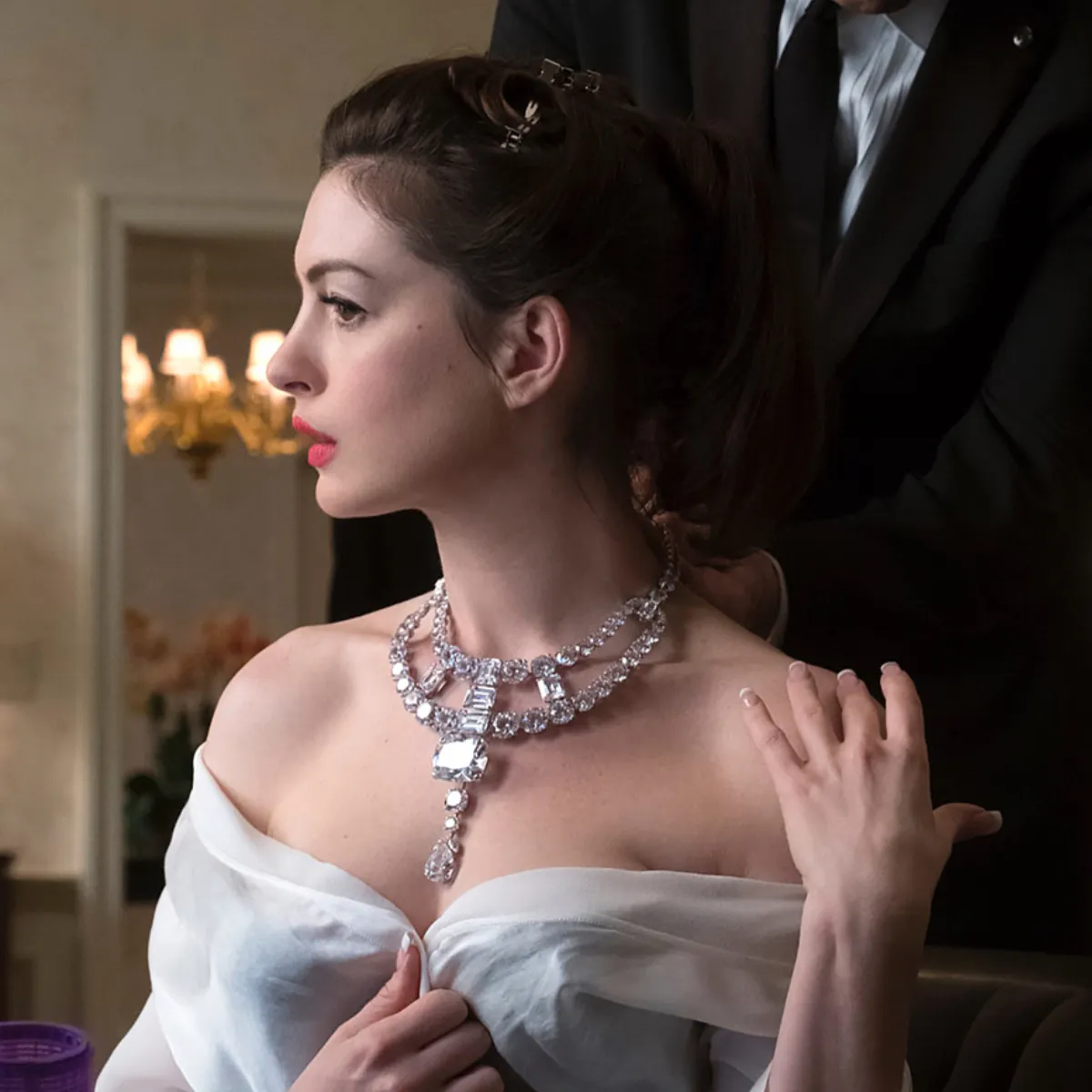
The necklace in question – a cascade of diamonds worth more than most people’s houses – had supposedly vanished from Victoria’s bedroom safe sometime between dinner and bedtime. According to her tearful testimony, she’d seen me “lurking suspiciously” near her room earlier that day.
I should have seen this coming. For three years, Victoria Blackwood had treated me like a virus that had infected her perfect family. I wasn’t old money. I wasn’t from the right background. I was Emily Chen, a middle school teacher from Oregon who’d had the audacity to fall in love with her precious son James.
From the moment we’d married, Victoria had made it clear that I was a temporary inconvenience she would eventually eliminate. I just never imagined she’d try to send me to prison to do it.
The Marriage That Never Had a Chance
Living in Blackwood Manor was like existing in a beautiful museum where you were never allowed to touch anything – including your own husband. The house itself was a monument to old money and older grudges, with rooms so grand they echoed when you walked through them and silence so thick you could choke on it.
Victoria ruled from her throne in the morning room, dispensing criticism like a queen distributing royal decrees. My cooking was “pedestrian.” My decorating was “tragic.” My clothes were “unfortunate.” No matter what I did, it was wrong, common, beneath the Blackwood standards.
But the real heartbreak wasn’t Victoria’s cruelty – it was James’s cowardice.
My husband, the man who’d promised to love and protect me, had become a ghost in his own house. He’d learned long ago that the path of least resistance was to become invisible when his mother launched her attacks. He would sit at the dinner table, mechanically cutting his food while Victoria eviscerated me, offering nothing more than the occasional weak suggestion that I “try harder next time.”
I’d married a man who’d never learned to stand up to his mother. Now I was paying the price for his weakness.
“James,” I pleaded as the officers prepared to lead me away, “you know I didn’t do this. Tell them. You know me.”
My husband looked at me with eyes I didn’t recognize – cold, distant, already writing me out of his story. “My mother doesn’t lie,” he said flatly. “And frankly, Emily, this explains a lot. Maybe you thought you could take a piece of our family history and disappear.”
The betrayal hit me like a physical blow. This wasn’t just about the necklace. This was James choosing his mother over his wife, choosing the easy path over the truth, choosing to destroy me rather than face his own cowardice.
“Take her away,” James told the officers, his voice carrying the authority of a man who’d finally found his spine – and used it to stab me in the back.
The officer behind me grabbed my arm. “Ma’am, we need to search your belongings and then take you downtown for questioning.”
I closed my eyes, feeling the cold metal of the handcuffs bite into my wrists. Three years of marriage, three years of trying to earn my place in this family, three years of swallowing my pride and accepting their abuse – and this was how it ended. With me in handcuffs while my husband and his mother watched with satisfaction.
That’s when I heard the small, quiet voice that would change everything.
“Excuse me, Mr. Policeman?”
The Child Who Couldn’t Lie
Noah Santos was six years old, with wide brown eyes and a worn superhero t-shirt that had seen too many wash cycles. He was the son of our housekeeper, Maria, and he often played quietly in the corners of the mansion while his mother worked. The Blackwood family treated him like furniture – useful when needed, invisible the rest of the time.
Now he stood in the doorway of the foyer, clutching a battered yellow dump truck to his chest. The toy looked absurdly out of place among the crystal chandeliers and marble statues, a splash of cheap plastic color in a world of expensive perfection.
“Son, you need to go find your mother,” one of the officers said gently. “The adults are talking.”
But Noah didn’t leave. Instead, he walked straight up to the officer holding my arm and tugged on the man’s uniform pants with the fearless directness that only children possess.
“Mr. Policeman,” Noah said, his voice ringing clear in the sudden silence, “why did Grandma put the shiny necklace inside my toy truck this morning and tell me to hide it in the lady’s bag?”
The words hit the room like a grenade.
Victoria’s sob caught in her throat, transforming into a strangled gasp. James went pale as parchment, his mouth falling open in shock.
“She said it was a secret game,” Noah continued, oblivious to the nuclear explosion he’d just triggered. “But I don’t like this game. The lady is crying, and games aren’t supposed to make people cry.”
With the clumsy coordination of a small child, Noah tipped his yellow dump truck. The diamonds cascaded onto the marble floor with a sound like falling stars, each stone catching the chandelier light and throwing it back in accusatory rainbows.
Victoria Blackwood’s priceless necklace lay glittering on the floor like evidence of a crime – which, I realized, was exactly what it was.
The Unraveling of a Perfect Plan
The silence that followed was deafening. The officer holding my arm loosened his grip, staring at the diamonds scattered across Victoria’s precious marble floors. The other officer’s hand moved instinctively toward his handcuffs – but this time, he was looking at Victoria.
“Ma’am,” the first officer said slowly, his tone shifting from professional courtesy to something much harder, “would you like to explain how your stolen necklace ended up in this child’s toy?”
Victoria’s face cycled through a series of expressions – shock, panic, calculation, and finally, desperate fury. “That’s impossible!” she shrieked. “Someone planted it there! Someone is trying to frame me!”
But her performance had lost its power. The truth was literally glittering on the floor between us, and even Victoria’s theatrical skills couldn’t explain it away.
“The boy is lying!” she continued, her voice rising to a hysterical pitch. “Children make up stories! You can’t believe a six-year-old over a respected member of this community!”
“I’m not lying,” Noah said quietly, his small voice cutting through Victoria’s hysteria like a knife. “Grandma gave me the pretty necklace this morning. She said to put it in my truck and then hide it in the lady’s bag when nobody was looking. She said it would be our secret.”
The officer turned to me, and I could see the moment when his entire understanding of the situation shifted. I wasn’t a criminal – I was a victim. And the real criminal was the woman who’d been sobbing about her stolen property just minutes ago.
“Mrs. Blackwood,” he said to Victoria, “I’m going to need you to remain silent while I read you your rights.”
“No!” Victoria screamed, her composure completely shattered. “This is absurd! I am Victoria Blackwood! My family has lived in this city for five generations! You cannot treat me like a common criminal!”
But the officer was already reaching for his handcuffs – the same ones that had been locked around my wrists just moments before.
The Husband Who Chose Wrong
As Victoria was handcuffed and led toward the police car, I turned to face James. My husband stood frozen in the center of the foyer, his face a mask of shock and dawning horror.
“Emily,” he said, his voice cracking, “I… I had no idea. You have to believe me. I thought…”
“You thought what?” I asked, my voice surprisingly calm. “You thought your wife was a thief? You thought I was capable of stealing from your family and lying to your face?”
James stepped toward me, his hands outstretched like a man reaching for salvation. “She’s my mother. She raised me. I trusted her judgment. I never thought she would…”
“She’s your mother,” I agreed, “and I was your wife. Was, James. Past tense.”
The words hung between us like a funeral shroud. James’s face crumpled as the full weight of what he’d done – what he’d chosen – finally hit him.
“You didn’t even ask for proof,” I continued, my voice growing stronger with each word. “You didn’t question her story. You didn’t defend me. The moment things got difficult, you threw me to the wolves to protect yourself.”
“I can fix this,” James pleaded, tears streaming down his face. “We can get past this. I’ll make it up to you. I’ll spend the rest of my life making it up to you.”
I looked at this man I’d once loved, this man who’d promised to stand by me through better or worse, and felt nothing but pity. “Some things can’t be fixed, James. Some betrayals are too deep to heal from.”
I walked past him toward the stairs, each step feeling like a small victory. “I’ll pack my things and be gone by morning. You can keep the house, the money, the family name – all the things that matter more to you than I ever did.”
The Freedom Found in Ashes
Six months later, I sat in a small coffee shop three states away, reading the local newspaper and marveling at how different my life had become. The article was buried on page six of the society section: “Blackwood Matriarch Sentenced to Community Service in False Reporting Case.”
Victoria had pleaded no contest to filing a false police report, evidence tampering, and attempting to frame an innocent person. The judge had been particularly harsh in his sentencing remarks, noting that her actions had “undermined the integrity of our justice system and demonstrated a callous disregard for human dignity.”
The community service was appropriate, the judge had said. Perhaps spending time helping people less fortunate than herself would teach Victoria something about the value of character over wealth.
Below Victoria’s story was a smaller item about James. Apparently, he was selling Blackwood Manor. The article quoted “sources close to the family” saying that the house felt too big and too quiet for one person, and that Mr. Blackwood was “seeking a fresh start.”
I’d heard through mutual friends that James had tried calling me dozens of times in the months after I left. He’d sent letters, emails, even flowers – all of them returned unopened. He’d apparently told anyone who would listen that he’d made a terrible mistake, that he wanted me back, that he would do anything to earn my forgiveness.
But forgiveness wasn’t mine to give. Some actions cross lines that can never be uncrossed. When James chose to believe his mother’s lies over his wife’s truth, when he watched me being handcuffed without lifting a finger to defend me, he’d revealed who he really was beneath all his promises and protestations of love.
He was a man who would sacrifice anyone – even the woman he’d vowed to cherish – to avoid confronting uncomfortable truths about his family.
The Boy Who Saved My Life
I’d kept in touch with Maria Santos, Noah’s mother, who had found a new job with a family that treated their staff with dignity and respect. Noah was thriving in first grade, and according to Maria, he’d become something of a local hero among their friends.
“He doesn’t understand why the grown-ups make such a big deal about what he did,” Maria had told me during our last phone call. “To him, he just told the truth when he saw someone being hurt.”
I’d set up a college fund for Noah – not because I felt I owed him anything, but because I wanted to make sure that a child with such a clear moral compass would have every opportunity to change the world. The boy who’d saved my life with a toy truck deserved a chance to save others with whatever gifts he chose to develop.
The irony wasn’t lost on me. Victoria Blackwood, with all her breeding and education and social connections, had tried to destroy an innocent person to protect her own interests. But a six-year-old boy with a dollar-store toy truck had possessed more integrity in his little finger than she had in her entire body.
The Life I Built from Ruins
My new apartment was small – a one-bedroom unit with thin walls and a view of the parking lot behind a strip mall. After Blackwood Manor, it felt like a palace. Every morning, I woke up in a bed that belonged to me, in a room where no one criticized my choices, in a space where I could breathe freely for the first time in years.
I’d gone back to teaching, finding a position at a public school in a working-class neighborhood where the students reminded me daily why I’d fallen in love with education in the first place. These kids didn’t care about my family name or my social connections. They cared about whether I believed in them, whether I saw their potential, whether I was willing to fight for their futures.
After three years of being told I wasn’t good enough for anything, it was healing to be needed again.
The Phone Call That Proved I Was Free
The call came on a Tuesday evening while I was grading papers and listening to jazz. I didn’t recognize the number, but something made me answer.
“Emily?” James’s voice was hoarse, desperate. “Thank God. I’ve been trying to reach you for months.”
“How did you get this number?”
“It doesn’t matter. Listen, I need you to come home. Mother is in the hospital. She’s… she’s dying. Pancreatic cancer. She wants to apologize to you. She wants to make things right.”
I set down my red pen and walked to the window. Outside, kids were playing in the courtyard of my apartment complex, their laughter drifting up through the evening air.
“I’m sorry she’s sick,” I said finally. “But I’m not coming.”
“Emily, please. She’s different now. The cancer has changed her. She realizes what she did was wrong. She wants your forgiveness.”
“Then she can want it,” I replied calmly. “Wanting forgiveness doesn’t entitle you to receive it.”
James’s voice broke. “Don’t be cruel. She’s dying.”
“I’m not being cruel, James. I’m protecting myself from people who’ve proven they’ll destroy me the moment it becomes convenient. Your mother tried to send me to prison. You helped her. Those aren’t mistakes – they’re character revelations.”
“We were wrong!” he sobbed. “I was wrong! I’ve lost everything – the house, my friends, my reputation. People cross the street to avoid me. I can’t live with what I did to you.”
“Then don’t live with it,” I said quietly. “Learn from it. Become a better person. But don’t expect me to absolve you of guilt that you’ve earned.”
The Truth About Happy Endings
I hung up the phone and returned to my stack of papers. Outside, the children’s laughter continued, a reminder that joy still existed in the world, that not every story ended in betrayal and broken promises.
The old Emily would have felt guilty about refusing to visit a dying woman. The old Emily would have convinced herself that forgiveness was her duty, that letting go of anger was the noble thing to do.
But the old Emily had died the moment those handcuffs clicked shut around her wrists. The woman who’d risen from those ashes was harder, wiser, and infinitely more protective of her own well-being.
I’d learned that forgiveness isn’t always healing. Sometimes it’s just another form of self-abuse, a way of convincing yourself that you can love people into treating you better. Some people don’t deserve forgiveness. Some betrayals are too deep, some cruelties too calculated, some damage too severe to ever truly heal.
Victoria Blackwood had spent three years trying to drive me away from her son through petty cruelties and daily humiliations. When those tactics failed, she’d escalated to framing me for theft – a crime that could have resulted in years in prison and a permanent criminal record. If not for a six-year-old boy’s inability to keep a secret, I might be writing this from a jail cell instead of a cozy apartment where I was free to be myself.
James had stood by and watched his mother destroy me, had actively participated in my destruction, had chosen her lies over my truth without a moment’s hesitation. That wasn’t a mistake born of confusion or fear – it was a choice that revealed exactly where his loyalties lay and exactly how much his marriage vows meant to him.
Three years later, I was teaching children who came from broken homes and difficult circumstances, showing them that education could be their path to something better. I was making a difference in the world, earning my own money, sleeping peacefully in a bed that belonged to me.
James was alone in his empty mansion, dealing with the consequences of his choices. Victoria was dying, facing the end of her life knowing that her final memorable act had been an attempt to destroy an innocent person.
And Noah Santos was in second grade, still playing with trucks and telling the truth because no one had taught him that lies were sometimes easier than honesty.
In the end, the diamond necklace trap had backfired completely. Victoria had intended to rid herself of an unwanted daughter-in-law. Instead, she’d freed that daughter-in-law from a toxic family and revealed her own moral bankruptcy to an entire community.
Sometimes the best revenge isn’t elaborate planning or careful schemes. Sometimes it’s simply refusing to let cruel people continue to hurt you, walking away from toxic situations, and building a life so much better than what you left behind that their absence becomes a gift rather than a loss.
The handcuffs that were supposed to imprison me had actually set me free. And I would never, ever let anyone lock them around my wrists again.
If you’ve ever found yourself trapped in a relationship where your worth was constantly questioned and your character was under attack, remember that sometimes the most loving thing you can do for yourself is walk away. Your peace of mind is worth more than any family approval, any social status, any amount of money. Choose yourself – because the people who truly love you would never ask you to choose between them and your own well-being.

Lila Hart is a dedicated Digital Archivist and Research Specialist with a keen eye for preserving and curating meaningful content. At TheArchivists, she specializes in organizing and managing digital archives, ensuring that valuable stories and historical moments are accessible for generations to come.
Lila earned her degree in History and Archival Studies from the University of Edinburgh, where she cultivated her passion for documenting the past and preserving cultural heritage. Her expertise lies in combining traditional archival techniques with modern digital tools, allowing her to create comprehensive and engaging collections that resonate with audiences worldwide.
At TheArchivists, Lila is known for her meticulous attention to detail and her ability to uncover hidden gems within extensive archives. Her work is praised for its depth, authenticity, and contribution to the preservation of knowledge in the digital age.
Driven by a commitment to preserving stories that matter, Lila is passionate about exploring the intersection of history and technology. Her goal is to ensure that every piece of content she handles reflects the richness of human experiences and remains a source of inspiration for years to come.