You don’t buy two acres outside a small town for excitement or drama. You buy it for the opposite—quiet mornings with coffee on the porch, dirt under your fingernails from honest work, and the kind of deep silence that makes you feel like yourself again after years of city noise grinding you down.
That’s exactly what I thought I was getting when I signed the papers on my property three years ago. A modest house with good bones, a garden plot out back waiting to be cultivated, and enough space to build the workshop I’d been dreaming about since I was sixteen. Room to breathe. Room to think. Room to build a life that felt authentically mine.
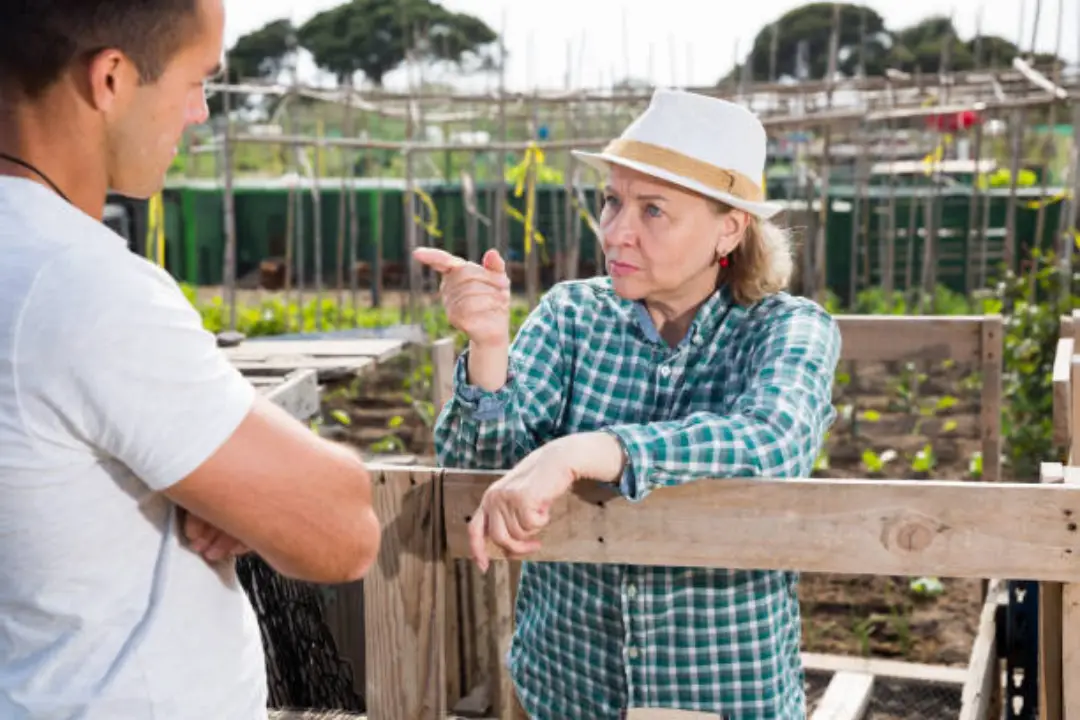
Then Jolene moved in next door carrying a homemade pie and wearing a smile that promised fresh starts and neighborly cooperation. Six months later, she was standing in my yard pointing at my garden fence and informing me with absolute certainty that I’d built it on her land—because she’d “done research” that apparently trumped actual legal documentation.
I laughed when she first said it. I genuinely thought she was confused and would be embarrassed when I showed her the property markers. I thought we’d have an awkward chuckle about the misunderstanding and move on with our lives.
One week later, I came home from work and found a brand-new fence slicing straight through the middle of my garden like she’d taken a ruler to my life and decided to redraw the boundaries according to her own private reality.
That’s when I learned something they don’t tell you about property disputes: sometimes the real boundary isn’t about land at all. It’s about how far someone is willing to go to take what isn’t theirs, and how much of yourself you’re willing to sacrifice to protect what is.
When I first bought the house, I didn’t start by unpacking boxes or painting walls. The very first thing I did was walk the land with the previous owner, Mr. Haskins—a man in his late seventies with white hair, a weathered cane, and hands that looked like they’d built more fences than I’d ever see in my lifetime.
He showed me the property markers with the kind of reverence other people reserve for family heirlooms, pointing out each metal stake driven into the ground at the corners and key points along the boundary lines.
“Those stakes right there are your gospel truth,” he told me, tapping one with his cane for emphasis. “If anyone ever gives you trouble about where your land starts and ends, you don’t argue with them. You don’t negotiate. You go straight to the county office and get the official records. Let the paperwork do the talking.”
At the time, his advice felt almost quaintly dramatic—like wisdom from a different era when people actually fought over land boundaries. This was the country, after all. People waved to each other from their porches. People minded their own business and respected their neighbors’ space. That’s exactly why I’d moved here in the first place, to escape the constant friction of city living.
For the first year, I was absolutely right about that assessment. The couple living on my left side, Marshall and Delphine, were friendly in that quiet, unobtrusive way that makes for perfect neighbors. They waved from their porch when they saw me. Marshall helped me pull a dead branch off my shed roof after a bad spring storm. Delphine dropped off zucchini bread one morning and told me she was glad to see “a young person” taking proper care of the place Mr. Haskins had loved.
I spent that first year making the property mine. I built a workshop behind the house using my own hands and whatever skills I’d picked up over years of weekend projects—nothing fancy or professional, but solid and functional. Two-by-fours, sweat equity, and what felt like a million trips to the hardware store for supplies I’d forgotten. I built furniture in there on weekends when I wasn’t working my regular job—coffee tables, chairs, bookshelves, pieces you could run your hand along and feel proud of the grain and the joints.
The garden came next, planted in the sunny spot behind the house where the soil looked promising. It wasn’t huge or ambitious, but it was enough to make me feel properly rooted in this place. Tomatoes, green beans, bell peppers, fresh herbs—things you could smell on your hands after an hour of working in the dirt, scents that told you this was real life happening right here.
Then Jolene moved into the house next door, and everything changed.
She arrived about six months after I’d settled in, pulling up in a loaded moving truck on a Saturday morning. The first time she walked over to introduce herself, she was holding a homemade pie like a peace offering and smiling in a way that seemed almost rehearsed, too practiced to be entirely natural.
“The city finally chewed me up and spit me out,” she said with a laugh that didn’t quite reach her eyes. “I’m completely done with noise and traffic and people everywhere. I just want peace and quiet and a simple life.”
I thanked her for the pie and figured she’d be the kind of neighbor you wave to occasionally and maybe chat about the weather with a few times a year. Easy. Uncomplicated. Exactly what I wanted.
It didn’t stay that way for long.
The deer started hitting my garden that summer like it was an all-you-can-eat buffet specifically designed for their enjoyment. One morning I walked outside to check on things and discovered neat little nibbled stems where my bean plants used to be. Another day, my prized tomato plant looked like something had taken systematic bites out of every leaf within reach.
So I did what any reasonable person would do—I built a small fence around the garden. Nothing dramatic or aggressive, just basic wooden posts with wire mesh strung between them and a simple gate for access. Standard deer deterrent, the kind you see in gardens throughout rural areas.
The same afternoon I finished installing it, Jolene appeared at the edge of my yard like she’d been watching from her window and waiting for this exact moment.
“What are you doing?” she asked, her tone already carrying an edge I hadn’t heard before.
“Keeping the deer out of my vegetables,” I said, wiping sweat off my forehead with the back of my hand.
Her gaze moved from the fence to the garden beds, then deliberately over to the property markers visible in the distance. Her expression tightened into something hard and unpleasant.
“You do realize you’re building that fence on my property, right?” she said it like she was stating an obvious fact I’d somehow missed.
I actually laughed out loud—because my brain simply refused to process the alternative, refused to accept that she was serious.
But she didn’t laugh back. She just stood there staring at me with absolute conviction.
I pointed toward the nearest property marker. “The property line is over there. I’m well within my boundaries.”
She walked over to the marker, examined it closely, then shook her head like she was personally offended by its existence. “Those markers are wrong,” she said flatly.
“How could they possibly be wrong?”
“I did extensive research,” she replied with the kind of dangerous confidence that makes ignorance feel threatening. “The land records around here are completely messed up. My grandmother owned property in this area decades ago. People in town remember her. This land has history.”
I tried to keep my tone calm and reasonable. “That’s not how property ownership works, Jolene. It’s based on legal deeds and official transfers, not on memories or family stories.”
Her smile turned sharp and cold. “You’re being deliberately difficult about this.”
Then she turned and walked away like she’d delivered some kind of official warning I was supposed to heed.
I told myself it was just a weird moment, an awkward misunderstanding. She’d settle down once she looked at the actual documentation. New neighbors always come in a little hot sometimes, trying to establish themselves or prove something. It would blow over.
Seven days later, I came home from my regular job and found a fence cutting straight through the middle of my garden.
Not a small fence. Not something ambiguous or temporary. A real fence with posts driven deep into the ground and panels set firmly like someone was claiming sovereign territory in a border dispute.
My tomato plants—three months of careful cultivation—were suddenly on the other side of this fence, completely inaccessible to me on what was legally my own land.
For a few seconds, my entire body went cold and my mind went completely blank.
Then I saw Jolene standing on her porch with her arms crossed, watching me like this was a performance she’d staged specifically for my reaction.
I walked up to the fence and stared through the wire mesh at my own vegetables, now prisoners in someone else’s delusion.
“What the hell is this?” I called out to her.
She didn’t flinch or show any sign of embarrassment. “I’m protecting my property from trespassers.”
“You put a fence through the middle of my garden.”
“You shouldn’t have been gardening on my land in the first place,” she said with infuriating calm.
I drove to the county office first thing the next morning, hands still shaking with anger. The clerk pulled up the GIS mapping system, the recorded deed, the official boundary documentation. It took maybe five minutes to confirm what I already knew with absolute certainty.
The property line was exactly where Mr. Haskins had shown me. Exactly where those metal stakes indicated. Exactly where it had always been according to every legal document on file.
Jolene’s claim had no basis in reality whatsoever.
I printed out copies of everything—the deed, the survey map, the GIS coordinates—and went directly to her door.
She opened it halfway and looked at the stack of official paperwork like I was trying to hand her junk mail.
“The county records confirm it,” I said, holding the documents out to her. “The property line is where I said it was. You need to take your fence down immediately.”
Her eyes narrowed to slits. “The county office is corrupt.”
I blinked. “Corrupt?”
“They’re in the pocket of developers and land speculators,” she said, her voice rising. “They steal land from real families who’ve been here for generations. Everyone knows this if they’re paying attention.”
I stared at her and realized right then that facts weren’t part of this conversation. Jolene didn’t want truth or accuracy. She wanted ownership—of land, of narrative, of some kind of victory that had nothing to do with legal reality.
She flat-out refused to remove the fence.
And then things got significantly worse.
She started treating my land like it was hers. Lawn chairs appeared on my side of her illegal fence. Her dog ran freely through my yard like it had always belonged there. She even planted vegetables in the space where my garden used to be, kneeling in the dirt with her back to me like she’d been cultivating that soil for years.
When I confronted her about any of it, she accused me of harassment and threatened to call the police.
Then she started telling her version of events around town, and that’s when I discovered how effective a good victim narrative can be in a small community.
At first, I didn’t fully understand what was happening. I’d walk into the local diner and feel the atmosphere shift when I entered. I’d go to the hardware store and hear conversations stop mid-sentence. People looked at me with expressions that suggested they’d already made up their minds about something.
Then I heard it directly. At the gas station, a guy I vaguely recognized said casually, “Heard you’re trying to steal that poor lady’s family land.”
I stopped dead in my tracks. “What are you talking about?”
“She’s been telling people,” he said with a shrug, like gossip was just weather you couldn’t control. “Says you’re taking land that belonged to her grandmother.”
I realized then that Jolene had a particular talent: she could cry on command. Not loud, dramatic sobs—but quiet, trembling tears that made people instinctively want to protect her and believe her story.
She called the police twice, claiming I was trespassing on her property.
Both times, the responding officers checked the county records and told her explicitly that she had no legal claim to my land. Both times, she cried about the system being rigged against ordinary people.
After the second call, one of the officers pulled me aside with a sympathetic expression.
“Look,” he said quietly, “we can’t arrest someone for being wrong about property boundaries. If you want this to actually stop, you’re going to need to pursue legal action through the courts.”
Legal action meant money I didn’t really have to spare. Time I couldn’t afford to waste. Stress that would consume months of my life.
And deep in my gut, I knew with certainty that Jolene wouldn’t respect a court order any more than she respected an official deed or a county survey.
So I decided to fight back in a way she couldn’t ignore or manipulate.
I waited until she left for work one morning and methodically took down her illegal fence. Every single post. Every panel. Quietly, carefully, systematically—treating her property with more respect than she’d shown mine.
I stacked all the materials neatly on her actual property and left a polite note explaining that she’d built on my land without permission and I was simply returning her supplies to where they legally belonged.
She came home that evening and started screaming like I’d burned down her house.
“You destroyed my property! I’m calling the police right now!”
“I didn’t destroy anything,” I said calmly. “I carefully moved it off my land and placed it on yours.”
She rebuilt the fence the very next day, posts driven even deeper this time.
I took it down again that night.
She rebuilt it again.
I removed it again.
By the fourth cycle of this absurd routine, the air between our houses felt absolutely electric with tension, like the whole neighborhood was collectively holding its breath waiting to see what would happen next.
She finally stopped rebuilding after that fourth time.
But she definitely didn’t stop fighting.
Instead, she just shifted her tactics to something more subtle and invasive.
For months, she’d been using a shortcut through the back corner of my property to reach the main road—a route that saved her maybe five minutes compared to using her own driveway. I’d ignored it before because it seemed harmless, not worth making an issue over.
Now it mattered. Now everything mattered.
I blocked the shortcut with posts and rope, clearly marking it as private property.
The next morning, I watched from my window as her car approached the blocked path, hesitated like she couldn’t believe what she was seeing, then reversed and took the long way around her own property.
By noon, half the town had apparently heard that I was being unreasonably petty to a poor woman who just wanted to get to work.
The morning after that, I walked outside to find her car parked at a strategic angle along the edge of my driveway—not quite blocking it completely, but positioned precisely to force me to maneuver carefully around it.
It was surgical in its pettiness. Designed to aggravate me without giving me an obvious reason to call anyone for help.
So I started documenting everything.
Photos with timestamps. Every morning, every evening. Three days straight of her car in that exact position.
I didn’t confront her about it. I’d learned that paper trails hit harder than words ever could.
Then I called the county office and asked who they’d recommend for an official boundary survey—the kind that would hold up in any legal proceeding.
“Harvey Kent,” the clerk said without hesitation. “He’s expensive but completely reliable.”
Harvey charged three hundred dollars for the survey. It hurt my budget, but I paid it gladly. Because I was exhausted from living in a reality where someone’s “research” and tears could apparently outweigh official government records.
Harvey showed up two days later with professional surveying equipment and started taking precise measurements.
Jolene stormed over within twenty minutes, demanding to know what was happening on “her property.”
“Official boundary survey,” Harvey said calmly, not even looking up from his equipment. “Establishing the legal property line.”
She glared at his tools like they’d personally betrayed her. “Your equipment is obviously wrong. Those measurements can’t be accurate.”
Harvey finally looked at her directly. “Ma’am, property ownership in this country is based on recorded deeds and legal surveys, not on personal beliefs.”
“My grandmother—”
“Recorded deeds,” he repeated, his voice firmer. “That’s what the law recognizes.”
She argued with him until he politely informed her that she was interfering with official county business.
She retreated to her house but watched from her kitchen window like a guard monitoring an invasion.
Two days later at the hardware store, the owner rang up my supplies and said casually, “Heard you’re the guy trying to steal that poor woman’s family land.”
My stomach dropped. I realized in that moment that Jolene wasn’t just fighting me with fences and trespassing. She was fighting me with narrative, with gossip, with the kind of small-town telephone game that could destroy someone’s reputation.
So I started carrying my deed and Harvey’s official survey results in a folder in my truck. Whenever someone mentioned the “dispute,” I calmly pulled out the documentation and showed them the actual facts. At the grocery store. At the gas station. At the diner.
I watched people’s faces change when official paperwork replaced emotional storytelling. Some apologized immediately. Some looked genuinely embarrassed. Some got annoyed, like I was ruining a dramatic story they’d already invested in believing.
Then a letter arrived from the town council. Jolene had filed a formal complaint claiming that my fence removal and shortcut blocking constituted harassment.
They scheduled mediation for a Tuesday evening at town hall.
I showed up carrying a folder thick enough to stop a bullet—every document, every photo, every piece of evidence I’d collected.
Jolene showed up with tears already glistening in her eyes, ready to perform.
The mediator reviewed everything: the deed, the survey, the photos of Jolene’s fence cutting through my garden, the documentation of her repeated trespassing. After maybe ten minutes, he looked at Jolene and told her plainly that she had no legal claim to my property.
I felt relief wash over me—until he suggested what he called a “neighborly compromise.”
Maybe I could let Jolene use the shortcut a few days per week as a goodwill gesture. Maybe I could allow her a small garden plot to show I wasn’t vindictive.
I stared at him in disbelief. “No. Absolutely not.”
He frowned like I’d disappointed him. “Sometimes being technically right isn’t as important as being neighborly and maintaining community harmony.”
“I tried being neighborly,” I said, my voice tight with controlled anger. “She responded by cutting my garden in half with an illegal fence and telling the entire town I was stealing her land.”
The mediator ended the session with a weak speech about “being considerate” that made my jaw clench hard enough to hurt.
That evening, Marshall and Delphine appeared at my door carrying a casserole dish.
“We’ve been setting the record straight everywhere we go,” Delphine said firmly.
Marshall nodded with determination. “Telling people the actual truth. Everywhere.”
Two days later, Jolene dumped a massive pile of landscaping rocks near the property line by my driveway—positioned perfectly to make backing out more difficult while technically staying on her side of the boundary.
She stood in her yard watching me discover them, waiting for my reaction.
“Just improving my property,” she called out with false sweetness.
I didn’t respond. I just took photos and added them to my growing documentation file.
Then I did something I’d been resisting: I consulted with a lawyer.
Scarlet Meadows had an office above the pharmacy in town. She reviewed all my documents, asked sharp questions, then laid out my options—restraining order, lawsuit for damages, formal harassment complaint.
Then she laid out the costs. Three to five thousand dollars. Months tied up in court proceedings. No guarantee Jolene would actually comply with any court orders.
I walked out of her office angry—not because I didn’t have a strong case, but because the legal system wasn’t designed for quick resolution or affordable peace.
That’s when the spring festival season arrived, and Marshall convinced me to rent a booth to sell some of the furniture I’d been building. I set up my display—tables and chairs arranged on a tarp under a simple canopy.
Two booths down from me, Jolene sold baked goods with handwritten price cards.
For the first hour, we pretended the other didn’t exist.
Then she started performing again. Not yelling at me directly—that would’ve been too obvious. Instead, she talked just loud enough for browsing customers to overhear.
“It’s so hard when people try to steal your family’s land…”
“Some folks just don’t respect history and legacy…”
She used words like “family” and “heritage” as if they were legal documents.
People started asking me questions. A woman buying two chairs asked if I was “the guy in that property dispute.”
I smiled tightly and pulled out my now-familiar folder. “I’m the guy who legally owns his land,” I said calmly. “Here’s the deed. Here’s the professional survey.”
She read the documents and her expression completely changed.
As the day progressed, more people asked. Some recognized me from around town. Some had only heard Jolene’s emotionally compelling version. I stopped trying to sell furniture and just started telling the truth backed up with paperwork.
By mid-afternoon, Jolene’s booth had noticeably fewer customers—like her story was losing oxygen in the face of documentary evidence.
That week, I made a decision: I was done playing defense.
I called a professional fencing company and got a quote for a complete privacy fence along the entire property line—six feet tall, built exactly on Harvey’s surveyed markers.
The cost was six thousand dollars. It made me physically wince when I wrote the check.
Then I thought about my destroyed garden, my invaded driveway, my stolen peace of mind, and I signed it anyway.
The installation crew arrived on a Monday morning. Posts went into concrete. Panels went up with efficient speed. The fence rose like a physical verdict, a permanent boundary she couldn’t manipulate or ignore.
Jolene came outside and watched from her porch with her arms crossed. The foreman showed her the official survey documentation proving they were building precisely on the legal property line.
She didn’t argue this time. But she didn’t go inside either. She just stood there watching each section go up like she was witnessing something die.
On the third day of installation, I glanced over and saw her standing in her kitchen window. She looked exhausted—dark circles under her eyes, shoulders slumped in a way I hadn’t seen before.
Later that afternoon, while I was replanting my reclaimed garden, I heard her voice carrying over the new fence. She was on her phone, arguing about bills and payment plans and an ex-husband who’d “taken everything” and left her drowning in debt.
I stood there holding a tomato seedling and felt something complicated twist in my chest. It didn’t excuse what she’d done to me—not even remotely. But it explained the desperate hunger behind her obsession.
Some people don’t try to steal what you have because they actually want it. They steal because they can’t stand being the person who lost everything, and taking something from someone else feels like winning.
A week later, a certified letter arrived for Jolene. I watched the mail carrier hand it to her, watched her sign for it, watched her face go pale when she looked at the envelope.
Over the next several days, her yard started to slip. Weeds grew unchecked. The lawn went uncut. Her car stayed in the driveway more than usual, like she’d stopped going to work regularly.
Most noticeably, she stopped watching me. No more porch monitoring. No more window surveillance. No new games or provocations.
Whatever that certified letter contained, it was bigger than our war.
For the first time in months, I felt my shoulders actually drop, felt tension I’d been carrying start to release.
But I’d learned that peace doesn’t arrive like a dramatic sunrise. It creeps back cautiously, testing whether it’s actually safe to stay.
Then one Thursday evening, someone knocked on my door. I opened it and found Jolene standing on my porch.
No anger. No performance. No manipulative tears. Just visible defeat.
“Can we talk?” she asked quietly.
I stepped outside and closed the door behind me, maintaining that boundary.
She didn’t apologize. She didn’t admit she’d been wrong. Instead, she said carefully, like she was negotiating with her own pride, “Maybe we should just agree to disagree about the property history.”
I almost laughed—because even now, even after everything, she couldn’t bring herself to say the simple words: “I was wrong.”
But she looked like someone barely holding up a crumbling wall.
“I’m tired,” she added, her voice thin. “I have other things I need to deal with right now.”
I studied her face. Whatever those “other things” were, they were clearly serious. But my sympathy for her situation didn’t rebuild my garden or erase my name from months of malicious gossip.
“I’ll agree to one thing,” I said firmly. “You stay completely off my property. You stop telling people I stole your land. You leave me alone. That’s the deal.”
She nodded quickly, almost desperately. “That’s fair. That’s completely fair.”
We stood there for a moment, both of us aware that the past was now sealed, unchangeable.
Then she walked back to her house, and I watched her go.
It wasn’t forgiveness. It wasn’t reconciliation or healing. It was a ceasefire—fragile and conditional, but real.
The ceasefire held for exactly two weeks.
Then the “accidents” started—small, deniable incidents that kept my blood pressure elevated. My trash bin knocked over twice. My mailbox left hanging open. My workshop padlock feeling sticky, like someone had tried it and failed.
So I installed security cameras—one facing the driveway, one covering the back fence. I didn’t announce it or post warning signs. I just let technology become my silent witness.
The second night after installation, a motion alert pinged my phone at 2:13 AM. On the screen: a figure in a hoodie at my fence line. Jolene, working at the post I’d repaired, holding what looked like wire cutters.
Then Marshall’s porch light flicked on next door. Jolene froze, then retreated when Marshall called out asking what she was doing.
I had footage now. Undeniable evidence.
The next morning, I went back to Scarlet Meadows with the video. She watched it without blinking, then leaned back in her chair.
“That changes everything,” she said. “You need a formal cease-and-desist letter with this evidence attached. If she escalates after that, the court sees it’s not a dispute—it’s harassment.”
The certified letter went to Jolene two days later.
The irony wasn’t lost on me. A certified letter had broken her confidence before. Now one was heading back her way, this time with legal teeth.
When she received it, her shoulders slumped visibly. She didn’t leave her house for three days.
Then unfamiliar vehicles started appearing—official-looking visits that felt ominous even from a distance. I heard yelling from inside her house. Saw a notice posted on her door—the kind nobody wants, the distinctive color of official foreclosure or eviction documents.
Marshall confirmed it quietly one evening. “That’s it. Foreclosure filing. Something serious.”
I didn’t feel victorious. I felt complicated. Because Jolene had tried to destroy my peace and steal my land, but watching someone’s entire life collapse in real time didn’t feel like winning.
The town began correcting itself slowly. The evidence was everywhere now—the survey, the fence, Marshall and Delphine telling the truth consistently. The hardware store owner apologized for believing her without checking facts. The dirty looks stopped. The whispers moved to someone else’s drama.
Then Jolene came to my door one final time on a gray evening that smelled like rain.
She looked like she’d aged five years. No makeup. Hair pulled back carelessly. Eyes rimmed red from crying or exhaustion or both.
“I’m selling,” she said simply. “The house. I have to.”
Relief washed through me, though I kept my expression neutral. “Okay.”
She swallowed hard. “I shouldn’t have—” The words stuck in her throat. A real apology hovered right there, close enough to touch, but she couldn’t quite reach it.
Instead, she said, “I just thought if I could prove something, anything, then maybe…” Her voice cracked.
I watched her, and suddenly her obsession made terrible sense. She’d been trying to win a battle—any battle—because losing everywhere else in her life had become unbearable.
Still, my garden hadn’t deserved to be collateral damage in her personal collapse.
“My land was never yours,” I said quietly but firmly. “And what you did to me wasn’t okay.”
She nodded, tears threatening but not quite falling. “I know.”
She didn’t ask for forgiveness. She didn’t ask for help. She just said, “I’m sorry you got caught in it.”
It wasn’t a perfect apology. But it was probably the closest I’d ever get.
“If you’re selling, here’s what I need,” I said. “You stop talking about me. You don’t tell the new neighbors some story about disputed land. You leave this behind completely.”
“I will,” she promised quickly. “I will.”
The “For Sale” sign went up two weeks later, looking almost surreal planted in her yard like a headstone for our war.
The day a “Sold” sticker appeared, Marshall walked over and clapped me on the shoulder. “Looks like you outlasted her.”
I looked at the sign. “I didn’t want to have to.”
The moving truck arrived a month later. Jolene loaded boxes with hired help, never once looking toward my house. When the truck finally pulled away, the road seemed quieter—not because she’d been loud, but because the tension she’d brought was leaving with her.
That evening, I walked the full length of my fence line slowly, running my hand over the wood I’d paid for, checking each post, looking at the garden growing strong again on my side of the boundary.
I realized something: I’d bought this place for peace. But peace wasn’t something that came automatically with the property deed. Peace was something you had to defend—sometimes with paperwork, sometimes with stubbornness, sometimes with a six-thousand-dollar fence that marked permanent boundaries.
I still keep copies of my survey in a fireproof safe. I still back up photos to the cloud. I still watch for red flags in ways I never did before, because once you learn how quickly “quiet” can become “war,” you don’t unlearn that lesson.
But the garden is mine again. The workshop is mine. The sky over my two acres feels wide and genuinely calm.
And for the first time in a very long time, I can stand on my porch in the evening and hear nothing but wind moving through the trees—no shouting, no rumors, no invisible borders drawn by someone else’s desperation.
Just the sound of a life that’s finally, genuinely mine again.
Not perfect. Not innocent or unchanged by what happened.
But mine. Completely, legally, peacefully mine.

Ethan Blake is a skilled Creative Content Specialist with a talent for crafting engaging and thought-provoking narratives. With a strong background in storytelling and digital content creation, Ethan brings a unique perspective to his role at TheArchivists, where he curates and produces captivating content for a global audience.
Ethan holds a degree in Communications from Zurich University, where he developed his expertise in storytelling, media strategy, and audience engagement. Known for his ability to blend creativity with analytical precision, he excels at creating content that not only entertains but also connects deeply with readers.
At TheArchivists, Ethan specializes in uncovering compelling stories that reflect a wide range of human experiences. His work is celebrated for its authenticity, creativity, and ability to spark meaningful conversations, earning him recognition among peers and readers alike.
Passionate about the art of storytelling, Ethan enjoys exploring themes of culture, history, and personal growth, aiming to inspire and inform with every piece he creates. Dedicated to making a lasting impact, Ethan continues to push boundaries in the ever-evolving world of digital content.