Sister Emptied My “Abandoned” Storage Units — Then 11 Business Owners Showed Up For Their Inventory
The notification sound cut through my Saturday morning coffee like a fire alarm. I glanced at my phone and saw the family group chat exploding with activity—seventeen messages in under two minutes, which was unusual even for my family’s standards of drama.
What I saw made my stomach drop before my brain could fully process it.
My sister Vanessa had posted a photo. In it, our mother stood beside a gleaming silver Lexus SUV, keys dangling from her fingers, both of them wearing smiles so wide you’d think they’d won the lottery. The car had a massive red bow on the hood like something out of a commercial. They looked triumphant. Celebratory. Proud.
The caption read: “Finally cleaned up your storage situation. You’re welcome. “
I set my coffee down carefully, my hand not quite steady.
The messages started rolling in before I could even formulate a response. Aunt Linda: “About time someone dealt with that mess!” Uncle Marcus: Three heart emojis and a thumbs up. My cousin Jade: “So proud of you Vanessa! This must have been SO much work.” My brother Tyler: “Mom deserves this. Good looking out.”
Vanessa was eating it up, responding with a string of modest deflections that somehow managed to make her sound even more heroic. “It wasn’t easy, but someone had to do it.” “Just trying to help the family.” “Couldn’t let it sit there forever.”
Then came the proof.
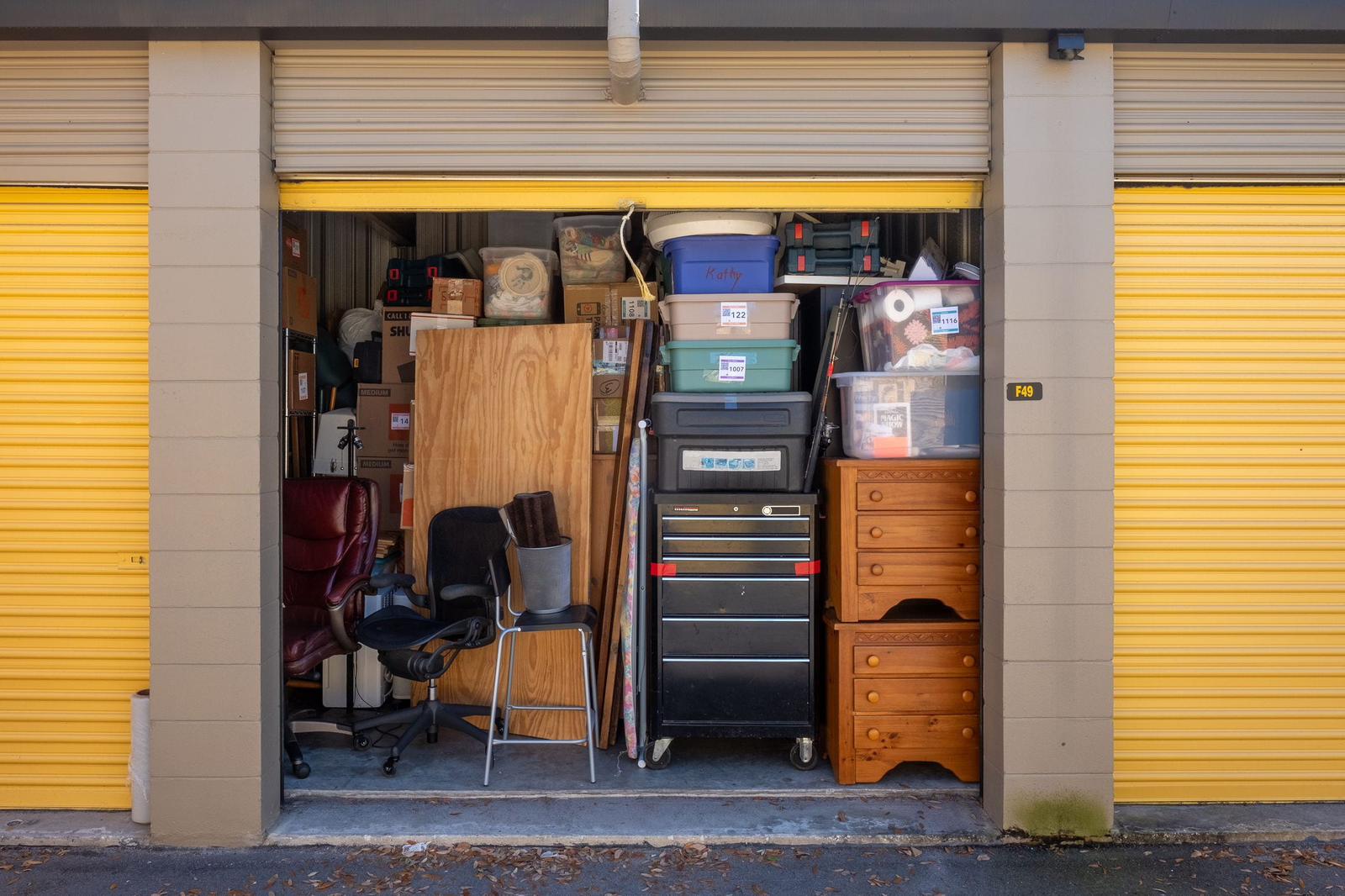
She posted a series of photos that made my coffee threaten to come back up. My three climate-controlled storage units—the ones I’d been renting for six years, the ones with industrial-grade locks and 24/7 security, the ones that formed the entire backbone of my business—sitting completely empty. Concrete floors swept clean. Shelving units bare. Not a single box, crate, or piece of inventory in sight.
Next came screenshots. Deposit slips showing tens of thousands of dollars transferred into accounts. A neat spreadsheet breaking down what she’d sold, what she’d “donated,” what she’d kept “for her time and effort.” The numbers were staggering. And at the bottom, highlighted in yellow like an achievement unlock, was the line: “Net profit after car purchase: $23,400.”
She’d turned my storage units into a shopping spree.
The family chat continued its chorus of approval. “You must be so relieved.” “What a blessing to have a sister who cares.” “Finally getting your life together.”
I read every message twice, feeling that old, familiar sensation creeping up my spine—the one I’d been living with since I was sixteen and decided to build something they didn’t understand. That jaw-tightening, teeth-grinding awareness that comes from watching people rewrite reality in real time, turning your accomplishments into problems and your success into something that needed “fixing.”
For six years, they’d called my work a hobby. Called my business “playing warehouse.” Dismissed my income as “lucky finds” or “that internet thing.” When I’d tried to explain what I actually did, I got glazed-over stares and subject changes. At family dinners, they’d ask when I was going to get a “real job.” At holidays, they’d exchange meaningful looks when I talked about my clients.
My mother had once introduced me to her book club friends as “still figuring things out,” even though I’d just cleared six figures that year.
So I didn’t argue in the family chat. Didn’t type out the furious paragraph forming in my head. Didn’t try to explain—again—that those “abandoned” units weren’t abandoned at all.
Instead, I opened my inventory management app with fingers that had started to shake.
The dashboard loaded. Clean. Organized. Professionally maintained because that’s what my clients paid for.
347 items logged. 11 active clients. Total contracted inventory value: $340,000.
Every single piece had been stored in the units Vanessa had just “cleaned up.”
My business isn’t clutter. It isn’t a hobby. It isn’t me “playing warehouse” or refusing to grow up or whatever narrative my family had constructed to make sense of something they’d never bothered to understand.
I run a white-glove storage and logistics service for boutique retailers, specialty importers, and small business owners who need more than a standard storage facility can offer. They need climate control for sensitive materials. They need detailed inventory tracking. They need someone who treats their products like the investments they are. They need someone they can trust.
I’d built this business from nothing—started seven years ago when a friend who ran a small vintage clothing boutique needed somewhere to store her off-season inventory and didn’t trust the warehouse options available. I had space. I had organization skills. I had a brain that actually enjoyed the puzzle of logistics and inventory management.
One client became two. Two became five. Within three years, I’d turned it into a full-time income. Within five, I was clearing more than most of my family members with their “real jobs.”
But because I didn’t wear a suit, didn’t have an office, didn’t fit their mental image of “successful,” they’d decided I was failing. And failures, apparently, needed intervention.
I pulled up my client roster, my heart hammering against my ribs.
Catherine Chen – Artisan ceramics and custom pottery. 42 pieces. Total value: $31,000.
Marcus & Lila Okoye – Imported African textiles and home goods. 67 pieces. Total value: $28,500.
Jonathan Reeves – Vintage audio equipment and collector electronics. 89 pieces. Total value: $52,000.
The list went on. Each name represented a small business owner who’d trusted me. Who’d signed contracts with me. Who’d paid me monthly fees to ensure their inventory was safe, tracked, and accessible.
Inventory that was now gone.
My phone rang. I recognized the number immediately—my legal counsel, Rebecca Martinez, who I kept on retainer specifically for business protection issues.
“I saw your message,” she said without preamble when I answered. “Tell me everything.”
I did. Voice surprisingly steady, I walked her through the family chat screenshots, the photos of empty units, Vanessa’s gleeful accounting of what she’d sold and where the money had gone.
Rebecca was silent for a long moment after I finished.
“Do you have your original rental agreements?” she asked.
“Yes. All in my name. Paid through automatic withdrawal from my business account.”
“Security camera footage?”
“The facility has cameras. I’ve already contacted management.”
“Client contracts documenting the inventory?”
“Every single piece itemized with photos, descriptions, and declared values.”
Another pause. Then: “Okay. This is bad, but it’s also very clear-cut. Your sister has committed theft on a massive scale, and depending on how she accessed the units, possibly breaking and entering. The facility may have liability issues too. We need to move fast.”
“I know.”
“How do you want to handle the family situation?”
I looked at my phone, where the group chat was still going, now discussing what color interior Mom should have gotten in her new car.
“I don’t,” I said. “Not yet. First I handle my clients. Then I handle the legal situation. Then—and only then—I deal with my family.”
“Smart,” Rebecca agreed. “I’ll start drafting everything we need. In the meantime, you need to contact your insurance broker and notify every single client immediately. Don’t wait. Don’t sugarcoat it. Just facts.”
The insurance call was brutal. My broker, Tom, had warned me when I first took out the policy that family theft was one of the most complicated claims to process. “Juries sympathize,” he’d said. “They think family drama should be worked out privately.”
“This isn’t drama,” I told him now. “This is $340,000 in stolen inventory belonging to eleven different business owners who trusted me.”
“I understand,” Tom said carefully. “But the insurance company is going to ask why your sister had access to your units.”
“She didn’t,” I said flatly. “She either stole my keys or convinced the facility management she had authorization. Either way, that’s not me granting access. That’s theft.”
“Okay. Okay. I’ll start the claim process. But you need to be prepared for this to get ugly.”
It was already ugly. It was about to get worse.
I spent Saturday evening making eleven phone calls I never wanted to make. Each conversation followed the same terrible script.
“Hi, this is Jordan. I need to inform you of a serious situation regarding your inventory… No, nothing environmental. It’s been stolen… Yes, all of it… My sister accessed the units without authorization and sold everything… I’ve already contacted law enforcement and my attorney… Yes, I have insurance, but… I understand you’re upset. You have every right to be…”
Catherine Chen cried. Actually cried on the phone, because those 42 ceramic pieces represented eight months of work and her entire spring collection that was supposed to launch in two weeks.
Marcus Okoye went silent for so long I thought the call had dropped. When he finally spoke, his voice was hollow. “We trusted you,” he said. “We trusted you with our business.”
“I know,” I whispered. “I know, and I’m so sorry.”
“Sorry doesn’t get our inventory back.”
“No. It doesn’t. But I’m going to make this right. I have insurance. I have legal counsel. And I’m pursuing criminal charges against the person responsible.”
“Your sister.”
“Yes.”
Another long pause. “What do you need from us?”
That question—asked by every single client despite their anger, despite their devastation—nearly broke me.
“I need you to meet me tomorrow morning at Unit A,” I said. “Ten AM. Bring any documentation you have. I’m having this documented officially by law enforcement. I need witnesses. I need your statements. And I need you to understand that I’m treating this exactly like what it is: a crime.”
By the time I finished the last call, it was nearly midnight. My voice was raw. My hands were shaking. The family group chat had finally gone quiet, satisfied with their good deed for the day.
I hadn’t responded to a single message.
Sunday morning arrived cold and gray, the kind of weather that matched the heaviness in my chest. I drove to Unit A—the largest of my three facilities—at 9:30 AM, wanting to be there before anyone else arrived.
Rebecca was already in the parking lot, leaning against her sensible sedan with a leather portfolio under one arm. She straightened when she saw me, her expression carefully neutral in that way lawyers have perfected.
“How are you holding up?” she asked.
“I’m not,” I admitted. “But I’m functional.”
“Functional works. The officers should be here any minute. I’ve briefed them on the situation. They’ll document everything, take statements, and add it all to the official report.”
Right on schedule, a patrol car pulled into the lot. Two officers emerged—one older with gray temples and tired eyes, one younger who looked fresh out of the academy. They introduced themselves as Officers Delgado and Kim.
“You’re the owner?” Delgado asked, shaking my hand.
“Yes. Jordan Matthews. These are my units.”
He glanced at the building, then back at me. “And you’re saying a family member emptied all three without permission?”
“Yes. My sister. I have the rental agreements in my name, payment records, and security protocols showing she had no authorized access.”
“But she’s family,” Kim said, not unkindly. Just confused.
“That doesn’t give her the right to steal from me or my clients,” I replied evenly.
Delgado nodded slowly. “No. No, it doesn’t. Let’s take a look.”
I unlocked Unit A and rolled up the metal door. The space yawned open—2,000 square feet of climate-controlled emptiness. The shelving units I’d installed still lined the walls, bare now. The inventory tags I’d used for organization littered the floor, torn off and discarded.
Rebecca pulled out her phone and started taking photos. The officers walked through slowly, their boots echoing on the concrete.
“This was full?” Kim asked.
“Completely. Wall to wall. Organized by client, itemized, tracked digitally.”
“What kind of stuff?”
“Everything. Ceramics, textiles, vintage electronics, imported goods, custom furniture, rare books, collectibles. Eleven different clients using me for secure storage.”
Delgado whistled low. “And your sister just… sold it all?”
“According to her own documentation, yes. She posted about it in our family group chat.” I pulled up the screenshots on my phone, showed them Vanessa’s triumphant messages and her detailed accounting of the sales.
The officers exchanged a look I couldn’t quite read.
“That’s…” Kim started.
“Bold,” Delgado finished. “That’s incredibly bold.”
At 10:03, the first vehicle pulled into the parking lot. A blue Honda Civic that I recognized immediately.
Catherine Chen stepped out, wrapped in a coat too thin for the weather, her face already showing the strain. She approached the open unit, looked inside, and the color drained from her face so quickly I thought she might faint.
“Where is everything?” she asked, her voice barely above a whisper.
I swallowed hard against the lump in my throat. “It’s gone. All of it. And I need to tell you exactly what happened and who’s responsible.”
By 10:15, all eleven business owners had arrived. They stood in a semicircle inside the empty unit—Catherine with her arms wrapped around herself, Marcus and Lila holding hands like they needed the anchor, Jonathan with his jaw clenched so tight I could see the muscle jumping, and eight others whose faces ranged from shock to fury to something worse: resignation.
The officers stood to one side, notebooks out. Rebecca positioned herself near the entrance, documenting everything with her phone.
I stood in the center of that empty space, surrounded by people who’d trusted me, and told them the truth.
“Six days ago,” I began, my voice echoing slightly in the hollow space, “my sister Vanessa accessed these three units without my knowledge or permission. She emptied all of them—every single piece of inventory you’d entrusted to my care. According to her own statements, she sold what she could, donated some items, and kept the rest. She used the money to buy our mother a $45,000 car and kept approximately $23,000 for herself as payment for her ‘time and effort.'”
Catherine made a small, wounded sound.
“She documented all of this in our family group chat, including photos of the empty units and a breakdown of the sales. She believed she was doing me a favor—cleaning up what she called my ‘storage situation’ and my ‘abandoned mess.'”
“Did she know about us?” Marcus asked, his voice tight. “Did she know this was a business?”
“I don’t know,” I admitted. “My family has never taken my business seriously. They’ve called it a hobby for years. It’s possible she genuinely thought these were just my personal storage units full of junk. It’s also possible she didn’t care enough to check.”
“That’s not an excuse,” Lila said sharply.
“No,” I agreed. “It’s not. It’s an explanation, but it’s not an excuse. Nothing excuses this.”
I took a breath, steadying myself for the next part.
“I’ve already filed a police report for theft. I’ve contacted my insurance company to begin the claims process. My attorney is here to ensure everything is documented properly. And I want to be completely transparent about what happens next.”
I looked at each of them in turn.
“The insurance will cover the declared value of your inventory based on our contracts. That process will take time, but you will be compensated. Additionally, I’m pursuing a civil lawsuit against my sister for the full value of everything stolen, plus damages. Any recovery from that lawsuit will be distributed to you.”
“What about criminal charges?” Jonathan asked.
Officer Delgado stepped forward. “Based on the value involved and the evidence, this is grand theft. We’ll be presenting the case to the district attorney. Whether they pursue charges will depend on several factors, but the documentation is solid.”
“She confessed in writing,” Rebecca added. “Posted photos of the crime scene, itemized what she stole, and documented where the money went. Prosecutors love that kind of evidence.”
“Will we get our actual items back?” Catherine asked, and the hope in her voice nearly destroyed me.
“I don’t know,” I said honestly. “We’re going to try. We’re contacting everyone Vanessa listed as a buyer. We’re checking donation centers. But some of it may be gone forever, and I need you to prepare for that possibility.”
The silence that followed was crushing.
Then Marcus spoke, his voice quiet but firm. “What do you need from us?”
I felt tears prick my eyes. After everything—after I’d failed to protect their inventory, after their livelihoods had been stolen—they were still asking what I needed.
“I need your statements,” I said. “Everything you remember about what you stored, when you last verified it was here, the value of each piece. I need copies of our contracts, payment records, any photos you have of your items. I need you to cooperate with the insurance investigators and be willing to provide testimony if this goes to court.”
“Done,” Jonathan said immediately.
The others nodded in agreement.
We spent the next three hours in that empty unit, documenting everything. The officers took statements. Rebecca made notes. My clients pulled up photos on their phones, showed me invoices and receipts, helped reconstruct exactly what had been stored in each unit.
Catherine showed me pictures of her ceramic pieces—vases with intricate glazing, sculptural bowls, decorative tiles she’d spent months perfecting. “These were supposed to be in a gallery show next month,” she said, her finger trembling as she swiped through the images. “I already sent the invitations.”
Marcus and Lila had spreadsheets tracking every textile they’d imported from Ghana, Nigeria, and Kenya. “We paid import duties on all of this,” Lila explained. “Customs fees. Shipping costs. And now it’s just… gone.”
Jonathan’s vintage audio equipment collection had taken him fifteen years to assemble. “Some of these pieces are irreplaceable,” he said, showing me photos of a 1960s tube amplifier. “They don’t make them anymore. You can’t just buy another one.”
Each story was a knife twist. Each loss was personal, professional, and devastating.
By the time we finished, I had three hundred pages of documentation, dozens of witness statements, and eleven business owners who’d agreed to stand with me in whatever came next.
As they prepared to leave, Catherine paused at the unit door and turned back to me.
“I’m still angry,” she said. “I’m furious, actually. But I believe you didn’t do this. I believe you’re trying to make it right. So I’m going to ask you something important.”
I braced myself.
“Don’t let your family make you feel guilty for pursuing this,” she said. “They’re going to. They’re going to say she’s your sister, say it’s just stuff, say you’re overreacting. Don’t listen. What she did was wrong. What they’ve done—dismissing your work, disrespecting your business—that’s wrong too. You don’t owe them forgiveness just because they’re family.”
The others murmured agreement.
“Hold them accountable,” Marcus added. “For all of us who can’t.”
I waited until Monday morning to respond to the family group chat. By then, they’d moved on from celebrating Vanessa’s “cleanup” to discussing Mom’s new car and whether she should get custom floor mats.
I posted a single message:
“To clarify: Those weren’t abandoned storage units. That was $340,000 in client inventory for my professional storage business. Vanessa stole from eleven business owners and committed grand theft. I’ve filed criminal charges and a civil lawsuit. Please contact my attorney with any questions.”
I attached Rebecca’s business card and a link to the police report number.
Then I muted the chat.
The explosion that followed—the frantic calls I didn’t answer, the text messages I didn’t read, the family members showing up at my apartment that I didn’t let in—that’s a different story.
This story ends in that empty storage unit, surrounded by people who’d trusted me, choosing to fight not just for myself but for every small business owner who’d been dismissed, undermined, or told their work didn’t matter.
My family thought they were cleaning up my mess.
Instead, they’d revealed exactly who they were.
And I was done making excuses for them.
THE END

Ethan Blake is a skilled Creative Content Specialist with a talent for crafting engaging and thought-provoking narratives. With a strong background in storytelling and digital content creation, Ethan brings a unique perspective to his role at TheArchivists, where he curates and produces captivating content for a global audience.
Ethan holds a degree in Communications from Zurich University, where he developed his expertise in storytelling, media strategy, and audience engagement. Known for his ability to blend creativity with analytical precision, he excels at creating content that not only entertains but also connects deeply with readers.
At TheArchivists, Ethan specializes in uncovering compelling stories that reflect a wide range of human experiences. His work is celebrated for its authenticity, creativity, and ability to spark meaningful conversations, earning him recognition among peers and readers alike.
Passionate about the art of storytelling, Ethan enjoys exploring themes of culture, history, and personal growth, aiming to inspire and inform with every piece he creates. Dedicated to making a lasting impact, Ethan continues to push boundaries in the ever-evolving world of digital content.