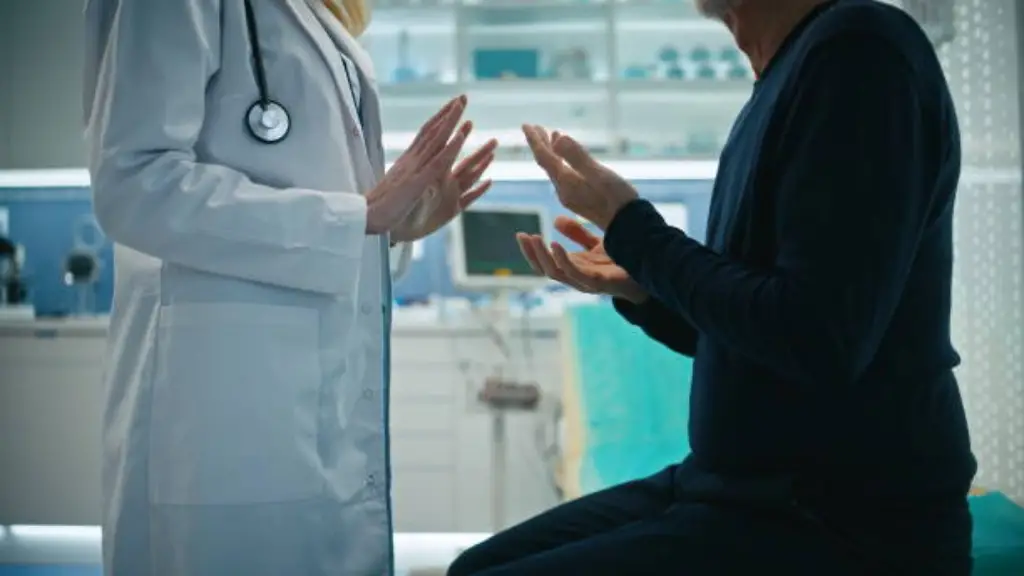
At 3:47 a.m., the world is supposed to be quiet. Hospitals never are, but my office at St. Catherine’s usually was. The surgical floor slept behind thick glass and fluorescent hum, and my screen glowed with next week’s schedule: gallbladders, hernias, a tumor resection that had me double-checking every name like it was a prayer.
Then my phone lit up. ETHAN.
My chest tightened so fast it felt like someone had cinched a strap around my ribs. Ethan didn’t call me at this hour unless something had broken loose from the ordinary rules of life. He was twenty-two, halfway through a master’s program at State, three hours away, and stubbornly independent in the way young men are when they’re still certain their bodies are unbreakable.
I answered on the first ring.
“Dad,” he said—and the sound of his voice turned my blood to ice. Strained. Thin. Carefully controlled, like he was trying not to scream. “I’m at Mercy General’s ER. I’ve been here for two hours. The doctor keeps saying I’m faking it for drugs. He won’t treat me.”
In the pause that followed, my mind did what it had been trained to do for decades: it built a differential diagnosis out of fear. And somewhere behind that clinical calm, another thought rose, dark and simple: If they send him home, my son could die.
I was already standing when Ethan started describing the pain. “Lower right. Sharp. Like something’s tearing. It started around midnight and it’s getting worse every hour. I’m nauseous. I threw up twice. I’m sweating. I think I have a fever.”
The words snapped into place like a latch. Right lower quadrant pain. Nausea. Vomiting. Fever. Classic acute appendicitis—until proven otherwise.
“What’s your temperature?” I asked, and hated how steady my voice sounded.
“I don’t know. They took it earlier. The nurse said it was ‘a little high.'”
“And the doctor?”
“He barely touched my stomach. Like a quick poke. Then he asked if I’d used opioids before. He kept looking at my arms. Like my tattoos were the actual problem. He told the nurse to give me Tylenol and discharge me.”
Tylenol. Discharge. My son’s pain had a sound now, pressed into the syllables like nails into wood.
“Listen to me,” I said. “Do not leave. You tell them your father is Dr. Garrison Mills, Chief of Surgery at St. Catherine’s. You tell them I’m on my way.”
There was a small, desperate inhale. “Dad—”
“Ethan,” I cut in, and my voice cracked around his name. “If your appendix ruptures because they’re delaying care, that can become sepsis. Peritonitis. That’s not dramatic. That’s physiology. Do you understand me?”
“I understand. I’m scared.”
“I know. Stay put. Keep the line open if you can. I’m leaving now.”
I ended the call, grabbed my coat, and tried not to slam the door hard enough to wake the surgical residents sleeping in the call rooms down the hall. Outside, the parking lot was empty and slick with winter rain. My breath came out in pale fog. I fumbled my keys like I’d never held them before.
I’d worked in medicine long enough to know two things could be true at once: we were capable of miracles, and we were capable of cruelty so casual it barely registered as cruelty at all. And I knew something else too—something I’d learned not from textbooks but from late-night morbidity conferences and quiet conversations with nurses who’d seen too much. Some doctors decided who deserved care before they decided what care was needed.
Ethan had both arms sleeved in ink. He wore his hair long. He’d gotten a small nose ring on his twentieth birthday and said it made him feel like himself. I’d teased him about it the way fathers do, but inside I’d admired his stubborn ownership of his own skin. Now I pictured him under fluorescent ER lights, curled around his pain, watched with suspicion.
I started the engine. The headlights cut through the rain. Three hours away. I could make it faster.
The highway at four in the morning is a different country. The world narrows to wet asphalt and taillights, to exits that appear and vanish like half-formed thoughts. Ethan stayed on speaker until his battery began to die. I could hear the ER behind him: muffled announcements, a distant cough, the metallic squeak of wheels.
“Dad,” he said at one point, voice shaking, “he asked if I’d ever been arrested.”
“Jesus.” My hands tightened on the steering wheel until my knuckles ached. “What did you say?”
“I said no. Obviously no.”
“And then?”
“He just smiled. Like he’d caught me in a lie anyway.”
There are moments in life when anger is so clean it feels holy. In my head, I walked through the standard of care: vitals, complete abdominal exam, labs—CBC, CMP—imaging if indicated, surgical consult early if there’s suspicion. Pain control isn’t a luxury; it’s humane. And even if someone is seeking drugs, you don’t punish them by ignoring a potential emergency.
Bias doesn’t stop bleeding. Prejudice doesn’t reverse inflammation. An appendix doesn’t care what you look like.
The call dropped near the outskirts of Mercy’s city. Ethan texted once: still here. worse.
I tried calling back. Straight to voicemail. I didn’t realize I was sweating until I wiped my forehead with the back of my hand and my skin came away cold.
At 5:12 a.m., I called a colleague I trusted—Simmons, an old friend who’d worked per diem at several ERs.
“Garrison?” he answered, thick with sleep. “What the hell—”
“My son’s at Mercy General. Right lower quadrant pain, fever, vomiting. Their attending is Leonard Vance. He’s trying to discharge him.”
There was a pause long enough to make my stomach drop. “Oh. Vance.”
“You know him.”
“Too well. Lazy. Profiles patients. Especially young men. If your kid looks like anything other than a choirboy, Vance assumes he’s there for narcs.”
A flash of Ethan at twelve, holding a bird with a broken wing in his palms, floated up behind my eyes. He’d cried when the bird died despite his careful feeding.
“Has anyone done imaging?” Simmons asked.
“Nothing. Tylenol and discharge.”
“Get there fast. And document everything. Every minute. Every name. Nurses will tell you the truth if you ask them straight.”
I ended the call and drove like the highway was an operating room countdown.
Mercy General’s ER smelled like antiseptic and old coffee and a faint undercurrent of fear. The waiting area was half full: a woman hunched over a toddler with a rash, a man holding his wrist like it might fall off, a teenager staring blankly at a wall with dried blood on his sleeve.
I walked in with my St. Catherine’s badge visible, not because I wanted to intimidate anyone, but because I wanted the system to recognize a language it respected. At the desk, the intake clerk looked up.
“I’m here for Ethan Mills. He’s been here since around 1:30 a.m.”
She typed, eyes flicking to my badge. “Are you family?”
“I’m his father. And I’m a surgeon. Please tell me where he is.”
She hesitated—just a heartbeat—and then nodded toward the back.
A nurse met me near the curtain line. She looked exhausted, hair pulled tight, eyes sharp. The kind of nurse you prayed for when you were the one on the stretcher.
“Sir, are you Dr. Mills?”
“I am.”
Her gaze softened with something like relief. “He’s over here. I’ve been concerned.” She glanced around quickly, as if the walls might report her. “His fever’s up. His heart rate’s high. He’s gotten more tender. I asked Dr. Vance to reassess twice.”
“And?”
She swallowed. “He said the patient is exhibiting drug-seeking behavior.”
My jaw clenched so hard I felt it click. “What’s your name?”
“Carol Brennan. Charge nurse.”
“Carol, thank you.”
She pulled back the curtain. Ethan lay curled on his side on a gurney, skin pale and damp. His hair stuck to his forehead. His lips had a faint bluish tinge that made my stomach lurch. He turned his head and his eyes found mine. The relief on his face was immediate and devastating.
“Dad,” he rasped.
I gripped the rail of the bed like it was the only solid thing in the room. “I’m here. I’ve got you.”
His hand lifted weakly and I took it, careful of the IV taped to his wrist. Carol read off his vitals: temp 102.3, heart rate 118, respirations elevated. His pain was an eight, he said. Maybe a nine now.
“Ethan, I’m going to press on your stomach. Tell me exactly where it hurts.”
He nodded, jaw trembling. I palpated gently, starting away from the pain, watching his face more than my fingers. When I reached the right lower quadrant, he sucked in a sharp breath and his body stiffened.
“Stop. Please.”
Rebound tenderness. Guarding. Not just appendicitis. Likely perforation—or close. My throat went tight with rage and fear braided together.
“Where is Dr. Vance?” I asked Carol.
She glanced toward the nurses’ station. “Room four.”
I didn’t think. I just moved.
Room four’s curtain was open. Inside, a man in his mid-forties leaned against a counter, laughing softly with another physician as they scrolled through something on a screen. He had the posture of someone who believed nothing could touch him.
“Dr. Vance?” I said.
He turned, smile still on his face for half a second—then his eyes dropped to my badge. The smile died.
“Can I help you?” he asked, a hint of irritation creeping into his tone.
“I’m Dr. Garrison Mills. Chief of Surgery at St. Catherine’s.” His pupils tightened. He didn’t like that name. “I’m also Ethan Mills’ father. The patient you’ve been refusing to treat for five hours.”
His face went pale in a way that was almost comical if it hadn’t been lethal. “Chief of Surgery… He’s your son?”
It took everything in me not to grab him by the collar. “You didn’t realize? And if you had—would it have changed what you did?”
He blinked. “I—he said his name was Ethan Mills. Mills is—”
“A common surname. Yes. So let’s pretend you never knew. Because that’s what ethics requires. You treat the patient in front of you, not the story you invent about him.”
His jaw tightened. He tried to recover, tried to stand taller. “Your son presented with vague complaints. His pain seemed exaggerated. He asked for narcotics.”
“He asked for pain relief,” I snapped. I lowered my voice, forced control back into place. “Did you order labs?”
“It wasn’t indicated.”
“A CT?”
“We can’t scan everyone.”
“A complete abdominal exam? Did you assess rebound tenderness? Guarding? Rigidity?”
He hesitated. That hesitation told me everything.
“Show me his chart.”
He looked to the screen like it might save him, then turned it toward me. The note was thin. A few lines of vital signs. A sentence about mild tenderness. The phrase likely drug-seeking behavior like a lazy stamp. No differential diagnosis. No plan beyond discharge.
I felt something in my chest shift, like a door locking. “This isn’t clinical judgment. This is malpractice.”
His face flushed red. “Now wait—”
“I’m calling your Chief of Emergency Medicine. And I’m requesting an immediate surgical consult. My son is febrile and tachycardic with localized peritoneal signs. If he perforates under your watch—”
“He’s already been assessed,” Vance snapped, and the mask slipped. “He looks like every other kid who comes in here hunting—”
I stared at him. “You mean he looks like someone you decided not to believe. That’s not medicine. That’s prejudice wearing a white coat.”
I turned and walked away before I did something that would ruin me and help no one.
Back at Ethan’s bed, his breathing was shallow. “Dad, it’s getting worse. It’s like it’s spreading.”
I pressed my palm to his shoulder. “I know. We’re fixing it.”
I stepped aside and called Dr. Andrea Whitmore, the Chief of Emergency Medicine. We’d shared panels at conferences. She’d once argued with me on stage about surgical wait times and then bought me a beer afterward like we were old friends.
She answered on the third ring. “Mills. What’s wrong?”
I gave it to her in clipped clinical terms: “Twenty-two-year-old male, five-hour progressive RLQ pain, vomiting, fever. No labs, no imaging. Vance tried to discharge him. He’s got guarding and rebound.”
There was a pause. Then, very quietly: “Goddamn it.”
“I need you here.”
“I’m twenty minutes out. I’m calling in Kowalski—general surgery. And I want Vance’s charting pulled. Don’t let your son leave.”
“I won’t.”
I returned to Ethan. “Help is coming. Hang on.”
His eyes were glassy with pain and something worse—doubt. “He kept saying I was faking. After a while, I started thinking maybe I was crazy.”
My heart broke clean in two. “You’re not crazy. Your body is screaming. We’re going to listen.”
Dr. Kowalski arrived like a storm compressed into human form—early thirties, focused, no wasted motion. He introduced himself directly to Ethan, not to me.
“I’m Dr. Kowalski. I’m going to examine you. I’m sorry you’ve been waiting.”
Ethan nodded, jaw clenched. Kowalski did what Vance hadn’t: a real exam, a careful history, a quick look at the trajectory of symptoms. His expression tightened with every finding.
“Significant guarding. Rebound tenderness. McBurney’s point is exquisitely tender.” He looked at the nurse. “I need labs now. CBC, CMP, lactate. And order a CT abdomen/pelvis with contrast, stat.”
He turned to me, eyes serious. “This is appendicitis until proven otherwise. With these signs, I’m concerned about perforation.”
My mouth tasted like copper.
Whitmore arrived fifteen minutes later, hair pulled back, coat open, eyes flinty with contained fury. She took one look at Ethan’s vitals trending on the monitor and her face hardened further.
“Who charted him?”
Carol didn’t hesitate. “Vance.”
Whitmore’s nostrils flared. “Where is he?”
A nurse pointed toward the station. Whitmore stalked over like she was headed to an execution. I stayed with Ethan. Because that was my only job now.
The CT took forever in the way minutes do when your child is in pain. When the images finally came back, Kowalski pulled them up, jaw set. There it was—bright and ugly: ruptured appendix. Free fluid. Early peritonitis. A preventable nightmare.
Kowalski looked at me. “We’re going to surgery. Now.”
They moved fast after that—too fast, in a way that felt like the hospital was trying to make up for lost time. Consent forms. Antibiotics. A second IV. The OR board updated like a scoreboard I couldn’t bear to watch.
Ethan squeezed my hand as they wheeled him down the corridor. “Dad, please don’t leave.”
“I’m right here. I’m right here.”
At the double doors, a nurse stopped me. “You can’t go past this point.”
I leaned down so Ethan could see my face clearly. “Listen. Dr. Kowalski is good. Dr. Whitmore is on top of this. They’re going to take care of you. I need you to do one thing for me.”
He blinked.
“Breathe. Just keep breathing.”
Tears pooled at the corners of his eyes. “They said I was lying,” he whispered again, like he couldn’t let it go.
“I believe you. I always believe you.”
The doors swung closed. And suddenly, in the bright sterile hallway, I was just a father again—empty-handed, powerless, furious.
I sank into a chair that felt too small for my body. My legs shook. My mind replayed the last five hours like a malpractice deposition: timestamps, quotes, the chart note’s thin cruelty.
I called Ethan’s mother, my ex-wife, before anyone else could. She answered on the first ring.
“Garrison? What is it?”
“He’s in surgery.”
Silence. Then: “What happened?”
I told her. The refusal. The accusations. The delay. The rupture. By the time I finished, her breathing had turned jagged.
“Oh my God. He could’ve—”
“I know. He’s in good hands now. He’ll be okay.”
“I’m coming. First flight.”
After I hung up, I made the next call without hesitation. Jeffrey Hartman. Malpractice attorney. Friend. The kind of man who knew how to turn rage into legal language.
He picked up on the second ring. “Mills. You never call this early unless the world’s on fire.”
“It is. My son’s appendix ruptured because an ER doc profiled him and tried to discharge him without labs or imaging.”
There was a pause, and I could hear Jeffrey’s keyboard start clicking. “Name.”
“Leonard Vance.”
“Hospital?”
“Mercy General.”
I gave him everything—arrival time, symptoms, Vance’s note, the CT findings. When I finished, Jeffrey exhaled slowly.
“This is clear negligence. Failure to evaluate. Failure to diagnose. Delay in care causing harm. You’ll need records. Witness statements.”
“I’m already on it.”
“And Garrison,” he added, quieter now, “you’re going to want blood. I get it. But be strategic.”
“I don’t want money. I want him stopped.”
Jeffrey went silent for a beat. “Okay. Then we do it right. We go for the board. We go for the pattern. And we don’t let them bury it with a check.”
Three hours and twenty-two minutes later, Kowalski came through the OR doors looking exhausted. His mask was down, hair damp with sweat, eyes tired in the way surgeons’ eyes get when they’ve been elbow-deep in a crisis.
“The appendix was ruptured. Significant contamination. We irrigated, placed drains. He’ll need IV antibiotics and close monitoring.”
Relief hit me so hard my knees went weak. “Thank you.”
Kowalski’s expression tightened. “Dr. Mills, I need you to understand something. Based on what we saw—the degree of perforation—I’d estimate the rupture occurred within the last two to three hours.”
My relief turned to ice. Meaning if he’d been evaluated when he arrived, we likely could’ve removed it before it perforated.
I closed my eyes. The word echoed in my skull: preventable.
Kowalski looked straight at me. “I’m documenting the timeline in my operative note. If there’s an investigation, I’ll speak to the standard of care.”
I opened my eyes again, and something inside me hardened into a decision. “Good. Because there will be.”
Ethan woke in recovery at 1:30 p.m., pale but stable. His eyes fluttered open, unfocused at first, then landing on me like I was the only thing tethering him to the world.
“Dad?”
“I’m here. It went well. They got it out. You’re going to be okay.”
His lips trembled. A tear slipped sideways into his hairline. “I wasn’t lying.”
My throat tightened so fiercely it hurt. “No. You weren’t.”
He squeezed my fingers weakly. “I kept thinking maybe I deserved it. Like, because of how I look.”
The words hit me harder than any surgical complication ever had. “Nobody deserves that. And you didn’t cause this. You hear me? You didn’t.”
His eyelids drooped again, exhaustion pulling him under. As he drifted back to sleep, I sat there watching the monitor lines pulse and made myself a promise: I would not let this be buried. Not under an NDA. Not under a settlement. Not under the hospital’s quiet machinery of self-protection.
Because Ethan survived because I had a title on a badge. What about the patients who didn’t?
The next three days moved in slow, heavy increments. Ethan spiked fevers, then stabilized. The antibiotics did their work. Nurses adjusted his pillow and spoke to him like he mattered.
I spoke to them too. Carol Brennan was first. Then David Kim, another nurse who’d charted Ethan’s distress carefully. Their notes were clear and damning: escalating pain, abnormal vitals, repeated concerns raised and dismissed.
I requested the full medical record. The first time the clerk said it would “take some time,” I smiled politely and said, “I’ll wait.” I waited in the same chair for three hours. Then I got it.
And there it was, in black and white: a young man in pain, a doctor who decided he didn’t deserve to be believed, and an outcome that could’ve killed him.
On day four, Whitmore called me personally. “Mills, I initiated peer review on Vance. Two years of charts. I’ve placed him on administrative leave pending review.”
“Administrative leave isn’t enough.”
“I know. Off the record? I’ve been trying to build a case for years. Admin keeps shielding him. Settling complaints. But your son’s case is documented. Nurses’ notes are strong. Kowalski’s op note is strong.”
“Good. Because I’m not letting them buy silence.”
Whitmore exhaled. “They’ll try.”
“I know.”
And I did. Hospitals were like ships in a storm: they didn’t like changing course. They preferred to patch leaks quietly and keep moving. But I was done being quiet.
Six weeks later, Ethan was home, thinner and jumpier, his laughter a little more cautious than before. And the letters began. The board acknowledged receipt of our complaint. Assigned an investigator. Requested additional documentation.
Jeffrey filed a notice of intent to sue Mercy General and Dr. Leonard Vance. Within hours, Mercy’s legal team called. They offered a settlement—two hundred and fifty thousand dollars with an NDA and withdrawal of the board complaint.
My mouth curled into something that wasn’t a smile. “No.”
Jeffrey watched me carefully. “Garrison, that’s a lot for a first offer. Most people would take it.”
“Most people don’t have to live with the knowledge that someone like Vance will do it again.”
Jeffrey leaned back. “You understand what going public means. Ethan’s record becomes part of a case file. Reporters. Social media. People will dig.”
“I understand.”
He was silent for a beat. “Okay. We do it your way. But if we’re doing it your way, we don’t just argue one incident. We argue a pattern.”
“Find it.”
Jeffrey nodded. And we went hunting.
Patterns hide in paperwork. In the weeks that followed, Whitmore’s internal review unearthed prior complaints: a young woman with chest pain told she was anxious, returning hours later with a pulmonary embolism; a teenage boy with abdominal pain dismissed as gastritis, later found to have a perforated ulcer. Settlements. NDAs. No discipline.
Then the story leaked. A journalist named Christine Dalton called Jeffrey first, then me.
“I’m working on something,” she said, voice calm and precise. “I heard about an ER physician at Mercy General—Dr. Leonard Vance—and a case involving delayed diagnosis of appendicitis.”
I said nothing for a long moment. Christine didn’t fill the silence.
Finally, I asked, “Who told you?”
“I don’t burn sources. But I can tell you this: I’ve already spoken to two families who say they were dismissed by the same doctor.”
My stomach tightened. “Then you know what this is.”
“A pattern. I want to do it right. I want documentation. Timelines. Names. I want the human story, but I want the receipts.”
I looked through the glass wall of my office at the hospital corridors. “We have them.”
Christine’s article ran a month later. The headline wasn’t subtle: A Pattern of Neglect: How One ER Doctor’s Bias Put Patients at Risk.
It detailed Ethan’s night alongside other cases. It included quotes from nurses, anonymized but sharp. It included excerpts from charts. It included the phrases hospitals hate most: standard of care, preventable harm, institutional failure.
The public reaction was immediate—angry, loud, relentless. Patient advocacy groups showed up outside Mercy General with signs. The hospital’s phone lines jammed. Local news stations ran segments with blurred faces and trembling voices.
Within a week, Mercy announced Vance’s termination. But termination wasn’t enough. A fired doctor could simply move to another hospital. A revoked license followed him everywhere. That was the difference between inconvenience and accountability.
The board hearing was set for November. Ethan asked me two nights before, “Do I have to testify?”
His voice tried to sound casual, but I could hear the fear under it.
“Yes. If we want them to see what this did to you—not just physically.”
Ethan stared at the floor. “I hate that I have to prove I was suffering.”
I swallowed hard. “I know.”
On the morning of the hearing, the room felt too cold. Formal. Bright. A long table where board members sat like judges. Vance sat with his attorney, Richard Keller—expensive suit, confident eyes. Whitmore sat behind us, arms crossed. Carol Brennan sat two rows back, back straight as steel.
The board called Ethan first. He walked to the witness chair and sat down, shoulders tense, hands clasped so tight his knuckles whitened. He told them everything. The pain. The waiting. The questions about drugs. The way Vance’s eyes slid over him like he was trash.
“I started to think maybe I was making it up,” Ethan said, and his voice broke on the last word. “Because he kept saying I was. And he’s a doctor. So I thought maybe I’m the problem.”
From the corner of my eye, I saw one of the public board members’ faces tighten.
Keller cross-examined, trying to poke holes. “Isn’t it true you asked for narcotic medication?”
“No. I asked for pain relief.”
“And you have tattoos and piercings.”
“Yes.”
Keller gave a small shrug, like that fact explained everything. Ethan looked at the board.
“I don’t understand why what’s on my skin mattered more than what was happening inside my body.”
Silence settled heavy. Then Carol testified.
“In twenty-six years, I’ve learned to trust my assessment. Mr. Mills was ill. His vitals were abnormal. His pain was real. I voiced concerns multiple times.”
“And Dr. Vance?”
Carol’s gaze didn’t waver. “He dismissed me. He said nurses need to trust physician judgment.”
Kowalski’s testimony was surgical and devastating. He spoke about timing, about perforation, about contamination. “The delay contributed directly to the rupture.”
Then the investigator presented findings: case after case, patterns of dismissal, missed diagnoses, settlements.
Finally, Vance took the stand. He looked defensive, jaw tight, eyes flicking too often to Keller for reassurance.
“I used my clinical judgment. Not every abdominal pain needs a CT.”
The board attorney leaned forward. “Did you perform a complete abdominal examination?”
Vance hesitated. “I performed an adequate exam.”
“Did you assess rebound tenderness?”
“I don’t recall specifically.”
“And you documented ‘likely drug-seeking behavior.’ What specific behaviors led to that conclusion?”
Vance’s eyes slid, just briefly, toward where Ethan sat. “He was focused on pain medication.”
“According to nursing notes, Mr. Mills did not request narcotics. He requested relief after hours of worsening symptoms. So again: what behaviors?”
Vance’s face flushed. “His demeanor. His appearance.”
The attorney paused, letting Vance’s own words sit in the air. “Be specific.”
Vance swallowed. “He had tattoos. Piercings. He looked unconventional.”
“And in your medical training, were you taught that tattoos and piercings are contraindications for acute appendicitis?”
The room went dead silent. Vance’s mouth opened, then closed. He muttered, “No.”
The attorney nodded slightly. “So you allowed appearance to influence medical decision-making.”
“That’s not—” Vance started.
“That is,” the attorney interrupted gently, “exactly what you described.”
The board deliberated for two hours. When they returned, the chairman—Dr. William Foster—read the decision with the weight of someone who understood exactly how rare it was to say what he was about to say.
“After review of evidence and testimony, this board finds that Dr. Leonard Vance violated multiple standards of medical practice: inadequate assessment, failure to order appropriate diagnostic testing, failure to document clinical reasoning, allowing personal bias to influence care.”
He looked directly at Vance. “It is the decision of this board to revoke your medical license effective immediately.”
Vance went white. Keller stood up, protesting, but Foster raised a hand. “The decision is final. This hearing is adjourned.”
For a moment, I couldn’t breathe. Then Ethan’s hand found mine. His grip was firm—alive.
Vance gathered his papers with shaking hands and walked out, head down, shoulders hunched like a man suddenly heavy with consequence.
Outside, Christine Dalton called my name as cameras swung toward me. “Dr. Mills, how do you feel?”
I looked into the lens and saw, for a heartbeat, every patient who didn’t have a father with a badge. “I feel relieved. And I feel furious it took this much to make the system act.”
Ethan stood beside me, quiet, eyes tired. And I realized something that didn’t feel like victory so much as a responsibility: stopping one doctor didn’t fix the disease. But it was a start.
Three months later, Mercy General settled the civil case for enough money to make headlines. We refused an NDA. Mercy implemented new protocols—mandatory second opinions for abdominal pain with abnormal vitals, patient advocate coverage, bias training that was no longer optional or performative.
Ethan finished his degree. He still wore his ink like armor. He still got judgmental looks sometimes. But he’d learned something he never should’ve had to learn so young: how to demand care, how to refuse dismissal, how to walk out if he wasn’t being heard.
A year after that night, I stood in front of an auditorium at a national medical ethics conference and told the story—without embellishment, because it didn’t need any.
I ended with the part that still haunted me. “My son survived. Not because the system worked. Because I had enough power to force it to work for him.” I looked out at the faces and let the silence stretch. “That isn’t justice. That’s privilege.”
After the talk, strangers came to me with their own stories—of being dismissed, ignored, humiliated, harmed. People who didn’t know how to fight back. People who’d been taught, like Ethan, to doubt their own pain.
Ethan and I started something small at first: a resource page, a hotline, a list of steps for filing complaints and requesting records and finding advocates. It grew. Not into a revolution—revolutions are loud and clean in movies, messy in real life—but into a network of people refusing to be quiet.
Years later, someone told me Vance tried to petition for reinstatement. Denied. Twice. The irony was that he ended up consulting for an insurance company, helping them deny claims.
I thought of Ethan on that gurney, curled around pain, judged by the shape of his skin. And I thought of the simple promise I’d made in a hospital hallway: I won’t let this be buried.
Some promises don’t end. They just become your life.
On a quiet evening five years after that 3:47 a.m. call, I sat across from Ethan at a small café near his apartment. He was working as a youth advocate now, helping teenagers navigate systems that often failed them. He’d turned his trauma into purpose, the way some people turn coal into diamonds through sheer pressure and time.
“Dad,” he said, stirring his coffee slowly, “do you ever regret it? Going after Vance the way you did?”
I thought about it—really thought about it. The hearings, the publicity, the nights Ethan couldn’t sleep because strangers online debated whether his pain had been real.
“No,” I said finally. “But I regret that it was necessary.”
He nodded, understanding the difference. “The resource center got another call yesterday. A kid in Montana. ER doctor told him his anxiety was making up chest pain. Turns out it was a blood clot.”
My jaw tightened. “Is he okay?”
“He is now. His mom found our website. Knew what questions to ask. Demanded imaging.” Ethan looked at me, and his eyes held something I hadn’t seen in years—not just survival, but strength. “We helped save his life, Dad. From three states away. Because you wouldn’t let them bury what happened to me.”
I reached across the table and squeezed his shoulder. “Because you were brave enough to let your story be told.”
“We were brave together,” he corrected.
And maybe that was the real ending—not the hearing, not the license revocation, not even the advocacy work that followed. The real ending was this: a father and son sitting across from each other, both changed by a night that should never have happened, both committed to making sure it happened to fewer people tomorrow.
The call that came at 3:47 a.m. didn’t just wake me up. It woke me up to a system that needed changing, to a fight worth fighting, and to the simple truth that sometimes the most important thing you can do is refuse to be silent when silence would be easier.
Ethan finished his coffee and smiled—a real smile, not the cautious ones from right after surgery. “Ready to go?”
“Ready.”
We walked out into the evening air, and I thought about all the patients we’d never meet, all the doctors who might think twice before dismissing someone because of how they looked, all the families who would demand better because they’d heard our story.
Some victories are quiet. Some victories take years. And some victories are simply this: your child survives, learns to trust their own voice again, and uses that voice to help others find theirs.
That’s not just a happy ending. That’s the beginning of something that matters.

Adrian Hawthorne is a celebrated author and dedicated archivist who finds inspiration in the hidden stories of the past. Educated at Oxford, he now works at the National Archives, where preserving history fuels his evocative writing. Balancing archival precision with creative storytelling, Adrian founded the Hawthorne Institute of Literary Arts to mentor emerging writers and honor the timeless art of narrative.
wonderful story. this is a nightmare people face everyday. Hospitals , Doctors ,nurses, that don’t care! they judge people to quick. they assume things by looks. its a sad world. Noone should be treated like this.