The Divorce I Signed With Nothing—And The Courtroom I Arrived At In A Billionaire’s Jet
There’s a particular kind of silence that exists in the moment before someone realizes they’ve underestimated you so completely that everything they thought they’d won is about to collapse. It’s not dramatic—no music swells, no one gasps. It’s just the slow, creeping awareness spreading across a face that was previously smug with certainty, the recognition arriving in stages: confusion, then doubt, then the first cold edge of fear.
I watched that silence settle over my ex-husband’s face in a Seattle courtroom on a grey Tuesday morning, three weeks after I’d signed away everything he thought mattered.
My name is Alexandra Hartwell. I’m thirty-six years old, and for eight years I was married to Richard Hartwell—tech entrepreneur, venture capitalist, self-made millionaire, and the kind of man who believed the loudest voice in any room was automatically the most important one.
When I signed the divorce papers, he thought my silence meant surrender.
He had no idea what it actually meant.
The Divorce
It happened in the penthouse we’d shared for six years—floor-to-ceiling windows overlooking Elliott Bay, designer furniture that Richard had chosen because it “made a statement,” the kind of aggressively expensive space that was meant to communicate success to anyone who entered.
Rain tapped against the glass that afternoon, Seattle’s perpetual drizzle turning the city beyond into a watercolor blur. Richard sat at the mahogany dining table—the one we’d hosted countless dinner parties around, where I’d smiled through conversations about valuations and exits and disruption while men who’d never asked my opinion talked over me like I was decorative furniture.
His attorney sat to his right. And on his left, with her hand resting possessively on his shoulder, was Sienna—twenty-six, his former executive assistant, now his “partner” in the particular way that men like Richard always find younger replacements before officially ending previous commitments.
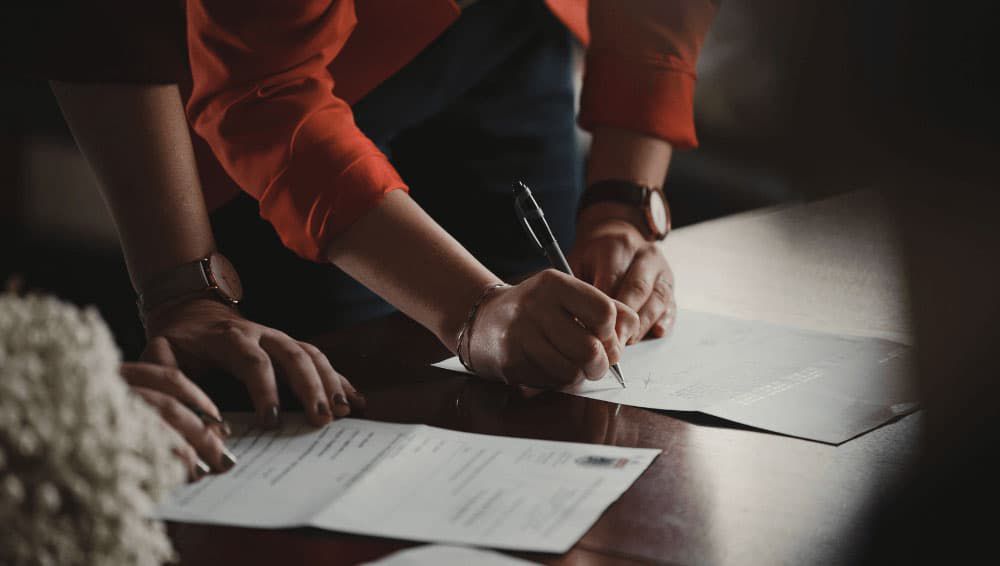
The divorce papers sat in the center of the table, positioned like evidence at a trial.
Richard slid them toward me with one finger, not quite looking at me, his expression carrying that particular blend of pity and contempt he’d perfected over the last year of our marriage.
“It’s a clean deal, Alex,” he said, using the shortened version of my name he knew I’d never liked. “Fifty thousand dollars. No support, no assets, no ongoing obligations. You sign, you walk away, we both move on with our lives.”
I looked at the papers without touching them.
Eight years of marriage. Reduced to a stack of legal documents that assigned me less value than his newest car.
“What about the jewelry?” I asked quietly.
Richard’s attorney—a sharp-faced man named Mitchell who I’d met exactly once before—spoke up. “The jewelry was purchased with Mr. Hartwell’s income and is therefore considered his separate property.”
“I see,” I said.
“You could fight it,” Richard offered, leaning back in his chair with false generosity. “You could hire a lawyer, drag this out for months, spend whatever money you have on legal fees. But we both know how that ends. I have better attorneys. More resources. More patience for this kind of thing.”
He paused, letting that sink in.
“Or,” he continued, “you take the fifty thousand, sign the papers, and we’re done. Clean. Simple. No drama.”
Sienna shifted slightly, her hand moving from his shoulder to his arm in a gesture of ownership so obvious it was almost funny.
I looked at Richard—really looked at him, maybe for the first time in months. Saw the man who’d courted me with intensity and promises, who’d said he wanted a partner not a trophy, who’d convinced me to leave my own career in finance to “support his growth” during the critical early years of his company.
The man who’d grown bored the moment his success was established, who’d started working later and later, who’d stopped asking about my day or my thoughts or anything beyond whether I’d confirmed the reservation for whatever dinner he needed me to attend.
The man who thought my value could be calculated and dismissed with a single payment.
I picked up the pen.
Richard’s smile widened. Mitchell nodded approvingly. Sienna’s expression didn’t change, but I saw her relax slightly, like she’d been worried I might make this difficult.
I flipped to the last page and signed my name with the practiced signature I’d developed years ago: Alexandra Chen Hartwell.
Then I stood, picked up my purse—a small leather bag that contained my phone, my wallet, and nothing else because everything in this penthouse had been purchased with Richard’s money and I wanted none of it—and looked at Richard one last time.
“Keep the silver,” I said quietly. “You’ll miss it more than I will.”
He laughed—a short, sharp sound of triumph.
“Good luck out there, Alex,” he said. “It’s a tough world for women without resources.”
I walked out without responding.
Rode the elevator down alone, walked through the lobby where the doorman who’d known me for six years didn’t quite meet my eyes, and stepped out into Seattle rain with nothing but that small bag and something Richard had never valued: my dignity intact.
After
Richard threw himself a “freedom party” the following weekend.
I know because it was covered in the local society pages and gossip blogs—photos of him and Sienna at some rooftop venue, champagne and laughter and friends congratulating him on “finally being free to be himself.”
The narrative was already being written: the self-made millionaire who’d been held back by a wife who didn’t understand his vision, who’d wanted the lifestyle but not the work, who’d taken a settlement and disappeared into obscurity where she belonged.
I read the coverage once, sitting in the modest apartment I’d rented in Capitol Hill—one bedroom, no view, furniture from IKEA that I’d assembled myself. Read it, processed it, and then closed the browser and got back to work.
Because while Richard was celebrating his victory, I was making phone calls.
To lawyers. To accountants. To people Richard had never known I knew, contacts from my previous life in finance that I’d maintained quietly over the years even as he’d encouraged me to “focus on supporting him” instead of maintaining my own career.
And I was having very specific conversations about very specific numbers.
Two weeks after signing the divorce papers, Richard’s attorney filed a lawsuit.
Not because Richard needed anything from me—what could I possibly have that he’d want?—but because he’d decided there was one more performance to be had, one more opportunity to demonstrate his superiority in a public forum.
The lawsuit alleged that I’d taken “personal items of significant value” from the penthouse without authorization. It was nonsense—I’d taken nothing but my own clothes and a few books—but it required me to appear in court, to defend myself, to stand in front of a judge and reporters and explain that I hadn’t stolen from my ex-husband.
It was theater. Humiliation disguised as legal process.
And Richard was looking forward to it.
The Courtroom
Three weeks after signing the divorce papers, I walked into King County Superior Court for the hearing Richard had orchestrated.
The building was classic Seattle—grey stone, imposing steps, the kind of governmental architecture meant to remind you that justice was serious business.
Richard arrived first, naturally. Made sure there were cameras present, made sure Sienna was on his arm looking sympathetic and supportive, made sure his entrance was noted and photographed.
He wore a charcoal suit that probably cost more than three months of my current rent. His attorney carried a briefcase that gleamed. They walked through the courthouse hallways like they owned them, pausing for questions from reporters, Richard’s expression carefully calibrated to show concern rather than triumph—he was here reluctantly, forced to protect his interests from an ex-wife who’d already taken enough.
I watched this performance from a car parked across the street, sitting in the back seat with tinted windows, waiting.
Inside the courtroom, Richard settled into his seat with the relaxed confidence of someone who’d already won. He checked his watch—a Patek Philippe that I’d given him for his fortieth birthday, back when I’d still believed expensive gifts might translate to appreciation. He whispered something to Sienna that made her smile.
The bailiff announced the judge. Everyone stood.
And Richard waited for me to arrive—late, probably flustered, definitely unprepared.
What he didn’t know was that I was already there.
Not in the building yet, but there in every way that mattered.
Outside, on the street in front of the courthouse, a sound was beginning that would change everything.
The Arrival
It started as a low rumble—the kind of deep, powerful engine sound that you feel in your chest before you consciously register hearing it.
Conversations in the courthouse hallway thinned. People turned toward the windows. The bailiff paused mid-instruction.
Even in the courtroom, insulated from street noise, the sound was unmistakable.
A helicopter.
Not a news helicopter circling at a distance, but something much larger, descending with the kind of precision that suggested a very specific destination.
It landed in the plaza in front of the courthouse—a space that technically wasn’t a landing zone but became one when the right people made the right calls to the right authorities.
Through the courthouse windows, people could see it: a Sikorsky S-76, gleaming black and silver, rotors still spinning as security personnel emerged first, moving with the practiced efficiency of people who did this regularly.
Then the door opened, and I stepped out.
I wore a structured navy dress and a white coat that was elegant without being showy, expensive in a way that whispered rather than shouted. My hair was pulled back simply. I wore minimal jewelry—just the pieces that had been my grandmother’s, that Richard had never known about because they’d predated our marriage and weren’t the kind of flashy statements he’d valued.
I looked like exactly who I was: a woman who didn’t need to prove anything to anyone.
Behind me, a security detail moved with quiet professionalism—not aggressive, not showy, just present in a way that created space.
And at the back of the group, barely visible, was someone Richard would recognize if he saw: James Chen. My uncle. Billionaire. Founder of Chen Industries. One of the wealthiest men in Asia and the family member Richard had never known I had because I’d kept my relationship with my mother’s family private, separate from the life Richard had wanted to control.
I walked up the courthouse steps surrounded by that security detail, past reporters who’d been waiting for me to arrive disheveled and alone, into a building that suddenly felt very different than it had when Richard had entered it.
Inside, I moved through hallways that cleared in front of me, not because anyone ordered it but because something about the energy had shifted—this wasn’t a woman arriving to be humiliated. This was someone else entirely.
The courtroom doors opened.
And I walked in.
The Shift
Richard’s face went through several expressions in rapid succession.
Confusion: Who is that?
Recognition: That’s Alex.
Disbelief: That can’t be Alex.
And finally: What the fuck is happening?
I moved to the defendant’s table where my attorney waited—not some overworked public defender or desperate solo practitioner, but Catherine Reeves, the attorney Richard had tried to hire for this case and who’d declined for “conflict of interest” reasons he hadn’t understood.
Now he understood.
I placed a single black card on the table in front of Catherine—no numbers visible, no name, just a crest embossed in silver that a few people in the room would recognize as belonging to one of the most exclusive private banking institutions in the world.
The kind of card that doesn’t have a credit limit because if you have to ask about limits, you don’t qualify for the card.
The judge—a woman in her sixties with the no-nonsense expression of someone who’d seen every courtroom trick and wasn’t impressed by theater—looked at me with interest.
“Please state your name for the record,” she said.
Richard was leaning forward now, his earlier confidence cracking. He whispered something urgent to his attorney, who looked equally confused.
“Alexandra Chen Hartwell,” I said clearly. “Though I’ll be returning to my maiden name—Alexandra Chen.”
Something flickered in the judge’s expression. Recognition, maybe.
Catherine stood, moving with the calm precision of an attorney who knew exactly how this was going to go.
“Your Honor, I’d like to submit several documents for the court’s review.”
She placed a folder on the bench—neat, professional, containing information that was about to rewrite everything Richard thought he knew.
At the exact same moment, Richard’s phone started vibrating.
Then Mitchell’s phone.
Then Sienna’s.
All three of them scrambling to silence devices, to check messages, to understand why multiple people were suddenly trying to reach them urgently.
The judge glanced at the disturbance with obvious disapproval.
“Mr. Hartwell, please silence your phone or step out of the courtroom.”
“I—yes, Your Honor, I apologize,” Richard stammered, which was notable because Richard never stammered.
He managed to silence his phone, but I could see his hand shaking slightly as he placed it face-down on the table.
Catherine continued.
“Your Honor, Mr. Hartwell filed this lawsuit alleging that my client removed items of significant value from the marital residence without authorization. The items in question are listed in the original complaint as jewelry valued at approximately two hundred thousand dollars.”
She paused, letting that number sit in the air.
“We’re prepared to demonstrate that the items in question were my client’s separate property, acquired before the marriage with funds that were entirely her own. We’re also prepared to introduce evidence about the actual financial circumstances of both parties that may be relevant to the court’s understanding of this dispute.”
Richard’s attorney stood. “Your Honor, the financial circumstances of this divorce were already settled. Mrs.—Ms. Hartwell accepted the terms of the settlement. This lawsuit is narrow in scope and concerns only specific property items.”
“I’m aware of what the lawsuit purports to be about,” the judge said dryly. “But if Ms. Hartwell’s attorney is suggesting there’s relevant context, I’m willing to hear it. Please proceed, Ms. Reeves.”
Catherine opened the folder and pulled out the first document.
“Your Honor, I’d like to introduce a financial disclosure statement prepared by Chen Industries, a privately held conglomerate based in Singapore with holdings valued at approximately forty-three billion dollars.”
The courtroom went very quiet.
“Ms. Hartwell is the daughter of Margaret Chen, sister of James Chen, the founder and CEO of Chen Industries. She is a direct beneficiary of the Chen family trust and has access to assets that were deliberately kept separate from the marital estate at her family’s insistence.”
Richard’s face had gone pale.
Catherine continued, her voice steady and professional.
“The jewelry Mr. Hartwell claims was purchased during the marriage and therefore marital property includes several pieces that were gifts from Ms. Hartwell’s grandmother, a woman who passed away twenty years ago—well before this marriage began. These items have documented provenance and were never Mr. Hartwell’s property in any sense.”
She placed photographs on the bench—professional appraisals of the jewelry in question, dated and certified.
“Additionally, Your Honor, I’d like to address the settlement itself. Ms. Hartwell signed an agreement accepting fifty thousand dollars and waiving all claims to marital assets. She did this not because she lacked resources or representation, but because she chose to walk away from a marriage that had become untenable. She took nothing that wasn’t specifically hers, and she’s taken nothing since.”
Catherine paused, then added quietly: “This lawsuit is not about protecting Mr. Hartwell’s interests. It’s about punishing Ms. Hartwell for leaving. And possibly about trying to determine whether she has resources he hadn’t previously known about.”
“Your Honor, that’s completely—” Mitchell started to object, but the judge held up her hand.
“I’ll hear from Mr. Hartwell directly,” she said. “Mr. Hartwell, did you know about your ex-wife’s family connections when you filed this lawsuit?”
Richard stood slowly, and for the first time since I’d known him, he looked genuinely uncertain.
“No, Your Honor. I… she never mentioned…”
He trailed off, looking at me like I was a stranger.
Which, in a sense, I was. He’d never actually known me at all.
The Truth
The judge looked at me.
“Ms. Chen, why did you keep your family circumstances private during your marriage?”
It was a fair question.
I stood, keeping my voice level.
“Your Honor, I came to the United States for university when I was eighteen. I wanted to build a life on my own terms, separate from my family’s business empire. I used my mother’s maiden name, I paid for school with scholarships and work, and I built a career in finance based on my own abilities.”
I paused, remembering those years.
“When I met Richard, he was building his first company. He was passionate and driven and he said he wanted a partner who understood the work, who’d support him without needing his money or status. I believed him. And I thought if he knew about my family, it would change how he saw me—I’d become the Chen heiress instead of just Alex.”
“So you never told him,” the judge said.
“I never told him,” I confirmed. “And when his company became successful and he started suggesting I leave my job to support him full-time, I agreed because I thought we were building something together. I thought I was investing in our partnership.”
My voice remained steady, but there was steel underneath it now.
“I was wrong. Richard didn’t want a partner. He wanted an accessory. Someone who’d make him look good, who’d host his parties and smile for photos and not have opinions or resources or identity beyond being his wife.”
I looked at Richard directly.
“When he asked for the divorce, when he sat across from me with his attorney and his new girlfriend and offered me fifty thousand dollars to disappear quietly, I could have told him then who I actually was. I could have brought my family’s attorneys, could have fought for half of everything he’d built during our marriage, could have made this process expensive and public and humiliating for him.”
“Why didn’t you?” the judge asked.
“Because I wanted to be free of him more than I wanted his money,” I said simply. “I signed the papers because staying married to someone who valued me at fifty thousand dollars was worse than walking away with nothing. I took my jewelry—my family’s jewelry—and I left. I took nothing that was his. I made no claims. I asked for nothing.”
Catherine stepped in.
“Ms. Chen has made no financial demands on Mr. Hartwell. She’s made no public statements. She’s simply attempted to move on with her life. This lawsuit exists only because Mr. Hartwell wanted one more opportunity to publicly diminish someone who’d already given him everything he asked for—a quiet, clean divorce with no complications.”
The judge looked at Richard.
“Mr. Hartwell, is there any evidence—any at all—that Ms. Chen took property that belongs to you?”
Mitchell tried to rally. “Your Honor, the jewelry—”
“The jewelry that’s been in her family for generations?” the judge interrupted. “The jewelry that has documented provenance predating the marriage? That jewelry?”
Silence.
“Mr. Hartwell, I’m going to ask you a direct question, and I expect a direct answer. Did you file this lawsuit because you actually believed your ex-wife had stolen from you, or did you file it because you wanted to embarrass her in public?”
Richard’s jaw worked silently. For once, he had no smooth answer, no practiced response.
“I… I wanted to make sure…”
“Make sure of what?” the judge pressed.
“That she wasn’t… that she…”
He couldn’t finish. Because the truth—that he’d filed this lawsuit to punish me for leaving, to remind me of his power, to ensure I couldn’t just walk away and rebuild without his permission—was too ugly to say out loud in a courtroom.
The judge’s expression hardened.
“This lawsuit is dismissed,” she said. “With prejudice. Mr. Hartwell, you will pay all court costs and Ms. Chen’s attorney fees. Additionally, I’m imposing a restraining order preventing you from filing any future litigation against Ms. Chen without first obtaining court permission demonstrating legitimate cause.”
She banged her gavel once.
“This court is adjourned.”
Walking Out
I stood, gathered my belongings, and walked toward the courtroom exit.
Behind me, I could hear Richard’s frantic whispers to his attorney, Sienna’s confused questions, the general commotion of people trying to process what had just happened.
I didn’t turn around. Didn’t gloat. Didn’t make a statement.
I just walked out of the courthouse the same way I’d walked out of the penthouse three weeks earlier—with my dignity intact and my future entirely my own.
The helicopter was still waiting in the plaza, security detail creating a clear path.
As I approached, my uncle James stepped forward. He was in his sixties, silver-haired, with the quiet confidence of someone who’d built an empire without needing to announce it loudly.
“You handled that well,” he said in Mandarin.
“Thank you for coming,” I replied in the same language.
“You’re family,” he said simply. “You should have called us sooner.”
“I needed to do it on my own first.”
He smiled slightly. “Your mother said you’d say that. She also said to tell you she’s proud, even if she thinks you’re too stubborn.”
“I learned from the best,” I said, and he laughed.
We climbed into the helicopter, rotors spinning up, lifting away from the courthouse and the reporters and Richard’s shocked face visible through the window.
From the air, Seattle looked small and manageable and entirely behind me.
Six Months Later
I didn’t move back to Singapore, despite my family’s offers.
I stayed in Seattle, in that modest apartment in Capitol Hill, because I’d chosen this city for myself years ago and Richard didn’t get to take it from me.
But I did accept my family’s offer to join Chen Industries’ North American division, working in strategic investments—the career I’d put on hold to support Richard’s ambitions, now resumed on my own terms.
I didn’t speak publicly about the divorce or the courtroom scene. Didn’t need to. The story spread anyway—the ex-wife who’d signed away everything and then arrived at court in a billionaire’s helicopter, the tech millionaire who’d discovered his “poor” ex-wife was connected to one of Asia’s wealthiest families.
Richard’s reputation took hits he’d never fully recover from. People started asking questions about how he’d treated me, about what kind of man files a frivolous lawsuit against his ex-wife to humiliate her, about whether his judgment in personal matters reflected his business judgment.
His company’s next funding round was quieter than expected. Several board members quietly stepped away. Sienna left him four months later for someone richer and more stable.
I heard all of this secondhand and felt nothing. He was no longer my concern.
What mattered was rebuilding the life I’d paused, reconnecting with the family I’d kept at distance, and learning to trust people who valued me for reasons beyond convenience or appearance.
My mother flew over from Singapore and stayed for two weeks. We’d been distant during my marriage—not estranged, just carefully separated because Richard hadn’t understood or appreciated her, and I’d prioritized his comfort over her presence.
“I knew he was wrong for you,” she said over tea in my small apartment. “But you needed to learn it yourself.”
“I’m sorry I kept you away,” I said.
“I’m sorry I let you,” she replied. “Family stays, even when it’s uncomfortable. I should have insisted.”
We promised each other we wouldn’t make that mistake again.
My uncle offered me a position on the Chen Industries board. I accepted, becoming the youngest board member and the first based permanently in North America.
And gradually, month by month, I built a life that looked nothing like the one I’d had with Richard but felt infinitely more solid.
The Message
Eight months after the courtroom scene, I received an email from Richard.
Subject line: “I’m sorry”
I almost deleted it without reading.
But curiosity won.
The message was short:
Alex—
I know I don’t deserve a response. I know I burned every bridge and earned your contempt.
But I need you to understand: I never knew who you really were. You hid your family, your resources, your entire identity from me. How was I supposed to know?
I’m not saying I was right. I’m saying I was blind. And maybe you were too—blind to what we could have been if you’d just trusted me with the truth.
I don’t expect forgiveness. But I wanted you to know that I’m sorry for how it ended.
—R
I read it twice.
Then I typed a response:
Richard—
You’re right that you didn’t know who I really was. But not because I hid my family from you.
You didn’t know me because you never asked. You never wondered who I was before we met, what I wanted beyond supporting your ambitions, what I’d given up to be the wife you needed.
I didn’t tell you about my family because I wanted you to see ME. And you never did. You saw a reflection of what you wanted—someone decorative and useful and ultimately disposable.
The money, the family, the resources—none of that was the point. The point was that you valued me at exactly fifty thousand dollars and thought I should be grateful for it.
I don’t accept your apology because I don’t need it. I don’t need your understanding or your regret.
I just need you to leave me alone.
—Alexandra
I sent it, then blocked his email address.
And finally, completely, I let go of the woman who’d signed those divorce papers thinking she had nothing.
Because she’d had everything that mattered.
She just hadn’t known it yet.
THE END

Ethan Blake is a skilled Creative Content Specialist with a talent for crafting engaging and thought-provoking narratives. With a strong background in storytelling and digital content creation, Ethan brings a unique perspective to his role at TheArchivists, where he curates and produces captivating content for a global audience.
Ethan holds a degree in Communications from Zurich University, where he developed his expertise in storytelling, media strategy, and audience engagement. Known for his ability to blend creativity with analytical precision, he excels at creating content that not only entertains but also connects deeply with readers.
At TheArchivists, Ethan specializes in uncovering compelling stories that reflect a wide range of human experiences. His work is celebrated for its authenticity, creativity, and ability to spark meaningful conversations, earning him recognition among peers and readers alike.
Passionate about the art of storytelling, Ethan enjoys exploring themes of culture, history, and personal growth, aiming to inspire and inform with every piece he creates. Dedicated to making a lasting impact, Ethan continues to push boundaries in the ever-evolving world of digital content.