There comes a point in life when you realize that trusting family too much can cost you more than you ever imagined. I used to think that point would arrive like a thunderclap—one dramatic moment, one shout, one door slammed hard enough to split the frame. But real life isn’t that tidy. Real life is quieter. It’s a slow erosion that happens in the places you don’t think to look, until one day you step into your own home and feel, in your bones, that something has been moved.
My name is Alicia Bennett. I’m thirty-four years old, and I built my life around independence because I learned early that peace only exists when you protect your own space. My house wasn’t a mansion—just a modest place in a decent neighborhood, the kind of street where kids rode bikes in the summer and lawns were cut on Saturday mornings. A little porch, a little front garden I kept alive more out of stubbornness than talent, hardwood floors that creaked in two specific spots because the previous owners had used cheap nails.
Every inch of it was mine. And maybe that sounds dramatic, like I’m romanticizing drywall and mortgage payments. But ownership is more than paperwork. Ownership is the right to breathe without bracing.
That belief collapsed the night I walked through my front door and saw unfamiliar bags leaning against my wall, unfamiliar shoes lined up by my entrance, and boxes placed neatly beside my furniture, as if someone had calmly decided that my home no longer belonged only to me.
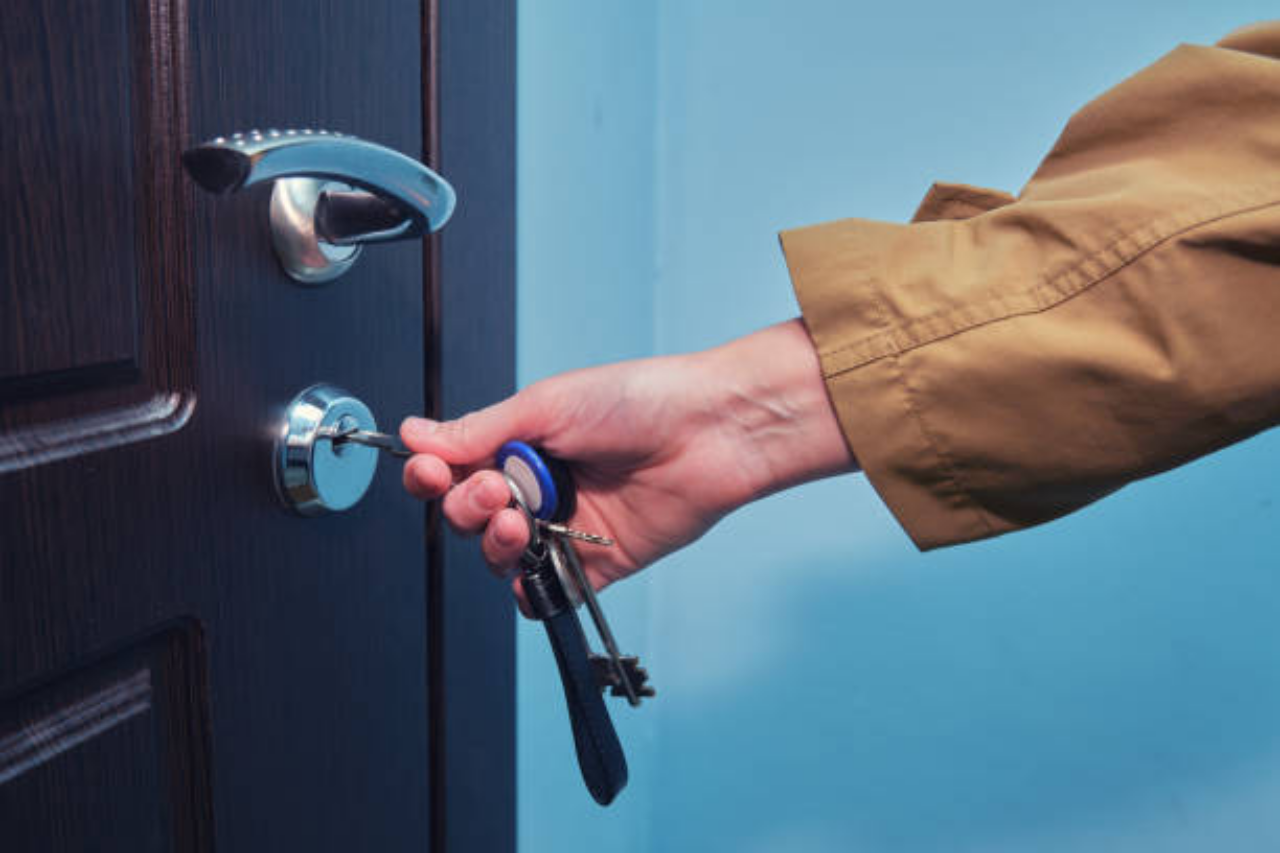
I remember standing there with my keys still in my hand, the metal biting into my palm because my grip tightened without me realizing it. The house smelled different. Not bad. Just different. Like someone else’s shampoo had slipped into the air. There was a faint floral scent near the entryway, and my stomach dropped because I recognized it. Rachel wore that perfume—sweet and heavy, the kind that filled a room and refused to apologize for it.
The shoes by the door were not mine. The boxes were sealed and labeled in thick black marker: RACHEL.
As if my house had become a storage unit.
I set my suitcase down slowly, not because I was calm, but because I was trying to keep control of my hands. There was movement further inside. A drawer opening. A soft thud like someone placing something down on a table. My home had sounds that were not mine.
I stood in the middle of my living room and said without raising my voice, “You don’t get to live here. This is my house.”
Rachel appeared from the hallway like she’d been waiting for the right moment to step into the light. She wore leggings and an oversized sweatshirt, hair twisted into a messy bun, like she was already comfortable enough to be casual.
My mother, Linda, was behind her, carrying a folded blanket I recognized from my linen closet.
My linen closet.
Rachel blinked at me like I’d interrupted her, like I was the one being rude. Linda didn’t even look surprised. She looked disappointed—at me.
“You’re overreacting,” Linda said softly, which was always her favorite way to dismiss me. She liked soft words. Soft words made her feel innocent.
Rachel didn’t say anything at first. She just looked around my living room like she was evaluating what she’d inherited. I could feel my pulse in my throat.
I picked up my phone, my hands steady even though my heart was not, and said to the operator, “There are people inside my house who entered without my consent, and they refused to leave.”
The operator’s voice was calm, practiced. She asked my address. She asked if anyone had a weapon. She asked if I felt in danger.
I glanced at my mother. The fact that I was even considering the question made me feel sick.
“No weapons,” I said. “But they won’t leave. They don’t have permission to be here.”
Linda’s eyes widened just slightly, not with fear, but with outrage, like I’d embarrassed her. Rachel’s jaw tensed.
“Are you serious?” Rachel finally snapped. “You would call the police on your own family?”
And there it was, the line she wanted to trap me with. Family. The word they used like a key.
The police arrived within twenty minutes. Two officers came in first, then a third who stayed near the door. One of them, a woman with a tight bun and a name tag that said Martinez, asked to speak with me privately. Linda tried to jump in, explaining, framing it as concern.
“We’re just trying to help,” she kept saying.
Rachel stood with her arms crossed, making herself look wronged.
Officer Martinez asked one simple question: “Do you want them here?”
“No,” I said. My voice didn’t shake. I’m proud of that, even now.
Another officer explained slowly, carefully, that entering someone’s home without permission was not something family status erased. Linda’s face tightened. Rachel’s cheeks flushed. And then, finally, they were escorted out. Not dragged. Not humiliated. Just guided, like children being removed from a place they didn’t belong.
I watched my mother’s posture as she crossed my threshold. She didn’t look ashamed. She looked offended. I thought it was over.
But two days later, I woke up to the sound of sharp metal scraping against my front door.
The sound yanked me out of sleep like a hand around my throat. At first, I thought it might be the wind. But this wasn’t settling. This was deliberate. I slid out of bed without turning on the light, grabbed my phone, and opened the security app.
My mother was there on the camera feed. Calm. Still. Arms folded like she was waiting for a package delivery. Beside her was a man crouched near my lock, tools in hand, focused and methodical.
I felt something in me go very quiet. Not panic. Clarity.
I picked up my phone and made the call. “Someone is trying to break into my house,” I said to the operator.
She asked who.
I swallowed. “My mother.”
The word mother felt foreign in my mouth in that moment, like a term that no longer meant what it used to.
The police response was different this time. Red and blue lights painted the front of my house in slow flashes before I ever heard the sirens. Commands came through sharp voices. I watched through the camera feed as officers moved fast, ordering the man to drop his tools and lie face down on the ground.
My mother was pulled several steps away from the door. One officer kept a hand lightly but firmly around her arm while another began writing on a clipboard. There was no friendly tone this time, no casual warnings, no soft explanations.
I stayed behind the locked door while it all unfolded. I didn’t step outside. I didn’t open the lock. Through the camera, I saw my mother speaking firmly, still composed, still convinced that whatever she was doing belonged within her rights. Her face showed irritation rather than shame.
In that moment, something inside me shifted without ceremony. I understood quietly and completely that she was not going to stop. This was not a misunderstanding. This was a pattern that had crossed into danger.
The distance between me and my mother didn’t come from anger. It came from pressure that never had a name. Growing up, Linda liked to call me “mature.” She said it like it was a compliment. I didn’t realize until I was older that “mature” was just another way of saying “easy.” I was the child who didn’t make noise, who didn’t ask for things, who learned to read a room before speaking.
Rachel was different. Rachel was the child who could cry on cue and turn it into a performance that made everyone rush to comfort her. She was the child who broke something and somehow made it someone else’s fault. Linda was always tired, always overwhelmed. She carried her stress like it was proof she loved us.
But love without respect is just pressure wearing perfume.
So I started building a life that belonged only to me, one quiet step at a time. I worked long hours, saved every extra dollar, skipped comfort, skipped shortcuts, and chose loneliness over dependence. I didn’t start out with a grand plan. I just started saying no to things that made me feel trapped.
I said no to “help” that came with strings.
I said no to letting Linda track my schedule like I was still seventeen.
I said no to lending Rachel money every time her life “fell apart.”
And every no made them look at me like I was changing into someone they didn’t recognize.
Rachel had always existed on the edge of my world, close enough to see what I built, distant enough to misunderstand it completely. She moved through life like something would eventually catch her, like something would fix things for her. She never called my work “work.” She called it “your little thing.” She acted like I was lucky, like I’d stumbled into stability by accident.
And whenever she was between jobs—which was often—Linda would call me with that careful tone. “Rachel’s just going through a hard time.”
As if Rachel’s hard time was a weather system that followed her, unavoidable.
By the time I bought my home with my own savings, I no longer felt like celebrating. I treated it as a private milestone because happiness felt fragile in a house where control often dressed itself as care.
The spare key was never about trust in the romantic sense. The night I handed it over, I looked directly into my mother’s eyes and made the terms clear. That key was meant for emergencies—only real emergencies, moments when I could not be reached, when something serious had happened, when waiting was not an option.
It was not for visits. It was not for convenience. It was not for decisions that did not belong to her.
Linda listened without interrupting, which should have been my first warning. She held the key quietly in her palm, nodded once, and said nothing else. At the time, the silence felt like agreement. I believed that boundaries had finally been understood.
I did not know that understanding and acceptance are not the same thing.
Two months before everything exploded, the air around my life began to feel heavier. I learned about Rachel’s housing situation not from my mother, not from Rachel herself, but from my aunt Denise during a casual phone call.
“Are you okay?” she asked after talking about nothing important.
“I’m fine,” I said automatically.
Denise hesitated. “I heard Rachel’s not staying anywhere stable right now.”
The sentence made my stomach twist. I ended the call and stared at my kitchen sink for a long time. Rachel didn’t call me. She didn’t send messages asking for help. But Linda started showing up more often, not to spend time with me, not to talk about my life, but to walk through my space with eyes that studied instead of admired.
I’d catch her standing in my hallway, looking at my guest room door like it was a resource she wanted to claim. She’d comment on how much room I had. How nice it must be. How lonely it might feel.
One afternoon, while she stood near the doorway of the guest room, she said something that felt simple on the surface but heavy underneath. “No one should live alone in a house like this.”
The tone was gentle, but there was something inside that sentence that shifted the balance of the room. It was not a suggestion. It felt like a test.
I didn’t argue. I smiled politely, changed the subject, offered coffee. And then, after she left, I sat in my living room and stared at the spare key hook by the door.
Not long after that, I went on a work trip—property evaluations that meant long inspections, paperwork, and constant movement between buildings. My job wasn’t glamorous. It was detailed, logical, full of numbers and measurements and forms that had to be correct.
During that trip, my phone stayed quieter than usual. Linda didn’t call. Rachel didn’t text. It should have felt like relief. Instead, it felt like silence before something.
I had planned to stay away longer, but the uneasy pressure in my chest grew stronger, so I decided to return early without telling anyone. When I opened my front door, the air inside felt unfamiliar. There were boxes stacked near the wall, bags sitting near the entryway, objects placed carefully as if someone had planned their positions.
And that was the moment Rachel stepped into view.
She appeared in my hallway like she belonged there. Not guilty. Not unsure. She did not look startled. She did not look ashamed.
I could see the subtle details that made it worse. My throw blanket was folded differently. A mug I didn’t own sat on the coffee table. My kitchen light was on. Someone had been living in my space.
I asked her what she was doing inside my home.
Rachel looked at me and said, “Mom said it was already handled.”
For a moment, I couldn’t speak. Not because I didn’t have words, but because my brain was trying to process the audacity. That sentence stayed in the air longer than anything else because it answered nothing while explaining everything.
Linda stepped out behind Rachel, wiping her hands on a dish towel like she’d been cooking. In my kitchen.
“Alicia,” she said in that calm tone. “You’re home early.”
“Yes.”
Linda smiled slightly. “We thought it would be easier if we got Rachel settled while you were busy.”
Easier. For who?
As I walked through my house, I began to notice how precise the changes were. My belongings had been shifted to make room. Drawers had been reorganized. In my bathroom, towels were stacked differently. In the guest room, Rachel’s suitcase sat open on the bed.
I realized that the emergency key I had given for protection had been used as a tool of access, not safety. Linda had taken my trust and turned it into a weapon.
What I felt was a clean and controlled understanding that my privacy had been taken from me in a way that could not be explained as care. This wasn’t family helping family. This was control.
I stood facing my mother without the softness I used to carry. I told her that ownership was not a feeling, not a suggestion, not a flexible idea shaped by blood, but a legal and personal reality that no one was allowed to touch simply because they shared my last name.
Linda’s face tightened. Rachel rolled her eyes.
Then I asked them to leave in a voice that did not rise and did not shake.
“Alicia,” Linda began, and I could hear the warning in her tone.
I didn’t let her finish. “No.”
Rachel stepped forward slowly. “You’re seriously going to do this? You have a whole house. One room won’t kill you.”
Linda nodded like Rachel had just said something profound. “You don’t understand what it’s like for her.”
And there it was again. For her. As if I was not a person.
I told them clearly that the emergency key was not permission, not access, not an open door. I explained that using it without consent was not helping—it was trespassing.
The word hung in the room in a way that could not be taken back.
Linda inhaled sharply. “How dare you.”
I stared at her. “How dare I?”
The thought of calling 911 did not arrive as panic. It arrived as a slow and deliberate process. I thought about everything I had compromised in the past to avoid conflict, about how often I had swallowed my own discomfort to preserve peace that was never real.
I realized that staying silent had never protected me. It had only trained them to step further into my space with confidence.
So I dialed. And when the police arrived, everything changed.
One week after the second police visit, I found something that made my blood run cold. Inside a thin cardboard box pushed to the back of my hallway closet, I discovered a sealed envelope with my name printed in neat letters. Not my handwriting.
Inside were printed forms that carried my name, my address, my signature, and descriptions of long-term residential permission that I had never applied for or approved.
For a second, my brain tried to reject what I was seeing. At first, I tried to convince myself it was a misunderstanding. But the longer I looked at the signature at the bottom, the clearer it became.
This wasn’t mine. Someone had tried to imitate my handwriting. The letters were similar, but the pressure was different. The rhythm was wrong. That realization made my stomach drop.
Because imitation isn’t accidental.
That night, I made an appointment with my lawyer, Daniel Harper. This no longer felt like a family problem that could be talked through quietly.
Daniel sat across from me quietly as he reviewed each page, moving slower with every document. His jaw tightened. Then he looked up.
“Where did you find these?”
“In my house.”
He explained that if those papers had ever been filed, even partially, someone could have argued that I had given legal permission for another person to establish residence in my home. This could have opened the door to property disputes that might take years to unravel.
He told me that in situations like this, silence is often the most dangerous response because it allows false documents to grow roots inside legal systems before the real owner even realizes something has been planted.
As he spoke, I felt something inside me shift from disbelief to resolve. I had spent so long trying to manage my family emotionally—trying to be calm, trying to be fair, trying to be reasonable. But reason wasn’t the language they were using. Control was.
Daniel asked me questions I didn’t want to answer. Had Linda ever had access to my personal documents? Had Rachel ever taken photos of my ID? Had either of them ever handled mail addressed to me?
Each question made my skin go colder. Because the answer to all of them was, at some point, yes. Not because I was careless. Because I once trusted them.
With Daniel’s guidance, I began preparing formal documentation that would protect the property, block any attempt to file residency claims, and create a clear legal record that I had never granted permission. We documented everything—the dates, the police reports, the security footage, the envelope.
Daniel explained that the system cares about evidence, not feelings. So I stopped giving feelings. I gave facts.
For the first time since everything began, I no longer felt small or confused. Clarity replaced hesitation, and preparation replaced fear.
Several months later, life no longer felt fragile inside my own walls. It felt quiet, structured, deliberate. That quiet didn’t come from forgiveness or closure. It came from paperwork, courtroom signatures, and the kind of legal language that leaves no space for negotiation.
There were hearings I attended where Linda sat across the room, looking at me like I was a stranger. Rachel didn’t always show up. When she did, she looked bored, as if the consequences were an inconvenience.
My mother faced administrative penalties after the second documented incident was fully reviewed. She received formal sanctions, was legally prohibited from approaching or interacting with any property connected to my name, and permanently lost any right to request, file, or interfere in housing-related decisions that involved me.
There were no dramatic scenes, only forms, hearings, verifications, and a steady removal of influence that had no path to return. The sanctions didn’t feel like revenge. They felt like a boundary finally enforced by something stronger than family guilt.
Rachel was forced to leave the city quietly. She had no protection, no structure to lean on, no remaining path to stay nearby. I did not track where she went. I did not need to. Distance created its own form of conclusion.
Inside the house, everything physical changed. I replaced every lock. I reinforced every entry point. The security system was redesigned and extended. Cameras covered angles I never thought I would need. Motion detection became layered. Alerts became instant. Access became singular.
The first time I tested the new system, I stood on my porch and watched my phone light up with the notification: Motion detected.
It felt strange to need that. But it also felt like taking my life back.
Through my lawyer, I established clear legal boundaries that existed on paper and inside official registries so that no claim, no signature, no attempt at residency could be attempted quietly again.
That process changed something in me that could not be reversed. For a long time, I believed family meant tolerance, patience, and emotional endurance. I learned that unprotected empathy allows people to cross limits without fear. I learned that allowing repeated access in the name of blood creates danger that grows in silence.
Boundaries are not cruelty. They are structure. They are safety. They are self-respect. No relationship, no title, no shared history justifies the removal of your right to feel safe where you live.
Protecting yourself is not betrayal. It is responsibility.
One evening, six months after everything was finally settled, I sat on my porch with a cup of coffee and watched the neighborhood kids ride their bikes down the street. The sun was setting, painting the sky in shades of orange and pink. My phone was silent. My doors were locked. My house was mine.
I thought about the spare key—the one I’d given to my mother because I believed emergencies required preparation, because I believed family meant automatic trust, because I didn’t yet understand that some people see keys as permission rather than responsibility.
That key had cost me my peace, my privacy, and nearly my home. But it had also taught me something I would never forget: access is earned, not inherited. Trust is built, not assumed. And safety begins the moment you stop apologizing for protecting what’s yours.
I finished my coffee as the streetlights flickered on one by one. The porch light timer clicked, casting a warm glow across the steps—my steps, my porch, my light. Everything exactly where it should be, controlled by systems I chose, protected by boundaries I built.
I went inside, locked the door behind me with the new deadbolt, and felt something I hadn’t felt in years. Not just safety. Not just peace. Something deeper. The quiet certainty that comes from knowing you chose yourself when it mattered most, and that choice made all the difference.

Lila Hart is a dedicated Digital Archivist and Research Specialist with a keen eye for preserving and curating meaningful content. At TheArchivists, she specializes in organizing and managing digital archives, ensuring that valuable stories and historical moments are accessible for generations to come.
Lila earned her degree in History and Archival Studies from the University of Edinburgh, where she cultivated her passion for documenting the past and preserving cultural heritage. Her expertise lies in combining traditional archival techniques with modern digital tools, allowing her to create comprehensive and engaging collections that resonate with audiences worldwide.
At TheArchivists, Lila is known for her meticulous attention to detail and her ability to uncover hidden gems within extensive archives. Her work is praised for its depth, authenticity, and contribution to the preservation of knowledge in the digital age.
Driven by a commitment to preserving stories that matter, Lila is passionate about exploring the intersection of history and technology. Her goal is to ensure that every piece of content she handles reflects the richness of human experiences and remains a source of inspiration for years to come.