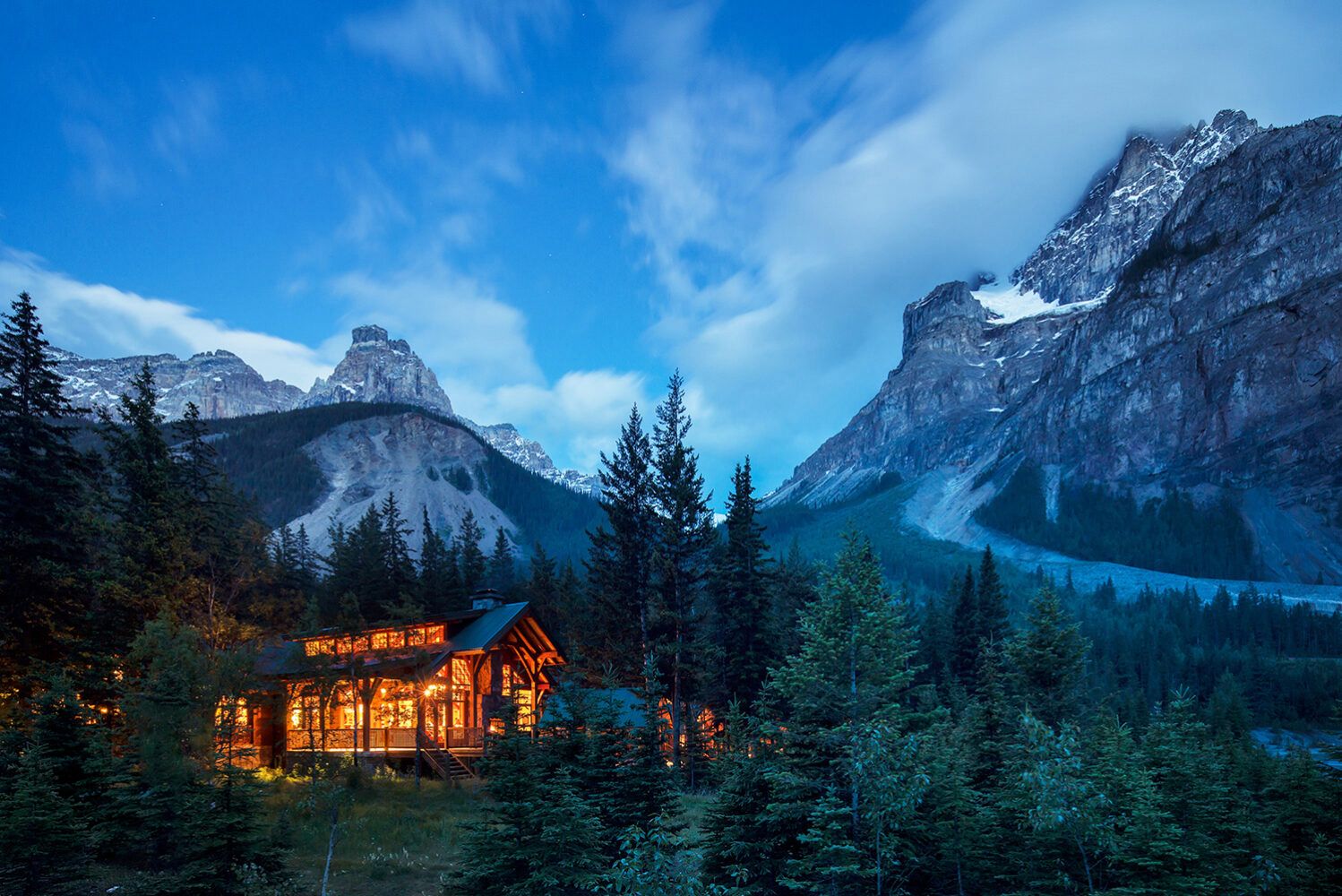
The Mountain Lodge My Brother Left Me—And The Son Who Tried To Take It
There are moments when you see someone you raised, someone you loved unconditionally, transform into a stranger whose primary interest in you is measured in dollar signs and inheritance potential. Moments when the performance of affection becomes so transparent that you can see straight through to the calculation underneath.
I had that moment sitting in a lawyer’s office in Denver, listening to my son and his wife plan how to monetize my brother’s mountain lodge before the will had even finished being read, before Robert’s ashes had settled into the Colorado soil he’d loved, before I’d had a chance to grieve the last family member who’d actually cared whether I lived or died.
My name is Evelyn Gable. I’m sixty-three years old, and I’ve spent the last five years watching my only child systematically erase me from his life while maintaining just enough contact to ensure he’d be included in any inheritance that might eventually flow my way.
The will reading was supposed to be a formality. A sad but straightforward conclusion to my brother Robert’s unexpected death from a heart attack at sixty-eight.
What it became instead was the moment I finally understood that my son had been waiting for me to become useful—and the moment I decided I was done being used.
The Funeral
Robert died on a Tuesday in March, alone in his mountain lodge, doing what he’d always done—working on repairs, maintaining the property he’d built with his own hands over forty years.
The heart attack was massive and quick. The county coroner said he probably didn’t suffer, which was supposed to be comforting but just made me angry that someone as vital and strong as Robert could be erased so suddenly, so completely.
The funeral was small. Robert had been a private man, content with his lodge and his mountains and the few close friends he’d made in White Elk County. He’d never married, never had children, poured all his energy into that property like it was the family he’d chosen instead of the one he’d been born into.
I flew up from Phoenix—from the small one-bedroom apartment I’d moved to after my divorce, after I’d downsized from the house where I’d raised James, after my retirement savings had been depleted by medical bills and the cost of just existing as a single woman in her sixties.
James didn’t come to the funeral.
“It’s just too far, Mom,” he’d said when I called to tell him his uncle had died. “Bella’s got that conference in Austin, and I can’t take time off right now. You understand.”
I did understand. I understood that my brother’s death wasn’t important enough to interrupt his schedule, wasn’t worth the cost of a plane ticket, wasn’t significant enough to warrant even a token appearance.
“The will reading is Friday,” I’d said. “Will you come to that?”
A pause. Then: “Yeah, we can make that work. Denver’s closer anyway.”
Of course he could make that work.
Because will readings might involve money.
So I stood alone at my brother’s graveside on a cold March morning, watching them lower a simple wooden casket into frozen ground, and I cried for the man who’d been more family to me in the last decade than my own son had.
Robert had been the one who’d called me every Sunday. Who’d invited me to the lodge for holidays when James was “too busy” to include me in his plans. Who’d listened to me cry about feeling invisible and worthless and had said, quietly but firmly, “You’re not invisible to me, Evie. You matter.”
Three days after the funeral, I drove to Denver for the will reading, my small suitcase packed with the black dress I’d worn to say goodbye and the cream-colored envelope Robert had given me two years ago with instructions I’d never quite understood.
The Will Reading
The law office was in downtown Denver—a modern building with too much glass and furniture that looked expensive but uncomfortable.
Thomas Whitfield, Robert’s attorney, greeted me in the waiting area with the kind of practiced sympathy that comes from decades of delivering bad news and unwelcome surprises.
“Mrs. Gable, I’m so sorry for your loss. Robert spoke of you often. You meant a great deal to him.”
“Thank you,” I said, my voice rough from days of crying.
“We’ll be joined by James and his wife, correct?”
I nodded. “They should be here soon.”
Should be. But probably wouldn’t be on time because punctuality had never been James’s strong suit, especially when the event was about someone else.
I was right.
I arrived at 2 PM for a 2 PM meeting. By 2:15, Thomas had offered me coffee and shown me to the conference room—a long space with a mahogany table and windows overlooking the city.
I chose a seat with a clear view of the thick folder that sat at the head of the table, Robert’s name on the tab, his entire life reduced to legal documents and property descriptions.
At 2:20, I heard voices in the hallway—James’s confident tone, Bella’s sharper laugh—and they walked in like they were arriving at a business meeting rather than the reading of my brother’s will.
James wore a suit that looked new and expensive. Bella wore a designer dress and carried a handbag that probably cost more than my monthly rent.
“Sorry we’re late,” James said, not sounding sorry at all. “Traffic was murder.”
Bella’s eyes swept the room, landed on the chair I’d been eyeing—the one with the best view of the documents—and she immediately took it, dropping her purse on the table like she was claiming territory.
I moved to a different chair without comment.
Thomas offered them coffee. Bella declined for both of them with a wave that suggested refreshments were beneath her concern.
I reached for the coffee pot, my mouth dry from the long drive, my hands shaking slightly from nerves and grief.
Bella’s hand shot out and stopped me, her fingers cool against my wrist.
“Maybe not, Evelyn,” she said with a smile that didn’t reach her eyes. “Wouldn’t want you spilling anything on the documents.”
The documents. Like I was a shaky old woman who couldn’t be trusted with basic motor functions.
I pulled my hand back and folded it in my lap, pressing my thumbnail into my palm until the pain gave me something to focus on besides the humiliation.
James settled into his chair, checked his phone, put it face-down on the table like he was making a concession.
Thomas cleared his throat and began reading.
His voice was steady but tired—the particular exhaustion of someone who’d spent too many years delivering grief for a living, watching families fracture over inheritances and revealing the worst parts of people who’d been performing love and concern.
I kept my purse tucked under my chair, and inside it sat the sealed cream envelope Robert had given me two years ago, my name written in his distinctive handwriting like a promise.
The Envelope
It had been Christmas two years ago. I’d driven up to the lodge—a trip I made several times a year because Robert always invited me and I was always grateful to be somewhere that felt like home.
We’d spent the evening by the fire, drinking hot cider and talking about nothing important—the kind of comfortable conversation you can only have with someone who doesn’t need you to be anything other than yourself.
Late that night, after I’d helped clean up from dinner, Robert had pulled a cream envelope from his desk drawer.
“I want you to have this,” he said, pressing it into my hands.
“What is it?”
“Insurance,” he said cryptically. “Don’t open it unless you need to. You’ll know when that is.”
“Robert, what—”
“Promise me, Evie. Don’t open it until you need to.”
His expression had been serious in a way that made me stop asking questions.
“I promise,” I’d said.
He’d squeezed my fingers then, held on like he was trying to anchor himself to something solid.
“You’re stronger than you think,” he’d said. “Don’t let people make you believe otherwise.”
I’d carried that envelope with me ever since, moving it from purse to purse, never quite forgetting about it, never quite understanding what it meant or when I’d “need” it.
Now, sitting in Thomas’s conference room with James and Bella already calculating how to spend an inheritance they assumed would be theirs to influence, I felt the envelope’s weight in my bag like it was pulling at me.
The Reading
Thomas read through the preliminaries—charitable donations to local conservation groups, small bequests to friends in White Elk County, Robert’s retirement accounts split between environmental causes he’d supported.
James listened with visible impatience, his fingers drumming quietly on the table.
Then Thomas reached the main clause.
“To my sister, Evelyn Margaret Gable, I leave the entirety of the mountain lodge property in White Elk County, Colorado, including the main structure, all outbuildings, furnishings, contents, and the surrounding forty acres of land.”
The air in the room shifted.
James’s fingers stopped drumming. Bella’s casual posture went rigid.
I felt like I’d been punched in the chest.
The lodge. Robert had left me the lodge.
Not a percentage. Not a shared inheritance. The entire property.
“That’s amazing, Mom!” James said, too loudly, too quickly, and his enthusiasm felt performative in a way that made my skin crawl. “This is perfect. We can finally build something together.”
We.
Not “congratulations.” Not “I’m sorry about Uncle Robert.” Not “what a generous gift.”
Just we—like my inheritance had already been scheduled into his calendar, like the lodge was a business opportunity rather than my brother’s life work.
Bella was already on her phone, scrolling with a polished nail.
“A family retreat,” she said, her voice taking on that excited edge she got when she was planning something expensive. “We could renovate, add luxury suites, create packages for corporate groups. The location is perfect—close enough to Denver for weekend trips, remote enough to feel exclusive.”
She was looking at photos of other mountain resorts, already comparing, already envisioning my brother’s hand-built lodge transformed into something unrecognizable.
James leaned forward, his earlier impatience replaced with focused interest.
“We’d need to see the property, obviously. Get appraisals. Figure out renovation budgets. But the potential is huge. This could be exactly what we need to—”
“James,” I interrupted quietly. “It’s not a business opportunity. It’s my brother’s home.”
“Well, it’s your home now,” Bella corrected, not looking up from her phone. “Which means it’s family property. Which means we should all be involved in deciding how to use it.”
Family property.
I’d been erased from family events for five years, but suddenly I had property and now I was family again.
Thomas was watching this exchange with an expression I couldn’t quite read.
“There is one final clause,” he said, and something in his tone made everyone go quiet.
James’s attention snapped back to the documents. Bella set down her phone.
And I felt my hand drift toward my purse, toward the envelope I’d been carrying for two years, like something was pulling me toward it.
Thomas looked at me—really looked at me, not with pity but with something like respect—and continued reading.
“In the event that my sister Evelyn chooses to accept this inheritance, she does so with full and sole ownership. No other party may claim interest in the property, make decisions regarding its use, or benefit from its sale or operation without Evelyn’s explicit written consent.”
He paused.
“Furthermore, any attempt by James Michael Gable or his spouse Isabella Gable to influence, coerce, or manipulate Evelyn’s decisions regarding the property will result in immediate activation of a secondary clause, which I have detailed in a sealed document to be opened only if such circumstances arise.”
The room was absolutely silent.
James’s face had gone pale. Bella’s mouth was slightly open.
“What the hell is that supposed to mean?” James asked, his voice tight.
“It means,” Thomas said calmly, “that your uncle anticipated exactly what just happened in this room. And he made provisions to protect your mother from it.”
“That’s ridiculous,” Bella snapped. “We were just discussing options. That’s not manipulation.”
“You were planning renovations to property you don’t own before your mother had even processed the information,” Thomas corrected. “You were referring to it as ‘family business’ and making decisions about its future without her input. That’s exactly the behavior Robert wanted to prevent.”
James turned to me, his expression shifting to something that was probably meant to look hurt.
“Mom, come on. You don’t actually think we were trying to manipulate you, do you? We’re just excited for you. We want to help.”
Five years of canceled visits. Five years of being too busy for holidays. Five years of phone calls that went unreturned.
And now, suddenly, he wanted to help.
I opened my purse and pulled out the cream envelope.
“What’s that?” James asked.
“I don’t know,” I admitted. “Robert gave it to me two years ago. Told me not to open it until I needed to.”
I broke the seal.
Inside was a single sheet of paper, handwritten in Robert’s careful script.
Evie—
If you’re reading this, James showed up to the will reading and immediately started planning how to use the lodge without asking what you wanted.
I’m sorry to be right about that.
Here’s what you need to know: I left you the lodge because you’re the only person who ever understood why it mattered. Not as an investment or a business opportunity, but as a place. As something worth protecting.
James has been calling me every few months for the past three years. Not to check on me. To ask about my “estate plans.” To suggest that the lodge would be “wasted” on just one person. To drop hints that you were “getting older” and “might not be capable of managing property.”
He wanted me to leave it to him. Or at least split it so he’d have a say.
I didn’t.
The lodge is yours. Completely. Do whatever you want with it—live there, rent it, sell it, burn it down if that’s what makes you happy.
But don’t let James convince you that his plans for it matter more than yours.
You’ve spent enough of your life making yourself smaller for people who don’t appreciate you.
The lodge is my way of giving you permission to be big again.
Love,
Robert
I read it twice while the room stayed silent.
Then I looked up at my son.
“You called him,” I said quietly. “For three years. To talk about his estate plans.”
James’s jaw tightened. “He was getting older. Someone needed to make sure things were organized.”
“You told him I couldn’t manage property.”
“I said you might need help—”
“You wanted him to leave the lodge to you.”
“I thought it made sense for the family—”
“Stop,” I interrupted, and my voice was harder than I’d ever heard it. “Just stop.”
I turned to Thomas.
“The secondary clause Robert mentioned. What does it say?”
Thomas pulled another document from the folder.
“In the event that James or Isabella attempt to manipulate, coerce, or pressure Evelyn regarding the lodge property, all charitable bequests previously designated for James’s benefit are revoked and redirected to the White Elk County Land Conservancy.”
“What bequests?” James asked, his voice going high.
“Robert left you his retirement accounts,” Thomas said. “Approximately $180,000. Conditional on you respecting your mother’s autonomy regarding the lodge. Based on what I’ve witnessed in this room, I’d say that condition has not been met.”
Bella stood up abruptly.
“This is insane. You can’t punish someone for having a conversation.”
“I can document attempted manipulation of a grieving woman by family members with financial motives,” Thomas said. “Which is exactly what I’ve been doing for the past twenty minutes. The recording system in this room is quite sophisticated.”
He gestured to a small camera I hadn’t noticed, discreetly mounted in the corner.
James’s face flushed red.
“You recorded us? Without permission?”
“You were informed when you entered the building that conference rooms may be recorded for legal purposes,” Thomas said. “It’s posted at reception and mentioned in the documents you signed.”
“Mom,” James said, turning to me with desperation creeping into his voice. “Come on. This is crazy. We’re family. We should be working together, not letting lawyers turn us against each other.”
Five years, I thought. Five years of being too busy for me. And now we’re family.
“Leave,” I said quietly.
“What?”
“Leave. Both of you. I need to think.”
“We’re not done here—” Bella started.
“Yes we are,” Thomas interrupted. “Mrs. Gable has requested privacy. If you refuse to leave, I’ll have building security escort you out.”
James looked at me like I was a stranger.
Maybe I was. Maybe the mother who’d always accommodated him, always made herself smaller, always accepted being treated as optional—maybe that woman was finally gone.
“This isn’t over,” he said.
“Yes it is,” I replied.
They left. Bella’s heels clicking sharply on the polished floor, James’s angry muttering fading into the hallway.
When the door closed, I sat in the sudden silence and cried—not sad tears, but something more complicated. Relief and grief and anger all mixed together.
Thomas handed me a box of tissues without comment.
“Your brother was a good man,” he said after a while. “He saw this coming. All of it. Told me exactly what would happen.”
“And you set up the recording.”
“He asked me to. Said you’d need proof. That you’d doubt yourself otherwise. That James was very good at making you feel guilty.”
I wiped my eyes and looked at Robert’s letter again.
You’ve spent enough of your life making yourself smaller.
“What happens now?” I asked.
“Now you decide what you want to do with your property,” Thomas said. “No pressure. No timeline. Just you and your choices.”
Six Months Later
I live in the lodge now.
Moved in three months after the will reading, after I’d sold my Phoenix apartment and packed up the life that had never quite felt like mine.
The lodge is beautiful in a way that has nothing to do with luxury or resort potential. It’s built from local timber, sits on forty acres of pine forest and mountain meadow, has a view of the Rockies that makes you understand why Robert spent forty years here.
It needs work. The roof leaks in two places. The plumbing is temperamental. The heating system is ancient.
I’m fixing it slowly, with help from local contractors who knew Robert and treat the place with respect.
I’m not turning it into a business. Not renovating it into something unrecognizable. Not maximizing its profit potential.
I’m just living in it. Reading by the fire. Walking the property. Learning to identify the birds and plants Robert loved.
James called once, two months after the will reading.
“I want to apologize,” he said. “We got caught up in the moment. We shouldn’t have started planning without asking what you wanted.”
“Okay,” I said.
“So are we good? Can we move past this?”
“Have you moved past seeing my inheritance as a business opportunity?”
Silence.
“I thought so,” I said, and hung up.
He hasn’t called again.
Bella sent a letter through her attorney, threatening to sue for “undue influence” and claiming Robert had been mentally incompetent when he made the will.
Thomas responded with the recording, the documentation, and a polite suggestion that she reconsider before filing a baseless lawsuit that would cost her money and credibility.
I haven’t heard from her since.
The charitable bequest James lost—the $180,000 that was supposed to be his—went to the land conservancy as Robert had specified. They used it to protect 200 acres of forest adjacent to the lodge, creating a permanent buffer that means this place will never be surrounded by development.
Robert would have loved that.
I think about him often. Wonder if he knew how much this gift would change my life. How much it would mean to finally have a place that was mine, that no one could take away or talk me into surrendering.
I’m sixty-three years old. I spent most of my life making myself smaller for people who didn’t appreciate the sacrifice.
My son wanted me to keep doing that—to treat my inheritance as a family resource he could manage and monetize and benefit from without actually having to treat me like family.
The lodge was Robert’s way of giving me permission to stop shrinking.
To take up space. To make decisions based on what I wanted rather than what would keep other people happy.
To finally, after six decades of accommodating everyone else, live a life that was actually mine.
I sit on the porch most evenings, watching the sun set behind the mountains, drinking coffee Robert taught me to make properly, and I feel something I haven’t felt in years:
Peace.
Not because my life is perfect or my relationship with my son is resolved.
But because I finally chose myself.
And that choice—difficult as it was, lonely as it sometimes feels—was the right one.
THE END

Adrian Hawthorne is a celebrated author and dedicated archivist who finds inspiration in the hidden stories of the past. Educated at Oxford, he now works at the National Archives, where preserving history fuels his evocative writing. Balancing archival precision with creative storytelling, Adrian founded the Hawthorne Institute of Literary Arts to mentor emerging writers and honor the timeless art of narrative.