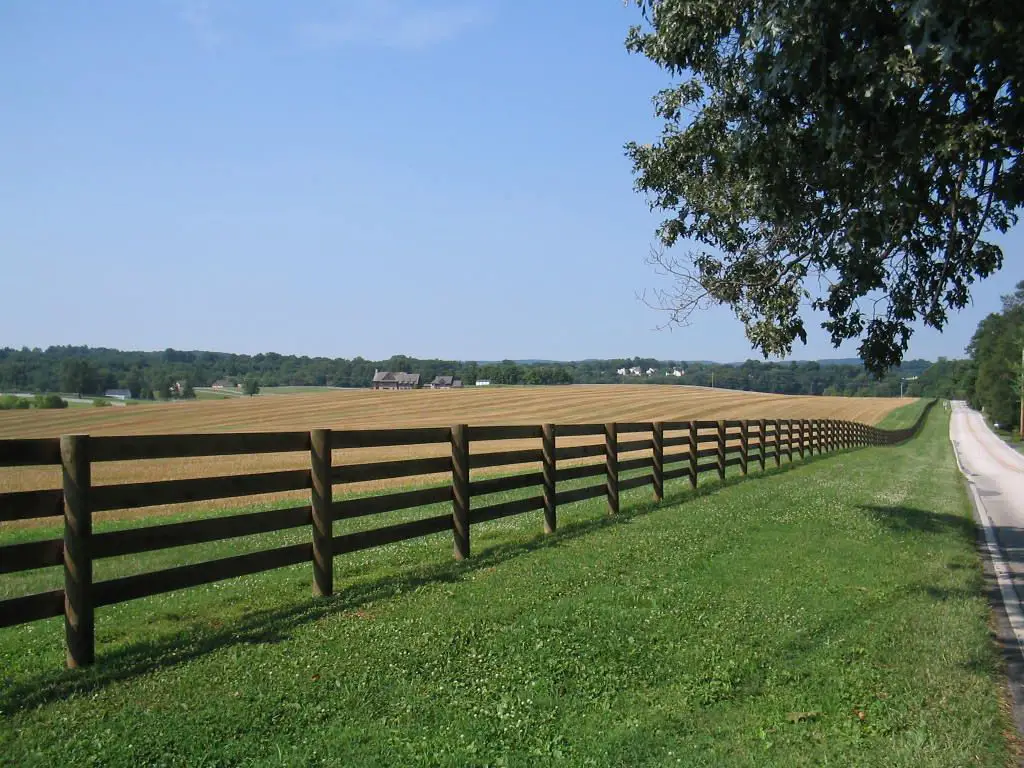
The Fence My Neighbor Built Through My Garden—And The War She Started Over Land That Wasn’t Hers
There’s a particular kind of violation that comes from watching someone deliberately destroy something you’ve built with your own hands. Not vandalism born of impulse or anger, but calculated destruction performed with the confidence of someone who believes they have every right to tear apart your work, your property, your peace.
I experienced that violation standing in my backyard, staring at a fence that had been erected through the middle of my vegetable garden while I was at work—a fence built by my neighbor who’d decided that property lines were negotiable and that her conviction mattered more than legal documentation.
My name is Thomas Webb. I’m thirty-eight years old, and I bought two acres outside the small town of Millbrook, Iowa, because I wanted the opposite of excitement—quiet mornings, dirt under my nails, space to build things with my hands and feel like myself again after years of working in corporate offices where everything was abstract and nothing felt real.
The land came with clearly marked boundaries, a detailed survey, and advice from the previous owner that would prove prophetic in ways I couldn’t have imagined.
What it didn’t come with was protection from a neighbor who would spend the next year trying to steal half my property through sheer force of will and community manipulation.
The Beginning
I closed on the house in April—a modest two-bedroom structure on two acres of flat Iowa farmland that had been in the Haskins family for three generations before old Mr. Haskins decided retirement meant a condo in Florida where someone else maintained the grounds.
The day I got the keys, the first thing I did wasn’t unpack boxes or connect utilities. It was walk the property line.
Mr. Haskins met me at 8 AM with a cane he didn’t really need and hands that looked like they’d built fences long before my father was born. He was eighty-three, sharp-minded, and deliberate in the way people get when they’ve spent decades learning that details matter.
“These stakes mark your corners,” he said, pointing to metal survey markers driven deep into the ground at precise intervals. “They were set by a licensed surveyor in 2007 when we had the property formally split from the original farmstead. GPS coordinates on file with the county. Legal description in your deed matches exactly.”
He tapped one of the markers with his cane for emphasis.
“These are your gospel,” he continued. “If anyone ever gives you trouble about boundaries—and in small towns, eventually someone always does—you don’t argue. You don’t negotiate. You go to the county and get the documentation. The markers don’t lie.”
At the time, it felt dramatic. Like advice from a different era when property disputes were common and neighbors feuded over inches.
This was 2023. We had GPS and GIS mapping and legal systems specifically designed to prevent exactly this kind of conflict.
Nobody was going to “give me trouble.” This was rural Iowa. People waved from their porches. They minded their own business. They helped each other during storms and borrowed tools and generally operated on the principle that good fences made good neighbors.
That’s why I’d moved here—to escape the passive-aggressive apartment living, the noise complaints, the parking wars, all the petty conflicts that came from humans being stacked too close together.
I wanted space. Quiet. The kind of life where your nearest neighbor was far enough away that their problems didn’t become yours.
For the first year, I was right.
The First Year
The couple on my east side, Marshall and Delphine Kowalski, were in their seventies and friendly in that quiet rural way—waves from the porch, brief conversations about weather or crops, the kind of neighborly relationship that required no maintenance and produced no drama.
Marshall helped me pull a dead branch off my shed roof after a spring storm. Delphine dropped off zucchini bread one Saturday and told me she liked seeing “a young person taking care of the place” because too many properties in the area were being bought by investment groups and left to deteriorate.
The property on my west side sat empty for my first year—a similar two acres with an older farmhouse that needed work and a barn that was slowly collapsing in that picturesque way abandoned structures do.
I spent that first year building.
I put up a workshop behind the house—nothing fancy, just a 20×20 structure with good lighting and enough space for woodworking tools. I’d always wanted to build furniture, the kind of thing you couldn’t do in an apartment, and this was my chance.
I built it myself. Every stud, every rafter, every sheet of plywood. I made a thousand trips to the hardware store, watched hundreds of YouTube videos, and slowly created a space that felt genuinely mine—built with my hands, on my land, for my purposes.
The satisfaction was profound in a way corporate work had never been. When you write code or analyze spreadsheets, the results are abstract. When you build a wall, you can run your hand along it and feel the realness of what you’ve created.
Next came the garden.
I’d never seriously gardened before, but something about having actual land made me want to try. I tilled a 30×40 space in the southeast corner of my property—close to the house, good sun exposure, far from the property line to avoid any possible disputes.
I planted tomatoes, beans, peppers, cucumbers, herbs. Things that would actually produce food I could eat, that would make the land useful rather than just decorative.
For six months, it was perfect.
I’d work my remote tech job during the day—video calls and code reviews and all the abstract digital labor that paid the bills—and then spend evenings in the workshop or garden, doing physical work that left me tired in a good way.
I slept better than I had in years. Felt more grounded. More like a complete person rather than just a brain servicing corporate needs.
And then Jolene Martinez moved into the vacant property next door.
Jolene
She arrived in late October with a U-Haul, a moving company, and a story she told to anyone who’d listen: the city had finally chewed her up, she was done with noise and crowds and the endless stress of urban living, she just wanted peace and quiet and a return to her roots.
The first time she walked over to my property, she carried a homemade pie like a peace offering and smiled with the kind of deliberate warmth that made me slightly uncomfortable even as I appreciated the gesture.
“I’m Jolene,” she said, extending her hand. “Your new neighbor. Figured I’d introduce myself properly instead of just waving across the yard.”
“Tom,” I replied, shaking her hand. “Welcome to the neighborhood. How are you settling in?”
“It’s an adjustment,” she admitted. “But a good one. I needed this. The quiet. The space. Somewhere I can actually think.”
We talked for maybe ten minutes—surface-level conversation about the town, recommendations for local services, general neighborly pleasantries.
She seemed normal. Friendly. Maybe a little intense in her eye contact, a little too interested in questions about property boundaries and previous owners, but nothing that raised serious red flags.
I thanked her for the pie, wished her well with the move, and figured she’d be the kind of neighbor you waved to occasionally and maybe borrowed a cup of sugar from.
It didn’t stay that way.
The first sign of trouble came in early spring, about six months after she’d moved in.
The Garden Fence
The deer discovered my garden in April.
I woke up one morning to find nibbled tomato plants, beans stripped to stems, peppers with bite marks like someone had taken samples. The destruction was systematic and thorough—whatever the local deer population had decided about my vegetables, the verdict was clearly positive.
I spent a weekend building a simple garden fence. Nothing elaborate—just posts driven every eight feet, wire mesh stretched between them, a gate on the side closest to the house. The kind of basic deer deterrent that every rural gardener builds eventually.
The entire structure was well within my property line—I’d measured carefully from the survey markers to ensure I was nowhere near the boundary with Jolene’s land.
I was hammering in the last post when I noticed Jolene standing at the edge of my yard, arms crossed, watching me work.
“What are you doing?” she called out.
“Building a fence to keep the deer out,” I replied, wiping sweat off my forehead with the back of my hand. “They destroyed half my garden last week.”
She walked closer, her gaze moving from the fence to the survey markers and back again.
“You know you’re building on my property, right?” she said.
I actually laughed—not to be rude, but because my brain refused to process the statement as serious.
But she didn’t laugh back.
“The property line is right there,” I said, pointing to the clearly visible survey marker. “My fence is twenty feet inside my boundary.”
Jolene walked to the marker and stared at it like it had personally offended her.
“These are wrong,” she said with absolute confidence.
“How could they be wrong? They’re GPS-surveyed metal stakes set by a licensed professional.”
“I did research,” she said, emphasizing the last word like it was a credential. “The land records around here are messed up. My grandmother owned property in this area back in the fifties. People in town remember. This land has history you don’t understand.”
I tried to keep my voice calm and reasonable.
“That’s not how property ownership works. It’s not about memory or local history. It’s about deeds and legal transfers and recorded boundaries.”
Her expression hardened.
“You’re being difficult,” she said. “I’m trying to be neighborly about this, but you’re making it personal.”
Then she walked away like she’d delivered a warning I should have understood.
I told myself it was a weird moment. New neighbor nerves. Some kind of misunderstanding that would resolve itself once she actually looked at the documentation.
I was wrong.
The Invasion
A week later, I came home from work at 5:30 PM to find a brand-new fence cutting straight through the middle of my garden.
Not a small fence. Not something ambiguous or temporary.
A real fence—six feet tall, wooden posts driven deep into the ground, horizontal slats creating a solid barrier that divided my carefully tended garden into two unequal halves.
My tomato plants were on the other side of it. My bean trellis. Three months of work suddenly inaccessible, claimed by a boundary that had been erected while I was gone.
I stood there for maybe thirty seconds, my brain struggling to process what I was seeing.
Then I noticed Jolene on her back porch, sitting in a lawn chair with a glass of what looked like iced tea, watching me like this was entertainment.
I walked to the fence—my garden was now split in two by her construction—and called across to her.
“What the hell is this?”
She didn’t flinch. Didn’t look embarrassed or uncertain.
“Protecting my property from trespassers,” she said calmly.
“You put a fence through my garden. Through the middle of my vegetables.”
“You shouldn’t have been gardening on my land,” she replied, taking a sip of her tea.
“This isn’t your land. The survey markers—”
“Are wrong,” she interrupted. “I told you that. I did my research. This property historically belonged to my grandmother’s family. Just because some corrupt county clerk filed bad paperwork doesn’t change the actual truth.”
I stared at her, feeling reality shift in an uncomfortable way.
This wasn’t a misunderstanding. This wasn’t confusion about boundaries.
This was deliberate. Calculated. She’d waited until I was at work, hired contractors or done it herself, and built a fence through my property specifically to claim it as hers.
“I’m going to the county tomorrow,” I said. “I’m getting the official documentation. And then you’re taking this fence down.”
“Good luck with that,” she smiled. “I’m sure the same people who created the problem will be very helpful solving it.”
The County
I took a half-day off work the next morning and drove to the Warren County Assessor’s office in Indianola.
The clerk was a woman in her fifties named Patricia who’d clearly worked there long enough to have seen every property dispute variation.
I explained the situation. She pulled up my property in the GIS mapping system, overlaid the legal description from my deed, and cross-referenced the survey coordinates.
It took about five minutes to confirm what I already knew.
“Your property line is exactly where your survey markers indicate,” Patricia said, turning her monitor so I could see. “The neighbor’s fence is approximately fifteen feet onto your land. She has no legal claim to that area.”
“Can you print this?” I asked.
“I can print the GIS map, the deed description, and a letter confirming the official boundary. That should be sufficient for any legal action you need to take.”
I paid for the copies and drove directly to Jolene’s house.
She opened the door halfway when I knocked, looking at me like I was a door-to-door salesman she hadn’t requested.
“The county confirms it,” I said, holding up the documents. “Your fence is on my property. You need to remove it.”
She glanced at the paperwork like it was a restaurant flyer.
“The county’s corrupt,” she said flatly.
“Corrupt?”
“In the pocket of developers,” she continued, her voice rising slightly. “They steal land from real families and sell it to outsiders. Everyone knows this. Ask anyone in town who’s been here more than five years.”
I stared at her, understanding crystallizing: facts weren’t part of this conversation. Evidence didn’t matter. Jolene had constructed a reality where she owned my land, and any information contradicting that reality was simply proof of conspiracy.
“I’m not removing the fence,” she said. “If you try to remove it yourself, I’ll call the sheriff for destruction of property.”
She closed the door.
I stood on her porch for a moment, feeling the particular frustration that comes from realizing someone has decided to be unreasonable and there’s no argument that will change their mind.
The Escalation
Over the next month, it got worse.
Jolene started treating my land like hers. She put lawn chairs on my side of her illegal fence. Let her dog run through my yard like it was a shared space. Started planting vegetables in the section of garden she’d claimed, kneeling in my dirt with her back to me like she’d been doing it for years.
When I confronted her, she accused me of harassment.
“You’re stalking me,” she said loudly enough for Marshall and Delphine to hear from their porch. “Standing in your yard watching me garden. It’s creepy.”
“That’s my garden,” I said. “You’re literally kneeling on my property.”
“It’s my property,” she corrected. “And I’m documenting your harassment. I have witnesses.”
Then she started telling her story around town.
At first, I didn’t understand what was happening. I’d walk into the local diner and feel the atmosphere shift slightly. People who’d been friendly became cooler. Conversations would pause when I entered the hardware store.
Then I heard it directly.
I was at the gas station paying for fuel when a guy in his sixties—someone I vaguely recognized from town but didn’t know personally—said casually:
“Heard you’re trying to steal that lady’s family land.”
I stopped mid-transaction.
“What?”
“The new neighbor,” he continued. “Jolene. Her grandmother’s property. Heard you’re claiming it even though everyone knows it belonged to her family.”
“That’s not—it’s my property. I have a deed. Survey markers. County documentation.”
He shrugged. “Just telling you what I heard. Seems like a city person move, you know? Coming in and pushing out locals.”
I tried to explain—showed him the county documents I’d started carrying in my truck—but he’d already decided. The story was more compelling than the evidence.
And Jolene was telling that story everywhere.
The Community Campaign
Over the next several weeks, I learned that Jolene had been systematically spreading her version of events throughout Millbrook.
She’d gone to church—I didn’t attend, which apparently was noted—and tearfully explained how a newcomer was trying to steal her grandmother’s land using corrupt county records.
She’d posted in local Facebook groups about property theft and corporate developers destroying family farms.
She’d talked to people at the grocery store, the post office, the library, anywhere people gathered and gossip flowed.
And because she’d framed it as David versus Goliath—a local woman defending her heritage against a wealthy tech worker from outside the community—people believed her.
Never mind that I wasn’t wealthy. That I worked a remote job that paid adequately but not extravagantly. That I’d bought a modest house on a budget and built my workshop with my own hands to save money.
Never mind that Jolene had moved to Millbrook six months before me. That her “grandmother’s property” was a vague claim with no documentation. That every official record contradicted her story.
The narrative was established: I was the villain.
I started getting hostile looks at the hardware store. People stopped chatting with me at the diner. Someone left a note on my truck windshield that said “LAND THIEF” in block letters.
Marshall and Delphine, my previously friendly neighbors, stopped waving.
I tried to correct the record. Showed people the county documents. Explained the survey markers. Offered evidence.
Most people listened politely and then clearly didn’t believe me.
Because Jolene had gotten there first. Had framed the story emotionally. Had made it about community and heritage and locals versus outsiders.
And I was the outsider.
The Legal Route
I hired an attorney—a property lawyer from Des Moines named Robert Chen who specialized in boundary disputes.
He reviewed my documentation, visited the property, and confirmed what I already knew: I had an absolutely airtight case.
“She has no legal standing,” Chen said. “None. Your deed is clear, your survey is professional and recent, the county records are unambiguous. If we file suit, you’ll win.”
“How long?” I asked.
“Six to eight months, probably. Iowa courts move slowly on civil matters. And it’ll cost you—legal fees will likely run between eight and fifteen thousand dollars depending on how hard she fights.”
I sat with that number, feeling sick.
“Can’t the sheriff just make her remove the fence?” I asked.
“It’s a civil matter, not criminal,” Chen explained. “The sheriff won’t intervene in a property dispute without a court order. You’ll need to sue, get a judgment, then enforce it.”
“And in the meantime?”
“In the meantime, she can keep the fence up. You can’t remove it yourself without potentially facing criminal charges for destruction of property—even though it’s on your land, she’s the one who built it, so removing it could be considered vandalism.”
The absurdity was stunning.
“So she can build on my property and I can’t remove it?”
“Not without a court order, no. Welcome to civil law.”
I authorized Chen to file suit.
The complaint was straightforward: trespass, conversion, request for injunctive relief ordering removal of the fence and cessation of use of my property.
Jolene was served two weeks later.
Her response came through her own attorney—a local lawyer named Dennis Pratt who I later learned specialized in delaying tactics and making simple cases complicated.
The response denied everything, claimed the survey was fraudulent, alleged that I’d somehow manipulated county records, and counter-sued me for harassment and emotional distress.
“This is going to be expensive and ugly,” Chen warned me. “Pratt is known for dragging things out. He’ll file motion after motion, request continuance after continuance. He’s counting on you running out of money or patience.”
“I’m not dropping this,” I said.
“Good. But prepare yourself for the long game.”
The Long Game
The lawsuit crawled forward with agonizing slowness.
Discovery requests. Depositions. Motions to compel. Motions to dismiss. Every procedural tool Jolene’s attorney could use to delay actual resolution.
Meanwhile, Jolene continued using my property like it was hers.
She expanded her garden into the disputed area. Set up a small greenhouse structure. Started parking her truck on my land when her driveway was full.
Every new violation was documented, photographed, added to the growing file of evidence.
But documentation didn’t stop it from happening.
And the community continued believing her story.
I’d become a pariah in Millbrook. The hardware store owner was still polite but noticeably cooler. The diner waitress who used to chat with me now took my order in silence. People at the grocery store gave me a wide berth.
Someone spray-painted “GO HOME” on my workshop wall.
Someone else left a dead rat on my porch.
The sheriff investigated both incidents with obvious skepticism, taking reports but making it clear he thought I was probably exaggerating or that the incidents were somehow my fault.
Marshall stopped by one evening, standing at the edge of my driveway like he was afraid to get too close.
“Look, Tom,” he said uncomfortably. “I don’t know the truth about your property dispute. But I do know Jolene’s been here longer than you, got family history in the area, and people trust her. Maybe you should just… let it go. Find somewhere else. Life’s too short for this kind of fight.”
“She built a fence through my garden,” I said. “She’s stealing my property.”
“Or maybe the boundaries really are wrong,” Marshall suggested. “Things get messed up over time. Records get lost. Maybe she’s right and the county made a mistake.”
“She’s not right. I have proof.”
“You have papers from the same people she says are corrupt,” Marshall countered. “That’s not proof. That’s just their word.”
He left, and I realized something that made me feel hollow: it didn’t matter how much evidence I had. People had chosen their narrative, and facts weren’t going to change it.
The Turning Point
Eight months into the lawsuit, something changed.
Dennis Pratt filed a motion for summary judgment—essentially asking the judge to throw out my case without a trial on the grounds that I had no valid claim.
It was an aggressive move, and Robert Chen was confident it would fail.
“Their argument is nonsense,” he said. “They’re basically claiming that feelings and family stories override legal property records. No judge is going to buy that.”
The hearing was scheduled for a Tuesday morning in the Warren County courthouse.
I took the day off work. Drove to Indianola. Sat in a courtroom that smelled like old wood and industrial cleaner.
Judge Patricia Morrison—no relation to the county clerk—reviewed the motions with the kind of patient attention that suggested she’d seen this exact dispute a hundred times before.
Pratt argued passionately about family heritage, community memory, corrupt records, the importance of honoring historical land ownership.
Chen countered with property law, GPS coordinates, professional surveys, legal chain of title.
Judge Morrison listened to both sides, asked a few clarifying questions, and then delivered her ruling:
“Mr. Pratt, your argument is that county records are unreliable and should be superseded by family memory and community consensus. Is that accurate?”
“In essence, yes, Your Honor,” Pratt said. “When official records conflict with known historical truth—”
“There is no known historical truth,” Judge Morrison interrupted. “There are recorded property transfers, professionally conducted surveys, and GPS coordinates. Those are facts. Everything else is speculation and belief.”
She turned to her computer, pulled up the county GIS system, and projected it on the courtroom screen.
“This is the official boundary,” she said, pointing to the line that clearly showed Jolene’s fence extending onto my property. “It’s based on a licensed survey conducted in 2007 and verified multiple times since. Unless the defense can provide competing survey evidence of equal professional standard, this boundary stands.”
“Your Honor, we believe the 2007 survey was conducted improperly—” Pratt started.
“Do you have an alternative survey?” Judge Morrison asked. “Conducted by a licensed surveyor? With documented methodology and GPS coordinates?”
“We have historical accounts—”
“That’s not a survey,” Judge Morrison said firmly. “Motion for summary judgment is denied. This case will proceed to trial. But I’m strongly advising both parties to settle this matter outside of court, because the outcome is not in doubt. The plaintiff has clear legal title. The defendant has nostalgia and assumption. Those things are not equivalent.”
She set a trial date for three months out and dismissed the hearing.
Outside the courtroom, Chen was smiling.
“That’s as close to a win as you get before trial,” he said. “Judge basically told them they have no case. Pratt knows it. Smart money says they’ll want to settle now rather than get destroyed at trial.”
“You think Jolene will settle?” I asked doubtfully.
“I think Jolene will dig in harder,” Chen admitted. “But Pratt will advise her that she’s going to lose and might face financial penalties for continuing a baseless claim. We’ll see which impulse wins—reason or stubbornness.”
The Settlement Offer
Two weeks later, Pratt sent a settlement proposal.
Jolene would remove the fence and cease use of my property. In exchange, I would pay her $25,000 and sign a statement saying there was “no ill will” and that the dispute was based on “honest misunderstanding of historical boundaries.”
I read the proposal three times, feeling rage build with each pass.
She’d trespassed on my property, built an illegal fence, stolen my land, turned the community against me, and now wanted me to pay her $25,000 for the privilege of getting my own property back.
“Absolutely not,” I told Chen.
“I advised against accepting,” Chen said. “But I’m legally required to present any settlement offer. What would you accept?”
“Removal of fence. Written admission that the property is mine. Reimbursement of my legal fees. And a permanent injunction preventing any future trespass.”
Chen conveyed my counter-offer.
Pratt’s response came back within hours: rejected.
We were going to trial.
The Trial
The trial took two days—far longer than necessary for what should have been a straightforward property dispute.
Pratt called witnesses—longtime Millbrook residents who testified that they “remembered” Jolene’s grandmother owning property in the area, that local history supported her claim, that county records couldn’t be trusted.
Chen systematically demolished each testimony with cross-examination that revealed none of them actually had direct knowledge of property boundaries, legal transfers, or anything beyond vague community memory.
The county assessor testified about the GIS system, the survey process, the legal description in my deed.
The surveyor who’d conducted the 2007 property split testified about his methodology, the GPS equipment used, the accuracy of the markers.
An expert witness explained how property law works, how deeds transfer ownership, why feelings and stories don’t override legal documentation.
And I testified about coming home to find a fence through my garden, about Jolene’s refusal to acknowledge evidence, about the systematic community campaign against me.
Jolene took the stand and was… honestly, kind of sympathetic.
She cried. Talked about her grandmother’s stories. About feeling like she’d finally come home to her roots only to have them stolen by someone with better lawyers.
If you didn’t know the legal reality, you’d have felt sorry for her.
But Judge Morrison did know the legal reality.
Her ruling came down three weeks later: comprehensive victory for me.
Jolene had 30 days to remove the fence. She was permanently enjoined from trespassing on my property. She was ordered to pay my legal fees—$22,000—plus an additional $5,000 in damages for loss of use of my property.
She was also ordered to publish a retraction in the local paper stating that the property was legally mine and that her claims had been without merit.
I should have felt triumphant.
Instead, I just felt tired.
The Aftermath
Jolene didn’t remove the fence in 30 days.
She filed an appeal, which delayed enforcement of the judgment for another six months.
The appeal was denied—quickly and decisively—with the appellate court noting that the lower court’s ruling was supported by overwhelming evidence and that continued litigation was approaching frivolous.
Finally, 14 months after she’d built the illegal fence, I got a court order allowing me to remove it at her expense.
A contractor took it down in four hours. Billed her $3,000.
I replanted my garden in the reclaimed space. Built a proper fence on the actual property line—metal posts, clear markers, undeniable boundary.
The retraction ran in the Millbrook Gazette, buried on page 7 in small print that most people probably never saw.
But somehow, people heard anyway.
Slowly, glacially, attitudes shifted.
The hardware store owner started chatting with me again. The diner waitress asked how my garden was doing. People at the grocery store made eye contact.
Marshall came by one evening with a six-pack of beer and an awkward apology.
“I should have given you the benefit of the doubt,” he said. “Should have looked at the evidence instead of just believing the story. That’s on me.”
“It’s hard to go against community consensus,” I said. “I get it.”
“Still wrong,” Marshall insisted. “You handled it right—went through the proper channels, got the documentation. That’s how it’s supposed to work.”
We drank beer on my porch and talked about normal things—weather, crops, local news that didn’t involve property disputes.
It felt like healing, in a small way.
Jolene never apologized. Never acknowledged wrongdoing.
She paid the judgment in installments over two years—the legal fees, the damages, the contractor bills for removing her illegal fence.
And then, three years after the whole mess started, she sold her property and moved away.
I heard she went back to the city she’d claimed to be escaping.
Now
I still live on my two acres outside Millbrook.
The garden grows well in the space I reclaimed. The workshop produces furniture I sell at farmers markets and online.
I’m still the guy who had the property dispute, but the story has changed. Now it’s “the guy who was right about the survey” instead of “the city person trying to steal land.”
I’ve made actual friends in town—people who judged me based on evidence rather than rumors, who appreciated that I’d fought through proper legal channels rather than resorting to vigilante fence removal or escalating conflict.
And I learned something important about small-town life: community memory is powerful, but it’s not necessarily accurate. Stories become truth through repetition, and once people believe a narrative, facts have to fight uphill against emotion.
But facts still matter.
Legal boundaries still mean something.
And sometimes defending your property isn’t about the land itself—it’s about refusing to let someone else’s conviction override reality just because they’re louder, more established, or more emotionally compelling.
Jolene built a fence through my garden and claimed it was protecting her property.
What she was actually doing was testing whether I’d fight for what was legally mine or accept her version of reality to avoid conflict.
I chose to fight.
It cost me money, time, community goodwill, and peace of mind.
But I kept my land.
And I learned that sometimes the real boundary isn’t property lines marked by survey stakes.
It’s the line between what you’ll accept and what you’ll fight against, even when fighting is expensive and lonely and everyone around you is telling you to just let it go.
I’m glad I didn’t let it go.
Because two acres outside a small Iowa town isn’t just about the land.
It’s about knowing what’s yours and having the courage to defend it when someone tries to take it.
THE END

Sophia Rivers is an experienced News Content Editor with a sharp eye for detail and a passion for delivering accurate and engaging news stories. At TheArchivists, she specializes in curating, editing, and presenting news content that informs and resonates with a global audience.
Sophia holds a degree in Journalism from the University of Toronto, where she developed her skills in news reporting, media ethics, and digital journalism. Her expertise lies in identifying key stories, crafting compelling narratives, and ensuring journalistic integrity in every piece she edits.
Known for her precision and dedication to the truth, Sophia thrives in the fast-paced world of news editing. At TheArchivists, she focuses on producing high-quality news content that keeps readers informed while maintaining a balanced and insightful perspective.
With a commitment to delivering impactful journalism, Sophia is passionate about bringing clarity to complex issues and amplifying voices that matter. Her work reflects her belief in the power of news to shape conversations and inspire change.