The leather photo album arrived without warning, dropped on my porch like evidence at a crime scene. No note. No card. Just my parents’ address in my mother’s neat handwriting—the kind that always looked like it belonged to someone incapable of cruelty.
Inside, the pages told a story I’d lived but never fully seen. Miami Beach—my parents and sister Lydia smiling in the sun, complete without me. Then Yellowstone. Washington D.C. California. The Bahamas. Greece. Vacation after vacation, a parade of proof that my absence wasn’t an accident. It was tradition.
Halfway through, a small photo slipped from behind a plastic sleeve and landed in my lap. Grainy. Slightly crooked. It showed my parents’ car at the end of our driveway, and in the foreground—tiny, eight years old, clutching a duffel bag—was me. My face was turned toward the camera. Crying.
Someone had photographed the moment they left me behind. And someone had saved it.
On the back, in Lydia’s familiar handwriting: “Bye, Bye Birdie. Finally.”
The memory crashed over me like a wave I’d been holding back for twenty-five years.
I was eight the first time they left me for Florida. All spring, I’d drawn crayon pictures of beaches—palm trees like green fireworks, stick figures holding hands under impossible blue skies. My drawings were taped to the refrigerator like promises.
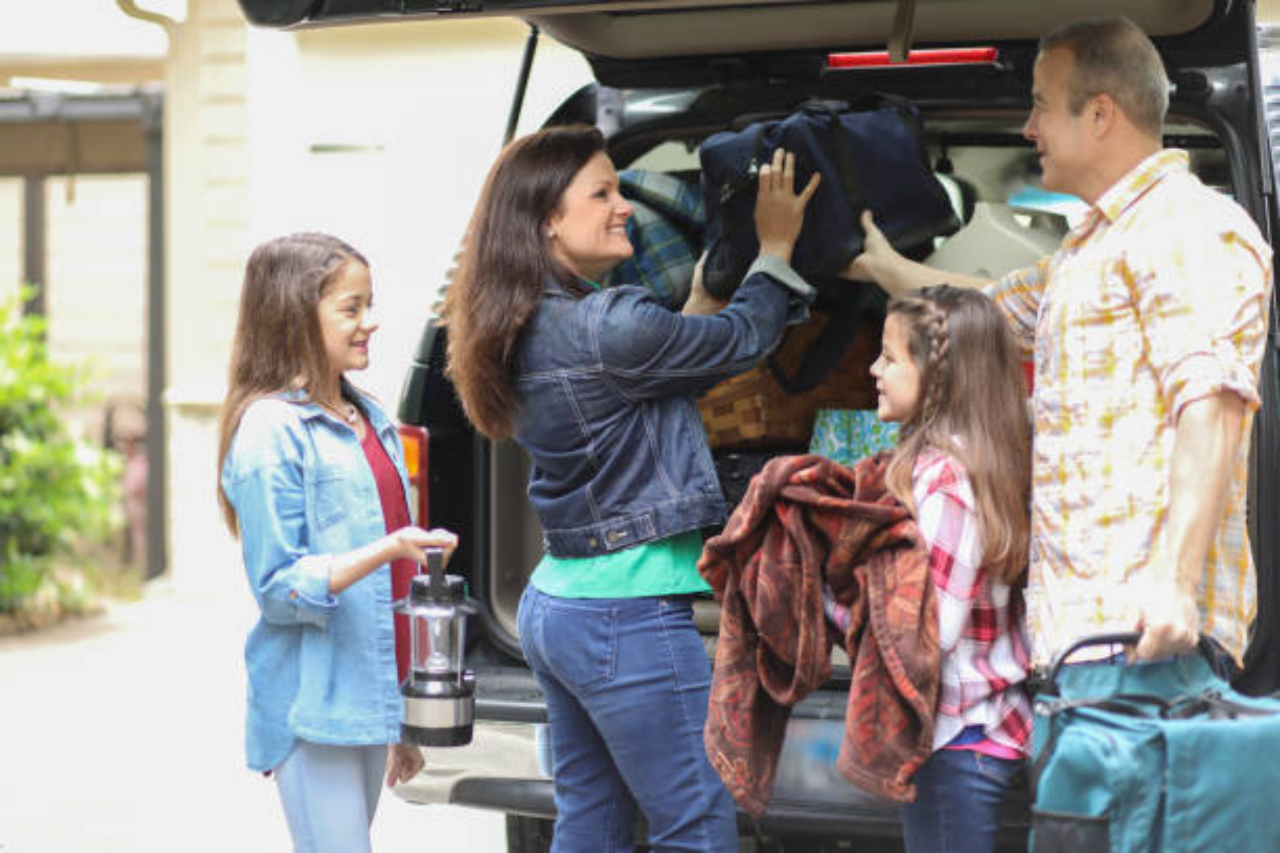
The morning they left, I watched my father load the car while my stomach twisted into knots. When I asked where my suitcase was, he didn’t turn around.
“You’re staying with Grandma Ruth this week.”
“But I thought we were going to Florida.”
My mother leaned out the passenger window, smile fixed in place. “You get car sick, honey. Remember Ohio?”
I’d thrown up once. One time, on a six-hour drive when I was five. But that single incident had become the official excuse for excluding me from every trip after—even though Lydia got motion sickness constantly and still went everywhere.
“You’re disgusting,” Lydia announced cheerfully from the backseat. “You ruined the whole trip.”
At eight years old, I knew the excuse was paper-thin. I could feel the truth underneath it, cutting through my ribs. They just didn’t want me there.
That week, Grandma Ruth fed me butter cookies and let me watch game shows while strangers on TV won vacations I wasn’t allowed to take. Then the postcard arrived—Lydia’s sprawling handwriting across glossy Miami Beach: “THE OCEAN IS AMAZING. WISH YOU WERE HERE. NOT REALLY “
When my family came home sun-kissed and loud with stories, Dad tossed me a cheap flamingo keychain and ruffled my hair like he was rewarding a dog for staying quiet.
That summer taught me the first rule of my family: if you want love, don’t be inconvenient.
It didn’t stop after Florida. It became organized. When I was ten, they went to Yellowstone while I stayed with Aunt Lorraine, who worked night shifts and left frozen dinners with sticky notes. When I was twelve, they toured Washington D.C. I begged to go.
“You wouldn’t enjoy the museums,” Mom said, waving a hand. “You hate walking.”
“I run track,” I said.
It didn’t matter. My reality never beat their narrative.
Lydia went everywhere. Lydia looked like Mom—blonde hair, soft features, the same dimples. Lydia laughed at Dad’s jokes. Lydia never asked “why” in a way that made people uncomfortable. I did. I looked like Dad’s side of the family—dark hair, sharp features, serious eyes. Mom called it “striking” in a tone that meant unfortunate.
By sixteen, I stopped asking to go. When they left for two weeks in San Diego, Mom just said casually, “There’s money for groceries.”
College couldn’t come fast enough. I applied for scholarships like it was a sport and chose a state school six hours away because distance felt like oxygen. At graduation, Mom cried theatrical tears in front of relatives. “My baby’s leaving,” she sobbed. I thought: You’ve been leaving me behind my whole life.
After college, I landed a job at a marketing firm in Chicago. My family visited once in three years—for Lydia’s bachelorette party. At brunch, Lydia talked about her wedding for ninety minutes straight while Mom nodded and asked nothing about my life beyond vague comments like “Still busy with work?”
The vacations never stopped. Italy for their anniversary. Bahamas for Lydia’s anniversary. A Greek island cruise. Hundreds of photos on social media—my family laughing in sunlight while I scrolled alone in my apartment, feeling like a ghost.
“We didn’t think you’d be able to get time off work,” Mom said once, dismissive, when I asked about Greece.
I had four weeks of vacation that year. I’d told her.
That’s when something in me went quiet. Not dramatic. Not explosive. Just done.
Then I met Warren.
We met at a networking event—terrible wine, forced conversations, people trying too hard. Warren had kind eyes and a laugh that made me feel genuinely clever. Dinner became a second dinner. Then six months passed and I couldn’t imagine life without him.
Warren’s family was everything mine wasn’t. His parents, Patricia and Roger, actually listened. His sister Kimberly included me in group texts without making me earn it. They had family dinners where people asked about your day and meant it.
After meeting my parents once—one stiff Christmas visit—Warren pulled me aside and said quietly, “They barely asked me anything about my life.”
“That’s normal,” I said automatically.
Warren stared at me, sadness in his eyes. “That’s not okay.”
It felt disorienting, like someone had pointed out I was bleeding after years of limping.
Warren proposed on a Michigan beach at sunset. No fireworks, no crowd—just us and the sound of waves. We planned a small wedding with mostly his family and my friends. My parents came, but Mom spent half the reception talking about how “traditional” Lydia’s wedding had been.
I didn’t care. I was marrying someone who wanted me around.
The first year of marriage was warm and real. Then Patricia and Roger announced their fortieth anniversary trip at Sunday dinner.
“We want to do something special,” Patricia said, eyes twinkling. “A real celebration with everyone we love.”
Her gaze landed directly on me.
They rented a villa in Tuscany for two weeks. All expenses paid. Fourteen people.
My throat tightened. “I can’t accept this,” I said. “That must cost a fortune.”
Roger leaned forward, serious and steady. “You’re family. This is what we want.”
I cried in the car afterward. Ugly sobs from somewhere deep and old. Someone wanted me on their vacation. Someone thought I was worth the trouble.
Then I made a mistake. I told my mother.
It slipped out during a mundane phone call. I mentioned Tuscany the way normal people share good news.
Mom’s voice went sharp. “Tuscany. For two weeks.”
“Yes. Patricia and Roger rented a villa for the whole family.”
“How nice,” Mom said, the words ice. “Must be lovely to be so included.” Then she hung up.
The next day, she called three times with frantic voicemails about betrayal. Dad sent a long email about “responsibility.” Lydia texted: Really? Italy while Mom and Dad are struggling? Classy.
They weren’t struggling. Dad had retired with a full pension. They owned their house outright. They took vacations constantly. But logic didn’t matter. Control did.
Mom somehow got Patricia’s number and started leaving rambling voicemails about “division” and “real family.”
Warren listened to one message, jaw clenched, and said, “This is insane.”
I was mortified. And still, the guilt gnawed at me, because guilt was how my family kept me tethered.
Then the photo album arrived.
Sitting on my kitchen floor with the album open, tears streaming down my face, I understood. Mom didn’t send it to apologize. She sent it like a leash. To remind me of my place.
Warren found me there, flipping through pages with growing horror. “Why would she do this?”
“To remind me I don’t belong,” I whispered.
That’s when the loose photo fell out—me at eight years old, crying at the driveway.
But as I looked closer at the album, I noticed details I’d missed. A restaurant receipt taped beside a California photo. A handwritten note in Mom’s handwriting: “Worth it to travel without the drama.” A postcard with Lydia’s cursive: “No whining this year!”
Then, behind a plastic sleeve, I found an envelope. Inside were folded documents—old, slightly yellowed.
TEMPORARY GUARDIANSHIP AGREEMENT. Minor Child: EMERSON GRANT.
My pulse hammered. The document listed another woman as my mother. Not my mom. The name made my vision blur: Lorraine Peters. My aunt.
There was another document. A letter on legal letterhead: Per our discussion, it is strongly advised that the minor child not be included in travel, extended family gatherings, or situations involving documentation until the matter is fully resolved. Public exposure may increase the risk of inquiry.
This wasn’t just cruelty. This was strategy. My family hadn’t simply decided I was annoying. They had treated my existence like a liability.
I called Aunt Lorraine with shaking hands.
“Emmy?” she said softly, using the nickname only she used.
“Why is your name on a guardianship agreement with my name on it?”
Guilty silence. Then a shaky inhale.
“Oh, honey,” Lorraine said, voice cracking. “She sent you the album.”
“What does that mean?”
Another long pause. “I didn’t want you to find out like this.”
“Find out what?”
“Your mother isn’t your mother.”
The room tilted. I clutched the counter to keep from sliding to the floor.
Lorraine continued carefully. “I got pregnant when I was nineteen. The father was older. Married. Powerful. Your grandparents panicked. They didn’t want scandal. So they gave you to your sister—to your mom. She’d been trying to get pregnant and couldn’t. They made an arrangement.”
“An arrangement,” I repeated, numb.
“They said you’d have a better life,” Lorraine whispered. “Two parents. A stable home. And I believed them because I didn’t have money, Emmy. I didn’t have support.”
“But why did they leave me behind? Why did they act like I didn’t belong?”
Lorraine exhaled a sob. “Because you looked like your father. Not their father. Yours.”
My skin went cold.
“The vacations,” Lorraine continued, “were when your mom felt like she could breathe. When she could pretend. When people wouldn’t ask why you didn’t resemble her. She hated that you were proof of something she didn’t choose.”
“Did you know?” I whispered. “All those times I stayed at your house—did you know?”
Lorraine choked on a sob. “Yes. And every time you cried at night, I wanted to tell you. But they threatened me. They said if I interfered, they’d ruin me.”
“Who’s my father?” I asked, voice thin.
Lorraine’s face went pale. “His name is Graham Caldwell.”
The name rang like a bell. Graham Caldwell—the man whose face was on hospital wings and library plaques. The kind of man who built things and donated to charities. The kind of man who had a wife and two kids and a life that didn’t include “nineteen-year-old girl gets pregnant.”
“He paid,” Lorraine said flatly. “Not child support. Quiet money. To your grandparents. To your parents. They called it ‘compensation’ for taking you.”
My stomach dropped. All those trips I watched from afar—funded by hush money. Money paid because my existence was a problem they wanted contained.
And the cruelest part? They could’ve used that money to include me. They chose not to. Because the point wasn’t convenience. The point was punishment.
I went to Tuscany anyway. Almost didn’t, but Warren insisted. “They had months. They chose guilt trips. You’re done.”
Tuscany was everything you imagine—warm air smelling like rosemary, hills rolling like waves, sunlight that made everything look painted. Patricia hugged me the first night and said, “We’re so happy you’re here.”
I realized I had never heard those words from my own mother.
I learned to make pasta in a small cooking class. I drank wine that tasted like peaches and summer. I walked cobblestone streets with Warren’s hand in mine and didn’t apologize for taking up space.
I posted a few photos. Nothing flashy. Just joy.
My phone exploded—sixteen calls from Mom in one day, Lydia’s texts full of rage. I turned my phone off.
When we got home, I didn’t call my mother to fight. I called a lawyer. The cease-and-desist letter went out the next week.
My parents responded by posting the photo album online with captions about “family memories” and “a daughter who turned her back.” They thought the photos would shame me. Instead, the comments turned on them.
Interesting how she’s not in any of these.
If you loved her, why didn’t you take her?
Aunt Lorraine commented one sentence that cracked my mother’s narrative: “She cried herself to sleep at my house for years. Stop pretending you included her.”
Mom deleted the post within hours, but screenshots never forget.
Then a letter arrived from a law firm. The estate of Graham Caldwell. During estate administration, information had arisen suggesting I might be his biological child. They requested DNA verification.
The test took ten minutes. A cheek swab. A signature. A confidentiality agreement.
The result came on a Wednesday morning: Probability of Paternity: 99.98%
Even though I’d expected it, seeing it in clinical numbers hit differently. It was real.
The estate lawyer offered a meeting. Inside a folder was a letter from Graham Caldwell, dated five years earlier: If this reaches you, it means my past has finally found the light. I made choices I regret. I harmed a young woman. I harmed a child. To my daughter: I am sorry.
There was a trust established for me. Substantial. The Caldwell family wished to avoid scandal and preferred confidentiality.
I wasn’t interested in revenge. I was interested in protection.
Three days later, my mother violated the restraining order I’d filed. She sent a package through Lydia—a hand-knit baby blanket with a letter: I hear you’re trying for a baby. Don’t be cruel. A child needs grandparents.
I took it to the police. The violation hearing wasn’t dramatic—just facts. Evidence. A judge who had seen this pattern before.
When the judge asked why they continued contact, my mother stood and pressed a hand to her chest. “I’m her mother. She’s destroying our family over childhood misunderstandings—”
My lawyer handed the judge the album pages. The “Worth it to travel without the drama” note. Lydia’s postcard. The photo of me crying.
The judge looked at my mother, eyes flat. “Ma’am, what part of this was a misunderstanding?”
Then my mother did what she always did when cornered: she tried to shift blame.
“She’s not even mine!” my mother snapped, voice cracking. “I raised her and she repaid me with humiliation!”
The air changed. The words were now part of court record.
The judge granted an extension of the restraining order—longer, with stricter enforcement.
As we walked out, Lydia hissed, “You ruined her.”
I stopped. “No. She ruined me. I’m just done pretending.”
Warren and I went to Scotland for our honeymoon. We climbed castle stairs slick with rain. We drank whiskey that burned like honesty. We stood on cliffs where the wind hit so hard it could peel your skin off—and I loved it, because it was real.
One night, Warren held my hand and said, “Let’s try. To have a baby.”
The fear rose immediately—the fear of repeating patterns. But Warren squeezed my hand. “Not like them. We do it our way.”
I swallowed hard. “Our way.”
It happened faster than expected. Two pink lines in a bathroom. Warren made a sound between a laugh and a sob and wrapped me in his arms.
“I’m going to be a mom,” I whispered.
And the word mom didn’t belong to my mother anymore. It belonged to me.
Patricia cried when we told her. Roger hugged Warren so hard his feet lifted. Kimberly screamed like we’d won the lottery.
Patricia took my hands and looked me in the eyes. “You will not do this alone,” she said, fierce and certain.
I believed her.
Patricia threw the baby shower. Not a Pinterest production. Just warmth. People I actually loved. I wore a soft yellow dress and didn’t feel like I was acting a part. I was just me.
I was opening gifts when Patricia’s expression shifted as she looked through the peephole. Her shoulders stiffened.
“Emerson,” she said quietly. “Your mother is outside.”
The room went silent. My heart dropped.
Patricia turned back toward the door, voice steely. “I’m not letting her in.”
I stood anyway. “I’ll handle it.”
I opened the door with Warren beside me. My mother stood on the porch holding a gift bag, hair perfect, eyes already wet.
“Emmy,” she said, voice trembling. “I just want to see you. I just want to be part of this.”
Her gaze dropped to my belly and something hungry flashed in her eyes. “A baby. My grandbaby.”
I took a slow breath. “You are not allowed here. You have a restraining order.”
Her face twisted. “You would really keep a child from family?”
I stared at her. “You kept a child from family. Me.”
Her mouth opened. No words came out.
“You don’t get to show up now and rewrite history because you want access to something you think you’re entitled to.”
Dad stepped forward. “Your mother is upset—”
“No,” Warren said sharply. “She’s manipulative.”
My mother’s tears spilled. “I did my best. I sacrificed—”
“Stop,” I said quietly.
She froze.
“You didn’t sacrifice for me,” I said. “You resented me. You documented my pain and kept it like a trophy. You sent it to me to remind me I didn’t belong.”
Her lips trembled. Then, as if she couldn’t help herself, she whispered, “You weren’t supposed to find out like that.”
The sentence hit like a confession.
“You need to leave,” I said. “Now. Or I’m calling the police.”
I pulled out my phone. And I called.
They left before the police arrived, my mother sobbing theatrically. The officer took my statement, calm and professional. Patricia stood behind me, hand on my shoulder like an anchor.
When labor started weeks later, it was 2:00 a.m. Warren drove too fast, knuckles white. Patricia met us at the hospital parking lot because she’d insisted on being on standby.
Hours later—after fear and sweat and tears and the brutal miracle of it—I heard the first cry. Strong. Furious. A cry that sounded like I’m here and I’m not asking permission.
The nurse placed her on my chest—tiny, warm, perfect. My daughter.
Warren cried openly, no shame. “She’s beautiful.”
I pressed my lips to her forehead. “She belongs,” I whispered.
Two days later, while still in the hospital, the front desk called our room. “There’s someone here asking for you. A woman claiming to be your mother.”
My blood went cold.
“Tell security to remove her,” I said.
Minutes later, raised voices echoed faintly. “She’s my daughter! That’s my grandchild!”
Then security’s calm voice. Ma’am, you need to leave.
“She can’t erase us!” my mother shouted.
I stared at my baby, and something quiet settled in my bones. I wasn’t erasing them. They erased me first. I was just refusing to let them write the next chapter.
Security removed her. Hospital police documented it. My lawyer filed it as another violation.
Later, my phone buzzed with a message from Lydia: mom got arrested
I didn’t respond.
Warren squeezed my hand. “You don’t owe anyone anything.”
I looked at my daughter. “No. I owe her everything.”
When our daughter was eight months old, Patricia planned another family trip. A beach house in Florida. The irony almost made me laugh—the same place my family had first left me behind.
When Patricia called to invite us, she said it like it was natural. “We got you the room with the balcony. The one closest to the kitchen, so you don’t have to walk far with the baby.”
She didn’t ask if I’d be “inconvenient.” She didn’t suggest I stay behind. She just made space for me.
On the first morning, I woke early and carried my daughter down to the sand. The sky was pale pink. The ocean rolled in slow, steady breaths. Warren walked beside me. Patricia and Roger joined us. Kimberly arrived with her kids, already laughing.
Lorraine came too—invited carefully, with boundaries still in place, but included because truth deserved a seat at the table. She knelt beside my daughter and offered her a seashell. My daughter grabbed it and squealed. Lorraine’s face crumpled with joy.
I watched it all—the sunlight, the laughter, the easy warmth—and something in me unclenched.
Patricia pulled out her phone. “Picture!” she called.
We gathered close—Warren’s arm around my waist, our daughter in my arms, Patricia and Roger on either side, Kimberly’s family squeezed in, Lorraine slightly behind but present.
The camera clicked.
And nobody was missing.
Later that night, I sat on the balcony and opened my phone to look at the photo. It wasn’t staged. It wasn’t perfect. Someone’s hair was messy. Roger’s eyes were half-closed.
But it was real. A family picture that included me without question.
I saved it to an album titled: WE BELONG.
I thought of eight-year-old me drawing palm trees in crayon, believing she’d finally belong on a family beach. Now, twenty-five years later, I was here—not begging for a place at the table, but sitting at one I’d chosen.
My daughter would never stand in a doorway watching suitcases get packed for a trip she wasn’t allowed to take. She would never learn that love is conditional, that belonging is earned through silence, that being “too much” is a reason to be left behind.
Because I did what my parents never did. I chose me. And then I built a family that chose me back.
The ocean rolled in, steady and sure, and for the first time in my life, the sound of waves didn’t remind me of postcards I’d never received. It reminded me of home.

Adrian Hawthorne is a celebrated author and dedicated archivist who finds inspiration in the hidden stories of the past. Educated at Oxford, he now works at the National Archives, where preserving history fuels his evocative writing. Balancing archival precision with creative storytelling, Adrian founded the Hawthorne Institute of Literary Arts to mentor emerging writers and honor the timeless art of narrative.