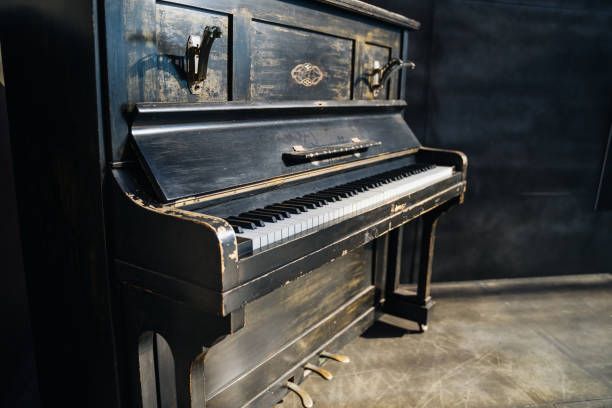
When Family Betrayal Meets Justice: The Piano That Changed Everything
Something was wrong the moment I stepped through the doorway. The air felt different—hollow, like the house itself was holding its breath. I stood in my grandmother’s living room, my teaching bag still slung over one shoulder, and my eyes went immediately to the space along the east wall where the light from the bay window used to catch the glossy finish of polished wood every afternoon at exactly this time.
The piano was gone.
Not moved. Not covered. Gone. Completely absent, as if it had never existed at all, leaving behind only a ghost of itself—a clean rectangle pressed deep into the beige carpet, the fibers still matted down in the exact shape of the instrument that had occupied that spot for thirty years. Dust motes drifted through the shaft of late afternoon sunlight, illuminating nothing but empty air where my grandmother’s most precious possession had stood since before I was born.
I felt my pulse quicken. Something cold settled in my chest.
This wasn’t just any piano. This was the piano—the 1902 Steinway Model M that my grandmother had played in concert halls across three states during her youth, the instrument she’d saved for years to purchase, the one she’d maintained with religious devotion through decades of marriage, motherhood, and eventually widowhood. The piano I had learned to play on as a child, sitting beside her on that bench while she guided my small fingers across the ivory keys, teaching me Chopin and Debussy and the old hymns she loved. The piano she had looked me in the eyes two years ago and promised, in words that left no room for interpretation: “This will be yours someday, Anna. Not anyone else’s. Yours.”
I pulled out my phone with shaking hands and called my mother. She answered on the third ring, her voice light and distracted, like she was in the middle of folding laundry or watching television. “Anna? What is it, honey?”
“Where’s Grandma’s piano?” I asked, trying to keep my voice steady.
There was a pause—not long, but just noticeable enough to confirm she knew exactly what I was asking about. “Oh,” she said, her tone shifting to something breezy, almost cheerful, the way people sound when they’re about to deliver news they’ve already decided you should be fine with. “Your father handled that. These are adult decisions, sweetheart.”
Adult decisions. The phrase hung in the air between us like a wall.
“What does that mean?” I pressed. “Handled what? Where is it?”
“We can talk about this later,” she replied, and I could hear her moving now, the sound of her footsteps on hardwood, a door closing. Creating distance. “I’m busy right now.”
“Mom—”
“Later, Anna.” And she hung up.
I stood there in my grandmother’s empty living room, phone still pressed to my ear, listening to dead air. The answer she’d given me didn’t land like reassurance or postponement. It landed like a door slamming shut in my face. Like a decision that had been made without my input, without my consent, and certainly without any intention of explaining it to me unless I forced the issue.
So that’s exactly what I did.
I drove straight to my parents’ house, still wearing my teaching clothes—wrinkled navy slacks and a cardigan with chalk dust on the sleeves. It was raining, one of those persistent autumn drizzles that turns the whole world gray and cold. My hands stayed locked tight on the steering wheel the entire twenty-minute drive, knuckles white, jaw clenched, trying not to imagine what else they might have decided without bothering to tell me. The windshield wipers beat a steady rhythm while my mind raced through possibilities, each one worse than the last.
My father answered the door holding a glass of scotch in one hand, his reading glasses pushed up on his head. He looked mildly annoyed, like I’d interrupted a peaceful evening, like I was being dramatic by showing up unannounced. Behind him, I could hear the television playing a football game.
I didn’t waste time with pleasantries. “Where’s Grandma’s piano?”
He took a sip of his drink, completely unbothered. “Sold it.”
The word hit me like a physical blow. “You what?”
“Sold it,” he repeated, as casual as if he’d said he’d sold an old toaster at a garage sale. “Ninety-five thousand dollars. Good price, actually. The dealer said we got lucky with the timing—apparently these vintage Steinways are really hot right now with collectors in Asia.”
My stomach twisted into a knot so tight I thought I might be sick right there on their front porch. “You sold it? Grandma told me that piano was mine. She promised me.”
He shrugged—actually shrugged, like I’d just asked him about the weather or mentioned a movie he hadn’t seen. “Well, she doesn’t need a piano right now, does she? And frankly, neither do you. You live in a one-bedroom apartment, Anna. Where would you even put it?”
“That’s not the point—”
“The point,” he interrupted, his voice taking on that patronizing edge he uses when he thinks he’s being reasonable, “is that your grandmother is in hospice care. She has medical expenses. She has end-of-life arrangements to consider. This was a practical decision.”
Before I could respond, my younger sister Megan appeared in the hallway behind him, and everything suddenly made terrible, perfect sense.
She was grinning—actually grinning—twirling something on her finger with the kind of gleeful energy usually reserved for Christmas morning. As she got closer, I could see exactly what it was: a Mercedes key fob, the metal still shiny and new, catching the light from the chandelier above.
“Anna!” she squealed, seemingly oblivious to the expression on my face. “Did you hear? I got a car! It’s the C-Class, the white one I showed you pictures of last month. It’s perfect.”
The pieces clicked together with sickening clarity. Ninety-five thousand dollars. A Mercedes C-Class. My grandmother’s piano—the one that was supposed to be mine—sold and converted into a luxury vehicle for my twenty-three-year-old sister who’d barely held a job for more than six months at a time.
My mother appeared then, stepping around my father with her arms already crossed over her chest, her posture defensive before I’d even said a word. She had that look on her face—the one that meant she’d already prepared her argument, already decided this conversation was going to go a specific way, and my feelings on the matter were merely an obstacle to be managed.
“Megan needs to make the right impression,” she said, her voice calm and measured, like she was explaining something obvious to a child. “You know she’s been seeing Marcus for eight months now. His family is… well, they’re particular. They have standards. She can’t show up to family events in that old Honda. It wouldn’t look right.”
I stared at her, genuinely unable to process what I was hearing. “You sold Grandma’s piano—the one she specifically left to me—to buy Megan a car so she could impress her boyfriend’s family?”
“We didn’t sell it to buy her a car,” my mother corrected, as if the distinction mattered. “We sold it because it was a valuable asset that was sitting unused, and we made a smart financial decision to invest that money in your sister’s future. Marcus comes from a very good family, Anna. This relationship could really be something. We’re just helping her put her best foot forward.”
“Her best foot forward,” I repeated numbly. “With Grandma’s piano.”
My father sighed, like I was being deliberately difficult. “Look, when your grandmother passes—and let’s be realistic here, that’s going to be soon—there’s going to be other things. Family heirlooms, jewelry, whatever. You’ll get your share. But right now, we needed liquid assets, and that piano was just sitting there.”
“Just sitting there,” I echoed. “In her house. Where she wanted it to stay. Where she told me it would be waiting for me.”
“Anna.” My mother’s voice sharpened slightly, taking on a warning tone. “Your grandmother is very ill. She’s weak. She’s confused sometimes. The last thing she needs right now is stress or conflict.”
“So you sold her most precious possession without telling her.”
“We made a decision that was in everyone’s best interest,” my mother said firmly. Then she looked at me directly, and her expression shifted to something that was probably meant to look like concern but came across more as calculation. “And please, Anna, I’m asking you as your mother—don’t bring this up with your grandmother. She needs peace right now. She needs to rest. The last thing she needs is to be upset about something that’s already done and can’t be changed.”
There it was. The real reason for this conversation. They weren’t explaining their decision to me. They weren’t asking for my understanding or my forgiveness. They were asking for my silence. They were asking me to become complicit in the lie, to let my grandmother drift away believing her wishes would be honored, never knowing that the piano she’d treasured for seventy years, the instrument she’d promised to her granddaughter, had been sold to finance my sister’s social climbing.
“Please,” my mother added, softening her voice. “For Grandma’s sake. Let her have peace.”
I looked at the three of them standing there in the warm glow of their comfortable home—my father with his scotch, my sister with her new car keys, my mother with her reasonable explanations—and I understood with perfect, painful clarity what they were really asking for.
Not my forgiveness. Not my opinion. Not even my understanding.
Just my silence. My complicity. My willingness to let them erase my grandmother’s wishes without consequence, to let them rewrite the story so it ended the way they wanted, with them as the practical, responsible adults who made hard but necessary decisions, and me as the overly emotional daughter who eventually came around and understood.
I left without saying another word. I didn’t trust myself to speak. If I’d opened my mouth, I would have screamed, and I didn’t want to give them the satisfaction of calling me hysterical.
That night, I sat alone on my couch in my small apartment—the one my father had used to justify stealing my inheritance—and stared at an old photograph I kept on my bookshelf. It was from my grandmother’s last public performance, maybe fifteen years ago, before her arthritis got too bad. She was seated at her piano on a concert hall stage, hands poised above the keys, her face tilted slightly upward and lit with the kind of radiant purpose I’d spent my whole life wanting to capture for myself.
She’d been magnificent that night. I’d been thirteen, sitting in the audience next to my parents, watching her play Rachmaninoff with such power and precision that the entire hall had fallen into breathless silence. I remembered thinking, even then, that I wanted to matter to something the way she mattered to that music. I wanted to have something I loved that much, that completely.
And she’d promised me I would. “That piano will be yours someday,” she’d told me after the performance, when I’d gone backstage and found her wiping down the keys with the soft cloth she always carried. “You’ll learn all its secrets. You’ll make it sing the way I did. I’m counting on you to keep it alive, Anna. Promise me.”
I’d promised. I’d meant it.
And now it was gone, sold to a stranger for the price of a luxury car and a shot at impressing some boyfriend’s family my sister might not even be dating a year from now.
I kept hearing my mother’s voice in my head. “Please don’t bring this up with your grandmother. She needs peace right now.”
The words echoed and twisted until they didn’t sound like concern at all. They sounded like control. Like one more way they’d managed to take something that wasn’t theirs and convince themselves they had every right to do it.
Well. I was done being controlled.
The next morning, I woke up early, called in sick to work for the first time in three years, and drove directly to Hospice of the Valley where my grandmother had been receiving care for the past six weeks. The building was quiet at that hour, just the soft beep of machines and the hushed voices of night shift nurses finishing their rounds.
Grandma was awake when I slipped into her room, propped up on pillows, looking small and frail in the hospital bed but with her eyes still sharp, still her. She smiled when she saw me, and my heart cracked a little further.
“Anna,” she whispered, her voice raspy from the oxygen tube. “This is a surprise. Shouldn’t you be teaching?”
I pulled a chair close to her bedside and took her hand—so light now, so delicate, like bird bones wrapped in paper-thin skin. I could feel every tendon, every vein. When had she gotten so small?
“Grandma,” I said quietly, “I need to tell you something. And I wish I didn’t. I wish I could protect you from this. But you deserve to know the truth.”
Her expression shifted, something wary creeping into her eyes. “What is it, sweetheart?”
I told her everything. I told her about walking into her empty living room and finding the space where her piano had been. I told her about my mother’s evasive answer and my father’s casual confession. I told her about the ninety-five thousand dollars and the Mercedes and Megan’s delighted grin. I told her about my mother asking me to keep quiet, to let her die in peace without knowing that the one thing she’d wanted to preserve, the one promise she’d made me keep, had been broken before she was even gone.
My voice shook through most of it. Tears rolled down my face and I didn’t bother wiping them away. I watched my grandmother’s face as I spoke, watched the emotions flicker across it—confusion, disbelief, hurt, and finally, something harder. Something cold and sharp and absolutely clear.
I expected tears. I expected anger, or maybe denial. I expected her to look away, to say I must be mistaken, to retreat into the soft confusion that sometimes claimed her these days.
She did none of those things.
Instead, she let out one long, tired sigh—the kind of sigh that carries decades of disappointment—and reached for her phone on the bedside table. Her hands trembled slightly as she picked it up, and I had to help her unlock it, but once she had it, her fingers moved with surprising speed through her contacts to a number I’d never seen before.
She put the phone on speaker and set it on her chest. It rang twice before a man’s voice answered, crisp and professional even at eight-thirty in the morning.
“Eleanor,” he said warmly. “This is unexpected. How are you feeling?”
“I’ve been better, Richard,” my grandmother replied, and despite everything, there was steel in her voice. “I need you to do something for me. Today, if possible.”
“Of course. What do you need?”
My grandmother’s eyes found mine, and she squeezed my hand with more strength than I thought she had left. When she spoke, her voice was perfectly steady.
“It’s time for my son and daughter-in-law to meet my attorney.”
Richard Castellano arrived at the hospice three hours later carrying a leather briefcase and wearing an expression I could only describe as grimly satisfied. He was in his sixties, gray-haired and distinguished, with the kind of quiet authority that comes from forty years of practicing estate law.
He greeted my grandmother with genuine affection, then turned to me with a small, knowing nod. “You must be Anna. Your grandmother’s told me quite a bit about you over the years.”
I didn’t know what to say to that, so I just nodded.
What followed was a conversation I’ll remember for the rest of my life. My grandmother, propped up in her hospice bed with oxygen tubes in her nose and medication keeping her comfortable, explained to her attorney exactly what had happened. She spoke slowly but clearly, pausing occasionally to catch her breath, but never once losing the thread of her story.
Richard took notes in a leather-bound notebook, his expression growing darker with each detail. When Grandma finished, he was quiet for a long moment.
“Eleanor,” he finally said, “I need to ask you directly. When you drew up your will three years ago, you were very specific about the piano. You stated that it was to go to Anna, and Anna alone, upon your death. Is that still your wish?”
“It is,” Grandma said firmly.
“And you never gave your son or anyone else permission to sell it?”
“Never.”
Richard nodded slowly. “Then we have a significant problem. Because legally speaking, what your son did constitutes theft and possibly fraud. That piano was still your property. You’re alive, Eleanor. The will hasn’t been executed. He had no legal right to sell it, regardless of any power of attorney or healthcare directive he might have.”
The words hung in the air. My grandmother’s face remained impassive, but I saw something flicker in her eyes—satisfaction, maybe, or vindication.
“What can we do?” I asked.
Richard turned to me. “Several things. First, we contact the buyer and explain the situation. The sale was unauthorized—it’s void. If they’ve already taken possession, we’ll need to recover the instrument. If they refuse, we file suit. Second, we file a police report for theft. Third, we immediately amend Eleanor’s estate documents to remove your father as executor and establish clear consequences for this breach of trust.”
“Police report?” I repeated, feeling dizzy.
“Your father stole and sold a ninety-five-thousand-dollar asset that didn’t belong to him,” Richard said flatly. “That’s grand theft. The fact that he’s family doesn’t change the legal reality.”
My grandmother spoke then, her voice quiet but absolutely certain. “Do it. All of it.”
“Grandma,” I whispered, “are you sure? This is going to cause… I mean, they’re going to…”
She squeezed my hand again. “Anna, I spent seventy years with that piano. I performed on it. I taught you on it. I promised it to you because I knew you’d love it the way I did. Your father sold it to buy your sister a car. A car.” She paused, breathing carefully. “I’m dying, sweetheart. I don’t have time for politeness anymore. And I’m not going to leave this world letting them think they can erase my wishes just because I’m too weak to fight back.”
Richard pulled out his phone. “I’ll make some calls. We’ll start with the buyer—do you know which dealer handled the sale?”
I didn’t, but I had an idea. I called my father. He answered on the first ring, his voice immediately defensive. “Anna, I really don’t think—”
“What dealer did you sell Grandma’s piano to?” I interrupted.
Silence.
“Anna, what’s this about?”
“The name of the dealer. Now.”
More silence, then, grudgingly: “Heritage Fine Instruments. Why?”
I hung up and repeated the name to Richard. He nodded, already dialing.
The conversation that followed was clinical and efficient. Richard identified himself as Eleanor Hayes’s attorney, explained that a 1902 Steinway Model M had been sold without the owner’s authorization, and that the sale was therefore void. There was a long pause while the person on the other end spoke. Richard’s expression didn’t change.
“I understand the funds have already been transferred,” he said calmly. “That’s unfortunate for all parties, but it doesn’t change the legal situation. The instrument was sold by someone who had no legal right to sell it. Ms. Hayes is still alive and has not transferred ownership. We’ll need the piano returned immediately, or we’ll be filing suit by end of business tomorrow.”
Another pause.
“Yes, I understand that will be inconvenient. I suggest you take that up with the seller, who appears to have misrepresented his authority to complete the transaction.”
When Richard hung up, he looked at my grandmother. “They’ve already delivered it to a buyer in California. They’re not happy, but they understand the legal position. They’ll recover the instrument and return it. They’re also going to pursue your son for the commission they’ll have to forfeit and any legal fees they incur.”
“Good,” Grandma said.
“The next call is going to be harder,” Richard warned. “I’m going to contact the police. This is going to create serious consequences for your son, Eleanor. He could face criminal charges.”
“I know,” she said. “Do it anyway.”
I watched Richard make that call too. Watched him explain the situation to a detective in the financial crimes unit. Watched him provide documentation, serial numbers, copies of the will. Watched the machinery of justice begin to turn.
My phone started buzzing in my pocket. My father, calling. Then my mother. Then Megan. Then my father again. I turned it off.
The next seventy-two hours were chaos.
The police showed up at my parents’ house with a warrant. My father was arrested and charged with grand theft and fraud. The story made it into the local news—”Man Arrested for Selling Dying Mother’s Piano.” My mother called me seventeen times, her voicemails progressing from confused to angry to pleading. Megan had to return the Mercedes, the dealer refusing to complete the sale once they learned the source of the funds was criminal.
My parents hired a lawyer who tried to argue that my father had power of attorney and therefore authority to manage my grandmother’s assets. Richard dismantled that argument in about ten minutes, pointing out that power of attorney doesn’t grant the right to sell assets and pocket the proceeds, and that there was clear documentation that the piano was specifically bequeathed to me, not part of the general estate.
The buyer in California was furious and threatened their own lawsuit until Richard provided them with the police report and documentation of the fraud. The piano was located, recovered, and returned to my grandmother’s house, where it sat once again in its place by the bay window.
I went to see it three days after everything exploded. Let myself into Grandma’s empty house with the key she’d given me years ago and stood in the living room looking at the instrument that had caused so much trouble.
It looked exactly the same. Still beautiful, still dignified, still resonant with seventy years of music and memory. I sat down on the bench and played a few scales, and the sound filled the room like it always had, rich and warm and alive.
My phone buzzed. My mother, texting now since I wasn’t answering calls.
This is destroying our family. How can you do this to us? To your father?
I stared at the message for a long moment, then typed back:
He destroyed it when he stole from Grandma. I just made sure there were consequences.
I didn’t wait for a response. I just kept playing—Chopin, one of the nocturnes Grandma had taught me when I was twelve. My fingers remembered the patterns even after all these years.
My grandmother died two weeks later, peacefully, in the early morning hours with me sitting beside her bed.
The funeral was awkward. My parents came but sat in the back row and left immediately after. Megan didn’t come at all. Several of my aunts and uncles—my father’s siblings—gave me cold looks, like I was the villain in this story. Like I’d somehow wronged them all by refusing to let my grandmother be robbed in her final days.
I didn’t care. I stood at the front of the church and played one of Grandma’s favorite hymns on the piano they’d brought in for the service. My hands shook through the opening bars, but then the muscle memory took over and I let the music carry me through.
When it was over, Richard found me standing by the casket.
“She left you a letter,” he said quietly, handing me an envelope. “Asked me to give it to you after.”
I opened it with trembling hands.
Dearest Anna,
If you’re reading this, then I’m gone, and I hope I went peacefully with you beside me like we planned. I want you to know how proud I am of you—not just for standing up for me, but for being the kind of person who believes in keeping promises, even when it’s hard.
The piano is yours now, like I always said it would be. Play it often. Play it loudly. Fill your home with music the way I filled mine. Don’t let it sit silent and gathering dust. Instruments are meant to be played, to be loved, to be lived with.
As for your father and the rest of them—I won’t tell you what to do. Forgiveness is your choice to make, and it’s a complicated one. But I will say this: standing up for what’s right, especially when it costs you something, is never wrong. You did the right thing, sweetheart. Never doubt that.
You kept your promise to me. The piano is safe. It’s home. And now it’s yours to love for the next chapter of its life.
All my love, always, Grandma
I folded the letter carefully and slipped it back into the envelope, then put it in my purse next to my heart.
Richard cleared his throat. “There’s one more thing. Your grandmother amended her will after… everything happened. Your father has been removed as executor and beneficiary. You’re now the sole executor of her estate, and the primary beneficiary. There are some bequests to charity and to your aunts and uncles, but the house, the piano, and the majority of her assets go to you.”
I stared at him. “I… I didn’t ask for that.”
“I know you didn’t,” Richard said gently. “But your grandmother wanted to make sure that the people who respected her wishes were the ones who benefited from her life’s work. She was very clear about that.”
It’s been six months since then. I’m writing this from my grandmother’s house—my house now, I guess, though it still feels strange to say that. I moved in three months ago, unable to afford the upkeep on a teacher’s salary but unwilling to sell it. The piano sits in its usual spot by the bay window, and I play it every day.
My relationship with my parents is… complicated. My father took a plea deal—probation, restitution, community service. No jail time, though Richard argued for it. My mother still thinks I overreacted, that I should have “handled it privately” instead of involving the law. We exchange Christmas cards. That’s about it.
Megan and I haven’t spoken since the funeral. I hear through mutual friends that she and Marcus broke up four months ago. She’s dating someone new now, someone who doesn’t care what kind of car she drives.
Sometimes I wonder if I did the right thing. If I should have just let it go, let them have the money, preserved what was left of my family relationships. Then I sit down at the piano and play, and I remember my grandmother’s hands guiding mine, her voice in my ear telling me about phrasing and dynamics and the importance of honoring the music.
She didn’t just teach me piano. She taught me that some things matter more than keeping the peace. She taught me that promises have weight, that integrity isn’t negotiable, and that standing up for what’s right—even when it costs you everything—is the only way to live with yourself.
The piano is mine now. I play it every day. I’m teaching three students on it, watching their small hands learn the same keys mine learned on decades ago. I’m filling this house with music again, the way Grandma did, the way she wanted me to.
And every time I sit down to play, I can almost feel her beside me, her hand on my shoulder, proud and pleased and vindicated.
Some inheritances are worth fighting for. Some promises are worth keeping, no matter the cost.
This piano will stay in my family. It will be played and loved and passed down when I’m old enough to have someone to pass it to. And whoever gets it next will know the whole story—not just the music, but the battle that kept it alive.
That’s Grandma’s real legacy. Not the instrument itself, but the lesson it taught me: that love and respect aren’t just words you say. They’re choices you make, even when those choices are hard. Especially when they’re hard.
I kept my promise to her. The piano is safe. It’s home.
And it always will be.
THE END

Lila Hart is a dedicated Digital Archivist and Research Specialist with a keen eye for preserving and curating meaningful content. At TheArchivists, she specializes in organizing and managing digital archives, ensuring that valuable stories and historical moments are accessible for generations to come.
Lila earned her degree in History and Archival Studies from the University of Edinburgh, where she cultivated her passion for documenting the past and preserving cultural heritage. Her expertise lies in combining traditional archival techniques with modern digital tools, allowing her to create comprehensive and engaging collections that resonate with audiences worldwide.
At TheArchivists, Lila is known for her meticulous attention to detail and her ability to uncover hidden gems within extensive archives. Her work is praised for its depth, authenticity, and contribution to the preservation of knowledge in the digital age.
Driven by a commitment to preserving stories that matter, Lila is passionate about exploring the intersection of history and technology. Her goal is to ensure that every piece of content she handles reflects the richness of human experiences and remains a source of inspiration for years to come.