The Lake They Couldn’t Take
My dad was seventy-eight years old when they put him in handcuffs on our dock, the same dock my grandfather built before Cedar Hollow even existed. Madison Price, freshly elected president of the Cedar Hollow HOA, stood ten feet away and told my neighbors out loud, “This lake is a community asset now.” And when the cruiser door slammed, I realized something ugly. This wasn’t about rules. It was about power.
I’m Ethan Cole, and up until that week, I was the kind of guy who believed paperwork solved most problems. I moved back home to settle my father’s affairs and manage the land I’d inherited—thousands of acres and one private lake that’s basically our family’s heartbeat.
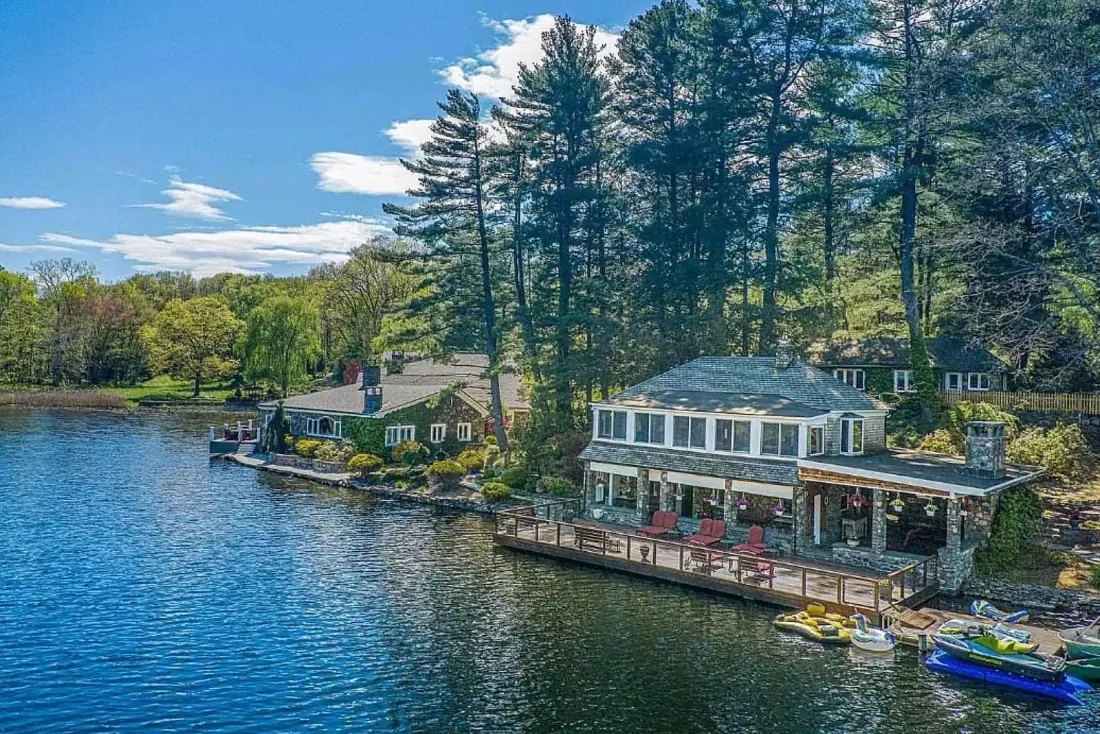
The place wasn’t flashy, but it was real. Old stone, old pines, and a shoreline my dad had walked every morning for as long as I could remember. Cedar Hollow came later, carved out of what used to be timberland on the other side of our fence. They marketed “Lake Living,” put glossy photos of my water on their brochures, and acted like the view came with their HOA dues.
For a while, it was just annoying. A few extra cars, a few teenagers wandering too close. Nothing I couldn’t handle with a polite chat.
Then Madison Price showed up.
She was the kind of woman who wore a blazer to a Saturday afternoon and spoke like she was reading a legal memo even when she ordered coffee. First time I met her, she didn’t introduce herself like a neighbor. She introduced herself like a verdict.
“Mr. Cole,” she said, smiling without warmth. “We need to formalize the community’s access to the lake.”
I remember the way she held her clipboard tight like it was a weapon. My dad stood behind me on the porch, one hand on the railing, trying to look steady.
Madison flipped a page and went straight for the numbers. “Fifty thousand for community impact. And five hundred a month for maintenance. We can call it a partnership.”
I actually laughed—just a short sound—because I thought she had to be joking. She wasn’t.
“That lake is on our deed,” I said. “It’s private property. Always has been.”
Madison’s smile didn’t change. Only her eyes did. “Deeds can be challenged, especially when a community has relied on a resource for years.”
My dad cleared his throat, calm but tired. “Ma’am, people have been welcome here because we let them. That’s called being decent.”
Madison tilted her head. “Decency doesn’t override the homeowners association. And if you don’t cooperate, the board has options.”
Two days later, those options showed up in a county vehicle. An inspector walked my shoreline saying there had been an anonymous complaint about runoff and unsafe conditions. He was polite, did his job, found nothing, and left. But the message landed exactly where Madison wanted it to land—right in my father’s chest.
That night, he sat at the kitchen table staring at his coffee. “I don’t want trouble. I just want to live out my days without people yelling at me.”
I wanted to promise him it would be fine. But Madison’s whole vibe was she didn’t just want access to the lake. She wanted to make an example out of the Cole family.
The next HOA meeting proved it. They held it in their little clubhouse—polished floors, framed rules on the wall, a big “Community First” banner. Madison stood at the front clicking through slides. And then she pointed at my dad.
“Frank Cole is refusing to comply. He’s withholding a community resource and creating safety risks.”
My dad looked around the room. People he’d waved to for years. People he’d let fish off our dock. Most of them looked down at their laps. A few looked annoyed, like my father was personally inconveniencing them.
“Some people struggle with change,” Madison said. “But Cedar Hollow has standards.”
That’s when my dad stood up slow, hand shaking slightly. “I’m not struggling with change. I’m struggling with disrespect.”
Madison didn’t miss a beat. “Sit down, sir. You’re not recognized.”
Not recognized. Like he was a nobody on his own land.
On the drive home, my dad didn’t talk. He just stared out the window, jaw tight. When we pulled into the driveway, he paused, hand on the door handle.
“She wants me to feel small,” he said. And I knew he was right.
The next morning, Madison escalated from threats to a full-on land grab. A survey crew appeared at the edge of our property line pounding stakes into the ground. I walked out and asked who authorized it.
One of the guys shrugged and handed me a printed email. Cedar Hollow HOA letterhead. Madison’s signature. A claim that they were reestablishing community boundaries due to historical usage.
I called Madison. She answered like she’d been waiting. “Oh, Ethan, don’t be dramatic. We’re just correcting a misunderstanding.”
“You’re trespassing,” I said.
She sighed. “If you cause a scene, I’ll have security handle it. Or law enforcement. Whatever’s needed.”
That afternoon, she made good on that threat.
My dad went down to the dock with a cane and a tackle box, just like he always did. Two HOA security guys followed him. Madison was there too, standing on the path with her phone out recording.
“You are not authorized to access this lake,” she said loud enough for anyone nearby to hear.
My dad blinked at her. “I built half of this dock. You’re telling me I can’t stand on my own boards.”
Madison didn’t answer him. She turned to the security guys. “Remove him.”
One of them reached for my dad’s arm. My dad jerked back, stumbled a little, and that’s when Madison called the cops.
By the time I got down there, my father was being cuffed while Madison explained sweet as pie to an officer that he was trespassing and refusing lawful HOA directives.
I saw my dad’s face in that moment. Not fear. Not anger. Humiliation.
I stepped forward. “Officer, this is private property. The HOA has no jurisdiction here.”
Madison cut in immediately. “He’s interfering. He’s unstable.”
The officer looked torn. Madison knew exactly how to play that. My dad got put in the back of the cruiser. And Madison looked at me like she just won a round.
That night, my house felt smaller than it ever had. My dad sat on the couch staring at the wall, silent. I paced, thinking I can fight this. But then I looked at my father—his shoulders slumped, his breathing shallow—and the fight suddenly had a price tag that wasn’t money.
Then my phone buzzed. Unknown number.
“Mr. Cole, my name is Luis Ortega. I work maintenance for Cedar Hollow. I shouldn’t be calling you, but you need to know something.”
We met the next morning at a diner off the highway. He kept his voice low. “She’s lying. She’s been telling the board you’re holding water hostage so she can push an emergency vote.”
“Emergency vote for what?” I asked.
Luis swallowed. “To force an easement. She’s got a developer sniffing around—someone who wants a fancy dock, a bigger clubhouse, a whole lake project.”
So that’s what it was. Not rules. Not safety. A deal.
Luis slid a printed packet across the table: emails, meeting notes, budget line items that didn’t make sense—legal fees, consulting, site planning—all tied to Madison’s personal email chain.
I drove home and went straight to the old safe in my father’s office. Inside was a thick envelope labeled in my grandfather’s handwriting: Water rights do not lose.
And as I started reading, the whole chessboard shifted.
It wasn’t just a deed. It was a set of agreements from decades ago. Water rights. Access restrictions. Mapped references to an underground valve system that fed not just our lake, but parts of the surrounding area.
The way it was written was blunt: The Cole family retained control over the lake and the flow regulation point. Period. Not negotiable. Not community-governed. Not subject to HOA bylaws that didn’t even exist back then.
I called Derek Shaw, a local attorney who’d dealt with HOAs before. He came out that afternoon, read the documents, and his eyebrows lifted.
“This is strong,” he said. “This is very strong.”
“But will it stop her?” I asked.
Derek glanced toward the lake. “Not by itself. People like this don’t stop because you’re right. They stop when you make it expensive to keep lying.”
So we built a plan. No drama. No threats. Just evidence, procedure, and a moment so clear it couldn’t be spun.
We pulled security footage from the day my father was cuffed. We gathered witness statements. Martha Lane, an older resident, said, “That woman is out of control.” Dr. Elena Reyes took independent water samples. And Luis agreed to testify because he was done watching her bully people.
Then we waited for Madison’s favorite stage: another HOA meeting.
She announced it like a coronation. Her email read: Tonight we reclaim the community lake.
The clubhouse was packed. Madison stood in front of a projector dressed like she was about to argue a case in court. She talked about shared resources and community safety. Then she pointed at me.
“Ethan Cole has refused reasonable requests. He has endangered the community and obstructed lawful access.”
I stood up slow, heart thudding. Derek stood beside me, carrying a folder.
Madison’s eyes narrowed. “You’re not recognized.”
I didn’t ask permission. I walked to the front and placed the old documents on the table gently.
“Before you vote,” I said, “you should see what you’re actually voting against.”
Madison tried to laugh. “Old papers don’t override—”
Derek cut in. “These are recorded instruments tied to water rights and flow control. And yes, they override your bylaws.”
You could feel the room shift. Madison’s smile started to crack. “That’s irrelevant. We’re discussing community access—”
I held up a page with a map reference. “This isn’t a debate. This is ownership.”
Madison’s voice tightened. “You’re threatening the community.”
“No,” I replied. “I’m correcting a lie.”
Then came the demonstration Derek warned me had to be precise. I nodded once. Luis, positioned at the control point, did exactly what we planned. For a brief moment, the clubhouse lawn irrigation outside the windows stuttered and stopped.
Not the neighborhood. Not homes. Just the HOA showpiece system.
Heads turned. People murmured. Before Madison could turn it into a speech, I nodded again. It came back on. Fifteen seconds. That was all.
But the message hit like a freight train.
Madison’s face went pale, then red. “See! He’s sabotaging us!”
Derek didn’t raise his voice. “No. He’s demonstrating lawful control while preventing harm. Something you’ve refused to acknowledge.”
Martha Lane stood up. “You got an old man arrested. You should be ashamed.”
Another resident spoke. Then another. People started talking over each other about fines Madison handed out, threats she’d made, letters she’d sent.
Derek slid the packet of evidence onto the table. Emails. Budget discrepancies. Luis’s documentation. Witness statements. The water report. The footage.
A county representative who’d been quietly observing—because Derek had arranged it—stepped forward and asked Madison for copies.
Madison’s mouth opened then closed. For the first time, she didn’t have a line ready.
An officer at the back of the room approached. “Ma’am, we need to speak with you outside.”
Madison shook her head. “This is harassment. This is a setup.”
The officer didn’t argue. He simply repeated himself.
Madison turned to the crowd, searching for allies. The room that used to nod at her didn’t nod anymore.
When she finally walked toward the door, she passed my father, who’d insisted on coming. He didn’t gloat. He didn’t smile. He just looked at her like she was what she’d always been: a bully in a blazer.
Madison’s wrists disappeared behind her back as the officer guided her out. No grand speech. Just the quiet sound of consequences arriving late but real.
The next morning, Cedar Hollow woke up to dry sprinklers. Not a minor glitch. Dead. The HOA’s showpiece irrigation—those perfect green lawns Madison loved—was brown-leaning and silent.
By noon, the clubhouse water fountain was off. By evening, people turned on taps and got a cough of air.
The neighborhood app exploded. We have nothing. My shower won’t work. Someone said it out loud: The Coles.
The HOA’s interim vice president, Harold Greene, called me at six a.m. “Ethan, we have a situation.”
“Do you,” I said.
“This isn’t funny. People don’t have water.”
“I didn’t do anything. But you should probably check your system.”
Harold swallowed. “The main feed to the community’s auxiliary line is—”
“Is controlled by the valve on my land,” I finished for him.
Silence. Then Harold said, quieter, “Madison said the lake was a community asset.”
“She lied.”
Harold exhaled sharply. “Can you help us fix it?”
I looked at my father, sitting at the table with his hands wrapped around a mug. His eyes were clearer. Less beaten down.
“I can,” I said to Harold. “But first you’re going to send an email to every homeowner explaining exactly why your water depends on a valve the HOA tried to steal.”
At eight-seventeen a.m., an email went out explaining that Cedar Hollow’s “community water enhancement system” was tied to an auxiliary flow line regulated by a private control point on Cole property. That the HOA had not legally secured an easement. That ongoing disputes had resulted in “operational suspension.”
By ten, I had a line of cars at the edge of my property. Neighbors. Some angry. Some embarrassed. Some desperate.
A woman stepped forward first. “Ethan, my baby can’t bathe.”
My chest tightened. “I’m not shutting off your drinking water. You have municipal water. What’s off is the HOA’s auxiliary system. Irrigation. The fountain. Their plumbing is badly integrated.”
A man pushed forward. “We pay dues. We were promised lake amenities.”
My father’s grip tightened on his cane. I stepped in front of him.
“You were sold a fantasy,” I said. “A brochure doesn’t change a deed.”
Martha Lane cut him off. “You should be mad at Madison. Not Ethan.”
The story shifted: not a community versus a stubborn landowner, but a community realizing it had been manipulated.
Derek showed up with his legal folder. “No one is losing access to clean water. The system affected is an HOA-controlled auxiliary line that the board expanded without securing proper rights.”
A man shouted, “What conditions?”
Derek held up one finger. “One: the HOA immediately halts all boundary actions on Cole land. Two: the HOA issues a formal correction that the lake is private property. Three: the HOA agrees to mediation. Four: the HOA reimburses Frank Cole for legal expenses.”
Harold Greene arrived looking overwhelmed. “We can agree to mediation. We can issue the correction.”
“And reimburse?” Derek asked.
My father’s voice cut through. “You had no trouble voting to put me in handcuffs. Find the courage now.”
Harold swallowed. “Okay. We’ll reimburse.”
At two p.m., Harold signed a temporary agreement in the back of Derek’s truck. Then, and only then, did we walk down to the control point.
The valve was an old steel housing set into the ground near the treeline. Luis met us there. Derek nodded to me. “Your call.”
I looked at my father. He nodded once.
I unlocked the hatch and turned the regulator half a notch—just enough to stabilize the auxiliary line without granting full draw.
In town, phones started buzzing. Water pressure’s back. People cheered like it was a miracle.
It wasn’t. It was a lesson.
That evening, my dad and I sat on the dock where he’d been cuffed. The lake was calm.
“You didn’t hurt anyone,” he said quietly.
“No,” I replied. “I hurt the illusion.”
He nodded. “That was the point.”
Madison didn’t stay quiet from the county office. She tried to become a victim immediately, claiming she acted in “good faith.” Derek responded with a single line: Historical usage doesn’t create ownership. Ask the judge.
The county pressed charges: falsifying documents, abuse of authority, harassment, and illegal boundary interference.
But Madison wasn’t worried about prison yet. She was worried about losing her developer. Because Luis brought me one more packet—emails with Brightshore Development about an “exclusive waterfront experience.” They were planning to build access points onto my lake.
The real war had just started.
Brightshore Development filed a petition for an easement claim, citing community benefit. Derek walked into my kitchen with the filing. “They’re trying to make this bigger than Madison.”
“So we make it expensive,” I said.
We filed an injunction against Cedar Hollow and Brightshore. We filed a civil claim for damages. And we contacted the state attorney general’s consumer protection unit with a complaint: Cedar Hollow marketed lake access they didn’t own.
That’s when the HOA’s base cracked. Homeowners realized they’d been sold a lie. Their anger turned inward—at the HOA, at the board, at the developers.
Harold Greene called me two weeks later. “They’re demanding resignations. People are furious.”
“Good,” I said.
Cedar Hollow homeowners were filing their own claims against the HOA for misrepresentation. Brightshore was trying to back away quietly.
Madison offered to “mediate” if I would drop charges.
I told Derek, “No.”
He nodded. “Good.”
The court hearing was held in a plain county courtroom. Brightshore’s attorney argued community benefit. Derek stood, calm as stone.
“This lake is private. It has always been private. Permission is not reliance. Decency is not an easement. And the defendants did not just request access—they attempted to seize it through intimidation, falsified documentation, and misuse of law enforcement.”
He played the footage of my father being cuffed. The courtroom went silent.
The judge granted the injunction. Cedar Hollow and Brightshore were barred from the lake, barred from the property line, barred from contact.
Outside the courthouse, a reporter asked me, “Do you feel like you won?”
I looked at my father. He was standing straighter now. Not proud. Just unbroken.
“This wasn’t about winning,” I said. “This was about stopping a bully.”
Six months later, settlement talks began. Brightshore offered money for an easement. Real money.
I declined.
Derek asked, “Are you sure?”
I looked at my father’s hands—hands that had built docks, fixed fences. “I’m sure. Some things don’t have a price.”
Cedar Hollow agreed to publicly retract marketing implying lake access, permanently remove “community lake” language, pay damages for wrongful enforcement, and fund a settlement reimbursing homeowners who purchased under false assumptions.
Madison was personally liable for fraud findings. She lost her real estate license. She moved away quietly, the way bullies do when the room finally stops nodding.
My dad and I sat on the dock one summer evening, lake water reflecting gold. He dipped his line in without asking anyone’s permission.
“You did good,” he said.
I stared at the water. “We did,” I corrected.
He nodded. “Yeah. We did.”
A year later, Cedar Hollow looked different. Less glossy. Less arrogant. The new board planted trees along their side of the fence line and installed signs: PRIVATE PROPERTY BEYOND THIS POINT.
My father’s health declined slowly, as it would have anyway. But the humiliation Madison tried to carve into him never stuck.
One morning, he walked down to the dock and said, “I’m glad I didn’t die with her voice in my head.”
I swallowed hard. “Me too.”
When my father passed two years later, the dock was quiet. At the memorial, Martha Lane came, and so did Luis Ortega.
After everyone left, I walked to the second control point in the woods, the hidden hatch my grandfather had marked for emergencies. I opened it for the first time.
Inside was a small plaque bolted to the housing. My grandfather’s handwriting etched into metal:
Water is life. Protect it. Don’t give it away to people who confuse wanting with owning.
I stood there for a long time, feeling the weight of what I’d inherited. Not just acres. Not just a lake. A responsibility. And a lesson carved into steel:
Being kind is good. Being defenseless is not.
Then I closed the hatch, locked it, and walked back to the dock where my father’s footsteps still felt present in the boards.
The water lapped softly against the wood, steady as a heartbeat.
And for the first time since Madison Price stood in a blazer and tried to take what wasn’t hers, Cedar Hollow’s view of the lake looked exactly like what it always had been.
A privilege. Not a right.

Lila Hart is a dedicated Digital Archivist and Research Specialist with a keen eye for preserving and curating meaningful content. At TheArchivists, she specializes in organizing and managing digital archives, ensuring that valuable stories and historical moments are accessible for generations to come.
Lila earned her degree in History and Archival Studies from the University of Edinburgh, where she cultivated her passion for documenting the past and preserving cultural heritage. Her expertise lies in combining traditional archival techniques with modern digital tools, allowing her to create comprehensive and engaging collections that resonate with audiences worldwide.
At TheArchivists, Lila is known for her meticulous attention to detail and her ability to uncover hidden gems within extensive archives. Her work is praised for its depth, authenticity, and contribution to the preservation of knowledge in the digital age.
Driven by a commitment to preserving stories that matter, Lila is passionate about exploring the intersection of history and technology. Her goal is to ensure that every piece of content she handles reflects the richness of human experiences and remains a source of inspiration for years to come.