The Envelope
The funeral had been beautiful, in the way that only obscene wealth can make death beautiful. White roses cascaded from crystal vases taller than I was. A string quartet played softly in the corner of the cathedral, their music swallowed by vaulted ceilings that seemed to reach toward heaven itself. My grandfather’s casket—mahogany, brass fixtures gleaming—sat at the front like a throne for the dead.
I stood in the back row, watching my family grieve in the way that rich people do: with expensive sunglasses hiding dry eyes, with designer black clothes that cost more than most people’s monthly rent, with perfectly timed sighs that suggested sorrow without actually requiring it.
Three days later, we gathered in the lawyer’s office to carve up what remained of Harrison Thompson’s empire like vultures picking at a carcass.
The conference room occupied the entire forty-second floor of the Morrison & Associates building in downtown San Francisco. Floor-to-ceiling windows overlooked the bay, where sailboats drifted like white ghosts across water that shimmered like hammered silver. The room itself was all dark wood paneling, leather chairs that cost more than cars, and the kind of silence that only money can buy.
Mr. Morrison sat at the head of the table, a silver-haired man in his sixties with the sort of face that had witnessed a thousand family fortunes change hands and had learned to show no emotion about any of them. He wore reading glasses perched on the end of his nose and had arranged my grandfather’s will in neat stacks before him, each document bound in blue folders embossed with gold lettering.
My father, Richard Thompson, sat to Morrison’s right, his leg bouncing beneath the table with barely contained anticipation. He’d worn his most somber suit—the Armani, charcoal gray—but couldn’t quite hide the gleam in his eyes. This was the moment he’d been waiting for since I was a child: the moment he would finally control the Thompson Shipping empire without his father’s iron hand on the wheel.
My mother, Linda, sat beside him with the satisfied smile of a cat who’d found an unguarded canary. She’d already started planning how to redecorate the Napa estate, I was sure. I’d heard her on the phone that morning, talking to her interior designer about “finally bringing some taste to that old barn.”
My brother, Marcus, sprawled in his chair with the casual arrogance of someone who’d never worked a day in his life but somehow believed he deserved everything anyway. He was scrolling through his phone, barely pretending to pay attention, probably already shopping for whatever toy he expected to inherit.
And then there was me.
April Thompson, twenty-six years old, sitting at the far end of the table like an afterthought. I’d been the one who visited Grandpa every Sunday without fail. I’d been the one who sat with him during his chemotherapy treatments, holding his hand while poison dripped into his veins in the hope of buying him a few more months. I’d been the one who listened to his stories about building his company from nothing, about sailing across the Pacific in his youth, about my grandmother and how much he missed her.
But in my family, love had never been currency that mattered.
“Shall we begin?” Morrison’s voice cut through the tension like a knife through silk.
My father sat up straighter. My mother stopped examining her manicure. Even Marcus pocketed his phone.
Morrison opened the first folder with practiced precision. “The last will and testament of Harrison James Thompson, dated March 15th of this year, prepared and witnessed in accordance with the laws of the State of California.”
He began reading in that flat, legal monotone that made even the transfer of millions sound boring. But the numbers weren’t boring. Not even close.
“To my son, Richard Thompson, I bequeath Thompson Shipping International, including all assets, holdings, subsidiaries, and associated properties. Current valuation: thirty-two million dollars.”
My father’s face transformed. Pure, unadulterated joy, quickly masked behind a expression of solemn gratitude. “Dad always knew I was the right one to carry on his legacy,” he murmured, though Grandpa had spent the last ten years of his life fighting with him over every business decision.
Morrison continued without pause. “To Linda Carter Thompson, I bequeath the Napa Valley estate, including the main residence, guest houses, vineyards, and all furnishings. Valued at eight point three million dollars.”
My mother actually clasped her hands together. “Oh, Harrison always did have such wonderful taste.” This, from the woman who’d called the estate “that dusty old barn” at every family gathering.
“To Marcus Richard Thompson,” Morrison read, “I bequeath the Manhattan penthouse located at 157 West 57th Street, along with the complete vintage automobile collection currently housed in Sonoma. Combined value: twelve point seven million dollars.”
Marcus pumped his fist like he’d just scored a touchdown. “Yes! Dad, did you hear that? The penthouse and the cars! Grandpa really did love me best!”
The cars. Grandpa had spent forty years collecting those cars, each one chosen with care, each one with a story. Marcus would probably sell half of them before the estate was even settled.
Morrison cleared his throat, and I felt every eye in the room turn toward me. The air seemed to thicken. I sat up straighter in my chair, trying to maintain some dignity even as my heart sank.
“And finally,” Morrison said, his voice softening slightly—with pity, I realized—”to his granddaughter, April Marie Thompson, Harrison bequeaths this envelope.”
He slid a simple manila envelope across the polished table. It whispered against the wood as it moved, the only sound in a room that had suddenly gone very quiet.
That was it. No property, no money, no vintage cars or shipping companies or vineyard estates. Just an envelope.
The silence lasted exactly three seconds before my mother started laughing. Not a polite titter but a full, genuine laugh that she tried to hide behind her hand. It didn’t work.
“Oh, April,” she gasped, patting my knee with her perfectly manicured hand. “Don’t look so devastated, sweetheart. I’m sure it’s a lovely letter. Maybe some advice about finding yourself a rich husband? Lord knows that’s probably what you need most at this point.”
Marcus wasn’t even trying to hide his amusement. He leaned across the table, grinning like a shark. “What do you think’s in there, sis? Monopoly money? A coupon for a free yacht ride? Maybe a participation trophy for being Grandpa’s least favorite?”
My father said nothing, but the smirk on his face told me everything. In his mind, he’d already written me off as competition. I was harmless now. Irrelevant.
My hands shook as I picked up the envelope. It was heavier than I expected, and something inside shifted when I lifted it. Not just paper, then.
“Thank you, Mr. Morrison,” I managed, my voice barely above a whisper.
I stood up, clutching the envelope to my chest like a shield, and walked toward the door on legs that felt like water. Behind me, the laughter continued. I heard my mother say something about “at least she got closure” and Marcus’s braying laugh in response.
The elevator doors couldn’t close fast enough.
Alone in the descending elevator, my reflection stared back at me from the polished steel doors. I looked small, defeated, still wearing the black dress from the funeral. My eyes were red-rimmed, but I refused to let the tears fall. I wouldn’t give them that satisfaction.
With shaking fingers, I tore open the envelope’s seal.
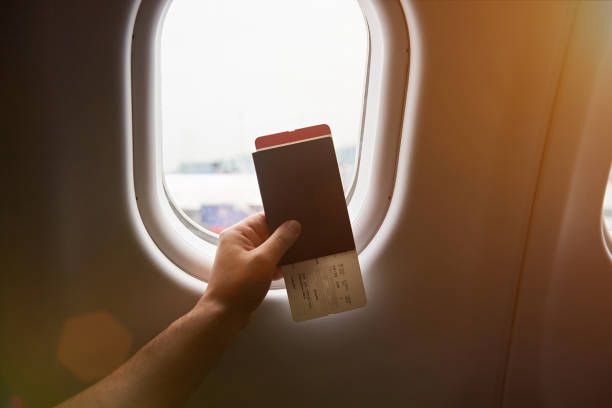
Inside was a plane ticket—first class, San Francisco to Monaco, departing tomorrow morning. Beneath it, a single piece of paper: a bank statement from Credit Suisse, Monaco Branch. And paperclipped to that, a note in my grandfather’s handwriting, the letters shaky but unmistakable:
“Trust activated on your 26th birthday, sweetheart. Time to claim what’s always been yours. Call Alexander when you arrive. He’ll explain everything. I love you more than you’ll ever know. Make them regret underestimating you.”
My breath caught in my throat. Trust? What trust?
I looked at the bank statement, scanning for the balance, expecting maybe enough for a year’s rent, perhaps a small nest egg to start over somewhere—
The number didn’t make sense at first. Too many digits. My brain couldn’t process it.
€327,000,000.00
Three hundred twenty-seven million euros.
I blinked. Counted the zeros again. Once, twice, three times. My hands started shaking so violently that I nearly dropped the paper.
At current exchange rates, that was roughly three hundred forty-seven million dollars.
Three hundred and forty-seven million dollars.
The elevator jerked to a stop on the ground floor, and I stumbled out into the marble lobby, the bank statement clutched in my fist. People moved around me like I was a stone in a river—businessmen in sharp suits, women in power heels, all of them part of a world that suddenly seemed very far away.
My phone buzzed in my purse. The family group chat. Against my better judgment, I looked.
Marcus had posted a photo of a set of Ferrari keys in his palm. Caption: “Winners take it all. Losers get paper envelopes. “
Beneath it, my mother had added a laughing emoji and: “Don’t be mean to your sister, Marcus. I’m sure April’s envelope is very special to her.”
The patronizing tone, the casual cruelty, the absolute certainty that they had won and I had lost—it all crystallized into something cold and hard in my chest.
I looked down at the bank statement again. At the number that still didn’t seem real. At my grandfather’s note with its final instruction: Make them regret underestimating you.
A slow smile spread across my face, nothing warm or kind about it.
I pulled out the gold-embossed business card that had also been in the envelope:
Prince Alexander de Monaco
Private number: +377…
My hands had stopped shaking. I dialed.
The phone rang once. Twice. Then a voice answered, refined and European, with the kind of accent that suggested boarding schools in Switzerland and summer homes on the Riviera.
“Hello, Miss Thompson. We have been awaiting your call.”
The flight to Monaco was surreal. First class on an international carrier wasn’t just a seat—it was a private pod with a bed, a personal entertainment system, champagne whenever I wanted it, and a flight attendant who seemed to anticipate my every need before I knew I had it.
I should have been sleeping. Instead, I spent the entire fourteen hours researching.
Prince Alexander de Monaco was real—devastatingly so. Forty-two years old, educated at Cambridge, a distant cousin to the ruling Grimaldi family. He managed one of the most exclusive private wealth management firms in Europe, catering exclusively to clients with portfolios exceeding one hundred million euros. His firm, Beaumont & Associés, had been managing my grandfather’s European holdings for over thirty years.
Holdings I’d never known existed.
The more I dug, the more I found. My grandfather hadn’t just been a successful shipping magnate. He’d been brilliant. Over the past four decades, he’d quietly moved assets into trusts, into European real estate, into art collections and rare investments that never appeared on the family’s radar because they were all held in offshore accounts under strict privacy laws.
And he’d left all of it to me.
The trust had been established on the day I was born, structured to activate on my twenty-sixth birthday. Every mention of it in the documents I found online—sparse as they were—emphasized one thing: completely irrevocable. My father couldn’t touch it. My mother couldn’t contest it. Marcus couldn’t charm or bully his way into it.
It was mine, and mine alone.
When we landed in Nice—the closest international airport to Monaco—a driver was indeed waiting. He stood in the arrivals hall holding a sign that read “Miss April Thompson” in elegant script.
“Miss Thompson?” He was older, perhaps sixty, with silver hair and the bearing of someone who’d spent his life in service to wealth. “I’m Henri. Prince Alexander sent me to collect you. Your luggage?”
I had only a carry-on—I’d left San Francisco with nothing but a hastily packed bag. “This is all.”
“Very good, ma’am. If you’ll follow me?”
The car was a Rolls Royce Phantom, black as midnight, with interior leather so soft it felt like sin. Henri drove in silence through Nice and then along the famous coastal road toward Monaco. The Mediterranean sparkled to our left, impossibly blue, dotted with yachts that probably cost more than my father’s entire shipping company.
“First time in Monaco, ma’am?” Henri asked.
“Yes.”
“You’ll find it quite different from San Francisco, I imagine. Smaller, certainly, but…” He paused, searching for the right word. “Concentrated.”
Concentrated wealth, he meant. Concentrated power. Concentrated everything that money could buy.
We entered Monaco through the coastal road, and suddenly I understood what he meant. The tiny principality clung to the mountainside like a jewel box, every building gleaming, every street perfectly clean, supercars parked along roads where even the bus stops looked like they cost a fortune.
Henri navigated through narrow streets that climbed the hill, past the famous casino, past shops with names I recognized from fashion magazines but had never dared enter. Finally, we pulled up to a building that looked like it belonged in a fairy tale—belle époque architecture, balconies dripping with flowers, a doorman who snapped to attention as our car approached.
“The prince’s office,” Henri announced. “Top floor. He’s expecting you.”
The elevator was all mirrors and brass, and I caught sight of my reflection: rumpled from the flight, my hair a mess, my eyes wide with exhaustion and disbelief. I looked like exactly what I was—a girl from San Francisco who was in way over her head.
The elevator opened directly into an office that took my breath away. Floor-to-ceiling windows overlooked the entire principality—the harbor with its impossible yachts, the palace perched on its rock, the Mediterranean stretching to the horizon. The office itself was decorated with the kind of understated elegance that screamed old money: antique furniture, oil paintings that were probably worth millions, a desk that looked like it had witnessed centuries of deals.
And behind that desk stood Prince Alexander.
He was taller than his photos suggested, with dark hair graying at the temples and blue eyes that assessed me in one swift, comprehensive glance. He wore a suit that had definitely been tailored on Savile Row, and when he smiled, it was warm but somehow also calculating.
“Miss Thompson,” he said, coming around the desk with his hand extended. “Welcome to Monaco. Please, sit. You must be exhausted from your journey.”
I shook his hand—firm grip, warm palm—and sank into a leather chair that probably cost more than my car back home.
“I apologize for the mystery,” he continued, settling back behind his desk. “But your grandfather was very specific about how this was to be handled. He wanted you to come here in person. He wanted you to understand the full scope of what he’d built before we had this conversation.”
“I don’t understand any of this,” I admitted. “The will reading was three days ago. My family inherited everything—the company, the properties, everything. And I got an envelope.”
Alexander’s smile widened. “Yes, I heard about that. Your grandfather predicted exactly how it would play out. He knew your father would take the shipping company, your mother the Napa estate, your brother the Manhattan penthouse and cars. He gave them exactly what they expected to receive.”
“But—”
“But those assets represent perhaps fifteen percent of Harrison Thompson’s total wealth,” Alexander said quietly. “The real fortune—the one he spent forty years building—was never part of the family holdings. It was never incorporated in the United States. It was never subject to American tax law or family litigation. It exists entirely separate, held in trusts he established through my firm decades ago.”
My mouth went dry. “How much?”
Alexander slid a leather portfolio across the desk. “The current valuation, as of this morning. Please, take your time reviewing it.”
My hands trembled as I opened the portfolio. Inside were dozens of pages—property deeds, stock certificates, account statements, investment summaries. I started reading, my eyes widening with each page.
A villa in Cap Ferrat, valued at forty-eight million euros. An apartment in Paris’s 7th arrondissement overlooking the Eiffel Tower, twenty-two million. A collection of Impressionist paintings currently on loan to the Musée d’Orsay, estimated value ninety-five million. Shares in three different tech companies that had gone public in the last decade, combined value over one hundred million. Real estate in London, New York, Tokyo, Sydney—all held in shell companies, all producing rental income that flowed into the trust.
And the cash accounts. Sweet God, the cash accounts.
“The total liquid assets currently stand at three hundred twenty-seven million euros,” Alexander said, watching me. “Real estate and art holdings bring the total estate value to approximately six hundred fifteen million euros. At current exchange rates, that’s roughly six hundred fifty million dollars, Miss Thompson.”
The room tilted. I gripped the edge of the desk.
“Your grandfather,” Alexander continued gently, “was one of the shrewdest investors I’ve ever known. He didn’t just build a shipping company. He built an empire. And he wanted you—specifically you—to inherit it.”
“Why me?” I whispered.
“Because you were the only one who loved him for who he was, not what he had. Because you were the only one who visited him in the hospital, who cared about his stories, who saw him as a human being rather than a bank account.” Alexander’s voice was soft. “He told me that you were the only one with a soul in your family. The only one worth saving.”
Tears burned my eyes. “They laughed at me. When the lawyer gave me that envelope, they laughed.”
“I know. Your grandfather knew they would. That’s why he structured it this way. He wanted them to show their true colors. He wanted you to see exactly how little they valued you. And then—” His smile turned sharp. “He wanted you to have the last laugh.”
I looked down at the portfolio again, at the staggering numbers that represented my grandfather’s life work. “What happens now?”
“Now,” Alexander said, standing, “you decide what kind of person you want to be. You have resources most people can’t even imagine. You can disappear, live a quiet life somewhere beautiful. You can build something meaningful, create a legacy of your own. Or—” His eyes glinted. “You can go back home and show your family exactly what they threw away when they underestimated you.”
I stayed in Monaco for two weeks, learning to navigate my new reality. Alexander introduced me to his team—lawyers, accountants, investment advisors, all of them discreet, all of them brilliant. They walked me through the empire my grandfather had built, explaining each asset, each investment, each strategic decision that had turned millions into hundreds of millions over four decades.
I learned that I owned a penthouse in Monaco itself—larger and far more valuable than Marcus’s Manhattan apartment. I learned that the villa in Cap Ferrat came with staff who’d been on my grandfather’s payroll for years, loyal and discreet. I learned that I could, quite literally, never work another day in my life and still have enough money for ten lifetimes.
But I also learned something else: money, in quantities like this, wasn’t just about buying things. It was about power. Influence. The ability to shape the world around you.
And I learned that I wanted to use that power to teach my family a lesson they’d never forget.
On my last day in Monaco, Alexander took me to lunch at a restaurant perched on the cliff’s edge, where we ate fresh fish and watched the yachts glide across the impossibly blue water.
“Have you decided?” he asked over coffee.
I set down my cup. “I’m going home. But I’m not telling them anything. Not yet.”
His eyebrows rose. “An interesting choice.”
“My grandfather wanted them to regret underestimating me,” I said. “I’m going to make sure they do. But on my terms. In my time.”
Alexander raised his glass. “To Harrison Thompson’s granddaughter. I believe he would be very proud.”
The flight back to San Francisco felt different. I felt different. I wore new clothes—nothing flashy, just well-made pieces that fit perfectly, that made me feel like someone who belonged in first class. I carried a new bag, leather soft as butter. And in my account, I now had access to funds that could buy and sell my father’s shipping company ten times over.
But nobody needed to know that yet.
I took a taxi from the airport to my small apartment in the Mission District. It was the same cramped one-bedroom I’d lived in for three years, with its temperamental heating and the neighbor who played loud music at two in the morning. But now, looking at it with new eyes, it seemed almost quaint. Temporary.
My phone had been blowing up for two weeks straight. Missed calls from my mother, my father, Marcus. Text messages asking where I was, why I wasn’t returning their calls, whether I was okay. Not because they cared, I knew. Because they wanted to gloat more about their inheritances.
I ignored them all.
Instead, I called Mr. Morrison, the lawyer.
“Miss Thompson,” he said, sounding surprised. “I hope you’re well. Your family has been trying to reach you.”
“I know. Mr. Morrison, I need to ask you something. That envelope my grandfather left me—did you know what was in it?”
A long pause. “Yes, Miss Thompson. I did.”
“And you let them laugh at me. You let them think he’d left me nothing.”
“Your grandfather’s instructions were very specific. I was to give you the envelope and say nothing else. No explanations, no hints. He wanted it to play out exactly as it did.” Morrison’s voice softened. “For what it’s worth, I’m very glad you went to Monaco. Harrison was one of the finest men I ever knew. He wanted you to have the life he couldn’t give you while he was alive, free from your family’s poison.”
“Thank you,” I said quietly. “I understand now.”
Over the next few months, I began quietly reshaping my life. I didn’t quit my job at the nonprofit where I worked—I actually started going in more, throwing myself into the work I loved. I didn’t move out of my apartment or buy a new car or do any of the obvious things someone might do with sudden wealth.
Instead, I invested. I bought a stake in a struggling tech startup that reminded me of companies my grandfather had backed in their early days. I donated anonymously to causes I believed in. I started learning about the family business—not my father’s shipping company, but the real business, the network of investments and properties that now belonged to me.
And I watched my family.
My father struggled with the shipping company almost immediately. Turns out, running a multi-million dollar business required actual skill, not just a sense of entitlement. Within six months, he’d lost two major clients and was scrambling to keep the company afloat.
My mother quickly discovered that maintaining a Napa Valley estate cost a fortune. The vineyards needed constant care, the house required a full staff, property taxes alone were crushing. She started talking about selling it within a year.
And Marcus—poor, predictable Marcus—sold half the car collection within three months to pay off gambling debts I hadn’t even known he had. The penthouse, it turned out, came with maintenance fees that ate up most of his trust fund income.
They’d each gotten exactly what they wanted. And it was destroying them.
I waited a full year before making my move. A year of watching them struggle, watching them realize that their inheritances weren’t the golden tickets they’d imagined. A year of letting them forget about me entirely.
And then I invited them to dinner.
We met at Gary Danko, one of San Francisco’s most exclusive restaurants. I’d made the reservation under my name, and when my family arrived, they looked confused to see me already seated at the best table in the house, a bottle of wine that cost more than their monthly car payments breathing beside me.
“April?” My mother looked me up and down, taking in my outfit—Armani, simple but unmistakably expensive—with confusion. “What is this?”
“Family dinner,” I said pleasantly. “Please, sit. I have something I want to discuss with you.”
They sat, exchanging glances. My father looked tired, older than I remembered. My mother’s smile was strained. Marcus just looked suspicious.
“How have you been, sweetheart?” Mom asked, her voice dripping with false concern. “We’ve barely heard from you this year.”
“I’ve been well. Busy. Learning about investments, actually. Grandfather left me quite a lot to think about.”
Marcus snorted. “Right. That envelope. What was in it, anyway? A heartfelt letter telling you how special you are?”
“Actually,” I said, “it was a bank statement. And a plane ticket.”
I pulled out a folder—much like the one Alexander had given me a year ago—and slid it across the table. “I thought you should know what grandfather really left me. Since you all seemed so amused at the will reading.”
My father opened the folder. I watched his face change as he read—confusion, disbelief, shock, and finally, something like horror.
“This can’t be real,” he whispered.
“What?” Marcus grabbed the folder. “What is it?”
“It’s a summary of the trust grandfather established for me,” I said calmly. “Current value: approximately six hundred fifty million dollars. That’s roughly twenty times what he left the three of you combined.”
The silence that fell over the table was profound. My mother’s face had gone white. Marcus looked like I’d slapped him.
“That’s impossible,” my father said. “The estate was valued at fifty million. Everything was accounted for in the will.”
“Everything in the American estate, yes. But grandfather had been moving assets to Europe for forty years. Real estate in Monaco, Paris, London. Art collections. Investment portfolios. All held in trusts that activated on my twenty-sixth birthday.” I took a sip of wine. “He spent decades building a fortune specifically for me. And he structured it so that none of you could ever touch it.”
My mother’s hands shook as she reached for her water glass. “Why would he do that?”
“Because I was the only one who loved him,” I said simply. “I was the only one who visited him, who cared about him as a person rather than a checkbook. You all showed up at the funeral and the will reading. I showed up for him when he was alive.”
Marcus’s face had turned red. “So you’ve been sitting on this for a year? Watching us struggle? That’s sick, April.”
“Is it?” I leaned forward. “You posted photos of your Ferrari keys mocking me. You called me a loser. You laughed when you thought I got nothing. And now you’re angry that I let you live with the consequences of underestimating me?”
“What do you want?” my father asked quietly. “Why tell us now?”
“Because grandfather wanted you to know what you lost when you dismissed me. He wanted you to understand that the love and respect you should have shown him—and me—was worth more than all the money you inherited.” I stood up. “I’m not telling you this to hurt you. I’m telling you this so you understand: I’m done being the family afterthought. I’m done being mocked and dismissed. From now on, you treat me with respect, or you don’t see me at all.”
I placed enough cash on the table to cover the most expensive bottle of wine in the restaurant. “Dinner’s on me. Consider it a parting gift. You’re going to need it more than I will.”
I walked out of that restaurant with my head high, leaving my family sitting in stunned silence. And for the first time in my life, I felt truly free.
Five years later, I’m writing this from my villa in Cap Ferrat, watching the sun set over the Mediterranean. The villa that my grandfather bought decades ago, imagining, perhaps, that someday his granddaughter might sit here and understand what he’d built for her.
I ended up selling my father’s shipping company when it was on the verge of bankruptcy—bought it for pennies on the dollar and merged it with a larger firm that actually knew how to run it. The employees kept their jobs. My father got enough money to retire comfortably, if not lavishly.
My mother eventually sold the Napa estate—to me, though she didn’t know it at the time. I’ve turned it into a retreat center for women recovering from addiction. Grandfather would have liked that.
Marcus and I actually have a relationship now. Turns out, losing everything was the best thing that ever happened to him. He got sober, went back to school, and now runs a small business restoring vintage cars. He’s happy in a way I never saw when he was rich.
As for me, I split my time between Monaco, Paris, and San Francisco. I run a foundation in my grandfather’s name, funding education and opportunity for young people who come from nothing, like he once did. I invest in companies that are trying to make the world better. And I live well—not ostentatiously, but comfortably, surrounded by beautiful things and good people.
Sometimes, late at night, I pull out that original envelope from the will reading. The one my family laughed at. I keep it in a frame on my desk, along with my grandfather’s handwritten note.
“Make them regret underestimating you,” it says.
I did, Grandpa. But more than that, I made you proud.
And that, I’ve learned, is worth more than all the money in the world.
THE END

Ethan Blake is a skilled Creative Content Specialist with a talent for crafting engaging and thought-provoking narratives. With a strong background in storytelling and digital content creation, Ethan brings a unique perspective to his role at TheArchivists, where he curates and produces captivating content for a global audience.
Ethan holds a degree in Communications from Zurich University, where he developed his expertise in storytelling, media strategy, and audience engagement. Known for his ability to blend creativity with analytical precision, he excels at creating content that not only entertains but also connects deeply with readers.
At TheArchivists, Ethan specializes in uncovering compelling stories that reflect a wide range of human experiences. His work is celebrated for its authenticity, creativity, and ability to spark meaningful conversations, earning him recognition among peers and readers alike.
Passionate about the art of storytelling, Ethan enjoys exploring themes of culture, history, and personal growth, aiming to inspire and inform with every piece he creates. Dedicated to making a lasting impact, Ethan continues to push boundaries in the ever-evolving world of digital content.