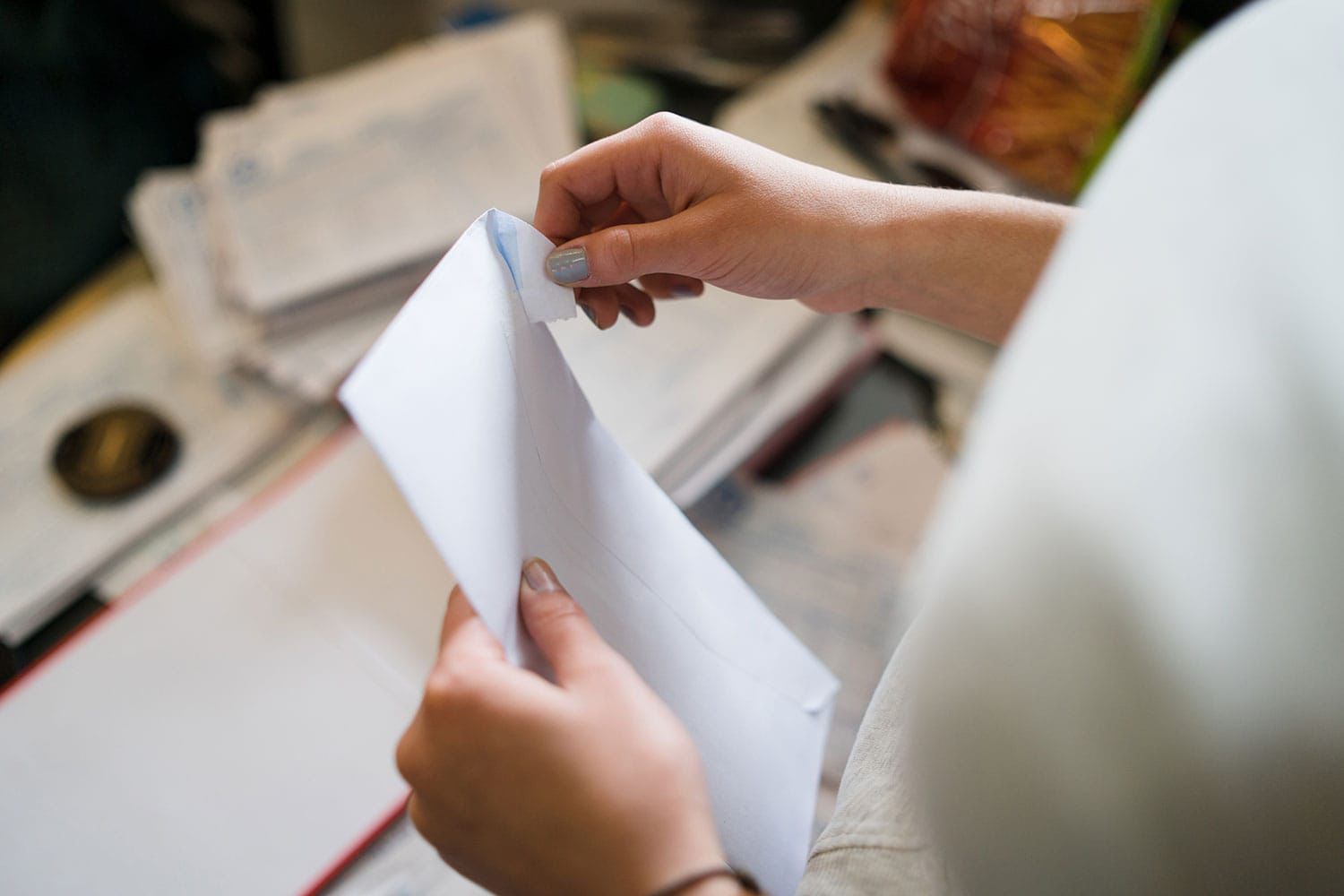
The Envelope Grandpa Left Behind
At the will reading, my parents beamed as they handed Vanessa a $10 million check, then turned to me and said, “Go earn your own.” I hadn’t even swallowed the lump in my throat when the lawyer pulled out a sealed envelope in Grandpa’s handwriting—Mom went pale, Dad clenched his fist, my sister held her breath—and one sentence inside made our whole “family show” start to collapse…
I sat at the end of the polished wooden table in a law office conference room, where everything was clean to the point of cold—and quiet enough that I could hear my own heartbeat. Vanessa sat across from me, back straight, lips slightly curved—the kind of confidence of someone who’d “already locked the win” before walking into the room.
The lawyer slid a thick sheet of paper toward her. No one had to explain it; I could see the number $10,000,000 clear as day. Vanessa reached out and took it, slowly, calmly, like it already had her name on it. My dad gave a small nod, my mom squeezed her shoulder like a congratulation. Then both of them turned to me at the same time, their voices soft but sharp: “Go earn your own.” Four words hit the tabletop dry and hard, like a stamped verdict.
I didn’t cry. I didn’t ask “why” anymore, either. I stared at the wood grain, forcing my throat not to cough up some weak sound they could retell later. I’d gotten used to being shoved into the “handle it yourself” drawer—so used to it that sometimes I wondered if I’d ever truly belonged in this family at all.
Then a man in a gray suit stood up. He looked straight at the leather briefcase, unlatched it slowly as if every second weighed something. “There’s one more document,” he said. And the room’s temperature shifted.
The envelope landed on the table. The seal was unbroken. The handwriting on it… I knew it instantly—Grandpa’s. Square, steady, like a man who never circled the truth. My mom went pale before she could pull her smile back into place. Dad clenched his hand until his knuckles went white. Vanessa held her breath, eyes glued to the envelope like it wasn’t supposed to exist.
Just a name on that envelope was enough to drag me back to the ranch outside Charleston: wind chimes on the porch ringing every afternoon, magnolia trees leaning toward the fence like they were still shading someone. I hadn’t been back there in over a year. They said I was busy. They said I changed my number. They said Grandpa “didn’t want to be bothered.” I believed it—until the old belief started to crack.
The lawyer flipped the envelope, slid out a neatly folded letter, careful like he was touching something fragile. “Per Mr. Walter’s request,” he said, “this letter must be read in front of everyone present today.” My mom let out a tight, awkward laugh—then went silent. Dad adjusted his collar—the habit he has whenever he wants to hide his discomfort. Vanessa set the check down, and for the first time, I saw her fingers shake.
I stayed still. Because I knew: if Grandpa left something in that envelope, it wouldn’t be a polite formality or a little “consolation gift.” It would be a hard swerve—one sentence strong enough to expose who’d been holding the wheel this whole time.
The lawyer drew a breath and looked around the room. The metal pen tip tapped lightly against the paper like a start signal. And then he opened his mouth to read—he hadn’t even finished the first line when I watched my mother’s smile crack like thin glass.
Let me go back to the beginning, because this story starts long before that conference room, before the envelope, before the ten million dollars that wasn’t meant for me.
My name is Lila Brennan, and I’m thirty-two years old. I grew up in Charleston, South Carolina, in a house that looked perfect from the outside—white columns, manicured lawn, the kind of place people drive by and think, “That family has it together.”
They didn’t know what it was like inside.
My parents, Richard and Caroline Brennan, are successful by any measure. Dad runs a commercial real estate development company. Mom is on the boards of three charities and hosts an annual gala that gets written up in the local society pages. They’re the kind of people who care deeply about appearances, about what others think, about maintaining the family image.
And then there’s Vanessa.
My younger sister, twenty-eight, beautiful in that effortless way some people are. Blonde hair that never frizzes, perfect skin, a smile that makes people want to give her things. She’s charming, charismatic, the kind of person who walks into a room and everyone turns to look.
I, on the other hand, have always been… different. Quieter. More serious. I read too much, asked too many questions, didn’t fit the mold my parents had in mind for their daughters.
From the time we were kids, the favoritism was obvious. Vanessa got the ballet lessons, the horse, the debutante ball. I got the library card and the suggestion that I “find my own path.”
When Vanessa wanted to go to a private college out of state, my parents paid for it without hesitation. When I wanted to go to art school, they told me it was “impractical” and that I should go to state school and study something “useful.”
I went to state school. I paid for most of it myself through scholarships and part-time jobs. I graduated with a degree in graphic design and built a modest freelance career that paid the bills but would never make me rich.
Vanessa, meanwhile, moved to New York, worked in fashion for a few years, then moved back to Charleston and married a lawyer from a prominent family. She didn’t work anymore—didn’t need to. She hosted brunches, went to yoga, posted Instagram photos from beach vacations.
And my parents adored her.
The only person who ever seemed to see me—really see me—was Grandpa Walter.
Walter Brennan was my father’s father, a man who’d built his wealth the hard way. He started with a small construction business, worked eighteen-hour days, saved every penny, and eventually built a real estate empire that dwarfed what my father had achieved.
He lived on a ranch about thirty miles outside Charleston—a beautiful property with horses, a big farmhouse, and magnolia trees that bloomed every spring. I spent every summer there as a kid, helping him feed the horses, sitting on the porch with lemonade, listening to his stories about building his business from nothing.
Grandpa Walter was tough but fair. He didn’t care about appearances or social status. He cared about character, about hard work, about doing what was right even when it was hard.
And he loved me.
Not in a performative way, not in a “you’re my favorite grandchild” way. Just… genuinely. He asked about my art, encouraged my dreams, told me I was smart and capable and that I shouldn’t let anyone make me feel small.
Vanessa visited too, but less often. She didn’t like the ranch—said it was boring, too far from the city, too quiet. She’d come for Christmas and Thanksgiving, smile and hug Grandpa, then spend the whole visit on her phone.
Still, my parents always talked about Vanessa’s visits like they were grand gestures. “Vanessa made time to see Dad,” my mother would say. “Even with her busy schedule.”
My visits, which happened every few weeks, were never mentioned.
About eighteen months ago, things started to change.
Grandpa got sick. Lung cancer, stage three. The doctors said it was treatable but serious. He started chemo, lost weight, got weaker. I visited every week, sometimes twice a week. I’d bring groceries, help around the house, sit with him while he watched old westerns.
My parents visited occasionally. Vanessa came once, stayed for an hour, and left.
Then, about six months before Grandpa died, I noticed something strange.
I’d call to check on him, and he wouldn’t answer. I’d leave messages, and he wouldn’t call back. When I drove out to the ranch, sometimes he wasn’t home—or at least, he didn’t answer the door.
I asked my parents if they knew what was going on. My mother said Grandpa was “getting forgetful” and “probably just tired.” My father said Grandpa had asked for “some space” and that I should respect that.
It didn’t feel right, but I believed them. I stopped visiting as often, stopped calling as much.
Then Grandpa died. Suddenly, peacefully in his sleep, according to the doctor. I found out two days after it happened, when my father called and said, “We need to make funeral arrangements.”
“Why didn’t anyone call me sooner?” I asked.
“We didn’t want to upset you,” my mother said. “You’ve been so emotional lately.”
I hadn’t been emotional. I’d been concerned. But they’d reframed it, the way they always did.
The funeral was small. Family, a few old friends, some business associates. I sat in the back pew, staring at the casket, feeling like a piece of myself had been buried with him.
After the service, my father pulled me aside. “There’s going to be a will reading next week. You should be there.”
“Of course,” I said. “I want to be there.”
He hesitated. “Just… don’t expect too much, Lila. Grandpa had his own way of doing things.”
I didn’t know what that meant. I didn’t think to ask.
The will reading was scheduled for the following Tuesday at the law offices of Morrison & Associates, Grandpa’s longtime attorneys.
I arrived early, wearing a simple black dress and flats. Vanessa arrived ten minutes later in a designer suit and heels that clicked importantly against the marble floor. My parents came last, my father in his usual power suit, my mother in pearls.
We were ushered into a conference room with a long table and leather chairs. A lawyer I’d never met—Mr. Morrison had retired; this was his son—sat at the head of the table with a stack of documents.
“Thank you all for coming,” he said. “We’re here to execute the last will and testament of Walter James Brennan.”
He read through the preliminaries—debts, taxes, funeral expenses. Then he got to the distributions.
“To my granddaughter Vanessa Brennan Whitmore,” he read, “I leave the sum of ten million dollars, to be distributed in a lump sum upon my death.”
Vanessa’s eyes went wide. My mother gasped softly. My father smiled.
The lawyer produced a check, already prepared, and slid it across the table to Vanessa. She picked it up with trembling hands, staring at the number like she couldn’t quite believe it.
My parents congratulated her immediately. My mother hugged her, tears in her eyes. My father squeezed her shoulder, pride radiating from him.
Then they turned to me.
“Lila,” my father said, his voice careful, measured. “This is Vanessa’s moment. Don’t make it about you.”
I hadn’t said anything. I hadn’t moved. I was just… sitting there, trying to process what had just happened.
“But,” I started, my voice small. “What about—”
“Grandpa made his choice,” my mother interrupted. “You need to respect that. And honestly, Lila, you’re capable. You can earn your own money. Vanessa needs this more.”
“Go earn your own,” my father added, and the words landed like a slap.
I sat there, stunned, the lump in my throat growing so large I thought I might choke on it.
That’s when the lawyer stood up. “Actually,” he said, “there’s one more document.”
He reached into his briefcase and pulled out an envelope. Thick paper, sealed with wax, my name written on the front in Grandpa’s handwriting.
My heart stopped.
The lawyer set it on the table. “Per Mr. Brennan’s instructions, this letter is to be read aloud in the presence of all beneficiaries and family members.”
My mother’s smile faltered. My father’s jaw tightened. Vanessa set down the check, her hands suddenly still.
The lawyer broke the seal and unfolded the letter. He cleared his throat.
“‘To my family,'” he began, “‘If you’re hearing this, it means I’m gone, and you’re all sitting in that conference room pretending to care about my final wishes. I hope the coffee’s good at least.'”
A nervous laugh escaped from Vanessa. My father didn’t react.
“‘I want to address something that’s been bothering me for a long time: the way you’ve treated Lila.'”
The room went silent.
“‘For years, I watched you favor Vanessa. I watched you dismiss Lila’s accomplishments, ignore her efforts, and treat her like she was less important because she didn’t fit your idea of what a daughter should be. I said nothing because I believed—stupidly—that you would eventually see what I saw: a smart, kind, hardworking young woman who deserved your respect.'”
My mother’s face had gone pale. My father was staring at the table.
“‘But you never did see it. You kept pushing her aside, and worse, you tried to keep her from me in my final months. You told her I didn’t want visitors. You intercepted her calls. You made sure she stayed away while you paraded Vanessa in front of my lawyers, suggesting she deserved my estate because she “needed it more.”‘”
Vanessa’s mouth fell open. “I didn’t—”
“‘Don’t interrupt,'” the lawyer read, and I could hear Grandpa’s voice in those words. “‘Yes, Vanessa, you did. You and your mother came to see me three times in those last months, and every visit was the same: hints about estate planning, suggestions about how much “family support” you needed, comments about Lila being “so independent” she didn’t need help.'”
My mother stood up. “This is absurd. Walter was sick. He didn’t know what he was saying—”
“Ma’am, please sit down,” the lawyer said firmly. “I’m required by law to read this in full.”
She sat, her face twisted with anger and something else—fear, maybe.
The lawyer continued. “‘So here’s what I did. That ten million dollars Vanessa just received? It’s real. The check will clear. Congratulations. But here’s what you don’t know: that money came from a separate account I set up specifically for this purpose. It’s not part of my actual estate. It’s a test.'”
Vanessa grabbed the check, staring at it like it might disappear.
“‘The bulk of my estate—the ranch, the investment portfolio, the real estate holdings, everything worth approximately forty-seven million dollars—goes to Lila. The paperwork has already been filed. The transfers are already in motion. By the time you hear this letter, she’ll own everything that actually matters.'”
The room erupted.
Vanessa screamed. My mother started crying. My father slammed his hand on the table, his face purple with rage.
I just sat there, frozen, my mind trying to catch up with what I’d just heard.
Forty-seven million dollars.
The ranch.
Everything.
The lawyer raised his voice over the chaos. “There’s more.”
The room quieted, but barely.
“‘Lila, if you’re hearing this, I’m sorry I couldn’t tell you in person. Your parents made sure of that. But I need you to know: you are the one who deserves this. Not because you need it, but because you earned it through character, through loyalty, through love that asked for nothing in return. Don’t let them guilt you. Don’t let them manipulate you. This is yours, and I’m damn proud to give it to you.'”
My eyes filled with tears. Not sad tears—something else. Relief, maybe. Vindication.
“‘To Richard and Caroline: you raised two daughters, but you only ever saw one of them. That’s your failure, not Lila’s. I hope this teaches you something, but I doubt it will.'”
My father looked like he wanted to punch something. My mother was openly sobbing now.
“‘And to Vanessa: that ten million is yours to keep. But understand this—it’s not a reward. It’s a severance package. You’re out of the family business, out of the estate decisions, out of everything. You got your money. Now leave your sister alone.'”
The lawyer folded the letter. “That concludes the reading. Ms. Brennan”—he looked at me—”if you’ll stay, we have some paperwork to go through. The rest of you are free to go.”
My family didn’t leave quietly.
Vanessa stood up, her face red and blotchy. “This is insane! That money should be mine! He was my grandfather too!”
“You got ten million dollars,” I said, my voice shaking. “That’s more than most people see in a lifetime.”
“It’s not fair!”
“Fair?” The word came out sharper than I intended. “You got everything growing up. The lessons, the attention, the support. I got told to earn my own. And now, for once, I’m the one who gets something, and you can’t stand it.”
My mother turned to me, her eyes wild. “Lila, you have to contest this. Walter was sick. He wasn’t thinking clearly—”
“He was perfectly clear,” the lawyer interrupted. “I met with him multiple times. His doctors evaluated him. Everything was done legally and properly. This will is airtight.”
My father stood up, his voice low and dangerous. “If you go through with this, Lila, you’re out of this family. Do you understand me? You’ll be dead to us.”
I looked at him—this man who’d never really seen me, never really loved me the way a father should—and I felt something break free inside my chest.
“I’ve been dead to you my whole life,” I said quietly. “At least now I’m free.”
I turned to the lawyer. “Let’s go through that paperwork.”
Three Months Later
I’m sitting on the porch of Grandpa’s ranch—my ranch now—watching the sun set over the magnolia trees.
The legal transfers took eight weeks. The ranch, the investment accounts, the real estate holdings—all of it in my name now. Forty-seven million dollars, plus the property, plus the ongoing income from the investments.
I quit my freelance work. Not because I don’t love design, but because I can finally do it on my own terms. I set up a small studio in one of the ranch’s outbuildings, and I take on projects I actually care about.
I hired a property manager to help maintain the ranch. I kept Grandpa’s horses, added a few more. I spend my mornings riding, my afternoons painting, my evenings reading on this porch.
It’s quiet. It’s peaceful. It’s mine.
I haven’t spoken to my parents since the will reading. They’ve tried calling, of course. First with anger—messages about how I “stole” Vanessa’s inheritance, how I “manipulated” Grandpa. Then with guilt—how I was “tearing the family apart,” how they “only wanted what was best.”
I blocked their numbers.
Vanessa tried once too, showing up at the ranch with tears and apologies, saying she “didn’t know” what Mom and Dad had been doing, that she “just wanted to fix things.”
I didn’t let her past the front gate.
Because the truth is, she did know. Maybe not every detail, but enough. She knew I was being pushed aside. She knew I was being dismissed. And she never once stood up for me.
The ten million dollars is hers to keep. Grandpa made that clear. But she’ll never get anything else from this estate, and she’ll never get access to me.
Six Months Later
I got a letter last week. Handwritten, careful script, from someone I didn’t expect: my father.
Lila,
I know you probably won’t read this. I know I don’t deserve your time or your forgiveness. But I needed to write it anyway.
Your grandfather was right about everything. About the way we treated you. About the favoritism. About how we failed you as parents.
I don’t have an excuse. We got caught up in appearances, in what we thought success looked like, in the version of family we wanted to present to the world. And in doing that, we lost sight of you.
I’m not asking you to forgive me. I’m just asking you to know that I see it now. I see what we did. And I’m sorry.
If you ever want to talk, I’m here.
Dad
I read the letter three times. Then I put it in a drawer.
Maybe someday I’ll respond. Maybe someday I’ll be ready to let them back in, piece by piece, earning their way the way Grandpa would have wanted.
But not today.
Today, I’m going to saddle up one of the horses and ride out to the far pasture where Grandpa and I used to watch the sunset. I’m going to sit on the fence rail and think about the man who saw me when no one else did, who protected me even after he was gone.
And I’m going to live the life he gave me—not with guilt or obligation, but with gratitude and joy.
Because that’s what he would have wanted.
That’s what I deserve.
THE END

Adrian Hawthorne is a celebrated author and dedicated archivist who finds inspiration in the hidden stories of the past. Educated at Oxford, he now works at the National Archives, where preserving history fuels his evocative writing. Balancing archival precision with creative storytelling, Adrian founded the Hawthorne Institute of Literary Arts to mentor emerging writers and honor the timeless art of narrative.